
organism population community ecosystem biosphere Population Ecology AP
organism population community ecosystem biosphere Population Ecology AP Biology
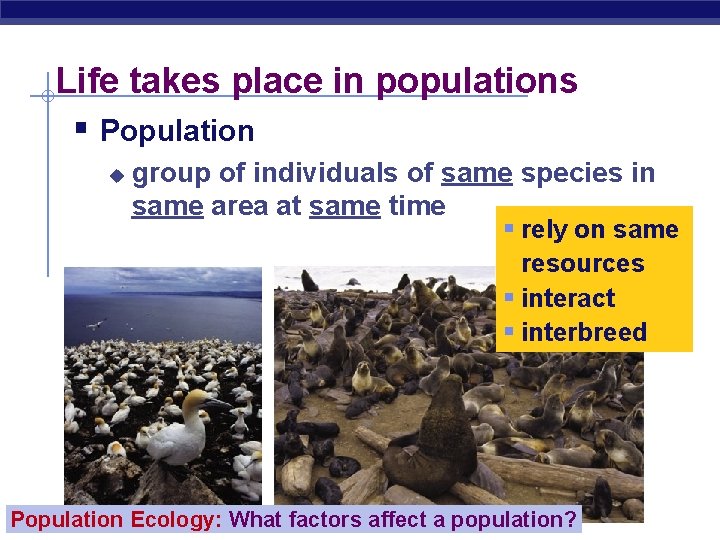
Life takes place in populations § Population u group of individuals of same species in same area at same time § rely on same resources § interact § interbreed AP Biology Ecology: What factors affect a population? Population
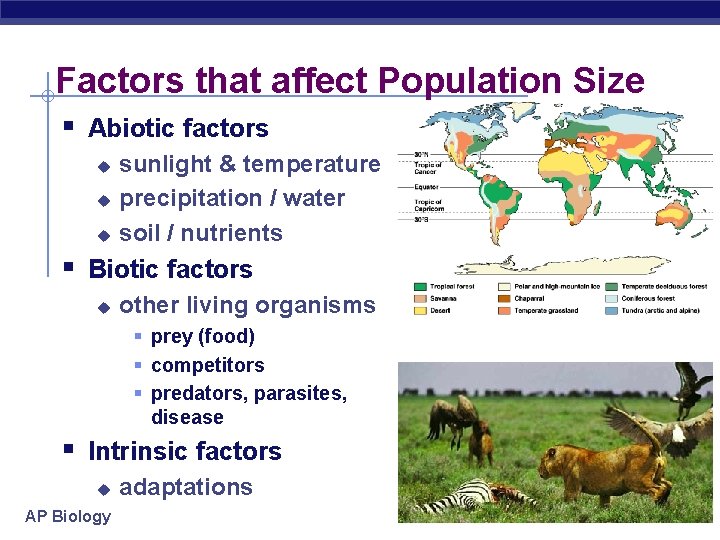
Factors that affect Population Size § Abiotic factors u u u sunlight & temperature precipitation / water soil / nutrients § Biotic factors u other living organisms § prey (food) § competitors § predators, parasites, disease § Intrinsic factors u AP Biology adaptations

Characterizing a Population § Describing a population range u pattern of Dispersion u Density of population u 1970 1966 1964 1960 1965 1961 Equator 1958 1951 1943 1937 1956 1970 Immigration from Africa ~1900 range AP Biology
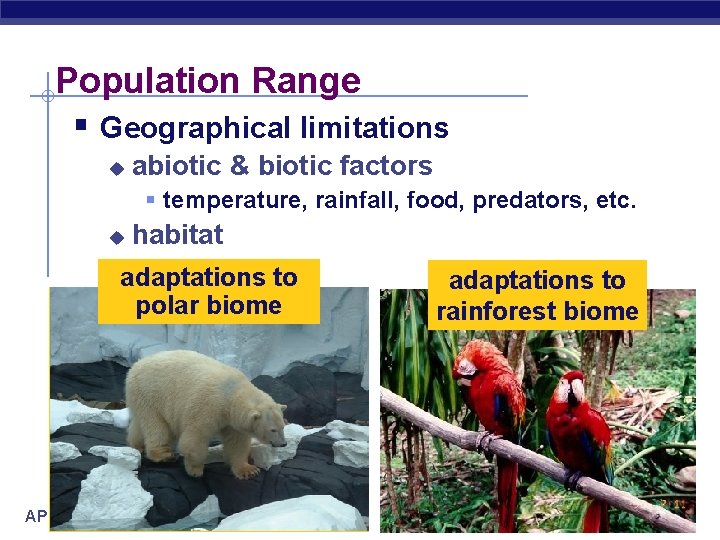
Population Range § Geographical limitations u abiotic & biotic factors § temperature, rainfall, food, predators, etc. u habitat adaptations to polar biome AP Biology adaptations to rainforest biome

Population Dispersion § Spacing patterns within a population Provides insight into the environmental associations & social interactions of individuals in population clumped random AP Biology uniform
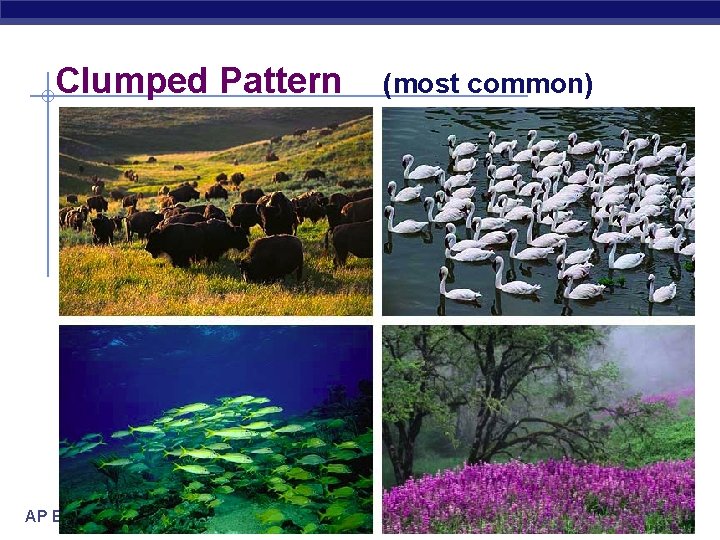
Clumped Pattern AP Biology (most common)
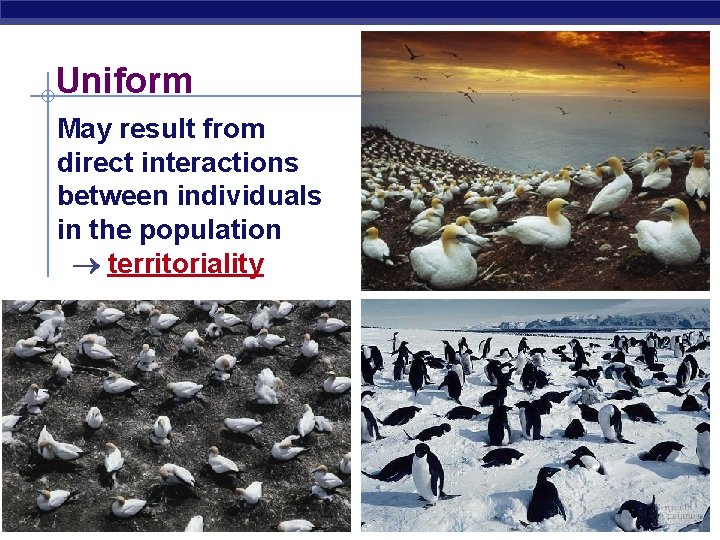
Uniform May result from direct interactions Clumped patterns between individuals in the population territoriality AP Biology
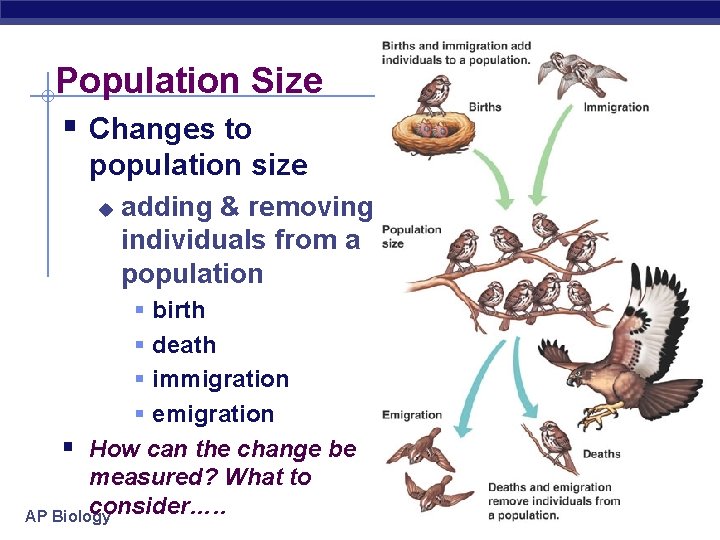
Population Size § Changes to population size u adding & removing individuals from a population § birth § death § immigration § emigration § How can the change be measured? What to consider…. . AP Biology
Population growth rates § Factors affecting population growth rate u sex ratio § how many females vs. males? u generation time § at what age do females reproduce? u age structure § how females at reproductive age in cohort? § How do biologists find all these factors? u AP Biology They study: Life Tables, Survivorship curves, and Age Structure diagrams
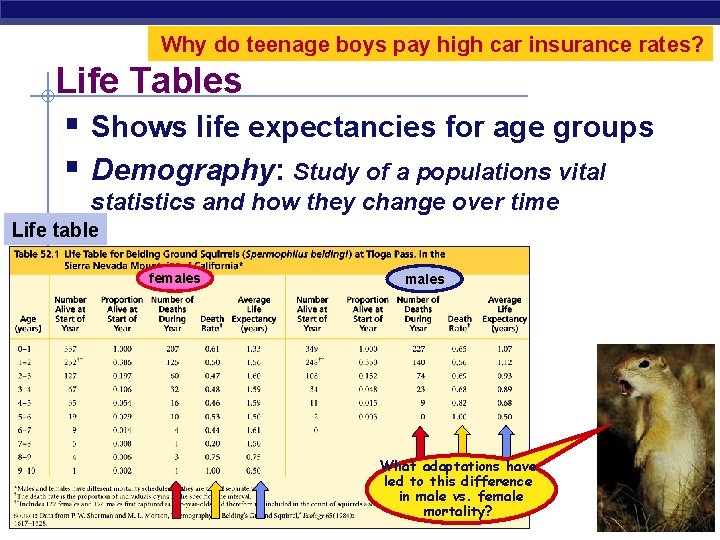
Why do teenage boys pay high car insurance rates? Life Tables § Shows life expectancies for age groups § Demography: Study of a populations vital statistics and how they change over time Life table females AP Biology males What adaptations have led to this difference in male vs. female mortality?
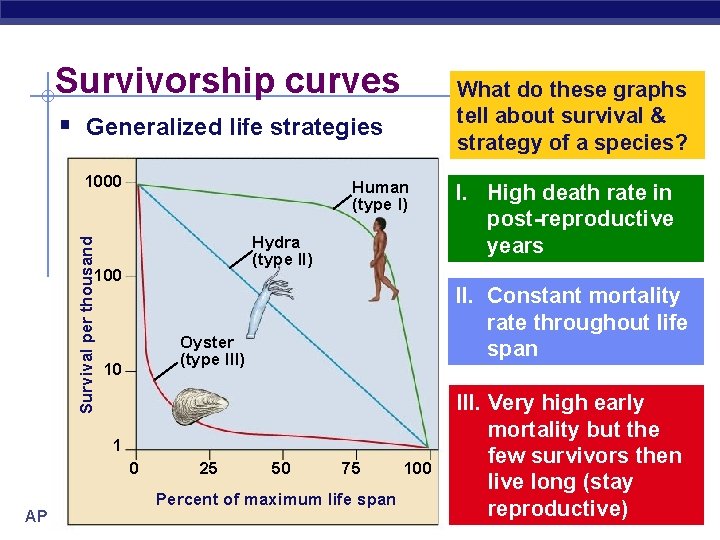
Survivorship curves What do these graphs tell about survival & strategy of a species? § Generalized life strategies Survival per thousand 1000 Human (type I) Hydra (type II) 100 II. Constant mortality rate throughout life span Oyster (type III) 10 1 0 AP Biology 25 I. High death rate in post-reproductive years 50 75 Percent of maximum life span 100 III. Very high early mortality but the few survivors then live long (stay reproductive)
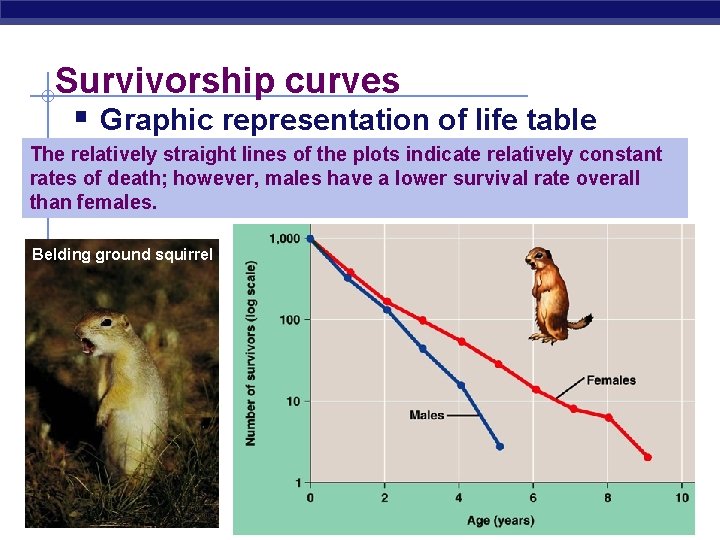
Survivorship curves § Graphic representation of life table The relatively straight lines of the plots indicate relatively constant rates of death; however, males have a lower survival rate overall than females. Belding ground squirrel AP Biology
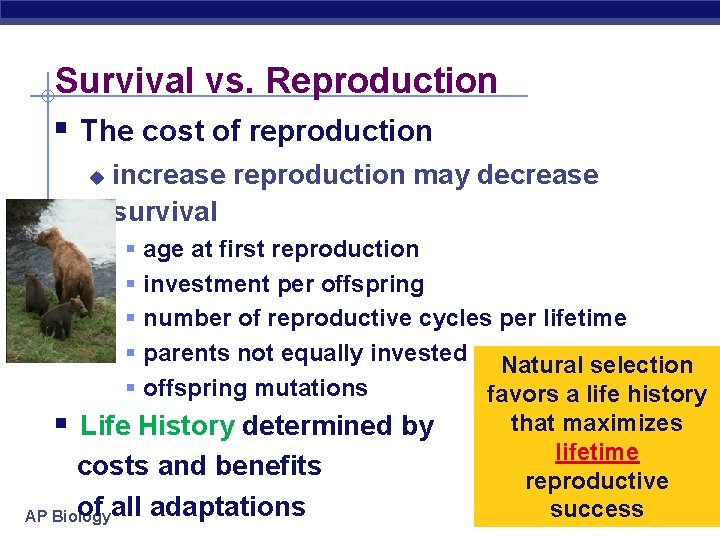
Survival vs. Reproduction § The cost of reproduction u increase reproduction may decrease survival age at first reproduction investment per offspring number of reproductive cycles per lifetime parents not equally invested Natural selection offspring mutations favors a life history that maximizes § Life History determined by lifetime costs and benefits reproductive of all adaptations success AP Biology § § §
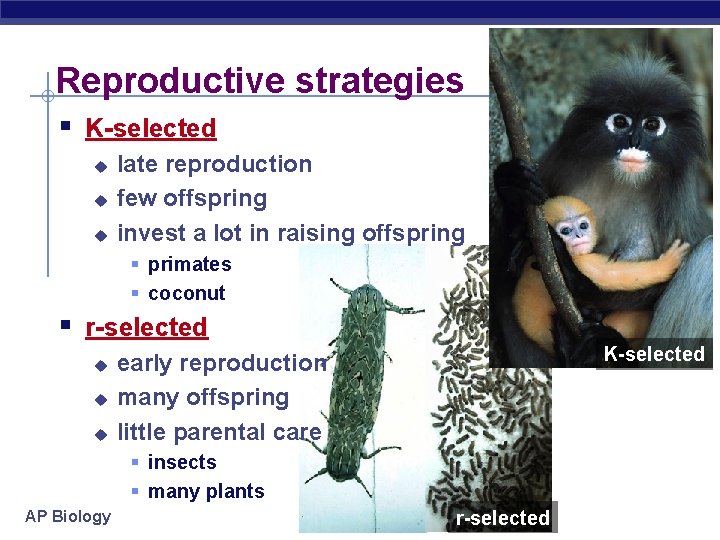
Reproductive strategies § K-selected u u u late reproduction few offspring invest a lot in raising offspring § primates § coconut § r-selected u u u K-selected early reproduction many offspring little parental care § insects § many plants AP Biology r-selected
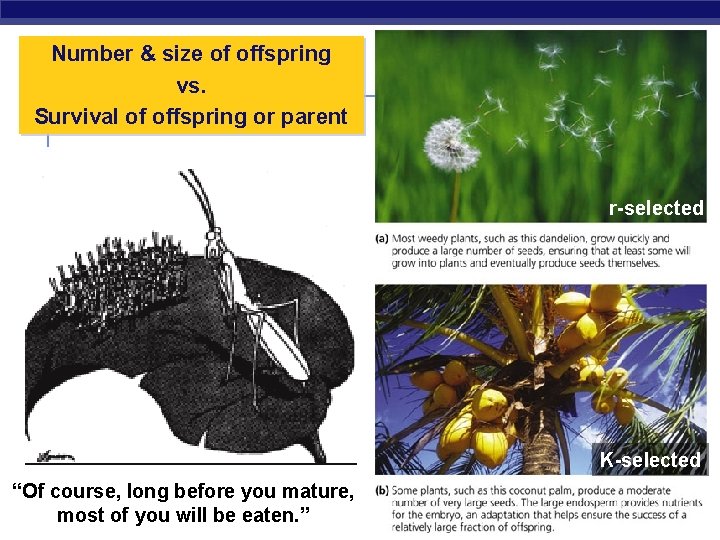
Number & size of offspring vs. Survival of offspring or parent r-selected K-selected “Of course, long before you mature, AP Biology most of you will be eaten. ”
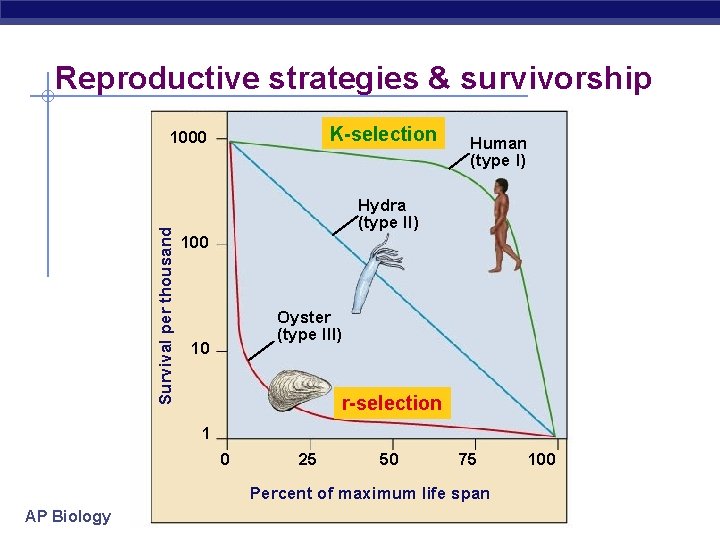
Reproductive strategies & survivorship K-selection Survival per thousand 1000 Human (type I) Hydra (type II) 100 Oyster (type III) 10 r-selection 1 0 25 50 75 Percent of maximum life span AP Biology 100
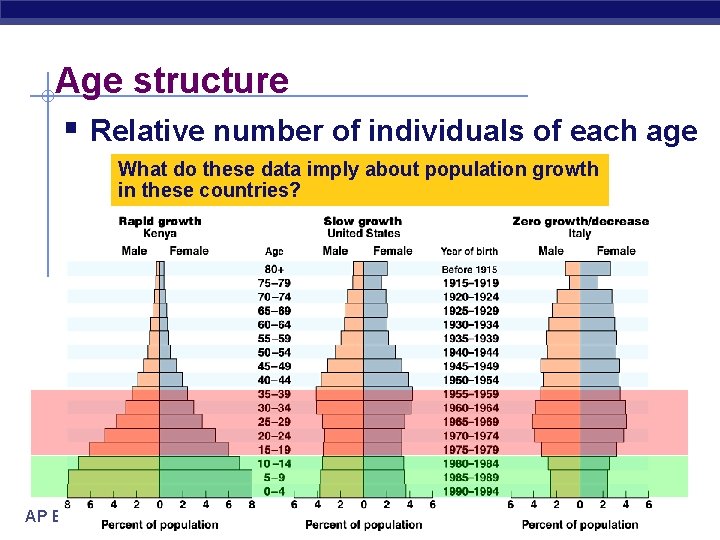
Age structure § Relative number of individuals of each age What do these data imply about population growth in these countries? AP Biology
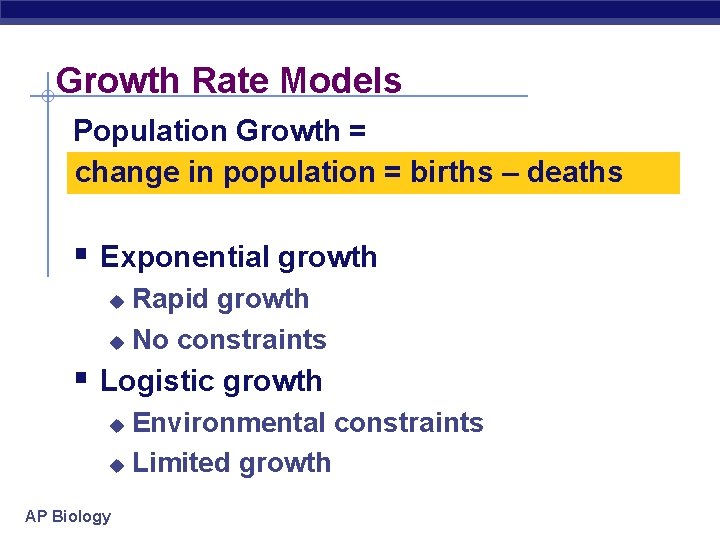
Growth Rate Models Population Growth = change in population = births – deaths § Exponential growth Rapid growth u No constraints u § Logistic growth Environmental constraints u Limited growth u AP Biology
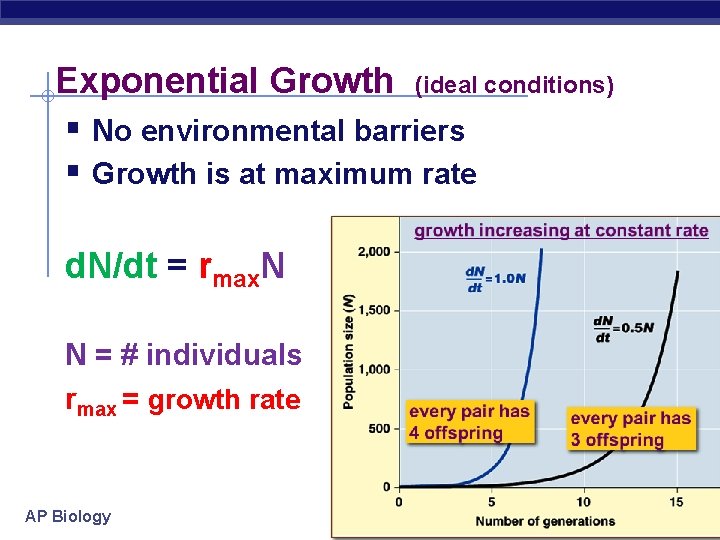
Exponential Growth (ideal conditions) § No environmental barriers § Growth is at maximum rate d. N/dt = rmax. N N = # individuals rmax = growth rate AP Biology
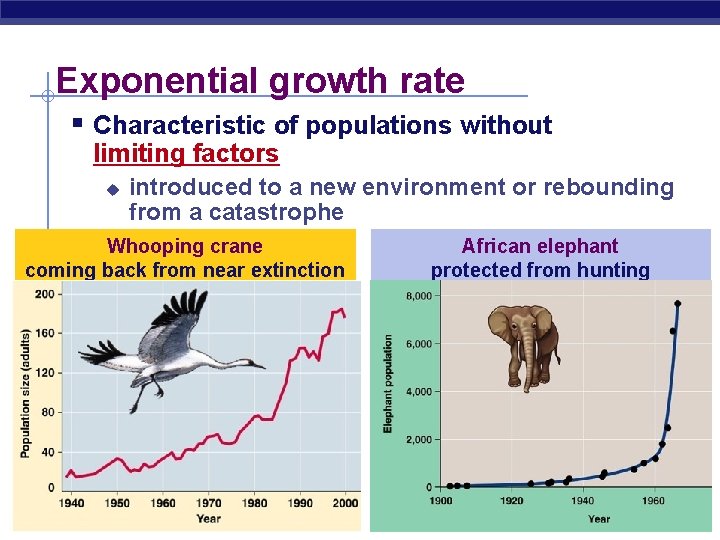
Exponential growth rate § Characteristic of populations without limiting factors u introduced to a new environment or rebounding from a catastrophe Whooping crane coming back from near extinction AP Biology African elephant protected from hunting
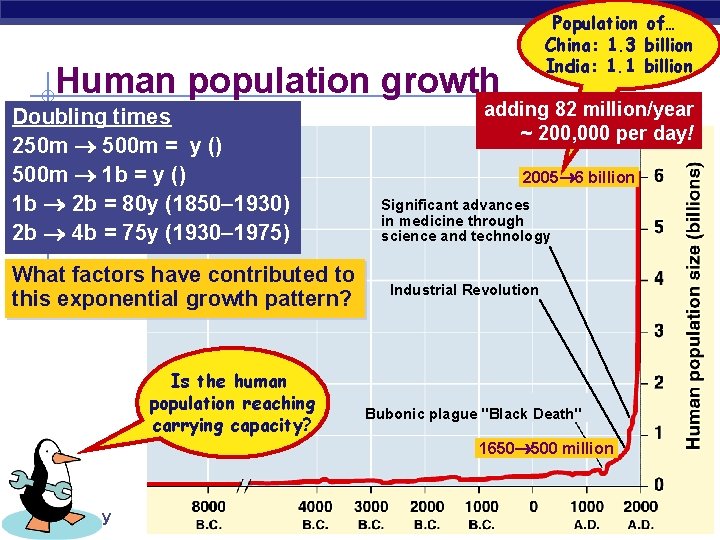
Population of… China: 1. 3 billion India: 1. 1 billion Human population growth Doubling times 250 m 500 m = y () 500 m 1 b = y () 1 b 2 b = 80 y (1850– 1930) 2 b 4 b = 75 y (1930– 1975) What factors have contributed to this exponential growth pattern? Is the human population reaching carrying capacity? adding 82 million/year ~ 200, 000 per day! 2005 6 billion Significant advances in medicine through science and technology Industrial Revolution Bubonic plague "Black Death" 1650 500 million AP Biology
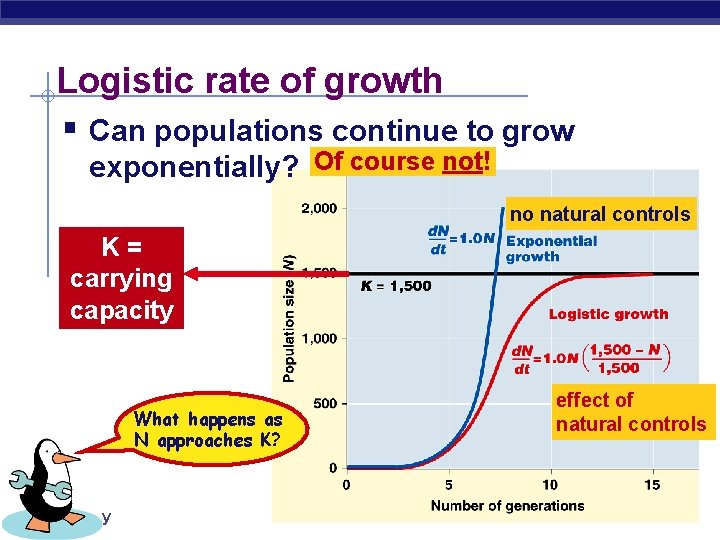
Logistic rate of growth § Can populations continue to grow exponentially? Of course not! no natural controls K= carrying capacity What happens as N approaches K? AP Biology effect of natural controls
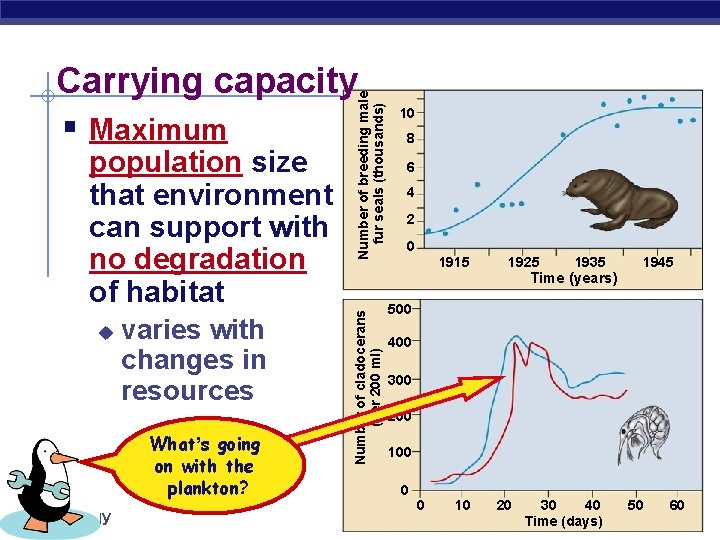
u varies with changes in resources What’s going on with the plankton? AP Biology Number of cladocerans (per 200 ml) population size that environment can support with no degradation of habitat Number of breeding male fur seals (thousands) Carrying capacity § Maximum 10 8 6 4 2 0 1915 1925 1935 Time (years) 1945 500 400 300 200 100 0 0 10 20 30 40 Time (days) 50 60
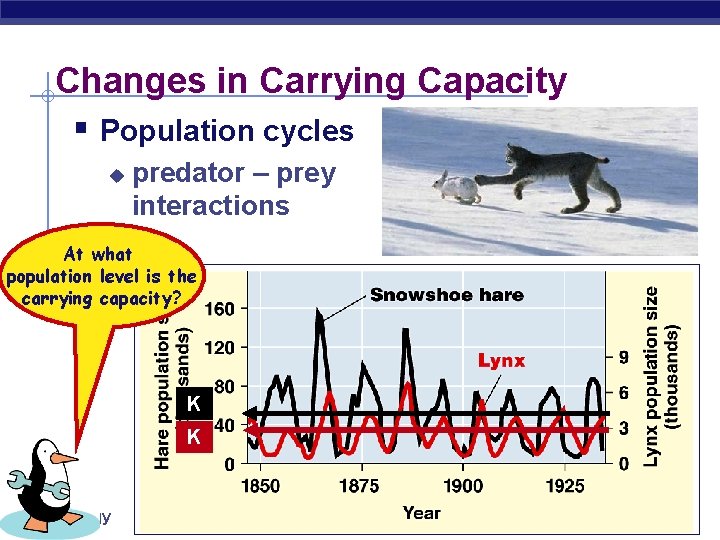
Changes in Carrying Capacity § Population cycles u predator – prey interactions At what population level is the carrying capacity? K K AP Biology
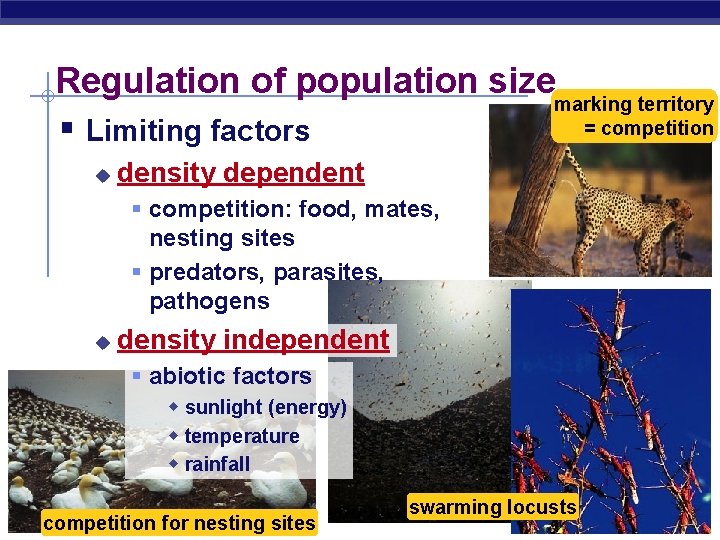
Regulation of population size marking territory = competition § Limiting factors u density dependent § competition: food, mates, nesting sites § predators, parasites, pathogens u density independent § abiotic factors w sunlight (energy) w temperature w rainfall APcompetition Biology for nesting sites swarming locusts
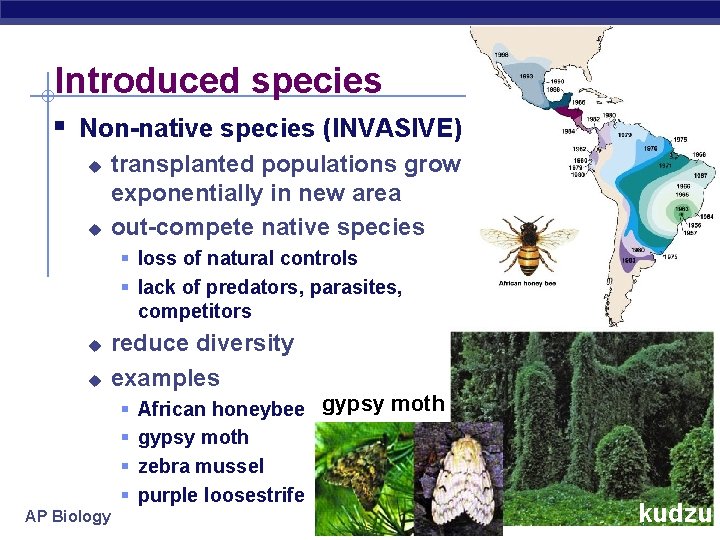
Introduced species § Non-native species (INVASIVE) u u transplanted populations grow exponentially in new area out-compete native species § loss of natural controls § lack of predators, parasites, competitors u u reduce diversity examples § § AP Biology African honeybee gypsy moth zebra mussel purple loosestrife kudzu
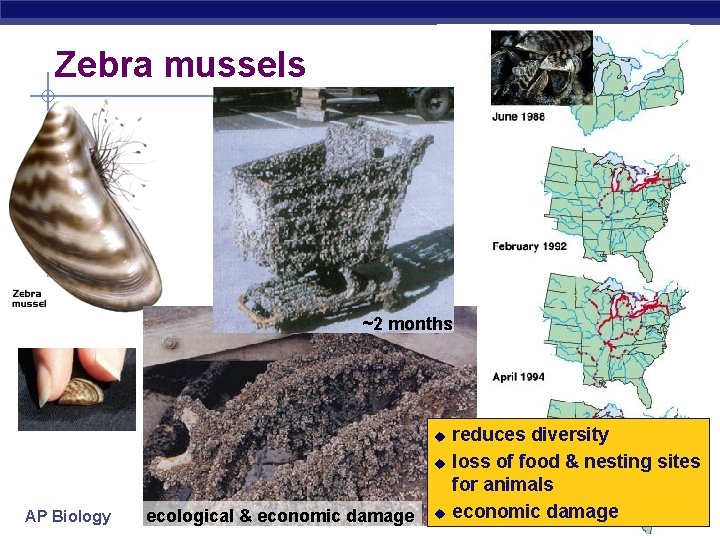
Zebra mussel ~2 months u u AP Biology ecological & economic damage u reduces diversity loss of food & nesting sites for animals economic damage
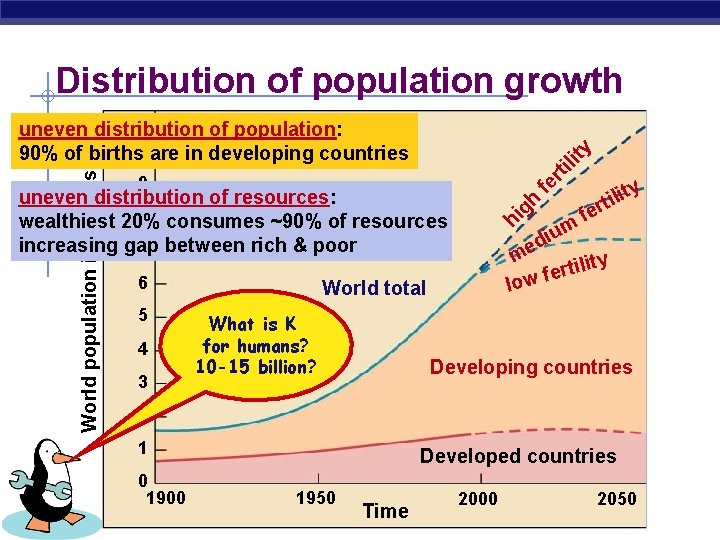
Distribution of population growth 6 5 4 3 What is K for humans? 10 -15 billion? ity rt il y it l i t r fe m u i d me ity l i t r e f low World total Developing countries 2 1 AP Biology gh uneven distribution of resources: 8 consumes ~90% of resources wealthiest 20% increasing gap 7 between rich & poor fe 9 hi World population in billions 11 uneven distribution of population: 10 are in developing countries 90% of births 0 1900 Developed countries 1950 Time 2000 2050
Any Questions? AP Biology 2007 -2008
- Slides: 30