
organism population community ecosystem biosphere Population Ecology AP
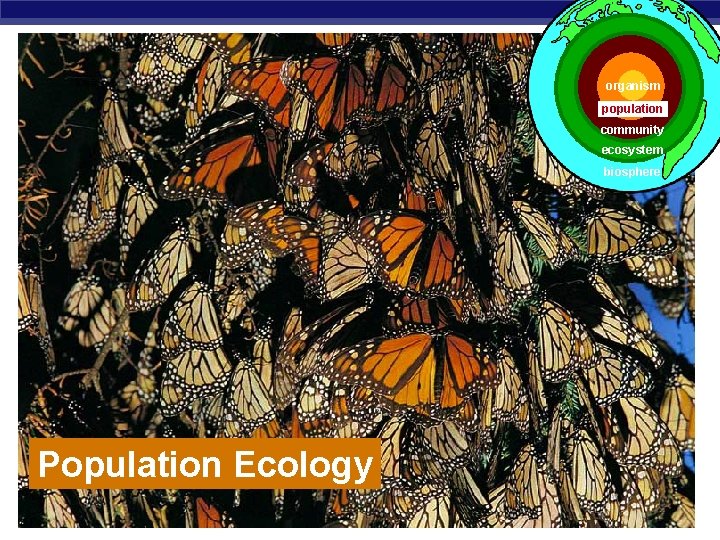
organism population community ecosystem biosphere Population Ecology AP Biology
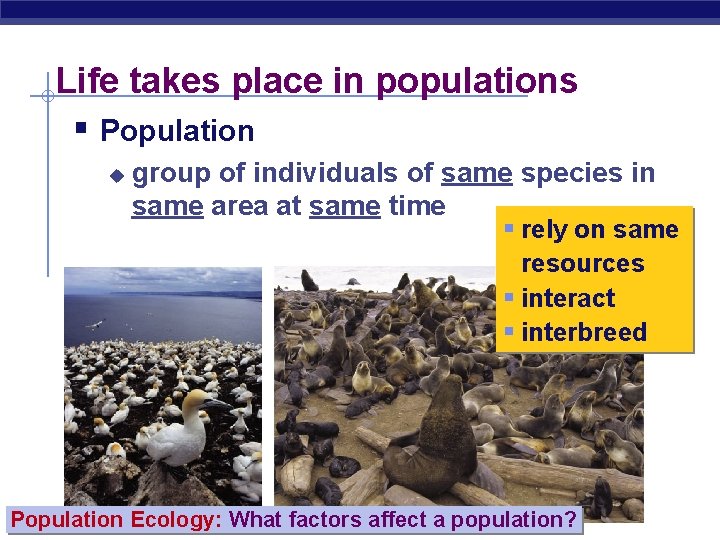
Life takes place in populations § Population u group of individuals of same species in same area at same time § rely on same resources § interact § interbreed AP Biology Ecology: What factors affect a population? Population
Why Population Ecology? § Scientific goal u understanding the factors that influence the size of populations § general principles § specific cases § Practical goal u management of populations § increase population size w endangered species § decrease population size w pests § maintain population size w fisheries management n AP Biology maintain & maximize sustained yield
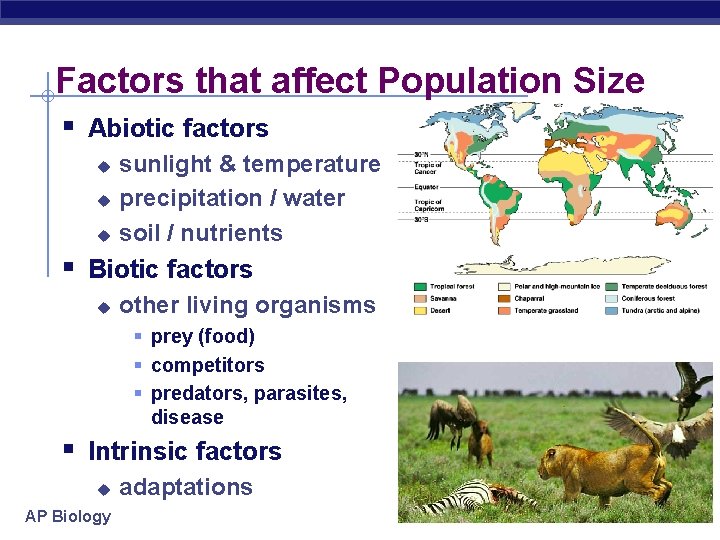
Factors that affect Population Size § Abiotic factors u u u sunlight & temperature precipitation / water soil / nutrients § Biotic factors u other living organisms § prey (food) § competitors § predators, parasites, disease § Intrinsic factors u AP Biology adaptations
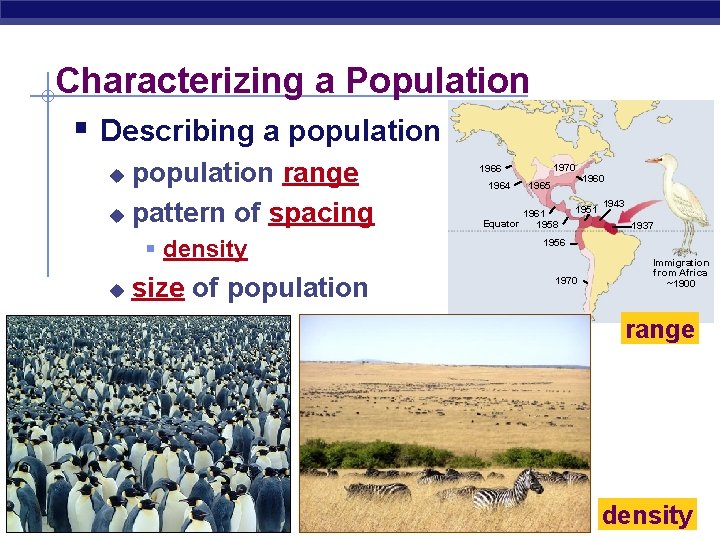
Characterizing a Population § Describing a population range u pattern of spacing u § density u size of population 1970 1966 1964 1960 1965 1961 Equator 1958 1951 1943 1937 1956 1970 Immigration from Africa ~1900 range AP Biology density
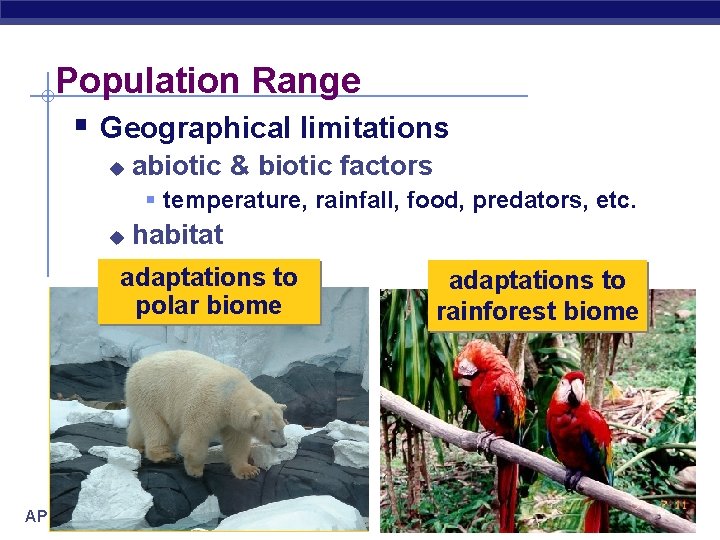
Population Range § Geographical limitations u abiotic & biotic factors § temperature, rainfall, food, predators, etc. u habitat adaptations to polar biome AP Biology adaptations to rainforest biome
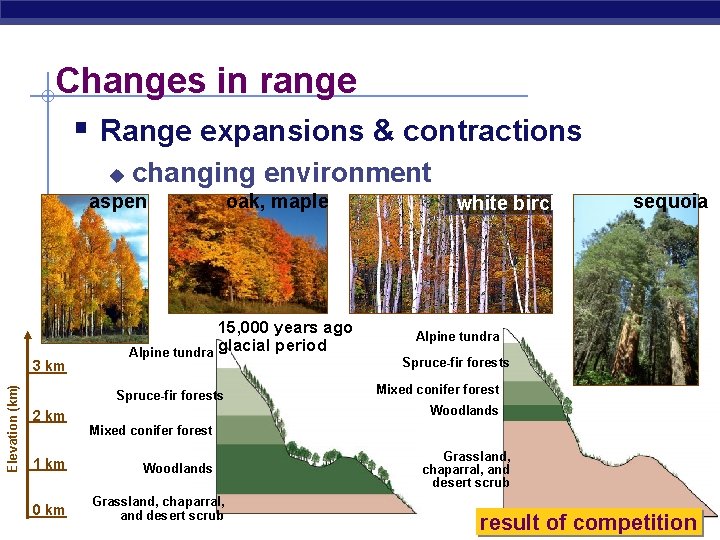
Changes in range § Range expansions & contractions u changing environment aspen Elevation (km) 3 km oak, maple 15, 000 years ago glacial period Alpine tundra Spruce-fir forests white birch Alpine tundra sequoia Present Spruce-fir forests Mixed conifer forest Woodlands 2 km Mixed conifer forest 1 km Woodlands Grassland, chaparral, and desert scrub Grassland, chaparral, 0 km AP Biology and desert scrub result of competition
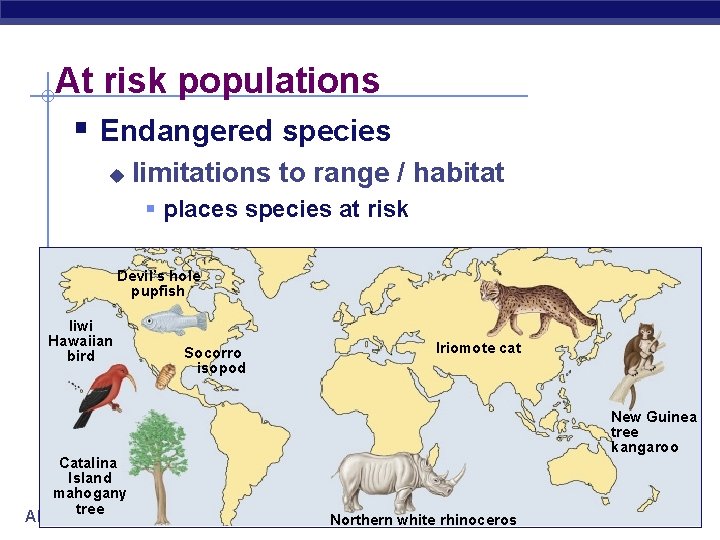
At risk populations § Endangered species u limitations to range / habitat § places species at risk Devil’s hole pupfish Iiwi Hawaiian bird Catalina Island mahogany tree AP Biology Socorro isopod Iriomote cat New Guinea tree kangaroo Northern white rhinoceros
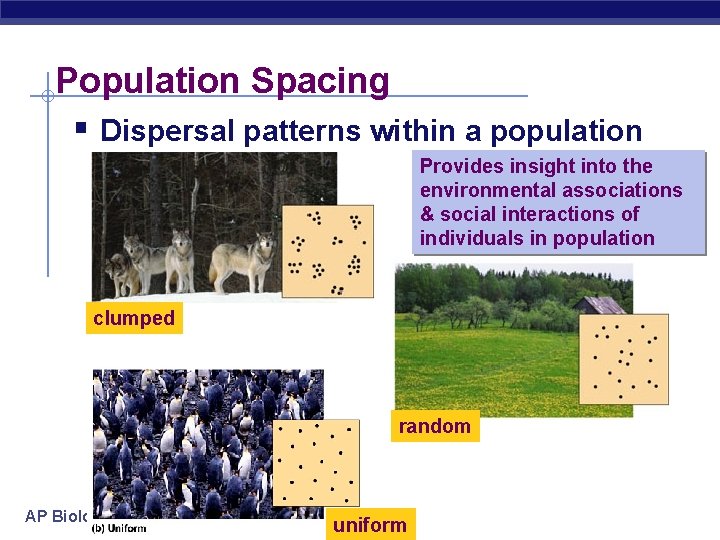
Population Spacing § Dispersal patterns within a population Provides insight into the environmental associations & social interactions of individuals in population clumped random AP Biology uniform
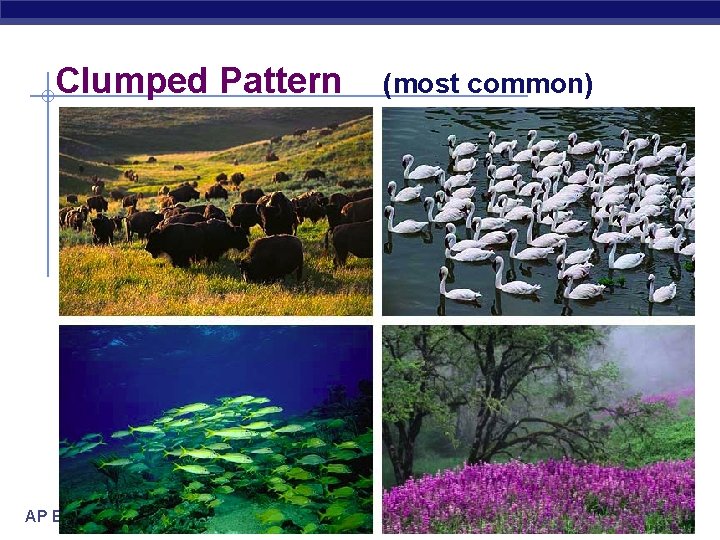
Clumped Pattern AP Biology (most common)
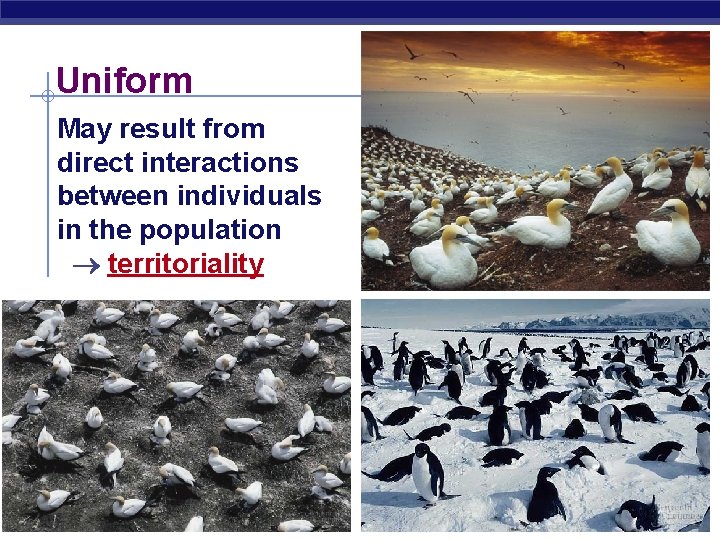
Uniform May result from direct interactions Clumped patterns between individuals in the population territoriality AP Biology
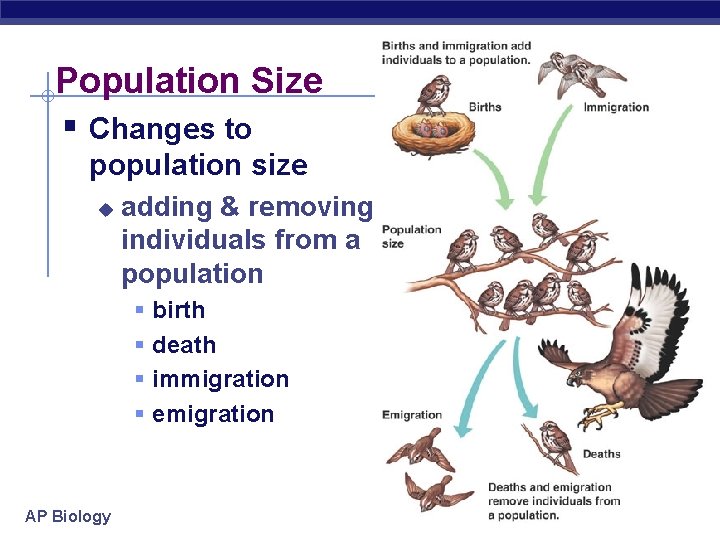
Population Size § Changes to population size u adding & removing individuals from a population § § AP Biology birth death immigration emigration
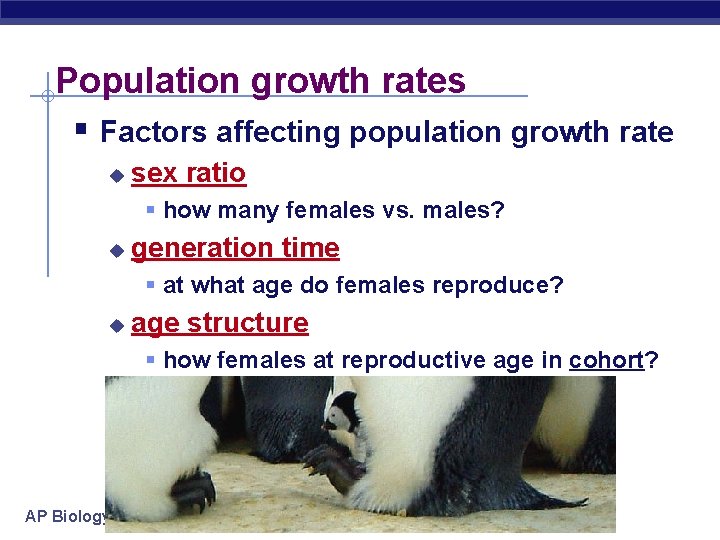
Population growth rates § Factors affecting population growth rate u sex ratio § how many females vs. males? u generation time § at what age do females reproduce? u age structure § how females at reproductive age in cohort? AP Biology
- Slides: 13