
Organism Interactions Adapted from kisdwebs katyisd orgcampusesKHS Ecology20
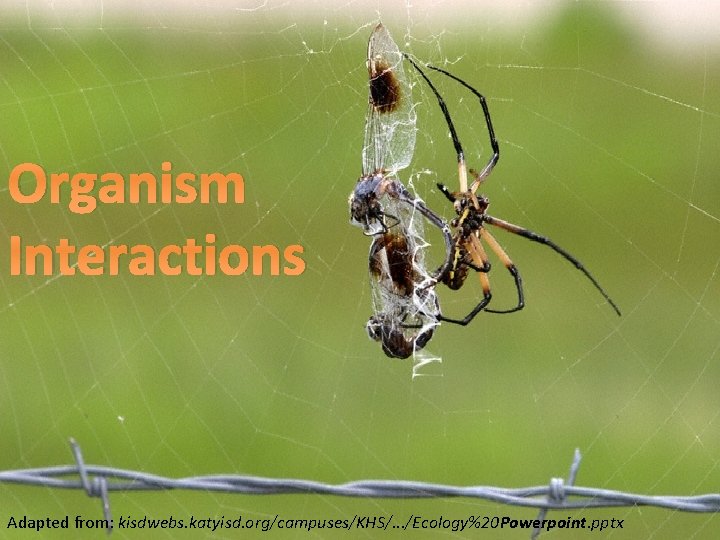
Organism Interactions Adapted from: kisdwebs. katyisd. org/campuses/KHS/. . . /Ecology%20 Powerpoint. pptx
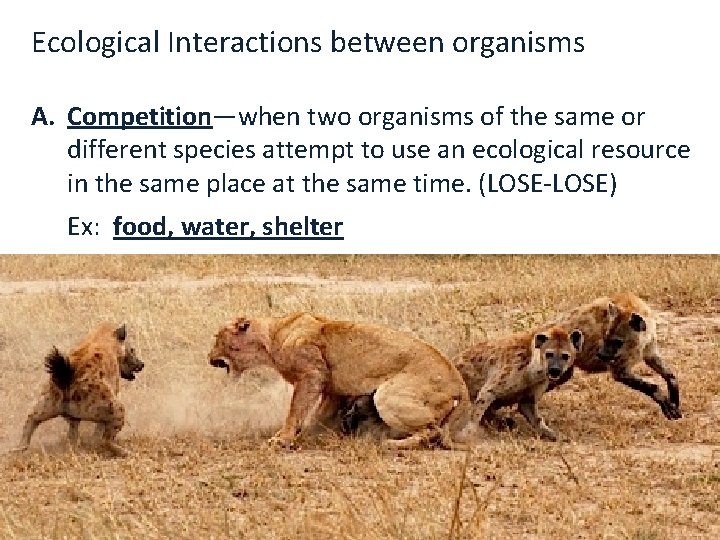
Ecological Interactions between organisms A. Competition—when two organisms of the same or different species attempt to use an ecological resource in the same place at the same time. (LOSE-LOSE) Ex: food, water, shelter

Monkeys compete with each other and other animals for food. Rams compete with each other for mates.
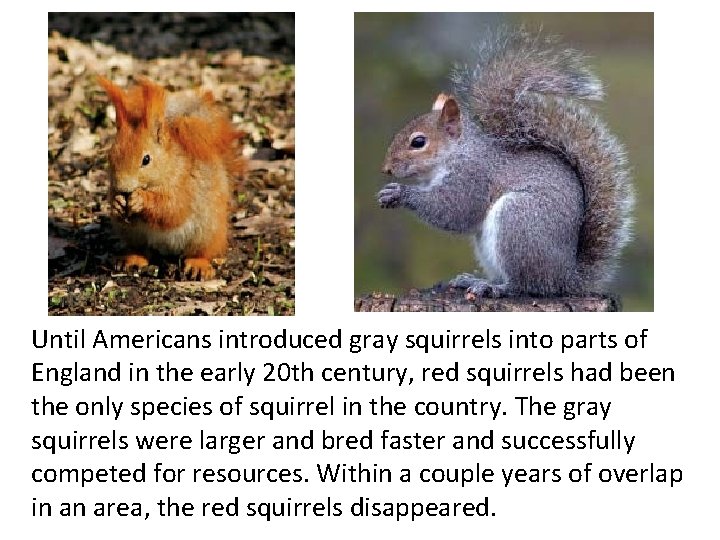
Until Americans introduced gray squirrels into parts of England in the early 20 th century, red squirrels had been the only species of squirrel in the country. The gray squirrels were larger and bred faster and successfully competed for resources. Within a couple years of overlap in an area, the red squirrels disappeared.
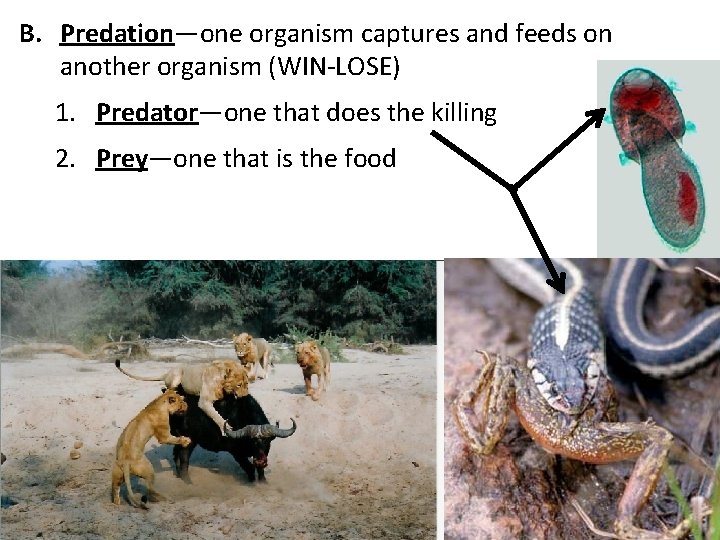
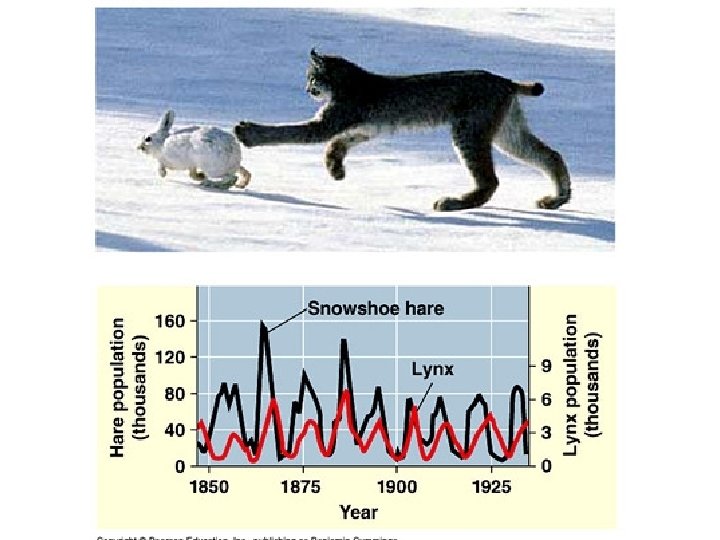
B. Predation—one organism captures and feeds on another organism (WIN-LOSE) 1. Predator—one that does the killing 2. Prey—one that is the food
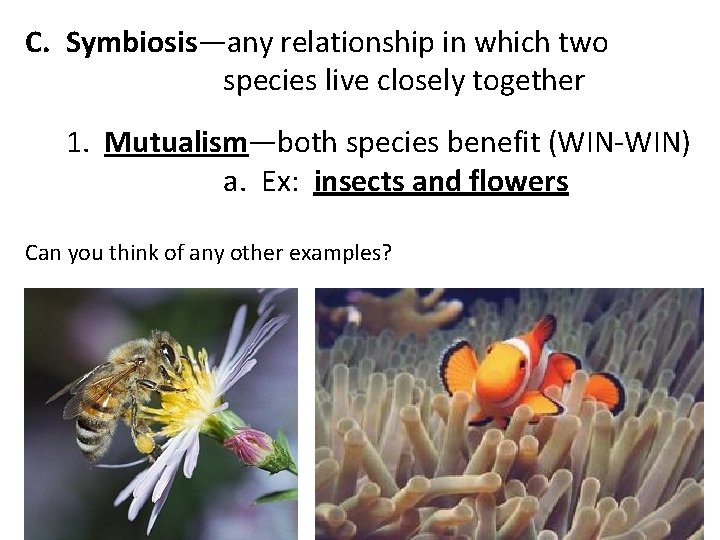
C. Symbiosis—any relationship in which two species live closely together 1. Mutualism—both species benefit (WIN-WIN) a. Ex: insects and flowers Can you think of any other examples?
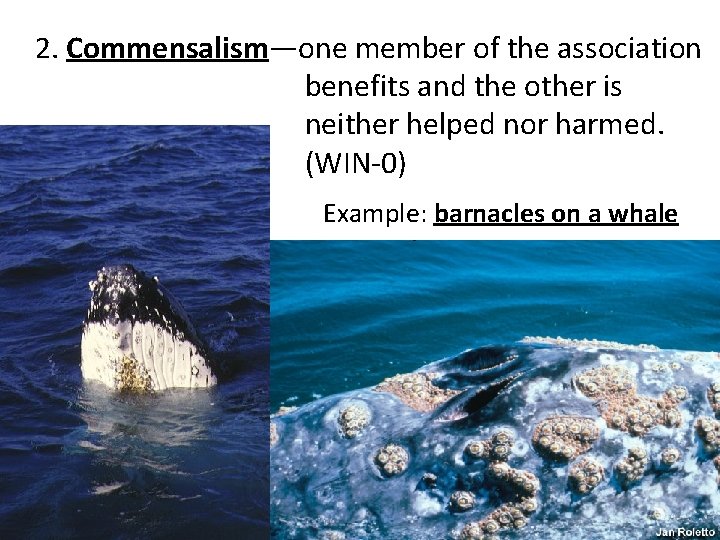
2. Commensalism—one member of the association benefits and the other is neither helped nor harmed. (WIN-0) Example: barnacles on a whale
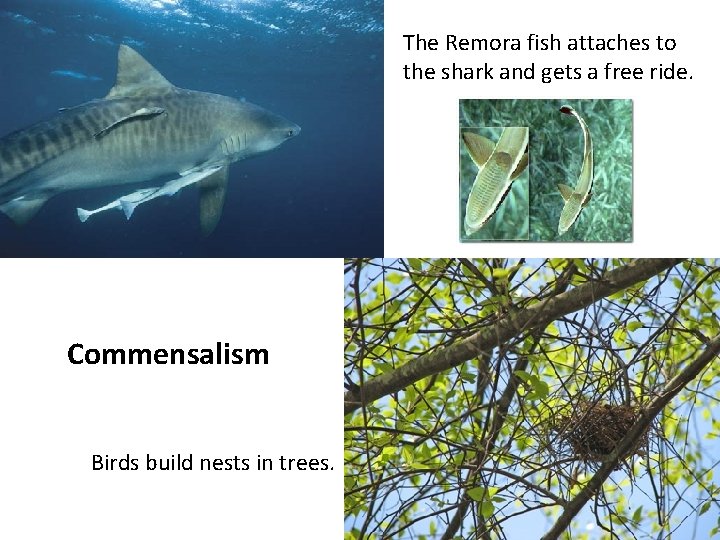
The Remora fish attaches to the shark and gets a free ride. Commensalism Birds build nests in trees.
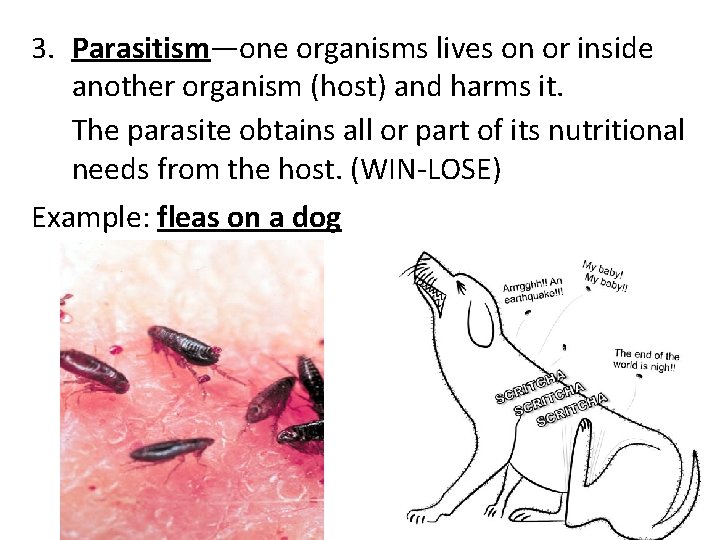
3. Parasitism—one organisms lives on or inside another organism (host) and harms it. The parasite obtains all or part of its nutritional needs from the host. (WIN-LOSE) Example: fleas on a dog
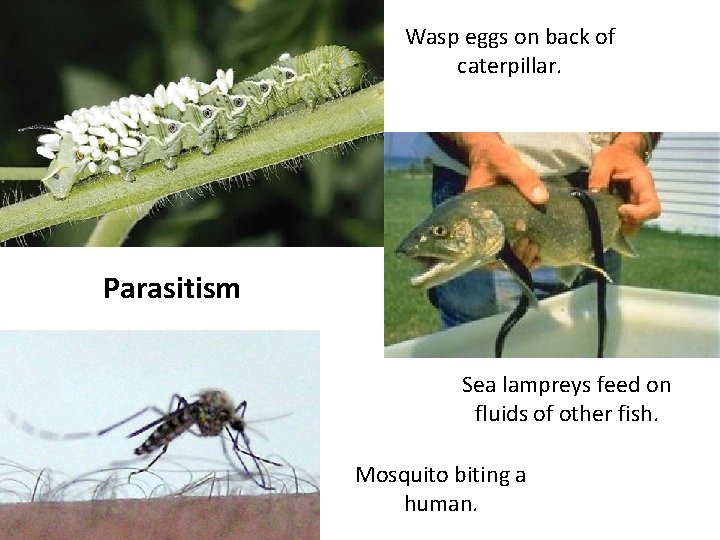
Wasp eggs on back of caterpillar. Parasitism Sea lampreys feed on fluids of other fish. Mosquito biting a human.
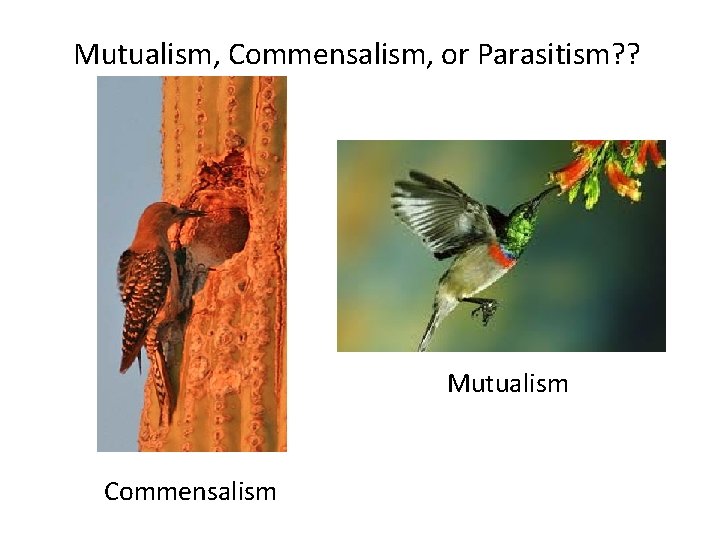
Mutualism, Commensalism, or Parasitism? ? Mutualism Commensalism
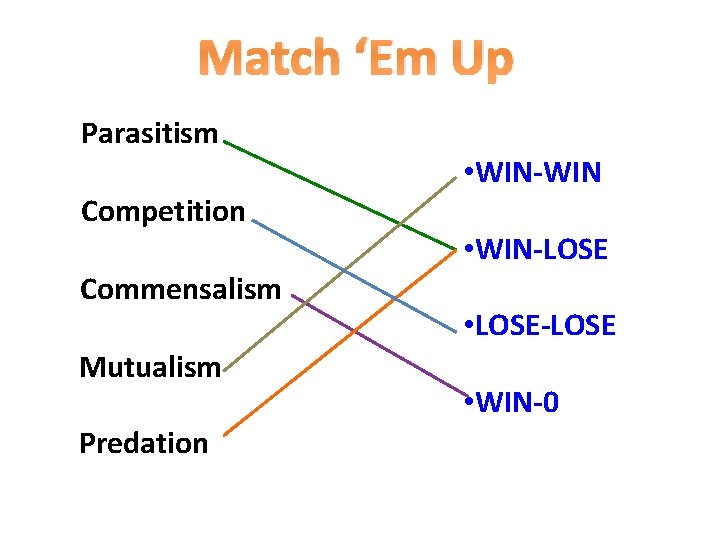
Match ‘Em Up Parasitism Competition Commensalism Mutualism Predation • WIN-WIN • WIN-LOSE • LOSE-LOSE • WIN-0
- Slides: 13