
Organisational Structure Organisational Structure Defines shows tells how

- Slides: 39
Organisational Structure
Organisational Structure • Defines (shows, tells) how the people, jobs and activities are inter-related. • This needs to be done so that every person is aware of the following:
The Structure shows. . • where does one belong in the organisation. • what authority does one have • what responsibility does one have • What is one supposed to do. • who is the boss? • who is accountable? • Who reports to who?
Structure evolves … • From the type of organisation. • It can be very simple to very complex.
Sole Trader – Milk Bar • Leo owns a milk bar. He owns, manages and operates the business. • • • He He No He He is the boss. has all the authority/power to make decisions. one is his superior. supervises no one. does all the work – shelving, selling, finance…. Leo Manager
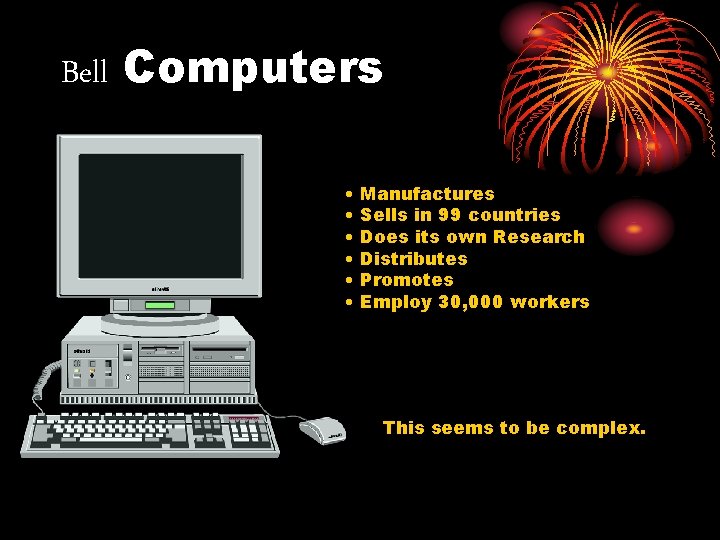
Bell Computers • • • Manufactures Sells in 99 countries Does its own Research Distributes Promotes Employ 30, 000 workers This seems to be complex.
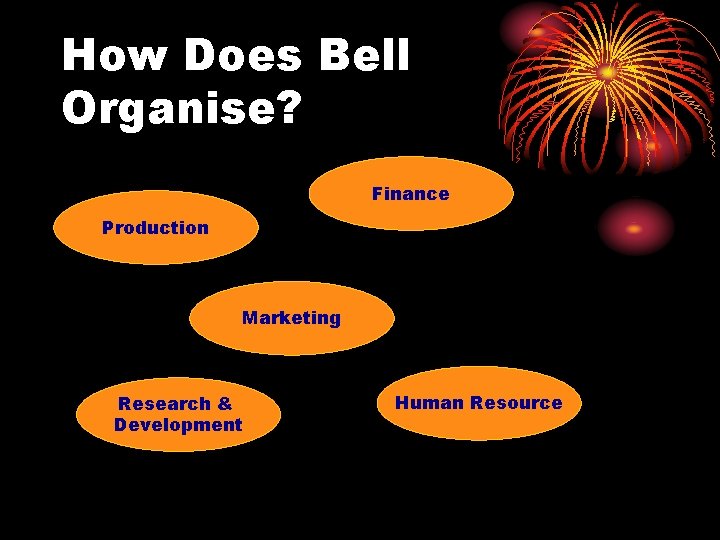
How Does Bell Organise? Finance Production Marketing Research & Development Human Resource
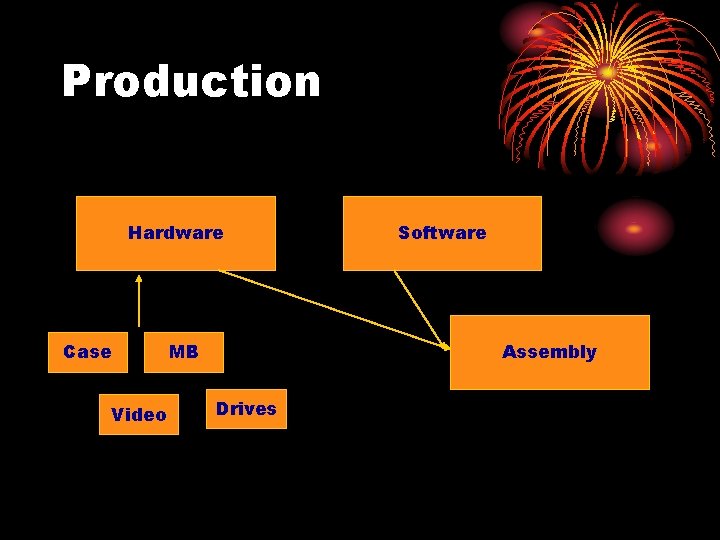
Production Hardware Case Video MB Software Assembly Drives
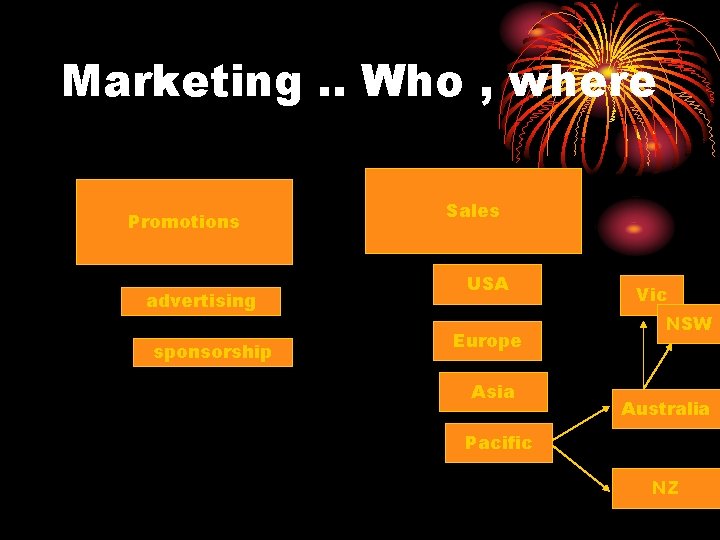
Marketing. . Who , where Promotions advertising sponsorship Sales USA Europe Asia Vic NSW Australia Pacific NZ
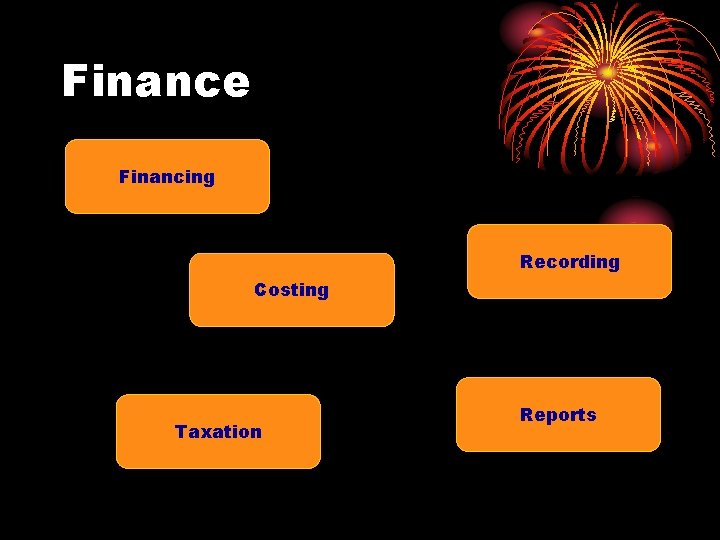
Finance Financing Recording Costing Taxation Reports
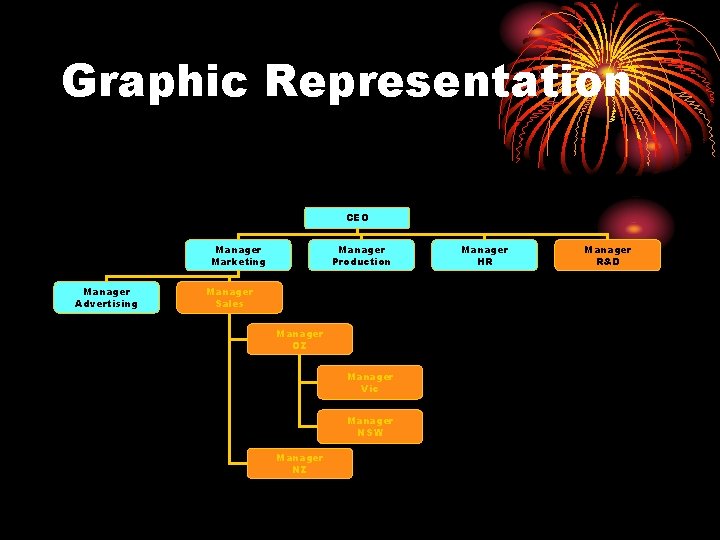
Graphic Representation CEO Manager Marketing Manager Advertising Manager Production Manager Sales Manager OZ Manager Vic Manager NSW Manager NZ Manager HR Manager R&D
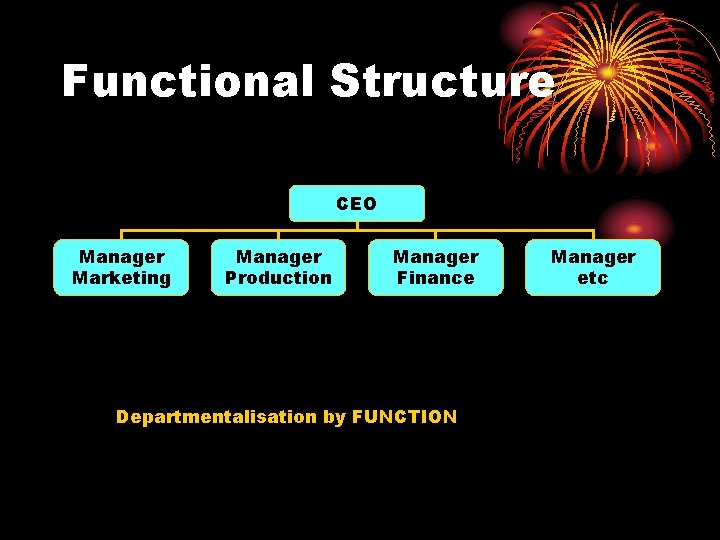
Functional or Divisional (Departmentalisation) • Structure can be created by function or Division. • Function is a specific type of activity. • Production • Marketing • R&D • HR • Finance
Production Function • Manufacturing – the making of goods – a factory. • Raw materials • Processing • Output
Marketing Function • Communicating to the market. • Advertising • Sponsorship etc • Delivery • Selling • Shops
Finance • Funding the business • Shares • Borrowings • Creditors • Accounting • Financial • Management • Tax etc
R&D Research & Development • Many businesses research to: • Improve their product • Improve methods of production • Develop new products • They may employ engineers, statisticians and scientist
Human Resources • • Recruitment Training and Development Promotions Payroll
Functional Structure CEO Manager Marketing Manager Production Manager Finance Departmentalisation by FUNCTION Manager etc
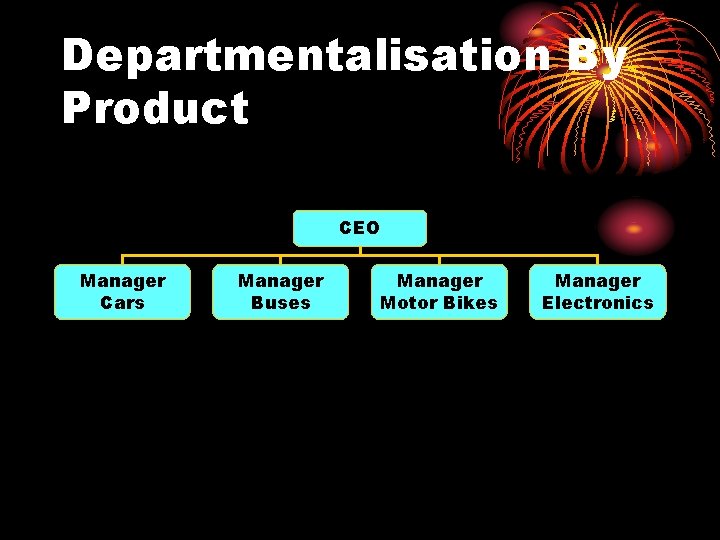
Departmentalisation By Product CEO Manager Cars Manager Buses Manager Motor Bikes Manager Electronics
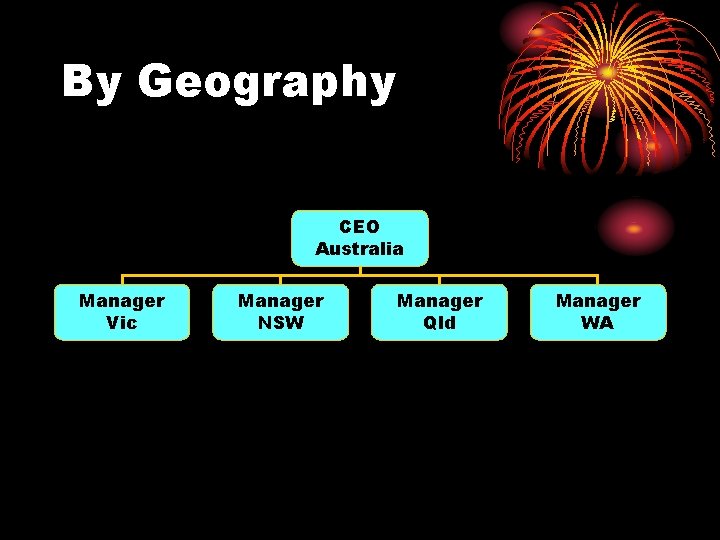
By Geography CEO Australia Manager Vic Manager NSW Manager Qld Manager WA
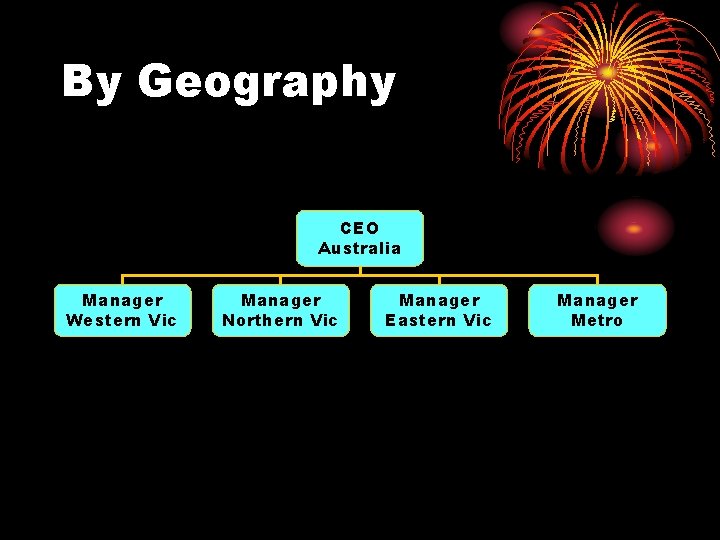
By Geography CEO Australia Manager Western Vic Manager Northern Vic Manager Eastern Vic Manager Metro
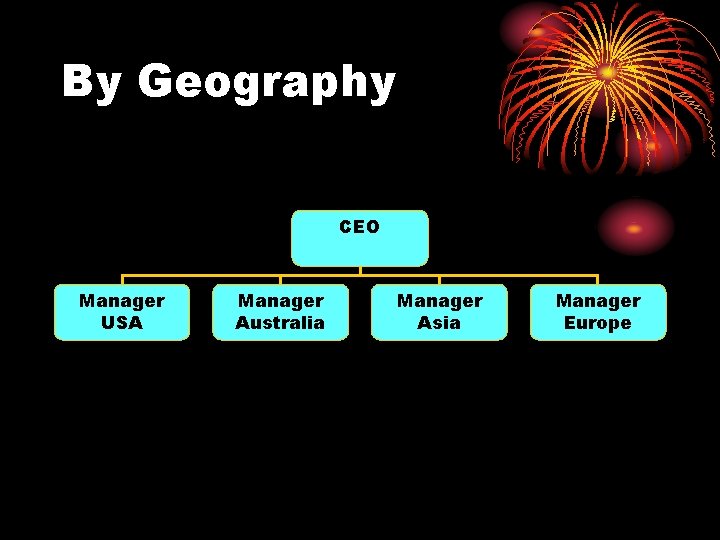
By Geography CEO Manager USA Manager Australia Manager Asia Manager Europe
Features of ~ Structure • The following is taken into account when developing a structure: • Division of Labour • Departmentalisation • Authority Responsibility • Delegation • Unity of Command • Span of Control • Communication Decision-making – Centralised or Decentralised
Division of Labour • Grouping of workers • Labour (workers/employees) are divided (grouped) according to work. Each worker does a different task.
Authority • The power of a position • If you have authority – it means you have the right to give commands and make decisions. • I do not have the authority to enrol students. • I have the authority to manage this class.
Responsibility • Is the obligation to perform the assigned work. • I am responsible to teach Business management. If you do not have the authority – you can’t be held responsible.
Delegation • Giving your authority (some of it) to some one else.
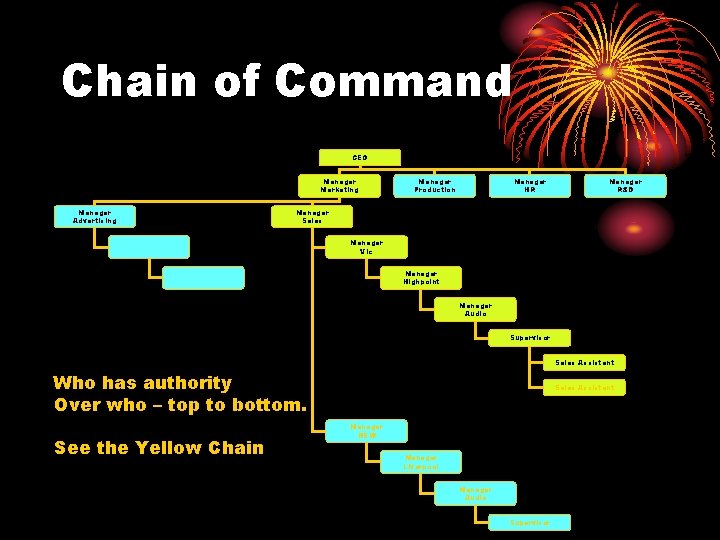
Chain of Command CEO Manager Marketing Manager Advertising Manager Production Manager HR Manager R&D Manager Sales Manager Vic Manager Highpoint Manager Audio Supervisor Sales Assistant Who has authority Over who – top to bottom. See the Yellow Chain Sales Assistant Manager NSW Manager Liverpool Manager Audio Supervisor
Unity of Command • One worker has only one boss
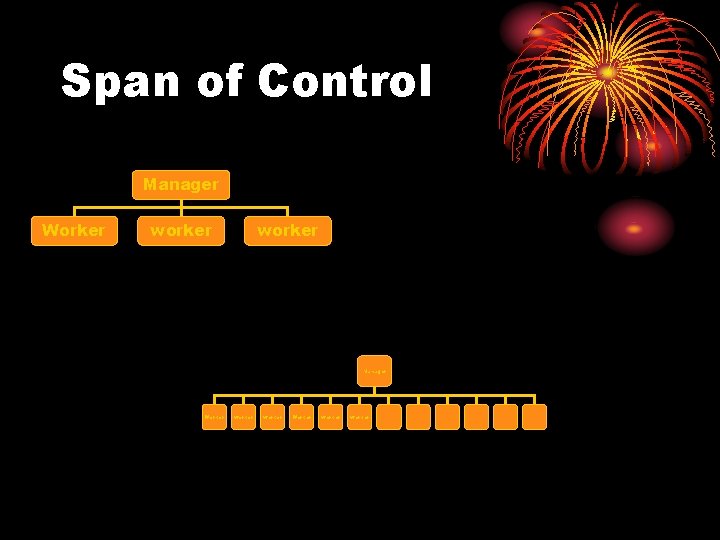
Span of Control • The number of people are supervised by one manager. • Span is large if you supervise many.
Span of Control Manager Worker worker Worker worker
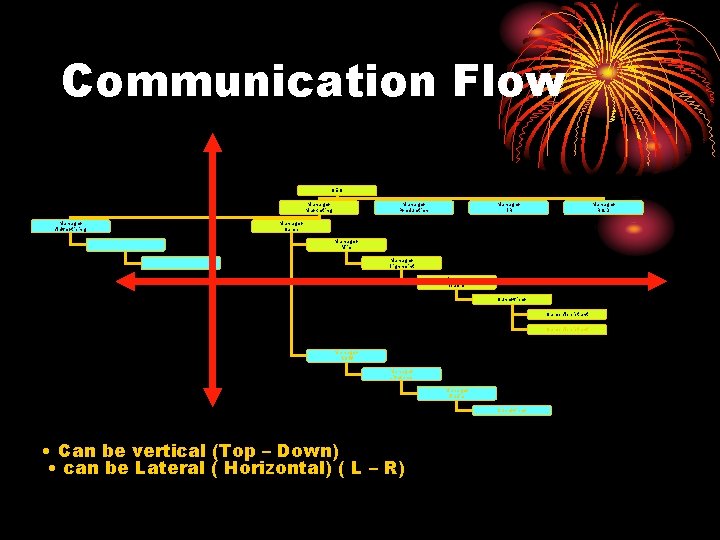
Communication Flow CEO Manager Marketing Manager Advertising Manager Production Manager HR Manager R&D Manager Sales Manager Vic Manager Highpoint Manager Audio Supervisor Sales Assistant Manager NSW Manager Liverpool Manager Audio Supervisor • Can be vertical (Top – Down) • can be Lateral ( Horizontal) ( L – R)
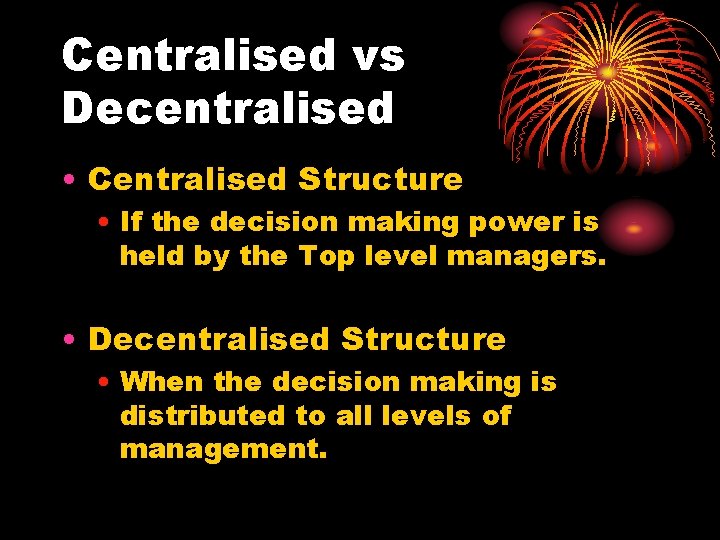
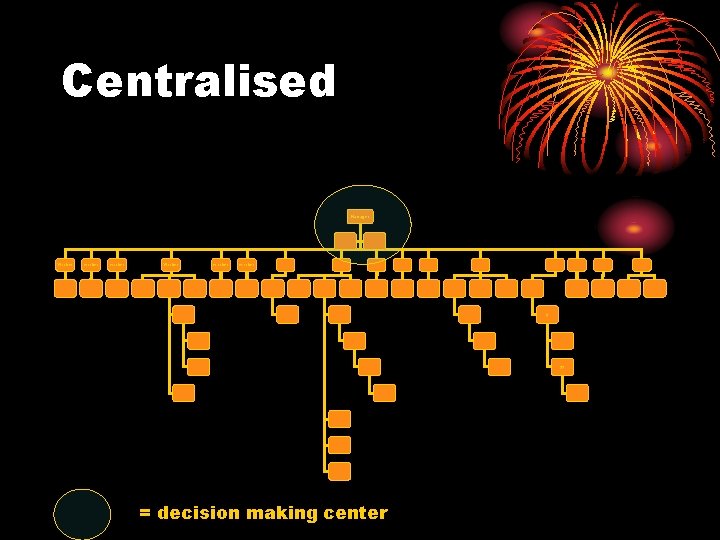
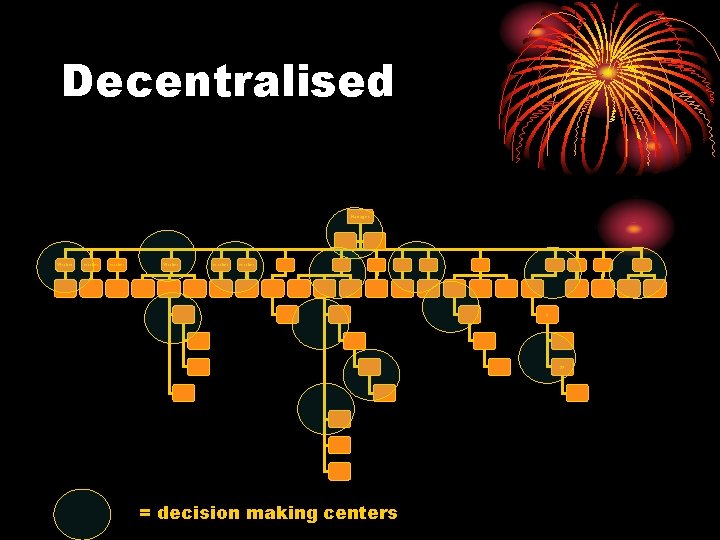
Centralised vs Decentralised • Centralised Structure • If the decision making power is held by the Top level managers. • Decentralised Structure • When the decision making is distributed to all levels of management.
Centralised Manager Worker worker y yy = decision making center
Decentralised Manager Worker worker y yy = decision making centers
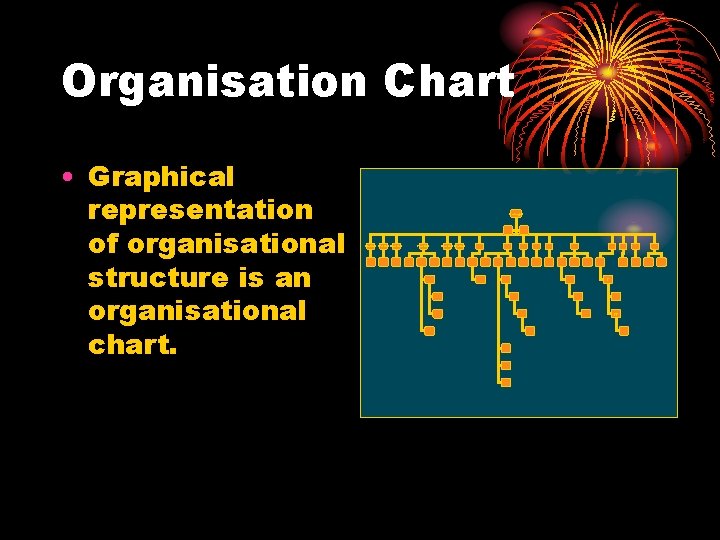
Organisation Chart • Graphical representation of organisational structure is an organisational chart. Manager Worker worker y yy
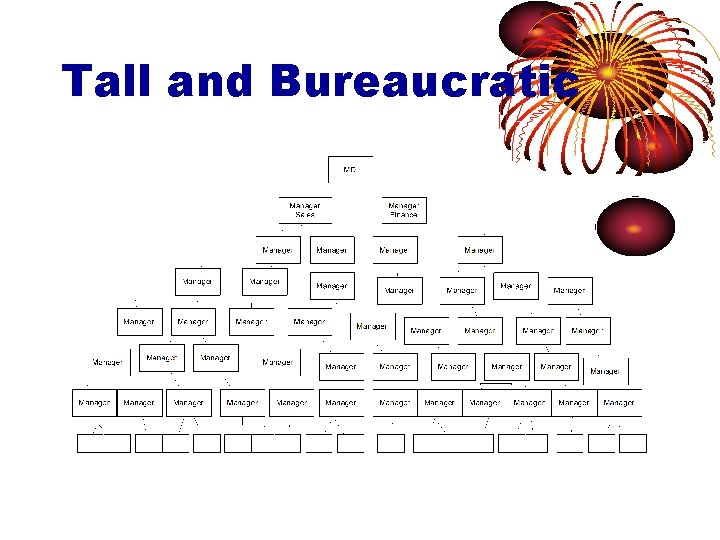
Tall and Bureaucratic
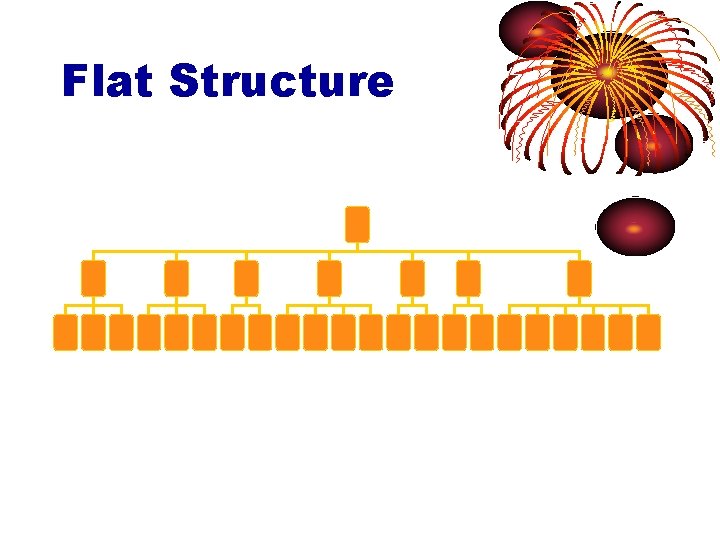
Flat Structure