
Organisational structure Internal organisation of firms In small
- Slides: 14
Organisational structure
Internal organisation of firms In small firms: Each worker may undertake a range of roles The structure may be informal and fluid As firms grow bigger: The roles and responsibilities of each worker must become clearer A more formal structure is necessary
Functional areas A function is the specific job of a person or department. The main functional areas in organisations are: Finance Human resources Sales & marketing Production and operations
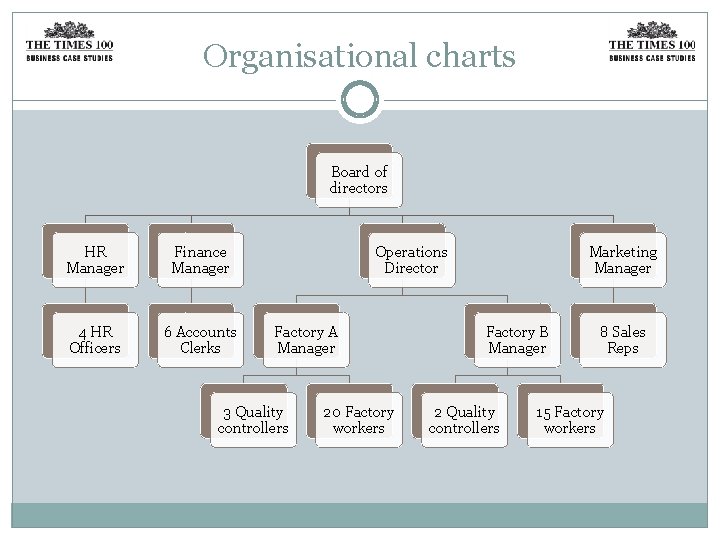
Organisational charts Board of directors HR Manager Finance Manager 4 HR Officers 6 Accounts Clerks Operations Director Factory A Manager 3 Quality controllers 20 Factory workers Marketing Manager Factory B Manager 2 Quality controllers 8 Sales Reps 15 Factory workers
Organisation structure Organisation charts - pictorial representations of the job roles and lines of responsibility within a business. Hierarchy – an organisation structured in layers, with those at the top having greater authority than workers in lower levels
Organisation structure Span of control – the number of workers one manager is directly responsible for Chain of command – the line down which instructions are passed through the layers in the hierarchy
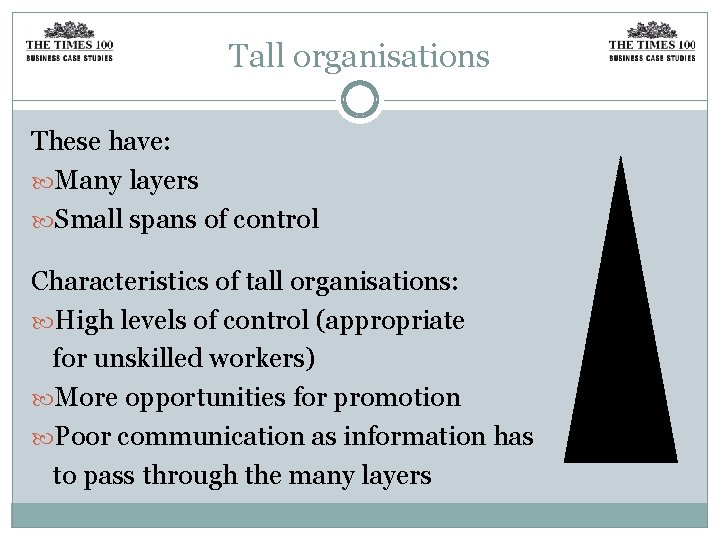
Tall organisations These have: Many layers Small spans of control Characteristics of tall organisations: High levels of control (appropriate for unskilled workers) More opportunities for promotion Poor communication as information has to pass through the many layers
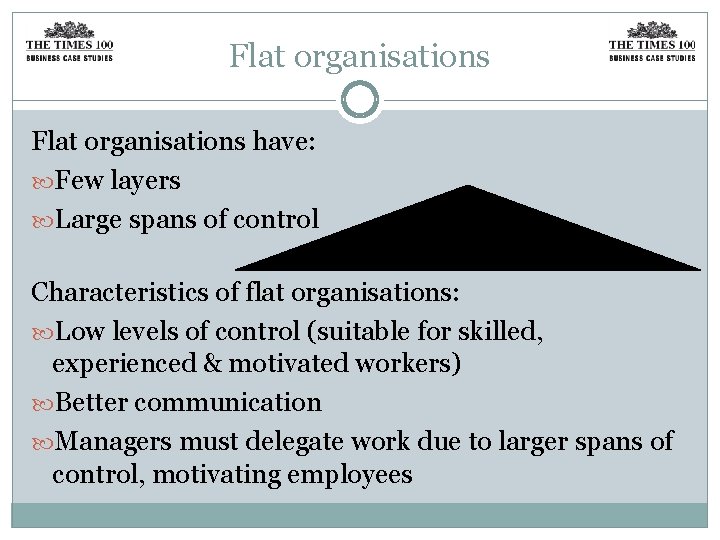
Flat organisations have: Few layers Large spans of control Characteristics of flat organisations: Low levels of control (suitable for skilled, experienced & motivated workers) Better communication Managers must delegate work due to larger spans of control, motivating employees
Delayering involves removing one or more layers of middle managers Delayering can: ü Cut the costs of paying many managers ü Improve communication ü Empower the remaining workers if they are given extra responsibilities X Result in a loss of experienced, skilled managers X Be costly initially in terms of redundancy and training
Matrix structures use a project based approach to organisational design Project teams are made up of representatives from the different functional areas Matrix teams run alongside the traditional functional structure
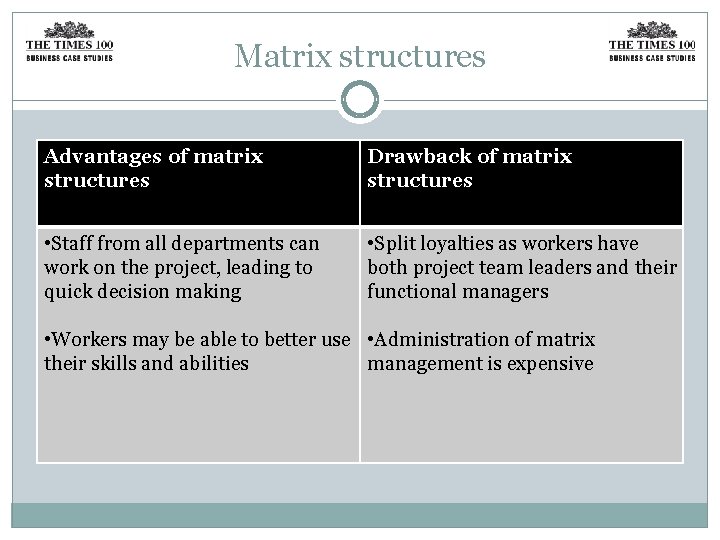
Matrix structures Advantages of matrix structures Drawback of matrix structures • Staff from all departments can work on the project, leading to quick decision making • Split loyalties as workers have both project team leaders and their functional managers • Workers may be able to better use • Administration of matrix their skills and abilities management is expensive
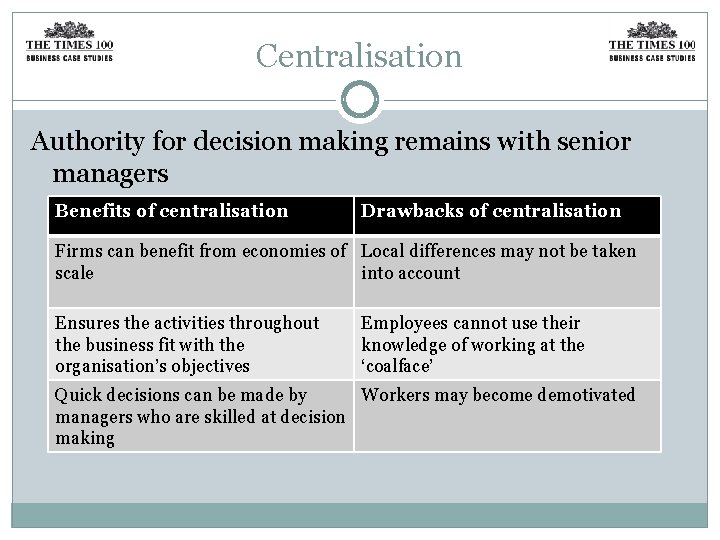
Centralisation Authority for decision making remains with senior managers Benefits of centralisation Drawbacks of centralisation Firms can benefit from economies of Local differences may not be taken scale into account Ensures the activities throughout the business fit with the organisation’s objectives Employees cannot use their knowledge of working at the ‘coalface’ Quick decisions can be made by Workers may become demotivated managers who are skilled at decision making
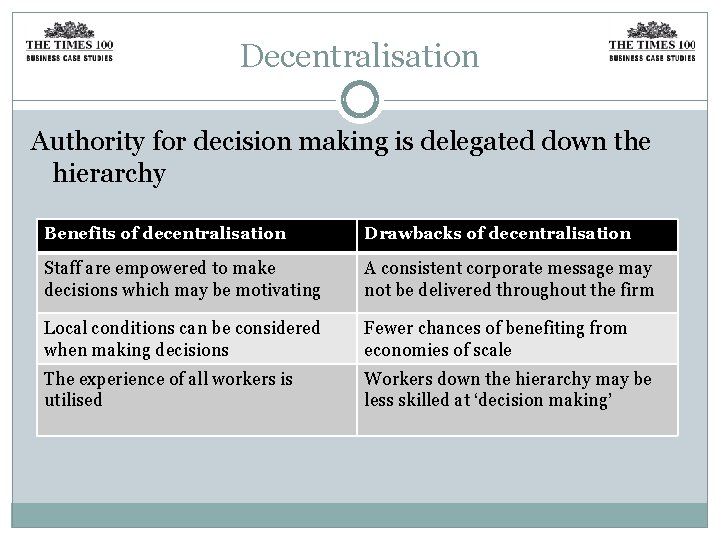
Decentralisation Authority for decision making is delegated down the hierarchy Benefits of decentralisation Drawbacks of decentralisation Staff are empowered to make decisions which may be motivating A consistent corporate message may not be delivered throughout the firm Local conditions can be considered when making decisions Fewer chances of benefiting from economies of scale The experience of all workers is utilised Workers down the hierarchy may be less skilled at ‘decision making’
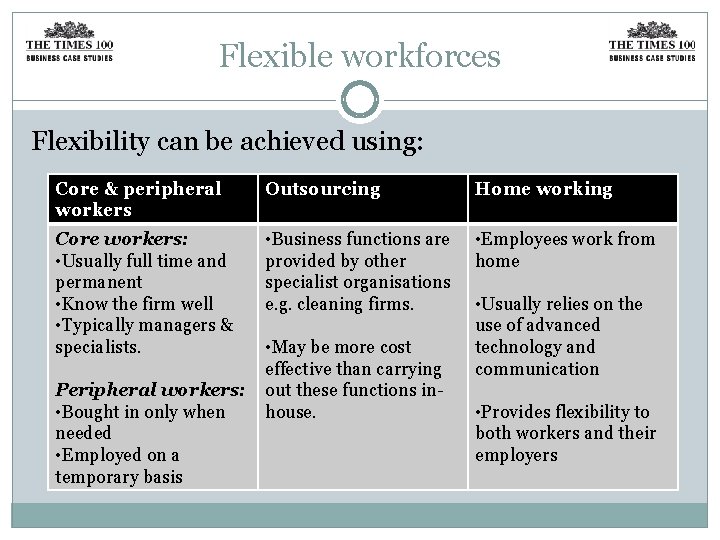
Flexible workforces Flexibility can be achieved using: Core & peripheral workers Outsourcing Home working Core workers: • Usually full time and permanent • Know the firm well • Typically managers & specialists. • Business functions are provided by other specialist organisations e. g. cleaning firms. • Employees work from home Peripheral workers: • Bought in only when needed • Employed on a temporary basis • May be more cost effective than carrying out these functions inhouse. • Usually relies on the use of advanced technology and communication • Provides flexibility to both workers and their employers