
ORGANIC MOLECULES CARBOHYDRATES CARBOHYDRATERICH FOODS White flour Oatmeal
ORGANIC MOLECULES CARBOHYDRATES
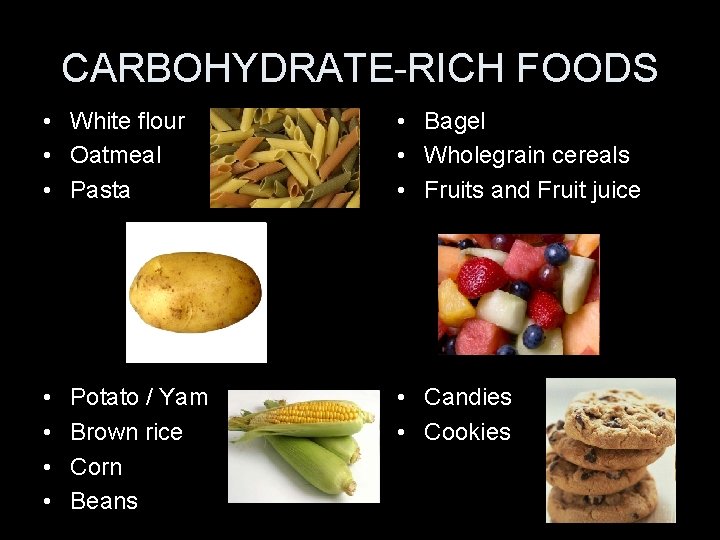
CARBOHYDRATE-RICH FOODS • White flour • Oatmeal • Pasta • Bagel • Wholegrain cereals • Fruits and Fruit juice • • • Candies • Cookies Potato / Yam Brown rice Corn Beans
CARBOHYDRATES • Made of: C, H, O • Monomer (Subunit): monosaccharide • Functions: – Short term energy storage – Makes up cell walls of plants
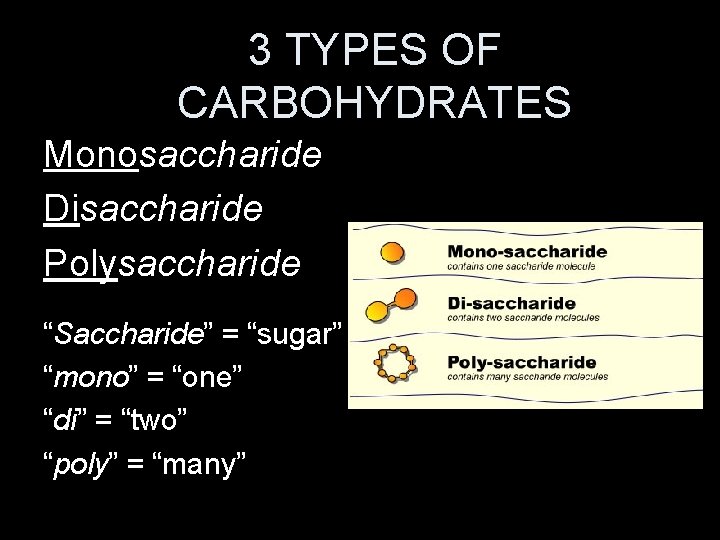
3 TYPES OF CARBOHYDRATES Monosaccharide Disaccharide Polysaccharide “Saccharide” = “sugar” “mono” = “one” “di” = “two” “poly” = “many”
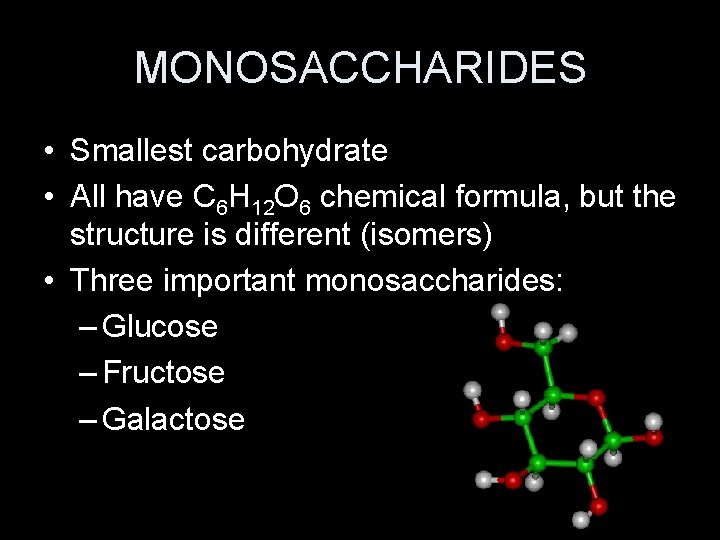
MONOSACCHARIDES • Smallest carbohydrate • All have C 6 H 12 O 6 chemical formula, but the structure is different (isomers) • Three important monosaccharides: – Glucose – Fructose – Galactose
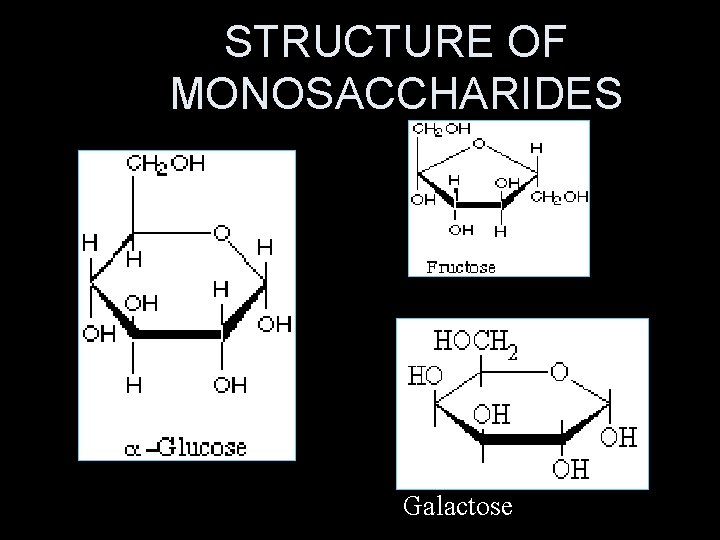
STRUCTURE OF MONOSACCHARIDES H H Galactose
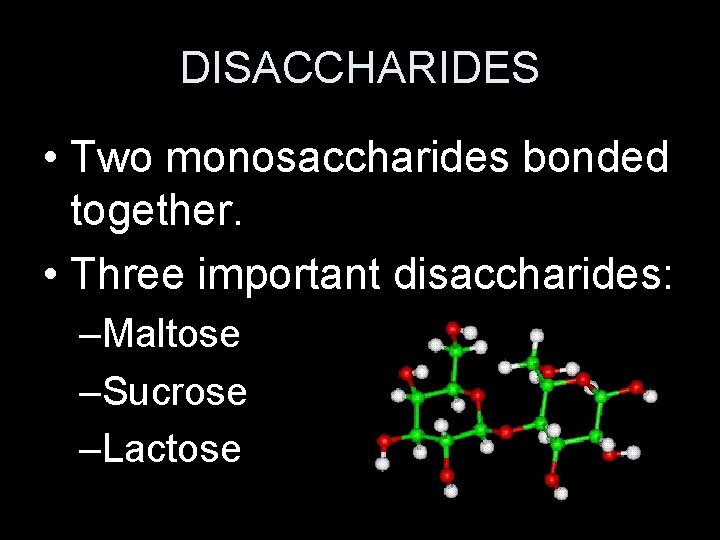
DISACCHARIDES • Two monosaccharides bonded together. • Three important disaccharides: –Maltose –Sucrose –Lactose
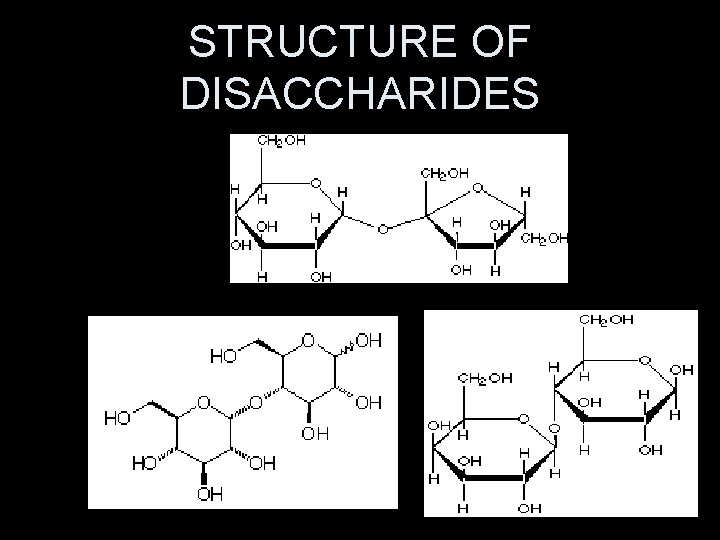
STRUCTURE OF DISACCHARIDES
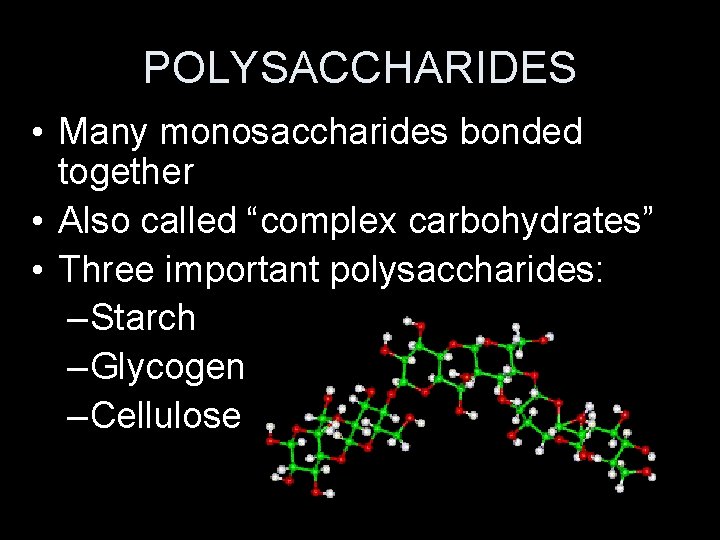
POLYSACCHARIDES • Many monosaccharides bonded together • Also called “complex carbohydrates” • Three important polysaccharides: – Starch – Glycogen – Cellulose
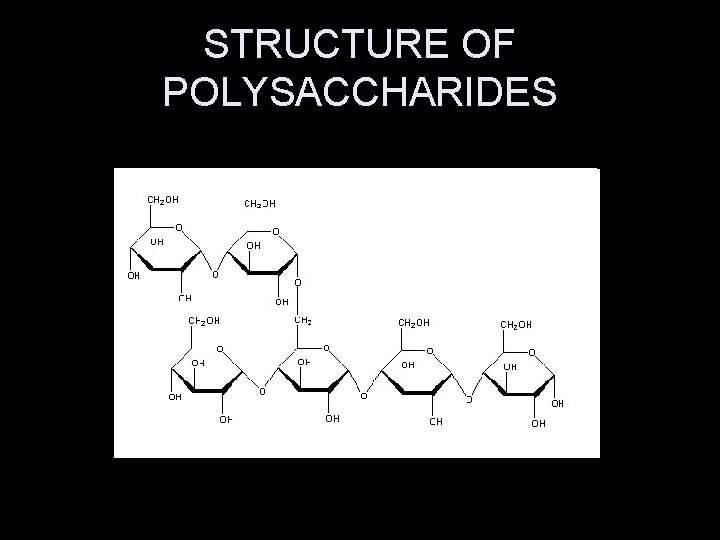
STRUCTURE OF POLYSACCHARIDES
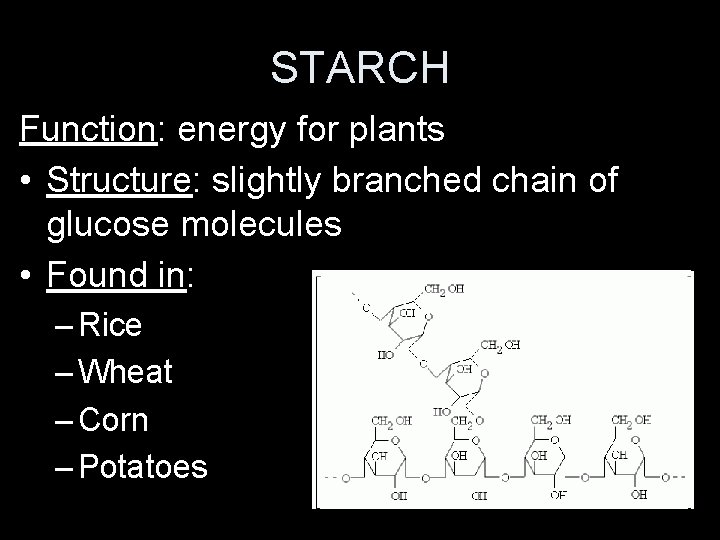
STARCH Function: energy for plants • Structure: slightly branched chain of glucose molecules • Found in: – Rice – Wheat – Corn – Potatoes
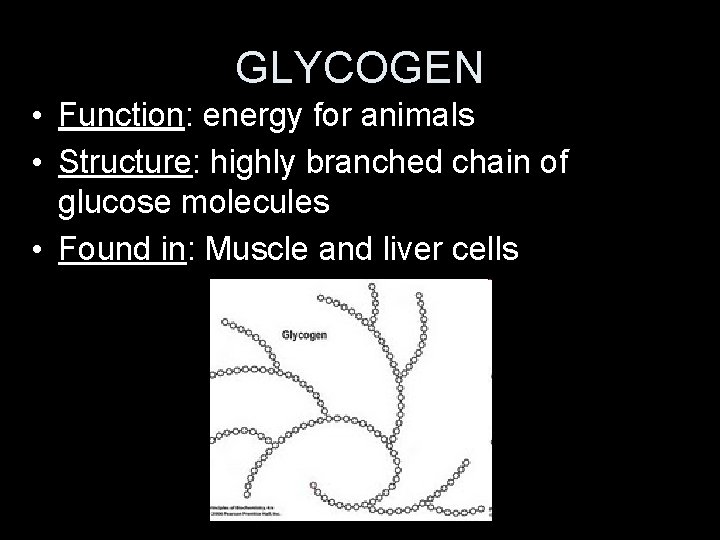
GLYCOGEN • Function: energy for animals • Structure: highly branched chain of glucose molecules • Found in: Muscle and liver cells
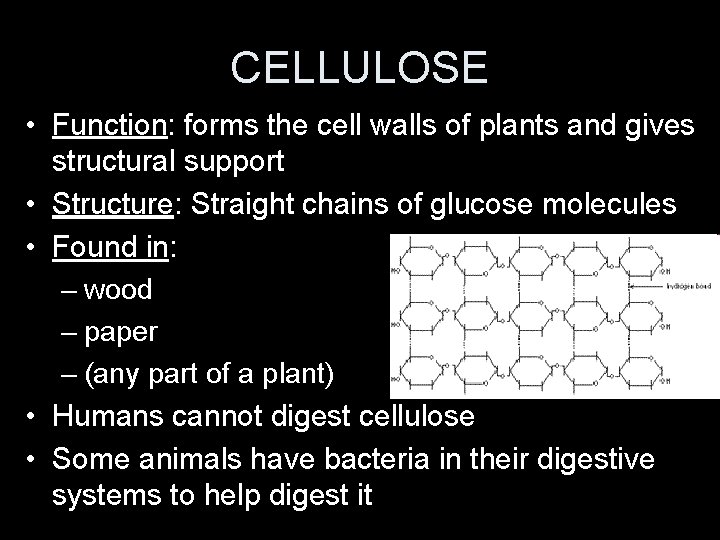
CELLULOSE • Function: forms the cell walls of plants and gives structural support • Structure: Straight chains of glucose molecules • Found in: – wood – paper – (any part of a plant) • Humans cannot digest cellulose • Some animals have bacteria in their digestive systems to help digest it
- Slides: 13