
Organic Molecule Building Block carbohydrates simple sugars lipids
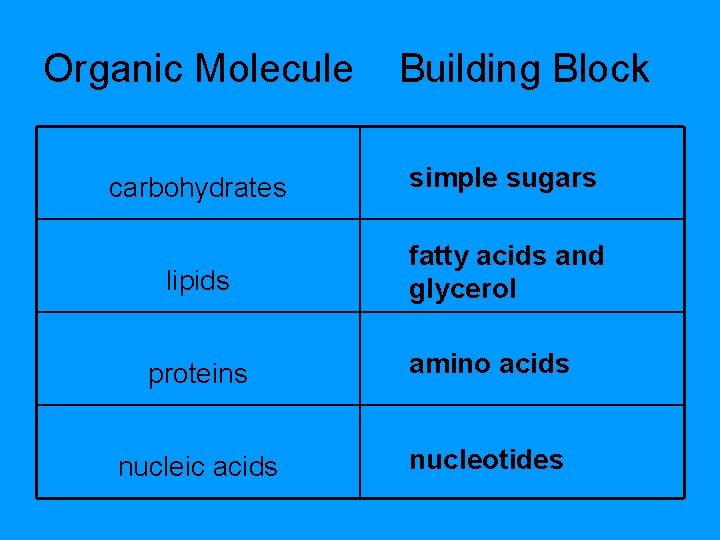
Organic Molecule Building Block carbohydrates simple sugars lipids fatty acids and glycerol proteins amino acids nucleic acids nucleotides
Explain why the possible number of proteins is virtually unlimited.
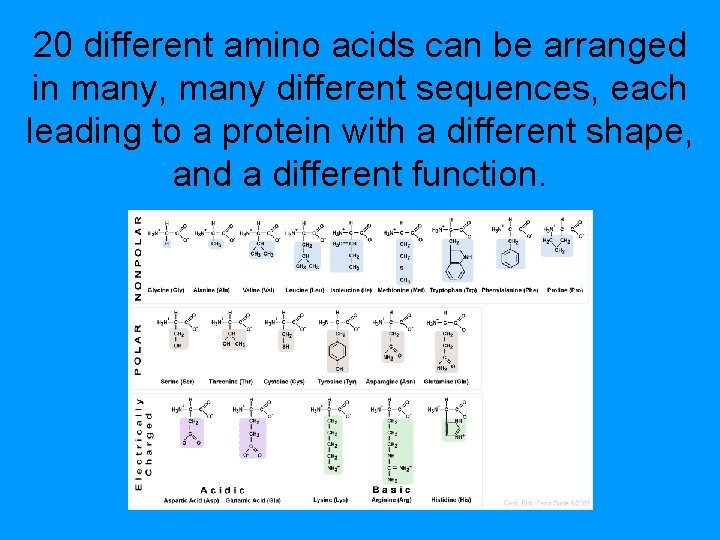
20 different amino acids can be arranged in many, many different sequences, each leading to a protein with a different shape, and a different function.
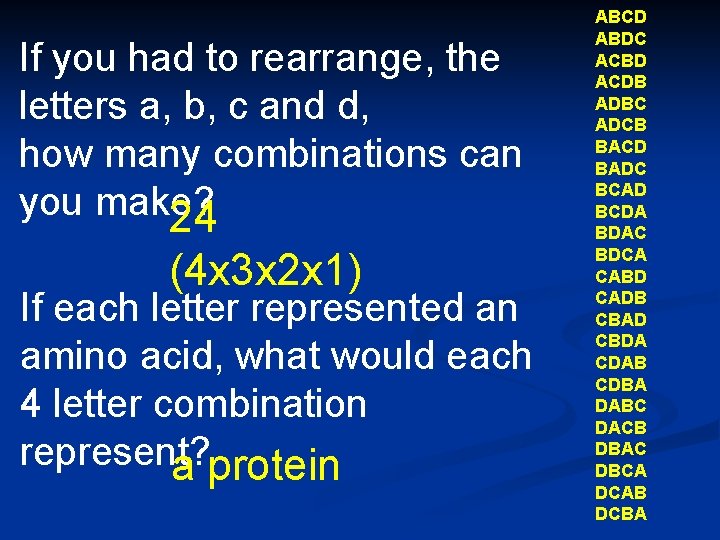
If you had to rearrange, the letters a, b, c and d, how many combinations can you make? 24 (4 x 3 x 2 x 1) If each letter represented an amino acid, what would each 4 letter combination represent? a protein ABCD ABDC ACBD ACDB ADBC ADCB BACD BADC BCAD BCDA BDAC BDCA CABD CADB CBAD CBDA CDAB CDBA DABC DACB DBAC DBCA DCAB DCBA
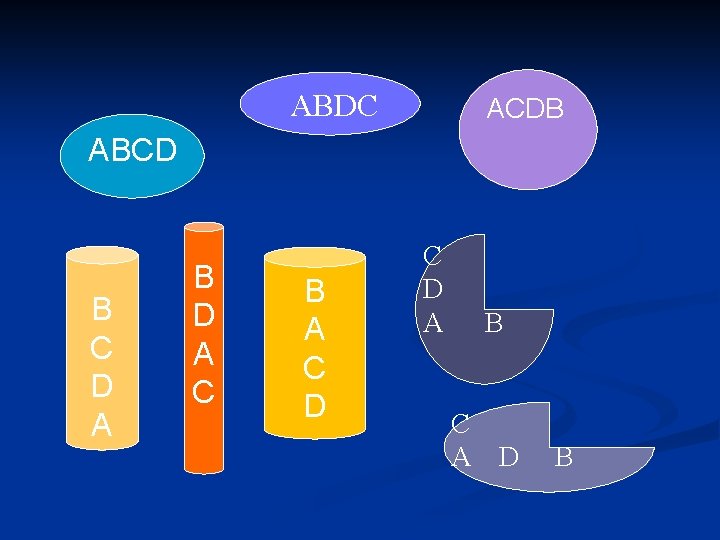
ABDC ACDB ABCD B C D A B D A C B A C D A B C A D B
Why DNA is important to a cell? Be specific! Include the following words in your answer: DNA, enzymes, proteins, amino acids, synthesis, information, chemical reactions
DNA has the information for the synthesis of proteins from amino acids. Some of these proteins are enzymes that control the rate of chemical reactions in a cell.
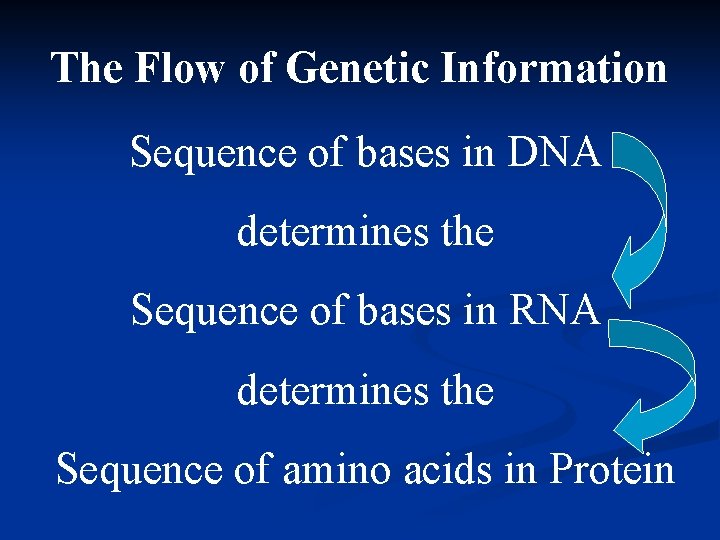
The Flow of Genetic Information Sequence of bases in DNA determines the Sequence of bases in RNA determines the Sequence of amino acids in Protein
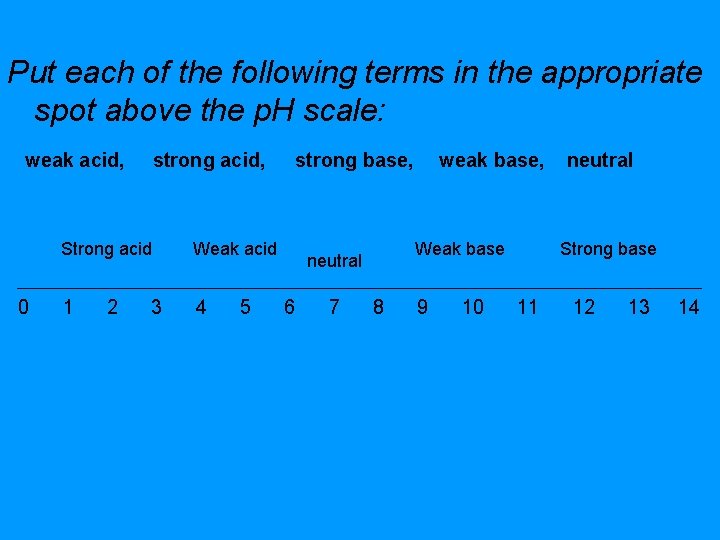
Put each of the following terms in the appropriate spot above the p. H scale: weak acid, strong acid, Strong acid strong base, Weak acid weak base, Weak base neutral Strong base _______________________________________ 0 1 2 3 4 5 6 7 8 9 10 11 12 13 14
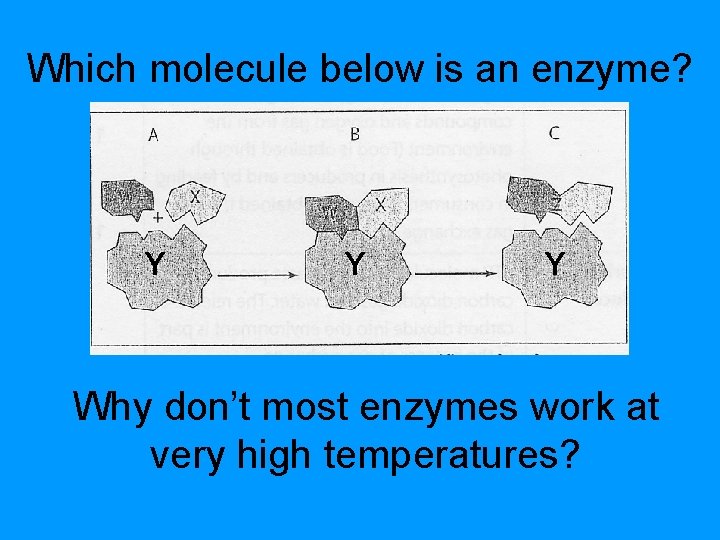
Which molecule below is an enzyme? Y Y Y Why don’t most enzymes work at very high temperatures?
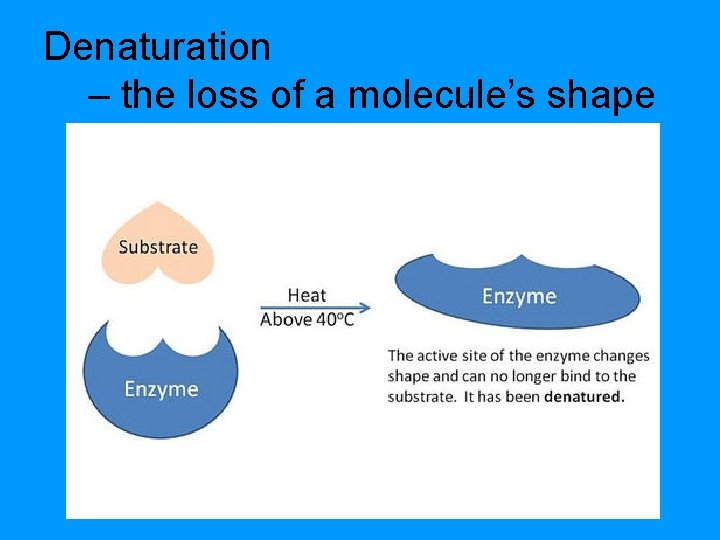
Denaturation – the loss of a molecule’s shape
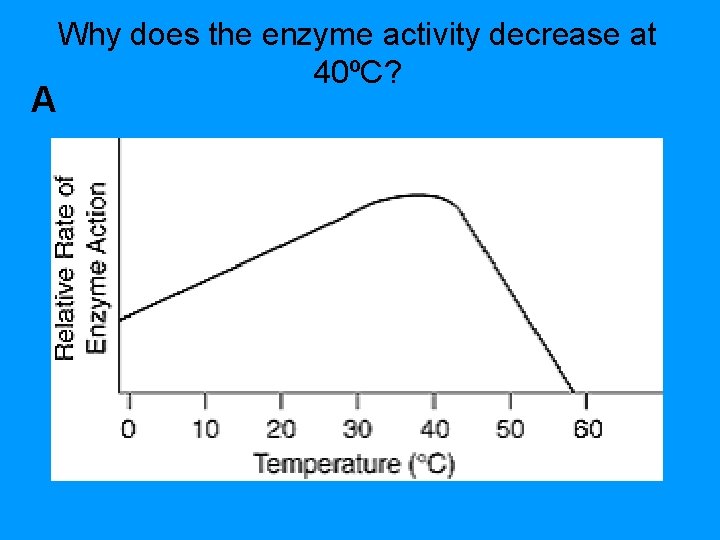
A Why does the enzyme activity decrease at 40ºC?
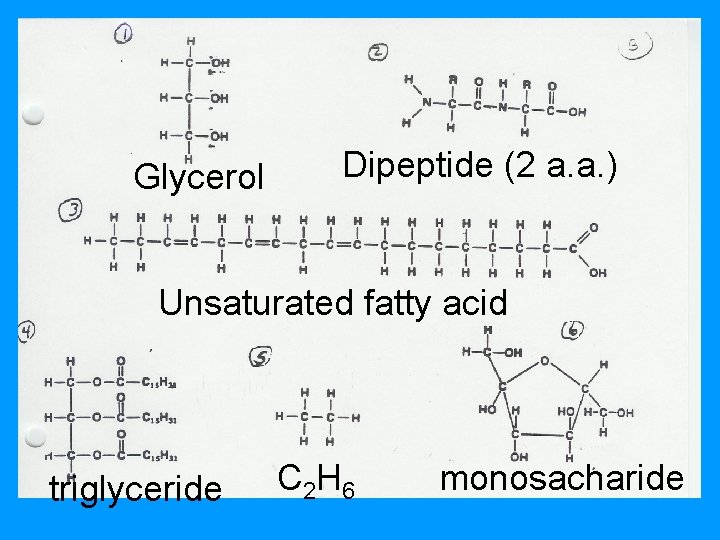
Glycerol Dipeptide (2 a. a. ) Unsaturated fatty acid triglyceride C 2 H 6 monosacharide
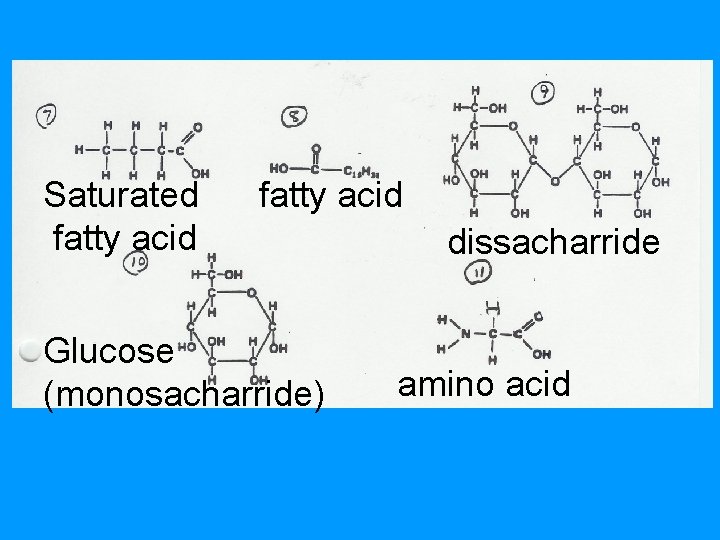
Saturated fatty acid Glucose (monosacharride) dissacharride amino acid
- Slides: 14