
ORGANIC EVOLUTION UNIT VII ORGANIC EVOLUTION ORGANIC EVOLUTION

- Slides: 79
ORGANIC EVOLUTION UNIT VII ORGANIC EVOLUTION
ORGANIC EVOLUTION
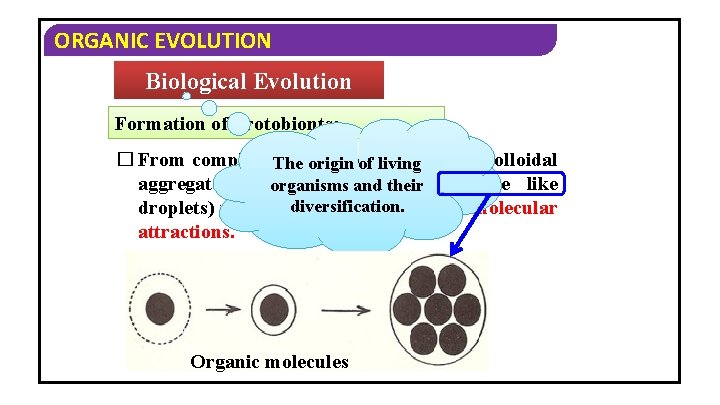
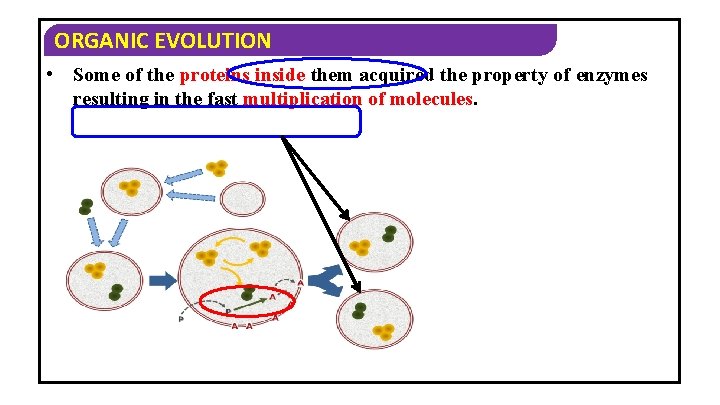
ORGANIC EVOLUTION Biological Evolution Formation of Protobionts: � From complex organic molecules, The origin of living large colloidal aggregates called coacervates organisms and their (bubble like diversification. droplets) were synthesized due to intermolecular attractions. Organic molecules
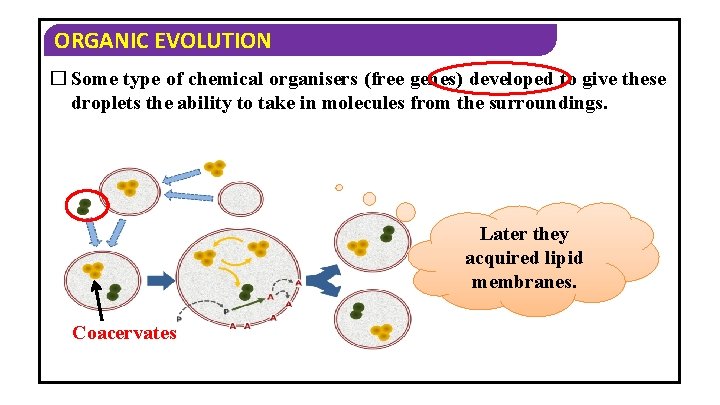
ORGANIC EVOLUTION � Some type of chemical organisers (free genes) developed to give these droplets the ability to take in molecules from the surroundings. Later they acquired lipid membranes. Coacervates
ORGANIC EVOLUTION • Some of the proteins inside them acquired the property of enzymes resulting in the fast multiplication of molecules.
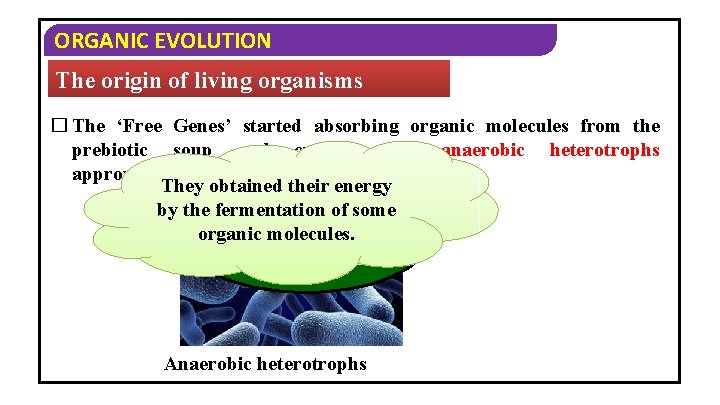
ORGANIC EVOLUTION The origin of living organisms � The ‘Free Genes’ started absorbing organic molecules from the prebiotic soup and evolved into anaerobic heterotrophs approximately three to four billion years ago. They obtained their energy by the fermentation of some The first organic molecules. organisms to evolve on the earth. Anaerobic heterotrophs
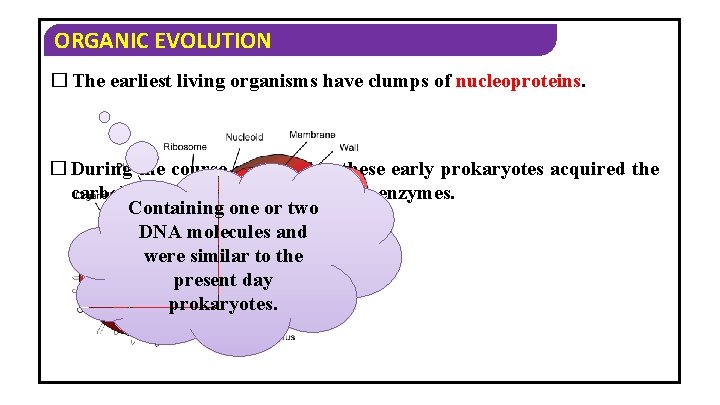
ORGANIC EVOLUTION � The earliest living organisms have clumps of nucleoproteins. � During the course of evolution these early prokaryotes acquired the carbohydrate – synthesis catalysing enzymes. Containing one or two DNA molecules and were similar to the present day prokaryotes.
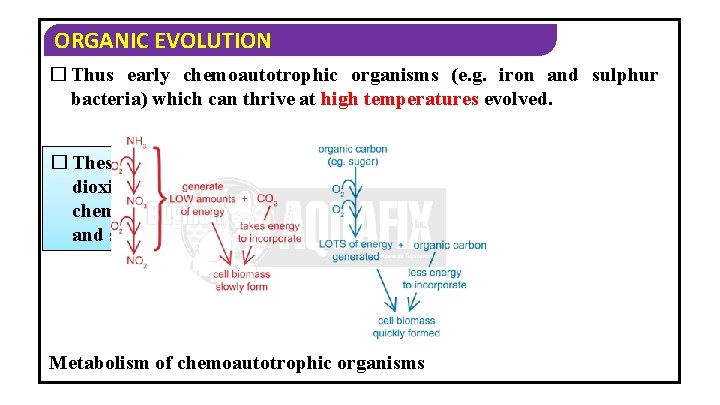
ORGANIC EVOLUTION � Thus early chemoautotrophic organisms (e. g. iron and sulphur bacteria) which can thrive at high temperatures evolved. � These organisms could take carbon dioxide into their bodies and used the chemical energy to create carbohydrates and sugars. Metabolism of chemoautotrophic organisms
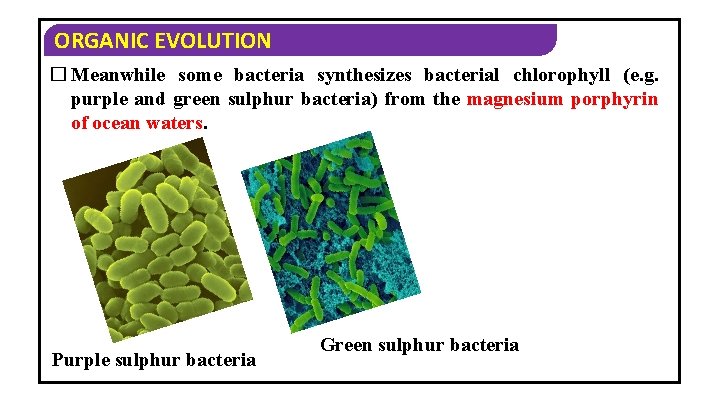
ORGANIC EVOLUTION � Meanwhile some bacteria synthesizes bacterial chlorophyll (e. g. purple and green sulphur bacteria) from the magnesium porphyrin of ocean waters. Purple sulphur bacteria Green sulphur bacteria
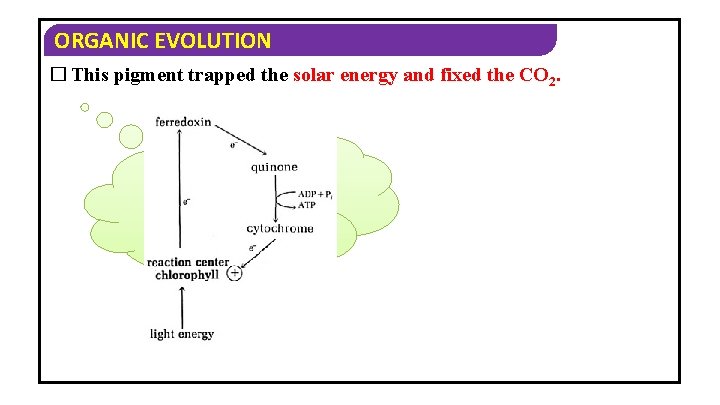
ORGANIC EVOLUTION � This pigment trapped the solar energy and fixed the CO 2. These were the anoxygenic photoautotrophic organisms.
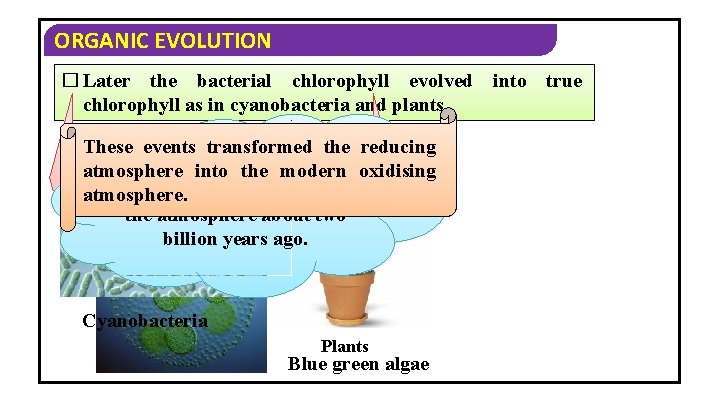
ORGANIC EVOLUTION � Later the bacterial chlorophyll evolved chlorophyll as in cyanobacteria and plants. events oxygenic transformed the reducing As. These a result, photo – It resulted in the increase of atmosphereorganisms into the modern oxidising autotrophic (like blue large quantity of oxygen in atmosphere. green algae) evolved. the atmosphere about two billion years ago. Cyanobacteria Plants Blue green algae into true
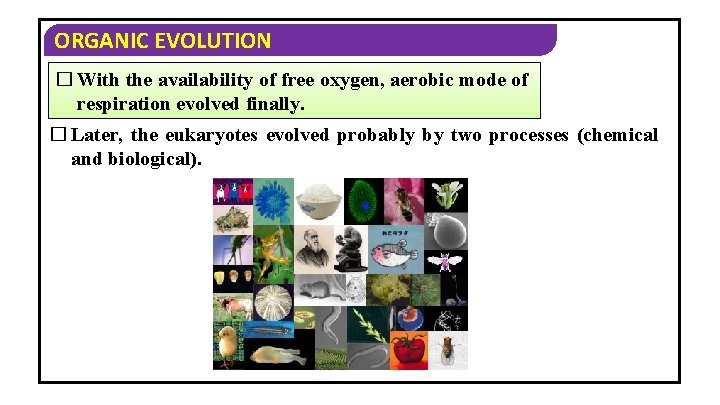
ORGANIC EVOLUTION � With the availability of free oxygen, aerobic mode of respiration evolved finally. � Later, the eukaryotes evolved probably by two processes (chemical and biological).
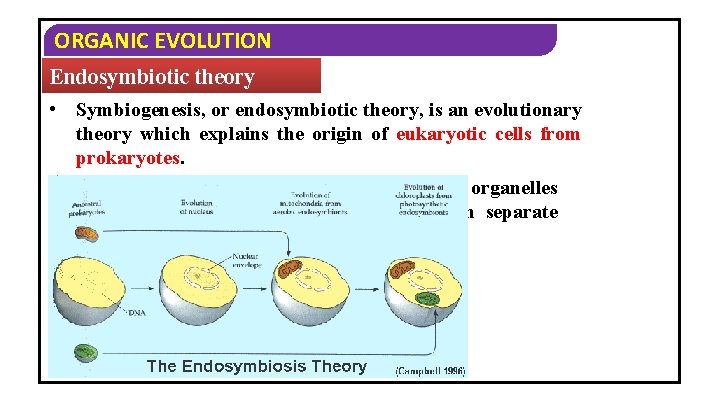
ORGANIC EVOLUTION Endosymbiotic theory • Symbiogenesis, or endosymbiotic theory, is an evolutionary theory which explains the origin of eukaryotic cells from prokaryotes. • It states that several key organelles of eukaryotes originated as symbiosis between separate single-celled organisms.
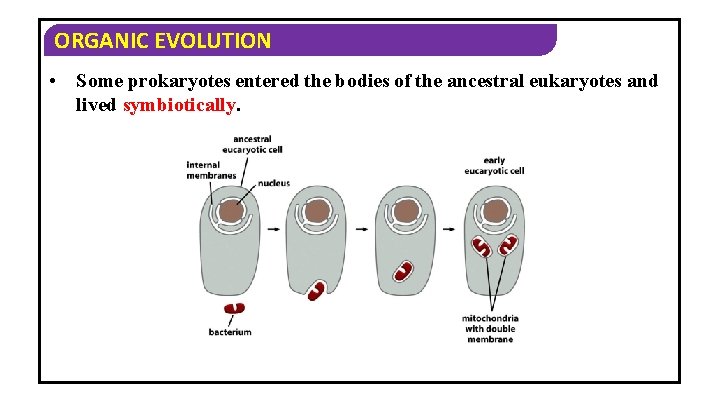
ORGANIC EVOLUTION • Some prokaryotes entered the bodies of the ancestral eukaryotes and lived symbiotically.
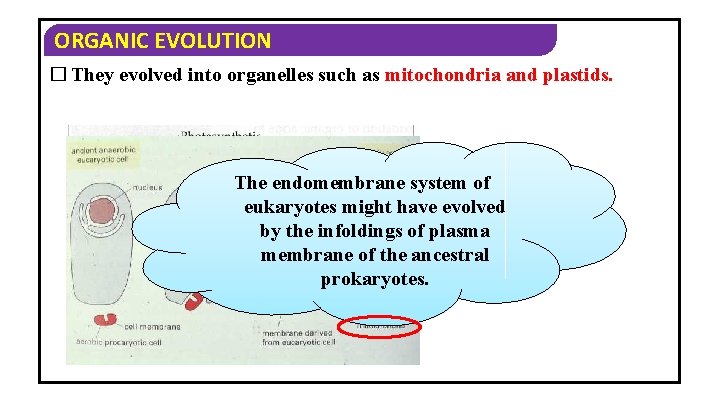
ORGANIC EVOLUTION � They evolved into organelles such as mitochondria and plastids. The endomembrane system of eukaryotes might have evolved by the infoldings of plasma membrane of the ancestral prokaryotes.
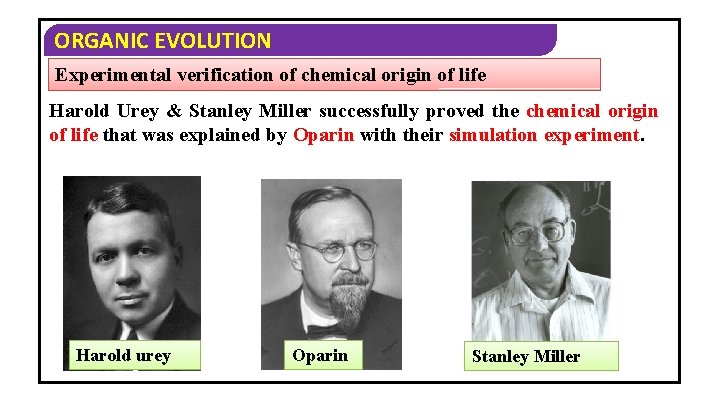
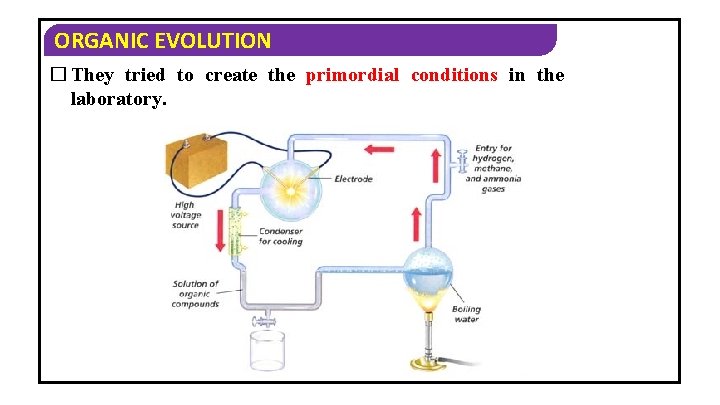
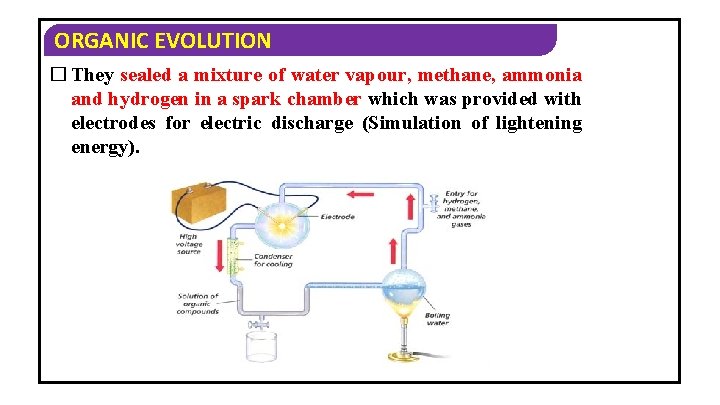
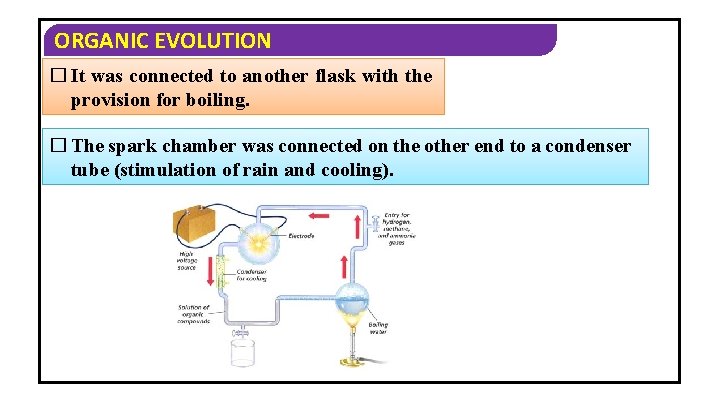
ORGANIC EVOLUTION Experimental verification of chemical origin of life Harold Urey & Stanley Miller successfully proved the chemical origin of life that was explained by Oparin with their simulation experiment. Harold urey Oparin Stanley Miller
ORGANIC EVOLUTION � They tried to create the primordial conditions in the laboratory.
ORGANIC EVOLUTION � They sealed a mixture of water vapour, methane, ammonia and hydrogen in a spark chamber which was provided with electrodes for electric discharge (Simulation of lightening energy).
ORGANIC EVOLUTION � It was connected to another flask with the provision for boiling. � The spark chamber was connected on the other end to a condenser tube (stimulation of rain and cooling).
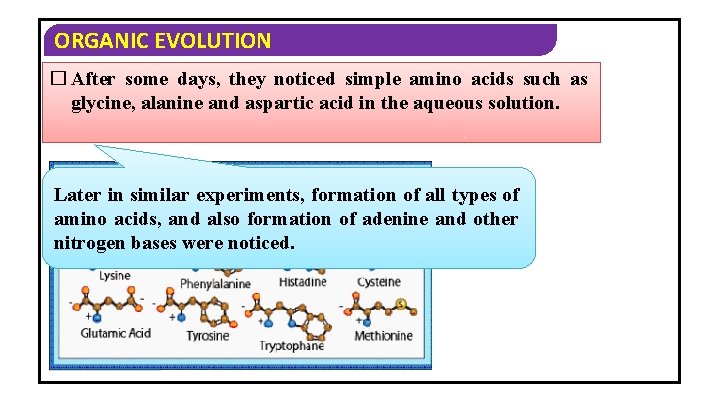
ORGANIC EVOLUTION � After some days, they noticed simple amino acids such as glycine, alanine and aspartic acid in the aqueous solution. Later in similar experiments, formation of all types of amino acids, and also formation of adenine and other nitrogen bases were noticed.
ORGANIC EVOLUTION 1. The scientist who described the ‘origin of life’ in his book “ The origin of life on the earth”… 1) Haldane 2) H. Urey 3) Stanley miller 4) A. I. Oparin MCQS
ORGANIC EVOLUTION 2. Chemical origin of life was experimentally supported by. …… 1) Oparin and Haldane 2) Urey and miller 3) Francesco Redi Spallanzani 4) Thales and Plato
ORGANIC EVOLUTION 3. The gaseous mixture sealed by miller in the spark chamber… 1) CH 4 + NH 3 + H 2 + water 2) CH 4 + HN 3 + H 2 + water 3) CH 2 + NH 3 + H 2 + water 4) All the above
ORGANIC EVOLUTION 4. The primitive ocean is described as the hot dilute or prebiotic soup by. . …… 1) A. I Oparin 2) Miller 3) Haldane 4) Urey
ORGANIC EVOLUTION
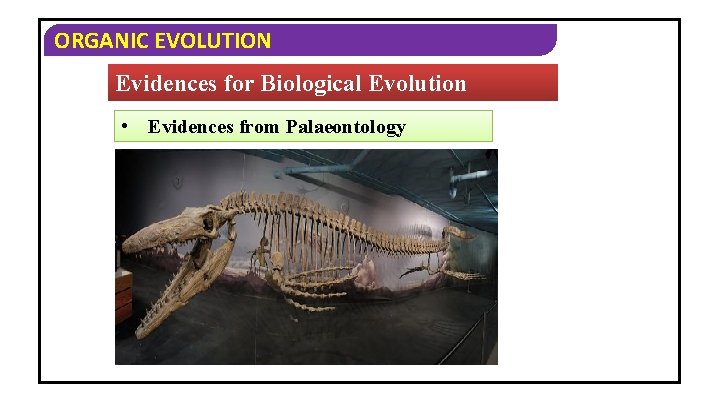
ORGANIC EVOLUTION Evidences for Biological Evolution • Evidences from Palaeontology
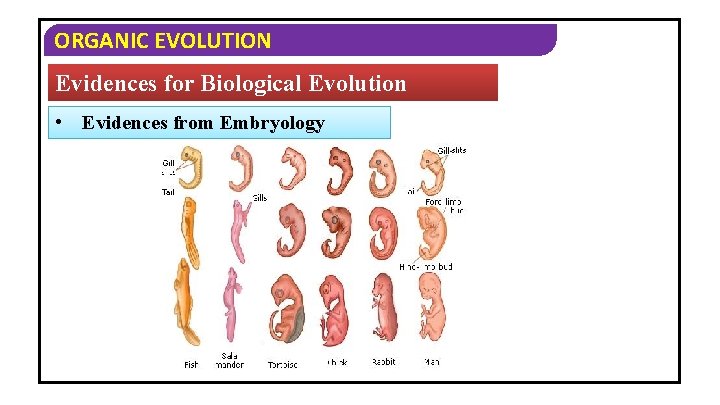
ORGANIC EVOLUTION Evidences for Biological Evolution • Evidences from Embryology
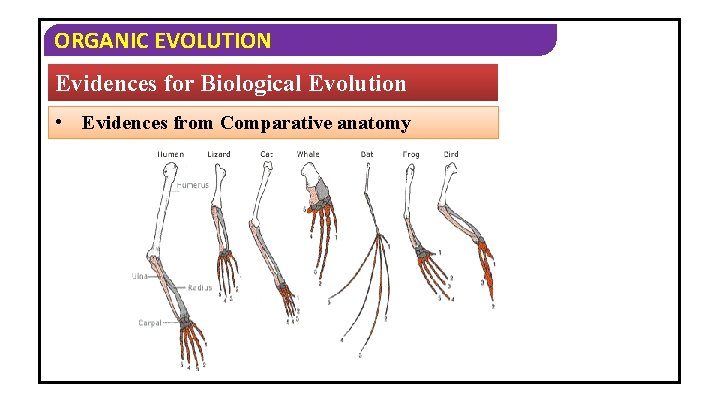
ORGANIC EVOLUTION Evidences for Biological Evolution • Evidences from Comparative anatomy
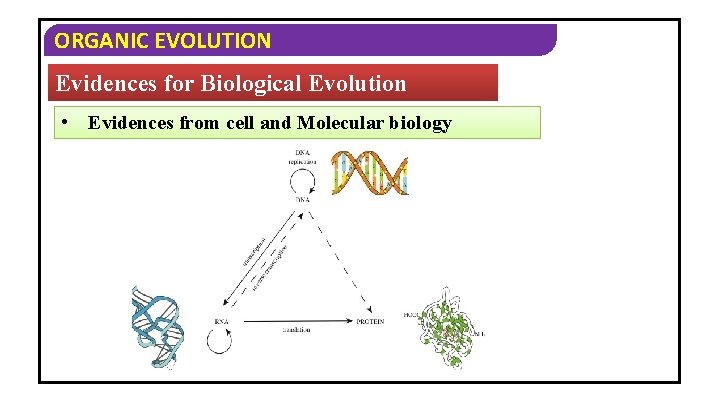
ORGANIC EVOLUTION Evidences for Biological Evolution • Evidences from cell and Molecular biology
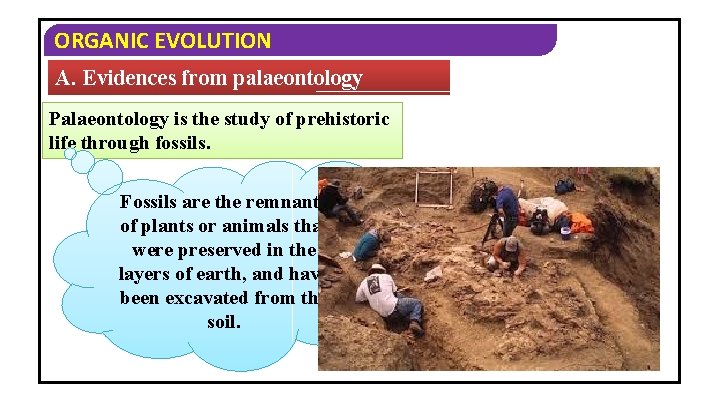
ORGANIC EVOLUTION A. Evidences from palaeontology Palaeontology is the study of prehistoric life through fossils. Fossils are the remnants of plants or animals that were preserved in the layers of earth, and have been excavated from the soil.
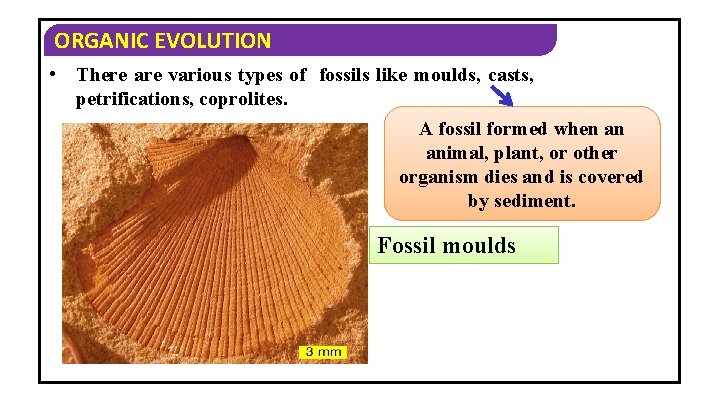
ORGANIC EVOLUTION • There are various types of fossils like moulds, casts, petrifications, coprolites. A fossil formed when an animal, plant, or other organism dies and is covered by sediment. Fossil moulds
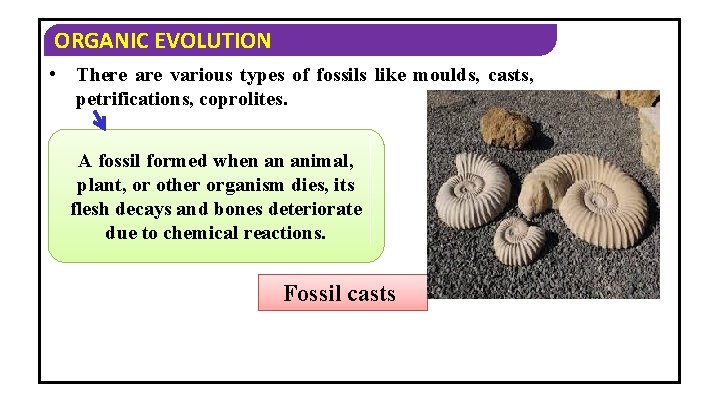
ORGANIC EVOLUTION • There are various types of fossils like moulds, casts, petrifications, coprolites. A fossil formed when an animal, plant, or other organism dies, its flesh decays and bones deteriorate due to chemical reactions. Fossil casts
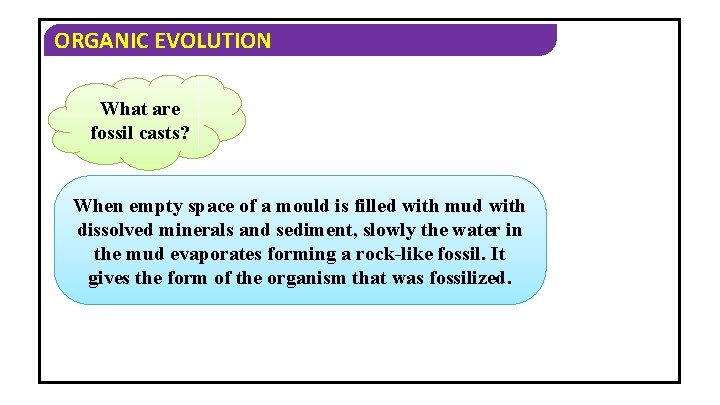
ORGANIC EVOLUTION What are fossil casts? When empty space of a mould is filled with mud with dissolved minerals and sediment, slowly the water in the mud evaporates forming a rock-like fossil. It gives the form of the organism that was fossilized.
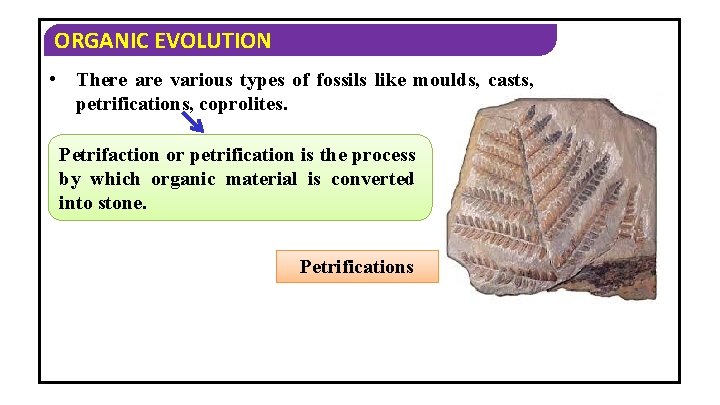
ORGANIC EVOLUTION • There are various types of fossils like moulds, casts, petrifications, coprolites. Petrifaction or petrification is the process by which organic material is converted into stone. Petrifications
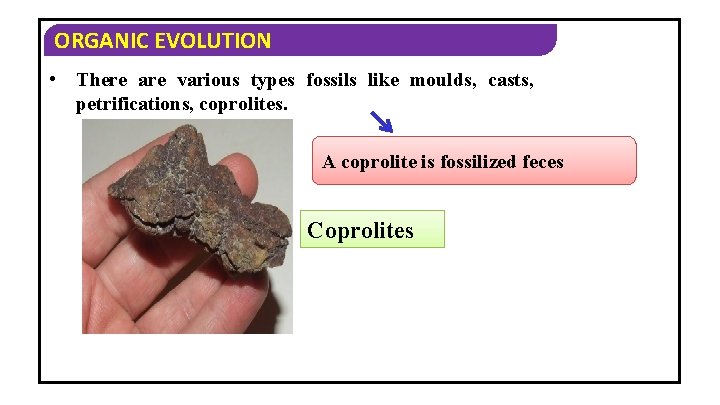
ORGANIC EVOLUTION • There are various types fossils like moulds, casts, petrifications, coprolites. A coprolite is fossilized feces Coprolites
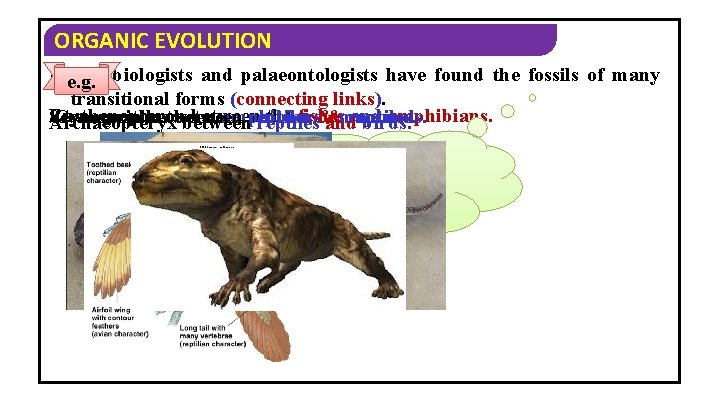
ORGANIC EVOLUTION �e. g. The biologists and palaeontologists have found the fossils of many transitional forms (connecting links). Eusthenopteron between the fishes and amphibians. Seymouria Cynognathus between amphibians reptiles &and &mammals. reptiles. Archaeopteryx between reptiles birds. These link all the major groups of vertebrates.
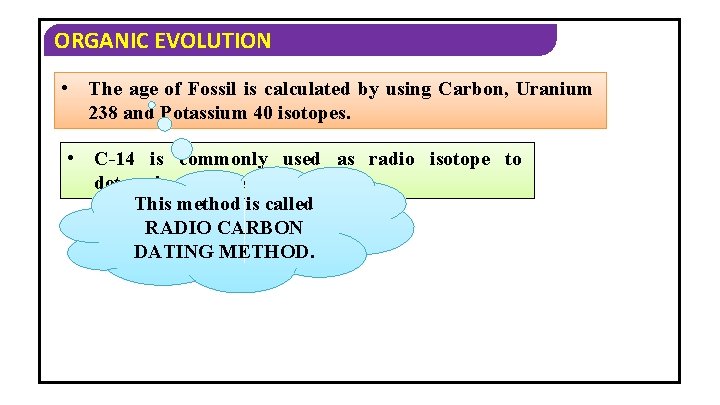
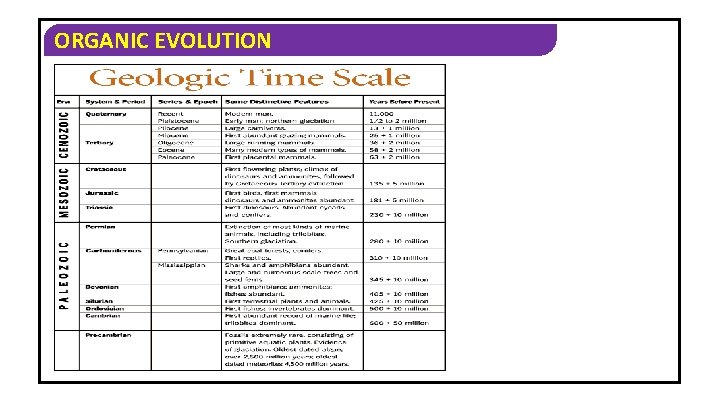
ORGANIC EVOLUTION • The age of Fossil is calculated by using Carbon, Uranium 238 and Potassium 40 isotopes. • C-14 is commonly used as radio isotope to determine the age. This method is called RADIO CARBON DATING METHOD.
ORGANIC EVOLUTION
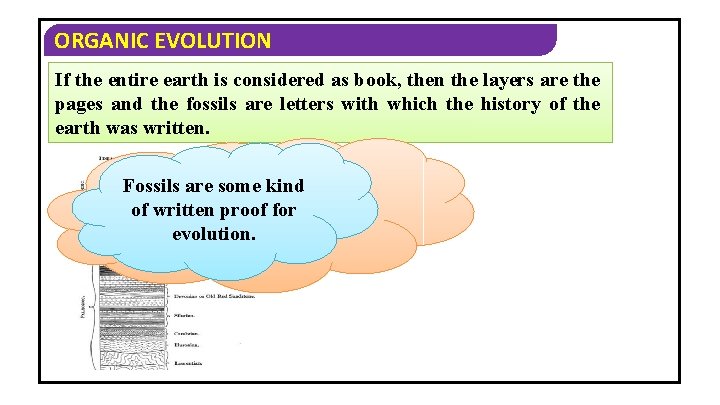
ORGANIC EVOLUTION If the entire earth is considered as book, then the layers are the pages and the fossils are letters with which the history of the earth was written. Hence, the fossils Fossils are some kind are considered the Documentary of written proof for Evidences in support of evolution.
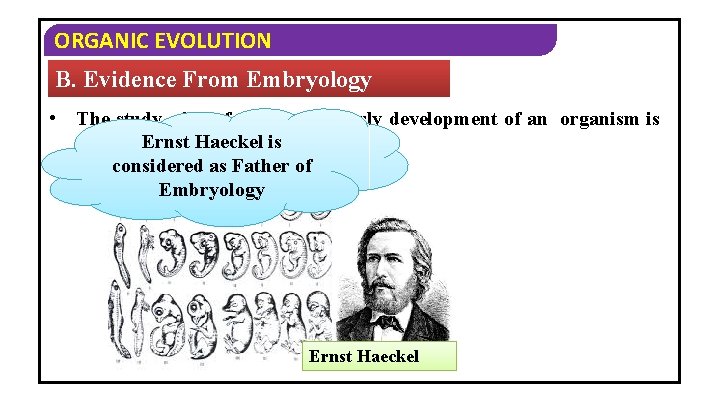
ORGANIC EVOLUTION B. Evidence From Embryology • The study of the formation & early development of an organism is Ernst Haeckel is called EMBRYOLOGY. considered as Father of Embryology Ernst Haeckel
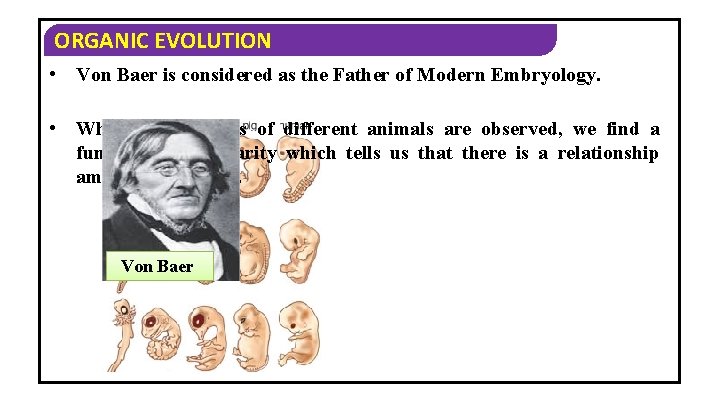
ORGANIC EVOLUTION • Von Baer is considered as the Father of Modern Embryology. • When the embryos of different animals are observed, we find a fundamental similarity which tells us that there is a relationship among the animals. Von Baer
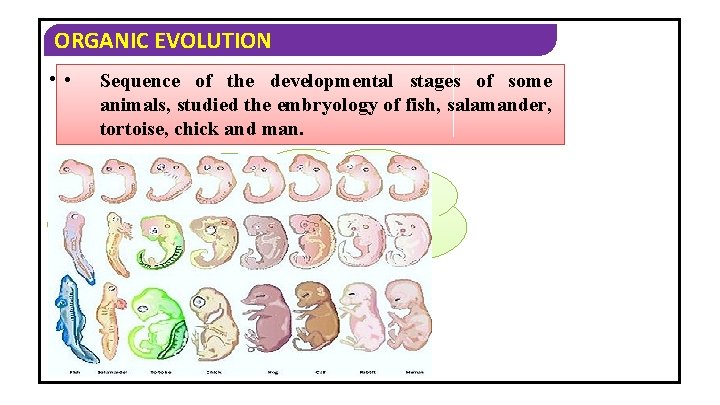
ORGANIC EVOLUTION • • The observation of Von Baer. Sequence of the developmental stages of some animals, studied the embryology of fish, salamander, tortoise, chick and man. Recapitulation of certain Ancestral features during Embryonic development.
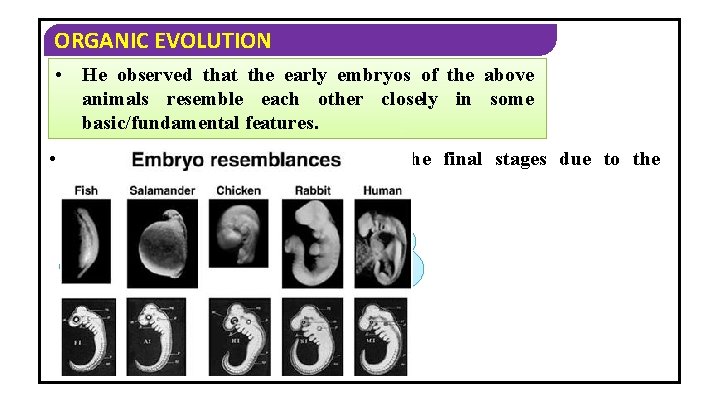
ORGANIC EVOLUTION • • He observed that the early embryos of the above animals resemble each other closely in some basic/fundamental features. However, these embryos differ in the final stages due to the formation of specialized characters. It indicates that the above animals have a common ancestor.
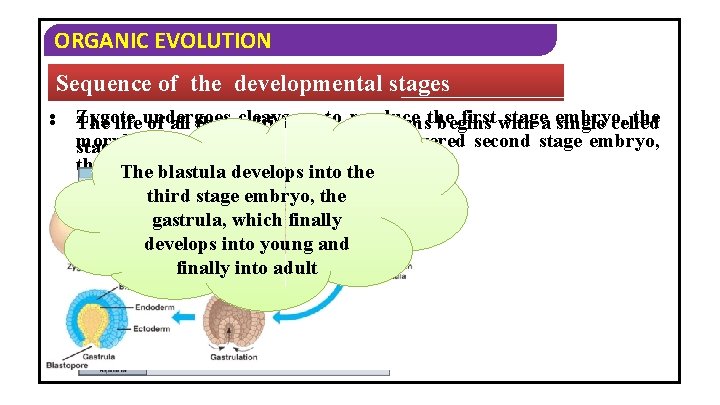
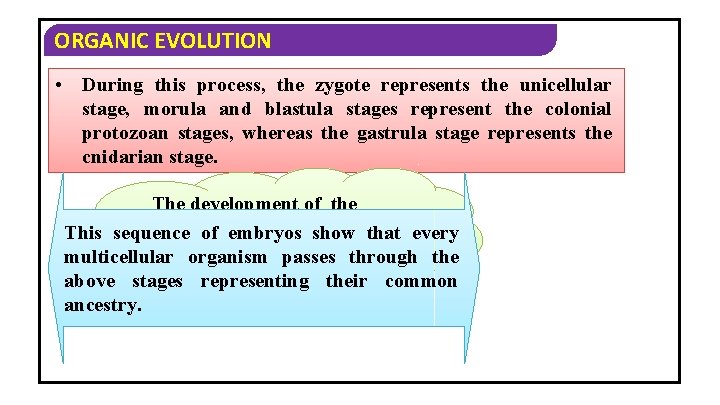
ORGANIC EVOLUTION Sequence of the developmental stages • • Zygote cleavages to organisms produce the first with stagea embryo, the The life undergoes of all the multicellular begins single celled morula, develops into a single layered second stage embryo, stage, thewhich zygote. the blastula. The blastula develops into the third stage embryo, the gastrula, which finally develops into young and finally into adult
ORGANIC EVOLUTION • During this process, the zygote represents the unicellular stage, morula and blastula stages represent the colonial protozoan stages, whereas the gastrula stage represents the cnidarian stage. The development of the embryos of different This sequence of embryos show that every organisms differspasses after the multicellular organism through the stage. their common above stages gastrula representing ancestry.
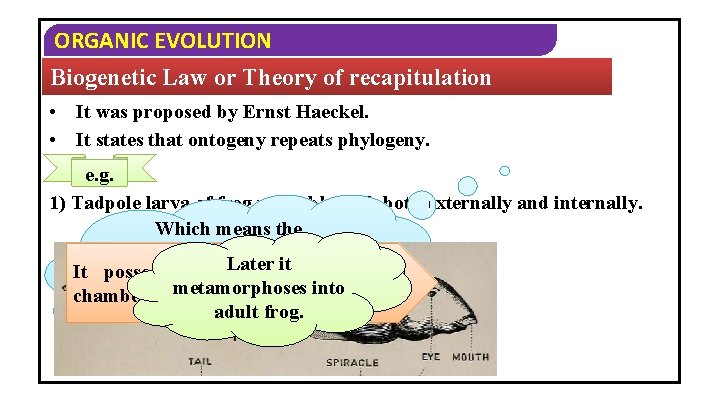
ORGANIC EVOLUTION Biogenetic Law or Theory of recapitulation • • It was proposed by Ernst Haeckel. It states that ontogeny repeats phylogeny. e. g. 1) Tadpole larva of frog resembles fish both externally and internally. Which means the developmental history of an Latergills it It possesses a repeats tail, organism the and two metamorphoses chambered heart like that of ofinto a fish. evolutionary history its adult frog. ancestor
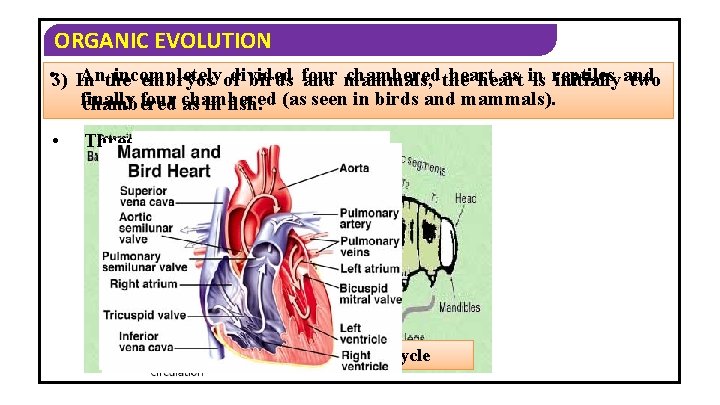
ORGANIC EVOLUTION • 3) Anthe incompletely divided chambered the heart as in reptiles 2) Caterpillar In embryos larva of of birds butterfour and fly recapitulates mammals, its heart closest is ancestor, initially and two the finally chambered annelidfour chambered in body as inform. fish. (as seen in birds and mammals). • Three chambered as in amphibians. Annelid Caterpillar larva of butterfly Butterfly life cycle
ORGANIC EVOLUTION 1. Biogenetic Law or Theory of Recapitulation was proposed by… 1) Darwin 2) Lamarck 3) Ernst Haeckel 4) None
ORGANIC EVOLUTION 2. Father of modern Embryology is. …… 1) Von Baer 2) Spencer 3) More 4) Haeckel
ORGANIC EVOLUTION
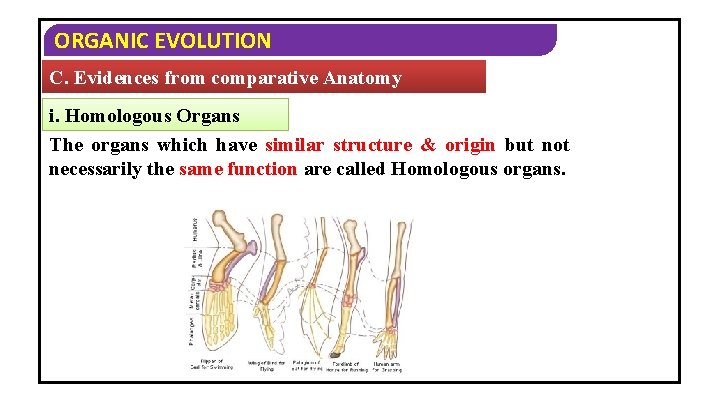
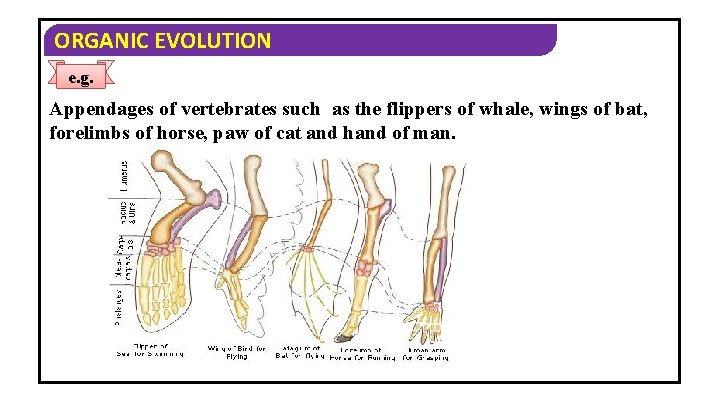
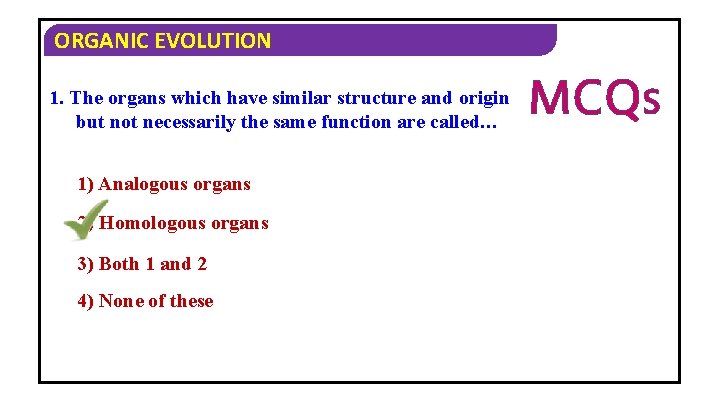
ORGANIC EVOLUTION C. Evidences from comparative Anatomy i. Homologous Organs The organs which have similar structure & origin but not necessarily the same function are called Homologous organs.
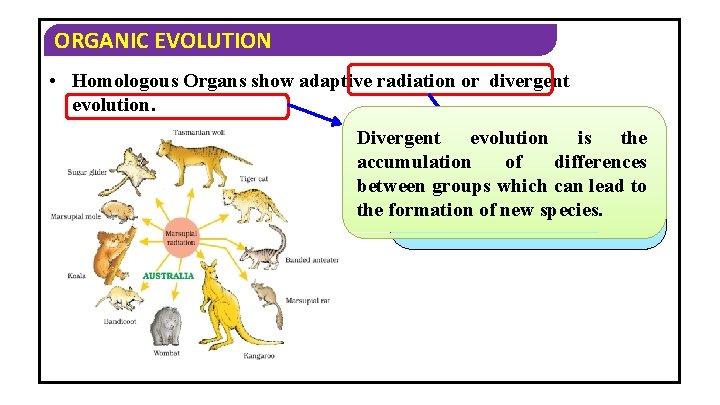
ORGANIC EVOLUTION • Homologous Organs show adaptive radiation or divergent evolution. Divergent evolution is the When the animals of a accumulation of differences certain habitat enter into between groups which can lead to different habitats, they the formation of new species. evolve into different forms.
ORGANIC EVOLUTION e. g. Appendages of vertebrates such as the flippers of whale, wings of bat, forelimbs of horse, paw of cat and hand of man.
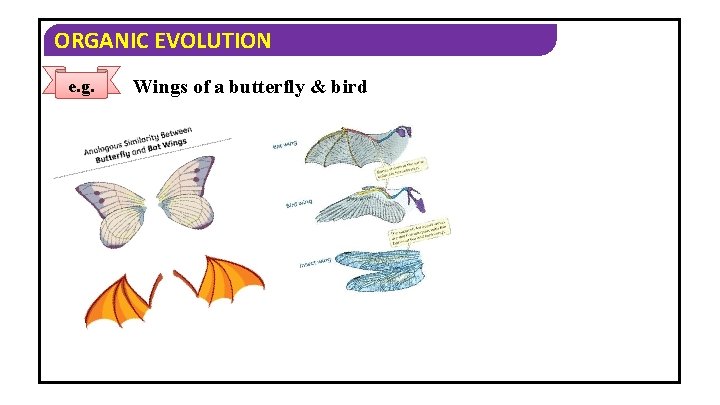
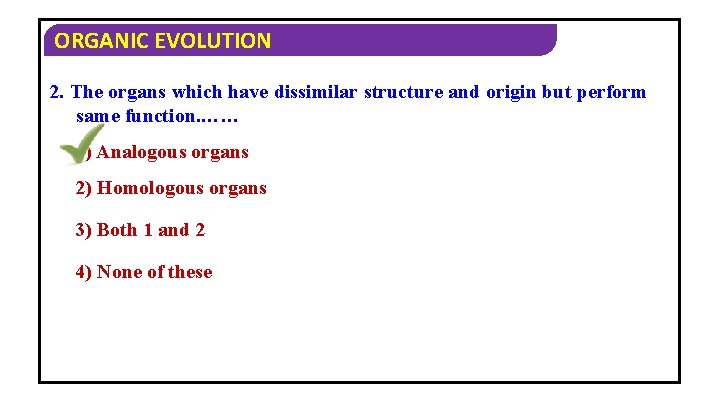
ORGANIC EVOLUTION ii. Analogous organ • The organs which have dissimilar structure and origin but perform the same function are called the Analogous Organs. • Analogous organs suggest Convergent Evolution. Convergent evolution is the process by which unrelated or distantly related organisms evolve similar body form.
ORGANIC EVOLUTION e. g. Wings of a butterfly & bird
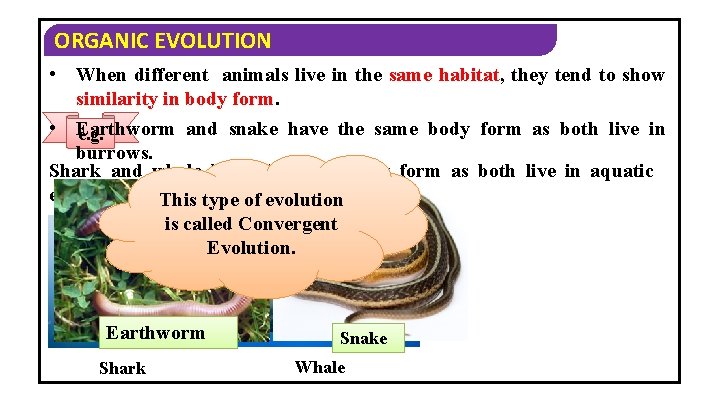
ORGANIC EVOLUTION • When different animals live in the same habitat, they tend to show similarity in body form. • Earthworm and snake have the same body form as both live in e. g. burrows. Shark and whale have the same body form as both live in aquatic environment This type of evolution is called Convergent Evolution. Earthworm Shark Snake Whale
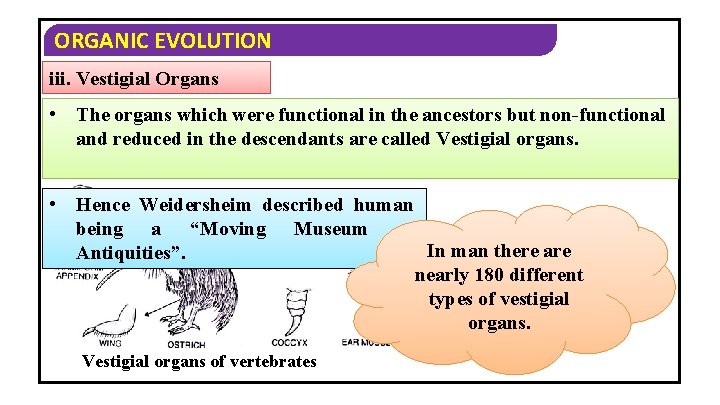
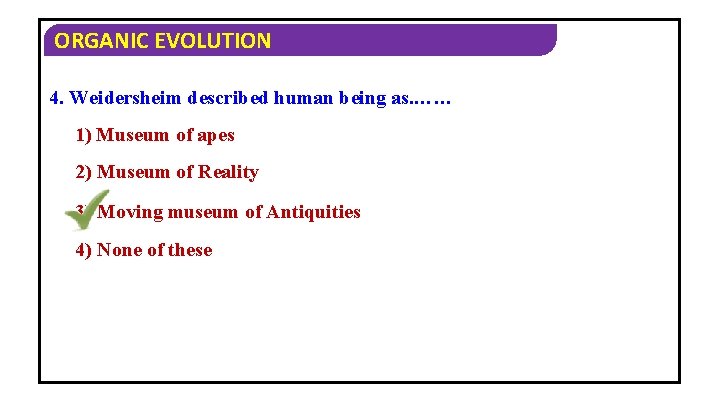
ORGANIC EVOLUTION iii. Vestigial Organs • The organs which were functional in the ancestors but non-functional and reduced in the descendants are called Vestigial organs. • Hence Weidersheim described human being a “Moving Museum of In man there are Antiquities”. nearly 180 different types of vestigial organs. Vestigial organs of vertebrates
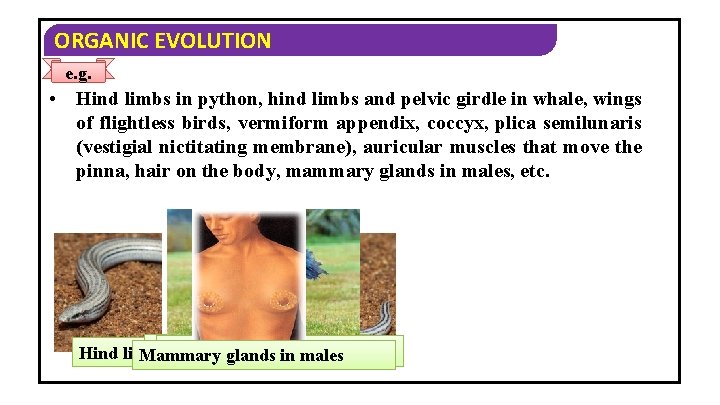
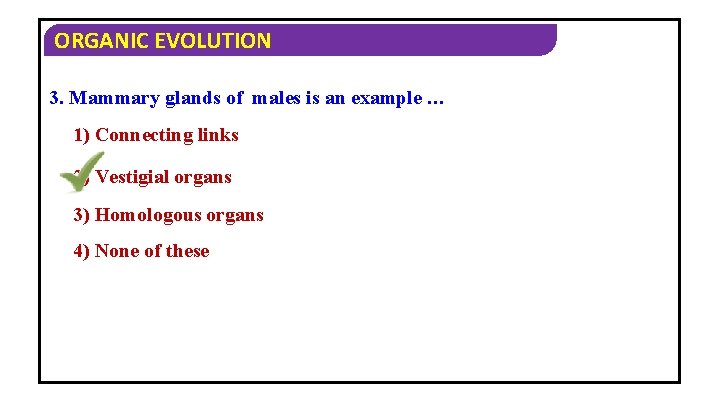
ORGANIC EVOLUTION e. g. • Hind limbs in python, hind limbs and pelvic girdle in whale, wings of flightless birds, vermiform appendix, coccyx, plica semilunaris (vestigial nictitating membrane), auricular muscles that move the pinna, hair on the body, mammary glands in males, etc. Hind limbs in whale Wings of flightless birds Hind limbs in python Mammary glands in males
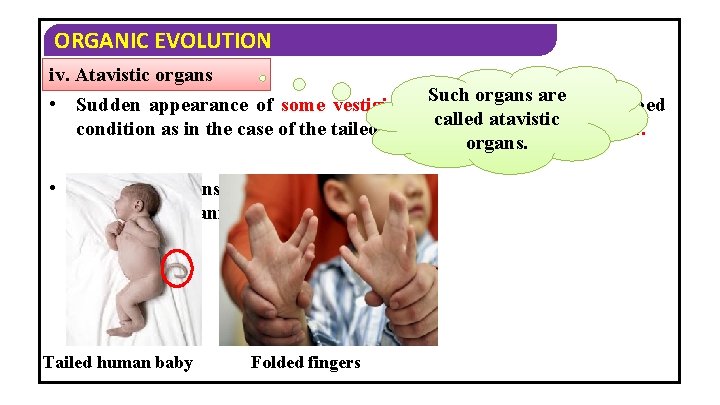
ORGANIC EVOLUTION iv. Atavistic organs Such organs are • Sudden appearance of some vestigial organs in a better developed called atavistic condition as in the case of the tailed human baby is called Atavism. organs. • Atavistic organs strongly support the concept of organic evolution. Tailed human baby Folded fingers
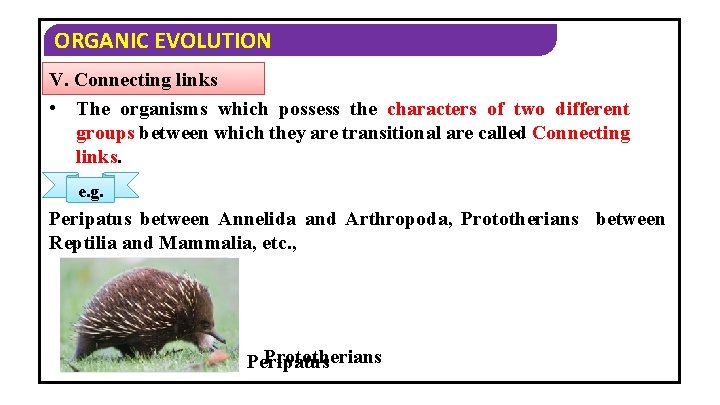
ORGANIC EVOLUTION V. Connecting links • The organisms which possess the characters of two different groups between which they are transitional are called Connecting links. e. g. Peripatus between Annelida and Arthropoda, Prototherians between Reptilia and Mammalia, etc. , Prototherians Peripatus
ORGANIC EVOLUTION D. Evidences From Cell and Molecular Biology • The field of cell and molecular biology provides the most detailed and convincing evidence in favour of biological evolution. i. unityunder of lifethree headings; • Fundamental They are studied ii. Blood precipitation tests iii. Biochemical recapitulations
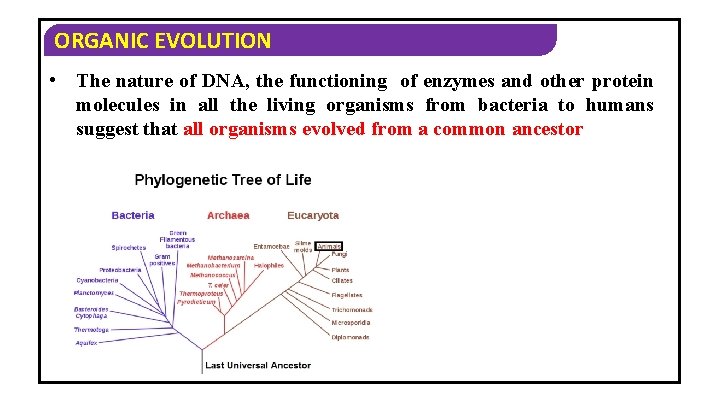
ORGANIC EVOLUTION • The nature of DNA, the functioning of enzymes and other protein molecules in all the living organisms from bacteria to humans suggest that all organisms evolved from a common ancestor
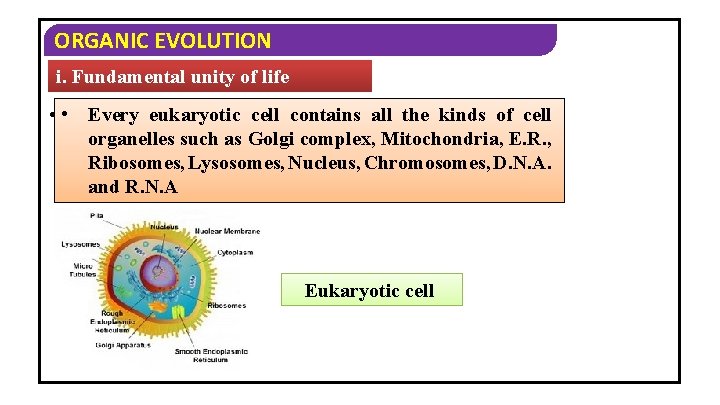
ORGANIC EVOLUTION i. Fundamental unity of life eukaryotic contains the all the kinds ofand cell • • In. Every all the living cell organisms, structural organellesunits suchare as Golgi functional called complex, the cells. Mitochondria, E. R. , Ribosomes, Lysosomes, Nucleus, Chromosomes, D. N. A. and R. N. A Eukaryotic cell
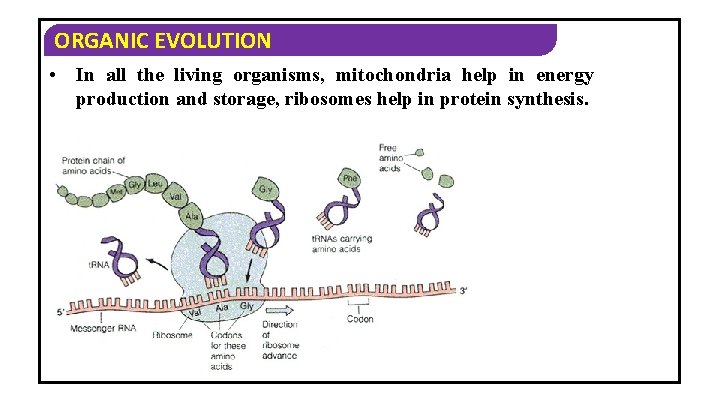
ORGANIC EVOLUTION • In all the living organisms, mitochondria help in energy production and storage, ribosomes help in protein synthesis.
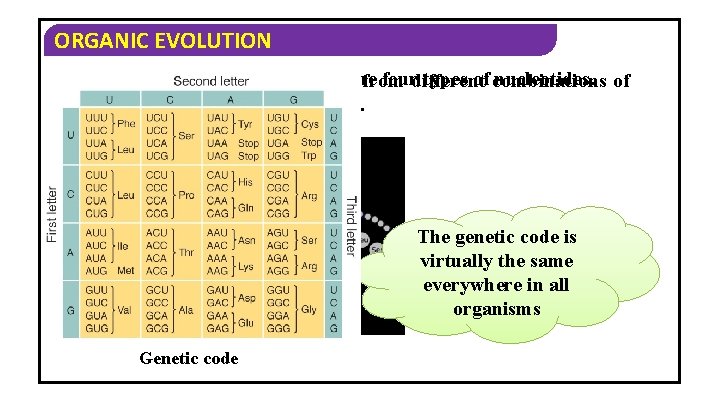
ORGANIC EVOLUTION • • In organisms has the same fourdifferent types of combinations nucleotides. of Allallthe proteins DNA are synthesized from the same 20 types of amino acids. The genetic code is virtually the same everywhere in all organisms Genetic code
ORGANIC EVOLUTION • Different types of biochemical substances and different types of biochemical reactions that occur in all the living organisms are the same. They indicate the relationship Enzymes, hormones, among all the organisms onrespiratory the earth. pigments
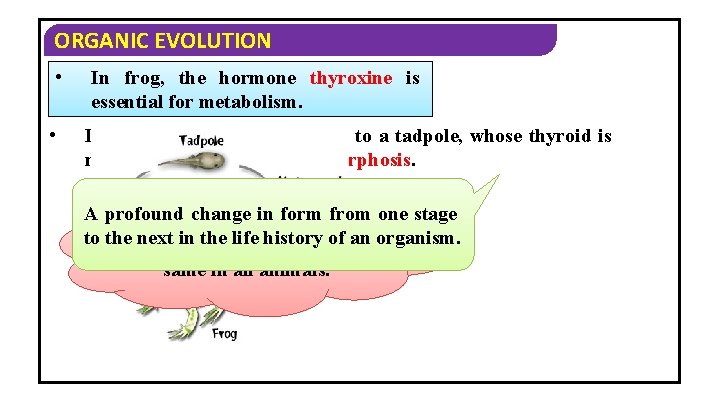
ORGANIC EVOLUTION • In frog, the hormone thyroxine is essential for metabolism. • If human thyroxine is injected to a tadpole, whose thyroid is removed, it undergoes metamorphosis. A profound in that formthe from one stage This change indicates to the function next in the history of life thyroxin is of thean organism. same in all animals.
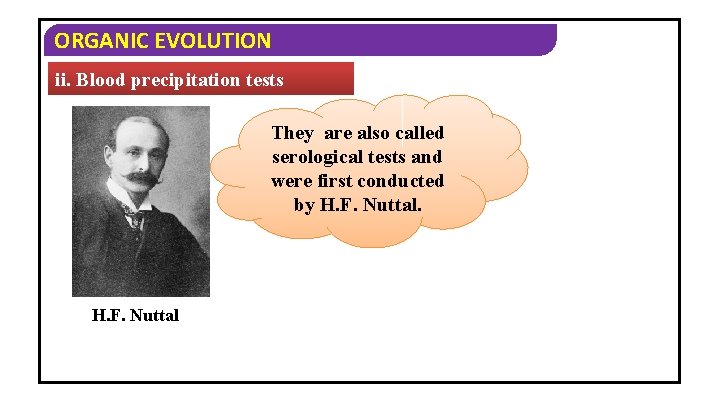
ORGANIC EVOLUTION ii. Blood precipitation tests They are also called serological tests and were first conducted by H. F. Nuttal
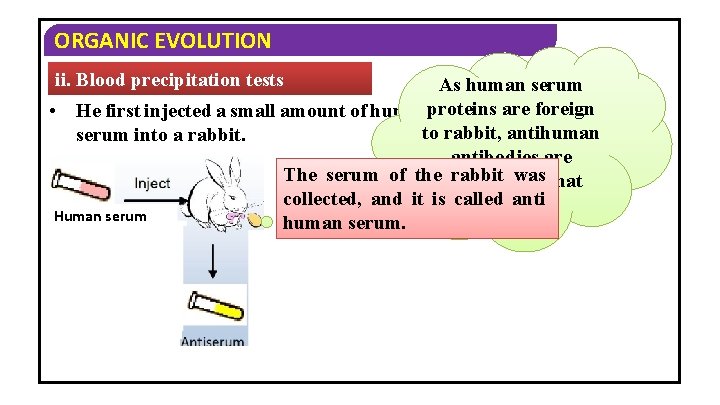
ORGANIC EVOLUTION ii. Blood precipitation tests As human serum • He first injected a small amount of humanproteins are foreign to rabbit, antihuman serum into a rabbit. antibodies are The serum of theproduced rabbit was in that collected, and it is called anti rabbit. Human serum human serum.
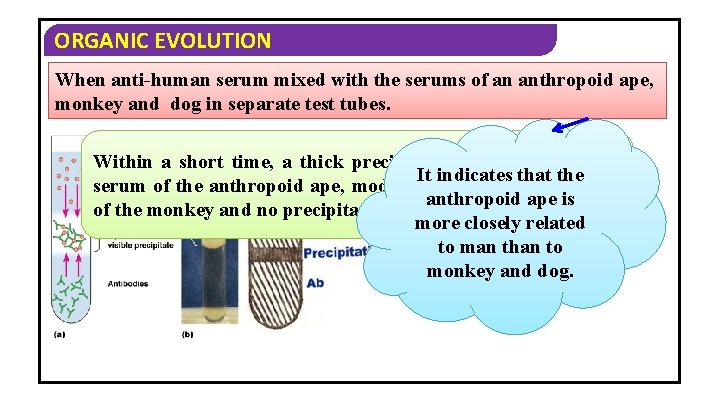
ORGANIC EVOLUTION When anti-human serum mixed with the serums of an anthropoid ape, monkey and dog in separate test tubes. Within a short time, a thick precipitate is formed with the It indicates that the serum of the anthropoid ape, moderate precipitate with that anthropoid ape is of the monkey and no precipitate with that of the dog. more closely related to man than to monkey and dog.
ORGANIC EVOLUTION iii. Bio-chemical recapitulations • Animals recapitulate the bio-chemical aspects of their ancestors.
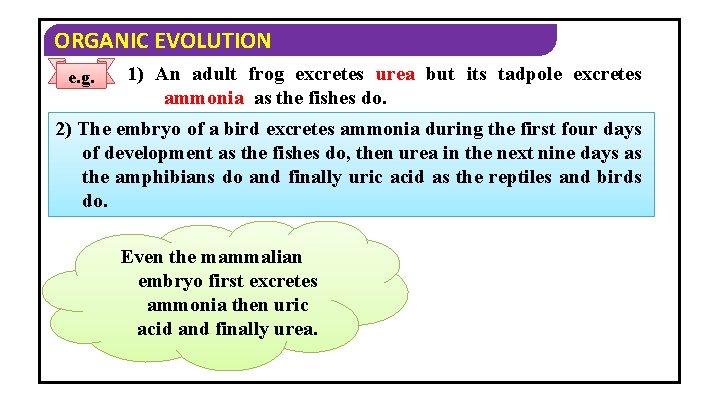
ORGANIC EVOLUTION e. g. 1) An adult frog excretes urea but its tadpole excretes ammonia as the fishes do. 2) The embryo of a bird excretes ammonia during the first four days of development as the fishes do, then urea in the next nine days as the amphibians do and finally uric acid as the reptiles and birds do. Even the mammalian embryo first excretes ammonia then uric acid and finally urea.
ORGANIC EVOLUTION 1. The organs which have similar structure and origin but not necessarily the same function are called… 1) Analogous organs 2) Homologous organs 3) Both 1 and 2 4) None of these MCQS
ORGANIC EVOLUTION 2. The organs which have dissimilar structure and origin but perform same function. …… 1) Analogous organs 2) Homologous organs 3) Both 1 and 2 4) None of these
ORGANIC EVOLUTION 3. Mammary glands of males is an example … 1) Connecting links 2) Vestigial organs 3) Homologous organs 4) None of these
ORGANIC EVOLUTION 4. Weidersheim described human being as. …… 1) Museum of apes 2) Museum of Reality 3) Moving museum of Antiquities 4) None of these
ORGANIC EVOLUTION 5. Organs that are common in embryonic origin and have the same fundamental structure but perform different functions are called… 1) Homogeneous organs 2) Homologous organs 3) Analogous organs 4) Vestigial organs
ORGANIC EVOLUTION 6. Wings of insects and wings of birds are example 1) Homologous organs 2) Analogous organs 3) Divergent evolution 4) Cladogenesis for. ……
ORGANIC EVOLUTION Thank you…