
Organic CompoundsMacromoleculesBiomolecules Organic Molecules AKA MacromoleculesBiomolecules Large molecules
Organic Compounds/Macromolecules/Biomolecules
Organic Molecules AKA: Macromolecules/Biomolecules • Large molecules that make up our body. We eat them, digest them, then build them back up again to use. • 4 macromolecules include: 1. Carbohydrates 2. Lipids 3. Proteins 4. Nucleic Acids
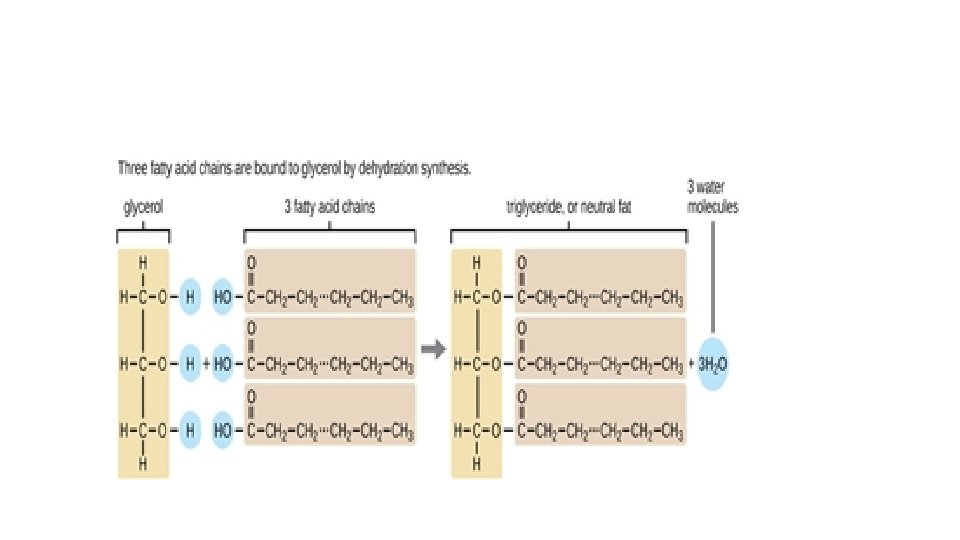
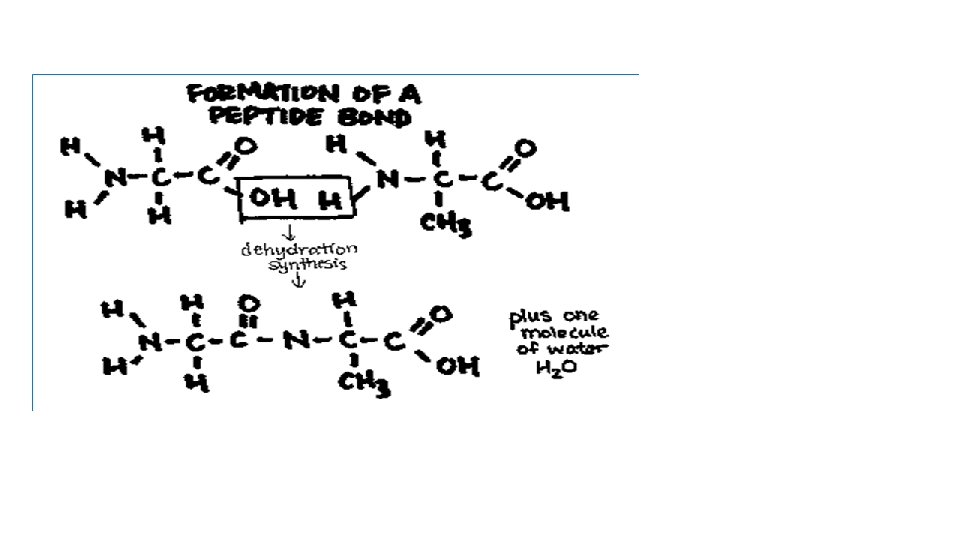
Building and Breaking Apart Organic Molecules • Macromolecules are usually assembled from basic building blocks – monomers. They are put together to form polymers. • Each monomer of a macromolecule are held together by covalent bonds • Condensation Reaction/aka Dehydration Synthesis: put them together (XH + XOH XX + H 20) • Hydrolysis breaks them apart (XX + H 20 XH + XOH)
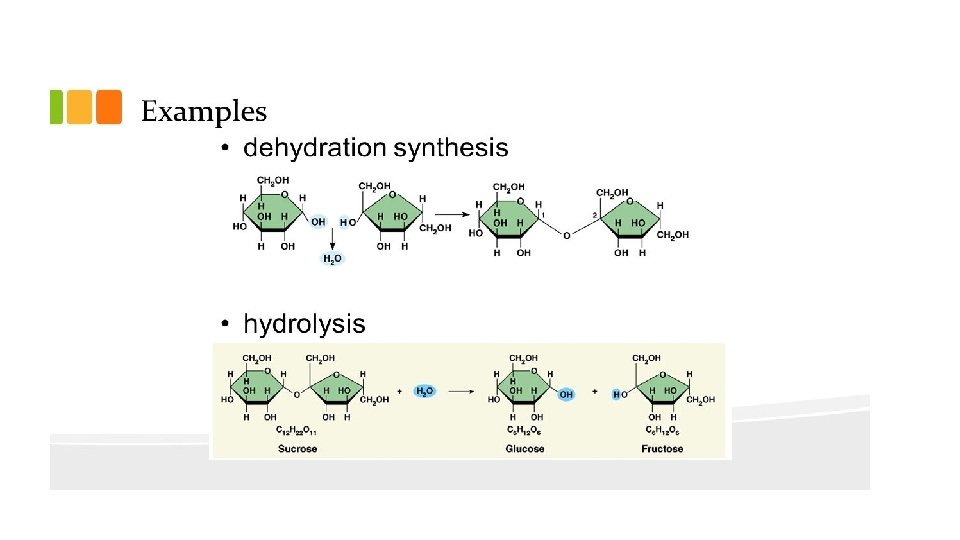
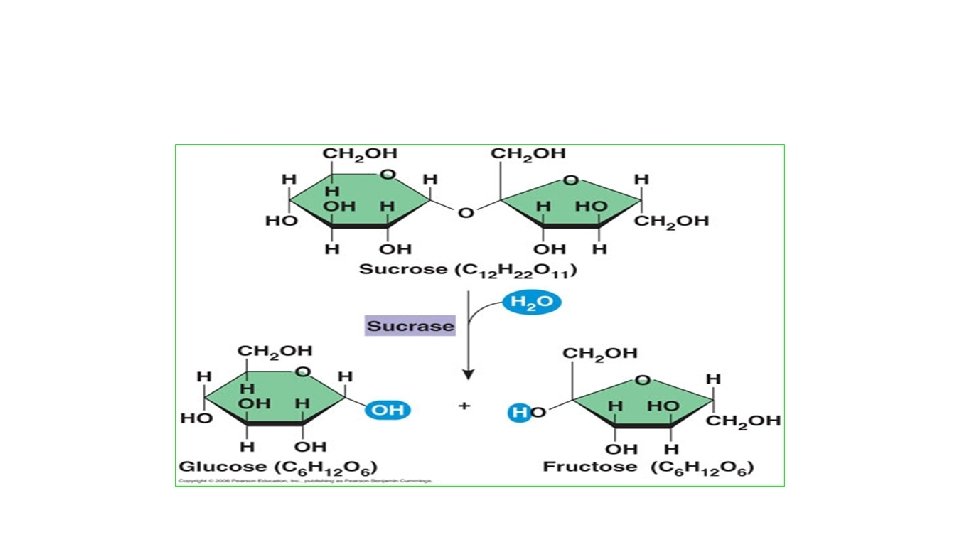
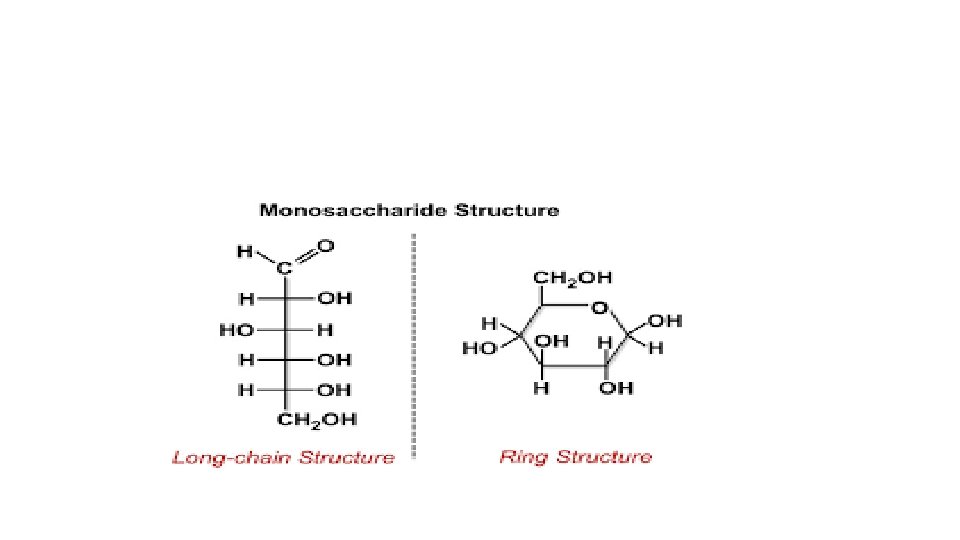
Carbohydrates (Polysaccharides) Means “Carbon + Water” Monomer: monosaccharide is (CH 2 O)n Contains C, H, O in a 1: 2: 1 ratio Examples: Glucose, Fructose- 6 carbon monosaccharides (can be chains or rings) Ribose and Deoxyribose- 5 carbon monosaccharides Sucrose and Lactose are disaccharides (2 mono linked together via condensation reaction) • •
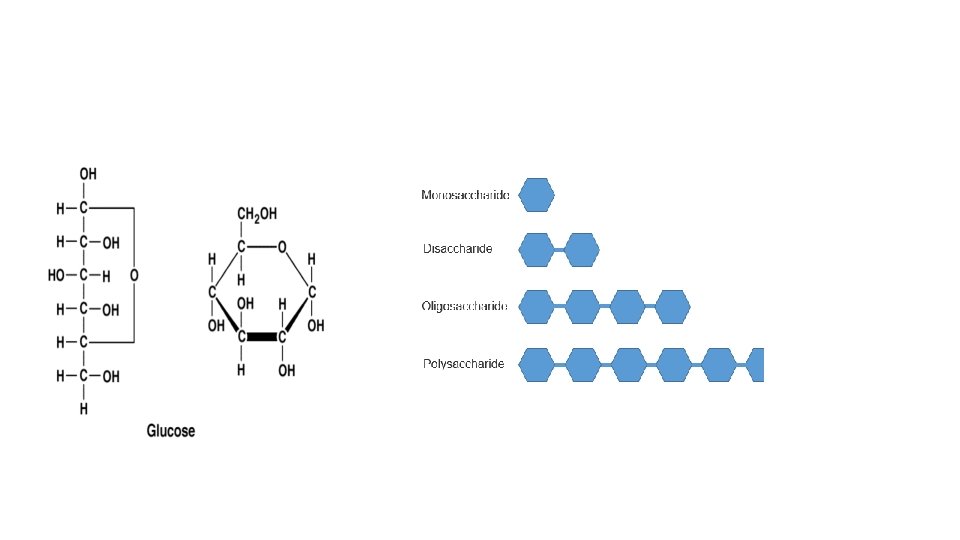
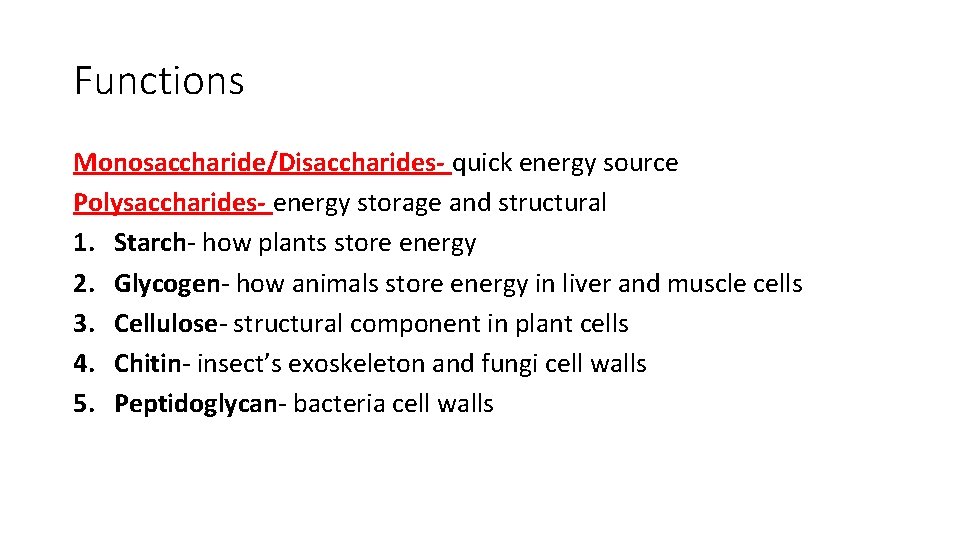
Functions Monosaccharide/Disaccharides- quick energy source Polysaccharides- energy storage and structural 1. Starch- how plants store energy 2. Glycogen- how animals store energy in liver and muscle cells 3. Cellulose- structural component in plant cells 4. Chitin- insect’s exoskeleton and fungi cell walls 5. Peptidoglycan- bacteria cell walls
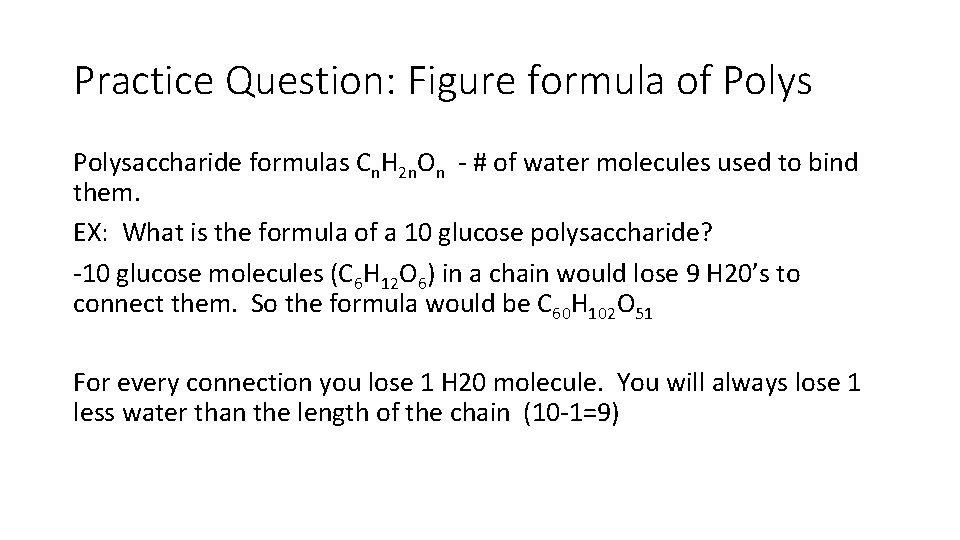
Practice Question: Figure formula of Polysaccharide formulas Cn. H 2 n. On - # of water molecules used to bind them. EX: What is the formula of a 10 glucose polysaccharide? -10 glucose molecules (C 6 H 12 O 6) in a chain would lose 9 H 20’s to connect them. So the formula would be C 60 H 102 O 51 For every connection you lose 1 H 20 molecule. You will always lose 1 less water than the length of the chain (10 -1=9)
Lipids • Insoluble in water- hydrophobic= main characteristics • 3 types: fats, phospholipids, steroids • No true monomers • C, H, O unless a phospholipid (P) A. Fats & Oils- Contain fatty acids and a glycerol (fats-solids-most animal products, oils-liquids-most plant products) Aka: triglycerides High energy storage molecule- 9. 3 cal/g vs 4. 1 in carbs and proteins (due to all the H)- very compact and store energy in not a lot of space
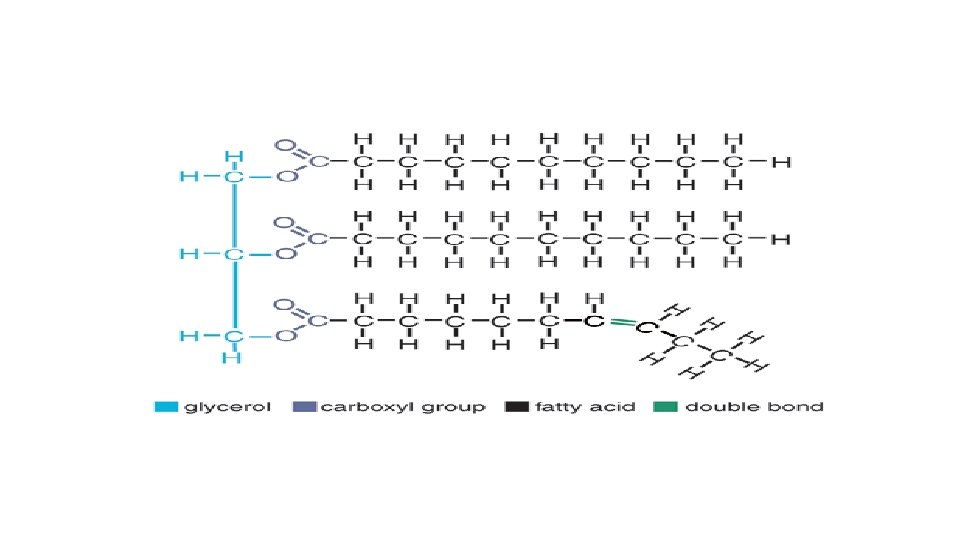
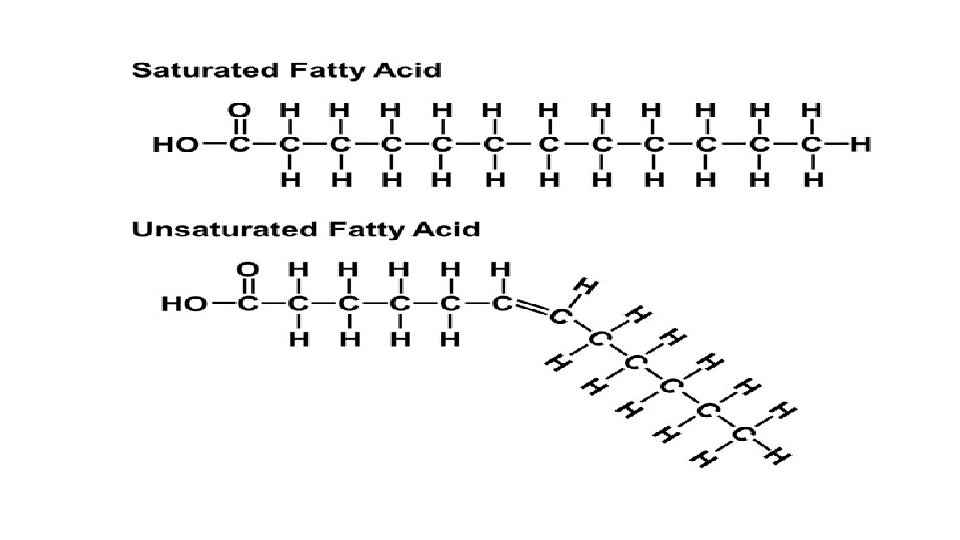
Saturated vs Unsaturated Fats 1. Unsaturated: have some double bonds between carbons. This causes “kinks” in the chain and keeps them liquid at room temperature. (oils/plant based) (stack of papers stack easily if placed right on top of each other. Every double bond gives paper a wrinkle and they can’t stay compact-liquid) (healthy fats) 2. Saturated: all single bonds between carbons. Every carbon is “saturated” with a carbon. They are solid at room temperature. (fats/animal products). No “kinks”
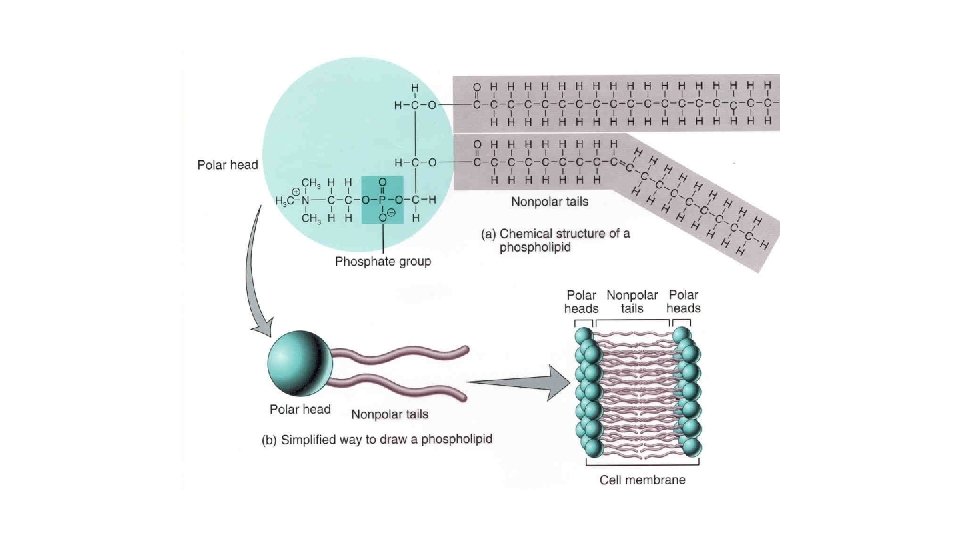
Lipids B. Phospholipids- 2 fatty acids, a phosphate, and a glycerol • Have polar heads (phosphate/glycerol) and non-polar tails (fatty acids) arrange in double layer in water • Found in cell membrane
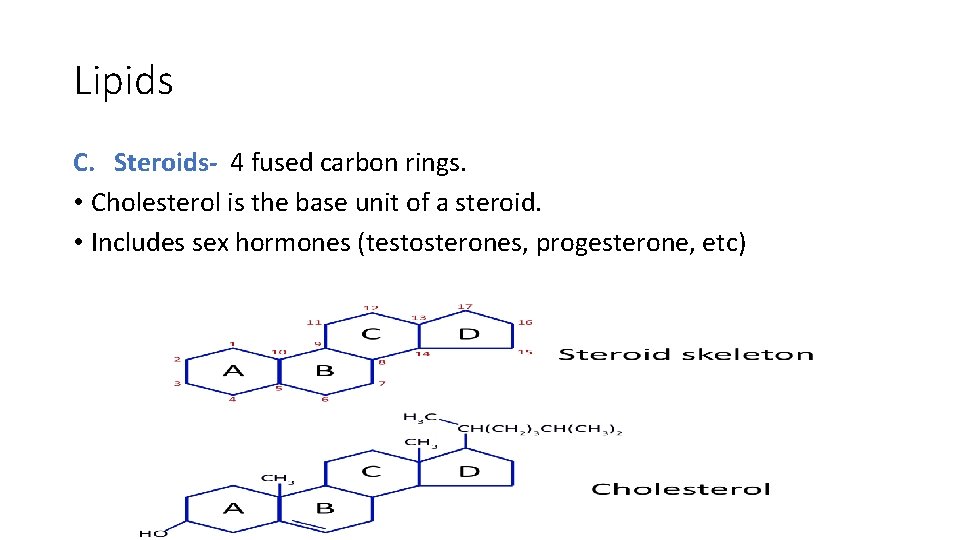
Lipids C. Steroids- 4 fused carbon rings. • Cholesterol is the base unit of a steroid. • Includes sex hormones (testosterones, progesterone, etc)
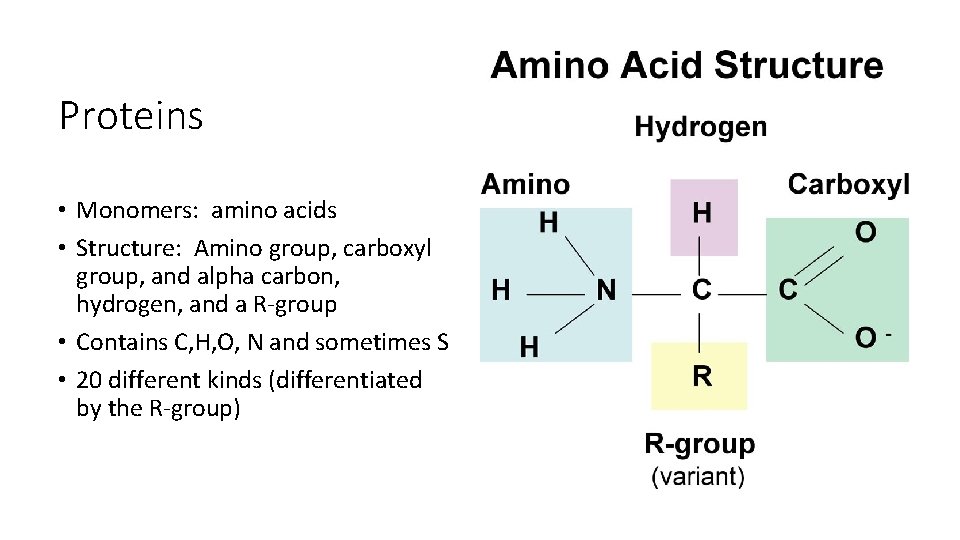
Proteins • Monomers: amino acids • Structure: Amino group, carboxyl group, and alpha carbon, hydrogen, and a R-group • Contains C, H, O, N and sometimes S • 20 different kinds (differentiated by the R-group)
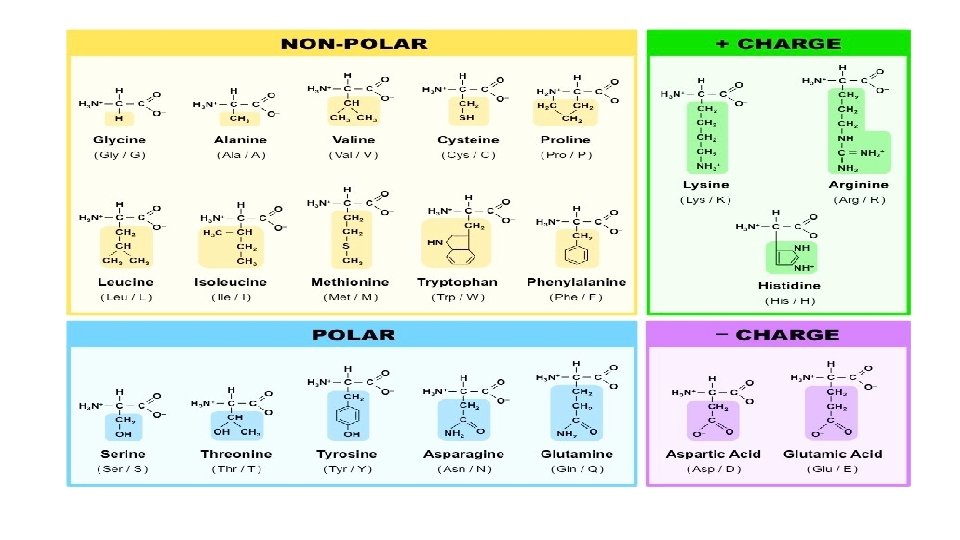
Proteins • Some R groups will repel each other, some will attract each other. This will determine how they are folded – which will determine the function of the protein. • Proteins are held together by covalent bonds called peptide bonds • Peptide bonds: condensation reactions between the H on one amino group and the OH on the carboxyl group of the next amino acid.
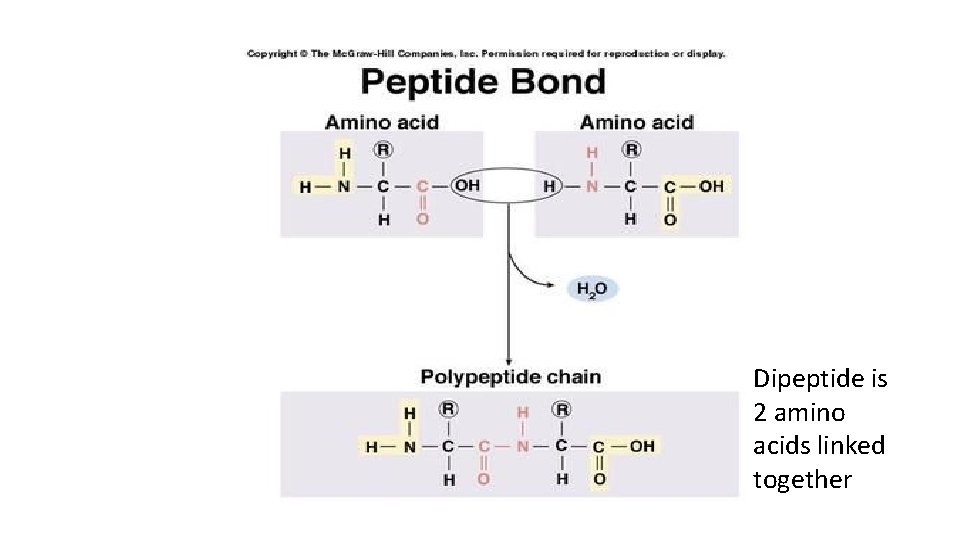
Dipeptide is 2 amino acids linked together
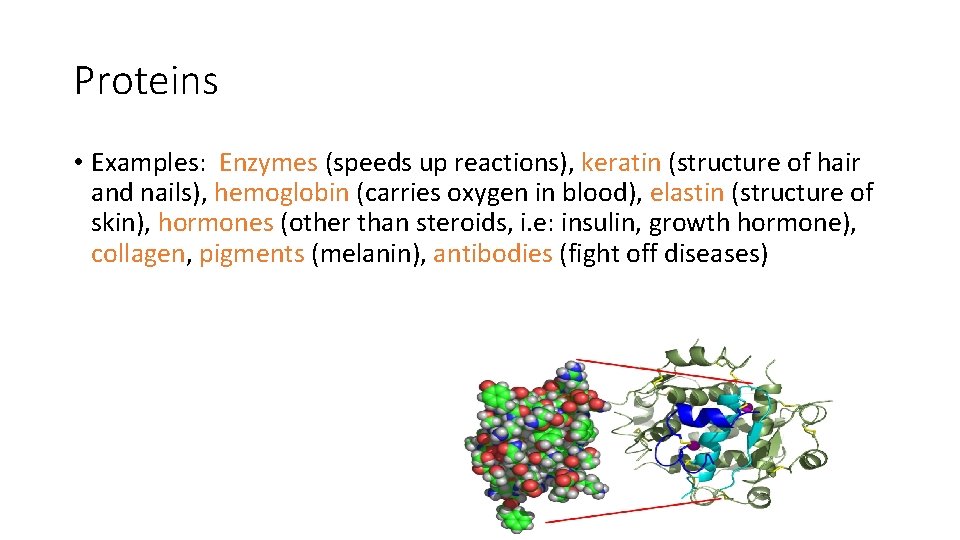
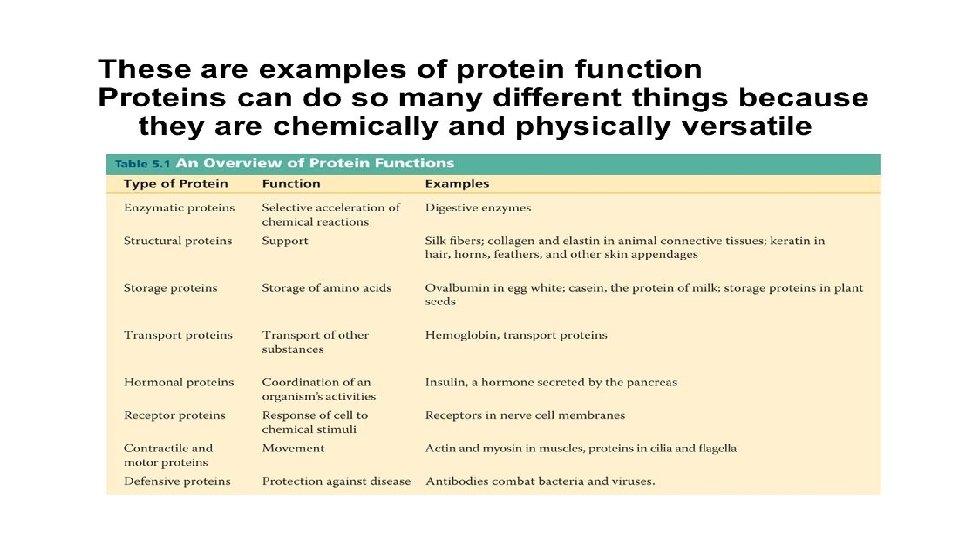
Proteins • Examples: Enzymes (speeds up reactions), keratin (structure of hair and nails), hemoglobin (carries oxygen in blood), elastin (structure of skin), hormones (other than steroids, i. e: insulin, growth hormone), collagen, pigments (melanin), antibodies (fight off diseases)
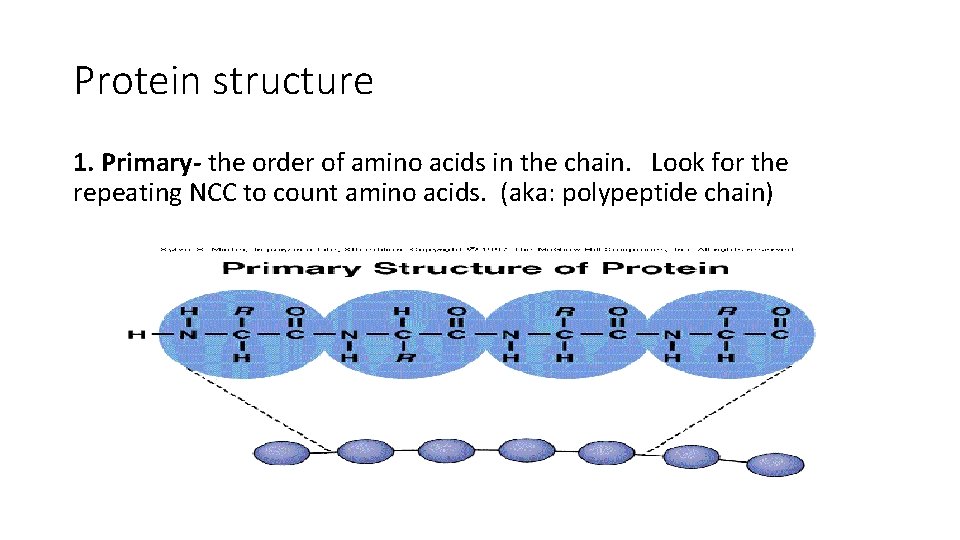
Protein structure 1. Primary- the order of amino acids in the chain. Look for the repeating NCC to count amino acids. (aka: polypeptide chain)
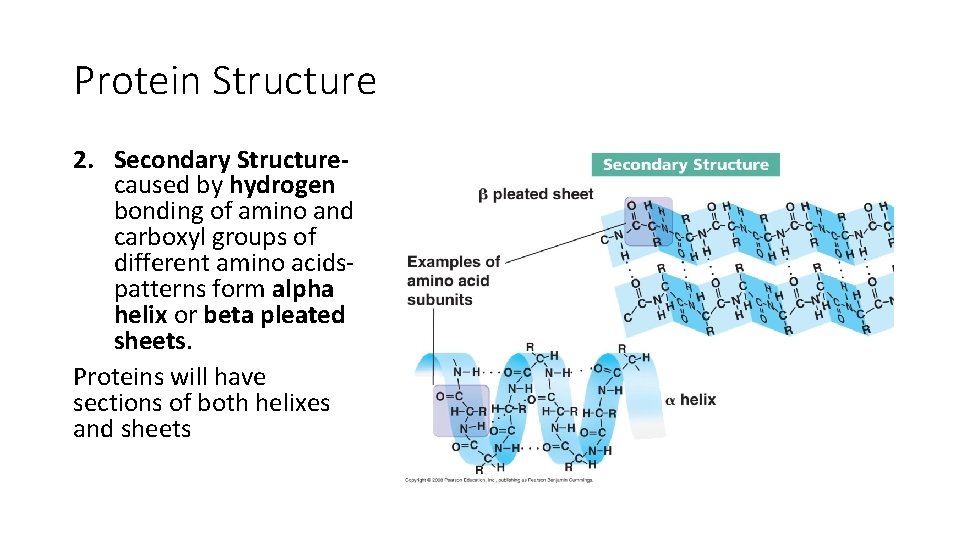
Protein Structure 2. Secondary Structurecaused by hydrogen bonding of amino and carboxyl groups of different amino acidspatterns form alpha helix or beta pleated sheets. Proteins will have sections of both helixes and sheets
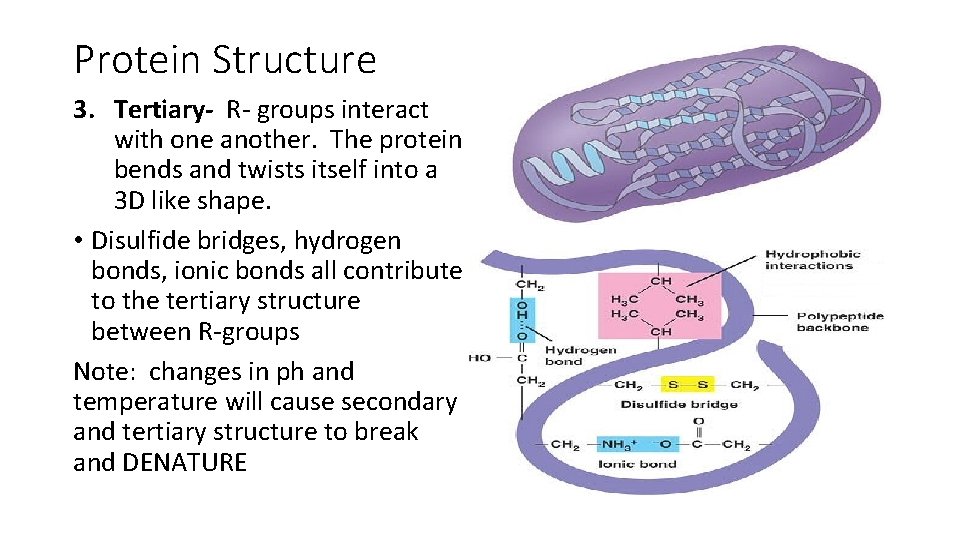
Protein Structure 3. Tertiary- R- groups interact with one another. The protein bends and twists itself into a 3 D like shape. • Disulfide bridges, hydrogen bonds, ionic bonds all contribute to the tertiary structure between R-groups Note: changes in ph and temperature will cause secondary and tertiary structure to break and DENATURE
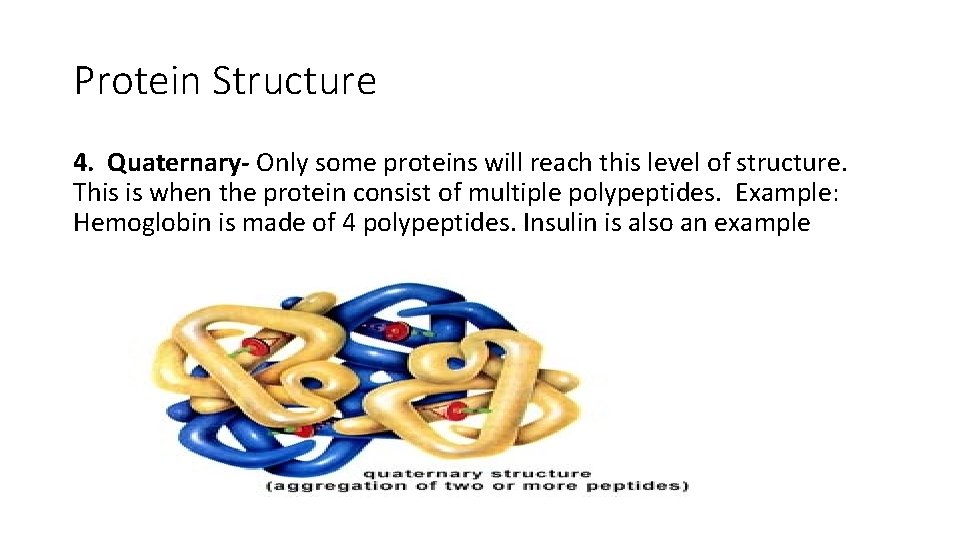
Protein Structure 4. Quaternary- Only some proteins will reach this level of structure. This is when the protein consist of multiple polypeptides. Example: Hemoglobin is made of 4 polypeptides. Insulin is also an example
Chaperonins • Complex proteins that help fold proteins correctly.
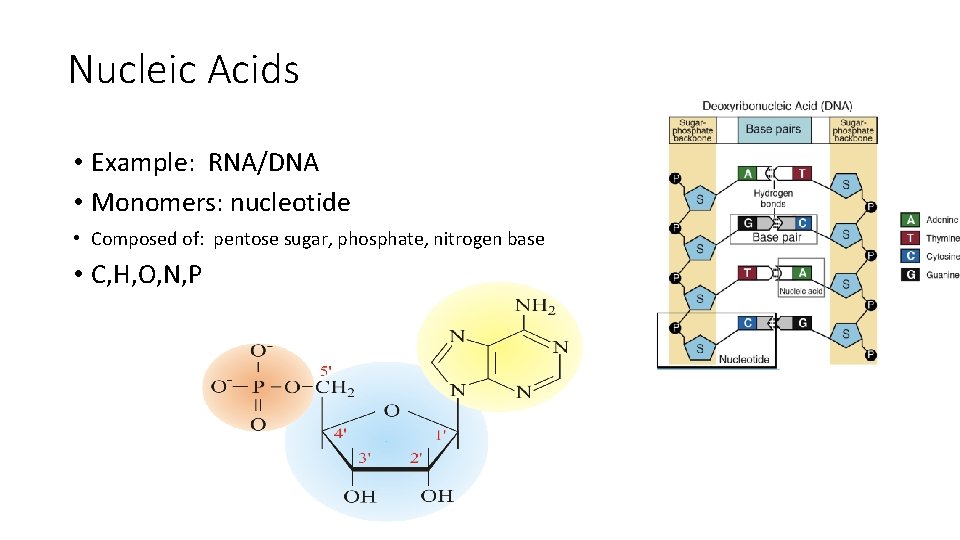
Nucleic Acids • Example: RNA/DNA • Monomers: nucleotide • Composed of: pentose sugar, phosphate, nitrogen base • C, H, O, N, P
• Nucleic acids contain directions for making proteins. • Damage to nucleic acids (mutations) means faulty proteins are made (or not at all)
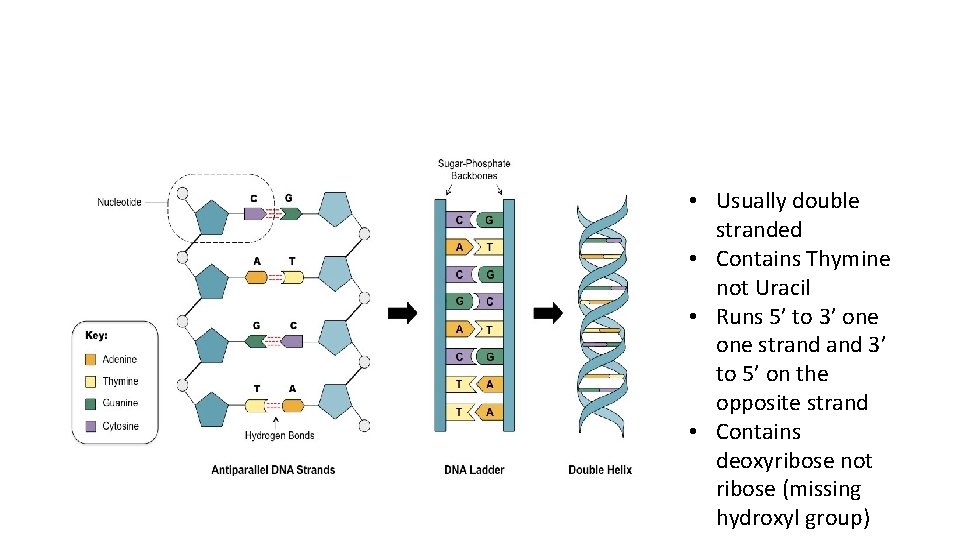
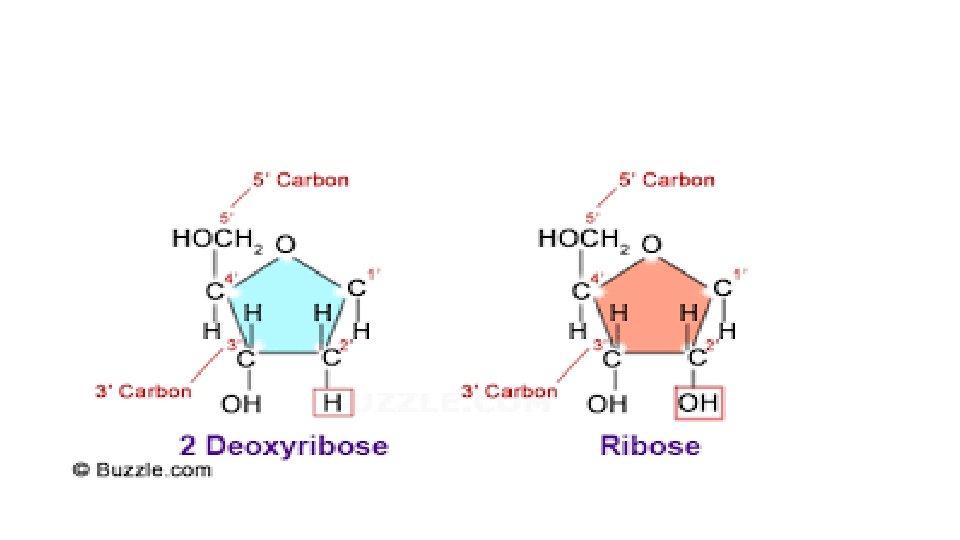
• Usually double stranded • Contains Thymine not Uracil • Runs 5’ to 3’ one strand 3’ to 5’ on the opposite strand • Contains deoxyribose not ribose (missing hydroxyl group)
- Slides: 34