
Organic Compounds Organic Chemistry The study of compounds
- Slides: 19
Organic Compounds
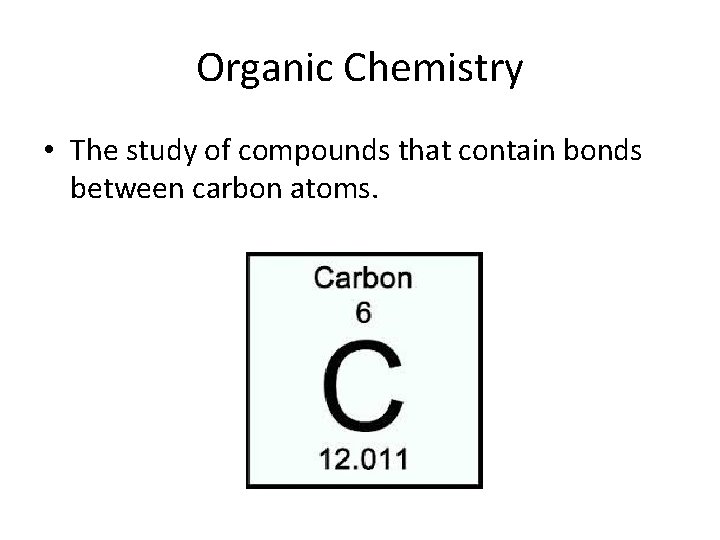
Organic Chemistry • The study of compounds that contain bonds between carbon atoms.
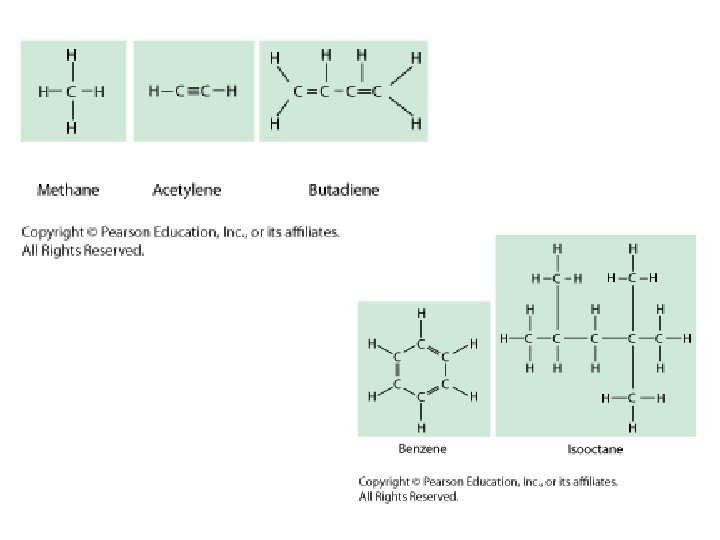
What is so special about carbon? • Carbon can bond with many elements including hydrogen, oxygen, phosphorus, sulfur, and nitrogen to form the molecules of life. • One carbon atom can bond to another – Form chains – Single, double, triple bonds – Form rings
Macromolecules • “giant molecules” • Made from thousands of smaller molecules • Form from a process known as polymerization
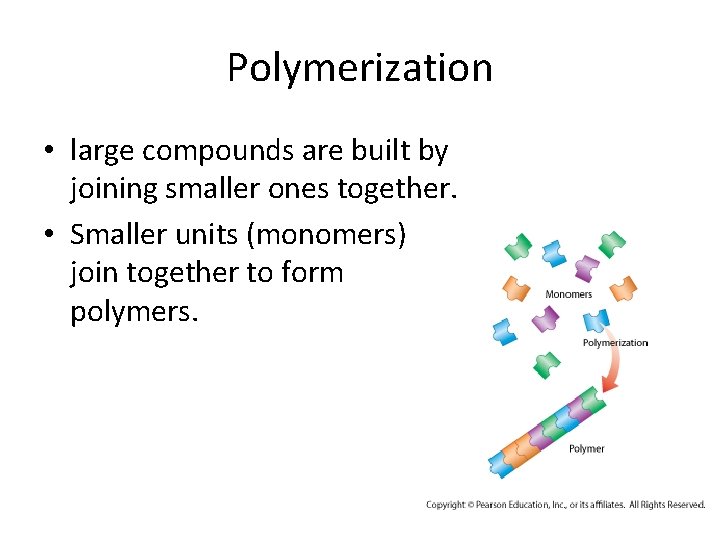
Polymerization • large compounds are built by joining smaller ones together. • Smaller units (monomers) join together to form polymers.
4 Major Groups of Macromolecules • • Carbohydrates Lipids Nucleic acids Proteins
Carbohydrates • Made up of Carbon, Hydrogen, Oxygen (1: 2: 1) • Living things use carbohydrates as their main source of energy. • Plants, some animals, and other organisms use carbohydrates for structures.
Carbohydrates • The breakdown of sugars, like glucose, supplies immediate energy for cell activities. • Many organisms store excess sugar as complex carbohydrates known as starches.
Simple Sugars • Monosaccharides: – Glucose, galactose (milk), fructose (fruit) • Disaccharide: – Sucrose (table sugar) – Made by joining 2 simple sugars (glucose & fructose) together
Complex Carbohydrates • Polysaccharides = large macromolecules formed from monosaccharides • Some polysaccharides: – Glycogen (animals store excess sugar) – Starch (plants store excess sugar) – Cellulose (plants use for structure)
Lipids Made mostly from Carbon and Hydrogen Generally not soluble in water Fats, oils, waxes Can be used to store energy Some are parts of biological membranes and waterproof coverings • Steroids are lipids- hormones • • •
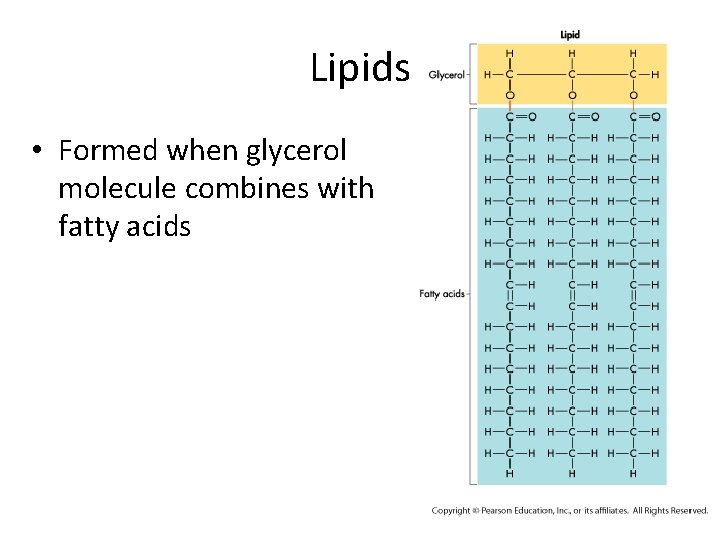
Lipids • Formed when glycerol molecule combines with fatty acids
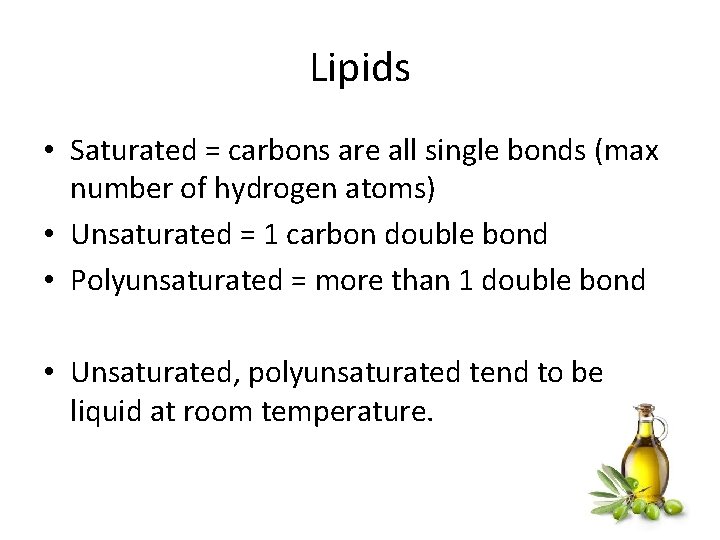
Lipids • Saturated = carbons are all single bonds (max number of hydrogen atoms) • Unsaturated = 1 carbon double bond • Polyunsaturated = more than 1 double bond • Unsaturated, polyunsaturated tend to be liquid at room temperature.
Nucleic Acids • Made up of Hydrogen, Oxygen, Nitrogen, Carbon, and Phosphorus • Nucleic acids store and transmit genetic information- RNA, DNA • Nucleic acids are polymers assembled from individual monomers called nucleotides. • ATP is a nucleotide that transfers chemical energy
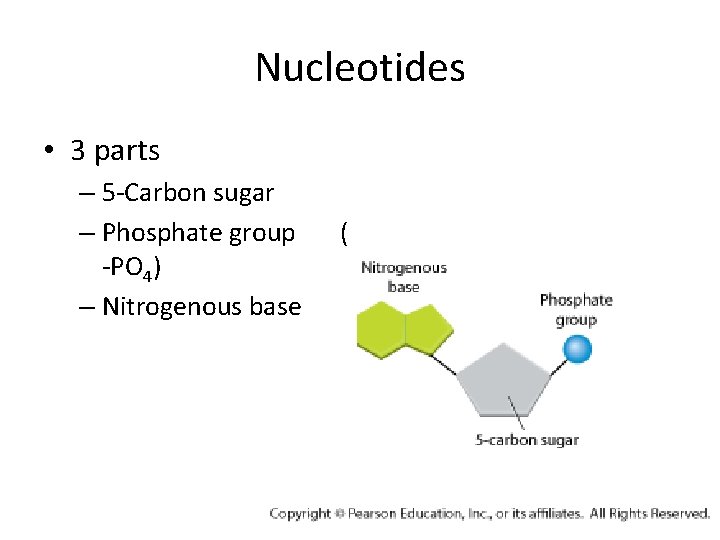
Nucleotides • 3 parts – 5 -Carbon sugar – Phosphate group -PO 4) – Nitrogenous base (
Proteins • Made up of Nitrogen, Carbon, Hydrogen, Oxygen • Proteins are polymers of amino acids • Some proteins control rates of reactions, regulate cell processes, form cell structures, transport materials in and out of the cell, help fight disease.
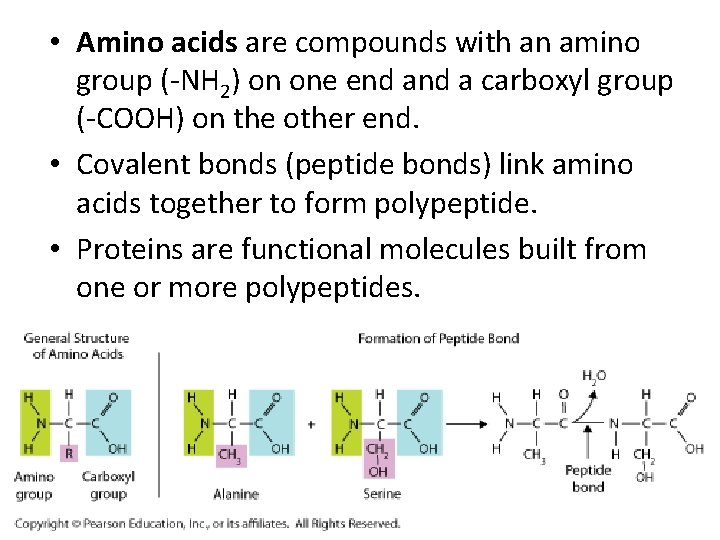
• Amino acids are compounds with an amino group (-NH 2) on one end a carboxyl group (-COOH) on the other end. • Covalent bonds (peptide bonds) link amino acids together to form polypeptide. • Proteins are functional molecules built from one or more polypeptides.