
Organic Compounds Biology How is an organism organized
Organic Compounds Biology
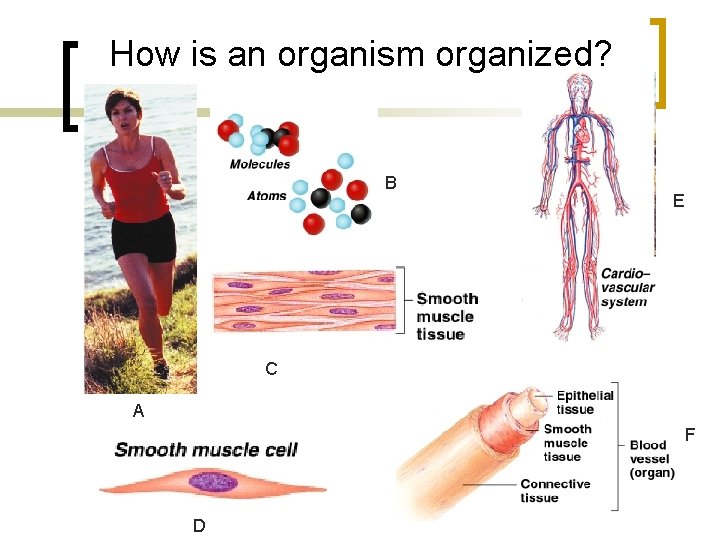
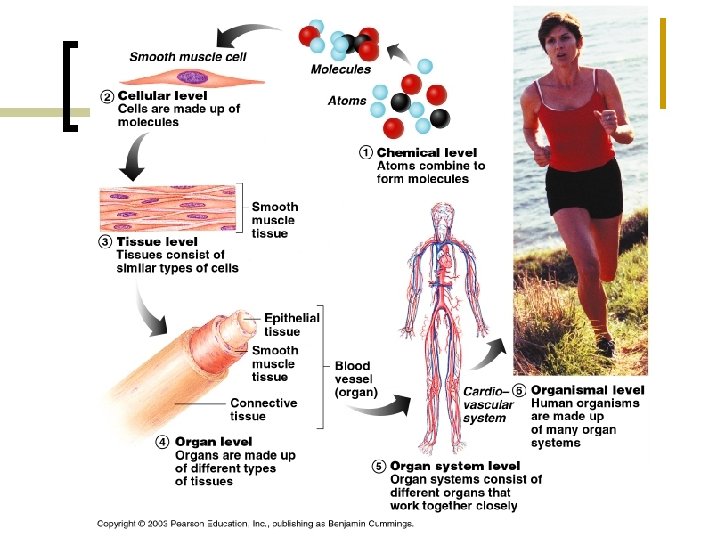
How is an organism organized? B E C A F D
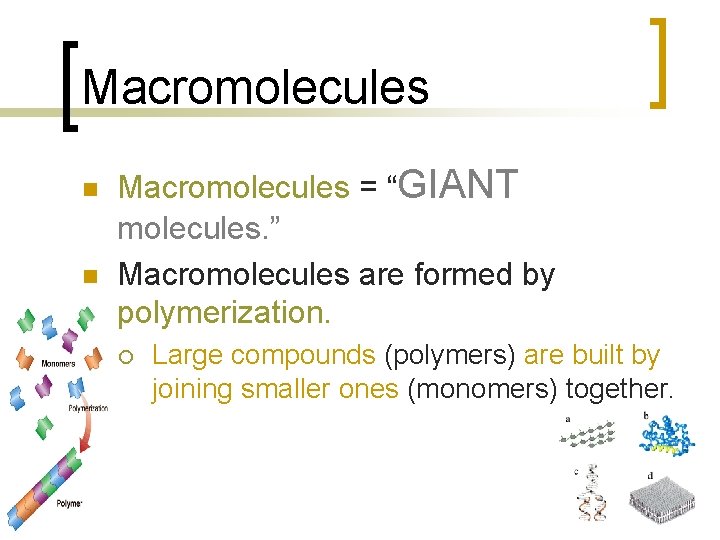
Macromolecules n n Macromolecules = “GIANT molecules. ” Macromolecules are formed by polymerization. ¡ Large compounds (polymers) are built by joining smaller ones (monomers) together.

What are monomers and polymers? This lemur is holding a monomer! n n Monomer—single molecules Polymer—large molecules made up of many smaller molecules (monomers) POLYMER = MACROMOLECULE
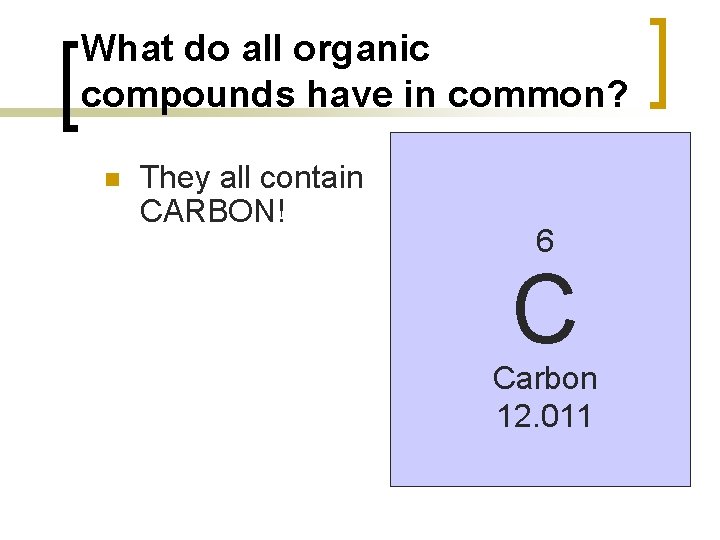
What do all organic compounds have in common? n They all contain CARBON! 6 C Carbon 12. 011
4 Macromolecules n n Carbohydrates Lipids Proteins Nucleic Acids
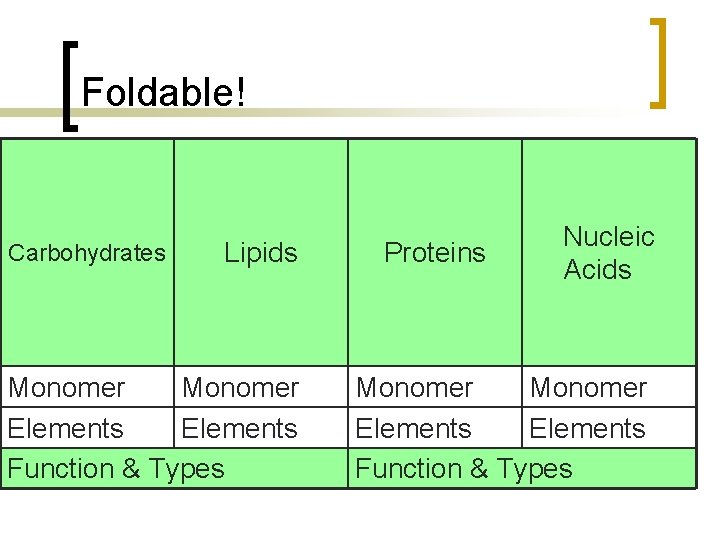
Foldable! Carbohydrates Lipids Monomer Elements Function & Types Proteins Nucleic Acids Monomer Elements Function & Types
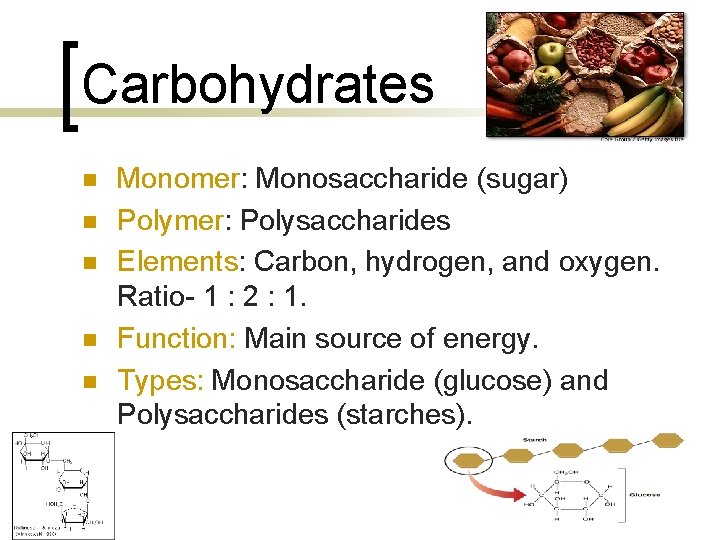
Carbohydrates n n n Monomer: Monosaccharide (sugar) Polymer: Polysaccharides Elements: Carbon, hydrogen, and oxygen. Ratio- 1 : 2 : 1. Function: Main source of energy. Types: Monosaccharide (glucose) and Polysaccharides (starches).
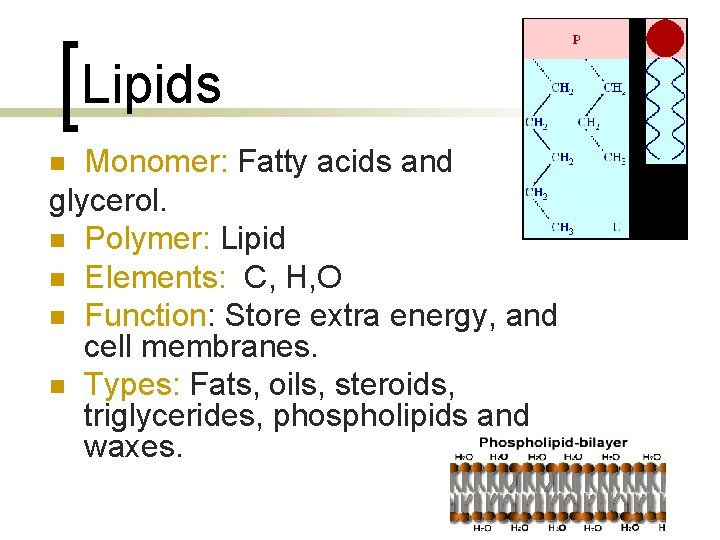
Lipids Monomer: Fatty acids and glycerol. n Polymer: Lipid n Elements: C, H, O n Function: Store extra energy, and cell membranes. n Types: Fats, oils, steroids, triglycerides, phospholipids and waxes. n
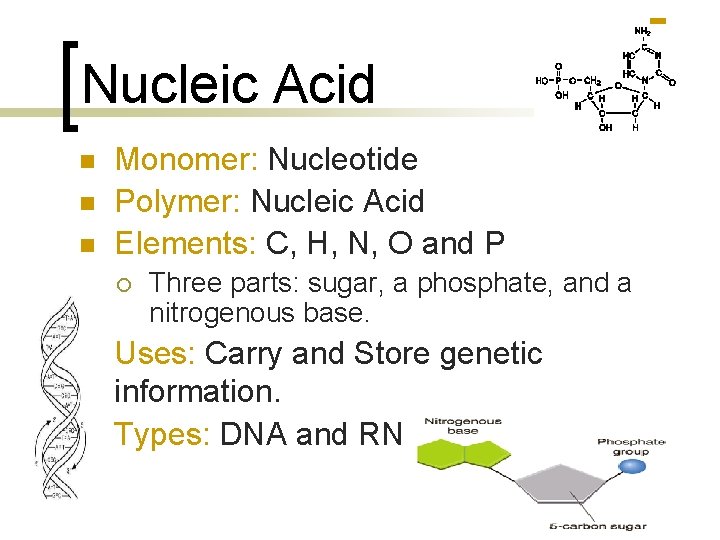
Nucleic Acid n n n Monomer: Nucleotide Polymer: Nucleic Acid Elements: C, H, N, O and P ¡ n n Three parts: sugar, a phosphate, and a nitrogenous base. Uses: Carry and Store genetic information. Types: DNA and RNA
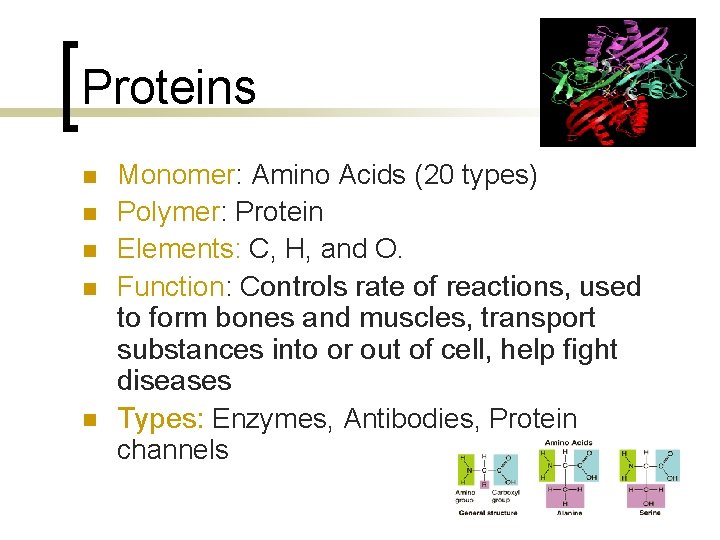
Proteins n n n Monomer: Amino Acids (20 types) Polymer: Protein Elements: C, H, and O. Function: Controls rate of reactions, used to form bones and muscles, transport substances into or out of cell, help fight diseases Types: Enzymes, Antibodies, Protein channels
- Slides: 12