
Organic Chemistry The Infinite Variety of Carbon Compounds
Organic Chemistry: The Infinite Variety of Carbon Compounds
Overview: 1. Introduction to Organic chemistry with an emphasis on CARBON 2. Hydrocarbons 3. Functional groups a. Unsaturation b. Oxygen containing c. Nitrogen containing
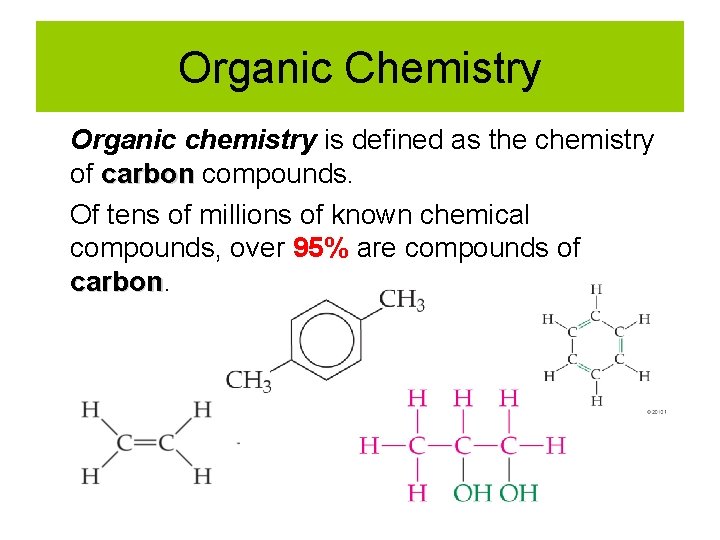
Organic Chemistry Organic chemistry is defined as the chemistry of carbon compounds. Of tens of millions of known chemical compounds, over 95% are compounds of carbon
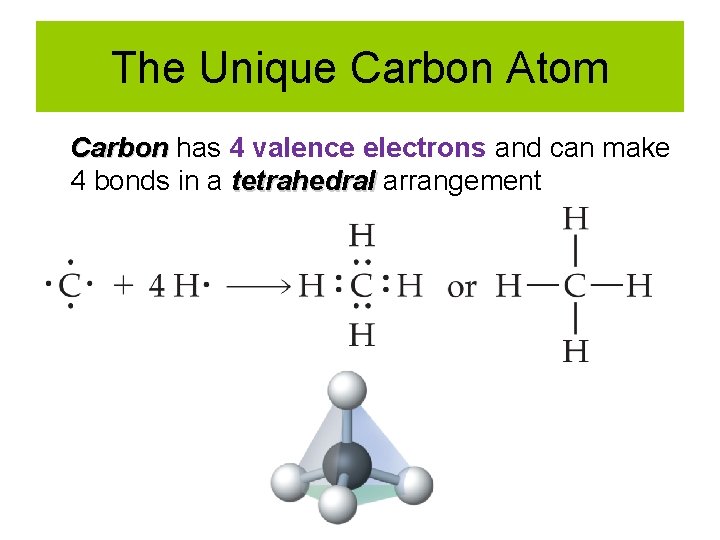
The Unique Carbon Atom Carbon has 4 valence electrons and can make 4 bonds in a tetrahedral arrangement
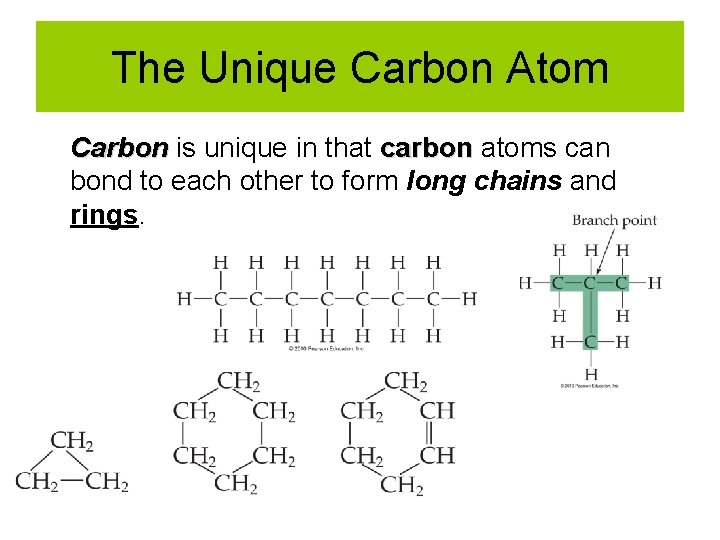
The Unique Carbon Atom Carbon is unique in that carbon atoms can bond to each other to form long chains and rings.
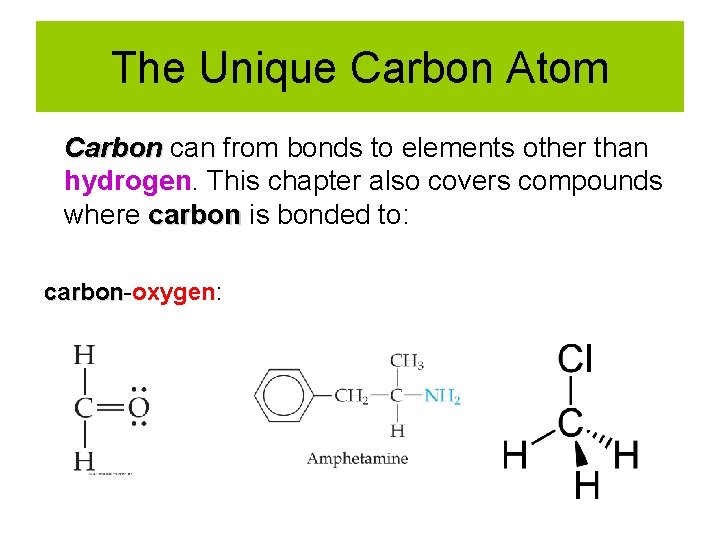
The Unique Carbon Atom Carbon can from bonds to elements other than hydrogen. This chapter also covers compounds where carbon is bonded to: carbon-oxygen: carboncarbon nitrogen: nitrogen & carbon halogen
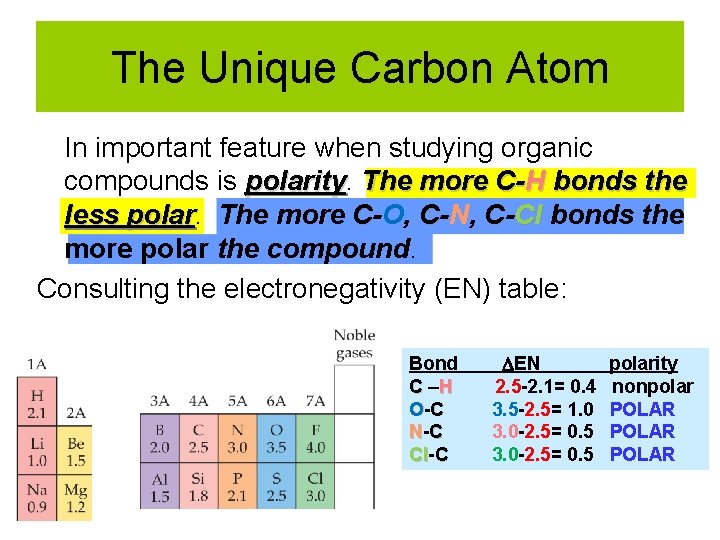
The Unique Carbon Atom In important feature when studying organic compounds is polarity The more C-H bonds the less polar The more C-O, C-N, C-Cl bonds the more polar the compound. Consulting the electronegativity (EN) table: Bond C –H O -C N -C Cl. Cl C DEN 2. 5 -2. 1= 0. 4 3. 5 -2. 5= 1. 0 3. 0 -2. 5= 0. 5 polarity nonpolar POLAR
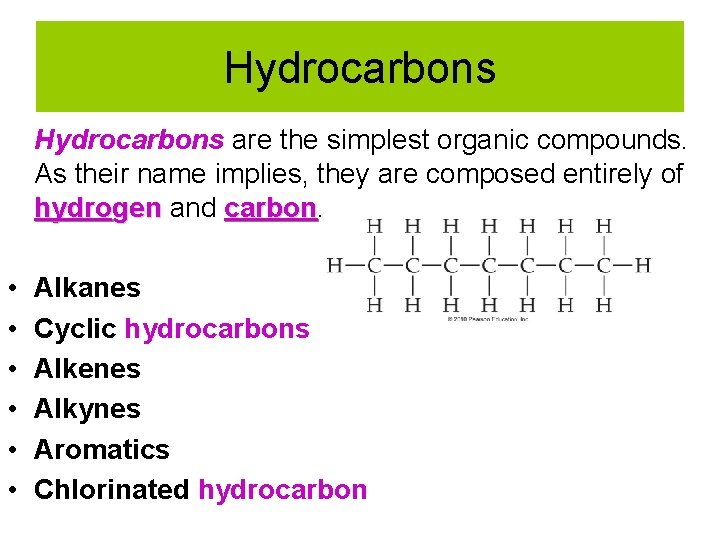
Hydrocarbons are the simplest organic compounds. As their name implies, they are composed entirely of hydrogen and carbon • • • Alkanes Cyclic hydrocarbons Alkenes Alkynes Aromatics Chlorinated hydrocarbon
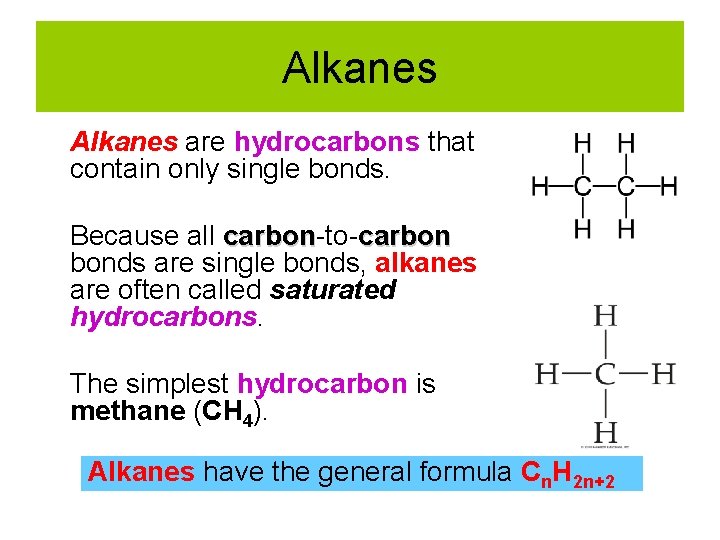
Alkanes are hydrocarbons that contain only single bonds. Because all carbon-tocarbon bonds are single bonds, alkanes are often called saturated hydrocarbons. The simplest hydrocarbon is methane (CH 4). Alkanes have the general formula Cn. H 2 n+2
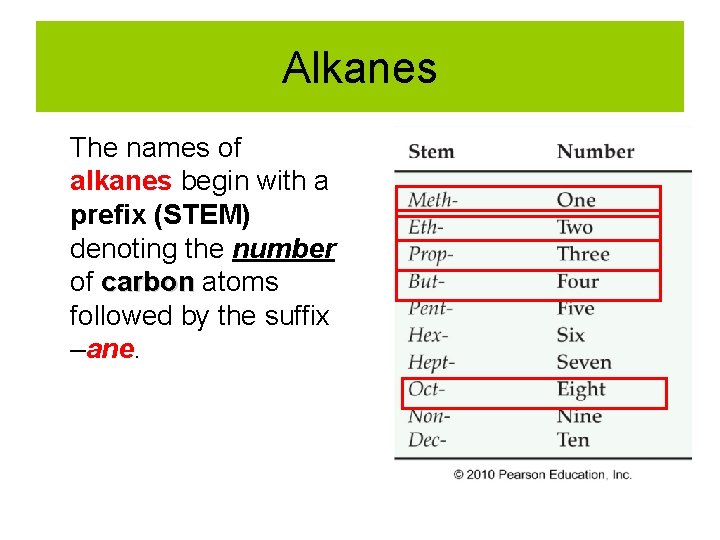
Alkanes The names of alkanes begin with a prefix (STEM) denoting the number of carbon atoms followed by the suffix –ane.
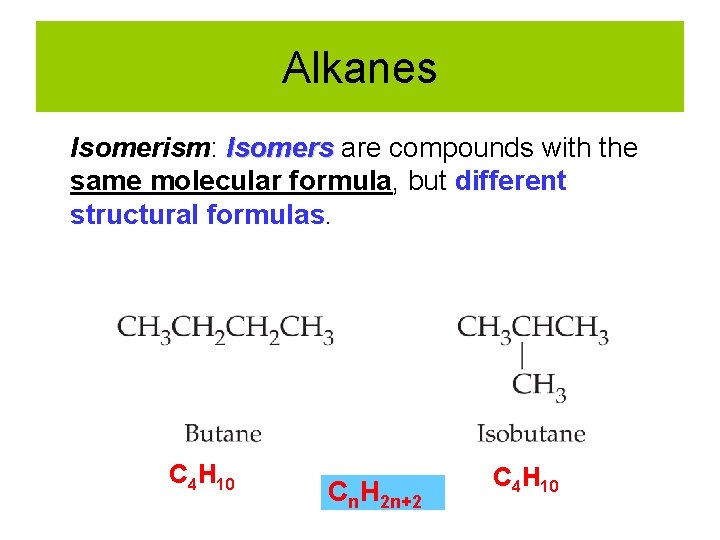
Alkanes Isomerism: Isomers are compounds with the same molecular formula, but different structural formulas. C 4 H 10 Cn. H 2 n+2 C 4 H 10
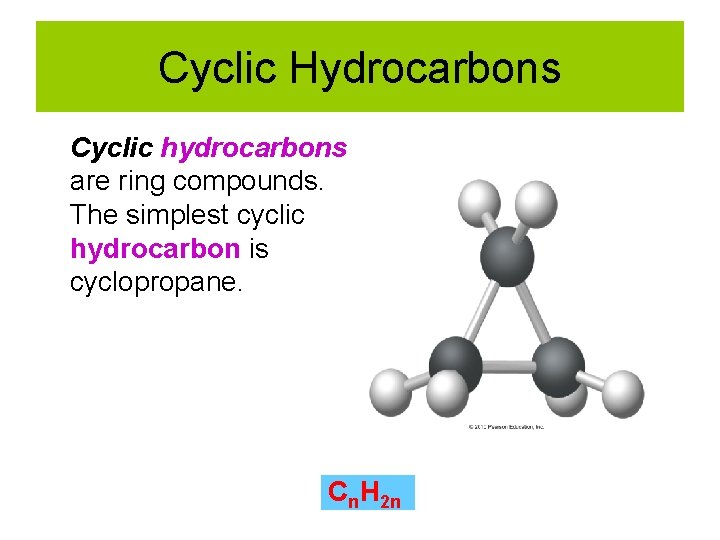
Cyclic Hydrocarbons Cyclic hydrocarbons are ring compounds. The simplest cyclic hydrocarbon is cyclopropane. Cn. H 2 n
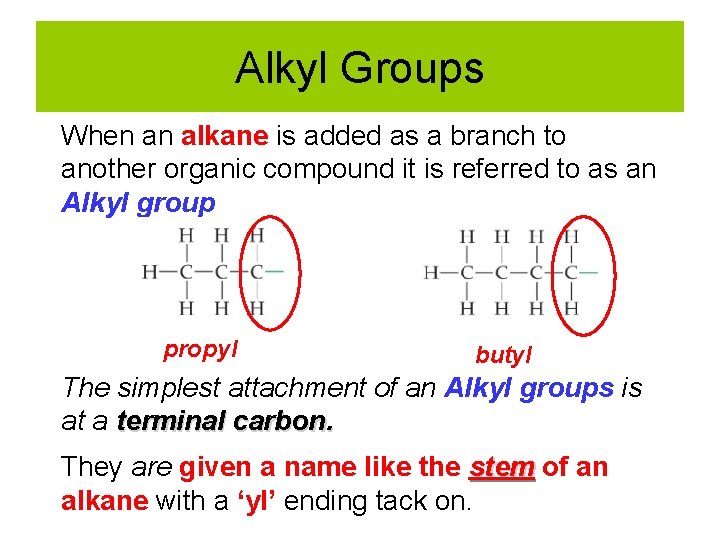
Alkyl Groups When an alkane is added as a branch to another organic compound it is referred to as an Alkyl group propyl butyl The simplest attachment of an Alkyl groups is at a terminal carbon. They are given a name like the stem of an alkane with a ‘yl’ ending tack on.
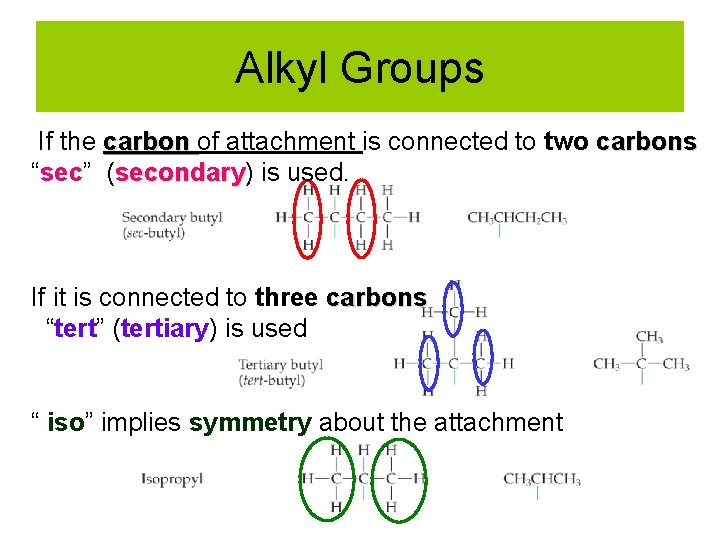
Alkyl Groups If the carbon of attachment is connected to two carbons “sec” (secondary) secondary is used. If it is connected to three carbons “tert” (tertiary) is used “ iso” implies symmetry about the attachment
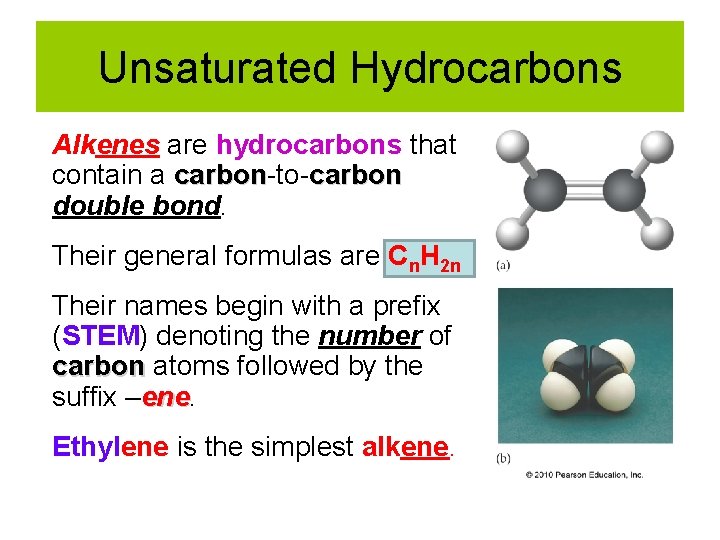
Unsaturated Hydrocarbons Alkenes are hydrocarbons that contain a carbon-tocarbon double bond. Their general formulas are Cn. H 2 n Their names begin with a prefix (STEM) denoting the number of carbon atoms followed by the suffix –ene. ene Ethylene is the simplest alkene.
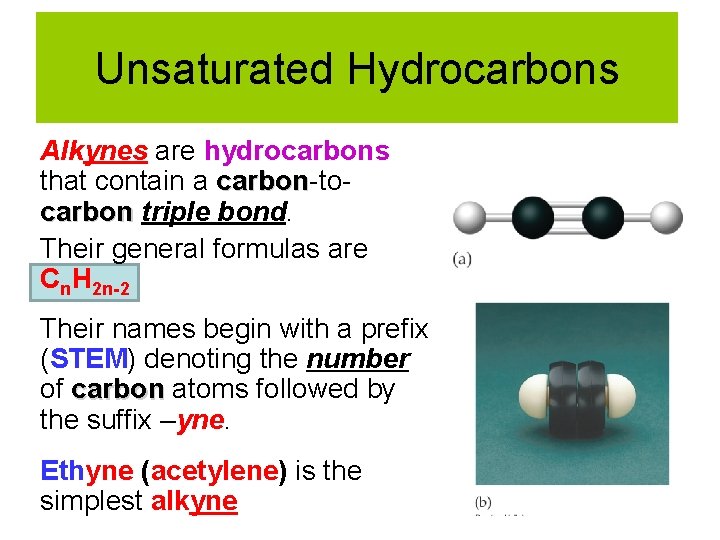
Unsaturated Hydrocarbons Alkynes are hydrocarbons that contain a carbon-tocarbon triple bond. Their general formulas are Cn. H 2 n-2 Their names begin with a prefix (STEM) denoting the number of carbon atoms followed by the suffix –yne. Ethyne (acetylene) is the simplest alkyne
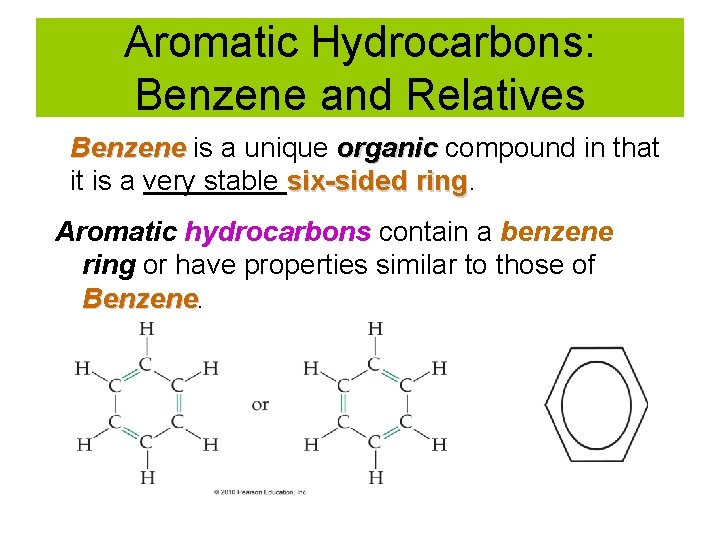
Aromatic Hydrocarbons: Benzene and Relatives Benzene is a unique organic compound in that it is a very stable six-sided ring Aromatic hydrocarbons contain a benzene ring or have properties similar to those of Benzene
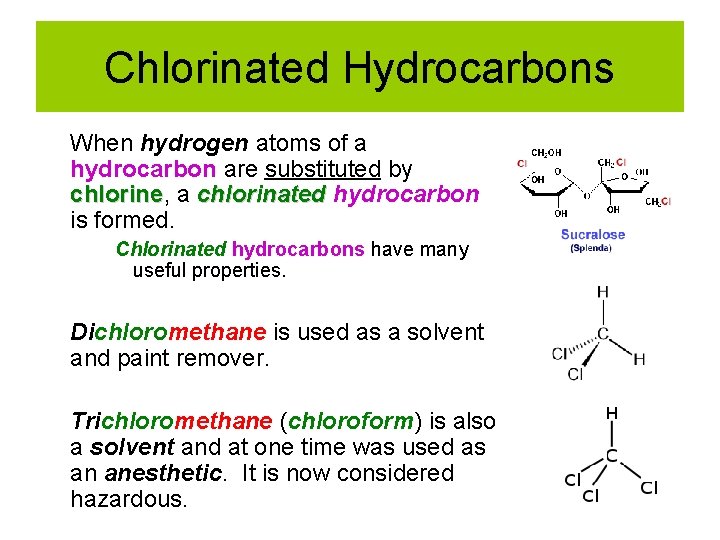
Chlorinated Hydrocarbons When hydrogen atoms of a hydrocarbon are substituted by chlorine, chlorine a chlorinated hydrocarbon is formed. Chlorinated hydrocarbons have many useful properties. Dichloromethane is used as a solvent and paint remover. Trichloromethane (chloroform) is also a solvent and at one time was used as an anesthetic. It is now considered hazardous.
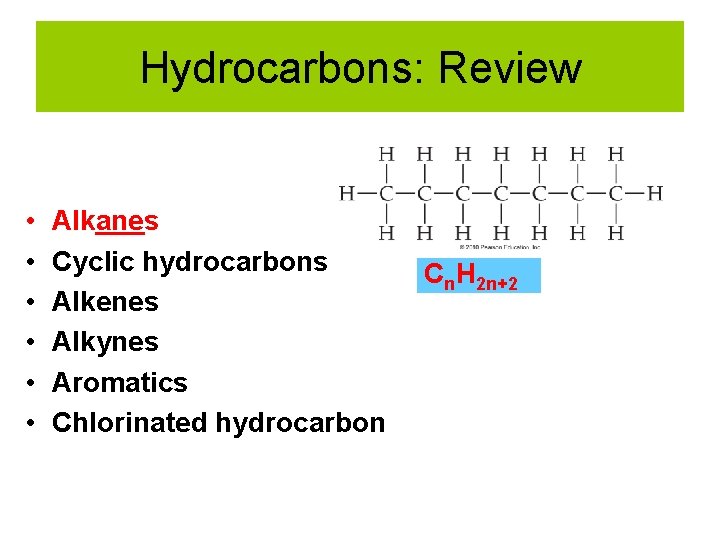
Hydrocarbons: Review • • • Alkanes Cyclic hydrocarbons Alkenes Alkynes Aromatics Chlorinated hydrocarbon Cn. H 2 n+2
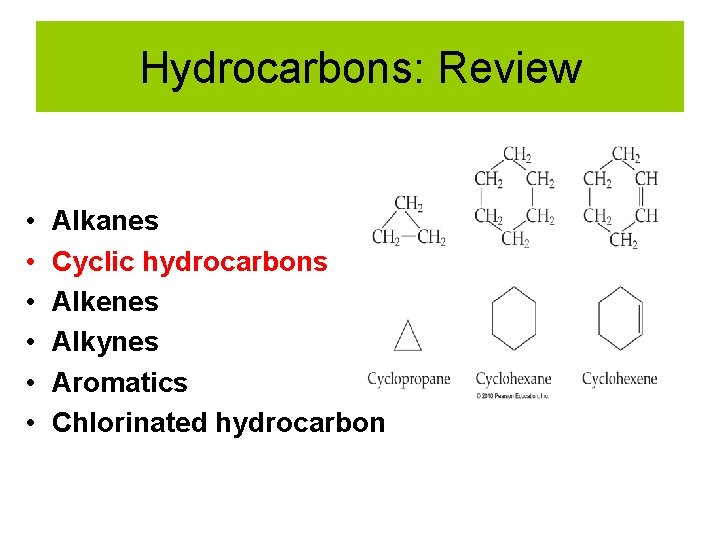
Hydrocarbons: Review • • • Alkanes Cyclic hydrocarbons Alkenes Alkynes Aromatics Chlorinated hydrocarbon
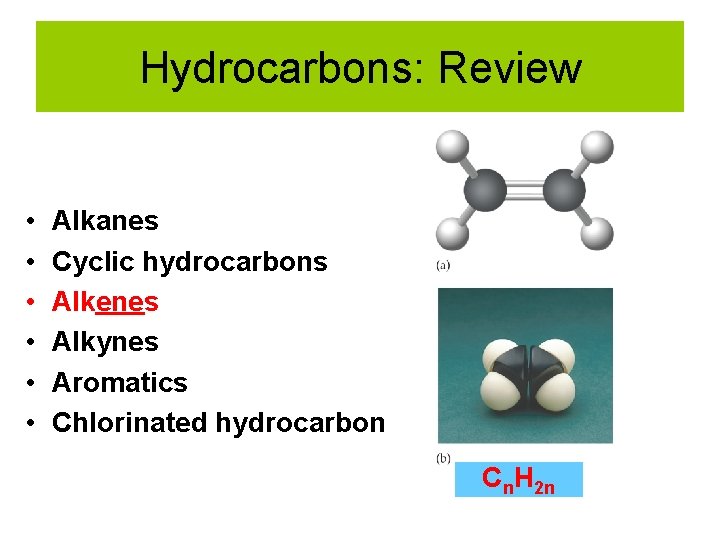
Hydrocarbons: Review • • • Alkanes Cyclic hydrocarbons Alkenes Alkynes Aromatics Chlorinated hydrocarbon Cn. H 2 n
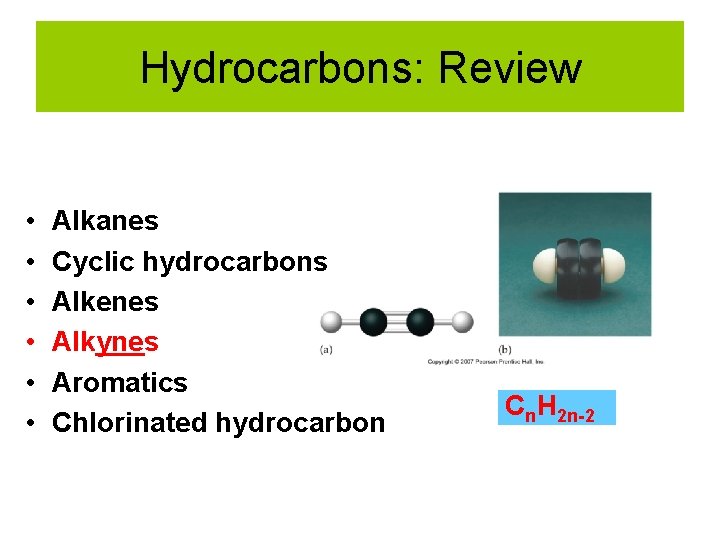
Hydrocarbons: Review • • • Alkanes Cyclic hydrocarbons Alkenes Alkynes Aromatics Chlorinated hydrocarbon Cn. H 2 n-2
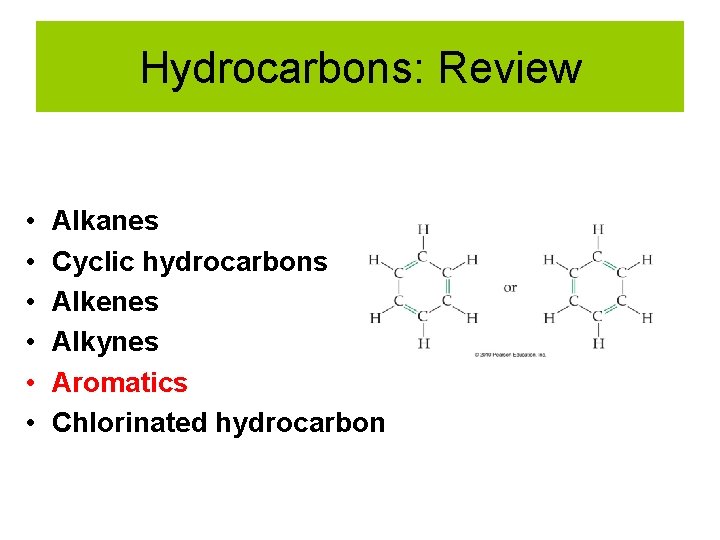
Hydrocarbons: Review • • • Alkanes Cyclic hydrocarbons Alkenes Alkynes Aromatics Chlorinated hydrocarbon
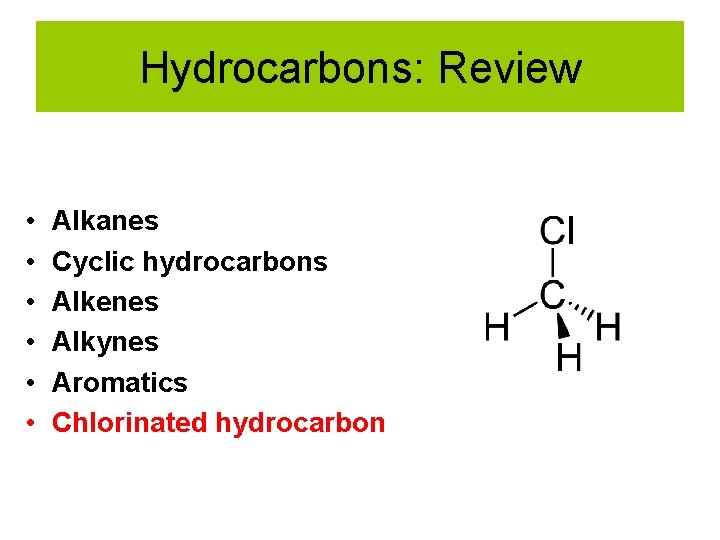
Hydrocarbons: Review • • • Alkanes Cyclic hydrocarbons Alkenes Alkynes Aromatics Chlorinated hydrocarbon
Functional Groups Atoms or groups of atoms attached to hydrocarbon skeletons give the compounds characteristic chemical and physical properties and are known as functional groups Double and triple bonds, as well as halogen substituents, are examples of functional groups.

Functional Groups: Hydrocarbons R = organic
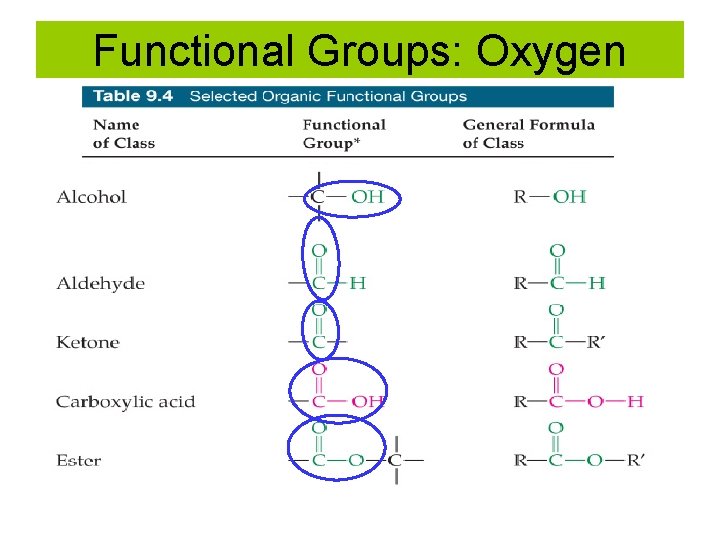
Functional Groups: Oxygen
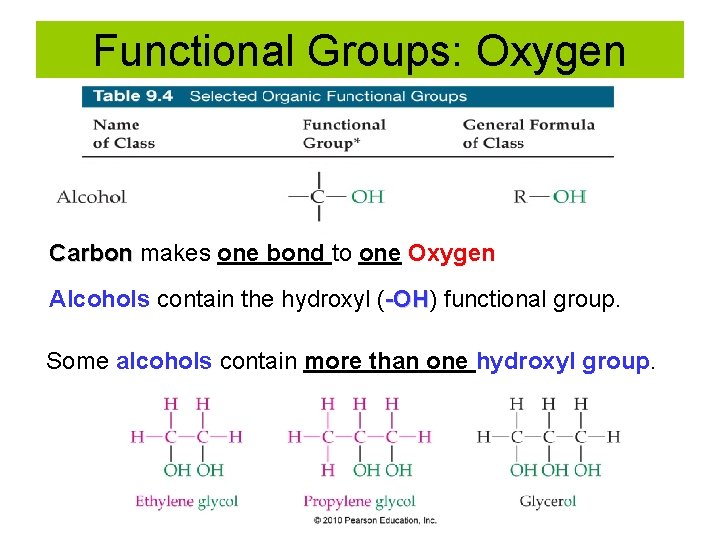
Functional Groups: Oxygen Carbon makes one bond to one Oxygen Alcohols contain the hydroxyl (-OH) -OH functional group. Some alcohols contain more than one hydroxyl group.
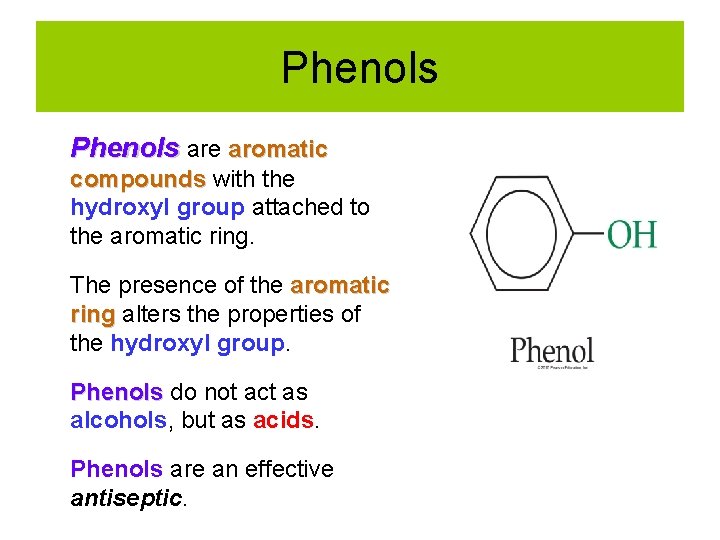
Phenols are aromatic compounds with the hydroxyl group attached to the aromatic ring. The presence of the aromatic ring alters the properties of the hydroxyl group. Phenols do not act as alcohols, but as acids. Phenols are an effective antiseptic.
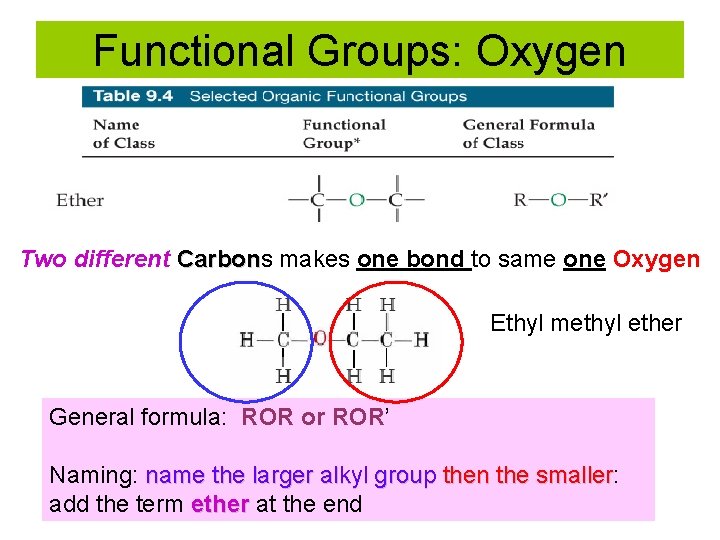
Functional Groups: Oxygen Two different Carbons Carbon makes one bond to same one Oxygen Ethyl methyl ether General formula: ROR or ROR’ Naming: name the larger alkyl group then the smaller: smaller add the term ether at the end
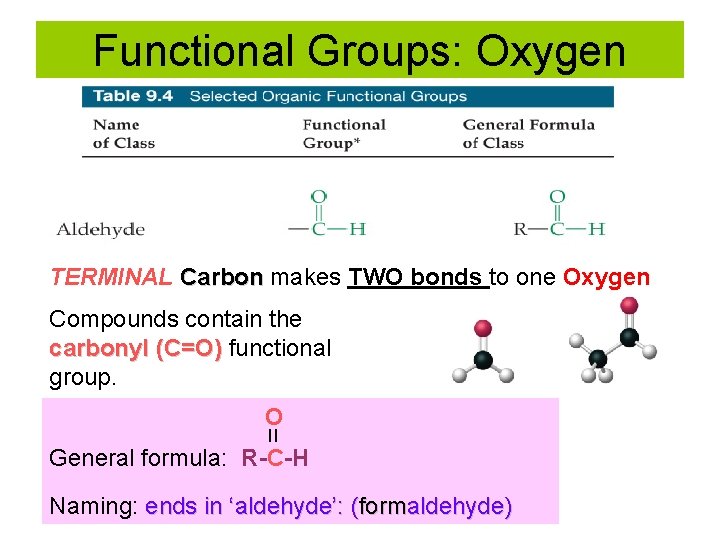
Functional Groups: Oxygen TERMINAL Carbon makes TWO bonds to one Oxygen Compounds contain the carbonyl (C=O) functional group. = O General formula: R-C-H Naming: ends in ‘aldehyde’: (formaldehyde)
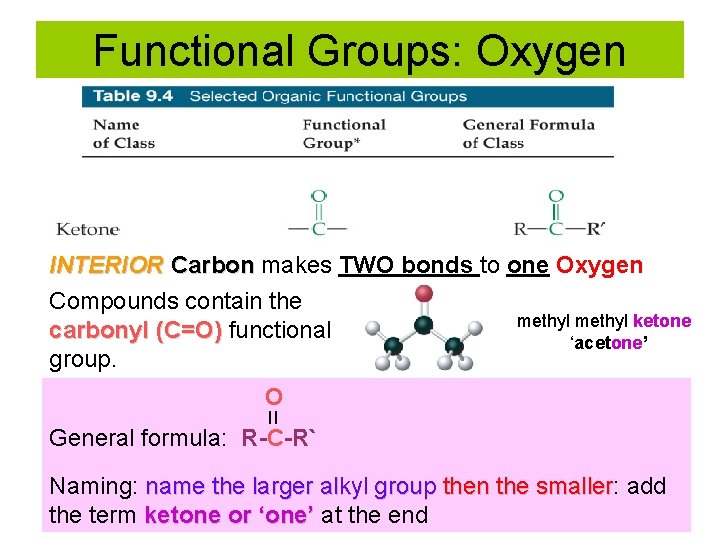
Functional Groups: Oxygen INTERIOR Carbon makes TWO bonds to one Oxygen Compounds contain the methyl ketone carbonyl (C=O) functional ‘acetone’ group. = O General formula: R-C-R` Naming: name the larger alkyl group then the smaller: smaller add the term ketone or ‘one’ at the end
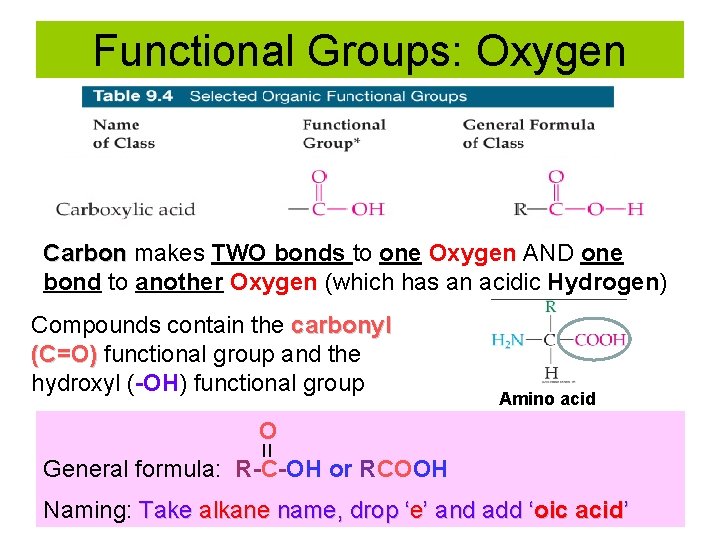
Functional Groups: Oxygen Carbon makes TWO bonds to one Oxygen AND one bond to another Oxygen (which has an acidic Hydrogen) Compounds contain the carbonyl (C=O) functional group and the hydroxyl (-OH) functional group Amino acid = O General formula: R-C-OH or RCOOH Naming: Take alkane name, drop ‘e’ and add ‘oic acid’
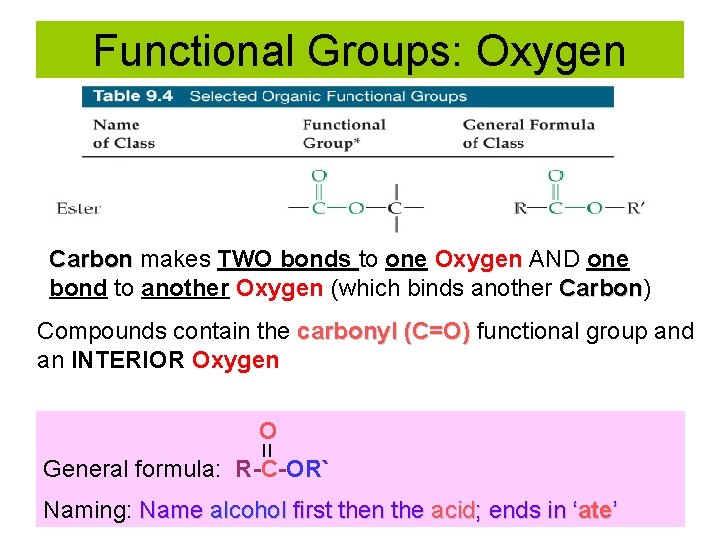
Functional Groups: Oxygen Carbon makes TWO bonds to one Oxygen AND one bond to another Oxygen (which binds another Carbon) Carbon Compounds contain the carbonyl (C=O) functional group and an INTERIOR Oxygen = O General formula: R-C-OR` Naming: Name alcohol first then the acid; ends in ‘ate’
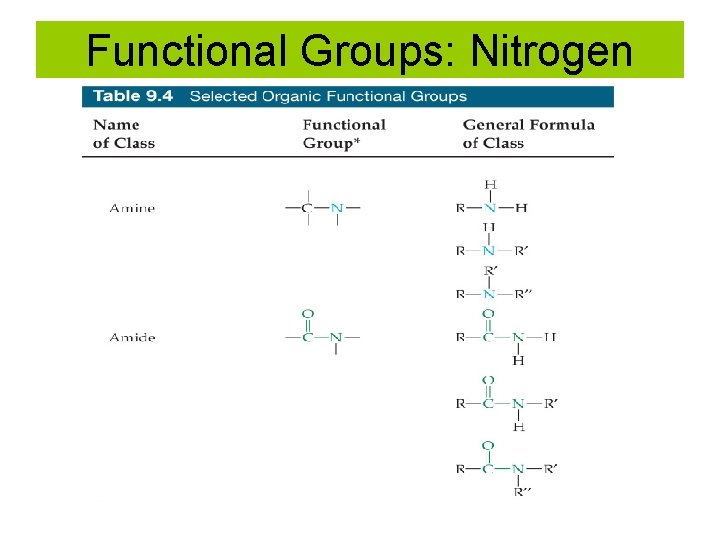
Functional Groups: Nitrogen
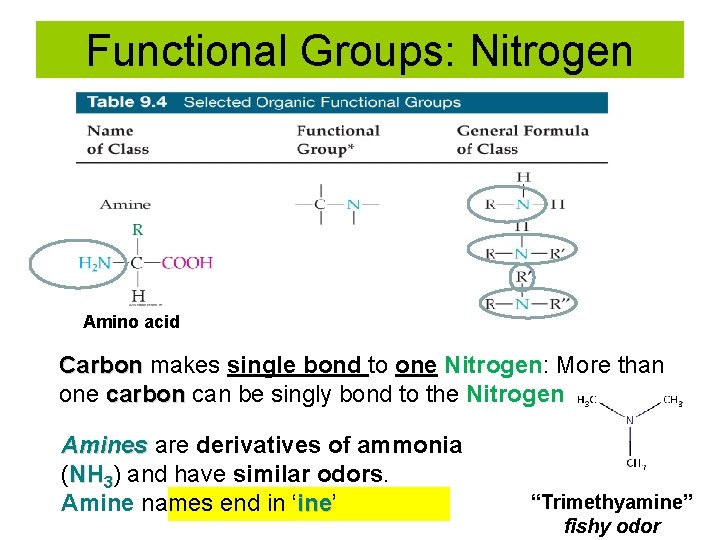
Functional Groups: Nitrogen Amino acid Carbon makes single bond to one Nitrogen: More than one carbon can be singly bond to the Nitrogen Amines are derivatives of ammonia (NH 3) and have similar odors. Amine names end in ‘ine’ ine “Trimethyamine” fishy odor
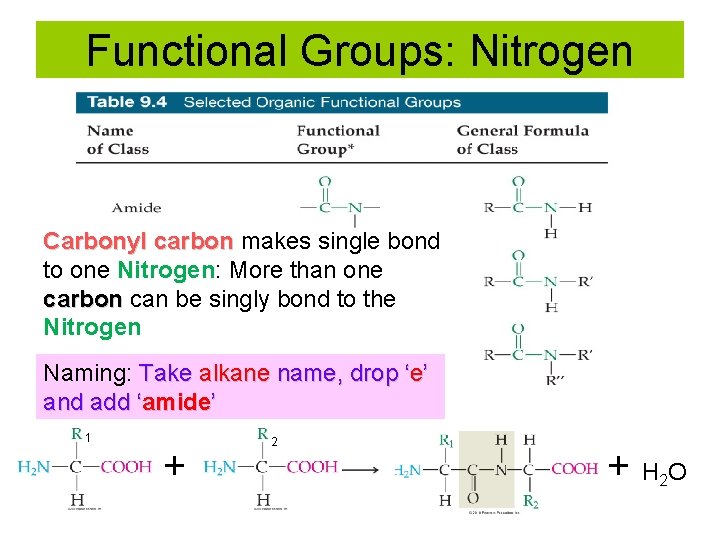
Functional Groups: Nitrogen Carbonyl carbon makes single bond to one Nitrogen: More than one carbon can be singly bond to the Nitrogen Naming: Take alkane name, drop ‘e’ and add ‘amide’ 1 + 2 +HO 2

Summary: 1. Organic molecules contain CARBON 2. Hydrocarbons contain hydrogens and carbons (some have Chlorine) and can contain double and triple bonds (alkenes and alkynes) 3. Carbon-Oxygen Functional groups progress for a single bond to an oxygen (alcohols) to double bonded (carbonyls) carbonyls to double and single bounded (carboxylic acids, acids esters) 4. Carbon-Nitrogen Function groups progress from a single bond to a nitrogen (amine) amine to a carbonyl carbon bound to a nitrogen (amide) amide
- Slides: 38