
Organic Chemistry Saturated Hydrocarbons Petroleum Reactions of Alkanes
Organic Chemistry Saturated Hydrocarbons Petroleum Reactions of Alkanes Unsaturated Hydrocarbons Aromatic Hydrocarbons Alcohols Aldehydes and Ketones Carboxylic Acids Esters Polymers
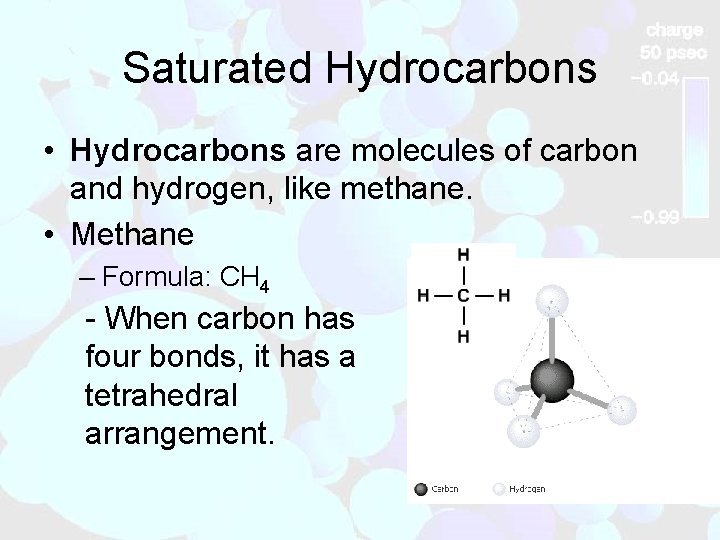
Saturated Hydrocarbons • Hydrocarbons are molecules of carbon and hydrogen, like methane. • Methane – Formula: CH 4 - When carbon has four bonds, it has a tetrahedral arrangement.
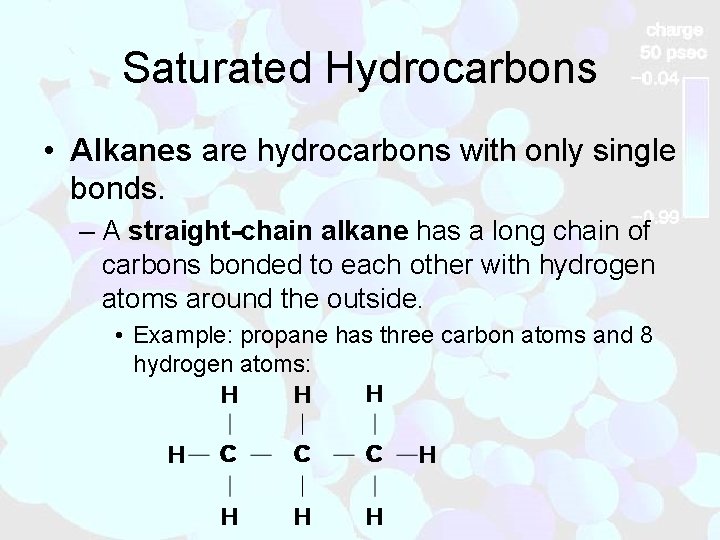
Saturated Hydrocarbons • Alkanes are hydrocarbons with only single bonds. – A straight-chain alkane has a long chain of carbons bonded to each other with hydrogen atoms around the outside. • Example: propane has three carbon atoms and 8 hydrogen atoms:
Saturated Hydrocarbons – Formulas: For each carbon that is added in an alkane, there are two more hydrogen atoms in the compound. • A CH 2 group is added from one compound in the series to the next. CH 3 – (CH 2) m – CH 3 – Memorize the first ten prefixes for naming alkanes: meth, prop, but, pent, hex, hept, oct, non, dec
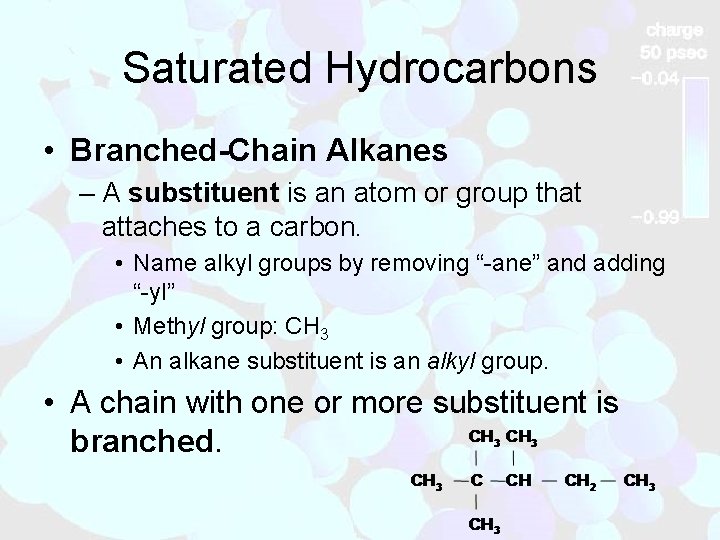
Saturated Hydrocarbons • Branched-Chain Alkanes – A substituent is an atom or group that attaches to a carbon. • Name alkyl groups by removing “-ane” and adding “-yl” • Methyl group: CH 3 • An alkane substituent is an alkyl group. • A chain with one or more substituent is branched.
Saturated Hydrocarbons • Naming alkanes with the IUPAC rules. • Step 1. Find the longest continuous chain of carbons (it doesn’t have to be straight). (Draw a line through these carbons if it’s helpful. ) Assign an “alkane” name according to the number of carbons in this chain.
Saturated Hydrocarbons • Step 2. All carbons not in this main chain are “branches” connected to the main chain. Name each branch using the corresponding prefix with a “–yl” ending. 1 carbon - “methyl” 2 carbons - “ethyl” 3 carbons - “propyl”
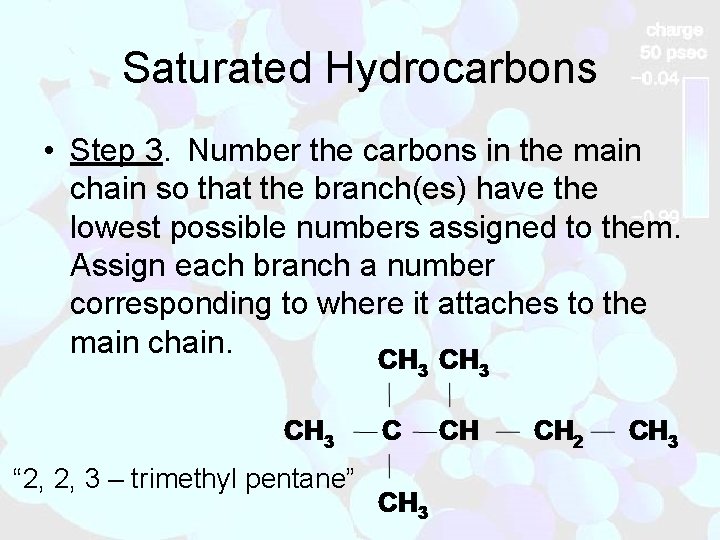
Saturated Hydrocarbons • Step 3. Number the carbons in the main chain so that the branch(es) have the lowest possible numbers assigned to them. Assign each branch a number corresponding to where it attaches to the main chain. “ 2, 2, 3 – trimethyl pentane”
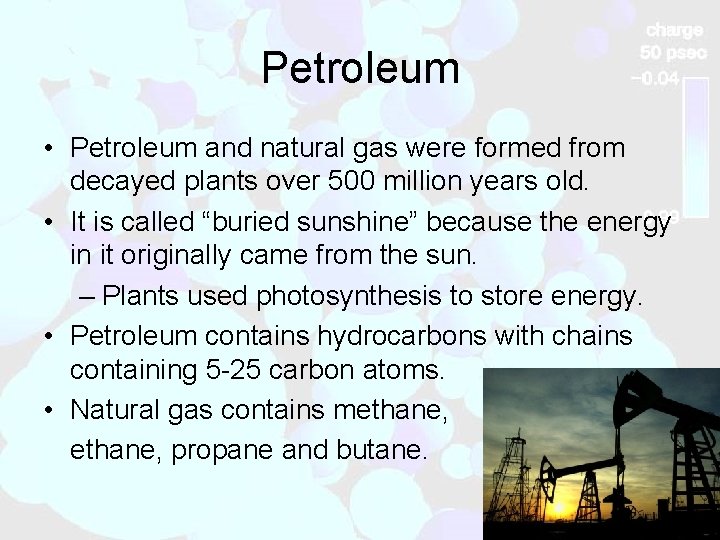
Petroleum • Petroleum and natural gas were formed from decayed plants over 500 million years old. • It is called “buried sunshine” because the energy in it originally came from the sun. – Plants used photosynthesis to store energy. • Petroleum contains hydrocarbons with chains containing 5 -25 carbon atoms. • Natural gas contains methane, propane and butane.
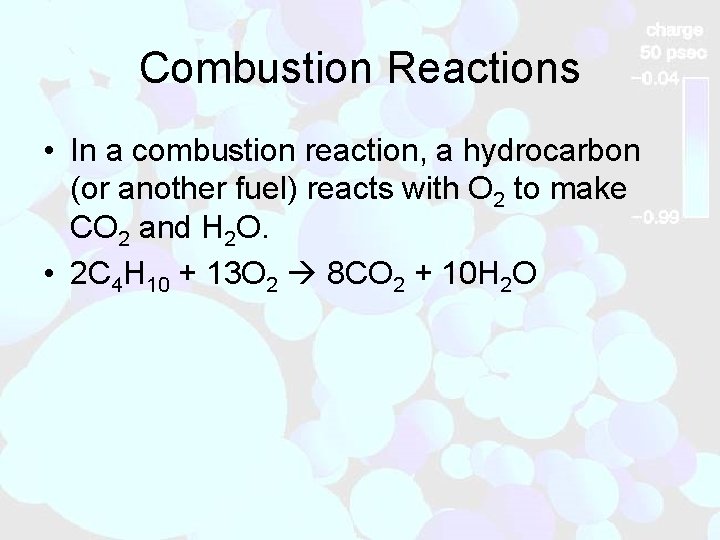
Combustion Reactions • In a combustion reaction, a hydrocarbon (or another fuel) reacts with O 2 to make CO 2 and H 2 O. • 2 C 4 H 10 + 13 O 2 8 CO 2 + 10 H 2 O

Combustion Reactions • Write the balanced equation for the combustion of propane: • C 3 H 8 + 5 O 2 3 CO 2 + 4 H 2 O • 1. Write O 2 on the left • 2. Write CO 2 and H 2 O on the right. • 3. Balance.
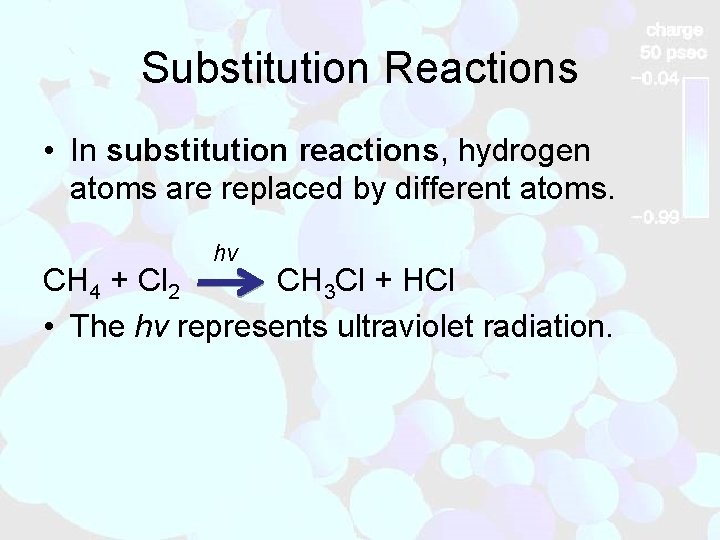
Substitution Reactions • In substitution reactions, hydrogen atoms are replaced by different atoms. hv CH 4 + Cl 2 CH 3 Cl + HCl • The hv represents ultraviolet radiation.
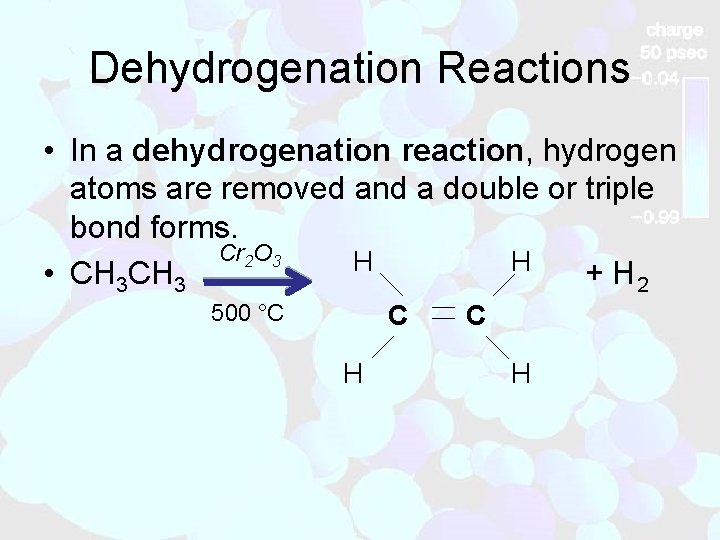
Dehydrogenation Reactions • In a dehydrogenation reaction, hydrogen atoms are removed and a double or triple bond forms. Cr 2 O 3 H H • CH 3 + H 2 500 °C C H
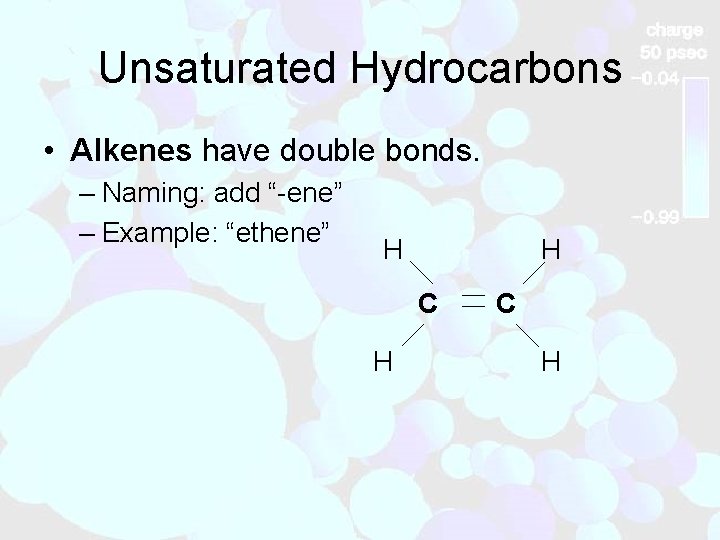
Unsaturated Hydrocarbons • Alkenes have double bonds. – Naming: add “-ene” – Example: “ethene” H H C H
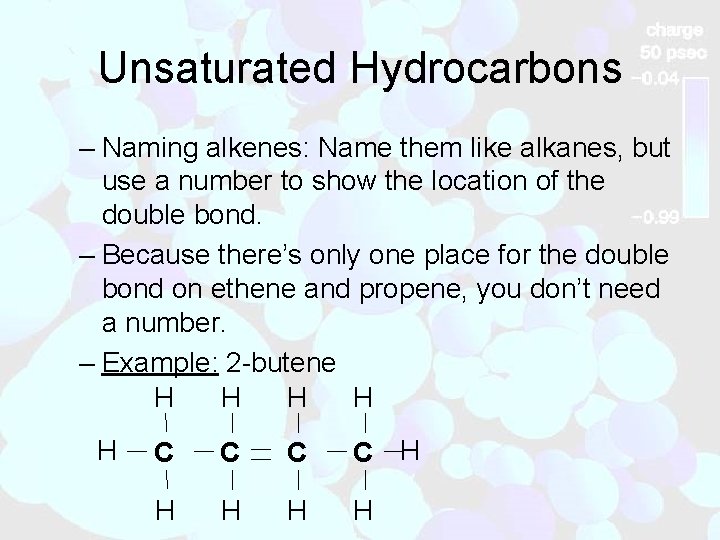
Unsaturated Hydrocarbons – Naming alkenes: Name them like alkanes, but use a number to show the location of the double bond. – Because there’s only one place for the double bond on ethene and propene, you don’t need a number. – Example: 2 -butene H H H C C H H H
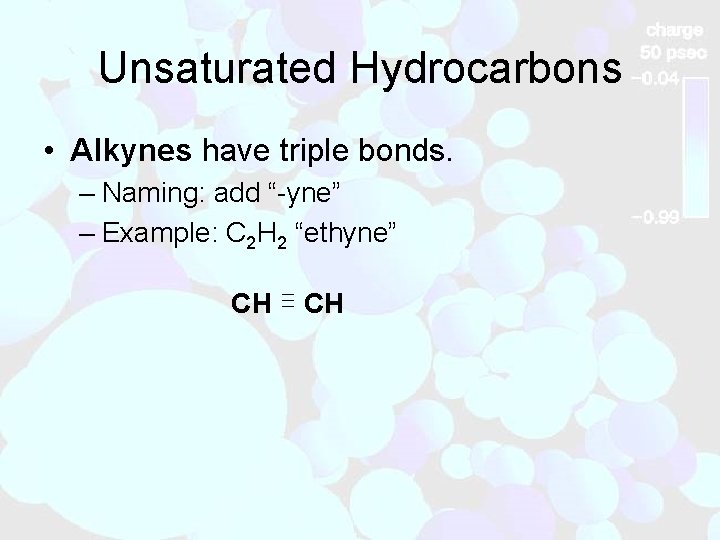
Unsaturated Hydrocarbons • Alkynes have triple bonds. – Naming: add “-yne” – Example: C 2 H 2 “ethyne” CH CH
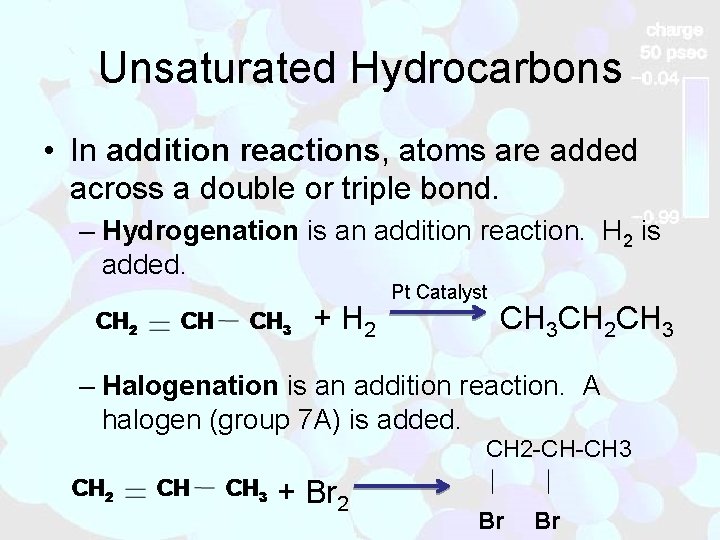
Unsaturated Hydrocarbons • In addition reactions, atoms are added across a double or triple bond. – Hydrogenation is an addition reaction. H 2 is added. + H 2 Pt Catalyst CH 3 CH 2 CH 3 – Halogenation is an addition reaction. A halogen (group 7 A) is added. + Br 2
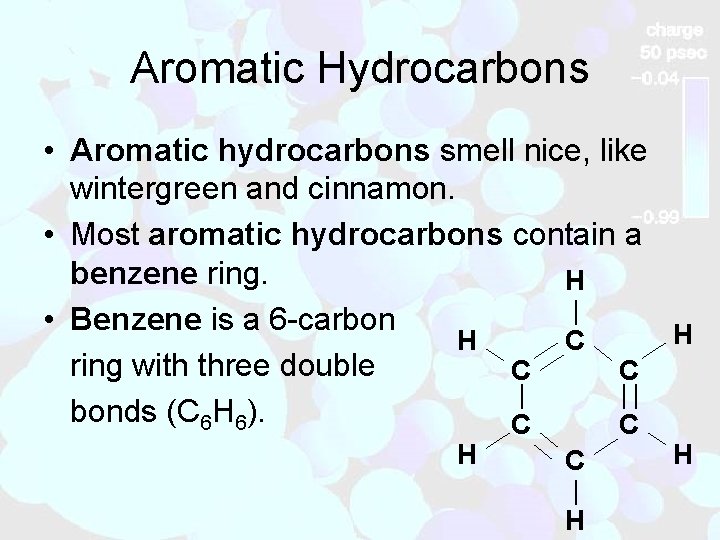
Aromatic Hydrocarbons • Aromatic hydrocarbons smell nice, like wintergreen and cinnamon. • Most aromatic hydrocarbons contain a benzene ring. H • Benzene is a 6 -carbon H H C ring with three double C C bonds (C 6 H 6). C C H H
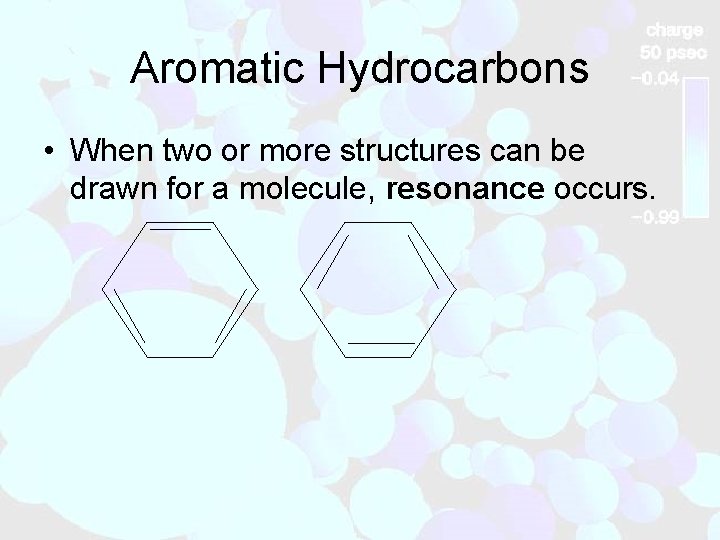
Aromatic Hydrocarbons • When two or more structures can be drawn for a molecule, resonance occurs.
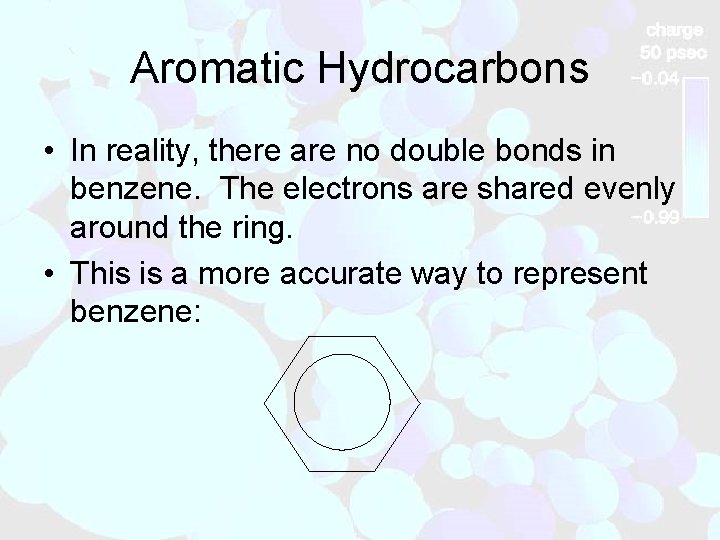
Aromatic Hydrocarbons • In reality, there are no double bonds in benzene. The electrons are shared evenly around the ring. • This is a more accurate way to represent benzene:
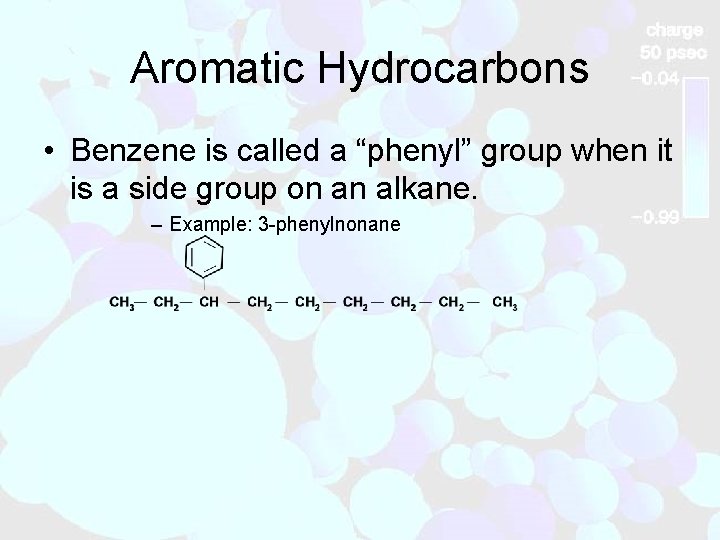
Aromatic Hydrocarbons • Benzene is called a “phenyl” group when it is a side group on an alkane. – Example: 3 -phenylnonane
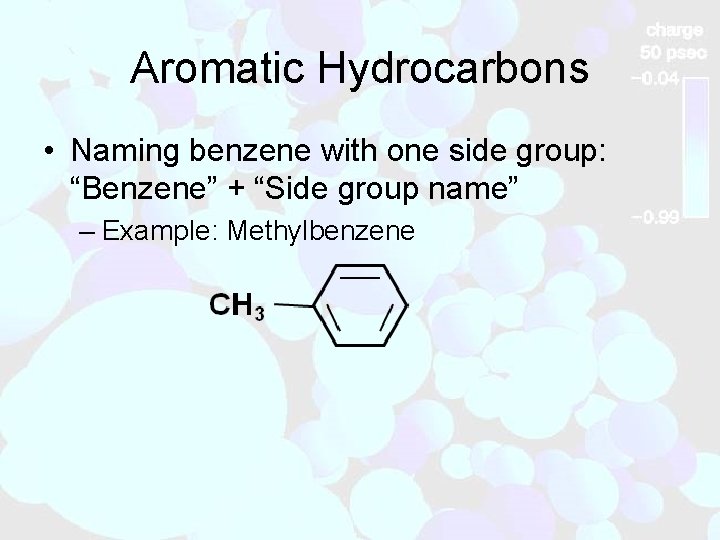
Aromatic Hydrocarbons • Naming benzene with one side group: “Benzene” + “Side group name” – Example: Methylbenzene
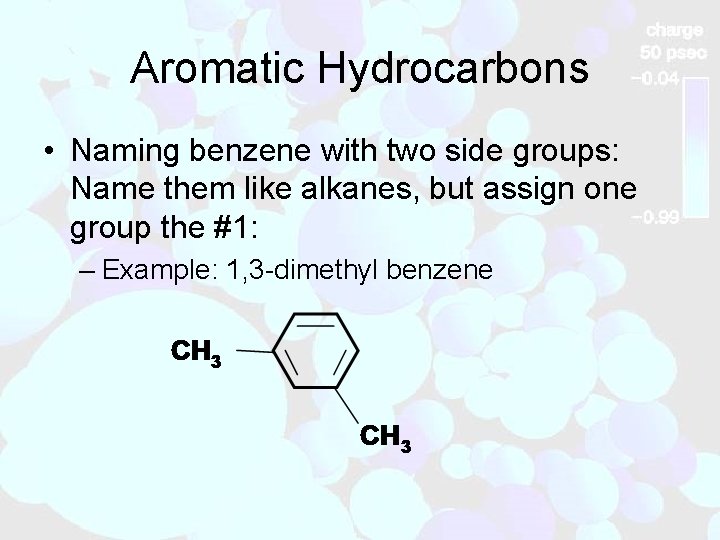
Aromatic Hydrocarbons • Naming benzene with two side groups: Name them like alkanes, but assign one group the #1: – Example: 1, 3 -dimethyl benzene
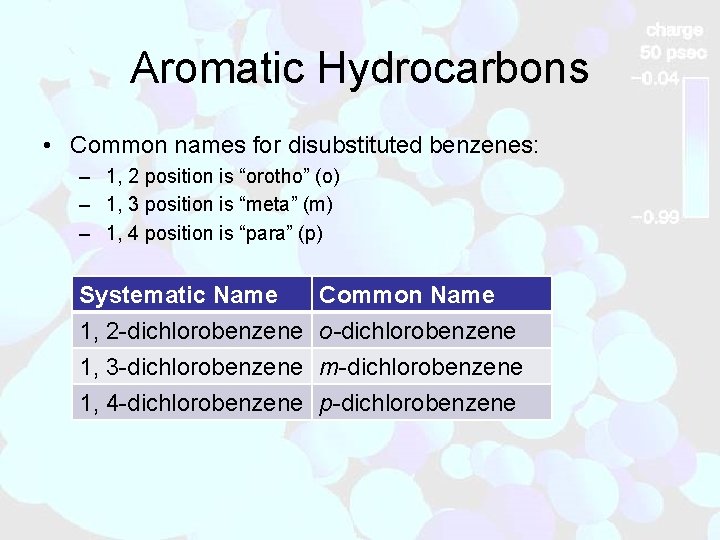
Aromatic Hydrocarbons • Common names for disubstituted benzenes: – 1, 2 position is “orotho” (o) – 1, 3 position is “meta” (m) – 1, 4 position is “para” (p) Systematic Name 1, 2 -dichlorobenzene 1, 3 -dichlorobenzene 1, 4 -dichlorobenzene Common Name o-dichlorobenzene m-dichlorobenzene p-dichlorobenzene
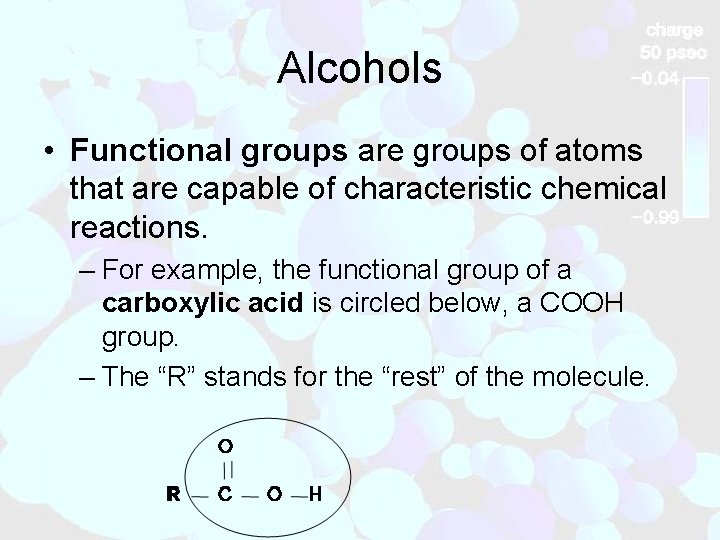
Alcohols • Functional groups are groups of atoms that are capable of characteristic chemical reactions. – For example, the functional group of a carboxylic acid is circled below, a COOH group. – The “R” stands for the “rest” of the molecule.
Alcohols • An alcohol is an organic compound with an “-OH” group. – The “-OH” group is called a hydroxyl group. – There are three kinds of alcohols: 1). Primary alcohol – one “R” group attached to the C-OH 2). Secondary alcohol – two“R” groups attached to the C-OH 3). Tertiary alcohol – three “R” groups attached to the C-OH
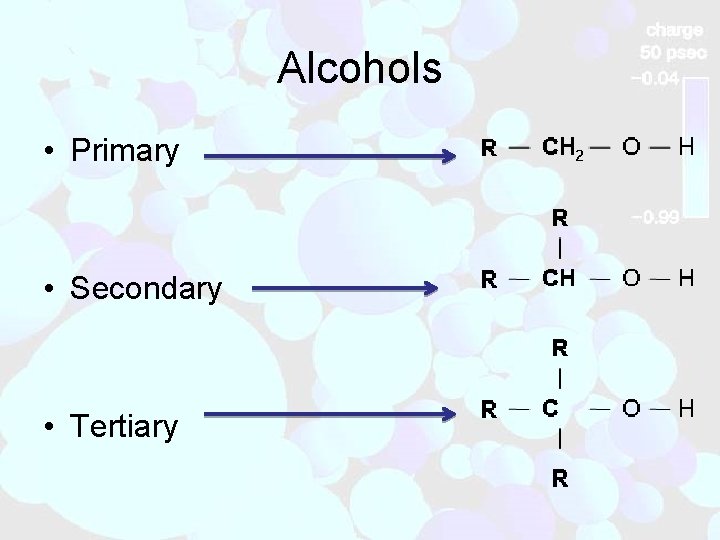
Alcohols • Primary • Secondary • Tertiary
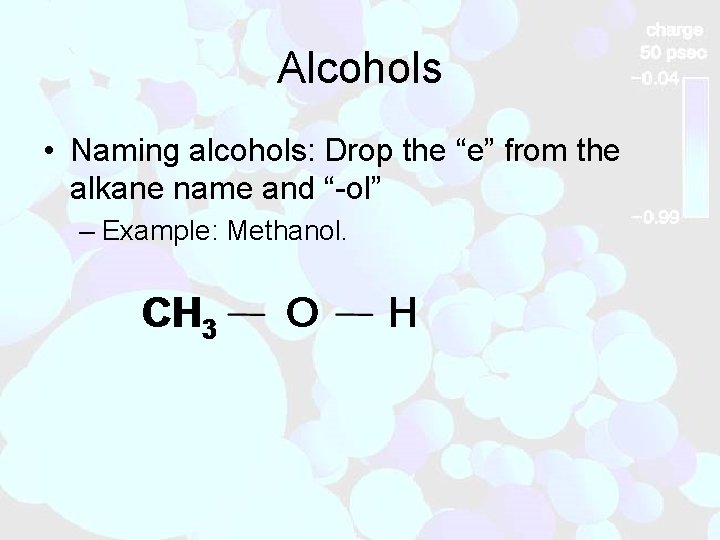
Alcohols • Naming alcohols: Drop the “e” from the alkane name and “-ol” – Example: Methanol.
Alcohols • Properties – Ethanol is produced by fermentation, which is the digestion of sugar by yeast. Alcoholic beverages such as beer are made by this process. – Methanol is used to make many materials— plastics, fibers, etc.
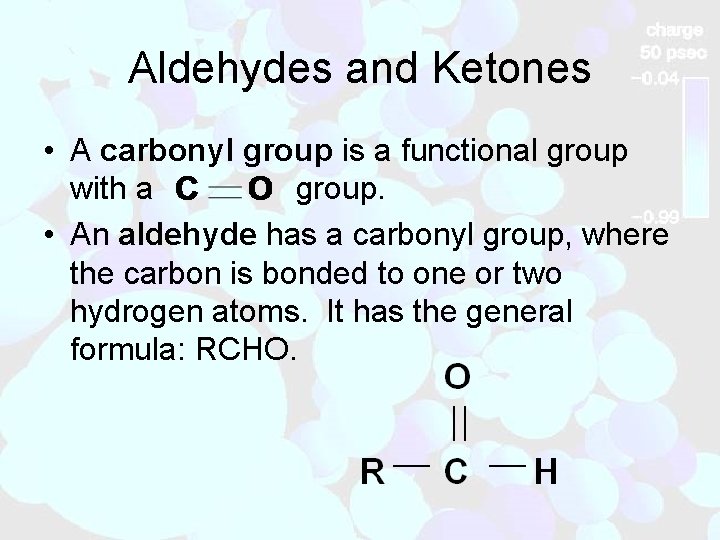
Aldehydes and Ketones • A carbonyl group is a functional group with a group. • An aldehyde has a carbonyl group, where the carbon is bonded to one or two hydrogen atoms. It has the general formula: RCHO.
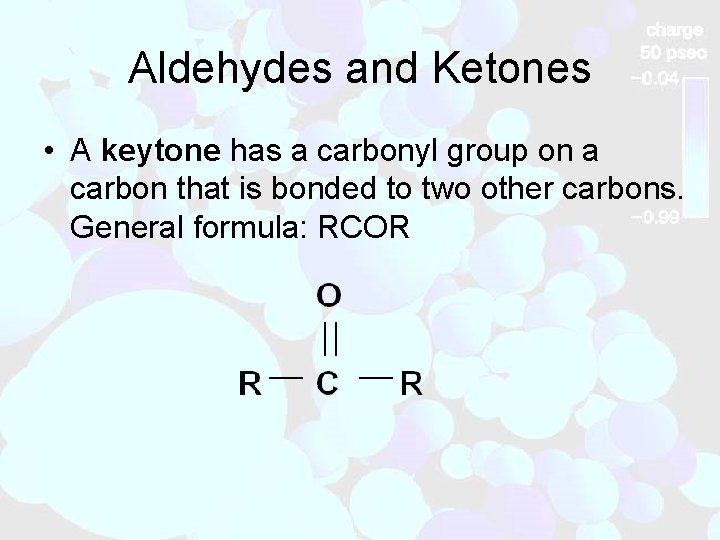
Aldehydes and Ketones • A keytone has a carbonyl group on a carbon that is bonded to two other carbons. General formula: RCOR
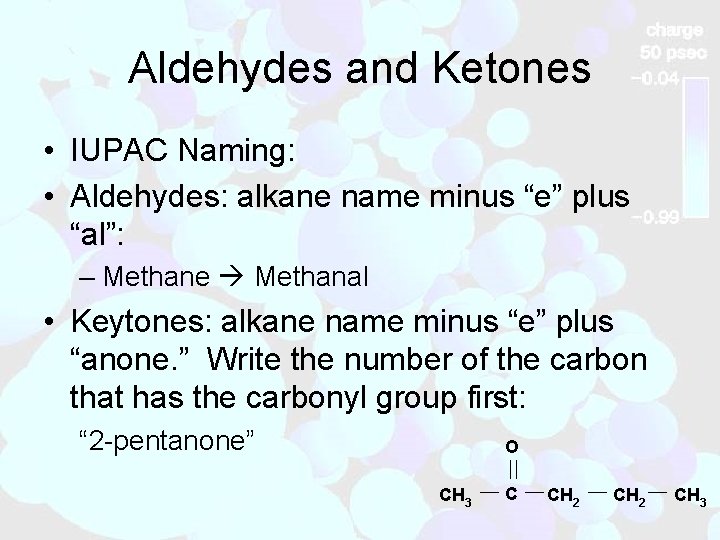
Aldehydes and Ketones • IUPAC Naming: • Aldehydes: alkane name minus “e” plus “al”: – Methane Methanal • Keytones: alkane name minus “e” plus “anone. ” Write the number of the carbon that has the carbonyl group first: “ 2 -pentanone” O CH 3 C CH 2 CH 3
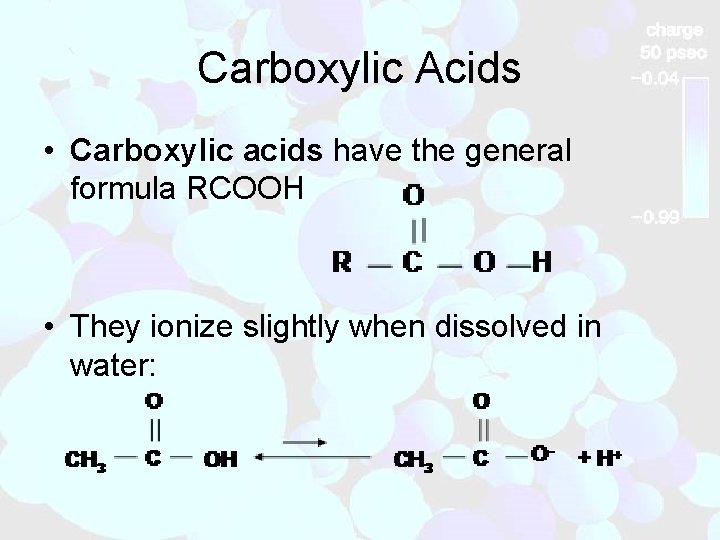
Carboxylic Acids • Carboxylic acids have the general formula RCOOH • They ionize slightly when dissolved in water:
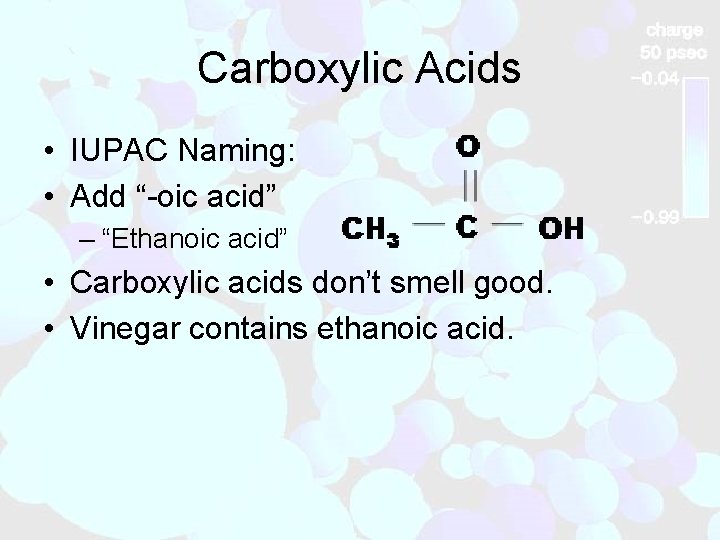
Carboxylic Acids • IUPAC Naming: • Add “-oic acid” – “Ethanoic acid” • Carboxylic acids don’t smell good. • Vinegar contains ethanoic acid.
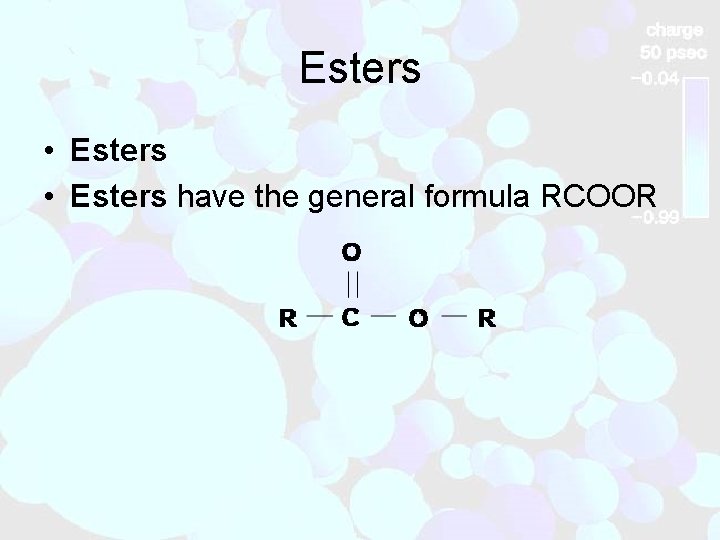
Esters • Esters have the general formula RCOOR
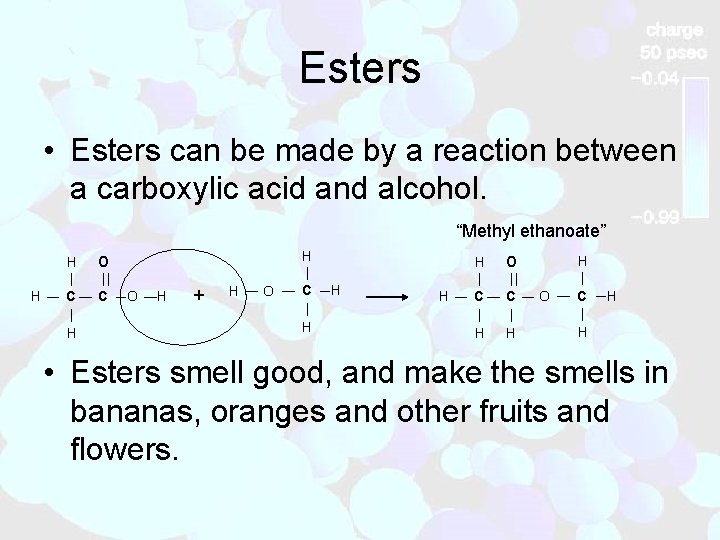
Esters • Esters can be made by a reaction between a carboxylic acid and alcohol. “Methyl ethanoate” H H o C C H H O H + H O C H H o C C H H H O C H H • Esters smell good, and make the smells in bananas, oranges and other fruits and flowers.
Polymers • Polymers are made from small molecules, called monomers. – Ethene can react with itself, creating an addition polymer. – This reaction is called an addition reaction. Many ethene add onto the growinig polymer chain to make a very long molecule.
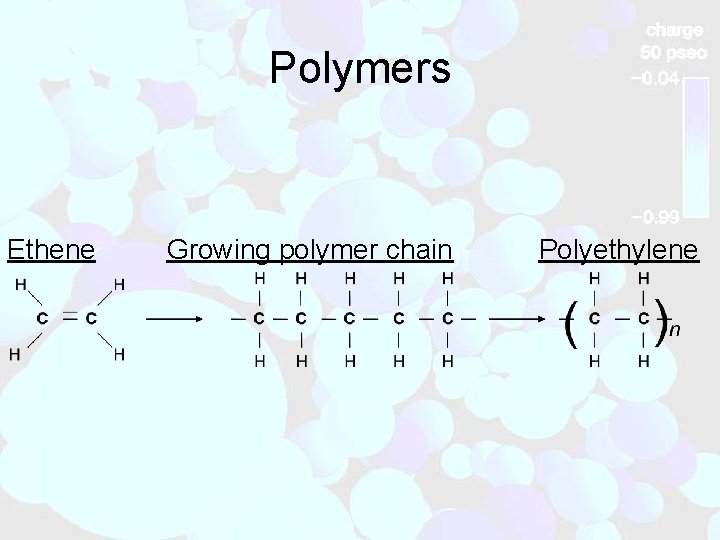
Polymers Ethene Growing polymer chain Polyethylene
- Slides: 38