
Organic Chemistry Notes EQ How does the valence



- Slides: 16
Organic Chemistry Notes EQ: How does the valence electron structure of carbon allow For so much diversity in bonding?
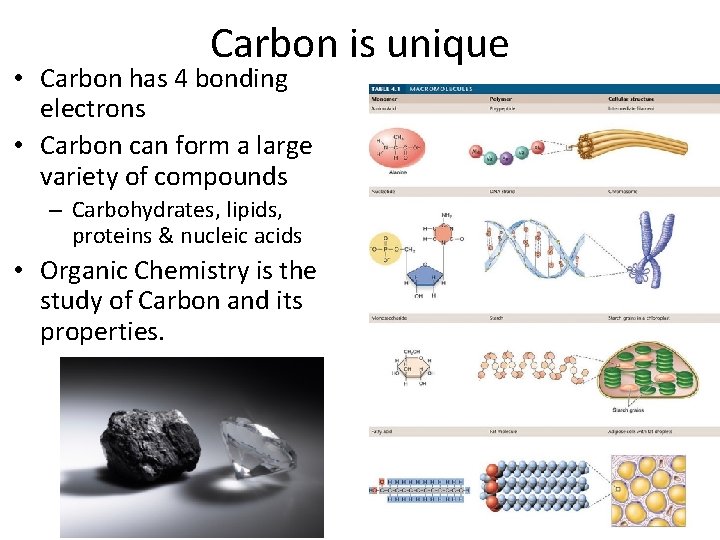
Carbon is unique • Carbon has 4 bonding electrons • Carbon can form a large variety of compounds – Carbohydrates, lipids, proteins & nucleic acids • Organic Chemistry is the study of Carbon and its properties.
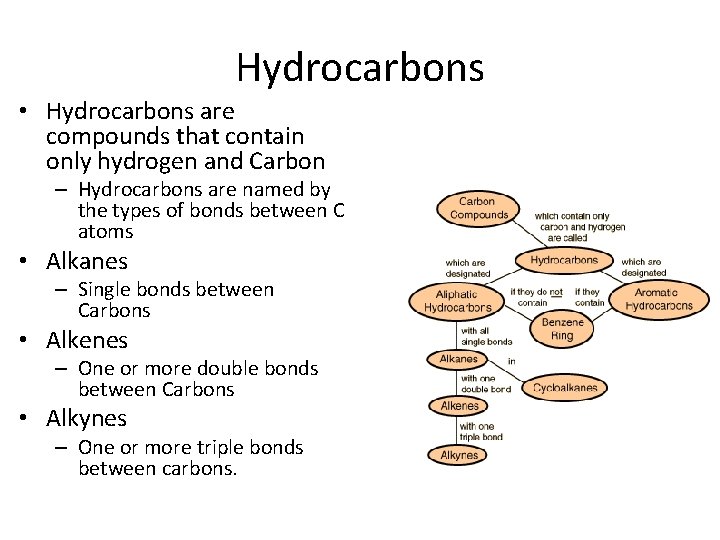
Hydrocarbons • Hydrocarbons are compounds that contain only hydrogen and Carbon – Hydrocarbons are named by the types of bonds between C atoms • Alkanes – Single bonds between Carbons • Alkenes – One or more double bonds between Carbons • Alkynes – One or more triple bonds between carbons.
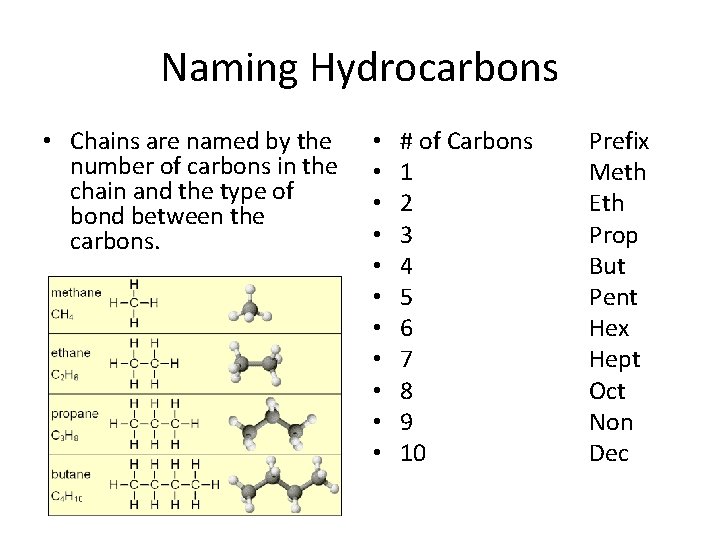
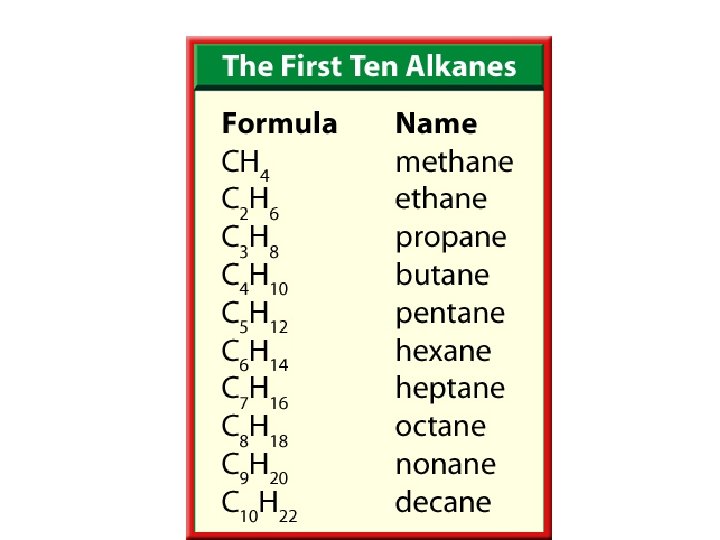
Naming Hydrocarbons • Chains are named by the number of carbons in the chain and the type of bond between the carbons. • • • # of Carbons 1 2 3 4 5 6 7 8 9 10 Prefix Meth Eth Prop But Pent Hex Hept Oct Non Dec
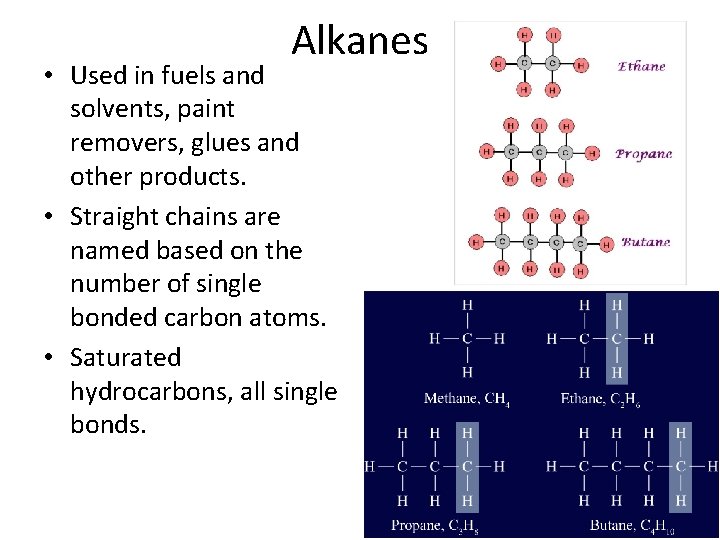
Alkanes • Used in fuels and solvents, paint removers, glues and other products. • Straight chains are named based on the number of single bonded carbon atoms. • Saturated hydrocarbons, all single bonds.
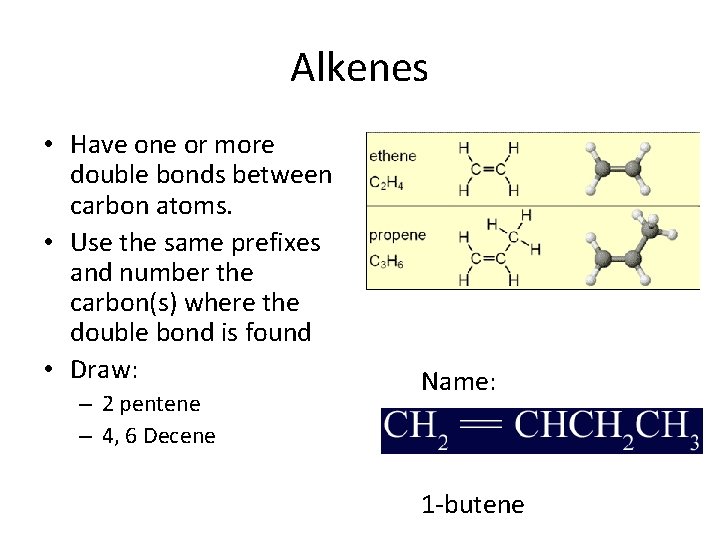
Alkenes • Have one or more double bonds between carbon atoms. • Use the same prefixes and number the carbon(s) where the double bond is found • Draw: – 2 pentene – 4, 6 Decene Name: 1 -butene
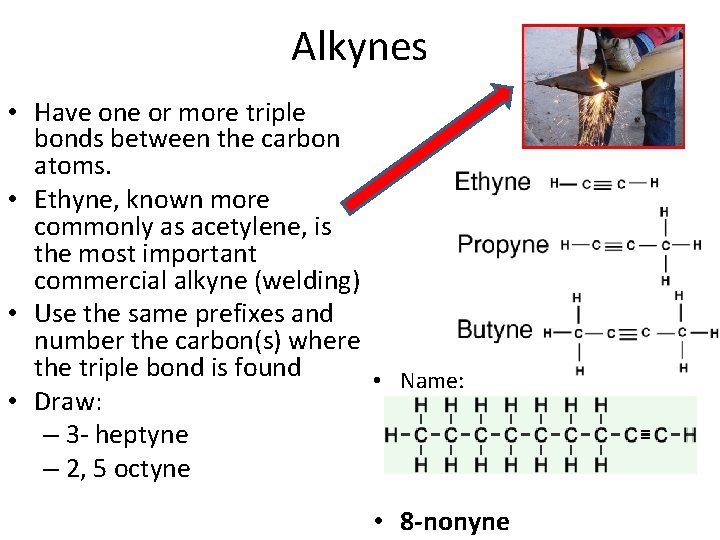
Alkynes • Have one or more triple bonds between the carbon atoms. • Ethyne, known more commonly as acetylene, is the most important commercial alkyne (welding) • Use the same prefixes and number the carbon(s) where the triple bond is found • Name: • Draw: – 3 - heptyne – 2, 5 octyne • 8 -nonyne
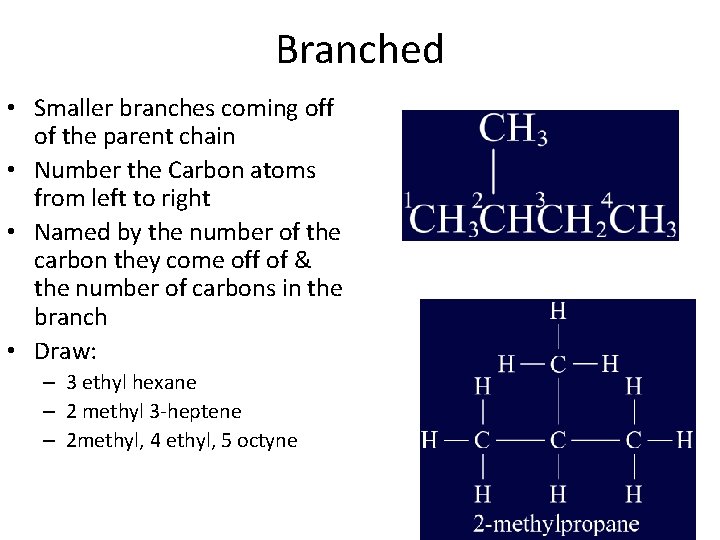
Branched • Smaller branches coming off of the parent chain • Number the Carbon atoms from left to right • Named by the number of the carbon they come off of & the number of carbons in the branch • Draw: – 3 ethyl hexane – 2 methyl 3 -heptene – 2 methyl, 4 ethyl, 5 octyne
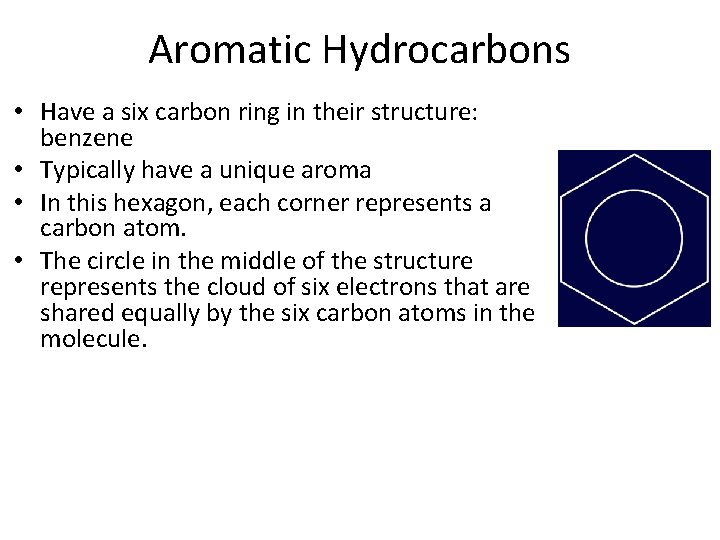
Aromatic Hydrocarbons • Have a six carbon ring in their structure: benzene • Typically have a unique aroma • In this hexagon, each corner represents a carbon atom. • The circle in the middle of the structure represents the cloud of six electrons that are shared equally by the six carbon atoms in the molecule.
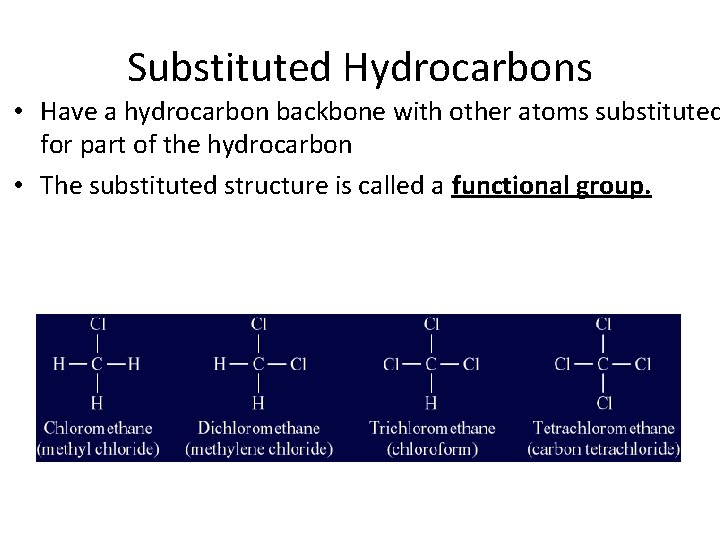
Substituted Hydrocarbons • Have a hydrocarbon backbone with other atoms substituted for part of the hydrocarbon • The substituted structure is called a functional group.
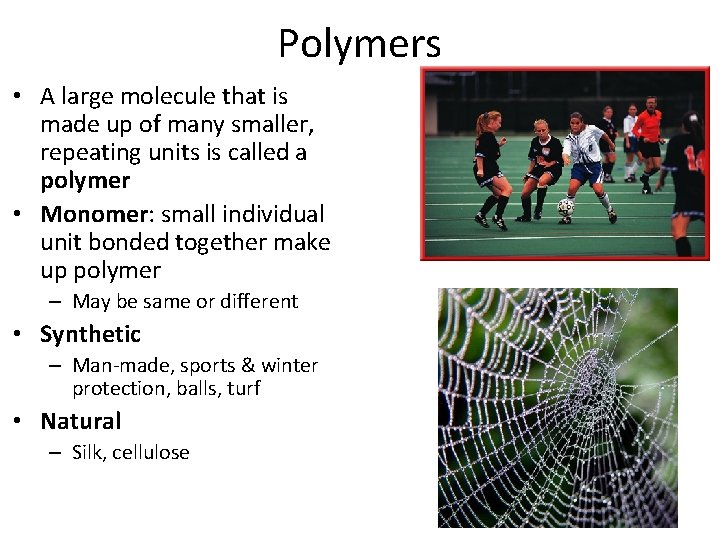
Polymers • A large molecule that is made up of many smaller, repeating units is called a polymer • Monomer: small individual unit bonded together make up polymer – May be same or different • Synthetic – Man-made, sports & winter protection, balls, turf • Natural – Silk, cellulose
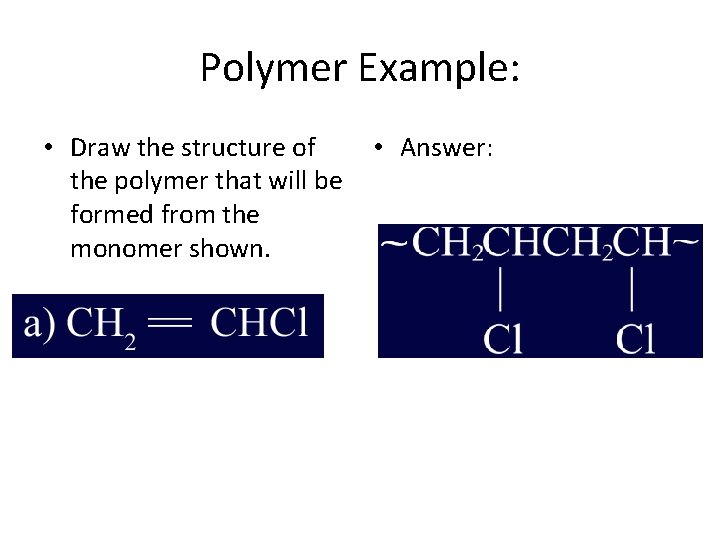
Polymer Example: • Draw the structure of the polymer that will be formed from the monomer shown. • Answer: