
Organic Chemistry 6 th Edition L G Wade
- Slides: 15
Organic Chemistry, 6 th Edition L. G. Wade, Jr. Chapter 14 Ethers, Epoxides, and Sulfides Chapter 14
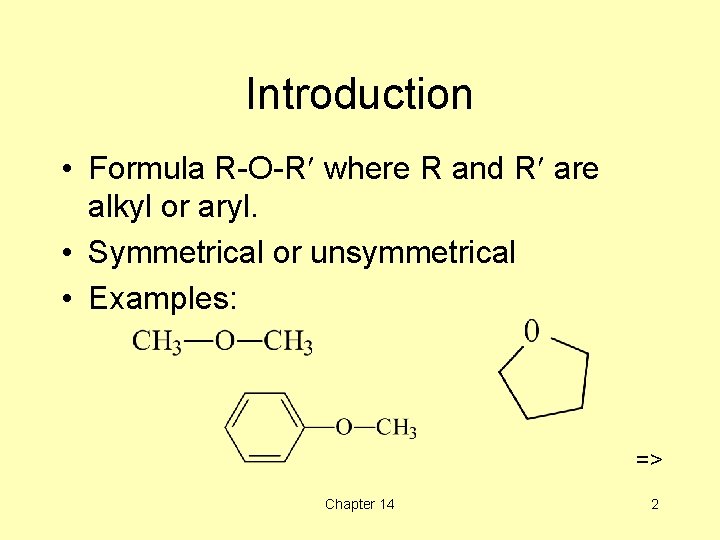
Introduction • Formula R-O-R¢ where R and R¢ are alkyl or aryl. • Symmetrical or unsymmetrical • Examples: => Chapter 14 2
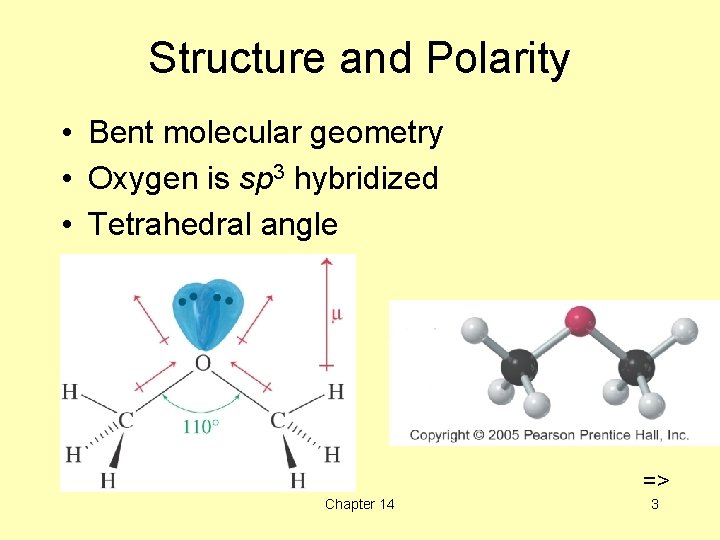
Structure and Polarity • Bent molecular geometry • Oxygen is sp 3 hybridized • Tetrahedral angle => Chapter 14 3
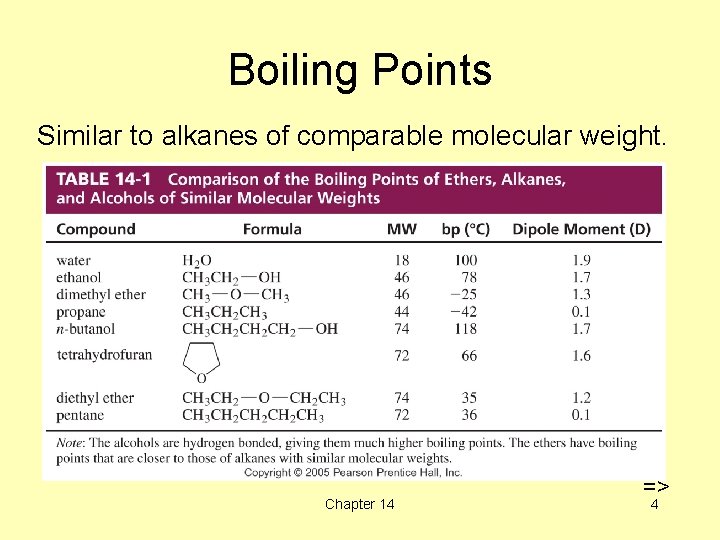
Boiling Points Similar to alkanes of comparable molecular weight. Chapter 14 => 4
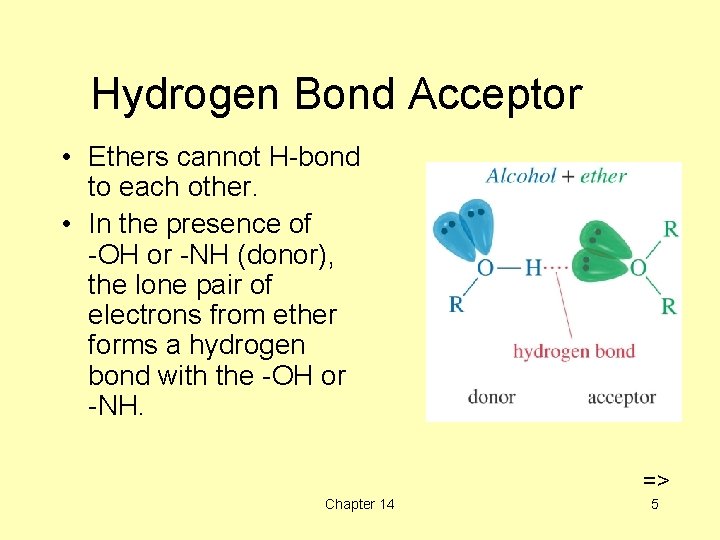
Hydrogen Bond Acceptor • Ethers cannot H-bond to each other. • In the presence of -OH or -NH (donor), the lone pair of electrons from ether forms a hydrogen bond with the -OH or -NH. => Chapter 14 5
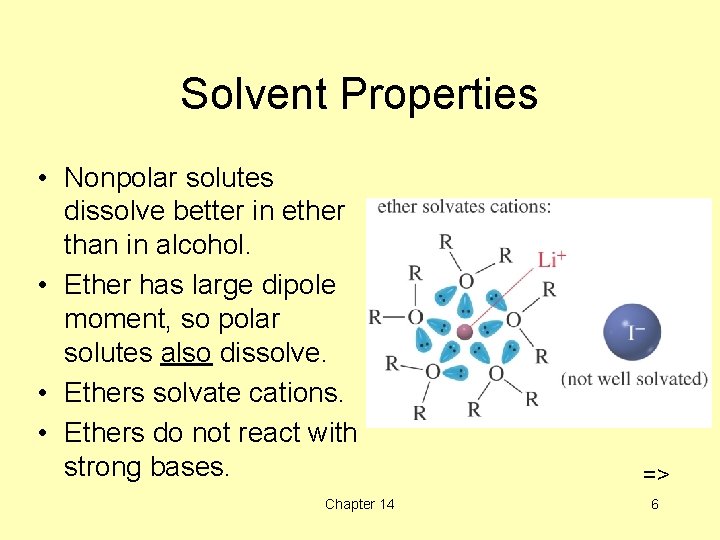
Solvent Properties • Nonpolar solutes dissolve better in ether than in alcohol. • Ether has large dipole moment, so polar solutes also dissolve. • Ethers solvate cations. • Ethers do not react with strong bases. Chapter 14 => 6
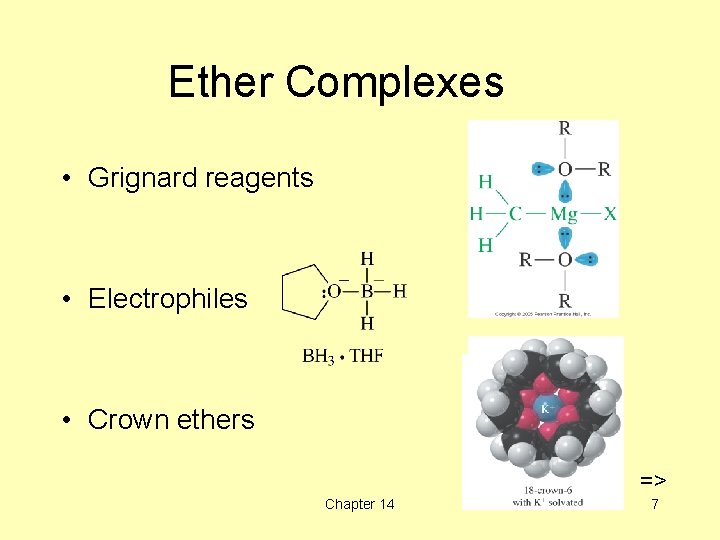
Ether Complexes • Grignard reagents • Electrophiles • Crown ethers => Chapter 14 7
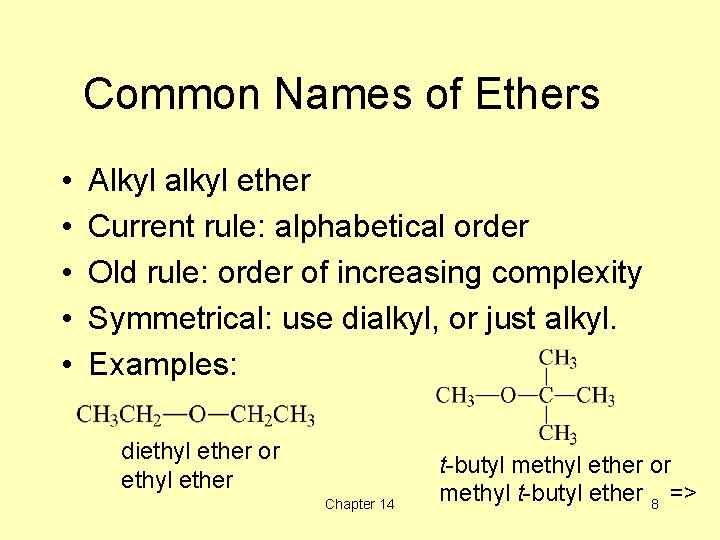
Common Names of Ethers • • • Alkyl alkyl ether Current rule: alphabetical order Old rule: order of increasing complexity Symmetrical: use dialkyl, or just alkyl. Examples: diethyl ether or ethyl ether Chapter 14 t-butyl methyl ether or methyl t-butyl ether 8 =>
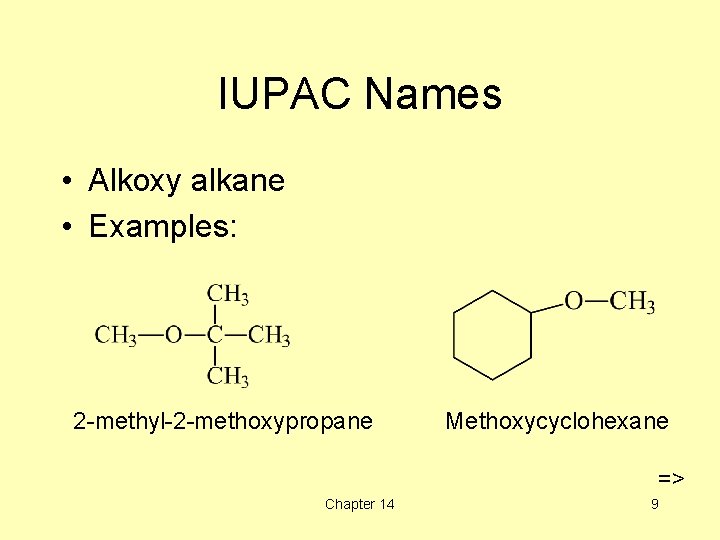
IUPAC Names • Alkoxy alkane • Examples: 2 -methyl-2 -methoxypropane Methoxycyclohexane => Chapter 14 9
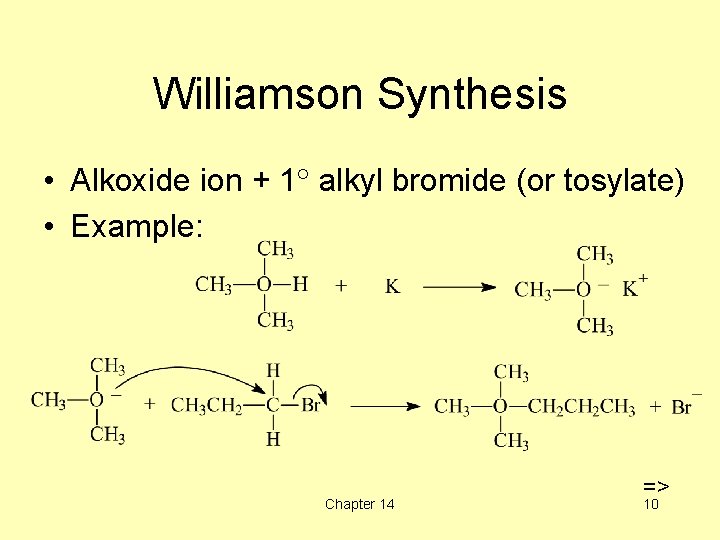
Williamson Synthesis • Alkoxide ion + 1 alkyl bromide (or tosylate) • Example: Chapter 14 => 10
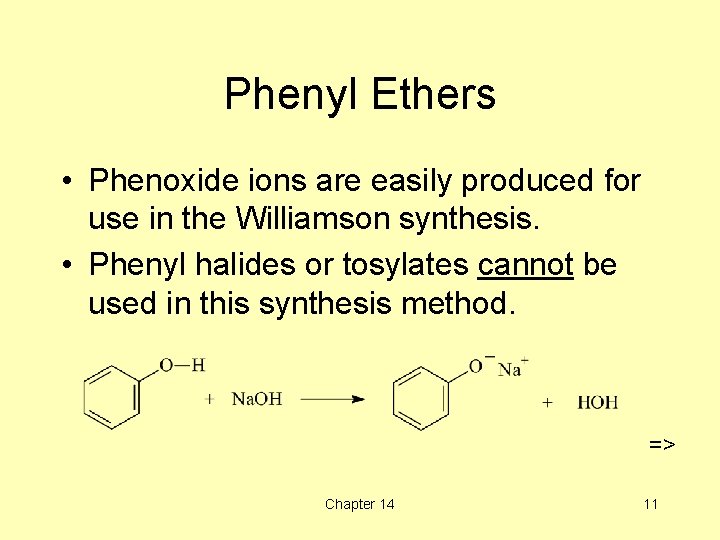
Phenyl Ethers • Phenoxide ions are easily produced for use in the Williamson synthesis. • Phenyl halides or tosylates cannot be used in this synthesis method. => Chapter 14 11
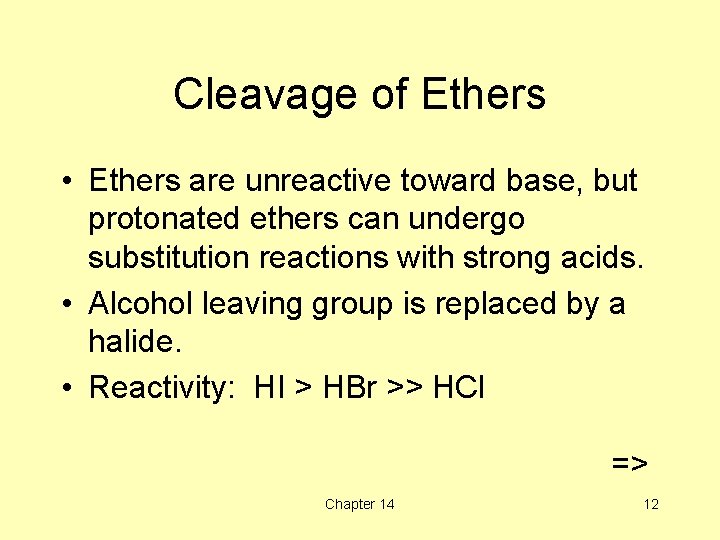
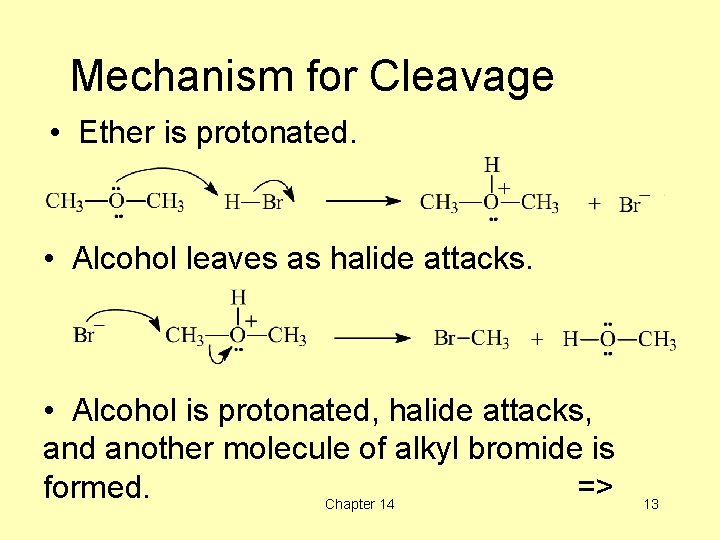
Cleavage of Ethers • Ethers are unreactive toward base, but protonated ethers can undergo substitution reactions with strong acids. • Alcohol leaving group is replaced by a halide. • Reactivity: HI > HBr >> HCl => Chapter 14 12
Mechanism for Cleavage • Ether is protonated. • Alcohol leaves as halide attacks. • Alcohol is protonated, halide attacks, and another molecule of alkyl bromide is formed. => Chapter 14 13
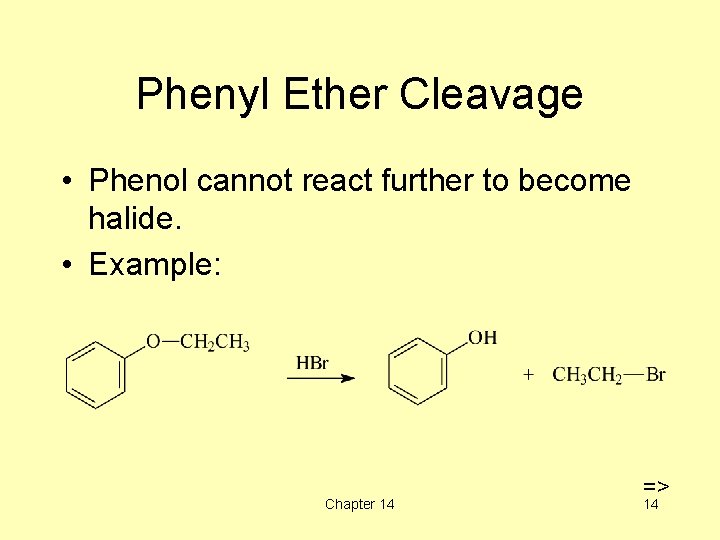
Phenyl Ether Cleavage • Phenol cannot react further to become halide. • Example: Chapter 14 => 14
End of Chapter 14 15