
Organic Chemistry 4 th Edition Paula Yurkanis Bruice

Organic Chemistry 4 th Edition Paula Yurkanis Bruice Chapter 3 Alkenes: Structures, Nomenclature, and an Introduction to Reactivity Thermodynamics and Kinetics Irene Lee Case Western Reserve University Cleveland, OH © 2004, Prentice Hall
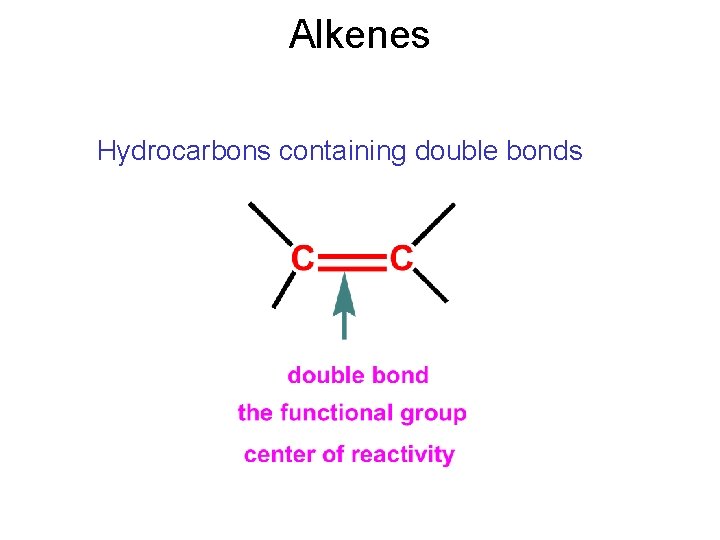
Alkenes Hydrocarbons containing double bonds
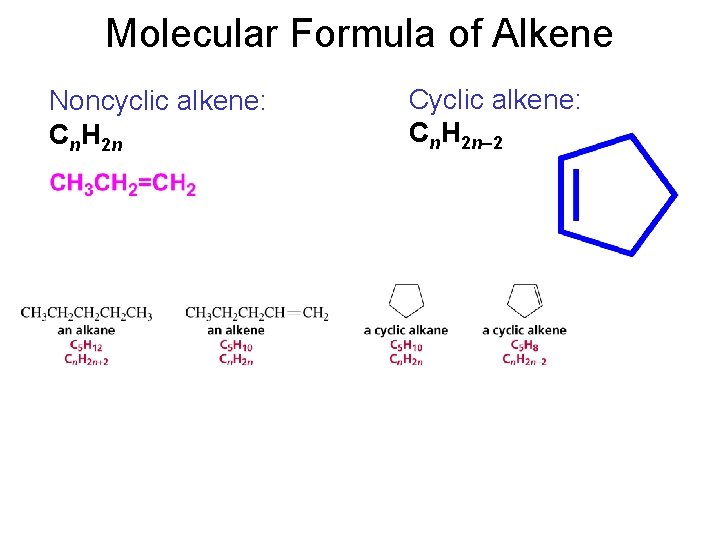
Molecular Formula of Alkene Noncyclic alkene: Cn. H 2 n Cyclic alkene: Cn. H 2 n– 2
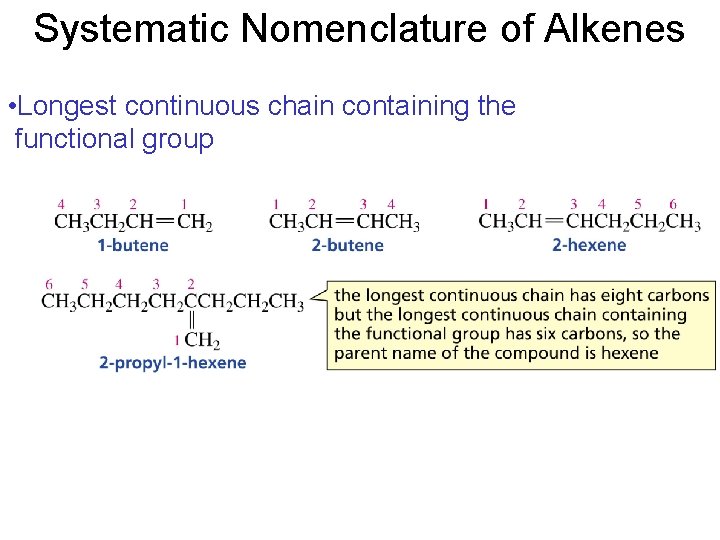
Systematic Nomenclature of Alkenes • Longest continuous chain containing the functional group
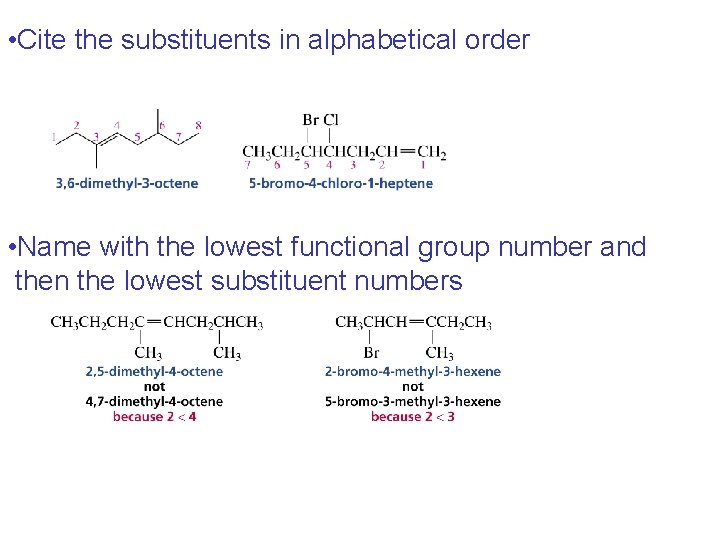
• Cite the substituents in alphabetical order • Name with the lowest functional group number and then the lowest substituent numbers
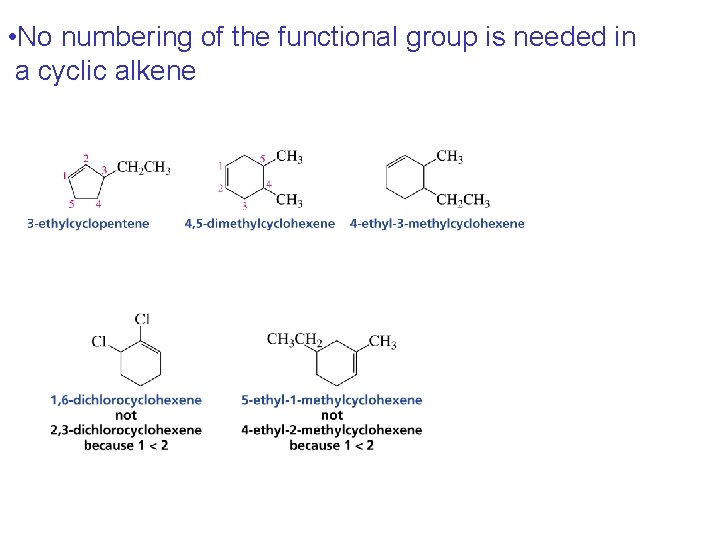
• No numbering of the functional group is needed in a cyclic alkene
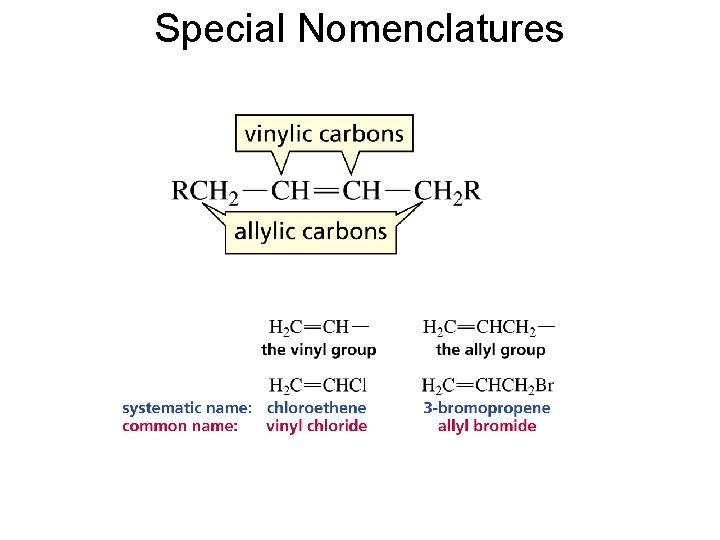
Special Nomenclatures
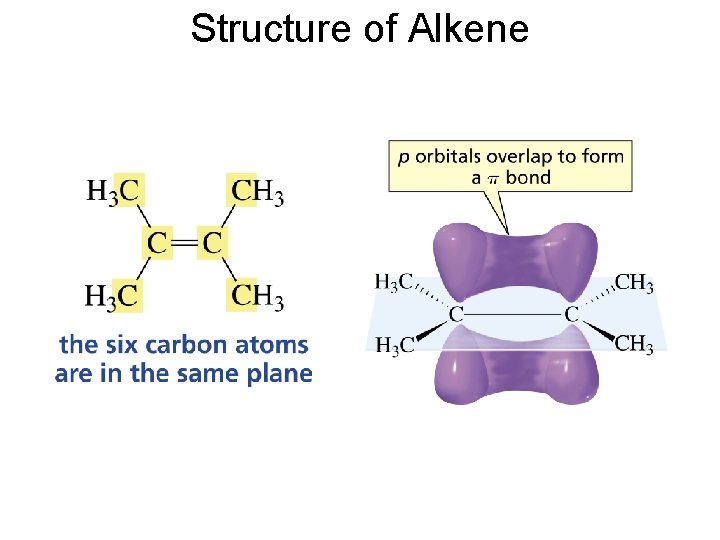
Structure of Alkene
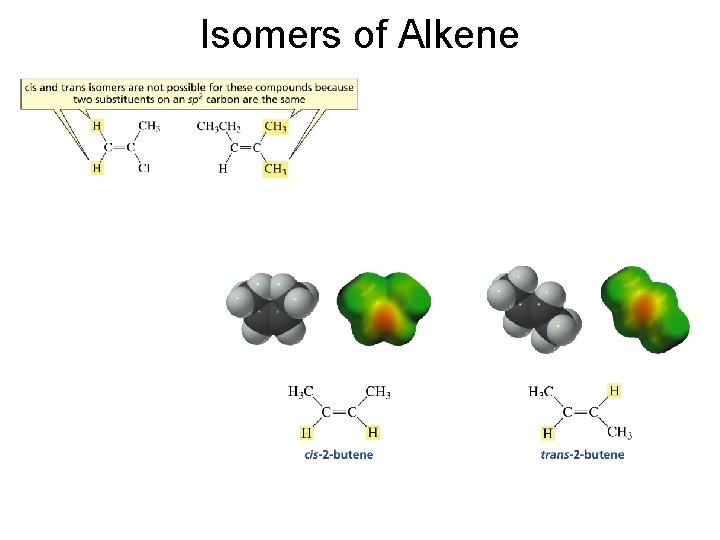
Isomers of Alkene
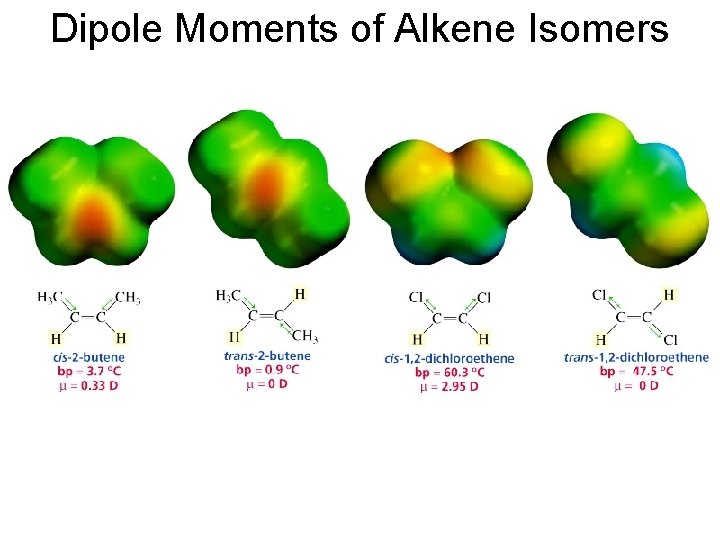
Dipole Moments of Alkene Isomers
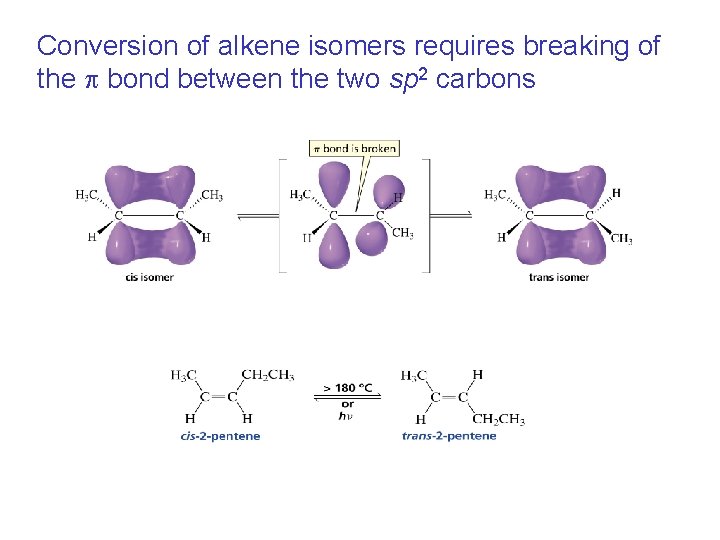
Conversion of alkene isomers requires breaking of the p bond between the two sp 2 carbons
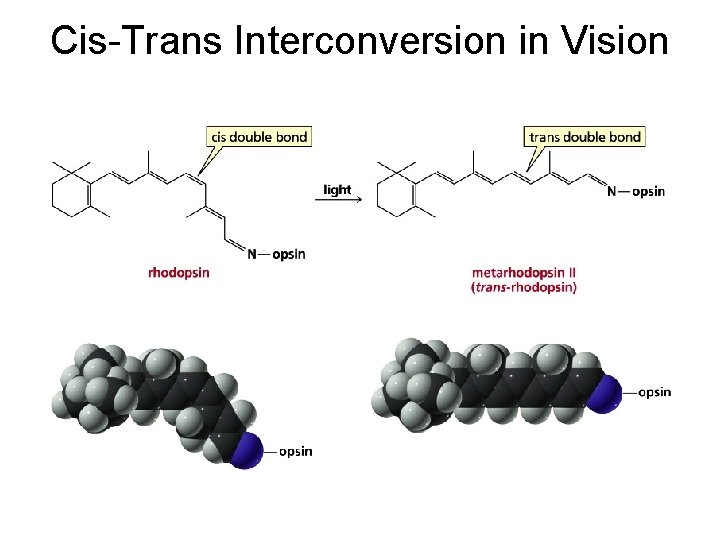
Cis-Trans Interconversion in Vision
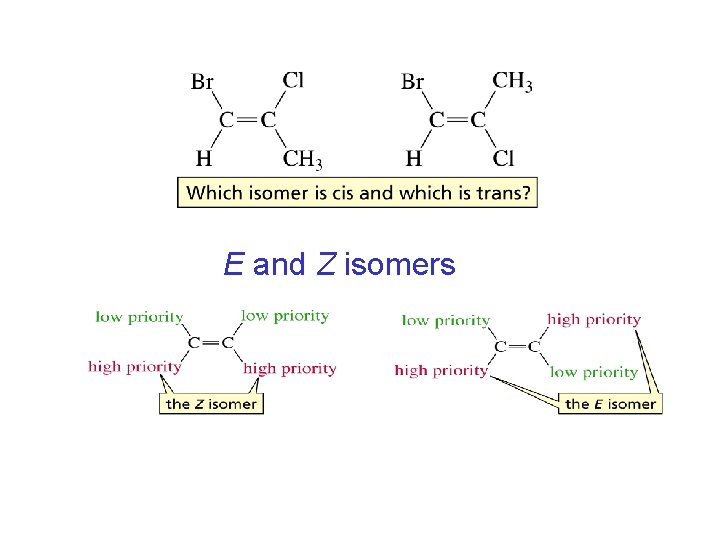
E and Z isomers
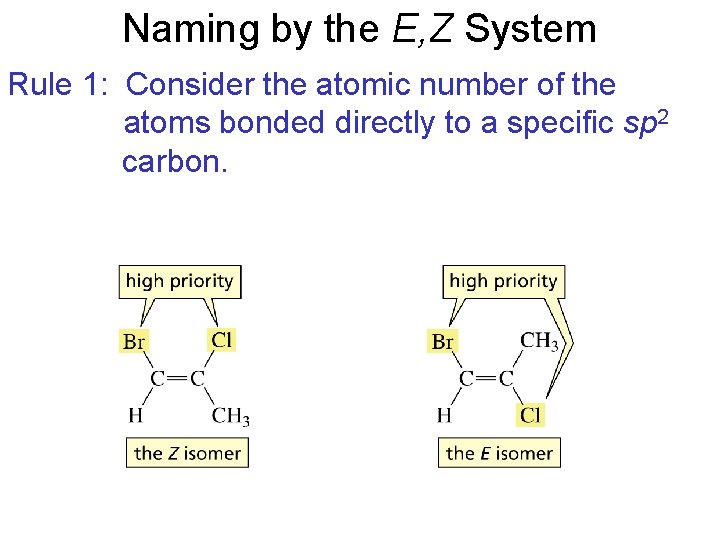
Naming by the E, Z System Rule 1: Consider the atomic number of the atoms bonded directly to a specific sp 2 carbon.
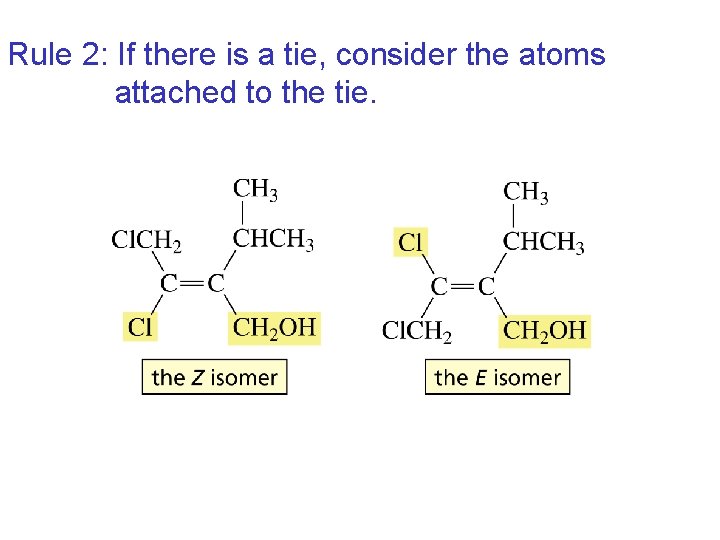
Rule 2: If there is a tie, consider the atoms attached to the tie.
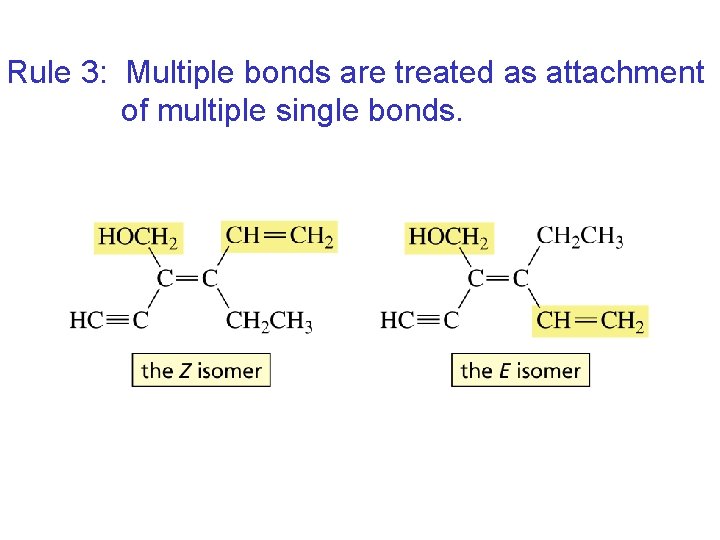
Rule 3: Multiple bonds are treated as attachment of multiple single bonds.
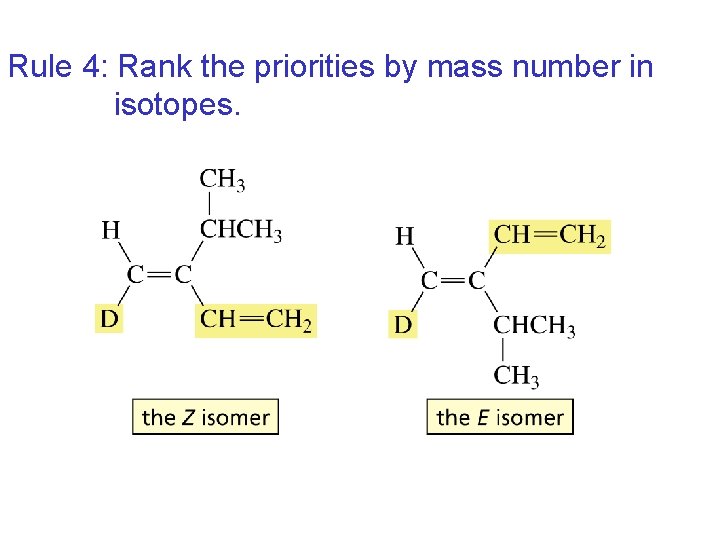
Rule 4: Rank the priorities by mass number in isotopes.
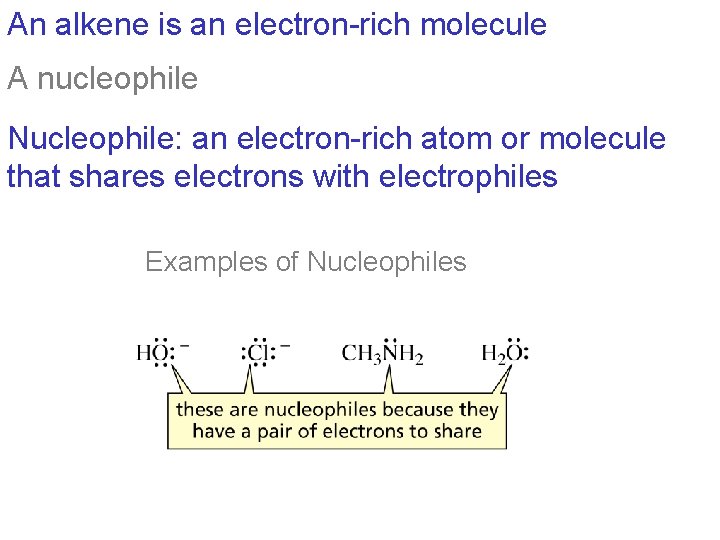
An alkene is an electron-rich molecule A nucleophile Nucleophile: an electron-rich atom or molecule that shares electrons with electrophiles Examples of Nucleophiles
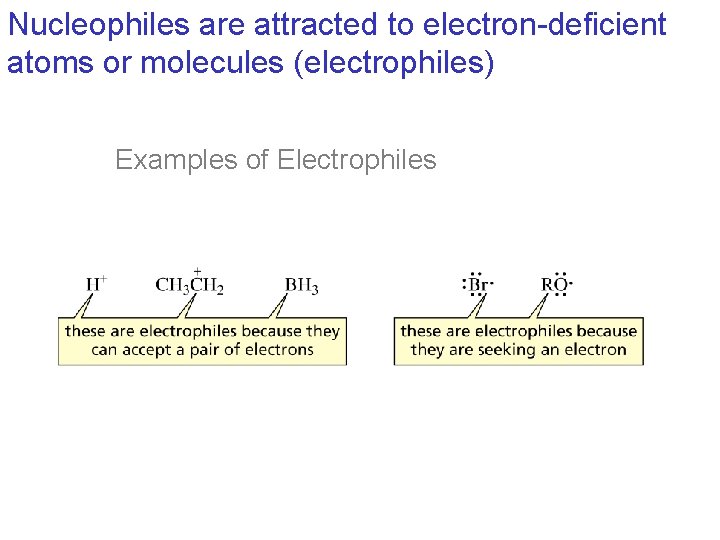
Nucleophiles are attracted to electron-deficient atoms or molecules (electrophiles) Examples of Electrophiles
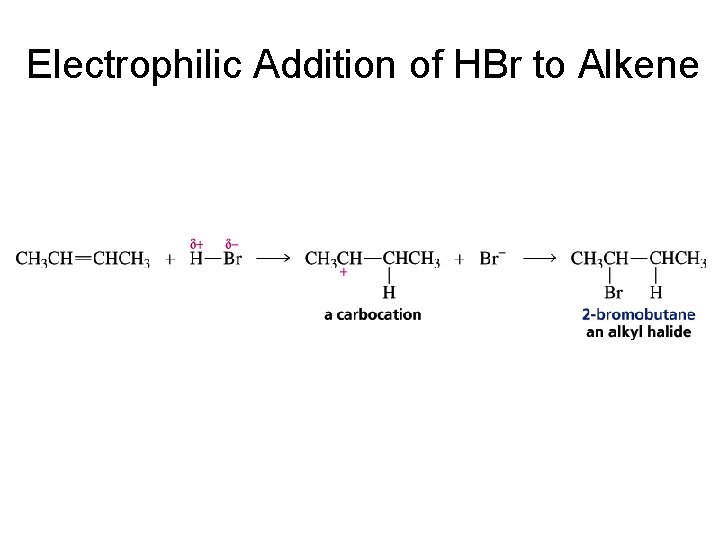
Electrophilic Addition of HBr to Alkene
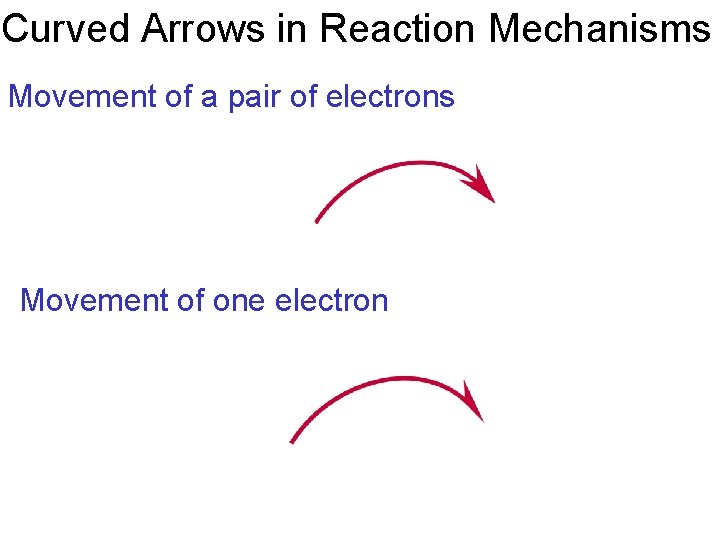
Curved Arrows in Reaction Mechanisms Movement of a pair of electrons Movement of one electron
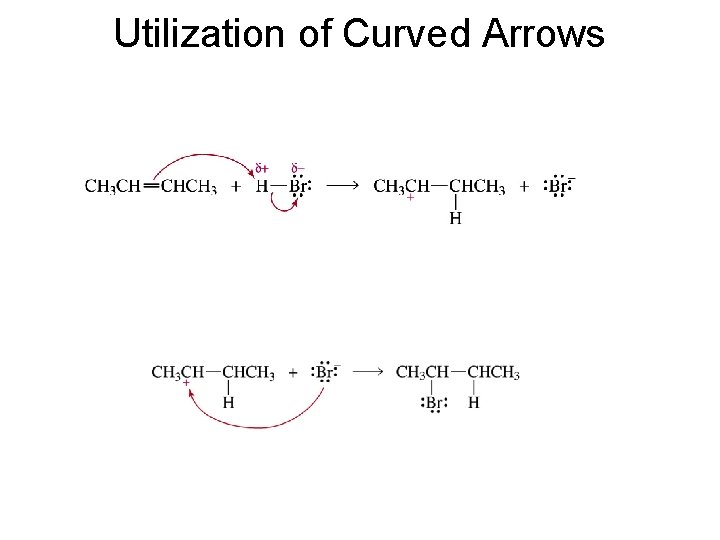
Utilization of Curved Arrows
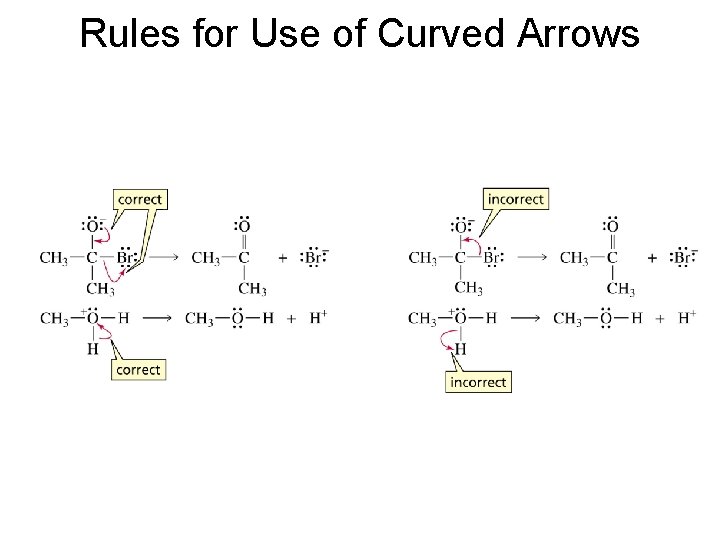
Rules for Use of Curved Arrows
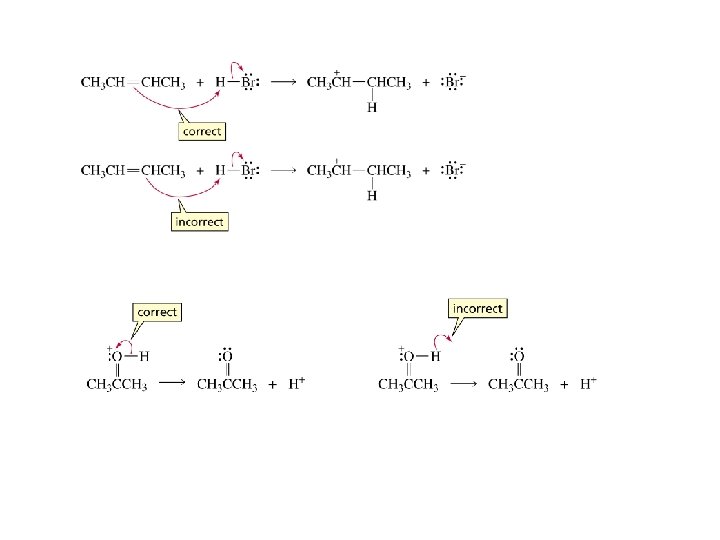
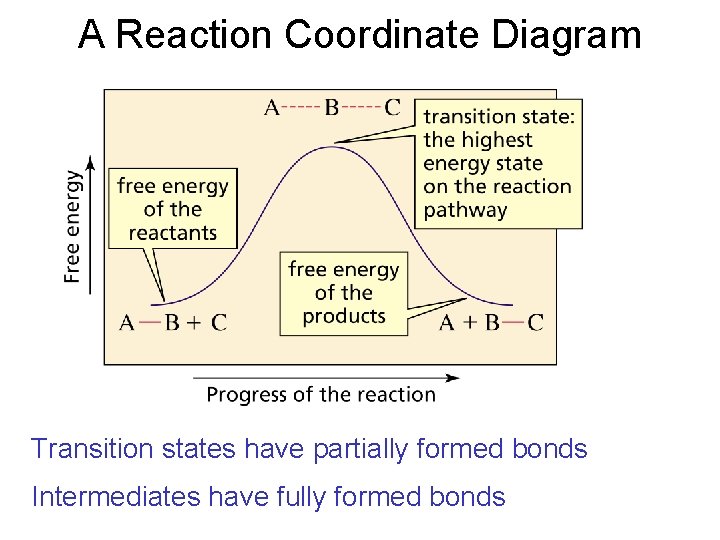
A Reaction Coordinate Diagram Transition states have partially formed bonds Intermediates have fully formed bonds
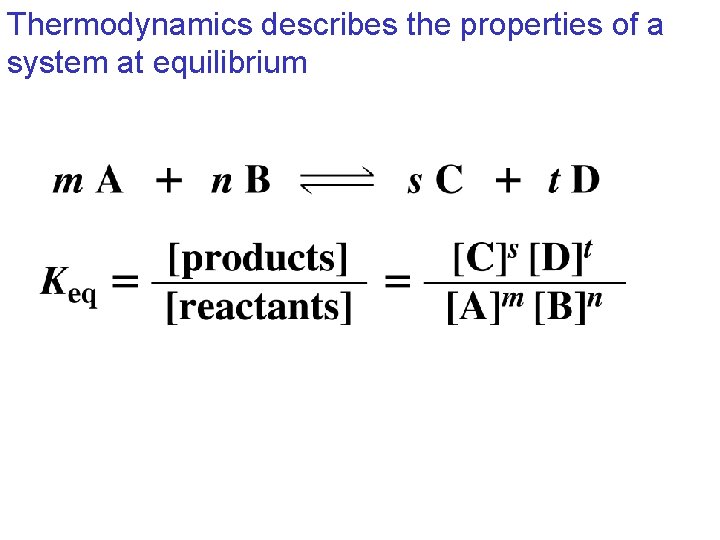
Thermodynamics describes the properties of a system at equilibrium
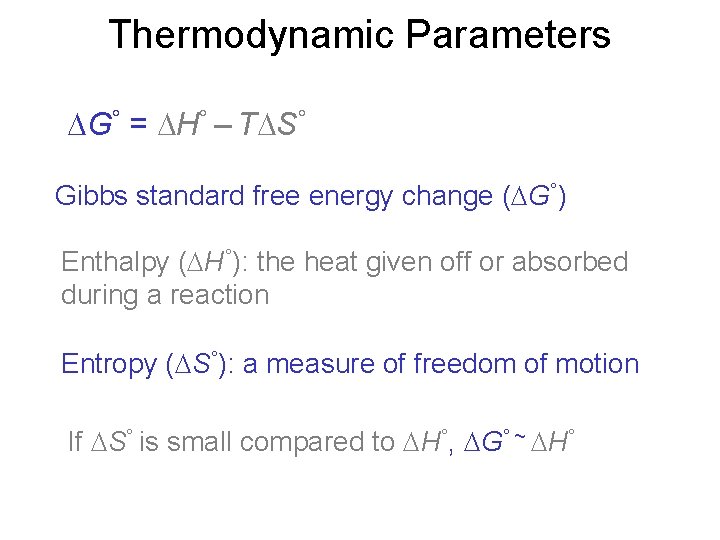
Thermodynamic Parameters DG° = DH° – TDS° Gibbs standard free energy change (DG°) Enthalpy (DH°): the heat given off or absorbed during a reaction Entropy (DS°): a measure of freedom of motion If DS° is small compared to DH°, DG° ~ DH°
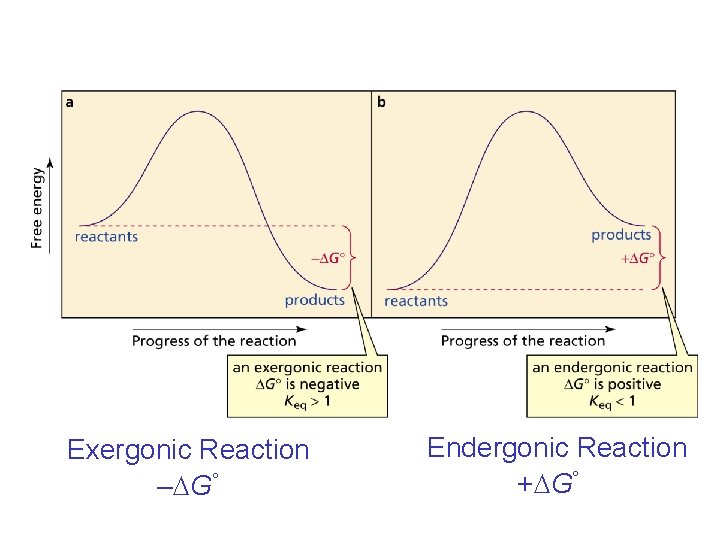
Exergonic Reaction –DG° Endergonic Reaction +DG°
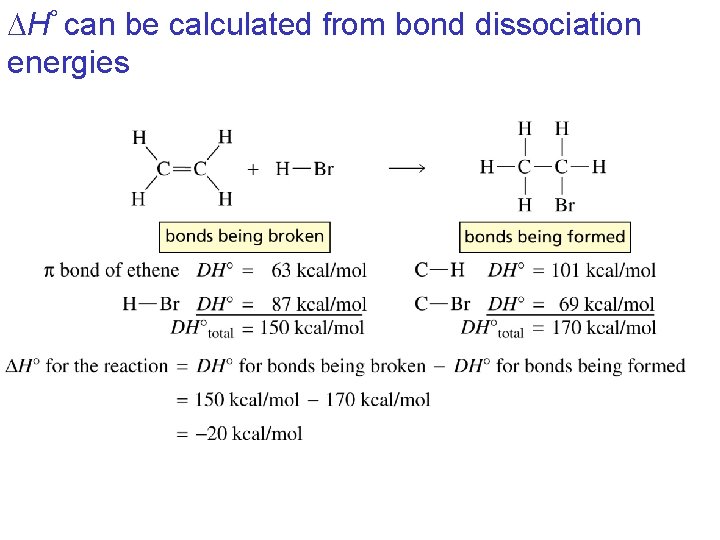
DH° can be calculated from bond dissociation energies
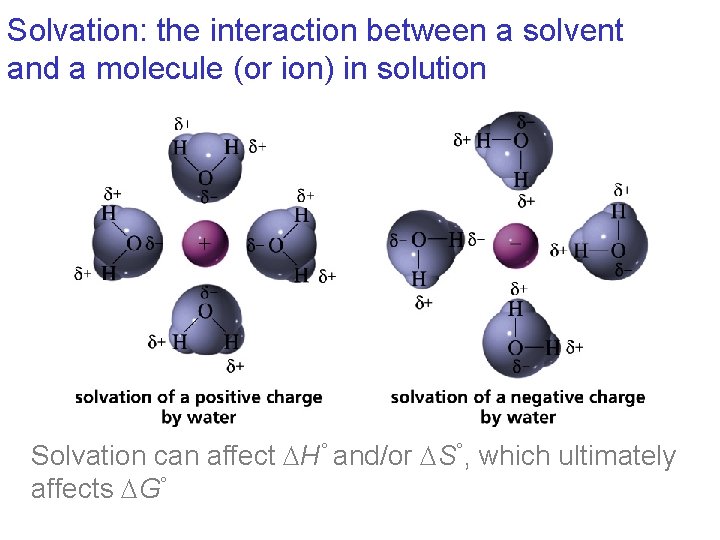
Solvation: the interaction between a solvent and a molecule (or ion) in solution Solvation can affect DH° and/or DS°, which ultimately affects DG°
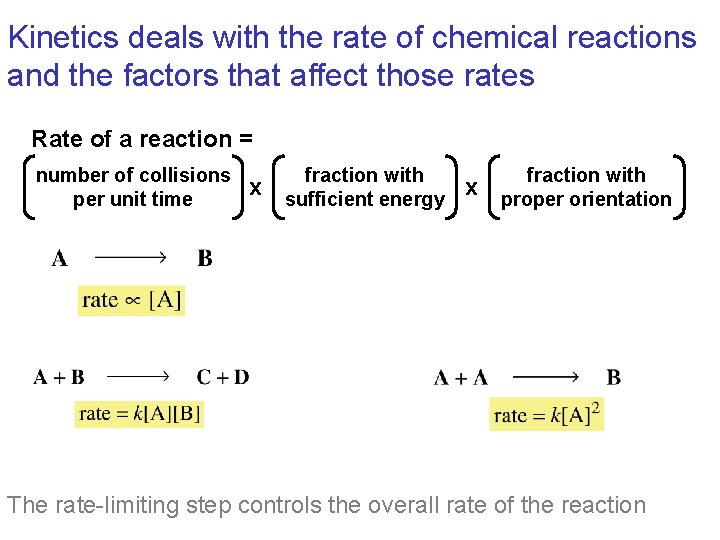
Kinetics deals with the rate of chemical reactions and the factors that affect those rates Rate of a reaction = number of collisions per unit time fraction with x sufficient energy x proper orientation The rate-limiting step controls the overall rate of the reaction
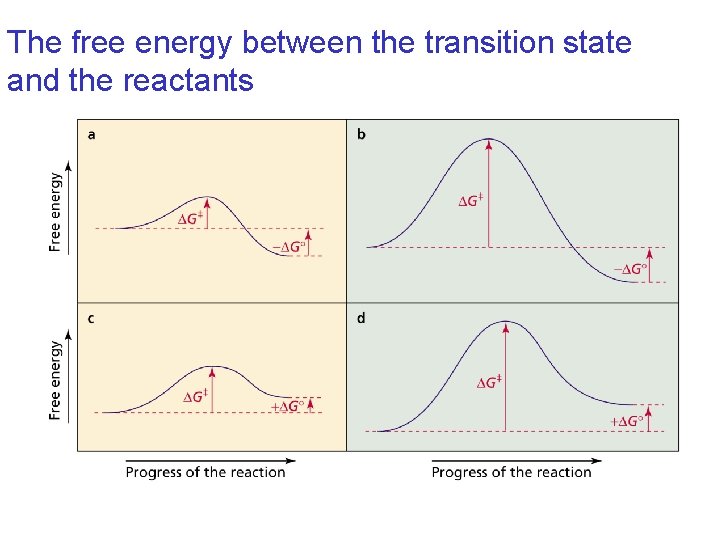
The free energy between the transition state and the reactants
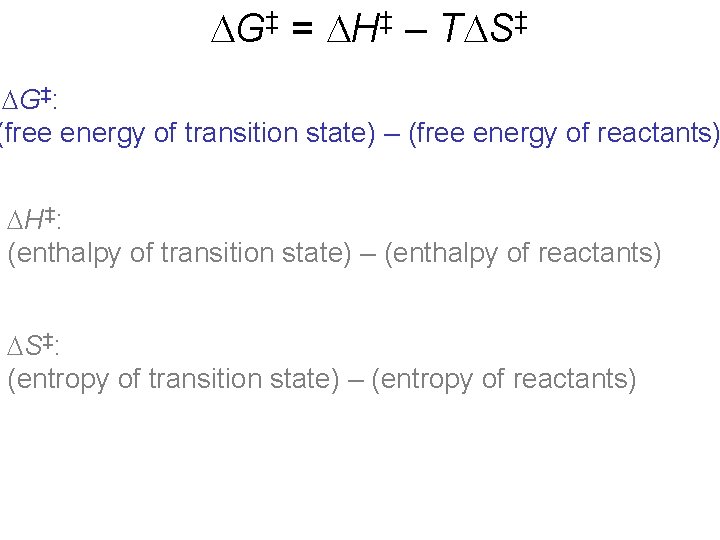
DG‡ = DH‡ – TDS‡ DG‡: (free energy of transition state) – (free energy of reactants) DH‡: (enthalpy of transition state) – (enthalpy of reactants) DS‡: (entropy of transition state) – (entropy of reactants)
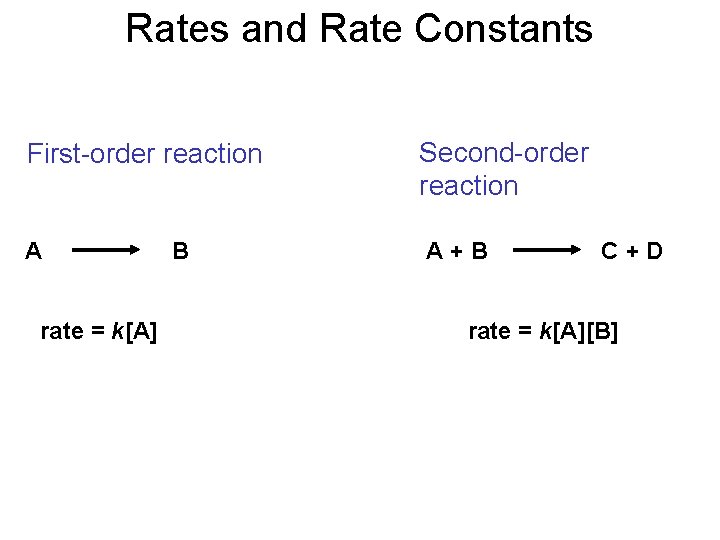
Rates and Rate Constants First-order reaction Second-order reaction A A+B rate = k[A] B C+D rate = k[A][B]
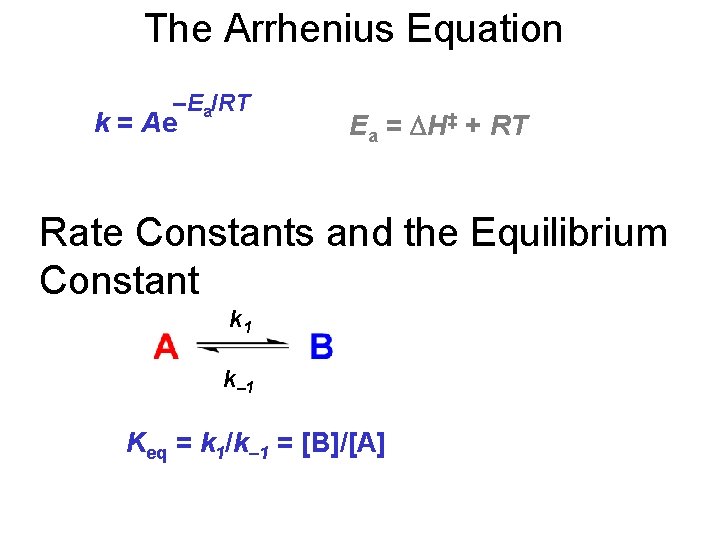
The Arrhenius Equation –Ea/RT k = Ae Ea = DH‡ + RT Rate Constants and the Equilibrium Constant k 1 k– 1 Keq = k 1/k– 1 = [B]/[A]
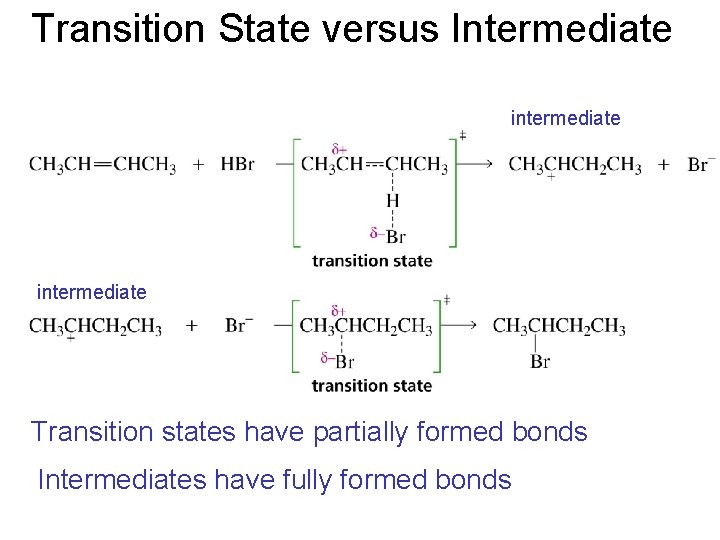
Transition State versus Intermediate intermediate Transition states have partially formed bonds Intermediates have fully formed bonds
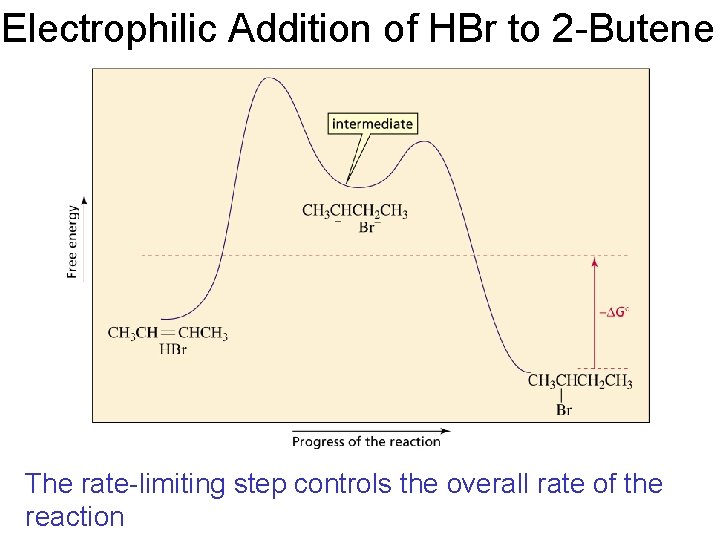
Electrophilic Addition of HBr to 2 -Butene The rate-limiting step controls the overall rate of the reaction
- Slides: 37