
Organic animal production in Estonia and in EU
- Slides: 30
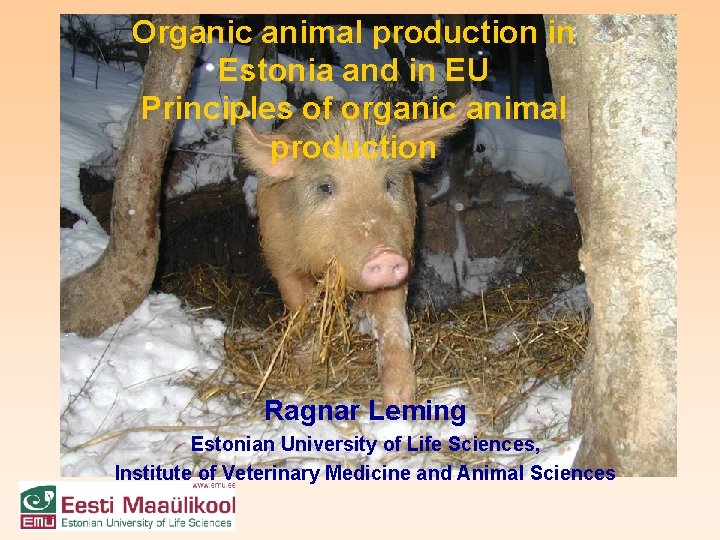
Organic animal production in Estonia and in EU Principles of organic animal production Ragnar Leming Estonian University of Life Sciences, Institute of Veterinary Medicine and Animal Sciences
Outline of presentation • Organic livestock production in Estonia and in Europe • Principles and legal definition of organic farming • Characteristics of organic livestock production
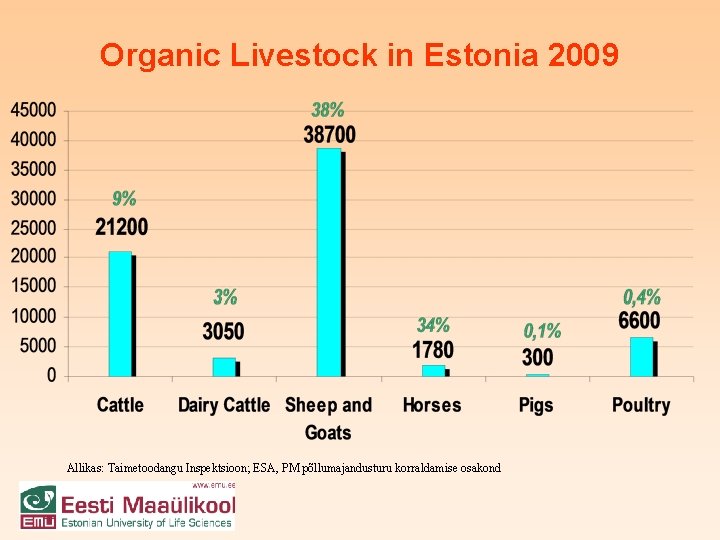
Organic Livestock in Estonia 2009 Allikas: Taimetoodangu Inspektsioon; ESA, PM põllumajandusturu korraldamise osakond
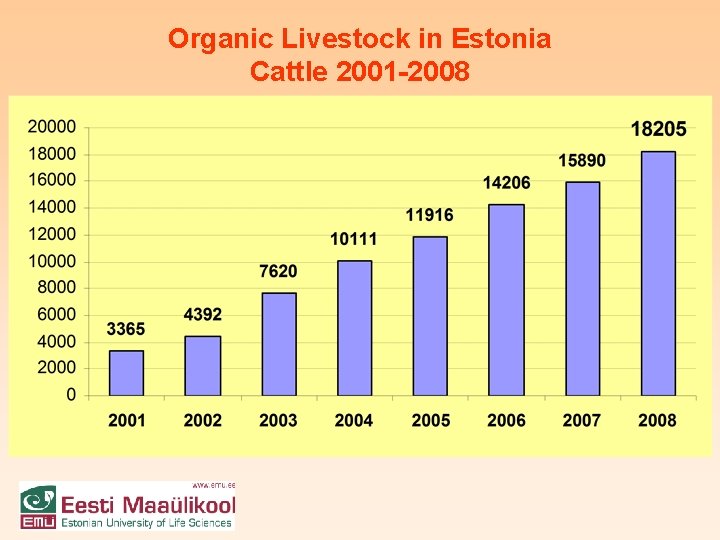
Organic Livestock in Estonia Cattle 2001 -2008
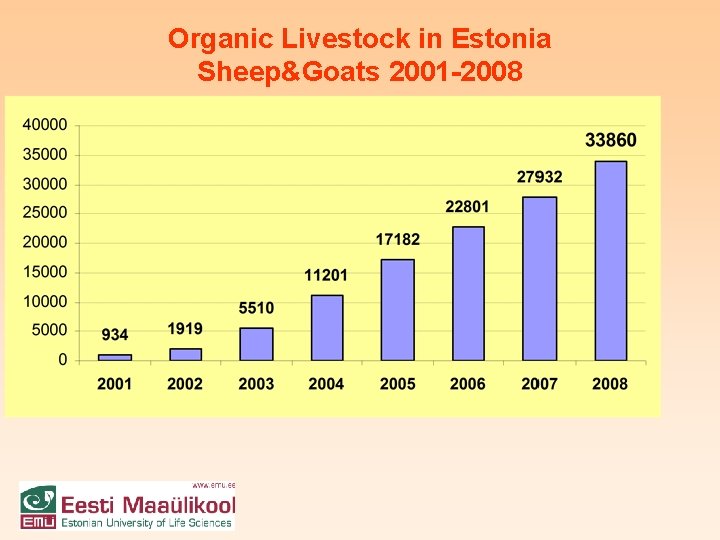
Organic Livestock in Estonia Sheep&Goats 2001 -2008
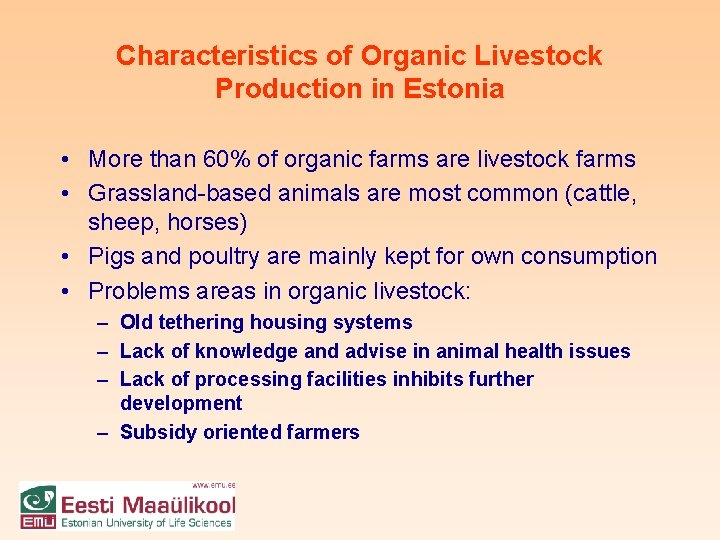
Characteristics of Organic Livestock Production in Estonia • More than 60% of organic farms are livestock farms • Grassland-based animals are most common (cattle, sheep, horses) • Pigs and poultry are mainly kept for own consumption • Problems areas in organic livestock: – Old tethering housing systems – Lack of knowledge and advise in animal health issues – Lack of processing facilities inhibits further development – Subsidy oriented farmers
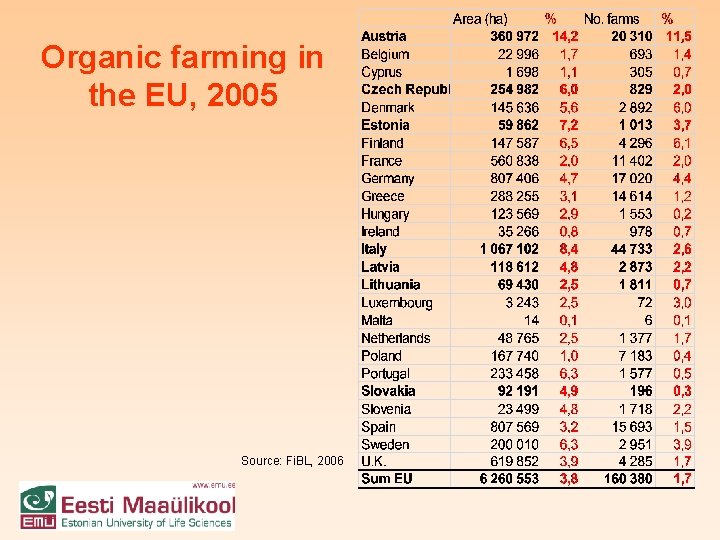
Organic farming in the EU, 2005 Source: Fi. BL, 2006
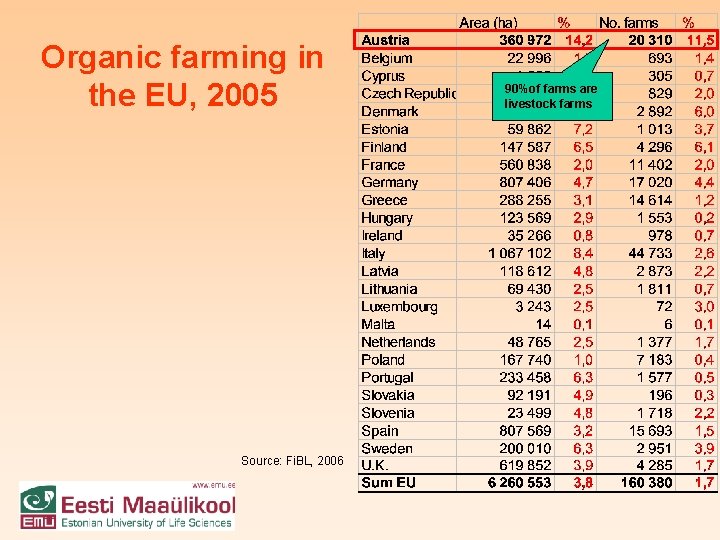
Organic farming in the EU, 2005 Source: Fi. BL, 2006 90%of farms are livestock farms
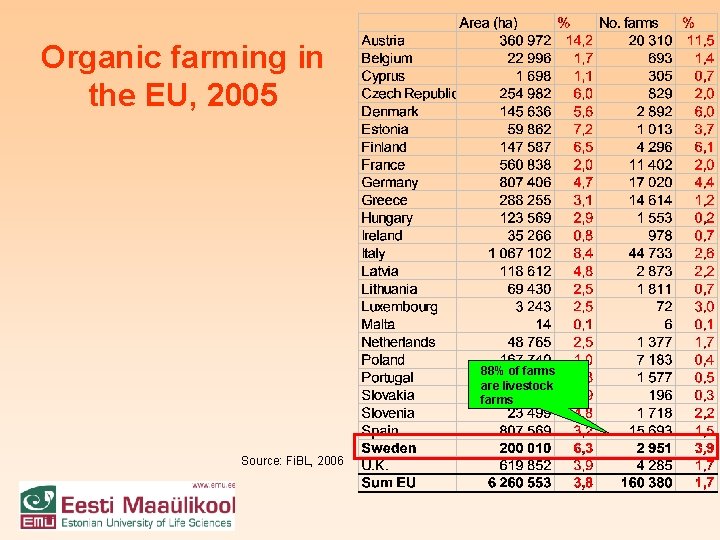
Organic farming in the EU, 2005 88% of farms are livestock farms Source: Fi. BL, 2006
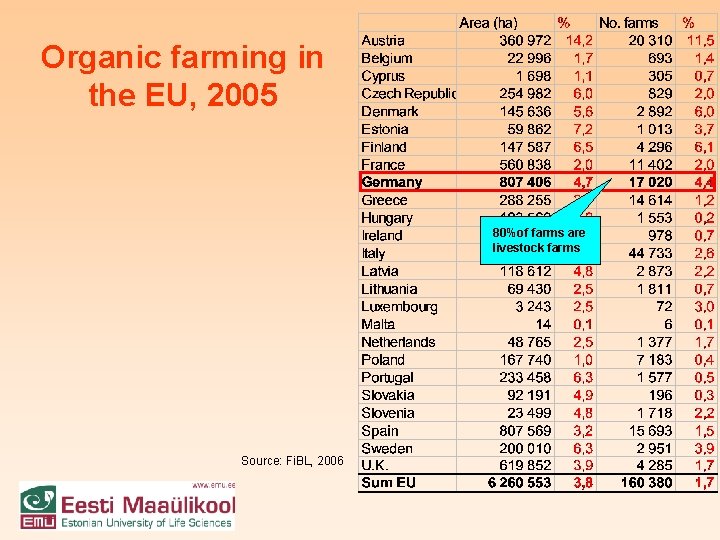
Organic farming in the EU, 2005 80%of farms are livestock farms Source: Fi. BL, 2006
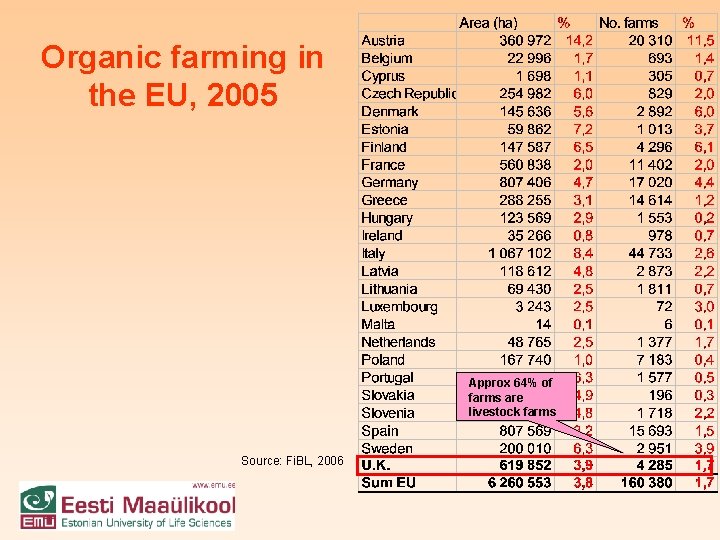
Organic farming in the EU, 2005 Approx 64% of farms are livestock farms Source: Fi. BL, 2006
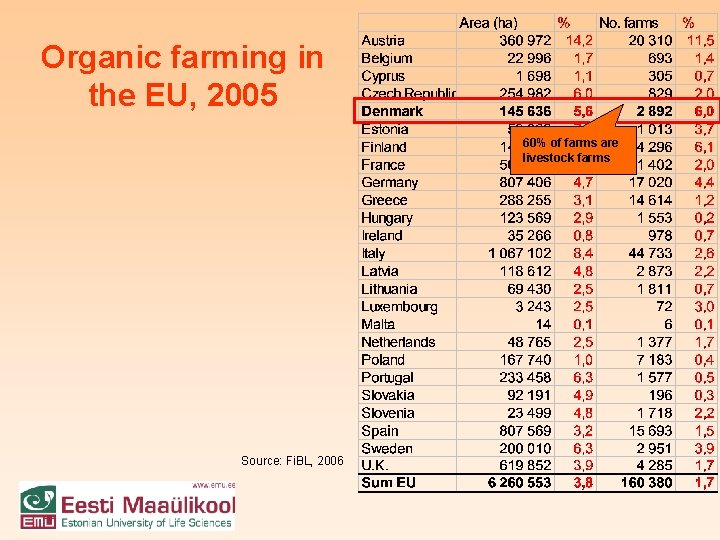
Organic farming in the EU, 2005 60% of farms are livestock farms Source: Fi. BL, 2006
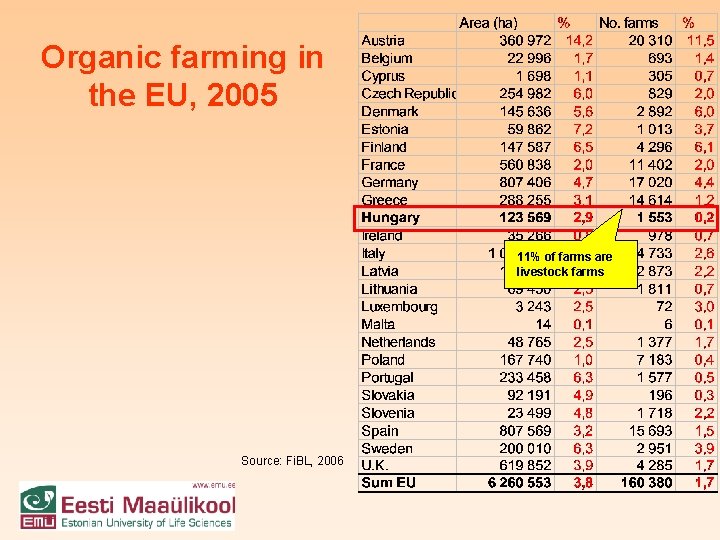
Organic farming in the EU, 2005 11% of farms are livestock farms Source: Fi. BL, 2006
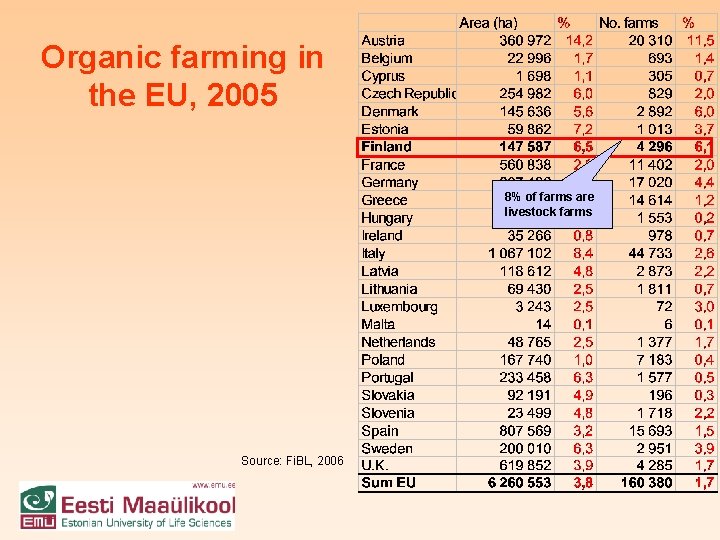
Organic farming in the EU, 2005 8% of farms are livestock farms Source: Fi. BL, 2006
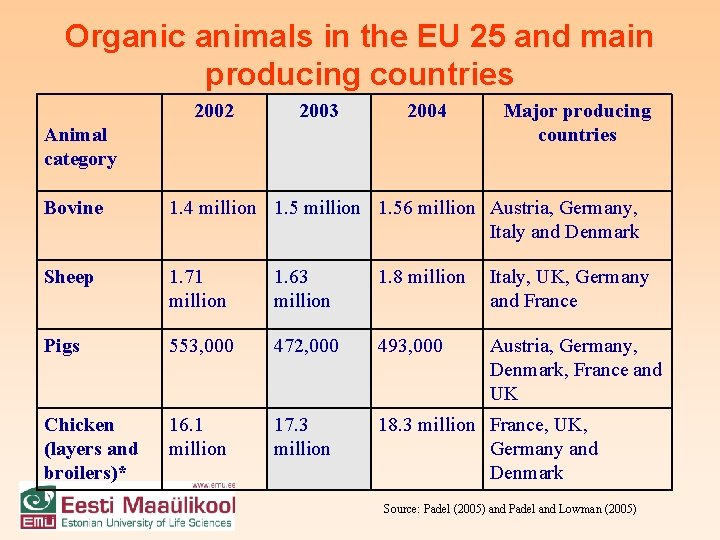
Organic animals in the EU 25 and main producing countries 2002 2003 2004 Animal category Major producing countries Bovine 1. 4 million 1. 56 million Austria, Germany, Italy and Denmark Sheep 1. 71 million 1. 63 million 1. 8 million Italy, UK, Germany and France Pigs 553, 000 472, 000 493, 000 Austria, Germany, Denmark, France and UK Chicken (layers and broilers)* 16. 1 million 17. 3 million 18. 3 million France, UK, Germany and Denmark Source: Padel (2005) and Padel and Lowman (2005)
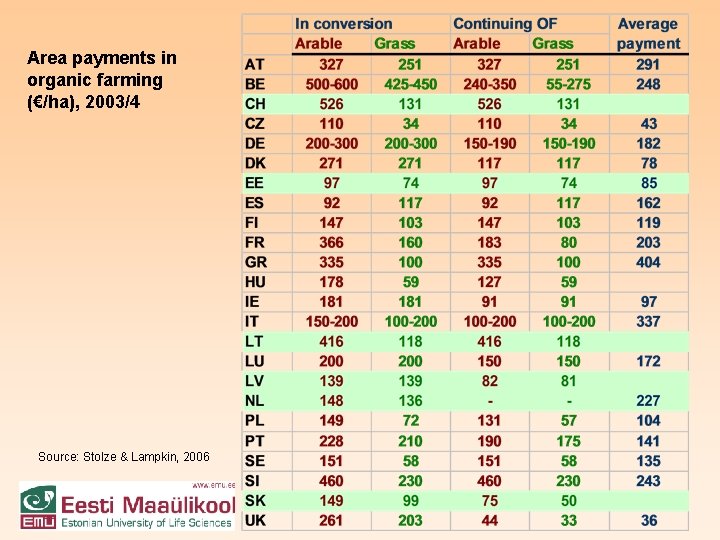
Area payments in organic farming (€/ha), 2003/4 Source: Stolze & Lampkin, 2006
Characteristics of Organic Livestock Production in EU • More than 50%? of organic farms are livestock farms • Grassland-based animals are most common (cattle, sheep) • Diversity of European livestock farming systems – – – Climate and land quality Intensive / extensive animal husbandry Different types of herds (mixed / specialised, sizes etc. ) Different levels of organisation (food chains /marketing) Different consumer preferences Huge variation in product and process quality Source: D. Younie, 2005
Definition of organic farming • Definition in terms of principles • Definition in legal terms
Definition of organic livestock farming (a): Some IFOAM principles of organic production • To give all livestock conditions of life with due consideration for the basic aspects of their natural behaviour • To create a harmonious balance between crop production & animal husbandry • To encourage & enhance biological cycles within the farming system • To interact in a constructive & life-enhancing way with natural systems and cycles • To produce food of high quality in sufficient quantity
Basic aims of organic livestock production • Maintenance of animal welfare • Focus on ’naturalness’ – – – Species-specific Appropriateness of genotype Ability to express natural behaviour Relationship between mother and offspring Flock/herd size Nutrition • Harmony with environment, humans, other animals • Production of healthy soil, healthy livestock, healthy food Source: D. Younie, 2005
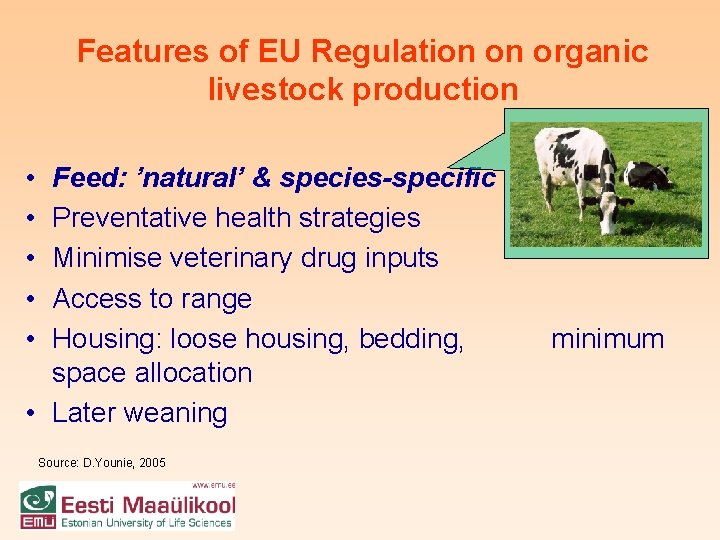
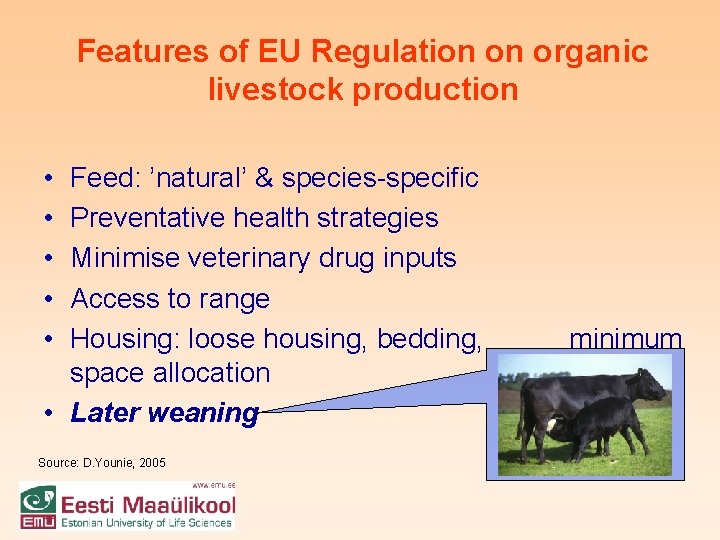
Features of EU Regulation on organic livestock production • • • Feed: ’natural’ & species-specific Preventative health strategies Minimise veterinary drug inputs Access to range Housing: loose housing, bedding, space allocation • Later weaning Source: D. Younie, 2005 minimum
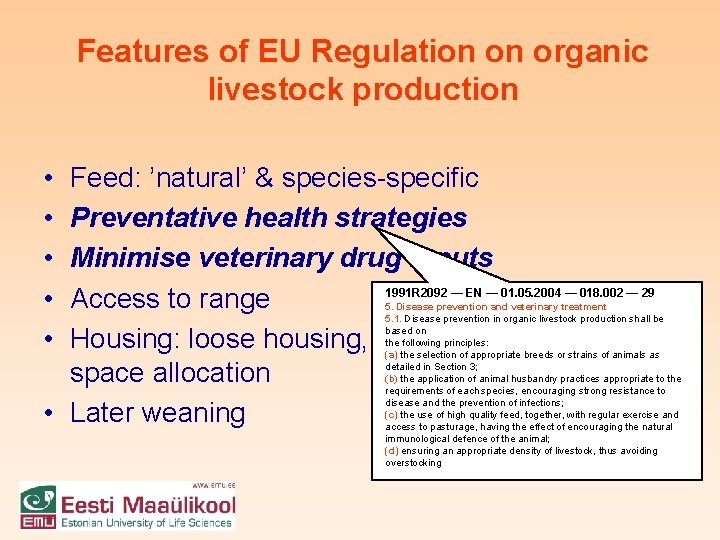
Features of EU Regulation on organic livestock production • • • Feed: ’natural’ & species-specific Preventative health strategies Minimise veterinary drug inputs 1991 R 2092 — EN — 01. 05. 2004 — 018. 002 — 29 Access to range Housing: loose housing, bedding, minimum space allocation • Later weaning 5. Disease prevention and veterinary treatment 5. 1. Disease prevention in organic livestock production shall be based on the following principles: (a) the selection of appropriate breeds or strains of animals as detailed in Section 3; (b) the application of animal husbandry practices appropriate to the requirements of each species, encouraging strong resistance to disease and the prevention of infections; (c) the use of high quality feed, together, with regular exercise and access to pasturage, having the effect of encouraging the natural immunological defence of the animal; (d) ensuring an appropriate density of livestock, thus avoiding overstocking
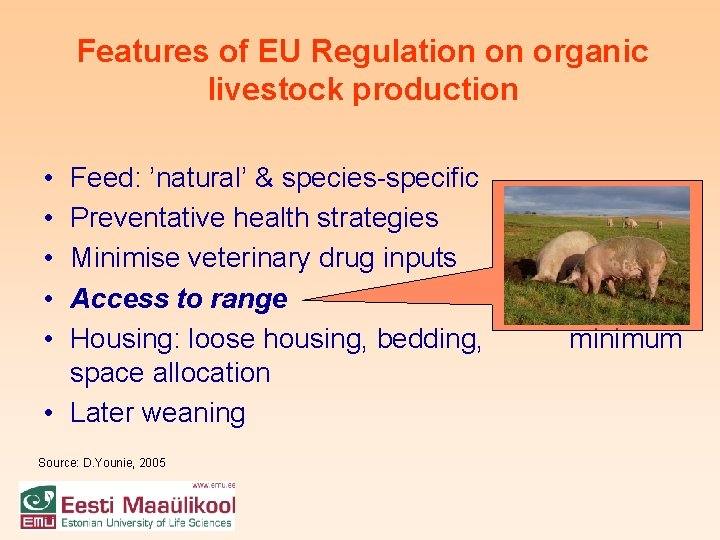
Features of EU Regulation on organic livestock production • • • Feed: ’natural’ & species-specific Preventative health strategies Minimise veterinary drug inputs Access to range Housing: loose housing, bedding, space allocation • Later weaning Source: D. Younie, 2005 minimum
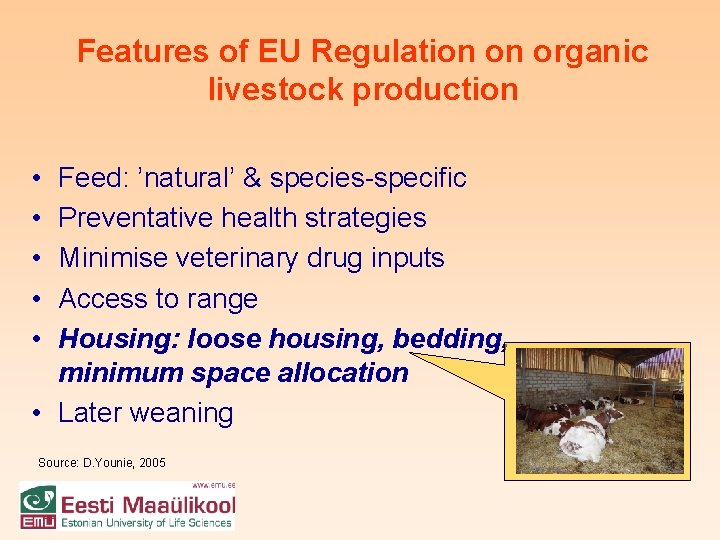
Features of EU Regulation on organic livestock production • • • Feed: ’natural’ & species-specific Preventative health strategies Minimise veterinary drug inputs Access to range Housing: loose housing, bedding, minimum space allocation • Later weaning Source: D. Younie, 2005
Features of EU Regulation on organic livestock production • • • Feed: ’natural’ & species-specific Preventative health strategies Minimise veterinary drug inputs Access to range Housing: loose housing, bedding, space allocation • Later weaning Source: D. Younie, 2005 minimum
Greatest differences between organic and conventional systems? 4 Poultry 4 Pigs 4 Dairy 7? Beef 7? Sheep Source: D. Younie, 2005
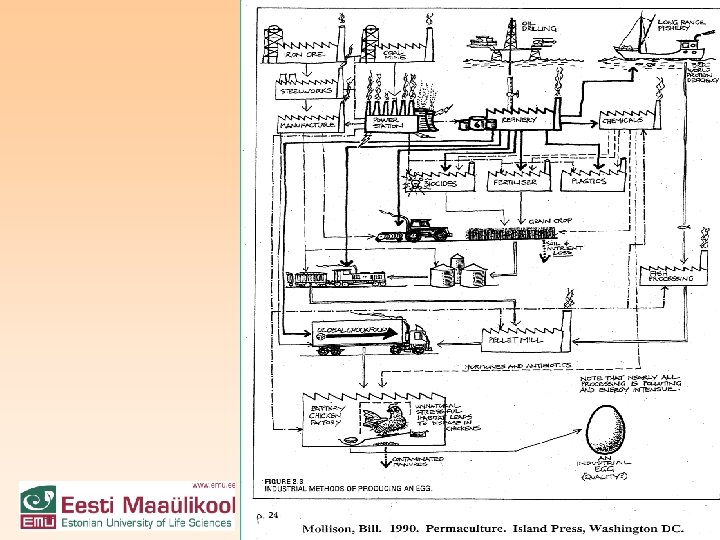
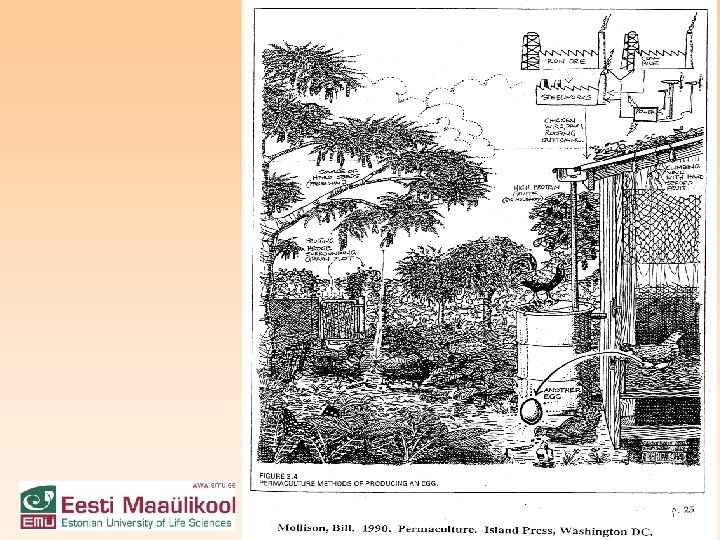
Methods of Producing an Egg Conventional versus Organic
Principles of organic production Not to exhaust: • Land • Animals • Humans (and Farmers!)