
Organic aerosol from the oxidation of biogenic organic
Organic aerosol from the oxidation of biogenic organic compounds: a modelling study Karl Ceulemans Ph. D Defence 13 October 2014 Promoters: Dr. Jean-François Müller (BIRA-IASB) Prof. dr. Magda Claeys (UAntwerpen)
Organic aerosol from the oxidation of biogenic organic compounds: a modelling study Outline § The atmosphere and volatile organic compounds § Organic aerosols: • How formed? • Why of importance? § BOREAM Model for biogenic organic aerosol formation § Model results: Comparisons with chamber experiments • How well do we model aerosol from α- and β-pinene? • “Ageing” of aerosols § For global modelling: Parameterisation 2
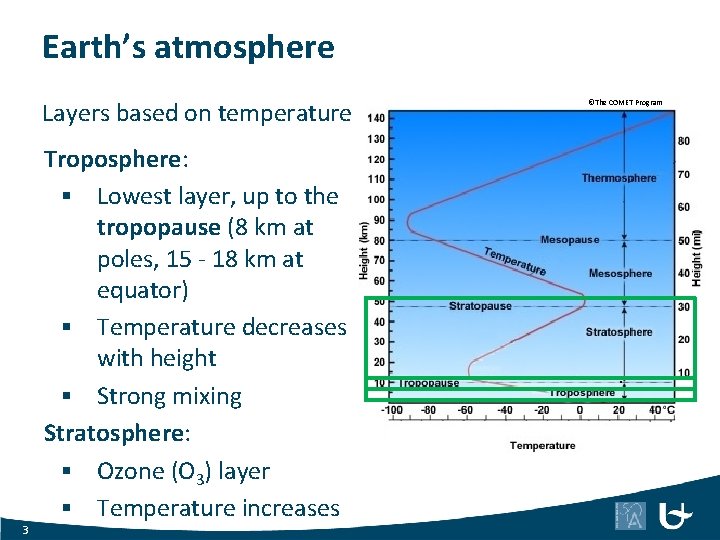
Earth’s atmosphere Layers based on temperature 3 Troposphere: § Lowest layer, up to the tropopause (8 km at poles, 15 - 18 km at equator) § Temperature decreases with height § Strong mixing Stratosphere: § Ozone (O 3) layer § Temperature increases ©The COMET Program
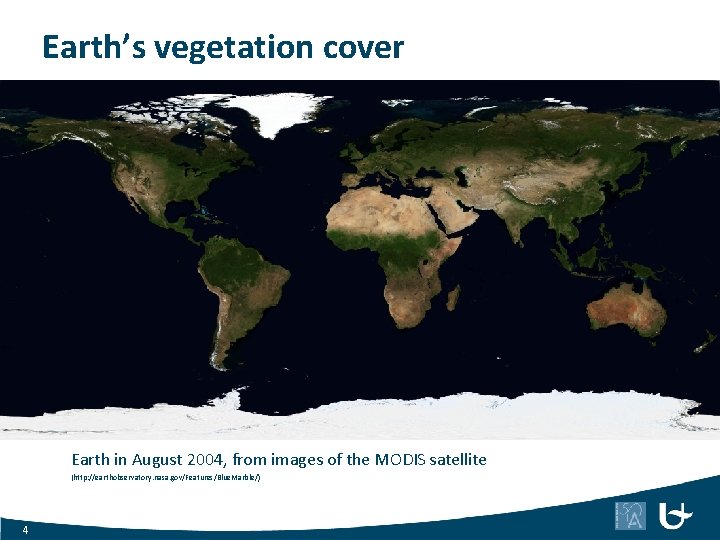
Earth’s vegetation cover Earth in August 2004, from images of the MODIS satellite (http: //earthobservatory. nasa. gov/Features/Blue. Marble/) 4

Biogenic VOC Isoprene (C 5) § Monoterpenes (C 10) § • • 70 Mt/y 20 Mt/y 7 Mt/y Sesquiterpenes (C 15) § Total: 1000 million tonnes/year § Anthropogenic VOC: 185 Mt/y (human CO 2 emissions: 36, 000 Mt/y!) § 5 α-pinene β-pinene 500 Mt/y

Biogenic emissions § Stimulated by light and/or temperature Why do plants emit VOCs? § Management of drought and heat stress § Protection against herbivores 6 • • α-pinene β-pinene Source: http: //msue. anr. msu. edu (Bert Cregg)
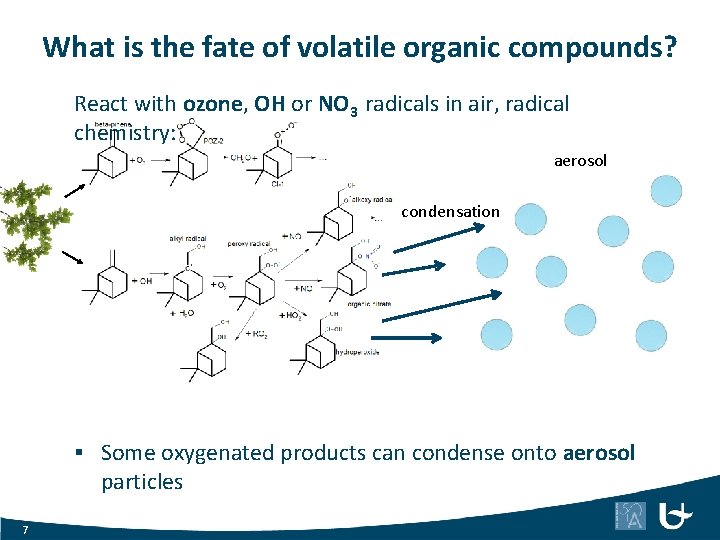
What is the fate of volatile organic compounds? React with ozone, OH or NO 3 radicals in air, radical chemistry: aerosol condensation § Some oxygenated products can condense onto aerosol particles 7
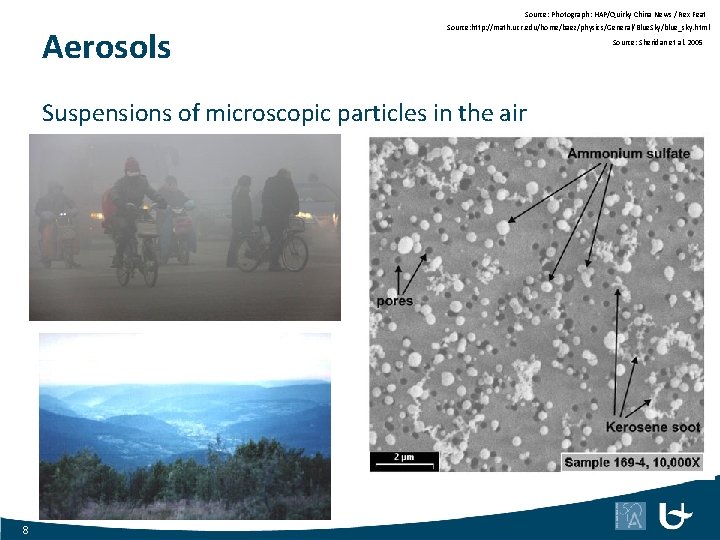
Source: Photograph: HAP/Quirky China News / Rex Feat Aerosols Source: http: //math. ucr. edu/home/baez/physics/General/Blue. Sky/blue_sky. html Suspensions of microscopic particles in the air 8 Source: Sheridan et al. 2005
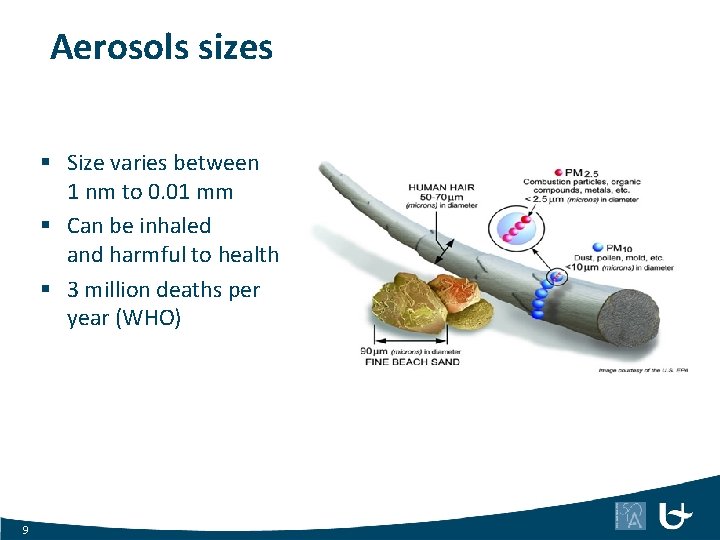
Aerosols sizes § Size varies between 1 nm to 0. 01 mm § Can be inhaled and harmful to health § 3 million deaths per year (WHO) 9
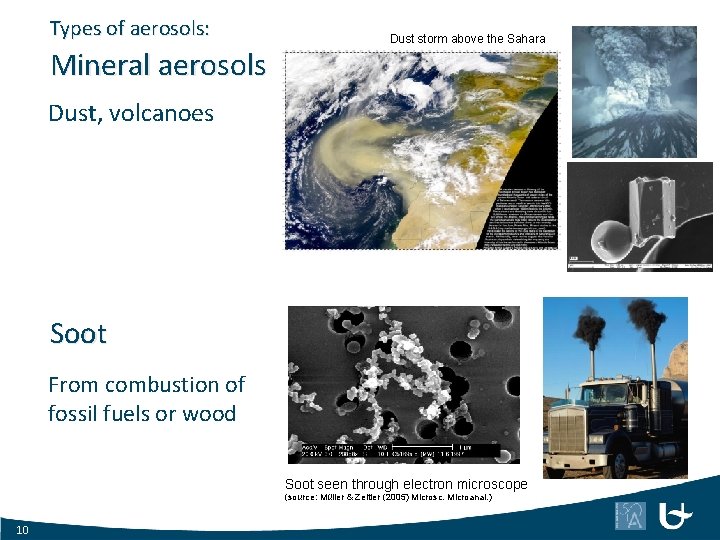
Types of aerosols: Mineral aerosols Dust storm above the Sahara Dust, volcanoes Soot From combustion of fossil fuels or wood Soot seen through electron microscope (source: Müller & Zeitler (2005) Microsc. Microanal. ) 10
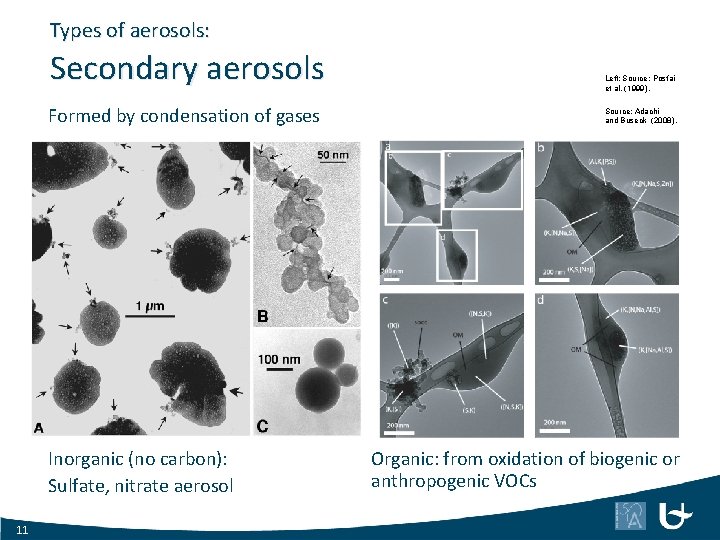
Types of aerosols: Secondary aerosols Left: Source: Posfai et al. (1999). Formed by condensation of gases Source: Adachi and Buseck (2008). Inorganic (no carbon): Sulfate, nitrate aerosol 11 Organic: from oxidation of biogenic or anthropogenic VOCs
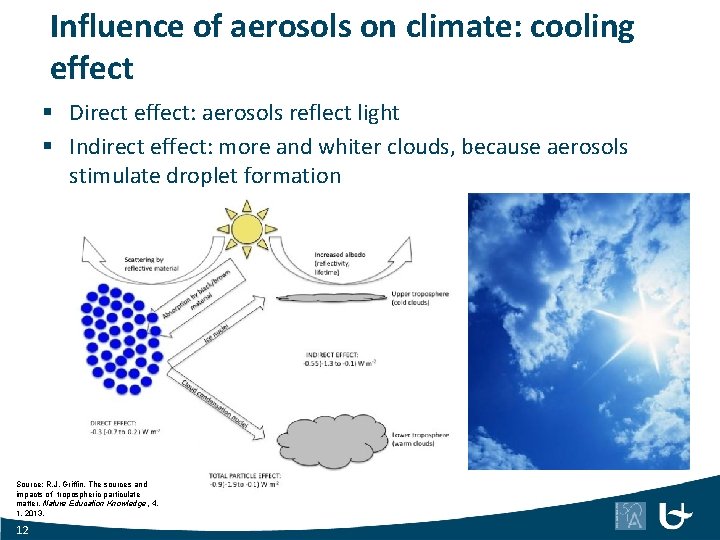
Influence of aerosols on climate: cooling effect § Direct effect: aerosols reflect light § Indirect effect: more and whiter clouds, because aerosols stimulate droplet formation Source: R. J. Griffin, The sources and impacts of tropospheric particulate matter, Nature Education Knowledge, 4, 1, 2013. 12
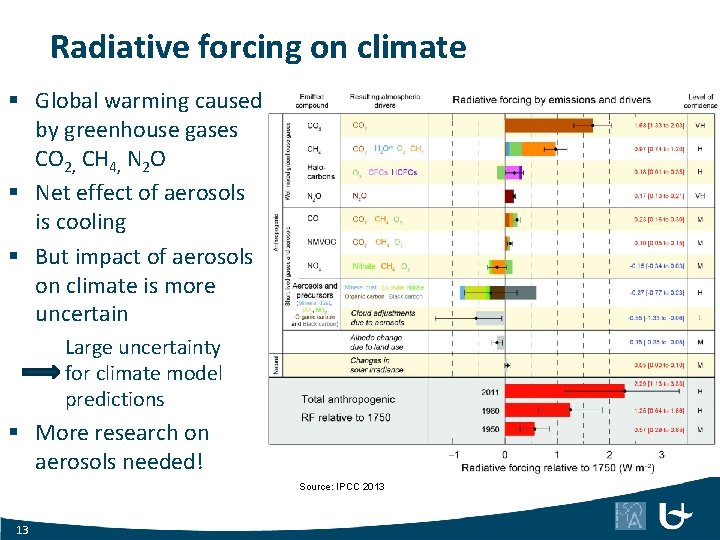
Radiative forcing on climate § Global warming caused by greenhouse gases CO 2, CH 4, N 2 O § Net effect of aerosols is cooling § But impact of aerosols on climate is more uncertain Large uncertainty for climate model predictions § More research on aerosols needed! Source: IPCC 2013 13

Ambient measurements of contribution of organic aerosols Source : Zhang et al. (2007) Geoph. Res. Letters 14
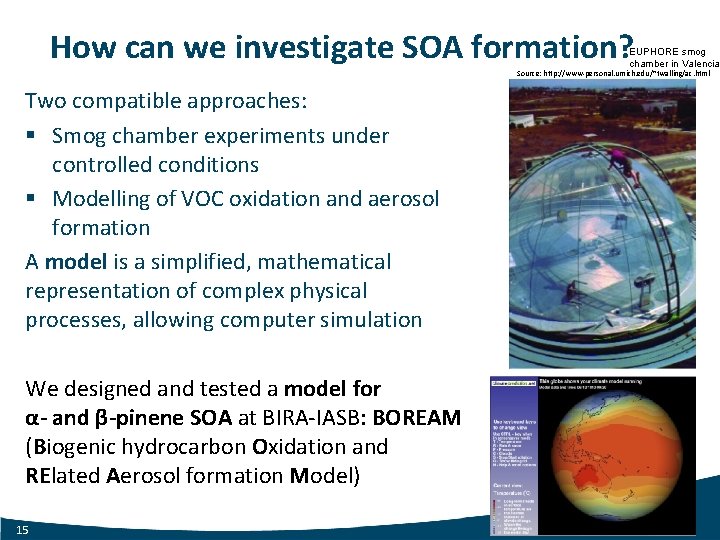
How can we investigate SOA formation? EUPHORE smog chamber in Valencia Source: http: //www-personal. umich. edu/~twalling/ac. html Two compatible approaches: § Smog chamber experiments under controlled conditions § Modelling of VOC oxidation and aerosol formation A model is a simplified, mathematical representation of complex physical processes, allowing computer simulation We designed and tested a model for α- and β-pinene SOA at BIRA-IASB: BOREAM (Biogenic hydrocarbon Oxidation and RElated Aerosol formation Model) 15
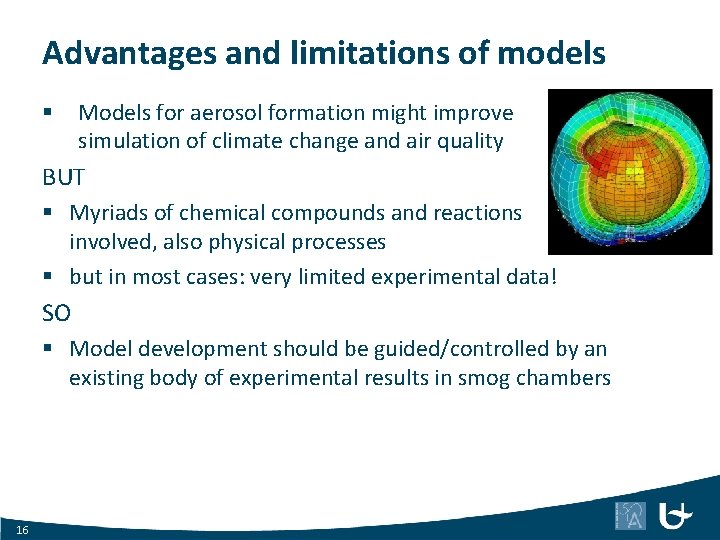
Advantages and limitations of models § Models for aerosol formation might improve simulation of climate change and air quality BUT § Myriads of chemical compounds and reactions involved, also physical processes § but in most cases: very limited experimental data! SO § Model development should be guided/controlled by an existing body of experimental results in smog chambers 16
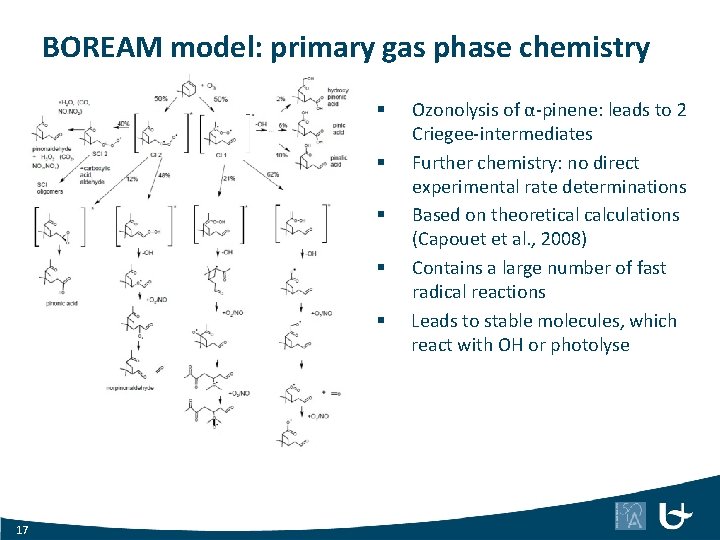
BOREAM model: primary gas phase chemistry § § § 17 Ozonolysis of α-pinene: leads to 2 Criegee-intermediates Further chemistry: no direct experimental rate determinations Based on theoretical calculations (Capouet et al. , 2008) Contains a large number of fast radical reactions Leads to stable molecules, which react with OH or photolyse
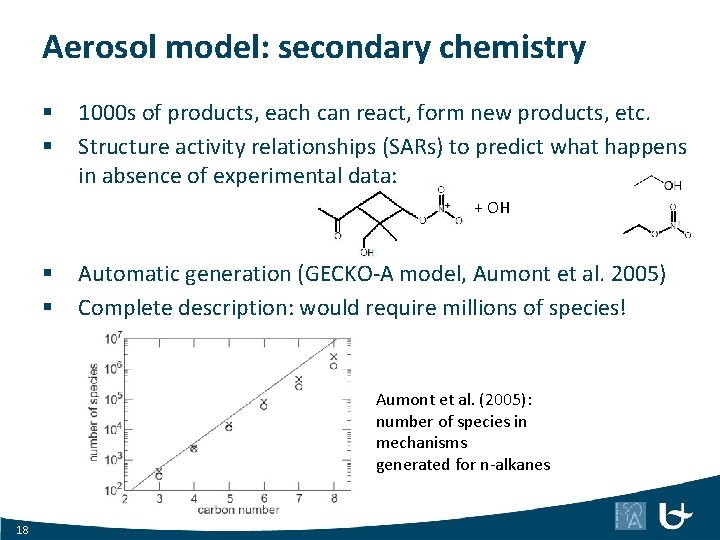
Aerosol model: secondary chemistry § § 1000 s of products, each can react, form new products, etc. Structure activity relationships (SARs) to predict what happens in absence of experimental data: + OH § § Automatic generation (GECKO-A model, Aumont et al. 2005) Complete description: would require millions of species! Aumont et al. (2005): number of species in mechanisms generated for n-alkanes 18
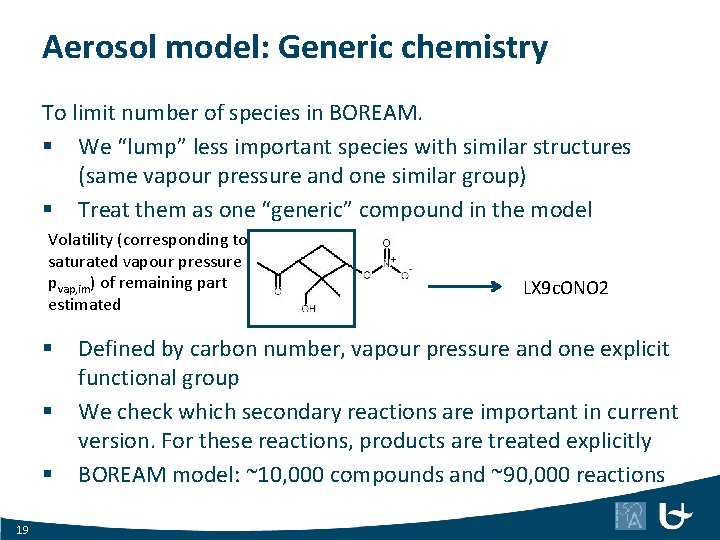
Aerosol model: Generic chemistry To limit number of species in BOREAM. § We “lump” less important species with similar structures (same vapour pressure and one similar group) § Treat them as one “generic” compound in the model Volatility (corresponding to saturated vapour pressure pvap, im) of remaining part estimated § § § 19 LX 9 c. ONO 2 Defined by carbon number, vapour pressure and one explicit functional group We check which secondary reactions are important in current version. For these reactions, products are treated explicitly BOREAM model: ~10, 000 compounds and ~90, 000 reactions
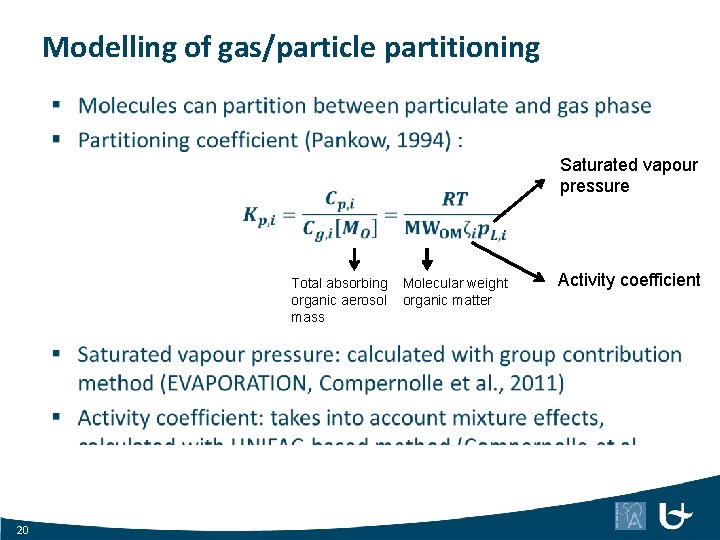
Modelling of gas/particle partitioning Saturated vapour pressure Total absorbing organic aerosol mass 20 Molecular weight organic matter Activity coefficient
Some earlier detailed model studies: underestimates Modelling studies based on the Master Chemical Mechanism, (MCM) (Jenkin, 2004, Xia et al. , 2008): § Find some large model underestimates (up to factor of 1000 compared to the experiment) of SOA yields Reasons: § Inadequate vapour pressure estimation § Incomplete secondary chemistry, missing condensable products 21
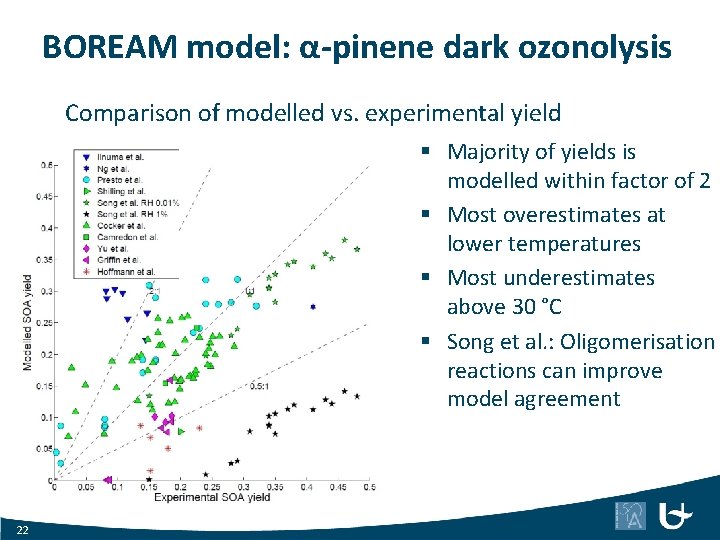
BOREAM model: α-pinene dark ozonolysis Comparison of modelled vs. experimental yield § Majority of yields is modelled within factor of 2 § Most overestimates at lower temperatures § Most underestimates above 30 °C § Song et al. : Oligomerisation reactions can improve model agreement 22
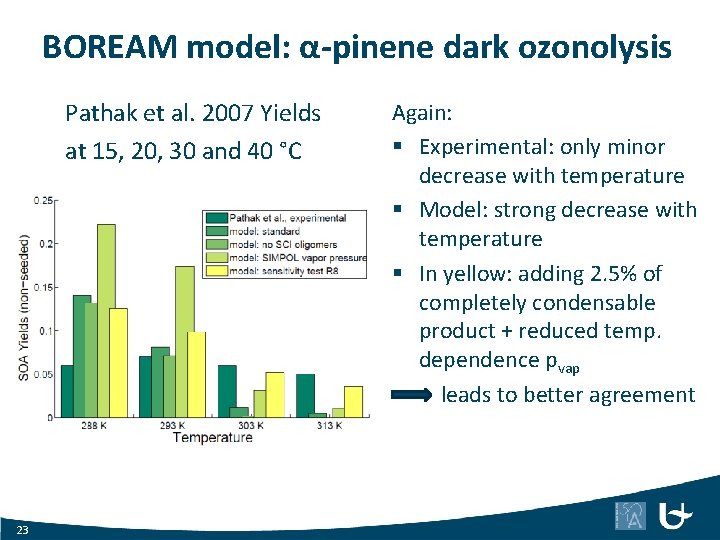
BOREAM model: α-pinene dark ozonolysis Pathak et al. 2007 Yields at 15, 20, 30 and 40 °C 23 Again: § Experimental: only minor decrease with temperature § Model: strong decrease with temperature § In yellow: adding 2. 5% of completely condensable product + reduced temp. dependence pvap leads to better agreement
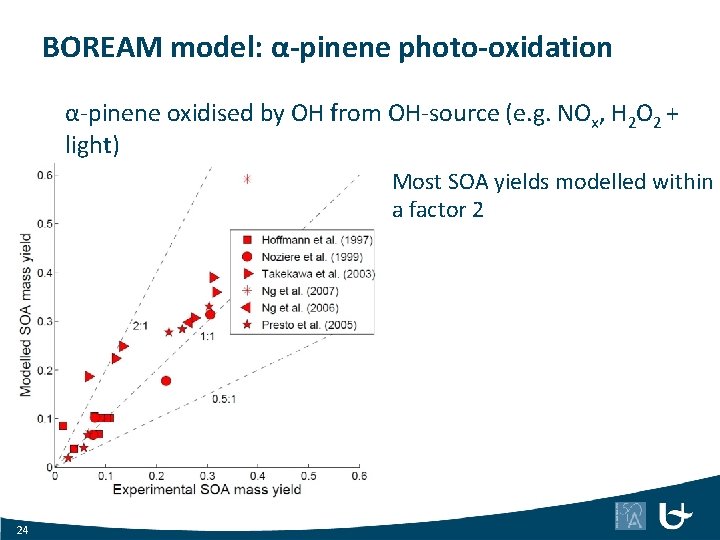
BOREAM model: α-pinene photo-oxidation α-pinene oxidised by OH from OH-source (e. g. NOx, H 2 O 2 + light) Most SOA yields modelled within a factor 2 24
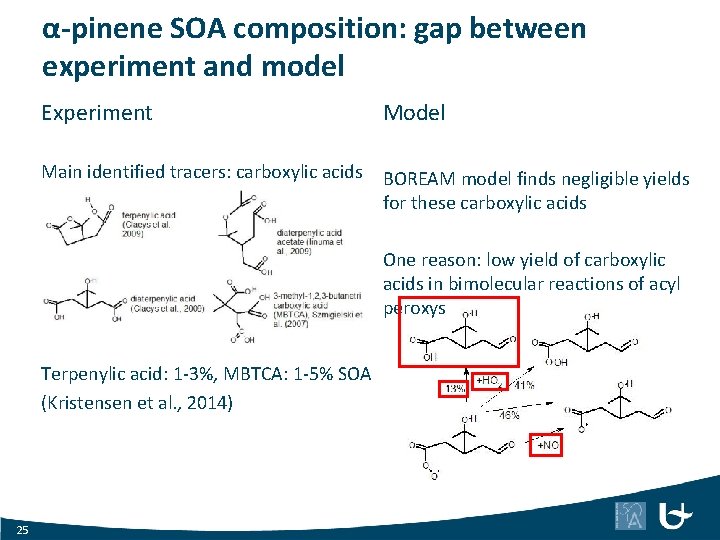
α-pinene SOA composition: gap between experiment and model Experiment Model Main identified tracers: carboxylic acids BOREAM model finds negligible yields for these carboxylic acids One reason: low yield of carboxylic acids in bimolecular reactions of acyl peroxys Terpenylic acid: 1 -3%, MBTCA: 1 -5% SOA (Kristensen et al. , 2014) 25
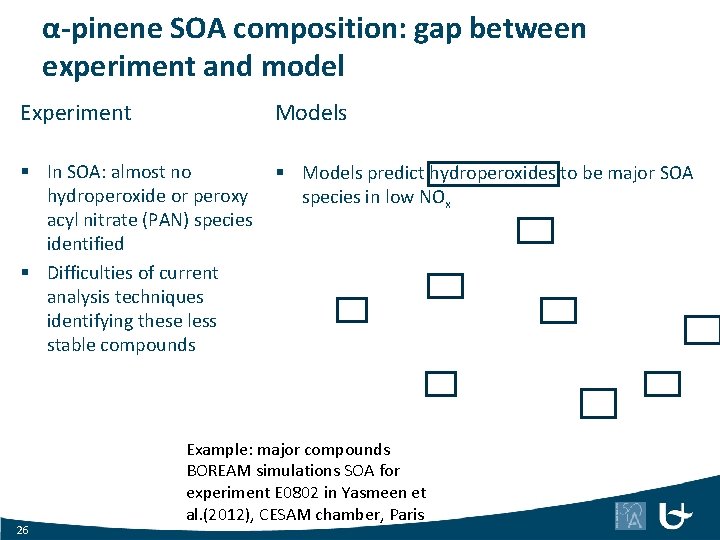
α-pinene SOA composition: gap between experiment and model Experiment Models § In SOA: almost no hydroperoxide or peroxy acyl nitrate (PAN) species identified § Difficulties of current analysis techniques identifying these less stable compounds § Models predict hydroperoxides to be major SOA species in low NOx 26 Example: major compounds BOREAM simulations SOA for experiment E 0802 in Yasmeen et al. (2012), CESAM chamber, Paris
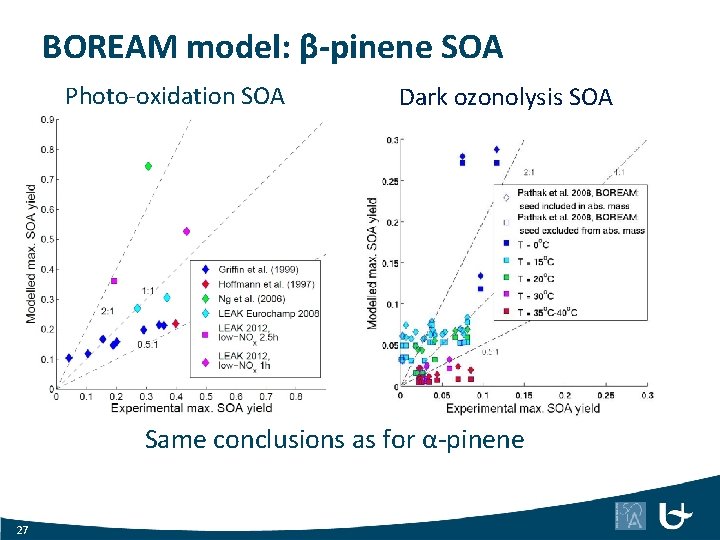
BOREAM model: β-pinene SOA Photo-oxidation SOA Dark ozonolysis SOA Same conclusions as for α-pinene 27
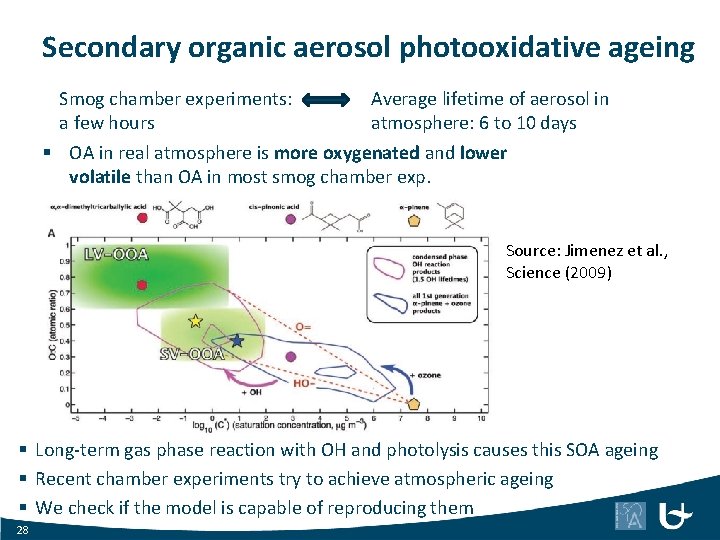
Secondary organic aerosol photooxidative ageing Smog chamber experiments: Average lifetime of aerosol in a few hours atmosphere: 6 to 10 days § OA in real atmosphere is more oxygenated and lower volatile than OA in most smog chamber exp. Source: Jimenez et al. , Science (2009) § Long-term gas phase reaction with OH and photolysis causes this SOA ageing § Recent chamber experiments try to achieve atmospheric ageing § We check if the model is capable of reproducing them 28
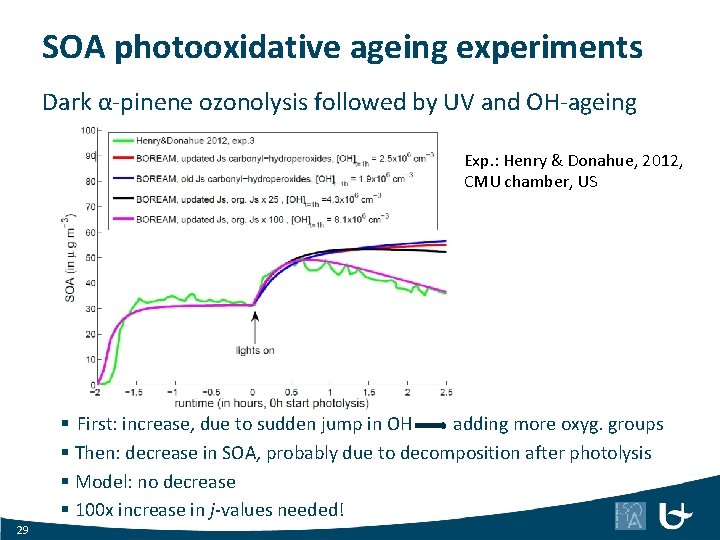
SOA photooxidative ageing experiments Dark α-pinene ozonolysis followed by UV and OH-ageing Exp. : Henry & Donahue, 2012, CMU chamber, US § First: increase, due to sudden jump in OH adding more oxyg. groups § Then: decrease in SOA, probably due to decomposition after photolysis § Model: no decrease § 100 x increase in j-values needed! 29
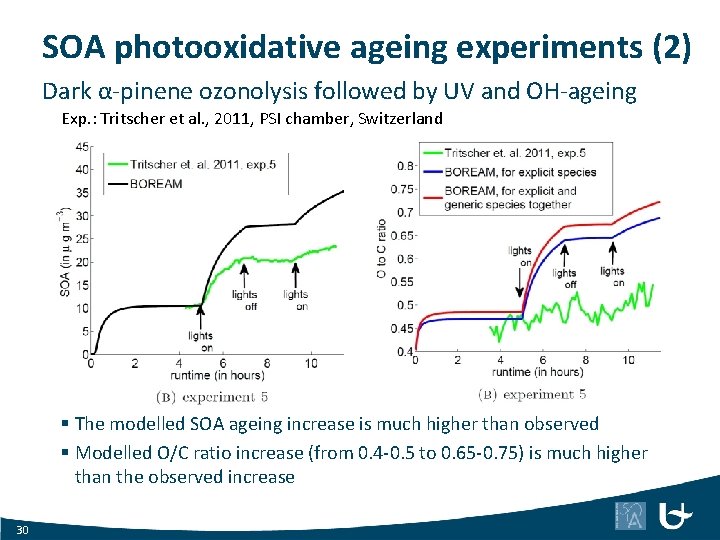
SOA photooxidative ageing experiments (2) Dark α-pinene ozonolysis followed by UV and OH-ageing Exp. : Tritscher et al. , 2011, PSI chamber, Switzerland § The modelled SOA ageing increase is much higher than observed § Modelled O/C ratio increase (from 0. 4 -0. 5 to 0. 65 -0. 75) is much higher than the observed increase 30
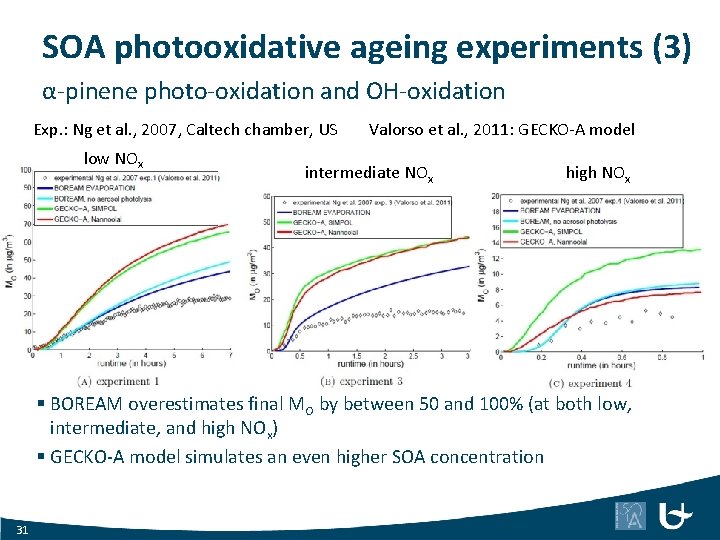
SOA photooxidative ageing experiments (3) α-pinene photo-oxidation and OH-oxidation Exp. : Ng et al. , 2007, Caltech chamber, US low NOx Valorso et al. , 2011: GECKO-A model intermediate NOx high NOx § BOREAM overestimates final MO by between 50 and 100% (at both low, intermediate, and high NOx) § GECKO-A model simulates an even higher SOA concentration 31
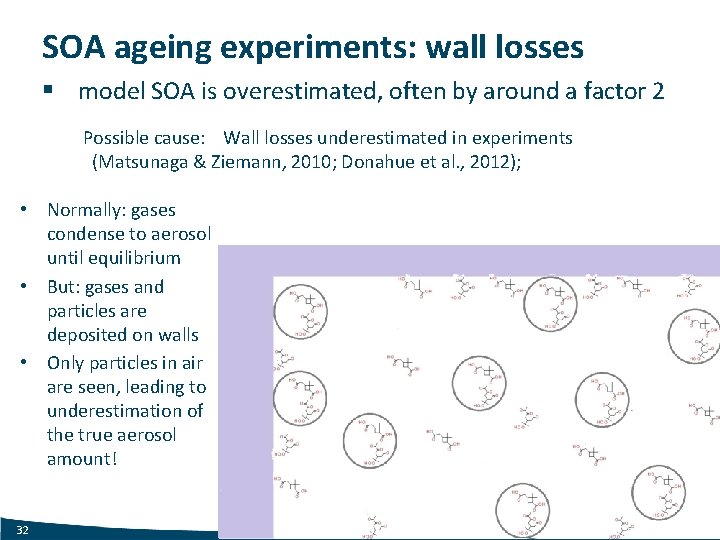
SOA ageing experiments: wall losses § model SOA is overestimated, often by around a factor 2 Possible cause: Wall losses underestimated in experiments (Matsunaga & Ziemann, 2010; Donahue et al. , 2012); • Normally: gases condense to aerosol until equilibrium • But: gases and particles are deposited on walls • Only particles in air are seen, leading to underestimation of the true aerosol amount! 32
Causes SOA ageing overestimation Other Possible causes: § No radical chemistry in aerosol phase after aerosol phase photolysis § Recently: some SOAs become viscous (glassy), prohibiting efficient partitioning § Accumulation of uncertainties on kinetic rates 33
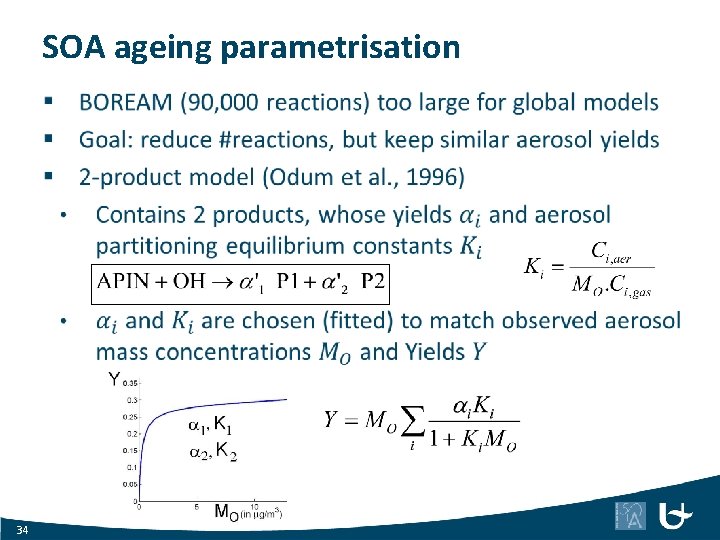
SOA ageing parametrisation 34
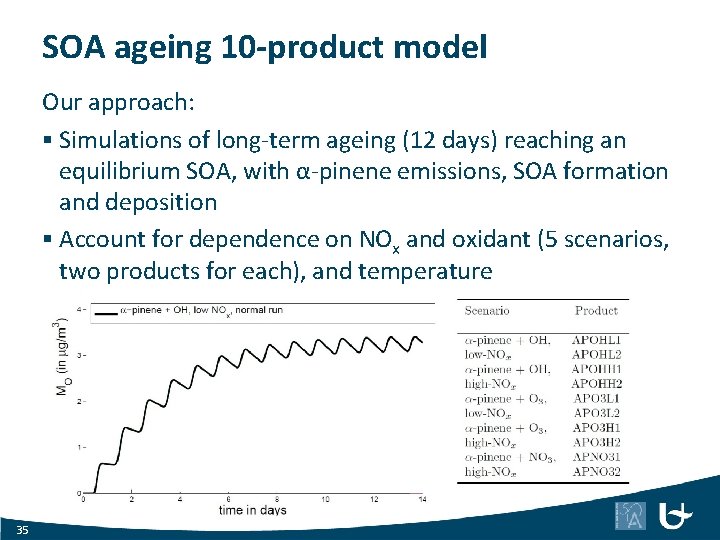
SOA ageing 10 -product model Our approach: § Simulations of long-term ageing (12 days) reaching an equilibrium SOA, with α-pinene emissions, SOA formation and deposition § Account for dependence on NOx and oxidant (5 scenarios, two products for each), and temperature 35
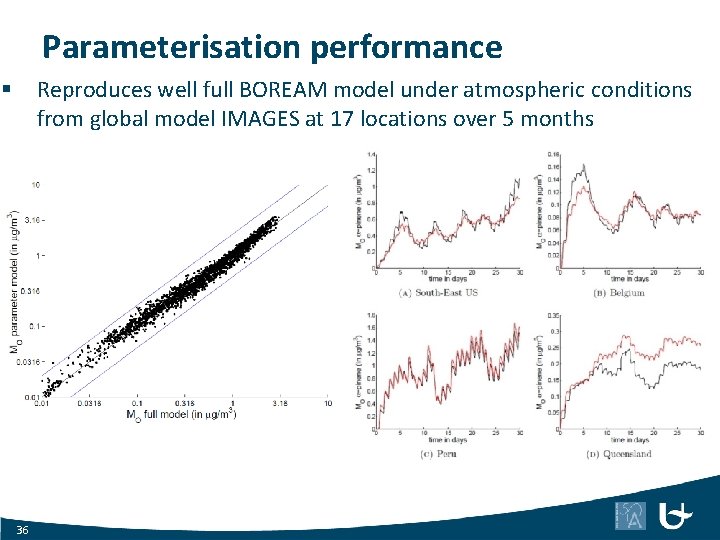
Parameterisation performance Reproduces well full BOREAM model under atmospheric conditions from global model IMAGES at 17 locations over 5 months § 36
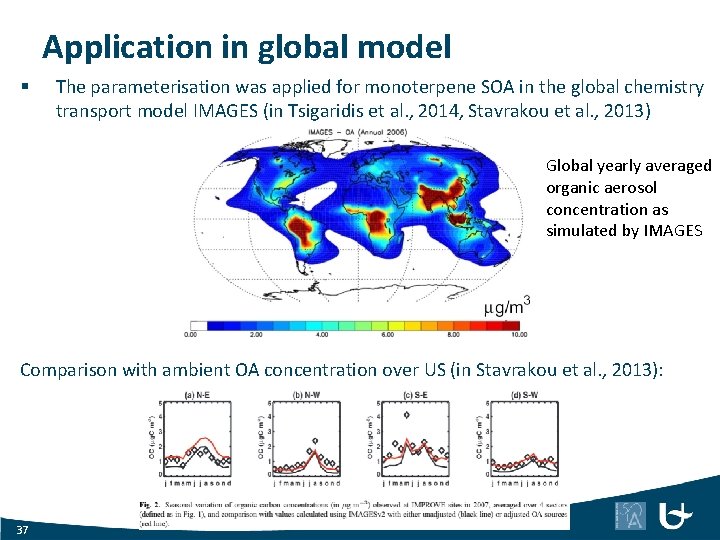
Application in global model § The parameterisation was applied for monoterpene SOA in the global chemistry transport model IMAGES (in Tsigaridis et al. , 2014, Stavrakou et al. , 2013) Global yearly averaged organic aerosol concentration as simulated by IMAGES Comparison with ambient OA concentration over US (in Stavrakou et al. , 2013): 37
Conclusions § BOREAM generated based on SARs and quantum calculations § Majority of SOA yields modelled within factor 2, but • Dark ozonolysis: T-dependence too high • Important observed species not formed in model – most model species remain unidentified in experiments § New β-pinene mechanism: reasonable SOA agreement § SOA ageing: frequent overestimates of factor 2 or more § Parameterisation: for aged SOA, sensitive to T, NOx and oxidant type; good agreement with full model 38
Acknowledgements: Promoters: Dr. Jean-François Müller (BIRA-IASB) Prof. dr. Magda Claeys (UAntwerpen) Jury: Prof. dr. Annemie Bogaerts (UAntwerpen) Prof. dr. Piet Van Espen (UAntwerpen) Prof. dr. Jean-François Doussin (LISA - UPEC) Prof. dr. Bernard Aumont (LISA - UPEC) I want to acknowledge the contributions, and great amount of help and advice which I received from many other scientists and colleagues: Dr. Steven Compernolle (BIRA-IASB), Prof. dr. Jozef Peeters (KU Leuven), Dr. Luc Vereecken (MPI Mainz), Dr. Thanh Lahm Nguyen (University of Texas), Dr. Ariane Kahnt (UAntwerpen), Dr. Jenny Stavrakou, Dr. Maite Bauwens, and the many other former colleagues at the Belgian Institute for Space Aeronomy (BIRA-IASB) This work would not have been possible without the support of the Belgian Science Policy Office (Belspo) 39 Cover image: Matthias Wassermann
40

Additional slides 41
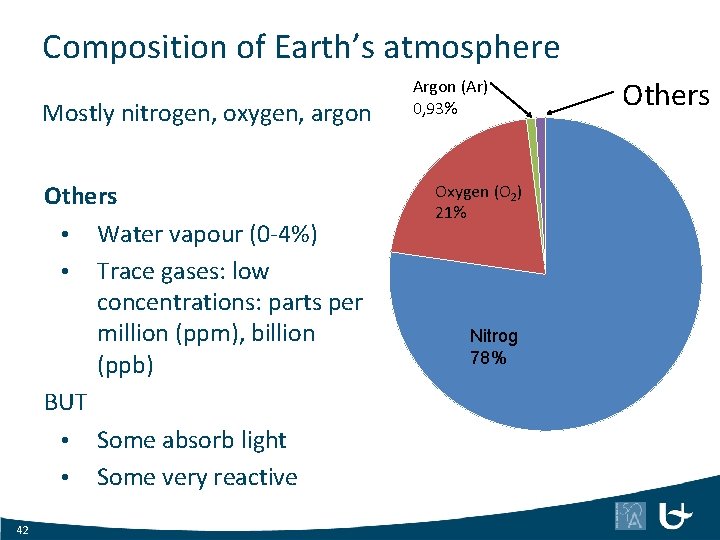
Composition of Earth’s atmosphere Mostly nitrogen, oxygen, argon Others • Water vapour (0 -4%) • Trace gases: low concentrations: parts per million (ppm), billion (ppb) BUT • Some absorb light • Some very reactive 42 Argon (Ar) 0, 93% Oxygen (O 2) 21% Nitrogen (N 2) 78% Others
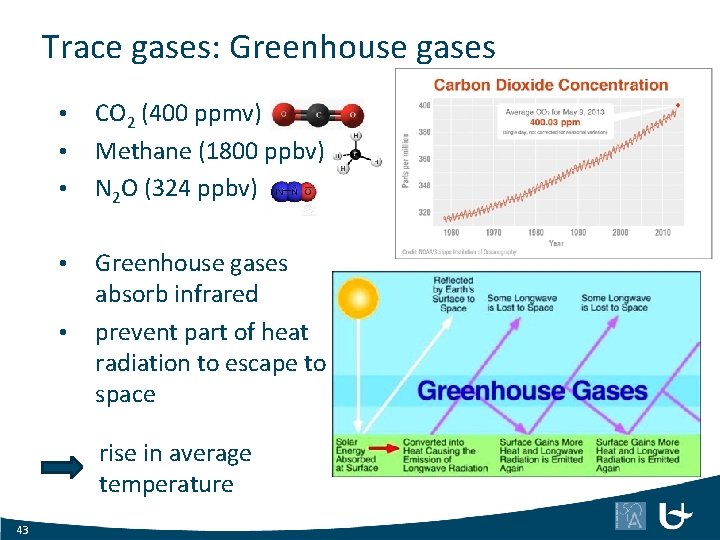
Trace gases: Greenhouse gases • • • CO 2 (400 ppmv) Methane (1800 ppbv) N 2 O (324 ppbv) Greenhouse gases absorb infrared prevent part of heat radiation to escape to space rise in average temperature 43
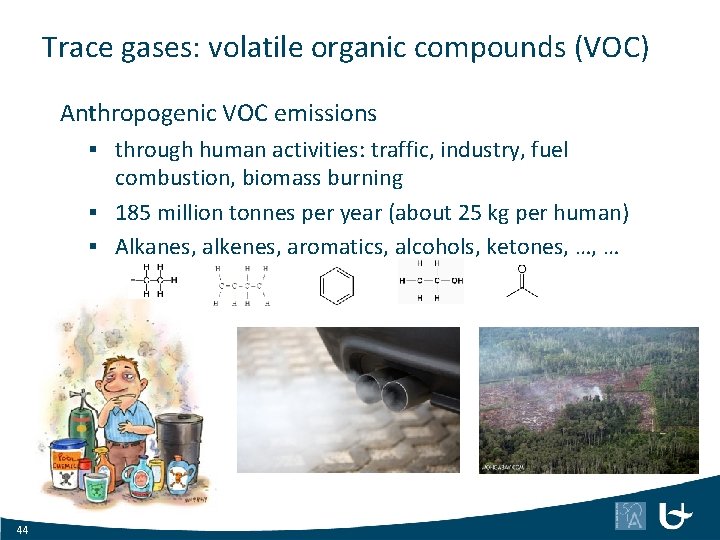
Trace gases: volatile organic compounds (VOC) Anthropogenic VOC emissions § through human activities: traffic, industry, fuel combustion, biomass burning § 185 million tonnes per year (about 25 kg per human) § Alkanes, alkenes, aromatics, alcohols, ketones, …, … 44
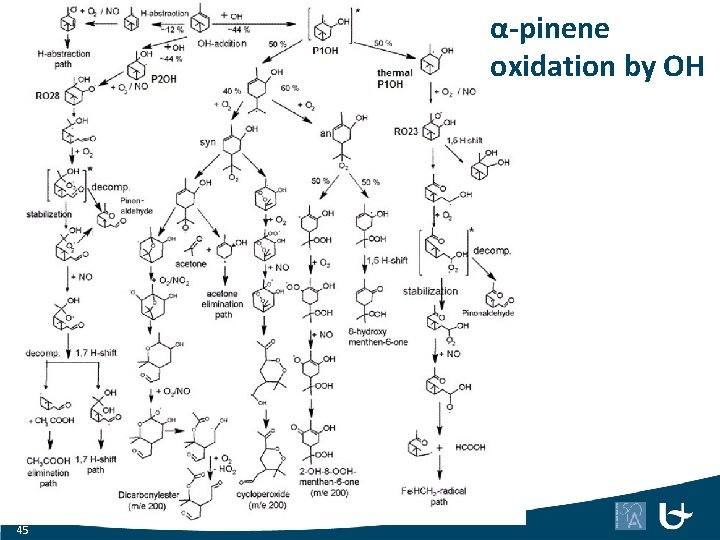
α-pinene oxidation by OH 45
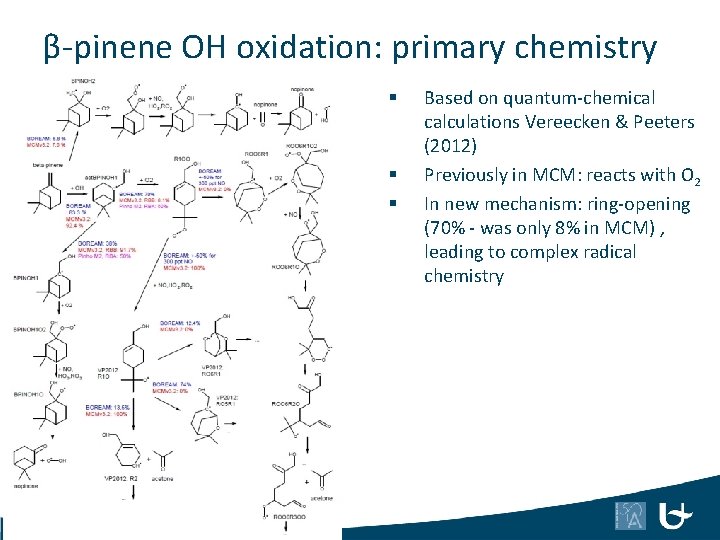
β-pinene OH oxidation: primary chemistry § § § 46 Based on quantum-chemical calculations Vereecken & Peeters (2012) Previously in MCM: reacts with O 2 In new mechanism: ring-opening (70% - was only 8% in MCM) , leading to complex radical chemistry
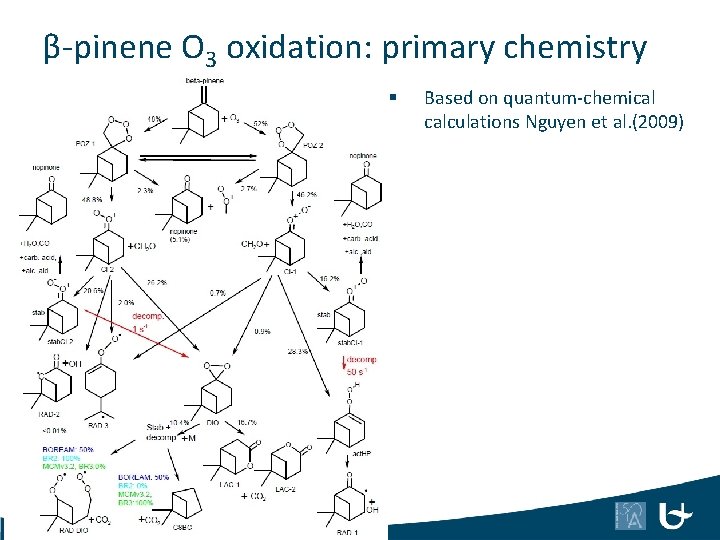
β-pinene O 3 oxidation: primary chemistry § 47 Based on quantum-chemical calculations Nguyen et al. (2009)
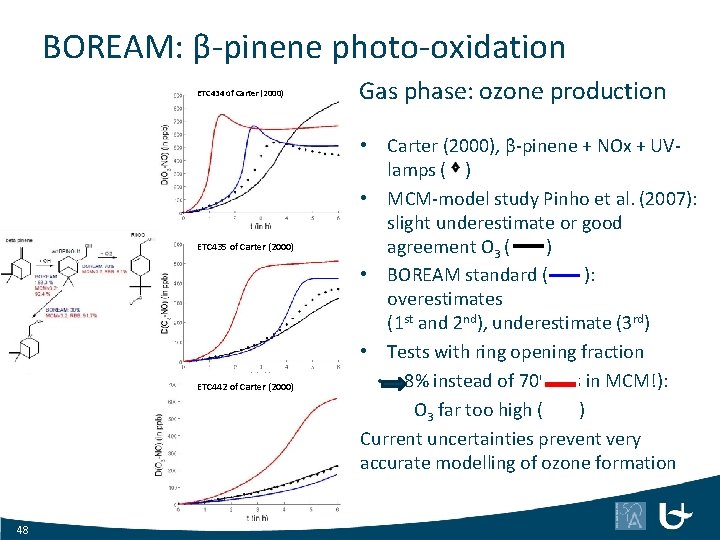
BOREAM: β-pinene photo-oxidation ETC 434 of Carter (2000) ETC 435 of Carter (2000) ETC 442 of Carter (2000) 48 Gas phase: ozone production • Carter (2000), β-pinene + NOx + UVlamps ( ) • MCM-model study Pinho et al. (2007): slight underestimate or good agreement O 3 ( ) • BOREAM standard ( ): overestimates (1 st and 2 nd), underestimate (3 rd) • Tests with ring opening fraction • 8% instead of 70% (as in MCM!): O 3 far too high ( ) Current uncertainties prevent very accurate modelling of ozone formation
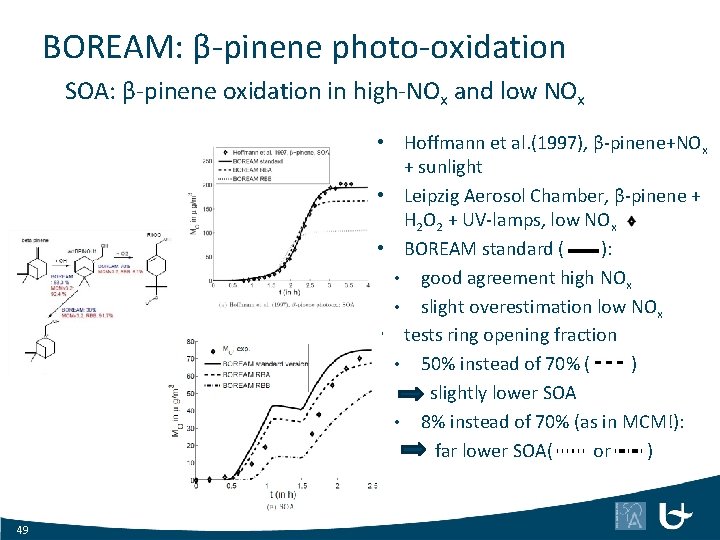
BOREAM: β-pinene photo-oxidation SOA: β-pinene oxidation in high-NOx and low NOx • Hoffmann et al. (1997), β-pinene+NOx + sunlight • Leipzig Aerosol Chamber, β-pinene + H 2 O 2 + UV-lamps, low NOx • BOREAM standard ( ): • good agreement high NOx • slight overestimation low NOx • tests ring opening fraction • 50% instead of 70% ( ) slightly lower SOA • 8% instead of 70% (as in MCM!): far lower SOA( or ) 49
- Slides: 49