
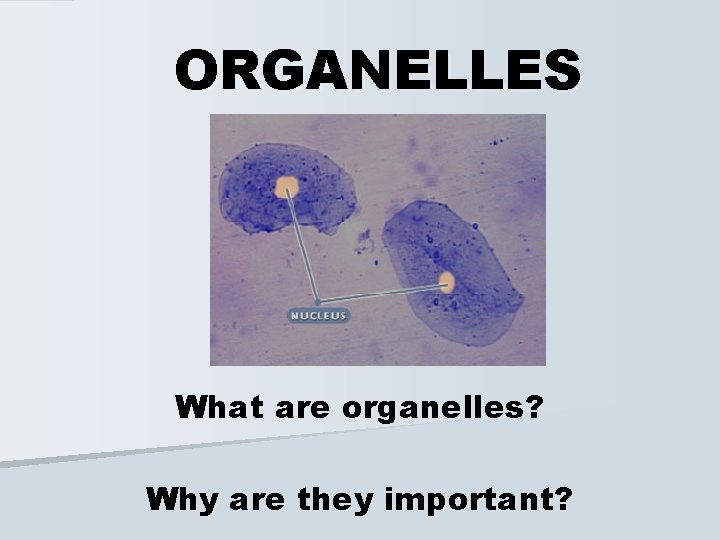
ORGANELLES What are organelles Why are they important
- Slides: 16
ORGANELLES What are organelles? Why are they important?
n Organelles = “Little Organs” n Each performs a specialized function – Nucleolus – Nucleoplasm – Nuclear membrane – Cytoplasm – Ribosome – Rough ER – Smooth ER - Mitochondria - Centrioles - Golgi Apparatus - Vacuole - Chloroplast - Lysosome - Cell Membrane - Cell Wall
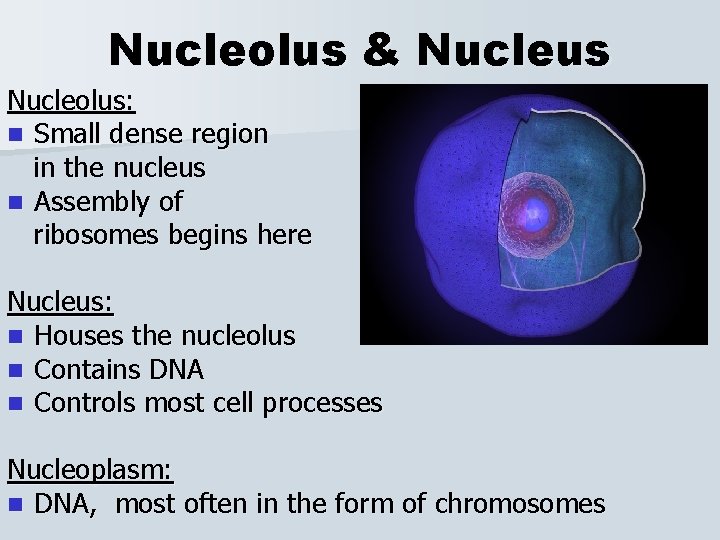
Nucleolus & Nucleus Nucleolus: n Small dense region in the nucleus n Assembly of ribosomes begins here Nucleus: n Houses the nucleolus n Contains DNA n Controls most cell processes Nucleoplasm: n DNA, most often in the form of chromosomes
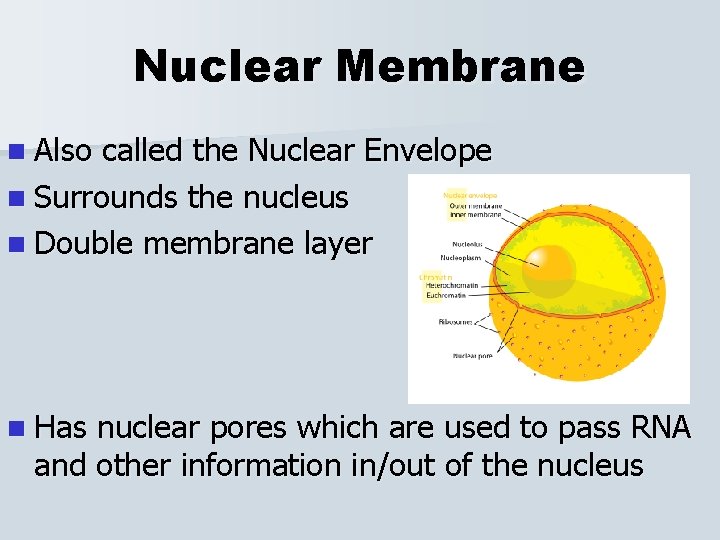
Nuclear Membrane n Also called the Nuclear Envelope n Surrounds the nucleus n Double membrane layer n Has nuclear pores which are used to pass RNA and other information in/out of the nucleus
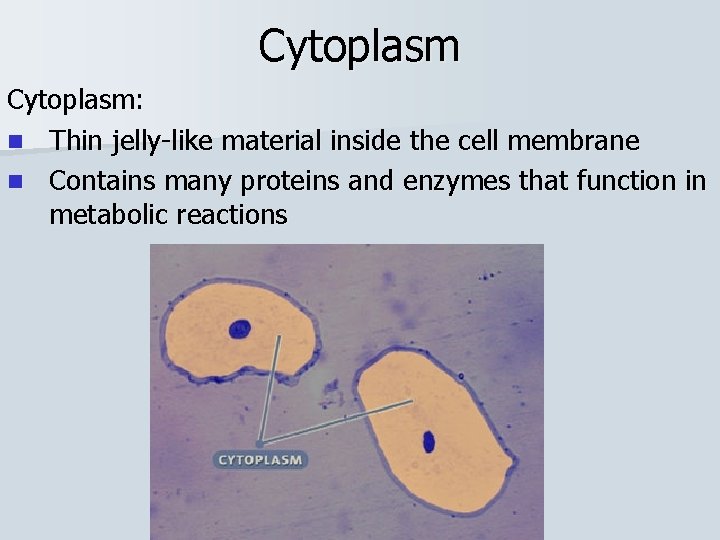
Cytoplasm: n Thin jelly-like material inside the cell membrane n Contains many proteins and enzymes that function in metabolic reactions
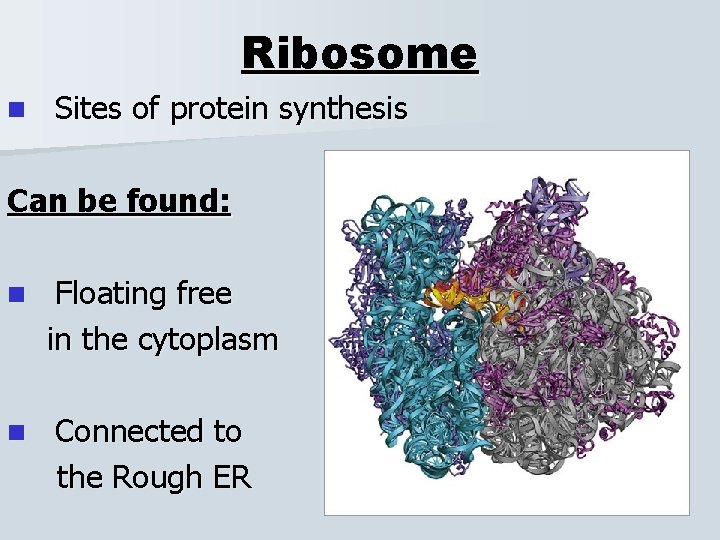
Ribosome n Sites of protein synthesis Can be found: n n Floating free in the cytoplasm Connected to the Rough ER
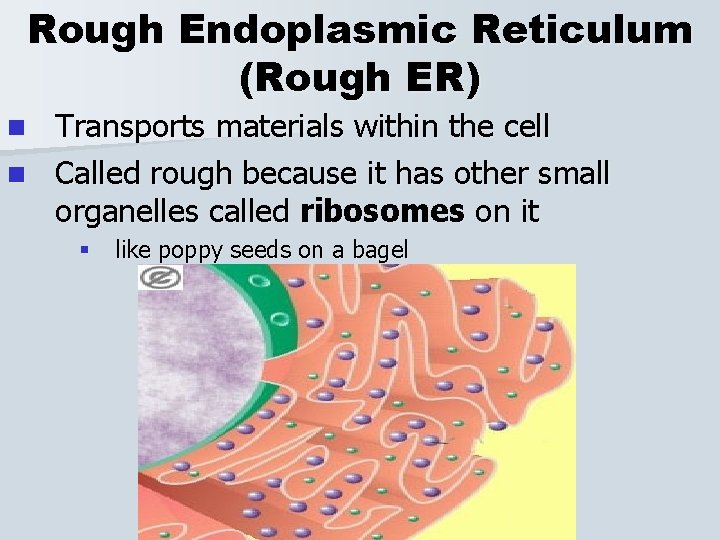
Rough Endoplasmic Reticulum (Rough ER) Transports materials within the cell n Called rough because it has other small organelles called ribosomes on it n § like poppy seeds on a bagel
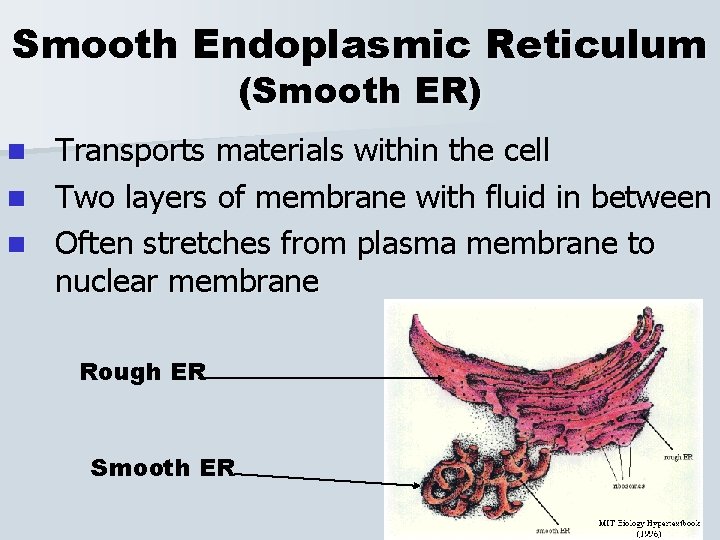
Smooth Endoplasmic Reticulum (Smooth ER) Transports materials within the cell n Two layers of membrane with fluid in between n Often stretches from plasma membrane to nuclear membrane n Rough ER Smooth ER
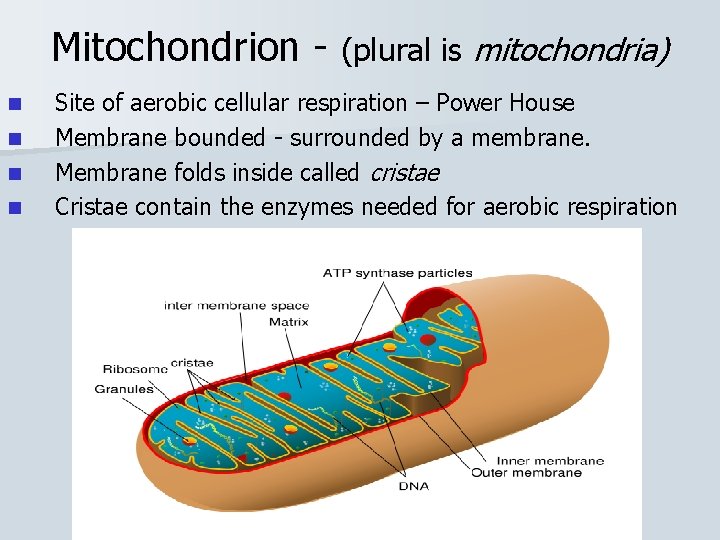
Mitochondrion - (plural is mitochondria) n n Site of aerobic cellular respiration – Power House Membrane bounded - surrounded by a membrane. Membrane folds inside called cristae Cristae contain the enzymes needed for aerobic respiration
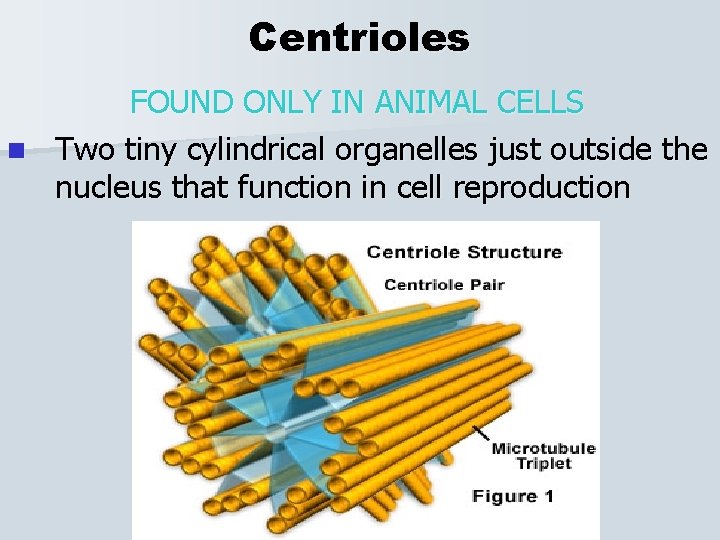
Centrioles FOUND ONLY IN ANIMAL CELLS n Two tiny cylindrical organelles just outside the nucleus that function in cell reproduction
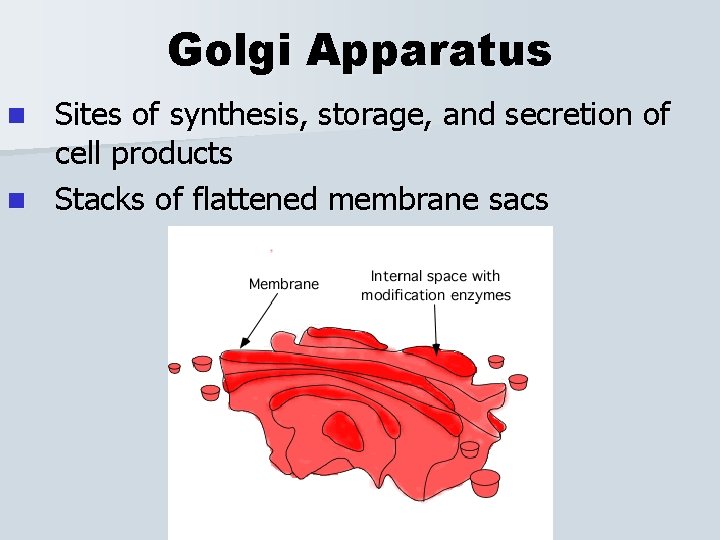
Golgi Apparatus Sites of synthesis, storage, and secretion of cell products n Stacks of flattened membrane sacs n
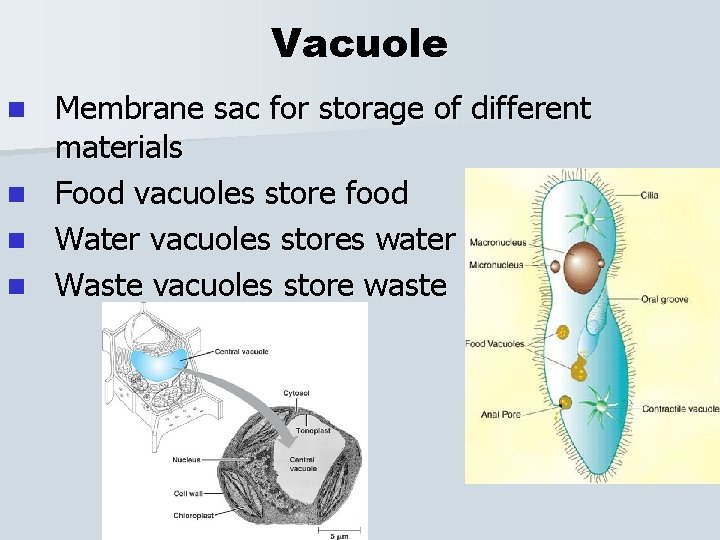
Vacuole n n Membrane sac for storage of different materials Food vacuoles store food Water vacuoles stores water Waste vacuoles store waste
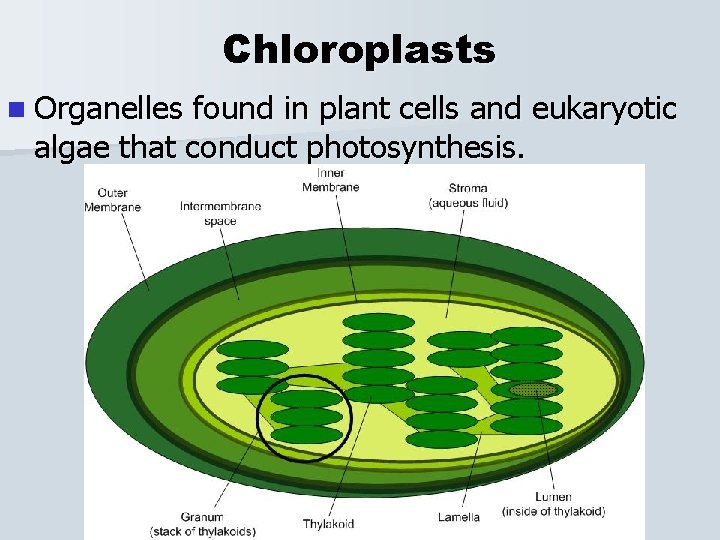
Chloroplasts n Organelles found in plant cells and eukaryotic algae that conduct photosynthesis.
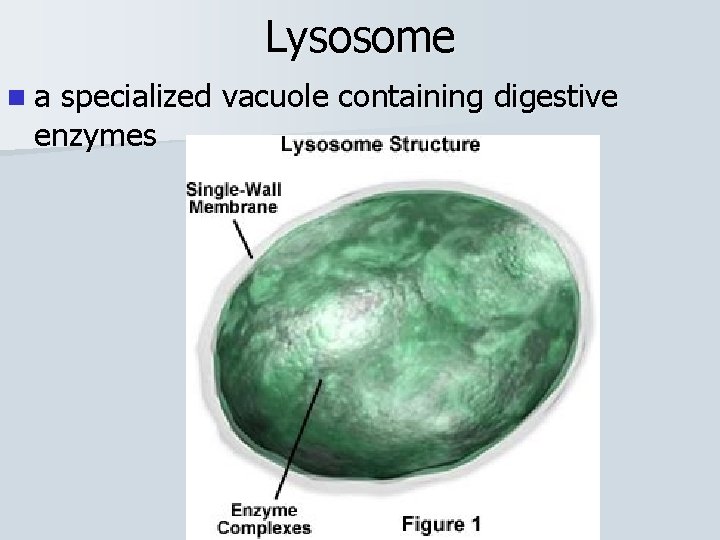
Lysosome na specialized vacuole containing digestive enzymes
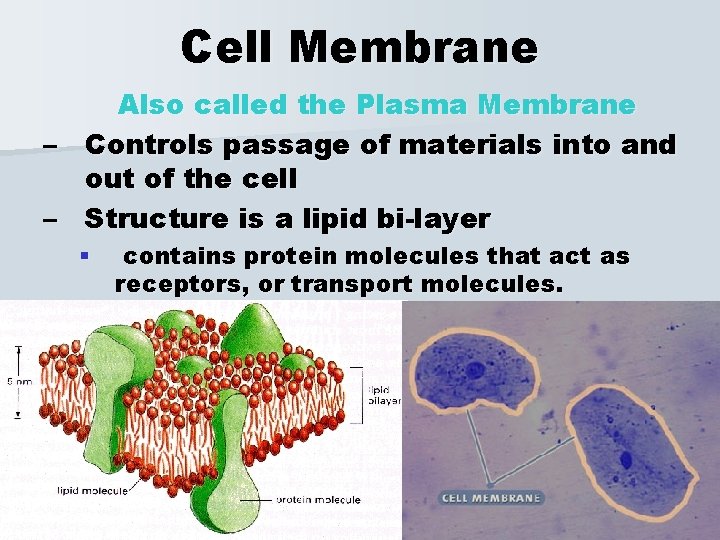
Cell Membrane Also called the Plasma Membrane – Controls passage of materials into and out of the cell – Structure is a lipid bi-layer § contains protein molecules that act as receptors, or transport molecules.
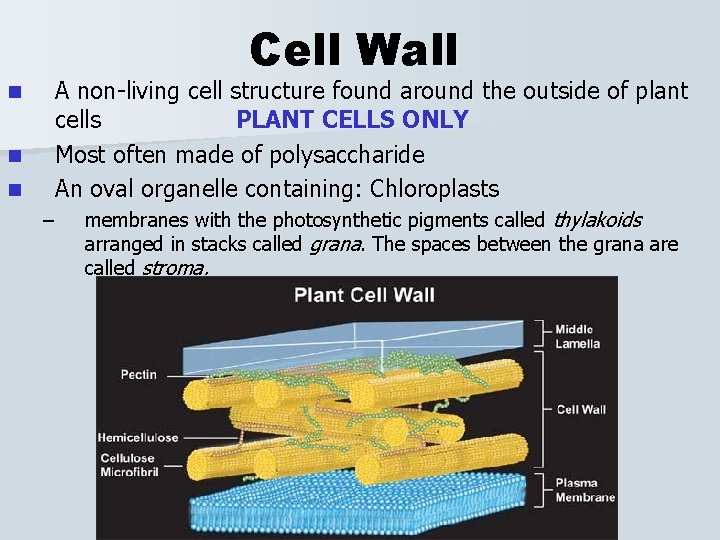
Cell Wall n n n A non-living cell structure found around the outside of plant cells PLANT CELLS ONLY Most often made of polysaccharide An oval organelle containing: Chloroplasts – membranes with the photosynthetic pigments called thylakoids arranged in stacks called grana. The spaces between the grana are called stroma.