
Organelles Structure and Function of Organelles The Structure
- Slides: 21
Organelles
Structure and Function of Organelles • The Structure and Function of the following organelles will be discussed: – – – – Cell Membrane Nucleus Cell Wall Cytoplasm Cytoskeleton Ribosomes Endoplasmic Reticulum – – – Golgi Apparatus Mitochondria Lysosomes Centrioles Vacuoles Chloroplast
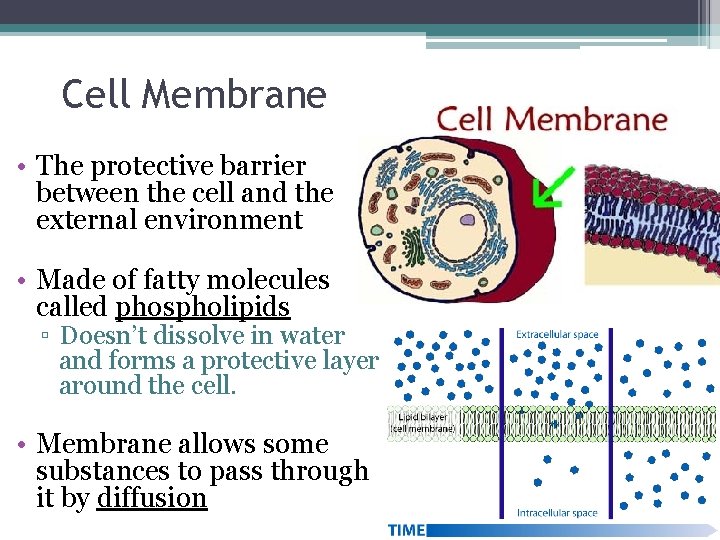
Cell Membrane • The protective barrier between the cell and the external environment • Made of fatty molecules called phospholipids ▫ Doesn’t dissolve in water and forms a protective layer around the cell. • Membrane allows some substances to pass through it by diffusion
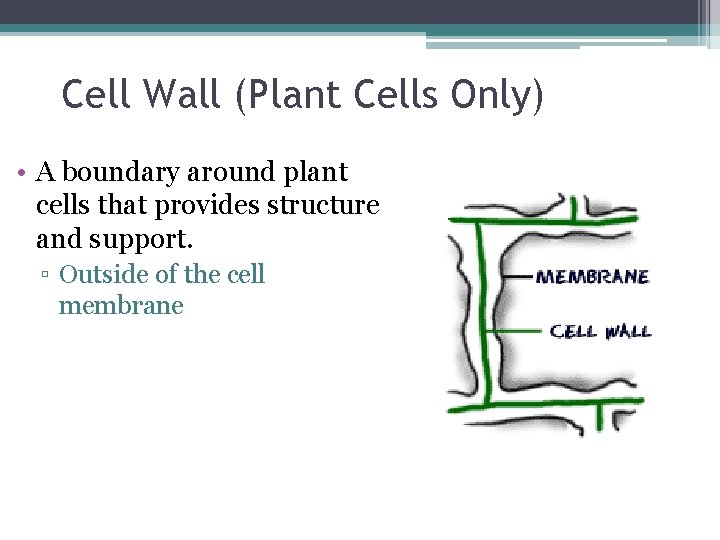
Cell Wall (Plant Cells Only) • A boundary around plant cells that provides structure and support. ▫ Outside of the cell membrane
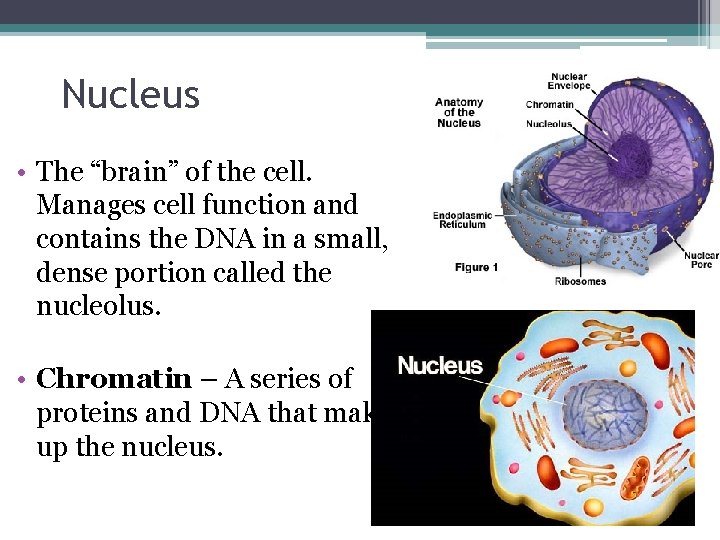
Nucleus • The “brain” of the cell. Manages cell function and contains the DNA in a small, dense portion called the nucleolus. • Chromatin – A series of proteins and DNA that make up the nucleus.
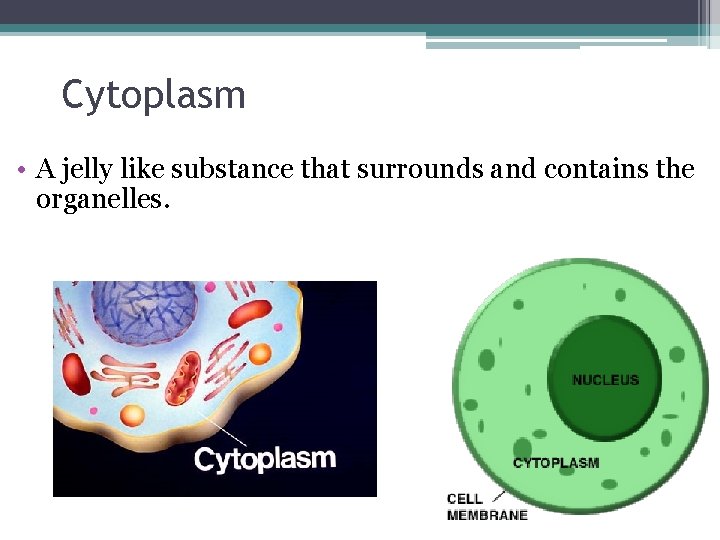
Cytoplasm • A jelly like substance that surrounds and contains the organelles.
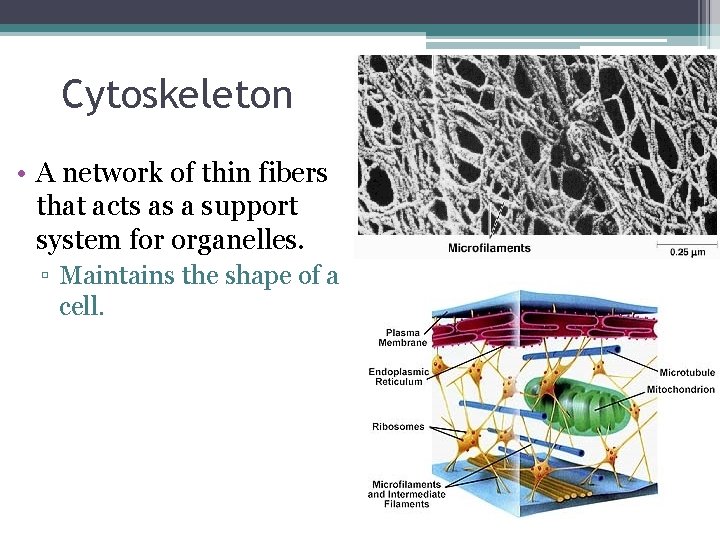
Cytoskeleton • A network of thin fibers that acts as a support system for organelles. ▫ Maintains the shape of a cell.
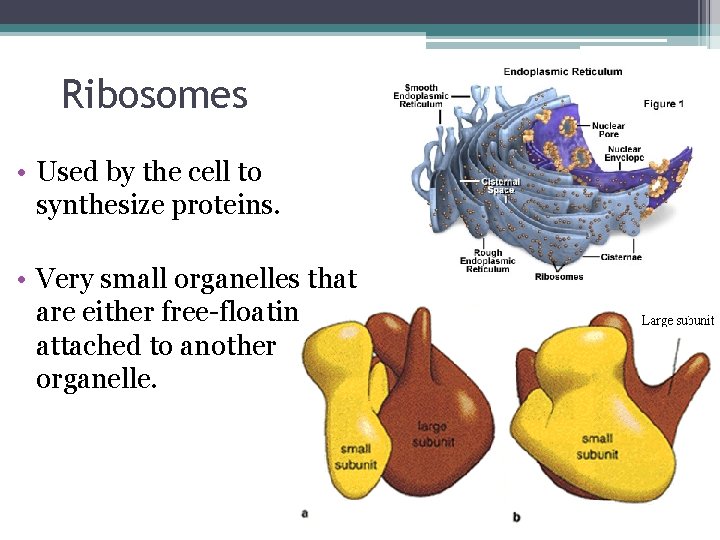
Ribosomes • Used by the cell to synthesize proteins. • Very small organelles that are either free-floating or attached to another organelle.
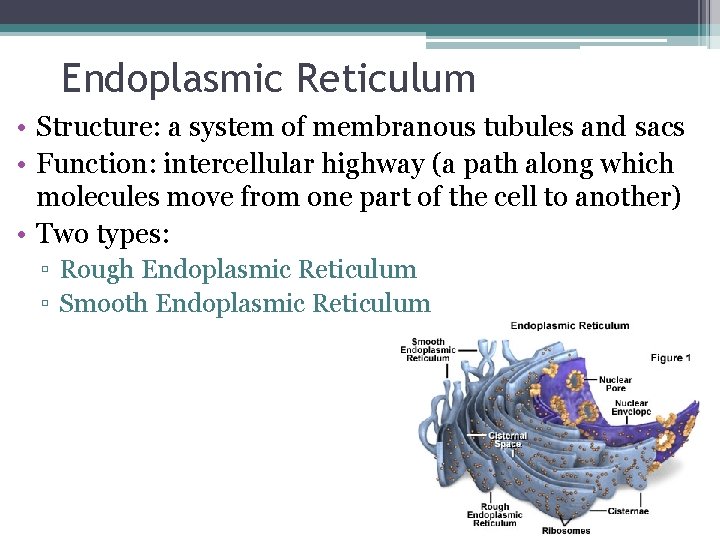
Endoplasmic Reticulum • Structure: a system of membranous tubules and sacs • Function: intercellular highway (a path along which molecules move from one part of the cell to another) • Two types: ▫ Rough Endoplasmic Reticulum ▫ Smooth Endoplasmic Reticulum
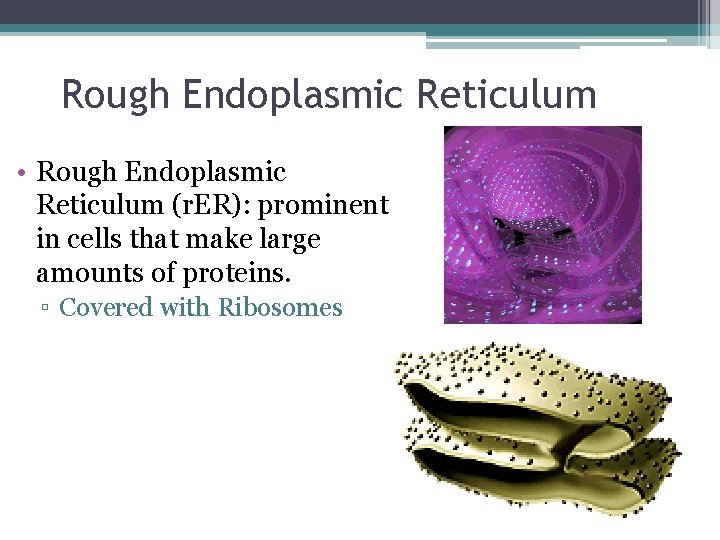
Rough Endoplasmic Reticulum • Rough Endoplasmic Reticulum (r. ER): prominent in cells that make large amounts of proteins. ▫ Covered with Ribosomes
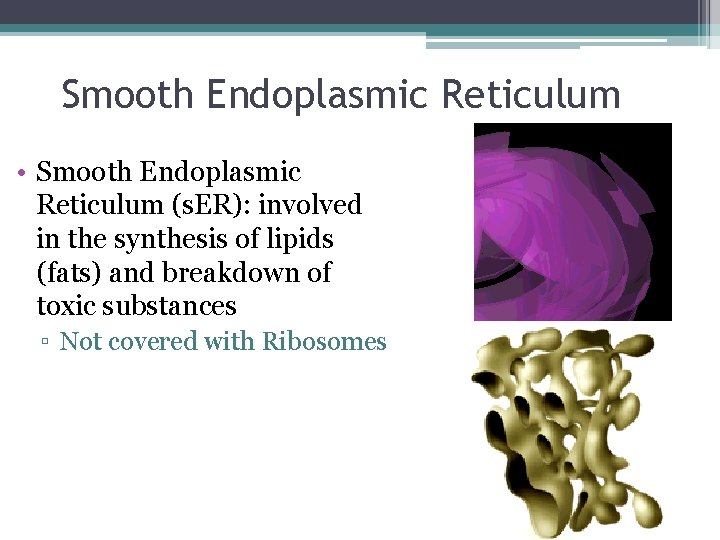
Smooth Endoplasmic Reticulum • Smooth Endoplasmic Reticulum (s. ER): involved in the synthesis of lipids (fats) and breakdown of toxic substances ▫ Not covered with Ribosomes
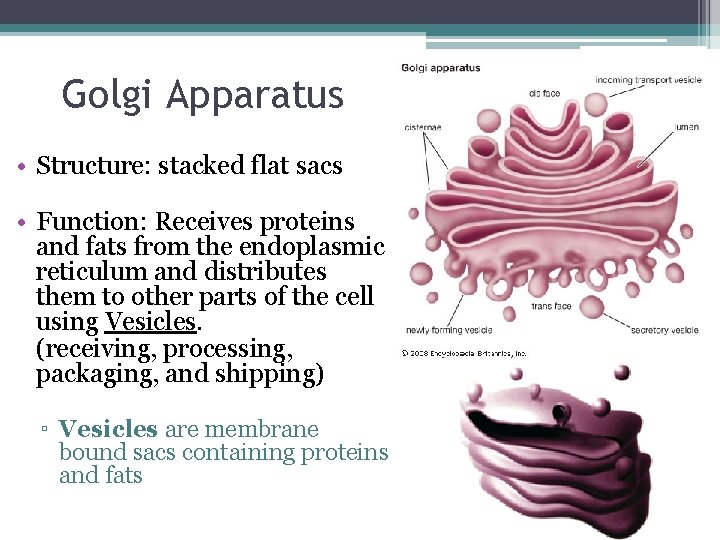
Golgi Apparatus • Structure: stacked flat sacs • Function: Receives proteins and fats from the endoplasmic reticulum and distributes them to other parts of the cell using Vesicles. (receiving, processing, packaging, and shipping) ▫ Vesicles are membrane bound sacs containing proteins and fats
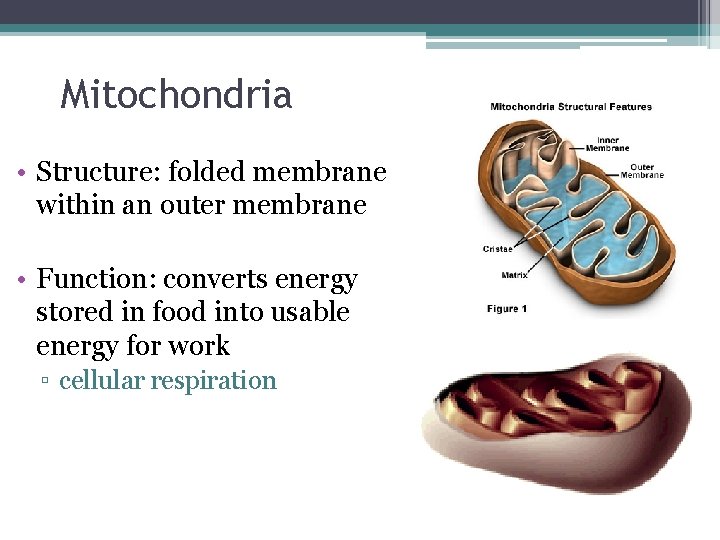
Mitochondria • Structure: folded membrane within an outer membrane • Function: converts energy stored in food into usable energy for work ▫ cellular respiration
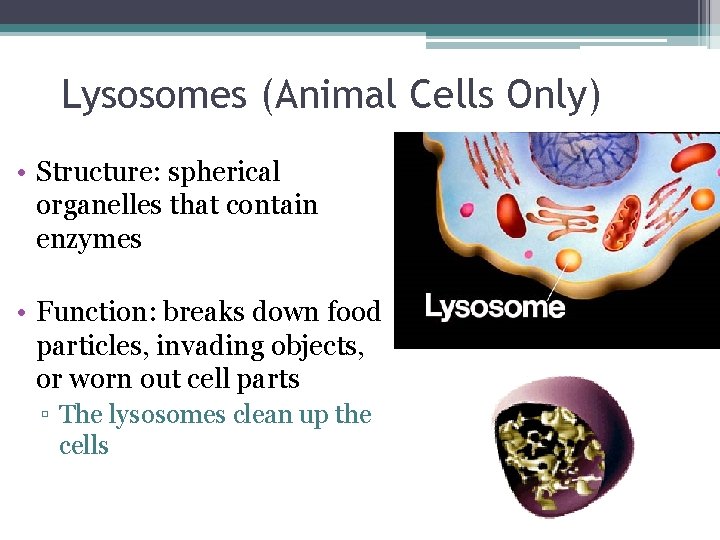
Lysosomes (Animal Cells Only) • Structure: spherical organelles that contain enzymes • Function: breaks down food particles, invading objects, or worn out cell parts ▫ The lysosomes clean up the cells
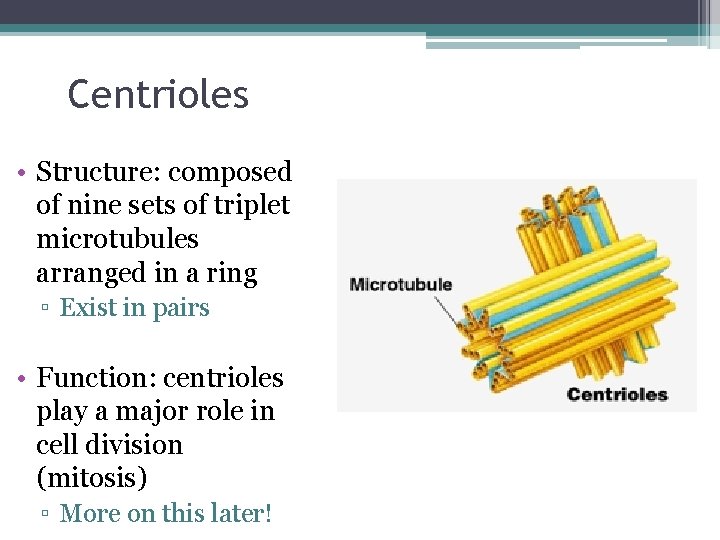
Centrioles • Structure: composed of nine sets of triplet microtubules arranged in a ring ▫ Exist in pairs • Function: centrioles play a major role in cell division (mitosis) ▫ More on this later!
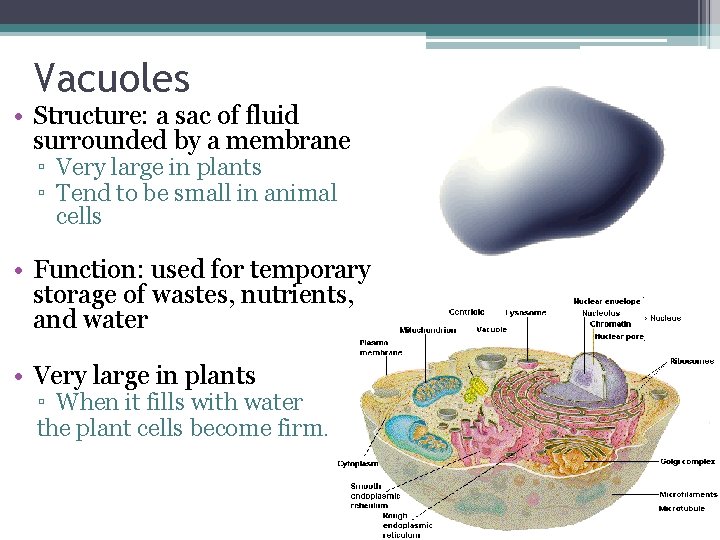
Vacuoles • Structure: a sac of fluid surrounded by a membrane ▫ Very large in plants ▫ Tend to be small in animal cells • Function: used for temporary storage of wastes, nutrients, and water • Very large in plants ▫ When it fills with water the plant cells become firm.
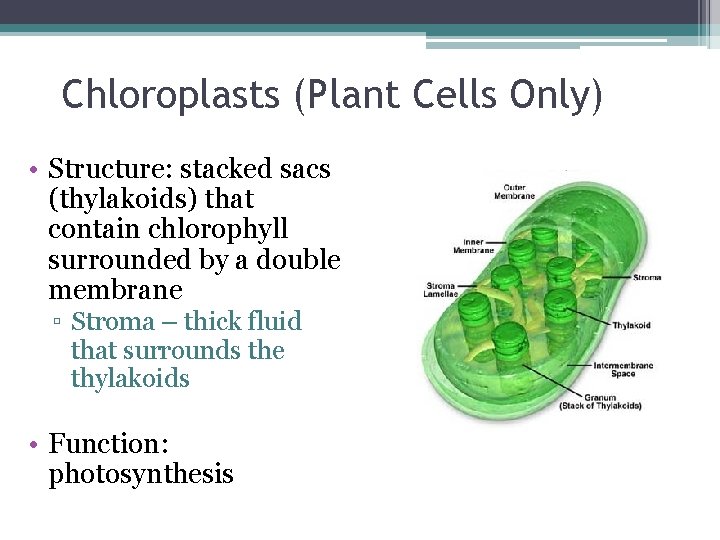
Chloroplasts (Plant Cells Only) • Structure: stacked sacs (thylakoids) that contain chlorophyll surrounded by a double membrane ▫ Stroma – thick fluid that surrounds the thylakoids • Function: photosynthesis
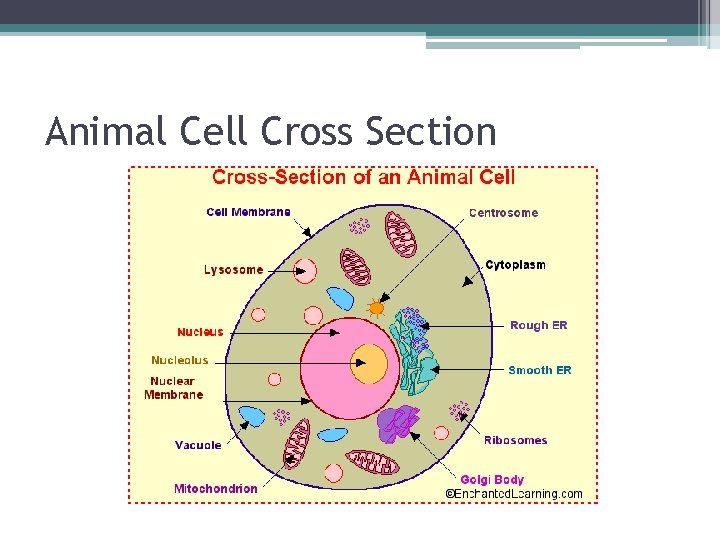
Animal Cell Cross Section
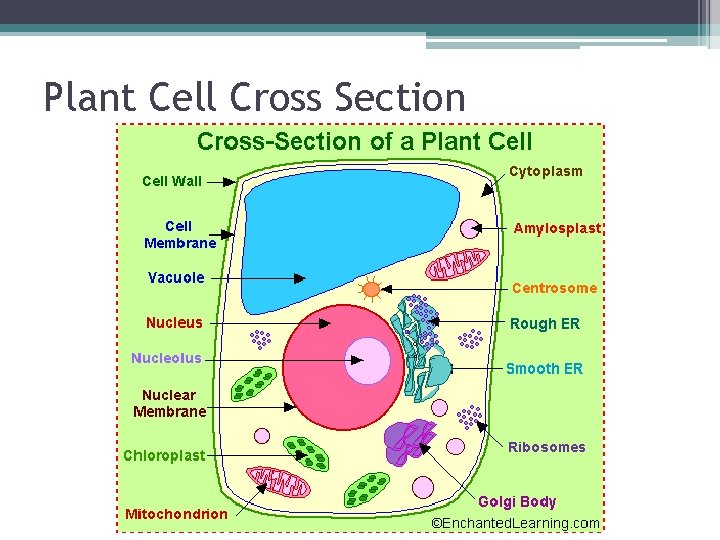
Plant Cell Cross Section
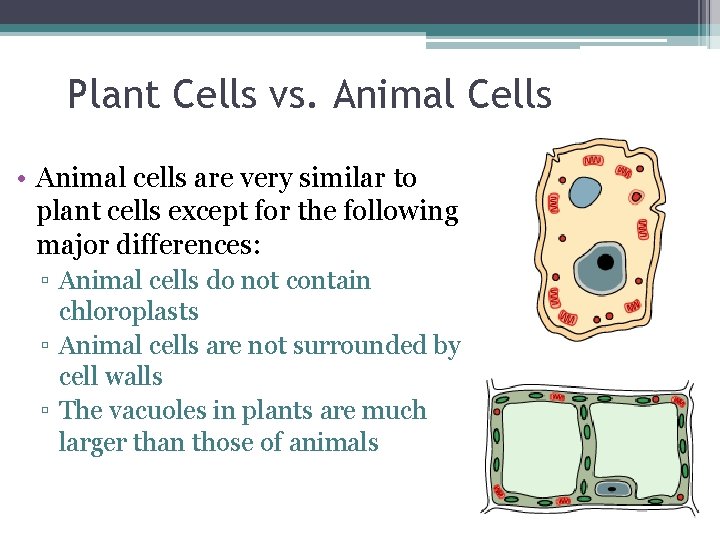
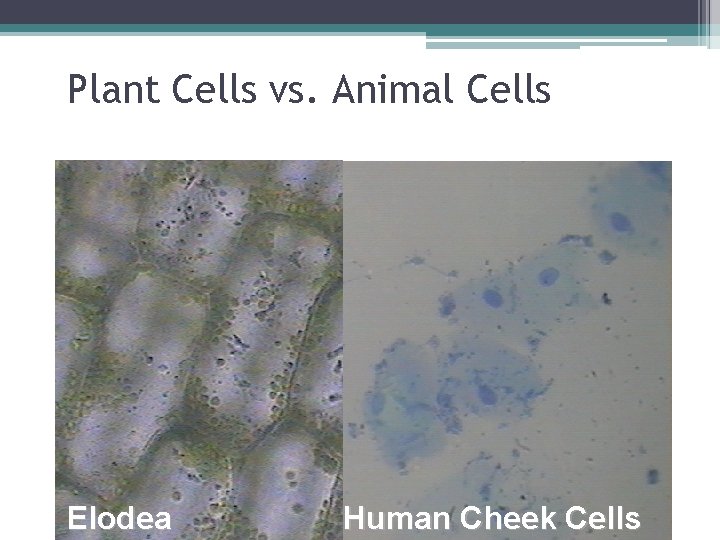
Plant Cells vs. Animal Cells • Animal cells are very similar to plant cells except for the following major differences: ▫ Animal cells do not contain chloroplasts ▫ Animal cells are not surrounded by cell walls ▫ The vacuoles in plants are much larger than those of animals
Plant Cells vs. Animal Cells Elodea Human Cheek Cells