
Organelles Of the Cell 1 Nucleus Appearance Large
- Slides: 30
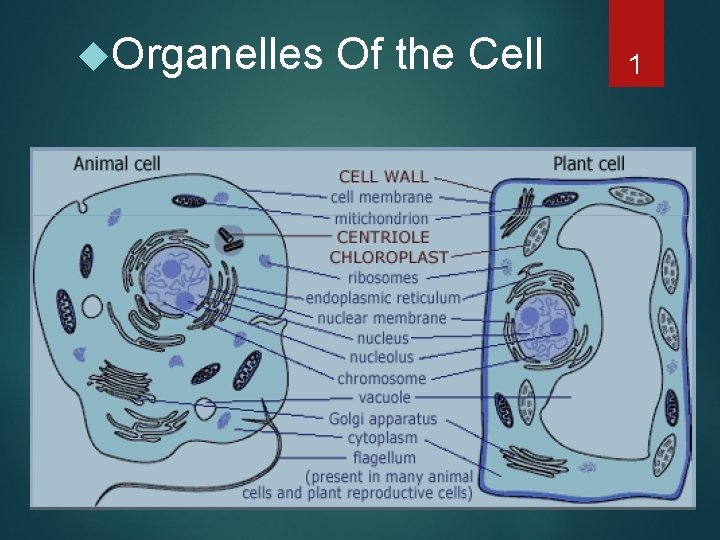
Organelles Of the Cell 1
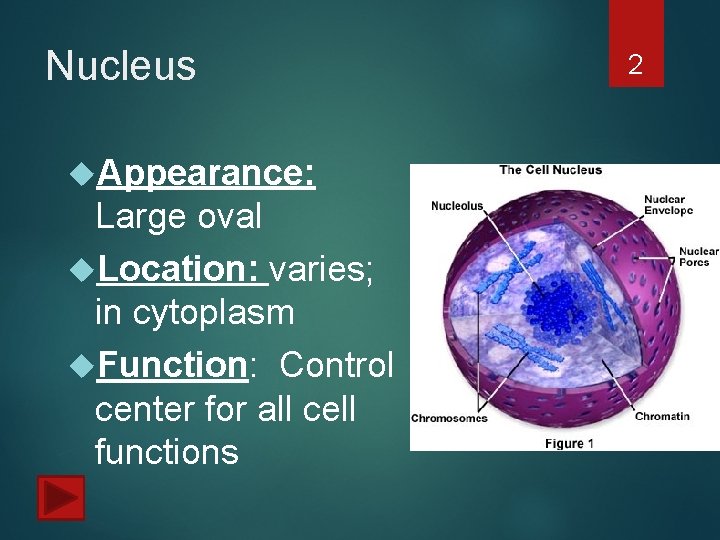
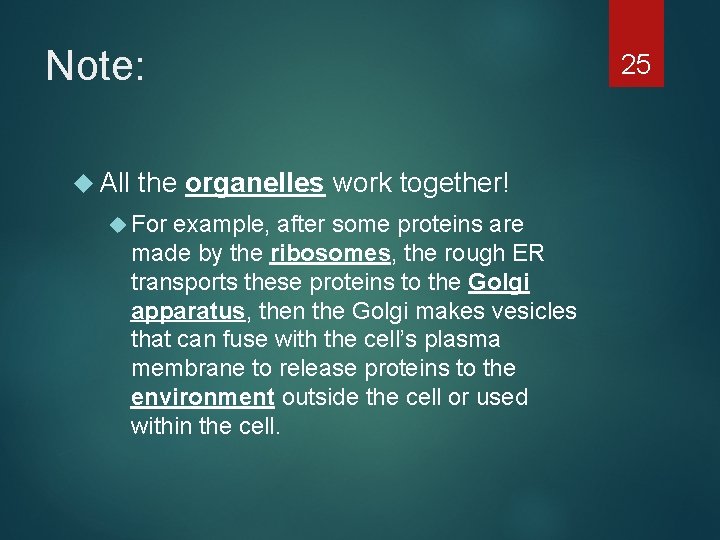
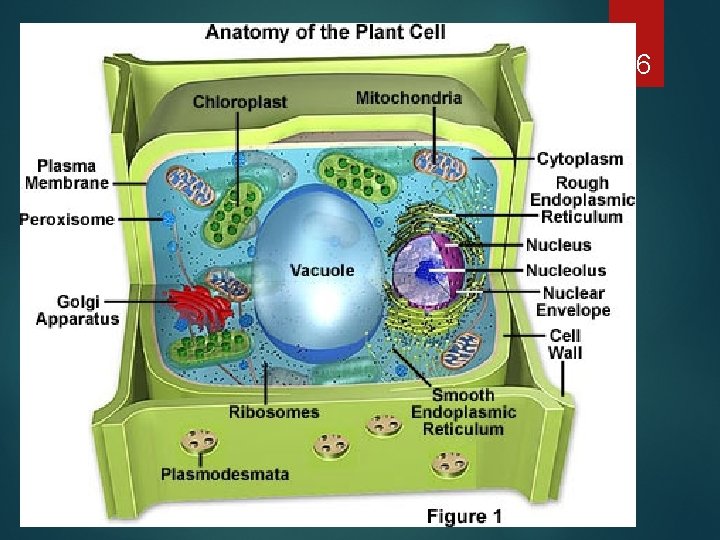
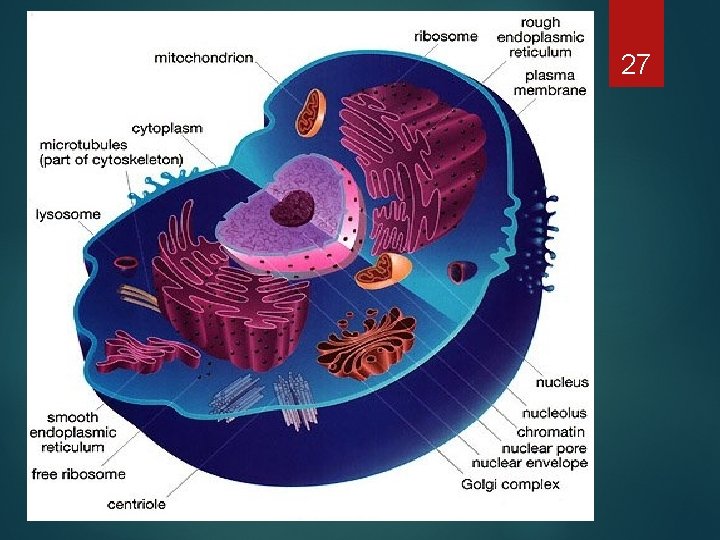
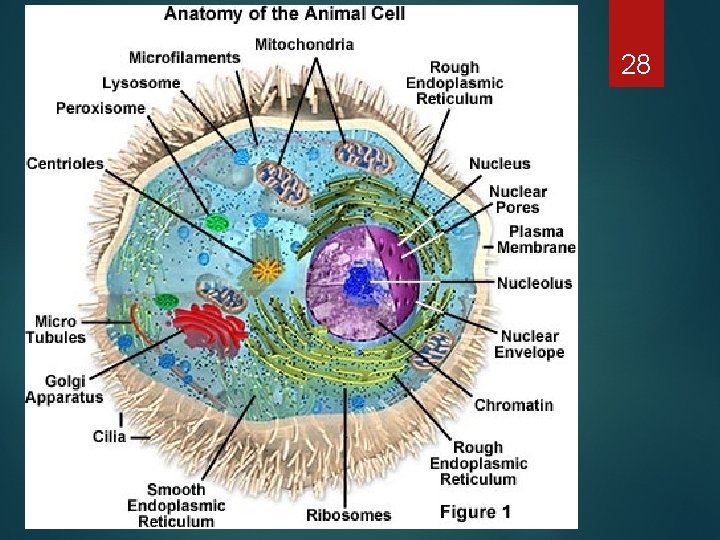
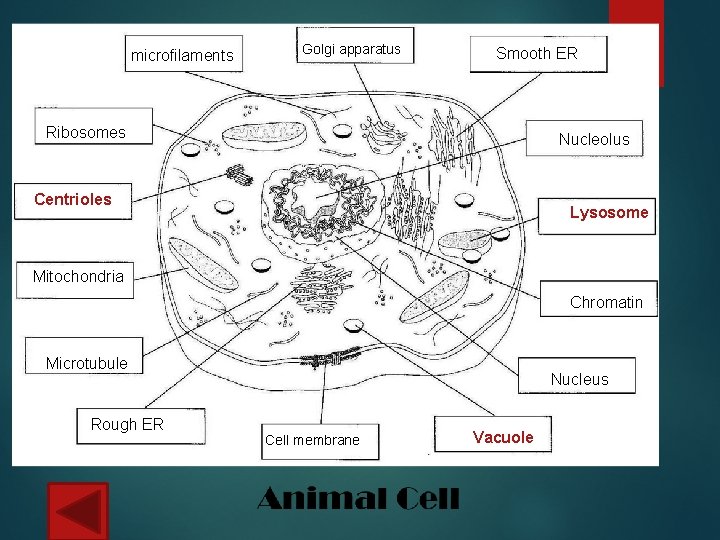
Nucleus Appearance: Large oval Location: varies; in cytoplasm Function: Control center for all cell functions 2
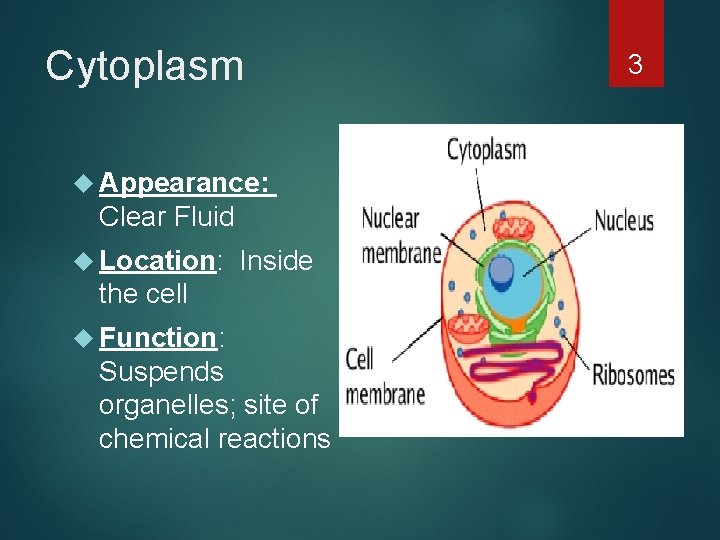
Cytoplasm Appearance: Clear Fluid Location: Inside the cell Function: Suspends organelles; site of chemical reactions 3
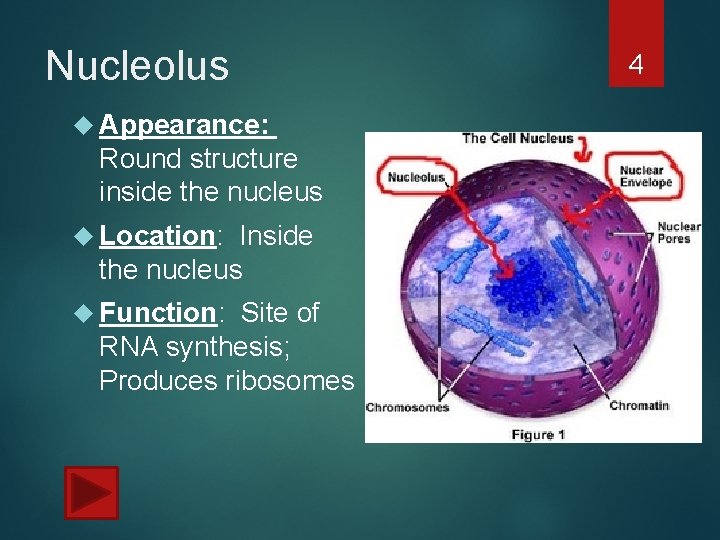
Nucleolus Appearance: Round structure inside the nucleus Location: Inside the nucleus Function: Site of RNA synthesis; Produces ribosomes 4
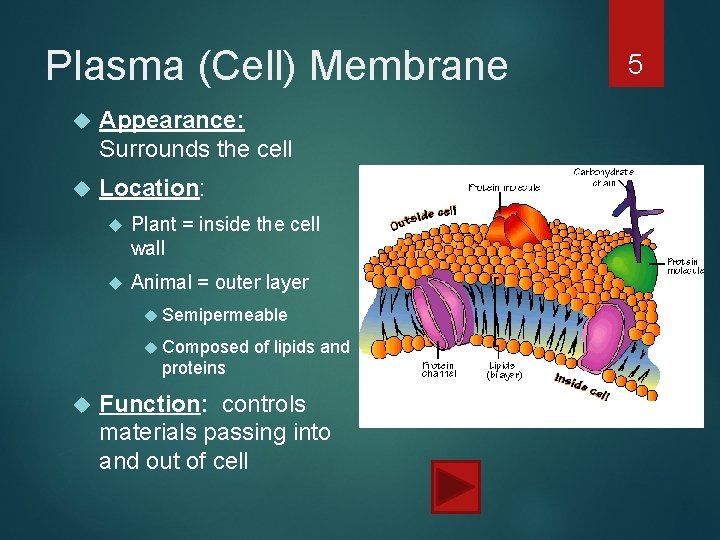
Plasma (Cell) Membrane Appearance: Surrounds the cell Location: Plant = inside the cell wall Animal = outer layer Semipermeable Composed of lipids and proteins Function: controls materials passing into and out of cell 5
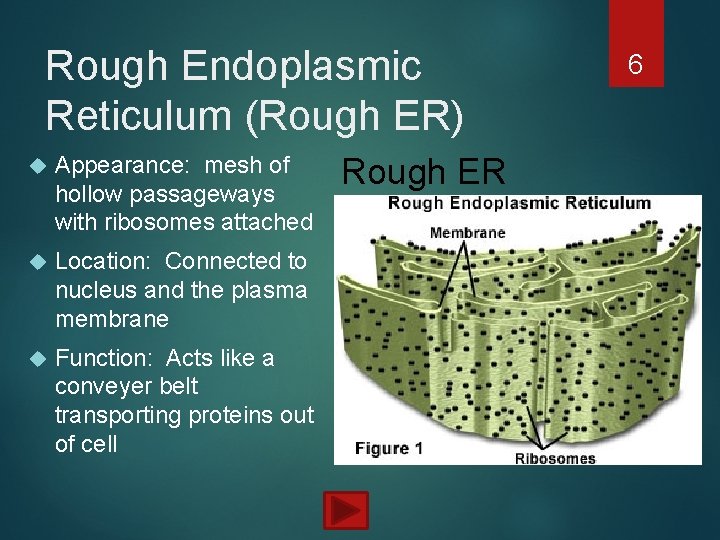
Rough Endoplasmic Reticulum (Rough ER) Appearance: mesh of hollow passageways with ribosomes attached Location: Connected to nucleus and the plasma membrane Function: Acts like a conveyer belt transporting proteins out of cell Rough ER 6
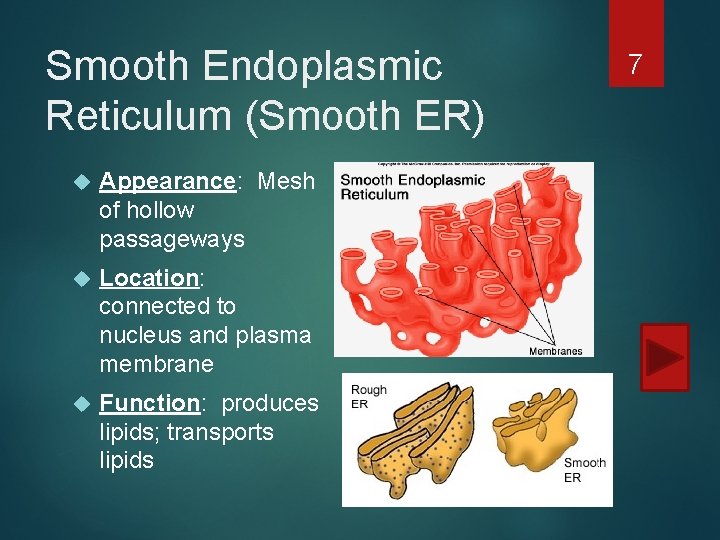
Smooth Endoplasmic Reticulum (Smooth ER) Appearance: Mesh of hollow passageways Location: connected to nucleus and plasma membrane Function: produces lipids; transports lipids 7
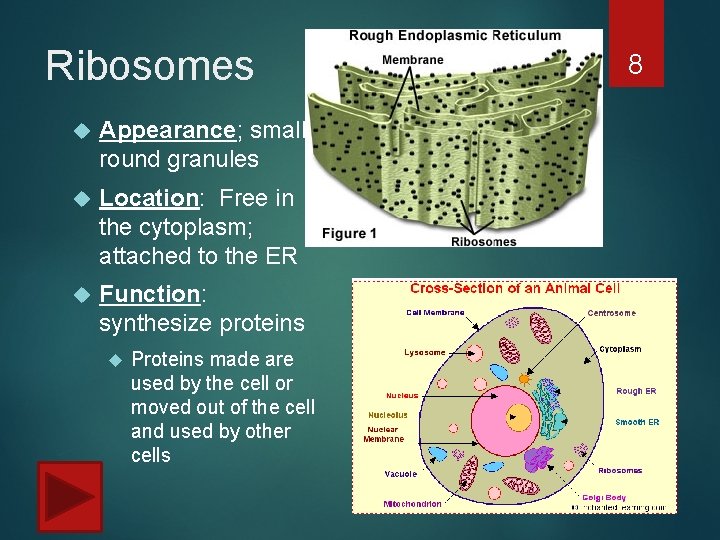
Ribosomes Appearance; small round granules Location: Free in the cytoplasm; attached to the ER Function: synthesize proteins Proteins made are used by the cell or moved out of the cell and used by other cells 8
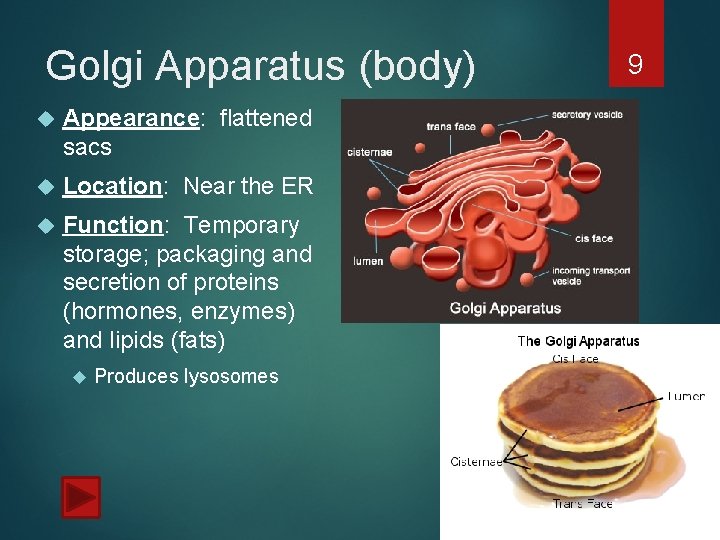
Golgi Apparatus (body) Appearance: flattened sacs Location: Near the ER Function: Temporary storage; packaging and secretion of proteins (hormones, enzymes) and lipids (fats) Produces lysosomes 9
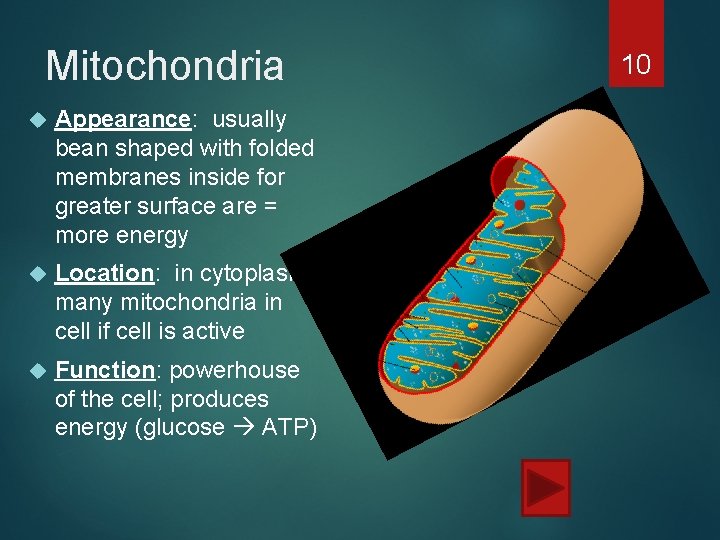
Mitochondria Appearance: usually bean shaped with folded membranes inside for greater surface are = more energy Location: in cytoplasm; many mitochondria in cell if cell is active Function: powerhouse of the cell; produces energy (glucose ATP) 10
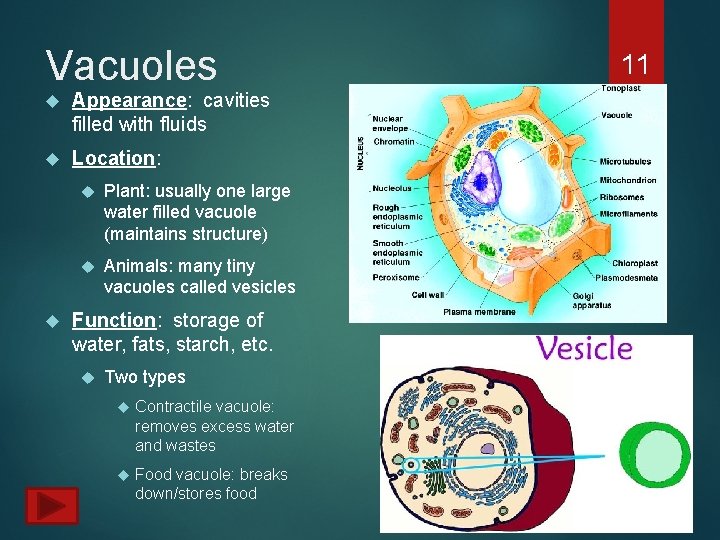
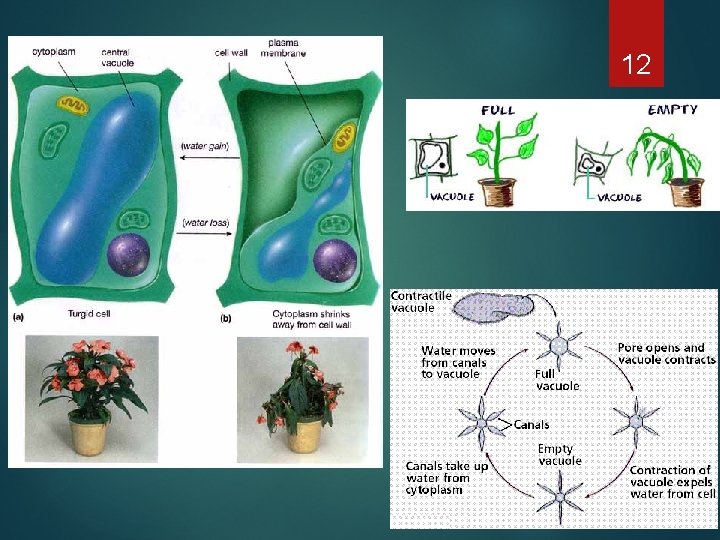
Vacuoles Appearance: cavities filled with fluids Location: Plant: usually one large water filled vacuole (maintains structure) Animals: many tiny vacuoles called vesicles Function: storage of water, fats, starch, etc. Two types Contractile vacuole: removes excess water and wastes Food vacuole: breaks down/stores food 11
12
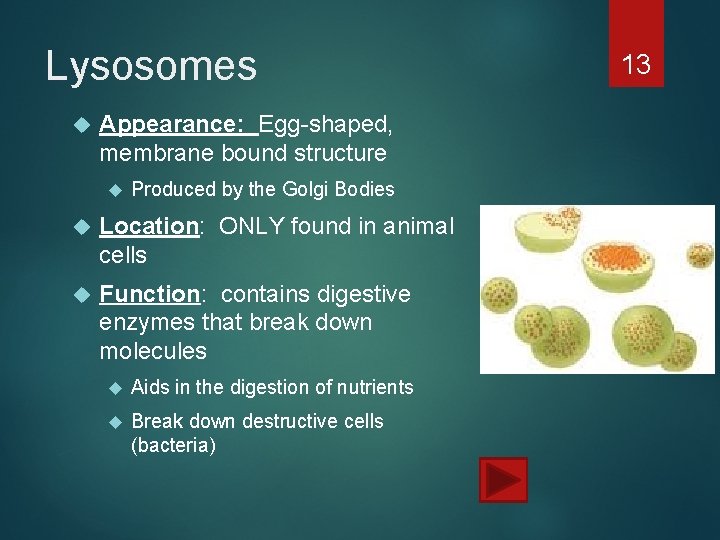
Lysosomes Appearance: Egg-shaped, membrane bound structure Produced by the Golgi Bodies Location: ONLY found in animal cells Function: contains digestive enzymes that break down molecules Aids in the digestion of nutrients Break down destructive cells (bacteria) 13
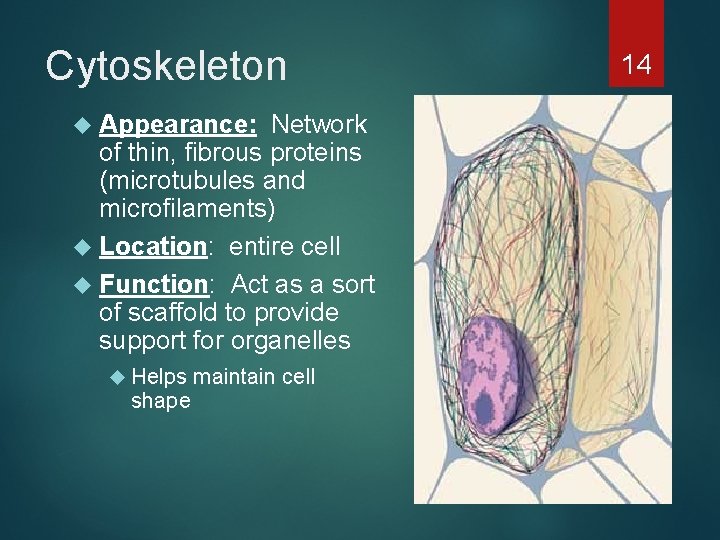
Cytoskeleton Appearance: Network of thin, fibrous proteins (microtubules and microfilaments) Location: entire cell Function: Act as a sort of scaffold to provide support for organelles Helps shape maintain cell 14
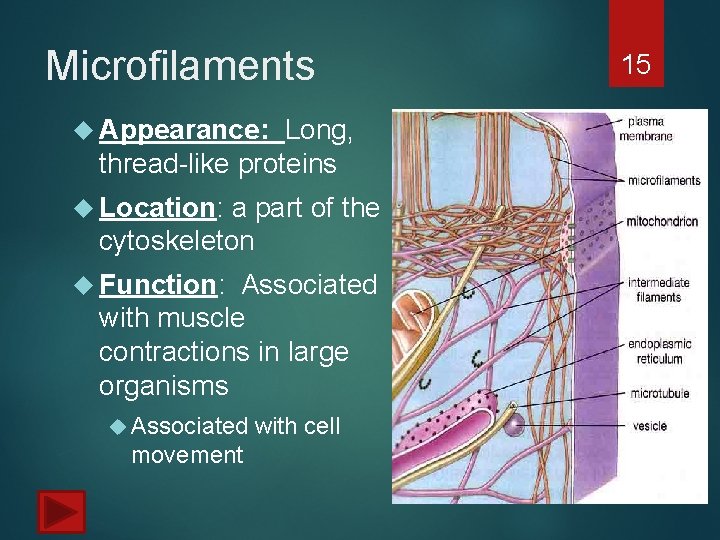
Microfilaments Long, thread-like proteins Appearance: Location: a part of the cytoskeleton Function: Associated with muscle contractions in large organisms Associated movement with cell 15
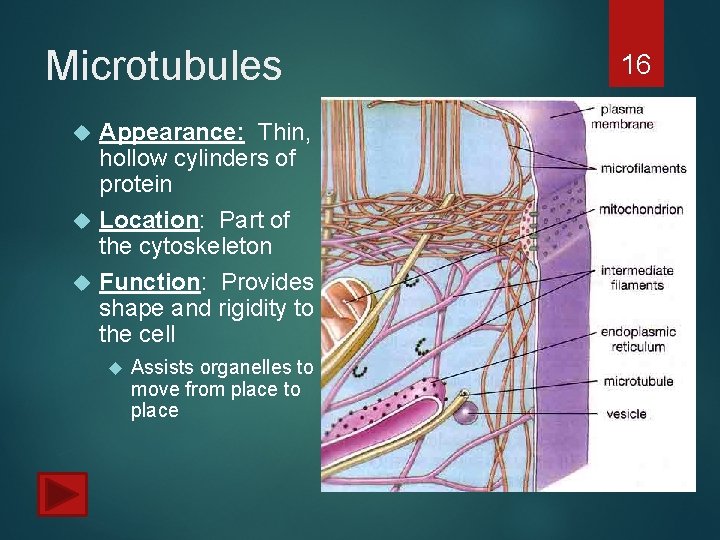
Microtubules Appearance: Thin, hollow cylinders of protein Location: Part of the cytoskeleton Function: Provides shape and rigidity to the cell Assists organelles to move from place to place 16
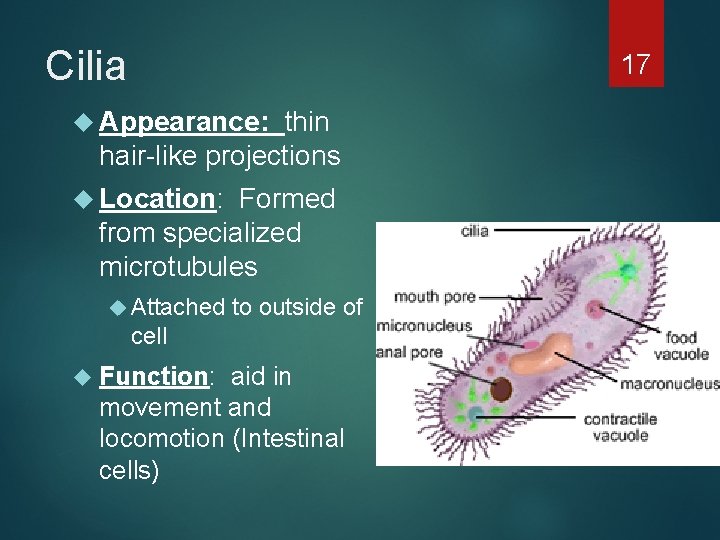
Cilia 17 thin hair-like projections Appearance: Location: Formed from specialized microtubules Attached to outside of cell Function: aid in movement and locomotion (Intestinal cells)
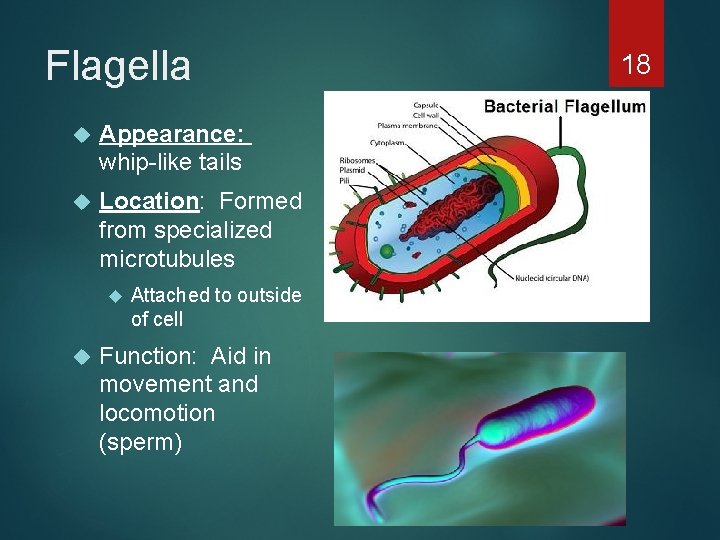
Flagella Appearance: whip-like tails Location: Formed from specialized microtubules Attached to outside of cell Function: Aid in movement and locomotion (sperm) 18
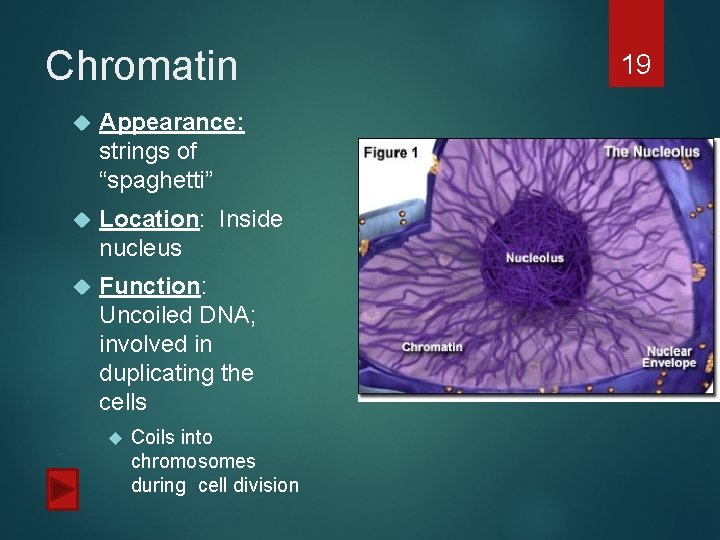
Chromatin Appearance: strings of “spaghetti” Location: Inside nucleus Function: Uncoiled DNA; involved in duplicating the cells Coils into chromosomes during cell division 19
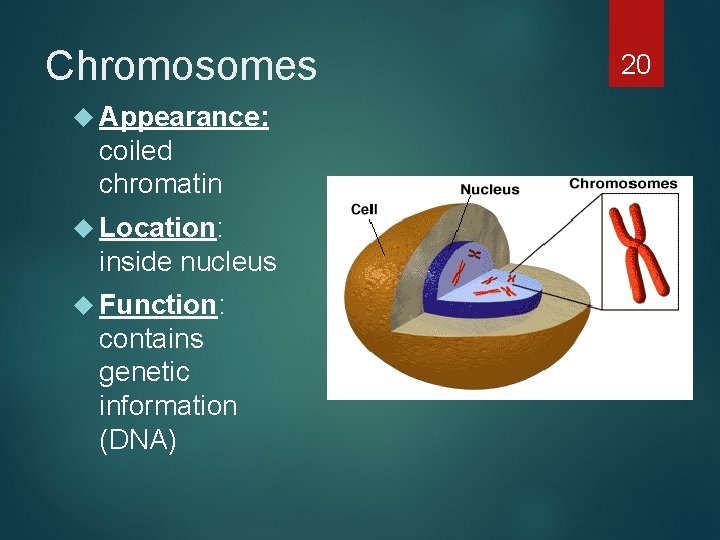
Chromosomes Appearance: coiled chromatin Location: inside nucleus Function: contains genetic information (DNA) 20
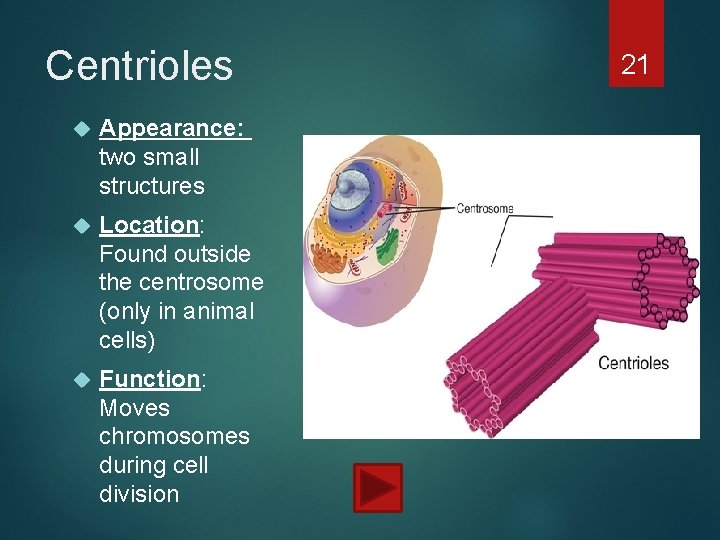
Centrioles Appearance: two small structures Location: Found outside the centrosome (only in animal cells) Function: Moves chromosomes during cell division 21
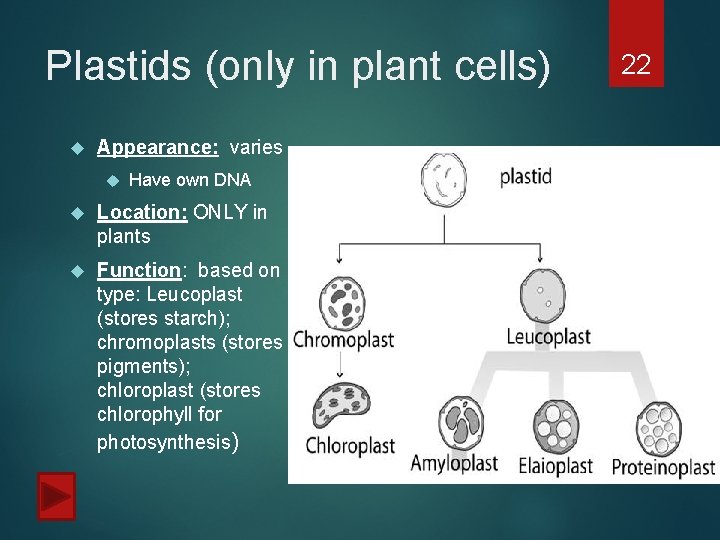
Plastids (only in plant cells) Appearance: varies Have own DNA Location: ONLY in plants Function: based on type: Leucoplast (stores starch); chromoplasts (stores pigments); chloroplast (stores chlorophyll for photosynthesis) 22
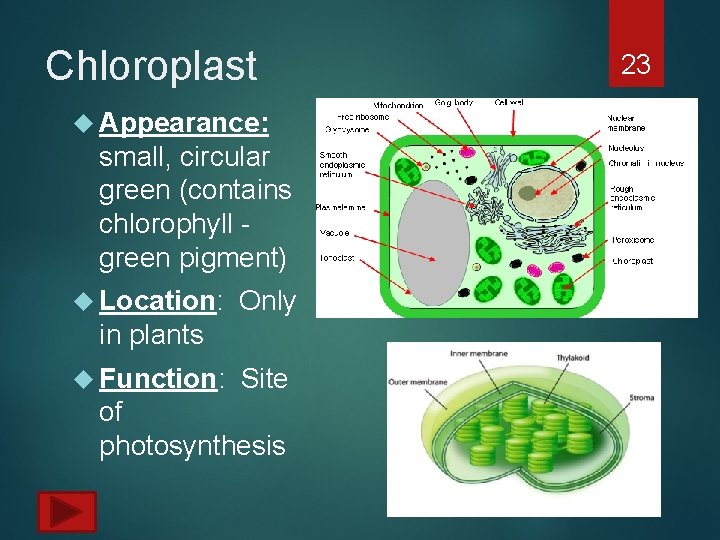
Chloroplast Appearance: small, circular green (contains chlorophyll green pigment) Location: Only in plants Function: Site of photosynthesis 23
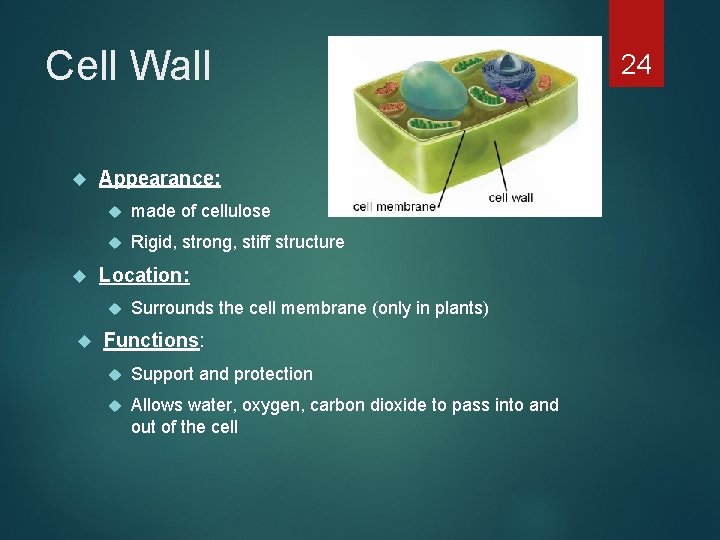
Cell Wall Appearance: made of cellulose Rigid, strong, stiff structure Location: Surrounds the cell membrane (only in plants) Functions: Support and protection Allows water, oxygen, carbon dioxide to pass into and out of the cell 24
Note: All the organelles work together! For example, after some proteins are made by the ribosomes, the rough ER transports these proteins to the Golgi apparatus, then the Golgi makes vesicles that can fuse with the cell’s plasma membrane to release proteins to the environment outside the cell or used within the cell. 25
26
27
28
microfilaments Golgi apparatus Smooth ER Ribosomes 29 Nucleolus Centrioles Lysosome Mitochondria Chromatin Microtubule Rough ER Nucleus Cell membrane Vacuole
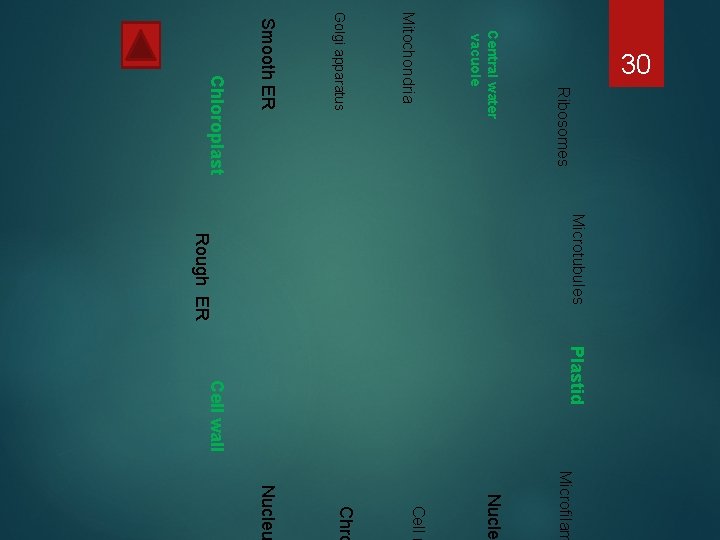
Ribosomes Chloroplast Smooth ER Golgi apparatus Mitochondria Central water vacuole 30 Microtubules Rough ER Plastid Cell wall Microfilam Nucleo Cell m Chro Nucleu