
Organelles Lysosomes Contains Digestive enzymes proteins that help


- Slides: 28
Organelles
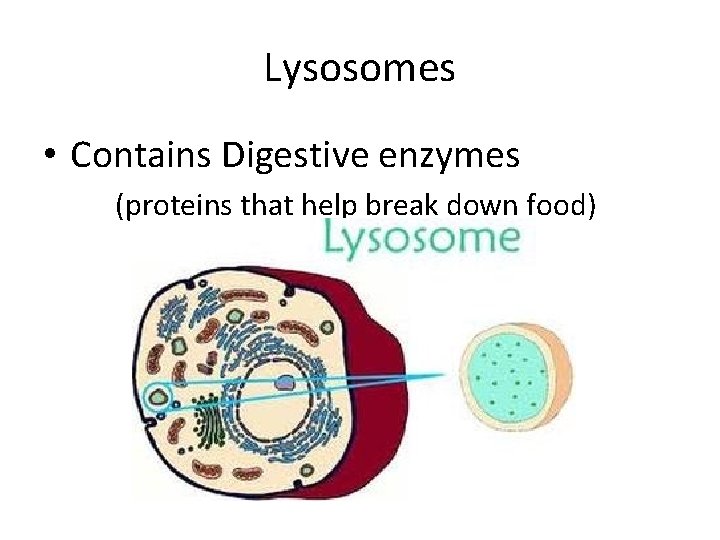
Lysosomes • Contains Digestive enzymes (proteins that help break down food)
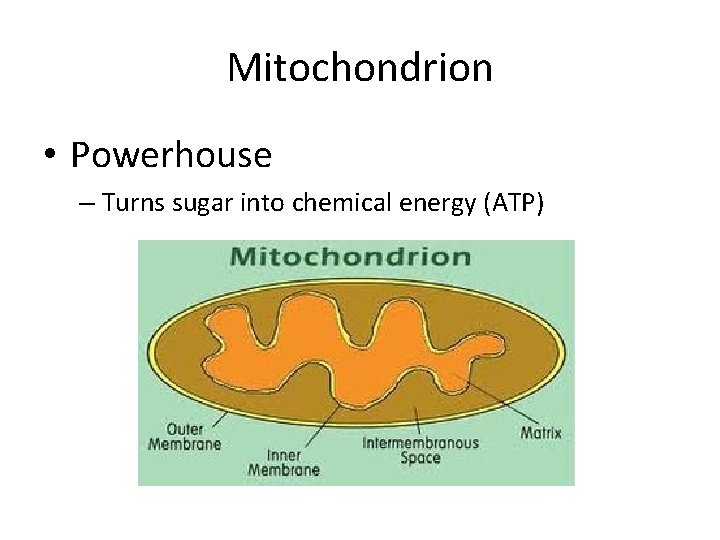
Mitochondrion • Powerhouse – Turns sugar into chemical energy (ATP)
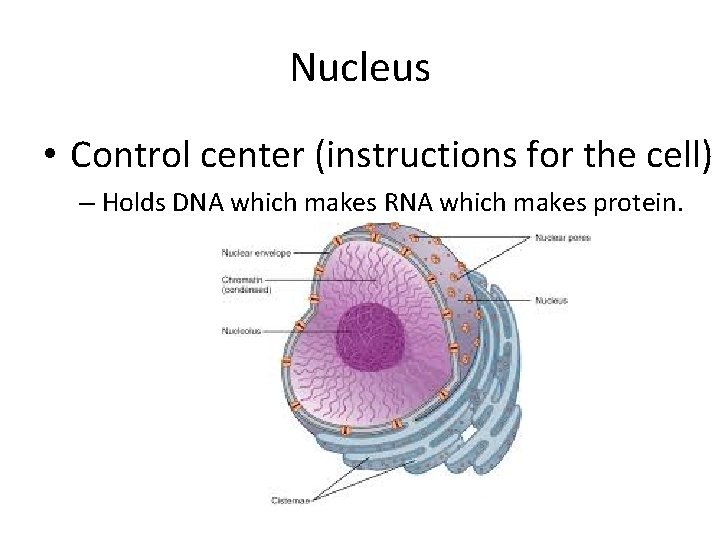
Nucleus • Control center (instructions for the cell) – Holds DNA which makes RNA which makes protein.
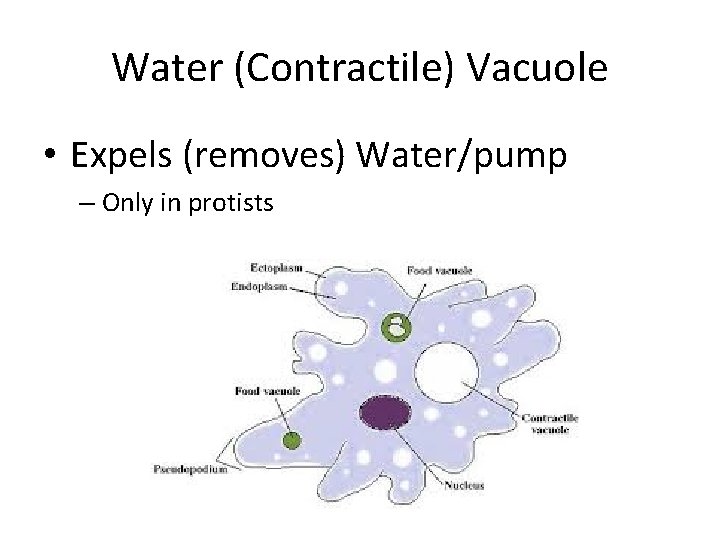
Water (Contractile) Vacuole • Expels (removes) Water/pump – Only in protists
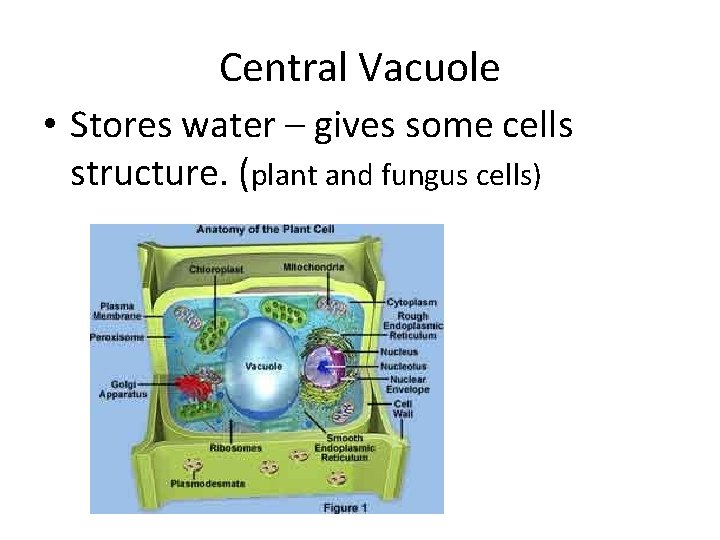
Central Vacuole • Stores water – gives some cells structure. (plant and fungus cells)
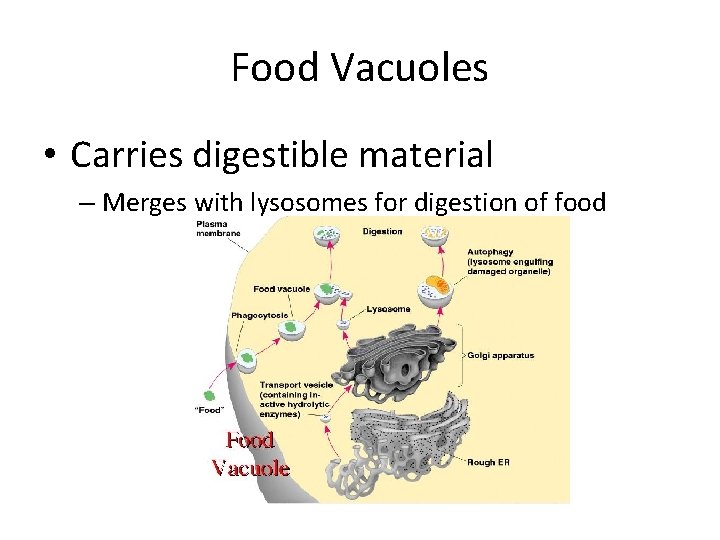
Food Vacuoles • Carries digestible material – Merges with lysosomes for digestion of food
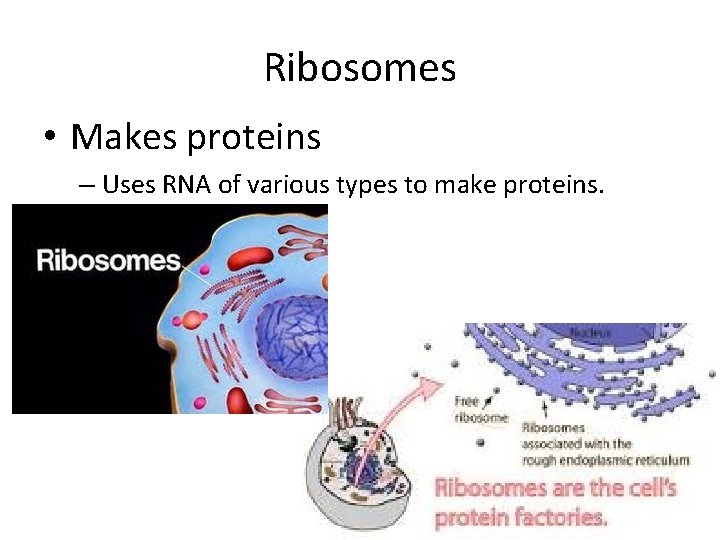
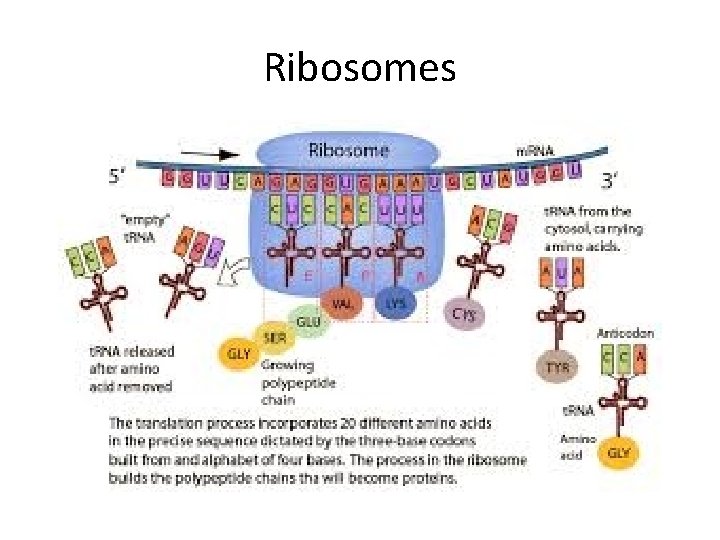
Ribosomes • Makes proteins – Uses RNA of various types to make proteins.
Ribosomes
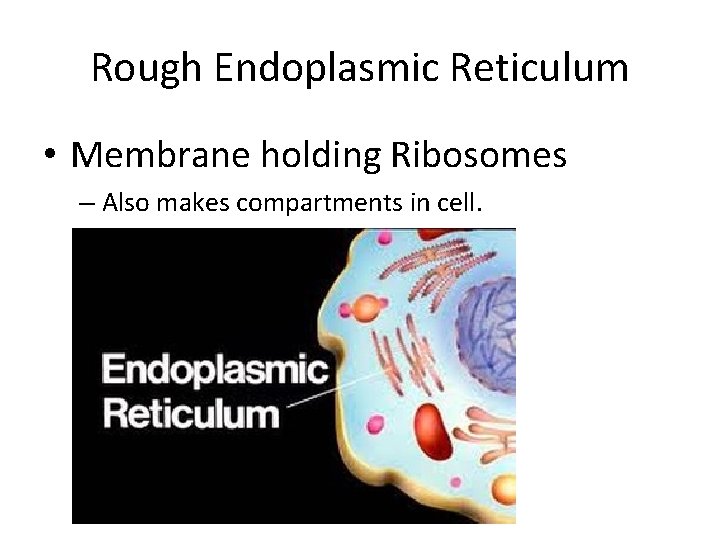
Rough Endoplasmic Reticulum • Membrane holding Ribosomes – Also makes compartments in cell.
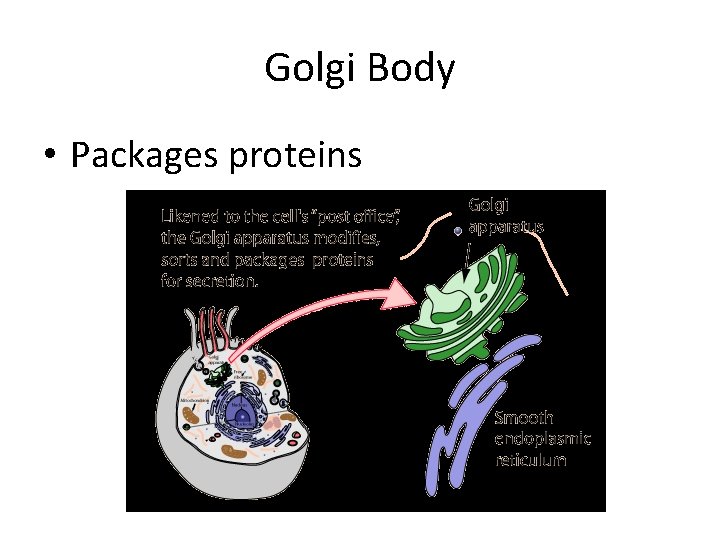
Golgi Body • Packages proteins
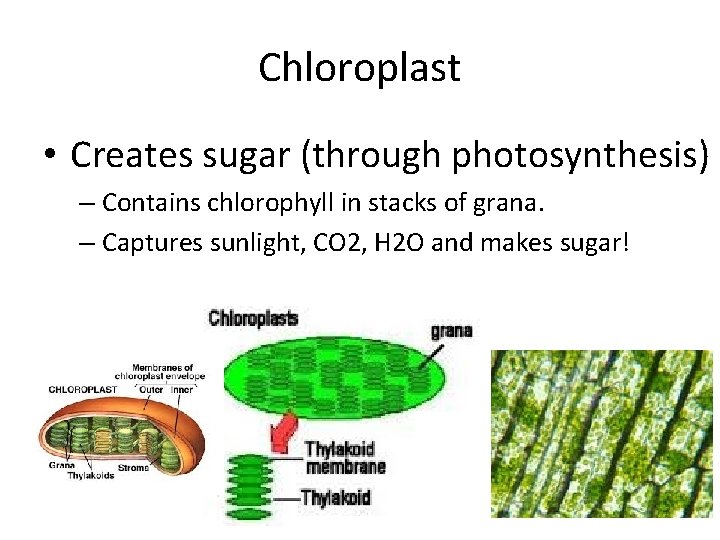
Chloroplast • Creates sugar (through photosynthesis) – Contains chlorophyll in stacks of grana. – Captures sunlight, CO 2, H 2 O and makes sugar!
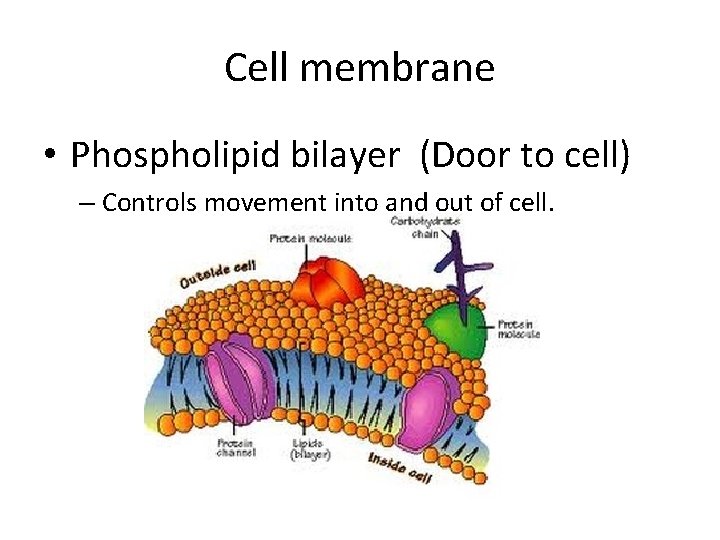
Cell membrane • Phospholipid bilayer (Door to cell) – Controls movement into and out of cell.
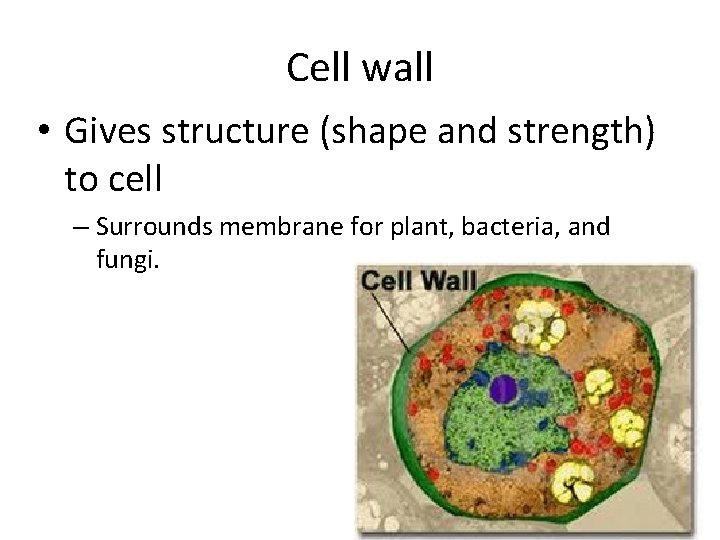
Cell wall • Gives structure (shape and strength) to cell – Surrounds membrane for plant, bacteria, and fungi.
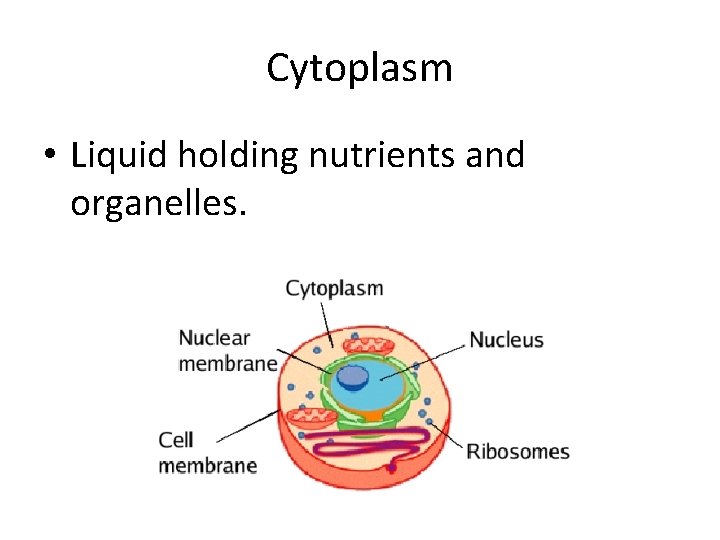
Cytoplasm • Liquid holding nutrients and organelles.
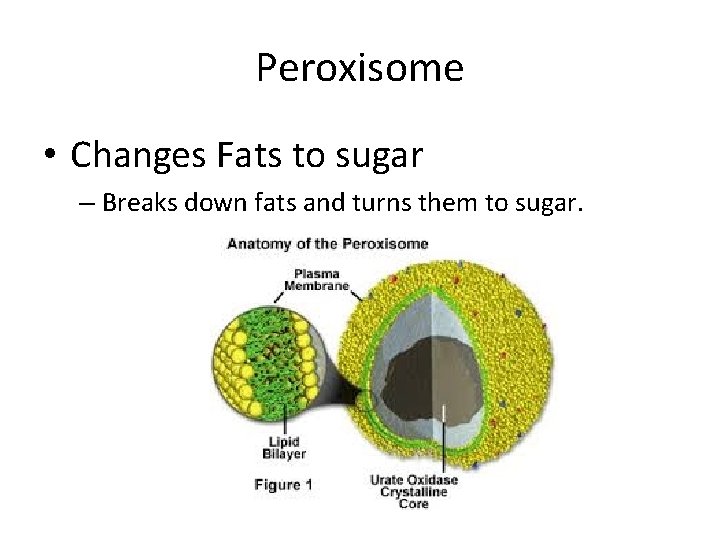
Peroxisome • Changes Fats to sugar – Breaks down fats and turns them to sugar.
For the Test • Know the previous 14 organelles function. • Be able to identify the starred organelles on the cells alive plant and animal pictures. (7 animal, 9 plant) • Know the types of cells that have the 14 organelles. (see organelle worksheet and/or graphic organizer for help with this). Slides follow
All 4 cells have • Cytoplasm (all cells need water) • A membrane (cells will loose their materials with no “skin or door”. • Ribosomes (we must make protein)
Plant, animal, and protista all have • 7 membrane bound structures – Nucleus (they are all eukaryotic) – Mitochondria (for energy) – Endoplasmic reticulum (to hold ribosomes) – Golgi body (to package proteins) – Lysosome (to digest food or dead cell parts) – Peroxisome (to turn fats to sugar) – Food vacuoles (stores nutrients)
Protista only • Water or contractile vacuole (plants and animal cells have either blood vessels or plant veins to take away extra water).
Plants only • Central vacuole
Plant and bacteria • Cell walls – although they are made out of different material in bacteria than plants (fungi also have cell walls)
Plants and protista • Chloroplasts (which contain chlorophyll)
Nuclear Info • What is the most important difference between prokaryotic and eukaryotic cells? – Eukaryotic cells have a nucleus to contain their DNA, prokaryotic cells do not (although they still have DNA) • Where is DNA housed in eukaryotes? What does DNA make? DNA is stored in the nucleus and it makes RNA
RNA and proteins • Where is RNA produced and what is it’s job? – RNA is produced in the nucleus – RNA’s job is to make proteins • Proteins are made on the ribosomes – Ribosomes can be either free floating or on the rough endoplasmic reticulum.
• Cell rap
• cellsalive. com
Cell videos • https: //www. youtube. com/watch? v=URUJD 5 NEXC 8