
Organelle Structure and function Advanced Higher Biology Cell
Organelle Structure and function Advanced Higher Biology Cell and molecular Biology

Activity • Copy and complete the following table organelle Plasma membrane Nucleus Mitochondria Chloroplasts Nucleolus Structure Function
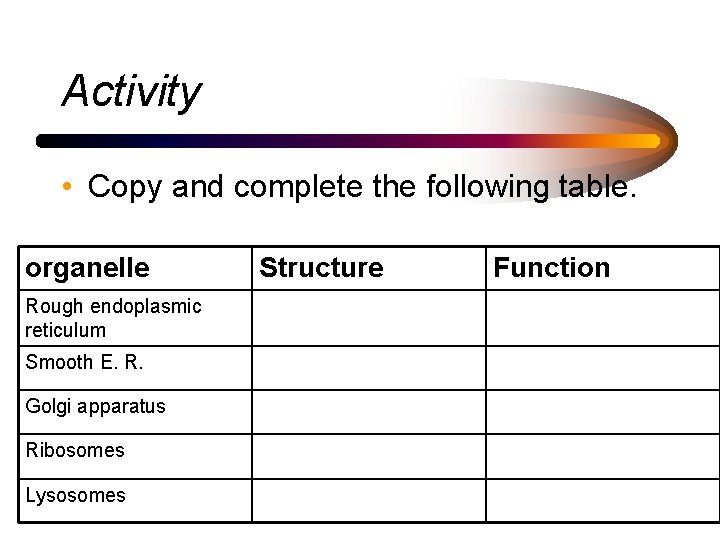
Activity • Copy and complete the following table. organelle Rough endoplasmic reticulum Smooth E. R. Golgi apparatus Ribosomes Lysosomes Structure Function
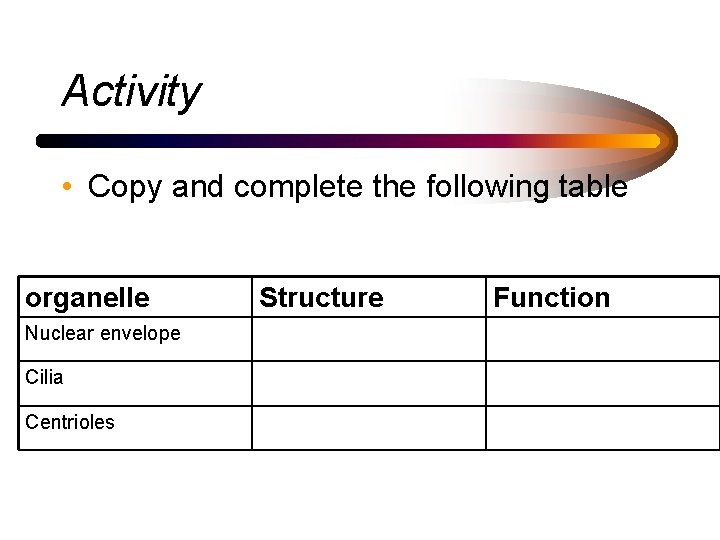
Activity • Copy and complete the following table organelle Nuclear envelope Cilia Centrioles Structure Function

Nucleus

Function of the nucleus • Acts as the control centre of the cell through the production of m. RNA and protein synthesis • Retain genetic material of the cell (DNA / chromosomes) • Manufacture r. RNA and ribosomes • Start the process of cell division
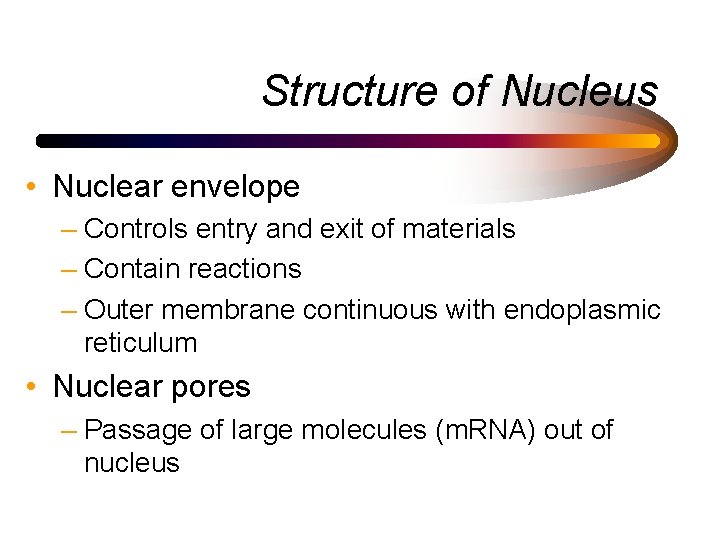
Structure of Nucleus • Nuclear envelope – Controls entry and exit of materials – Contain reactions – Outer membrane continuous with endoplasmic reticulum • Nuclear pores – Passage of large molecules (m. RNA) out of nucleus

Structure of Nucleus • Nucleoplasm • Chromatin – DNA and associated proteins, chromatin condenses into chromosomes when the cell divides. • nucleolus – Manufactures ribosomal RNA and assembles the ribosomes
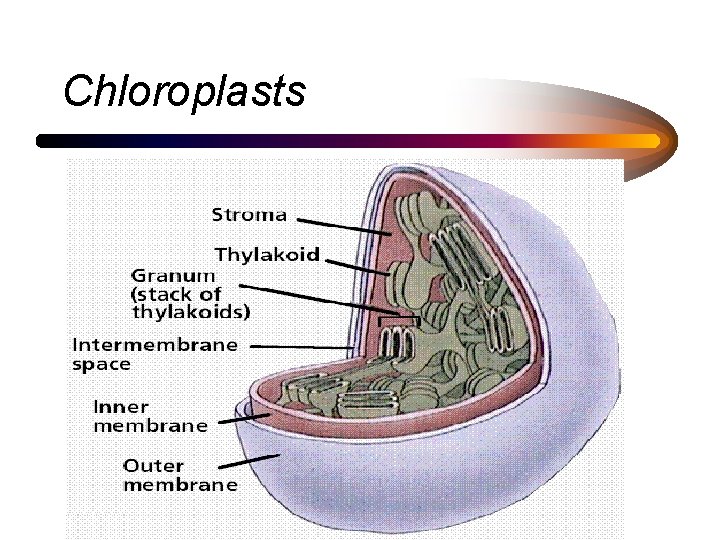
Chloroplasts
Structure and Function of Chloroplasts • Chloroplast envelope – Entry and exit of substances • Stroma – Enzymes for the light independent stages of photosynthesis • Grana (thylakoids/lamellae) – Light dependent stage of photosynthesis • Starch grains – Temporary stores of carbohydrates
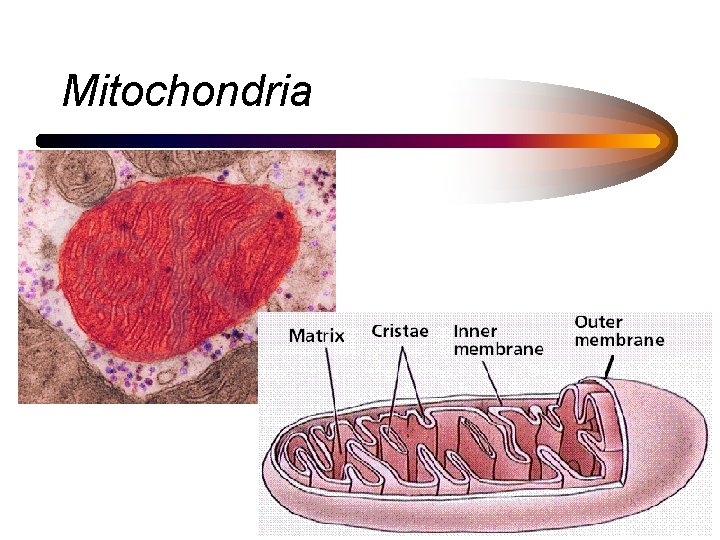
Mitochondria
Function of Mitochondria • Site of Krebs cycle and oxidative phosphorylation in aerobic respiration • Production of energy rich ATP molecules from carbohydrates
Structure of Mitochondria • Double membrane – Inner membrane folded into cristae which provide a large surface area for attachment of stalked particles (contain enzymes involved in ATP synthesis) • Matrix – DNA, enzymes and mitochondrial ribosomes
Endoplasmic reticulum
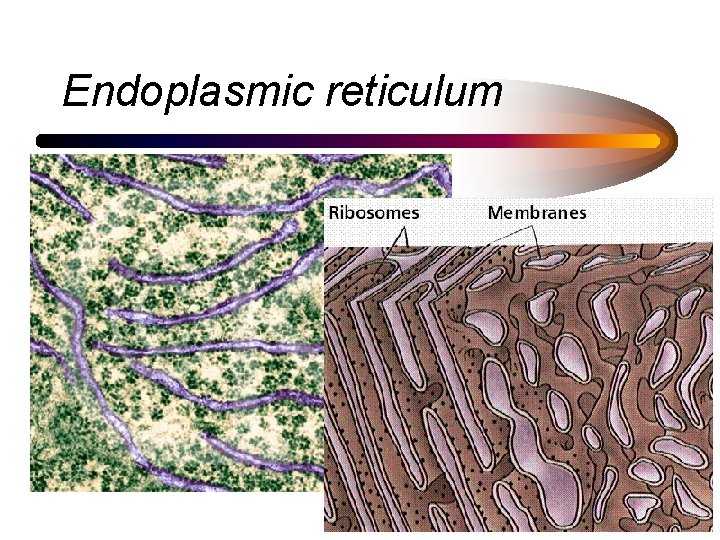
Endoplasmic reticulum • Membranes spreading through the cytoplasm of cells, continuous with the nuclear membrane • Enclose flattened sacs called cisternae • Rough endoplasmic reticulum – Ribosomes present on outer surface of membrane • Smooth endoplasmic reticulum – No ribosomes, tubular in appearance.
Function of endoplasmic reticulum • RER – Provide LSA for synthesis of proteins – Provides a pathway for the transport of materials (esp. proteins) throughout the cell. • SER – Synthesis, stores and transports lipids and carbohydrates – Contains lytic enzymes (liver cells)
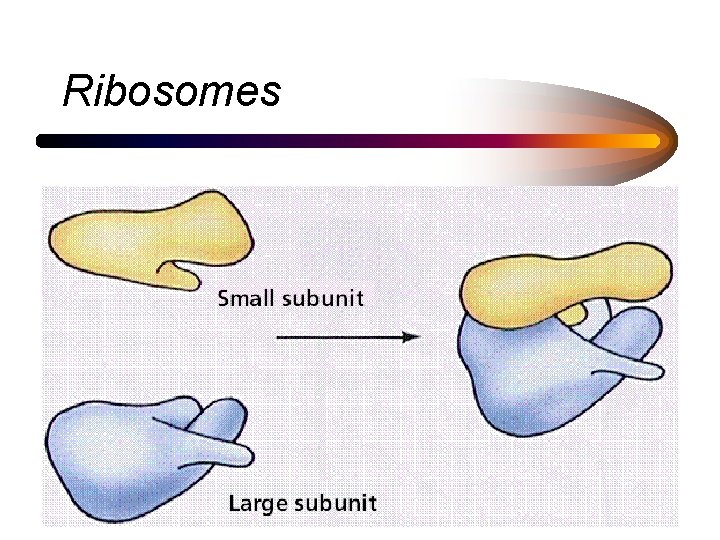
Ribosomes
Structure and function of ribosomes • Two types – 80 S – eukaryotic cells – 70 S – prokaryotic cells • Make up 25% of dry mass of cell • Important in protein synthesis
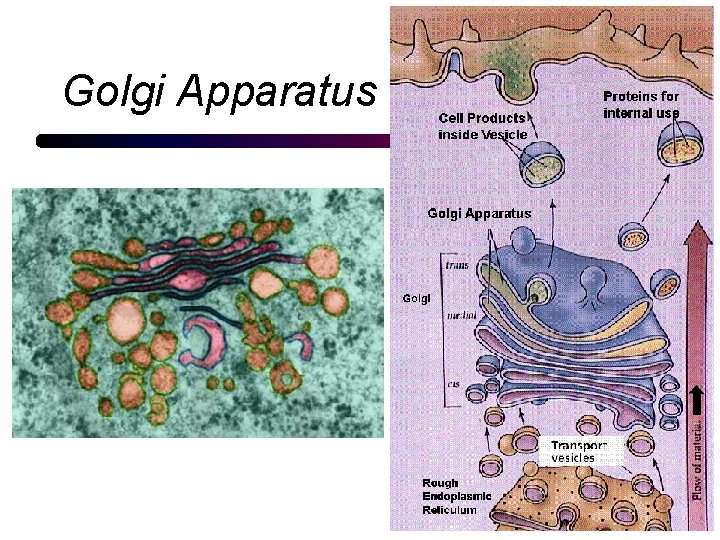
Golgi Apparatus
Functions of Golgi Apparatus • Adds carbohydrates to proteins to form glycoproteins • Produces secretory enzymes • Secretes carbohydrates • Transports, modifies and stores lipids • Forms lysosomes
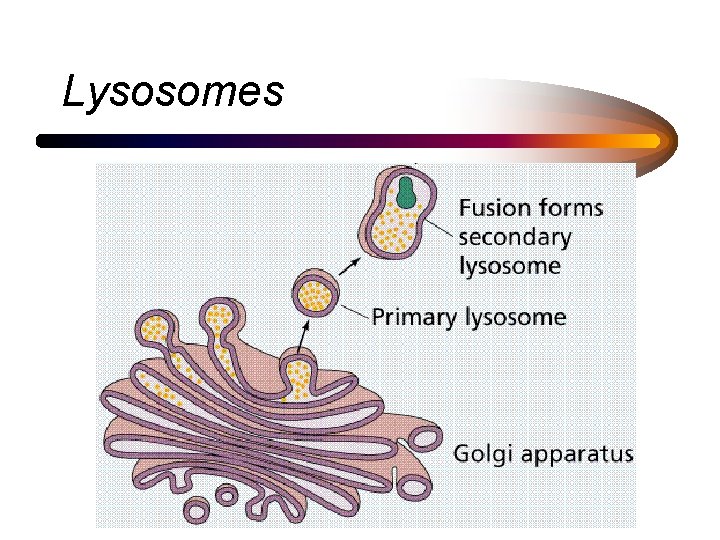
Lysosomes
Functions of Lysosomes • Destroy foreign material inside or outside the cell. – Breakdown material ingested by phagocytic cells – Release enzymes outside the cell – Digest worn out organelles (autophagy) – Autolysis break down cells after they have died.
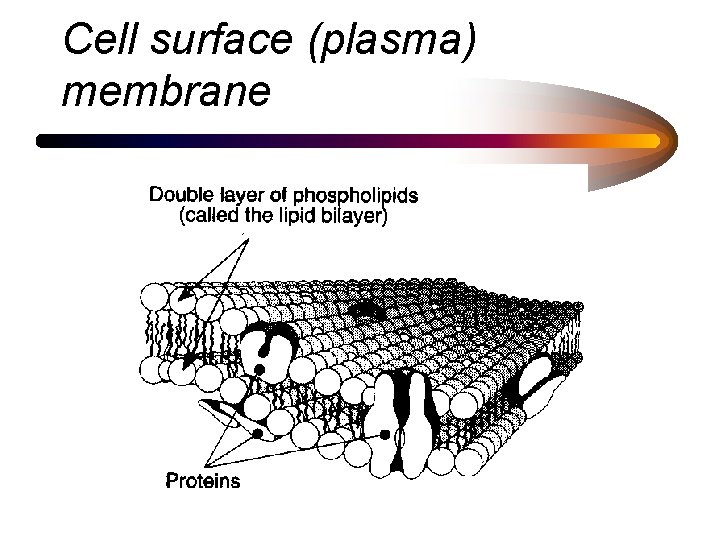
Cell surface (plasma) membrane
Functions of cell surface membrane • Controls movement of substances into and out of the cell • Forms a recognition site for immune system • Receptor sites for specific hormones and neurotransmitters • Folded to form villi (LSA) • Helps cells attach to one another and forms tissues
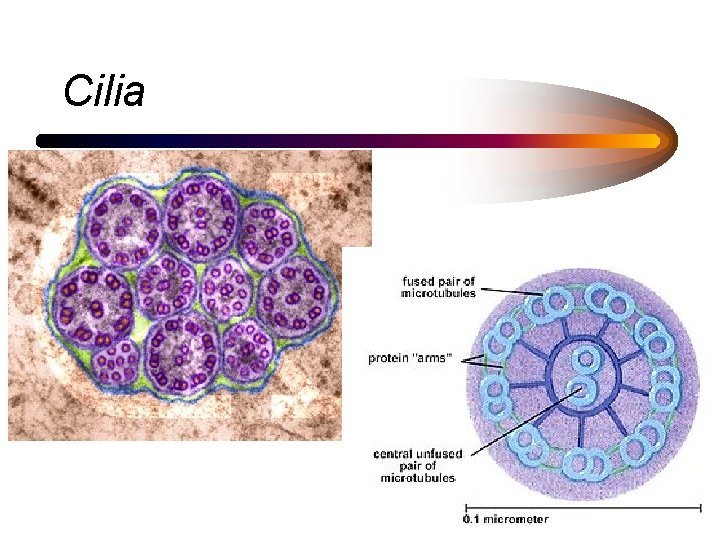
Cilia
Structure and function of cilia • • Threads that extend from cell surface Made of nine sets of 3 microtubules Move an entire organism Move material within an organism – E. g. cilia lining respiratory tract move mucus towards the throat.
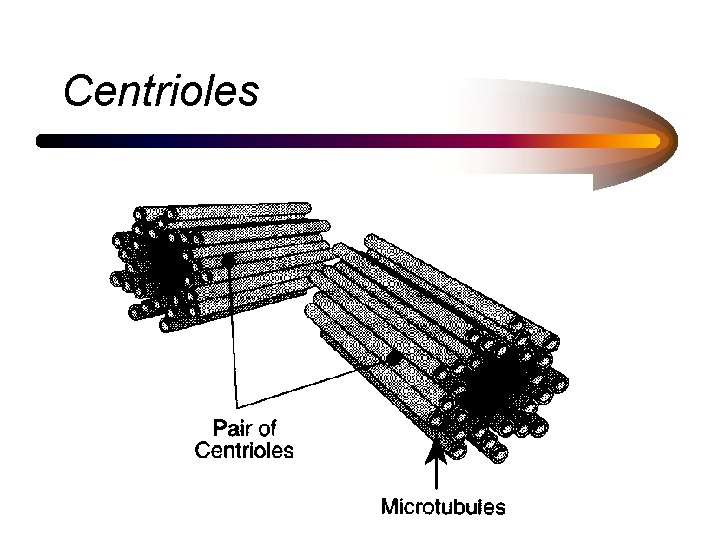
Centrioles
Structure and function of centrioles • Hollow cylinders of microtubules • Microtubules form spindle fibres for nuclear division • Maybe involved in formation of microtubules that make up cells cytoskeleton
- Slides: 28