
Organ Systems Levels of Organization Atom Molecule Human
- Slides: 25
Organ Systems
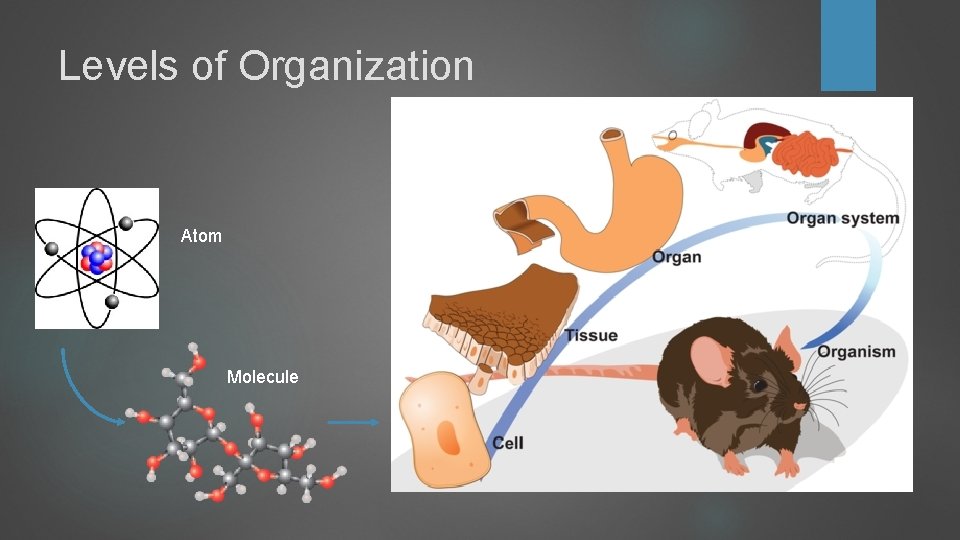
Levels of Organization Atom Molecule
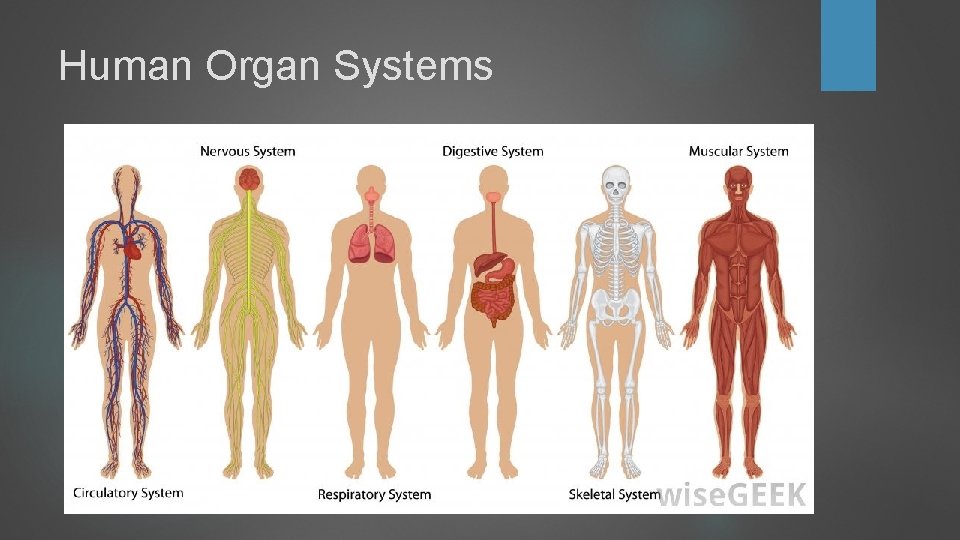
Human Organ Systems
HOMEOSTASIS Each organ system works to maintain HOMEOSTASIS – Maintaining a stable internal environment
Biology GVC #7 Describe the relationship between structure and function of organ systems in plants and animals.
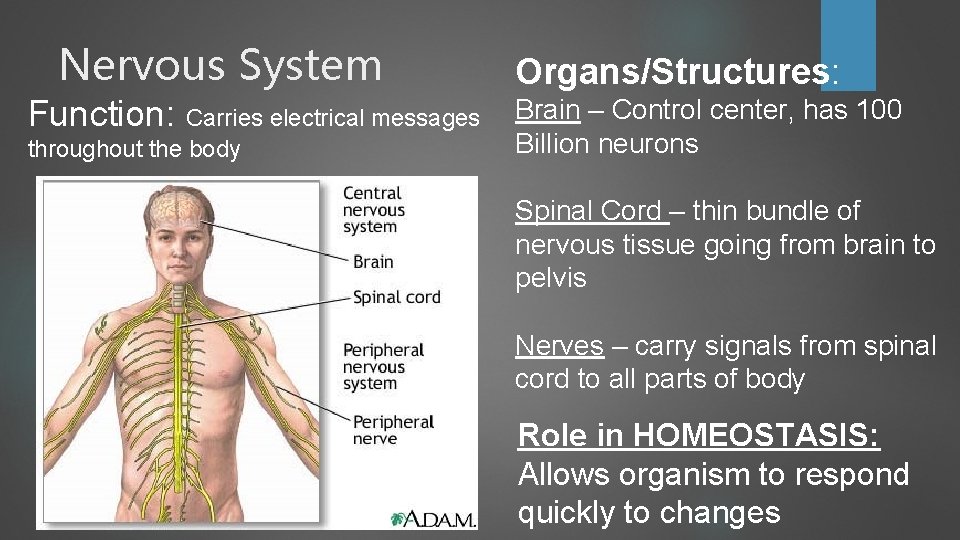
Nervous System Function: Carries electrical messages throughout the body Organs/Structures: Brain – Control center, has 100 Billion neurons Spinal Cord – thin bundle of nervous tissue going from brain to pelvis Nerves – carry signals from spinal cord to all parts of body Role in HOMEOSTASIS: Allows organism to respond quickly to changes
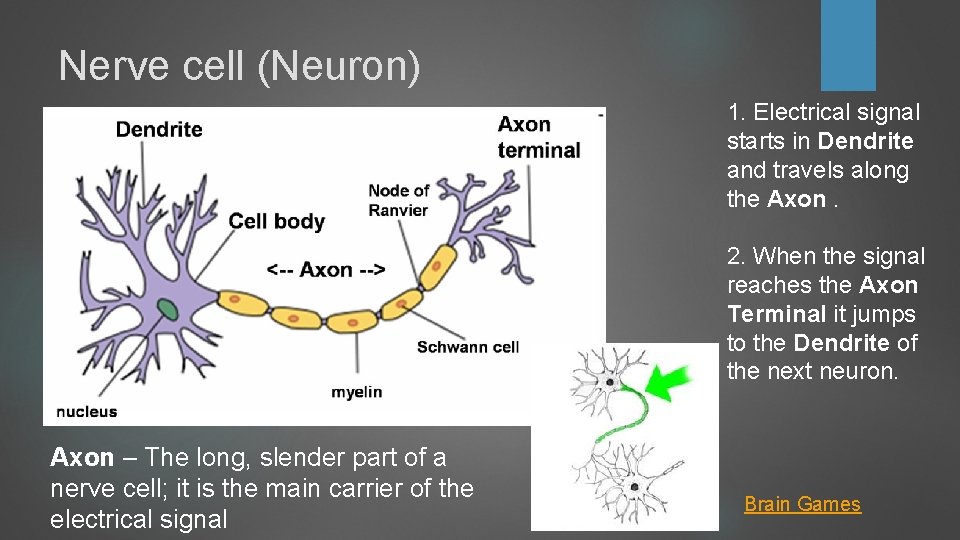
Nerve cell (Neuron) 1. Electrical signal starts in Dendrite and travels along the Axon. 2. When the signal reaches the Axon Terminal it jumps to the Dendrite of the next neuron. Axon – The long, slender part of a nerve cell; it is the main carrier of the electrical signal Brain Games
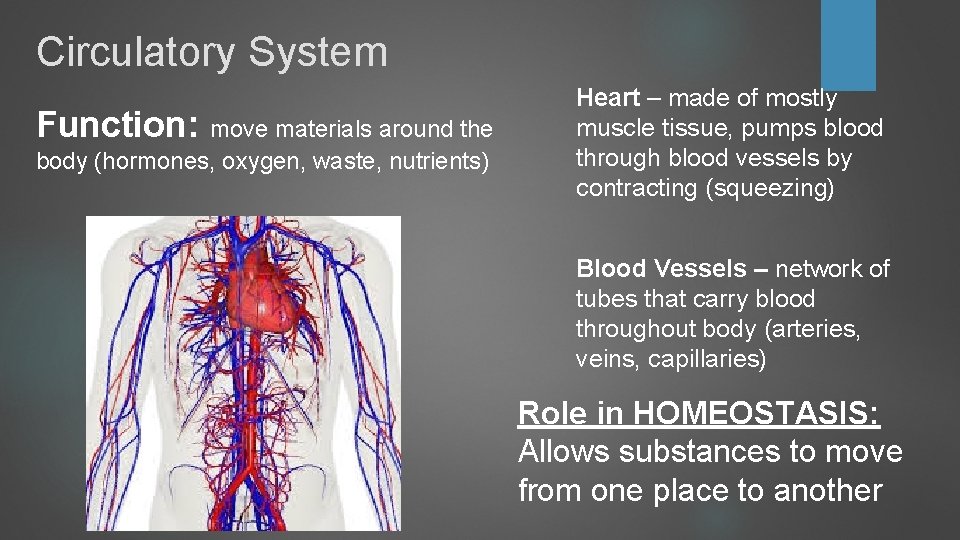
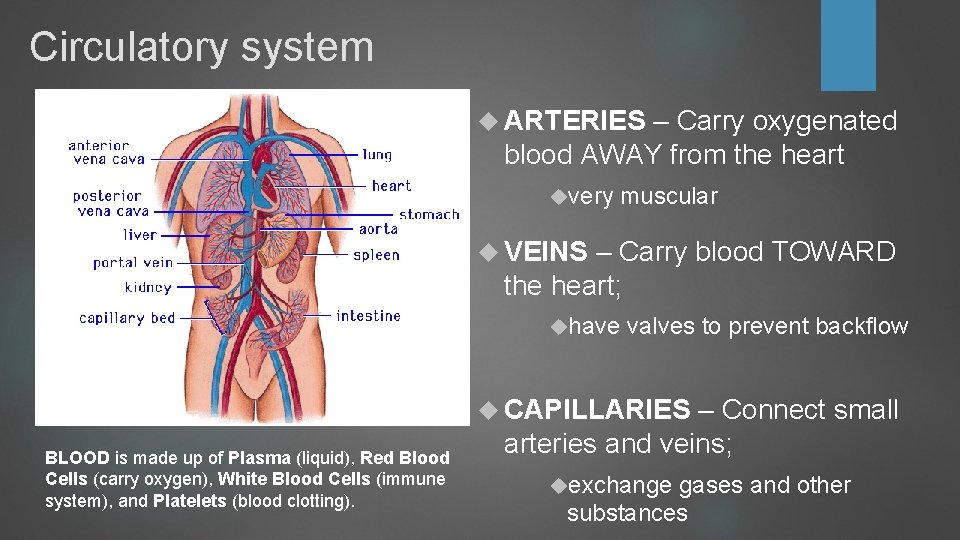
Circulatory System Function: move materials around the body (hormones, oxygen, waste, nutrients) Heart – made of mostly muscle tissue, pumps blood through blood vessels by contracting (squeezing) Blood Vessels – network of tubes that carry blood throughout body (arteries, veins, capillaries) Role in HOMEOSTASIS: Allows substances to move from one place to another
Circulatory system ARTERIES – Carry oxygenated blood AWAY from the heart very muscular VEINS – Carry blood TOWARD the heart; have valves to prevent backflow CAPILLARIES BLOOD is made up of Plasma (liquid), Red Blood Cells (carry oxygen), White Blood Cells (immune system), and Platelets (blood clotting). – Connect small arteries and veins; exchange gases and other substances
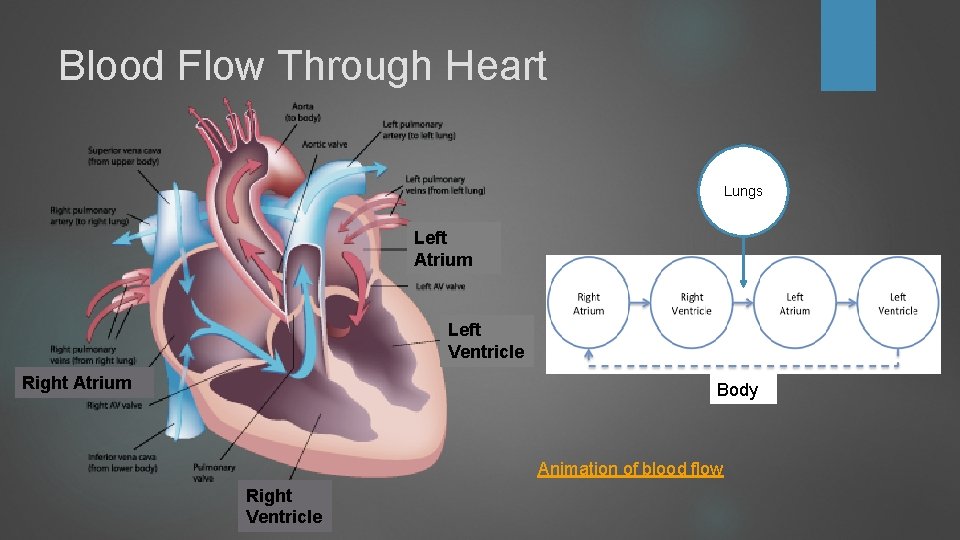
Blood Flow Through Heart Lungs Left Atrium Left Ventricle Right Atrium Body Animation of blood flow Right Ventricle
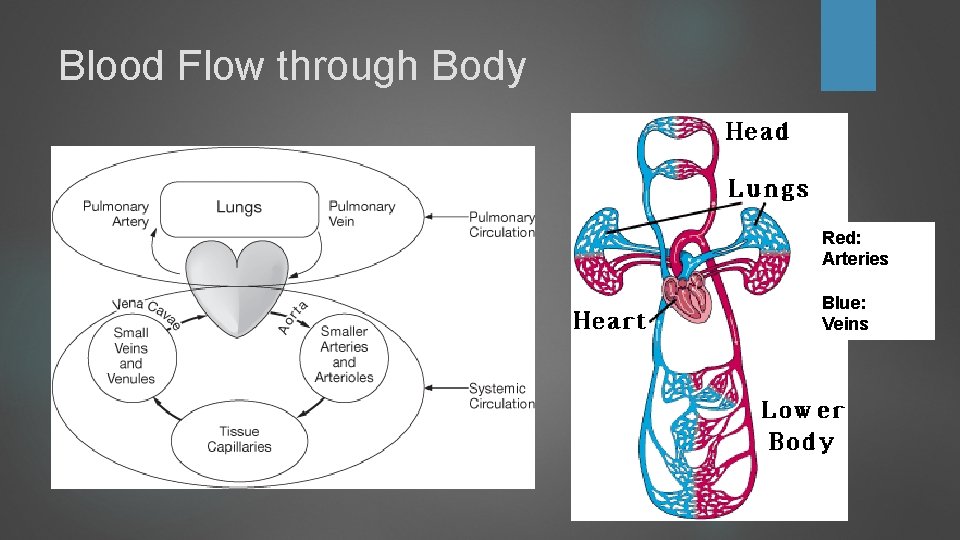
Blood Flow through Body Red: Arteries Blue: Veins
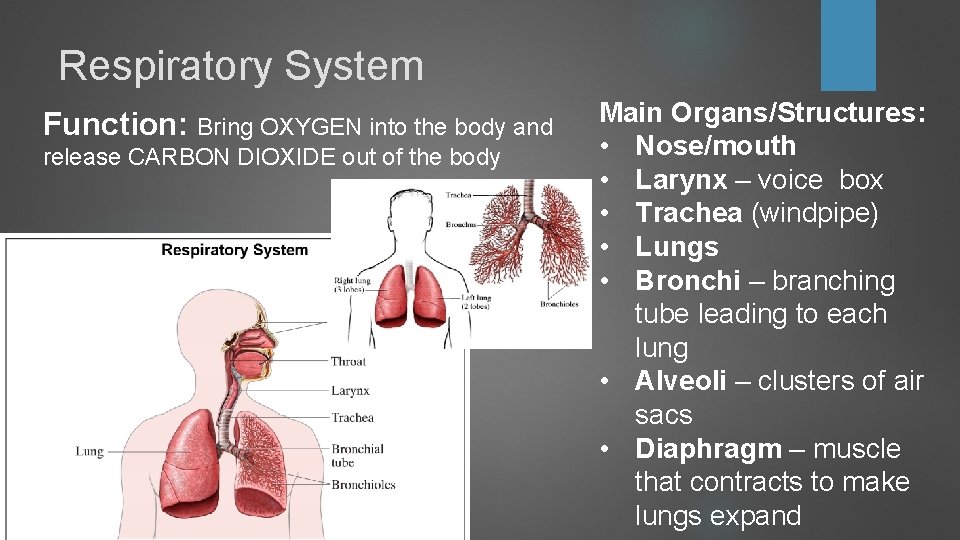
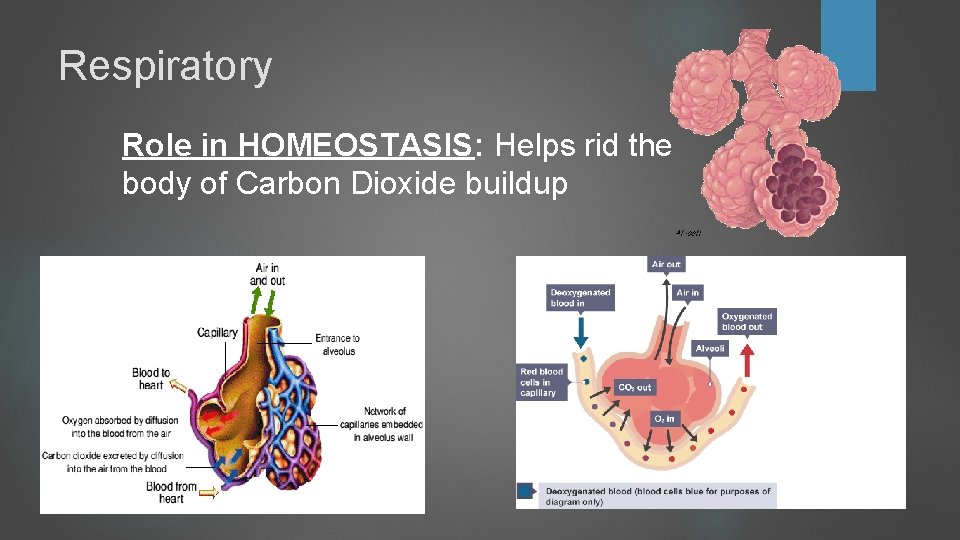
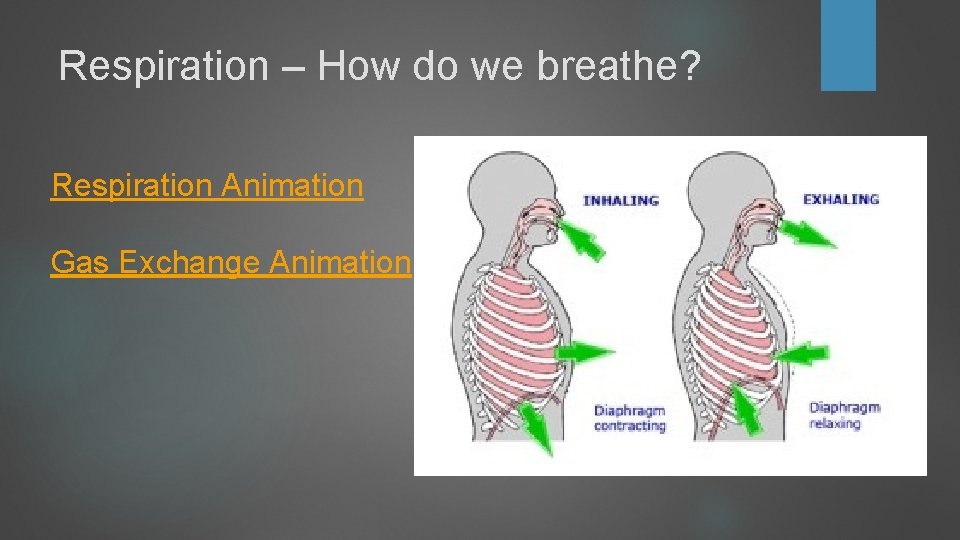
Respiratory System Function: Bring OXYGEN into the body and release CARBON DIOXIDE out of the body Main Organs/Structures: • Nose/mouth • Larynx – voice box • Trachea (windpipe) • Lungs • Bronchi – branching tube leading to each lung • Alveoli – clusters of air sacs • Diaphragm – muscle that contracts to make lungs expand
Respiratory Role in HOMEOSTASIS: Helps rid the body of Carbon Dioxide buildup
Respiration – How do we breathe? Respiration Animation Gas Exchange Animation
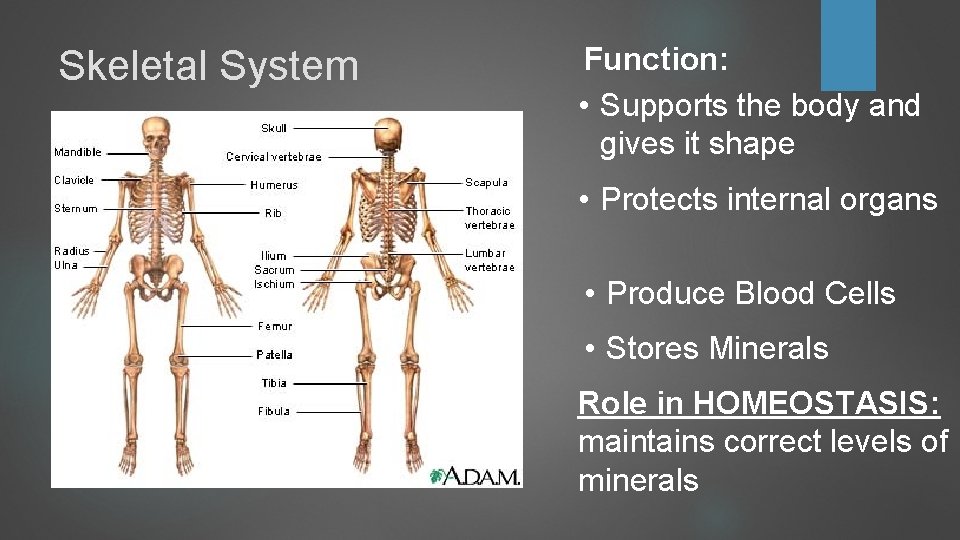
Skeletal System Function: • Supports the body and gives it shape • Protects internal organs • Produce Blood Cells • Stores Minerals Role in HOMEOSTASIS: maintains correct levels of minerals
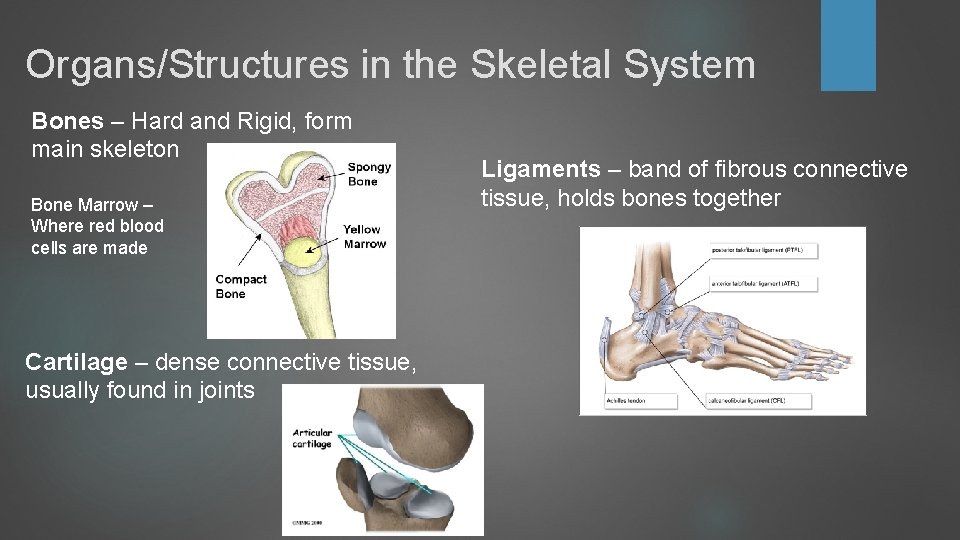
Organs/Structures in the Skeletal System Bones – Hard and Rigid, form main skeleton Bone Marrow – Where red blood cells are made Cartilage – dense connective tissue, usually found in joints Ligaments – band of fibrous connective tissue, holds bones together
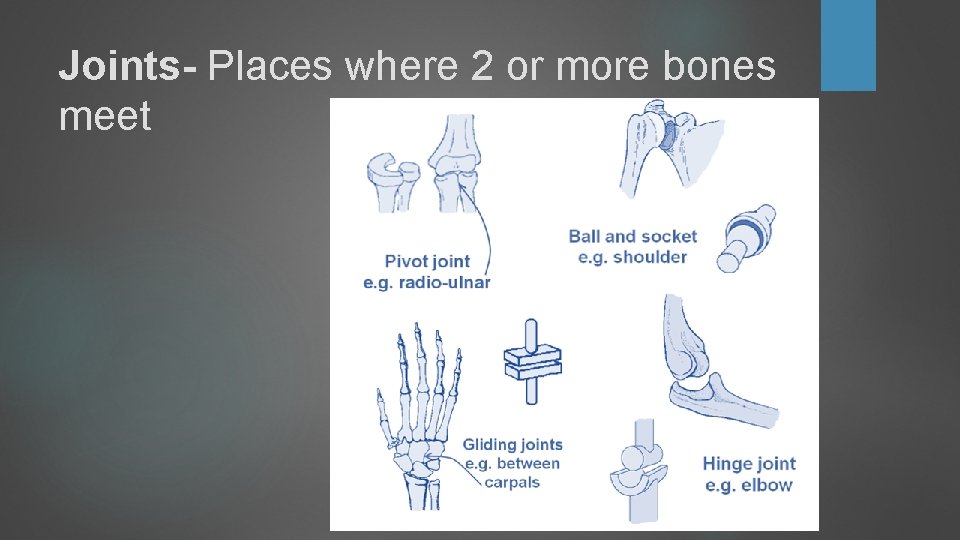
Joints- Places where 2 or more bones meet
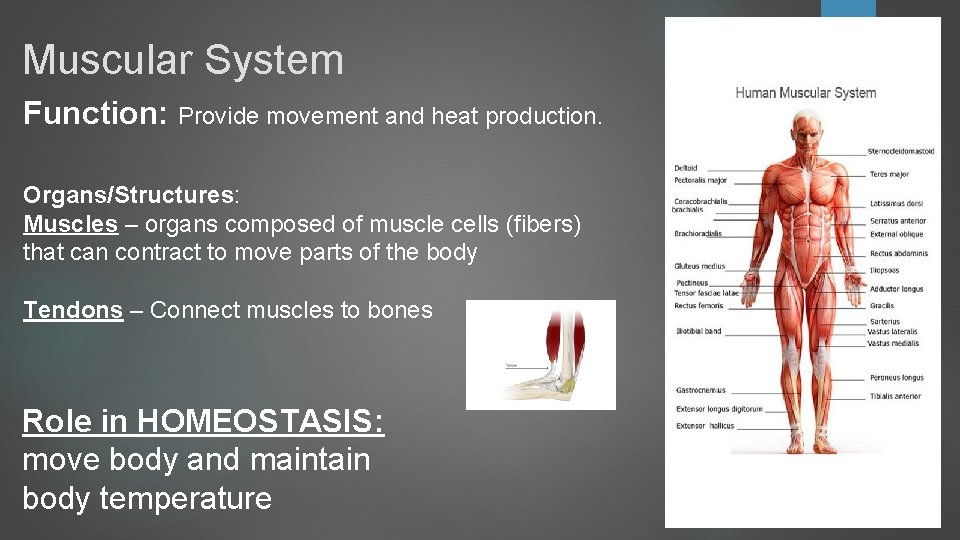
Muscular System Function: Provide movement and heat production. Organs/Structures: Muscles – organs composed of muscle cells (fibers) that can contract to move parts of the body Tendons – Connect muscles to bones Role in HOMEOSTASIS: move body and maintain body temperature
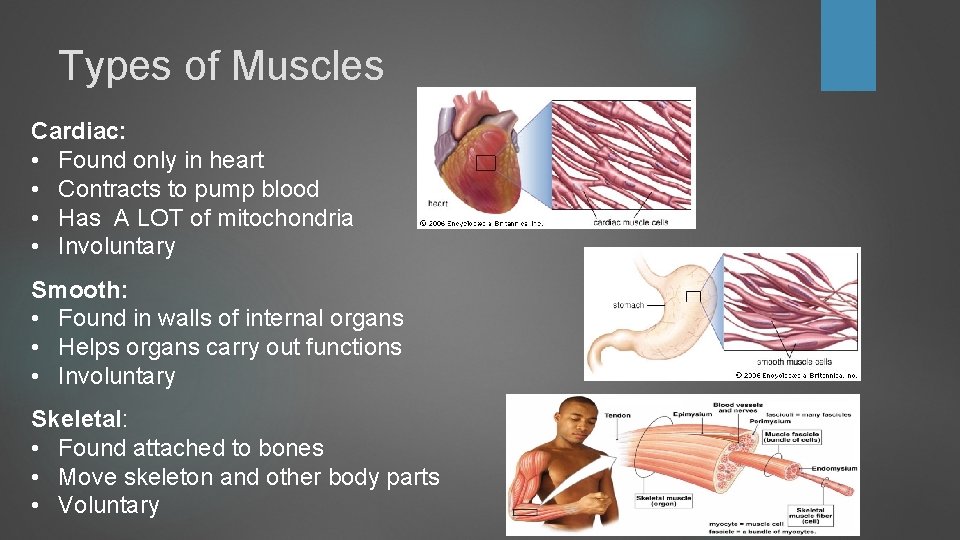
Types of Muscles Cardiac: • Found only in heart • Contracts to pump blood • Has A LOT of mitochondria • Involuntary Smooth: • Found in walls of internal organs • Helps organs carry out functions • Involuntary Skeletal: • Found attached to bones • Move skeleton and other body parts • Voluntary
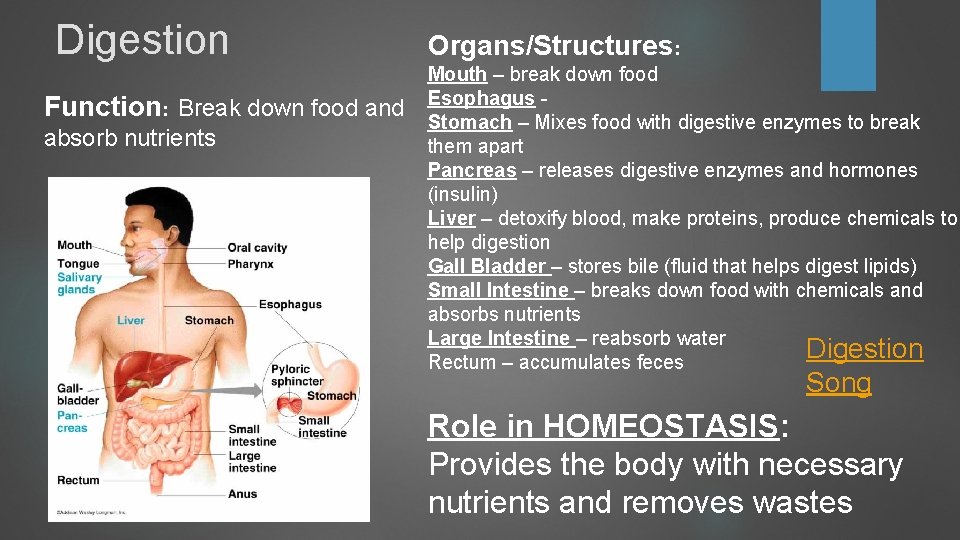
Digestion Function: Break down food and absorb nutrients Organs/Structures: Mouth – break down food Esophagus Stomach – Mixes food with digestive enzymes to break them apart Pancreas – releases digestive enzymes and hormones (insulin) Liver – detoxify blood, make proteins, produce chemicals to help digestion Gall Bladder – stores bile (fluid that helps digest lipids) Small Intestine – breaks down food with chemicals and absorbs nutrients Large Intestine – reabsorb water Digestion Rectum – accumulates feces Song Role in HOMEOSTASIS: Provides the body with necessary nutrients and removes wastes
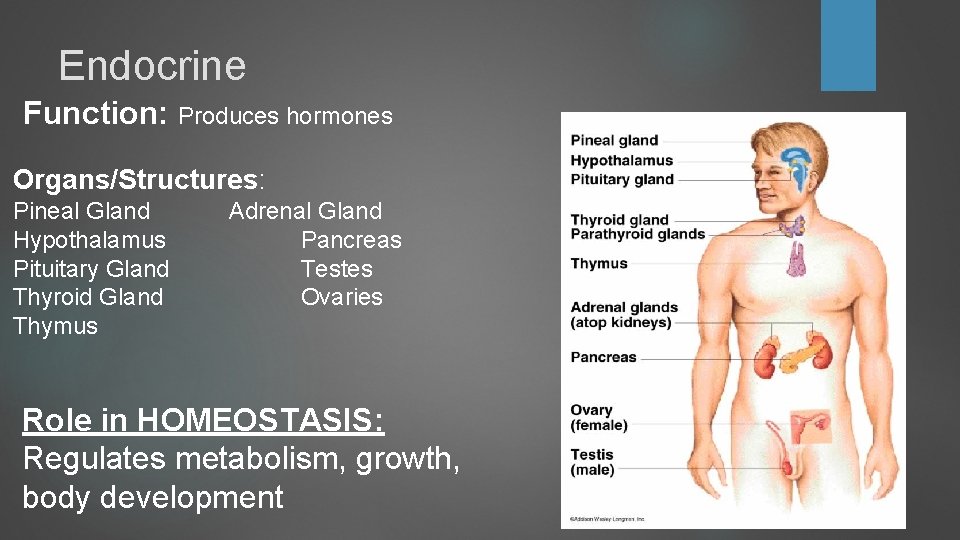
Endocrine Function: Produces hormones Organs/Structures: Pineal Gland Hypothalamus Pituitary Gland Thyroid Gland Thymus Adrenal Gland Pancreas Testes Ovaries Role in HOMEOSTASIS: Regulates metabolism, growth, body development
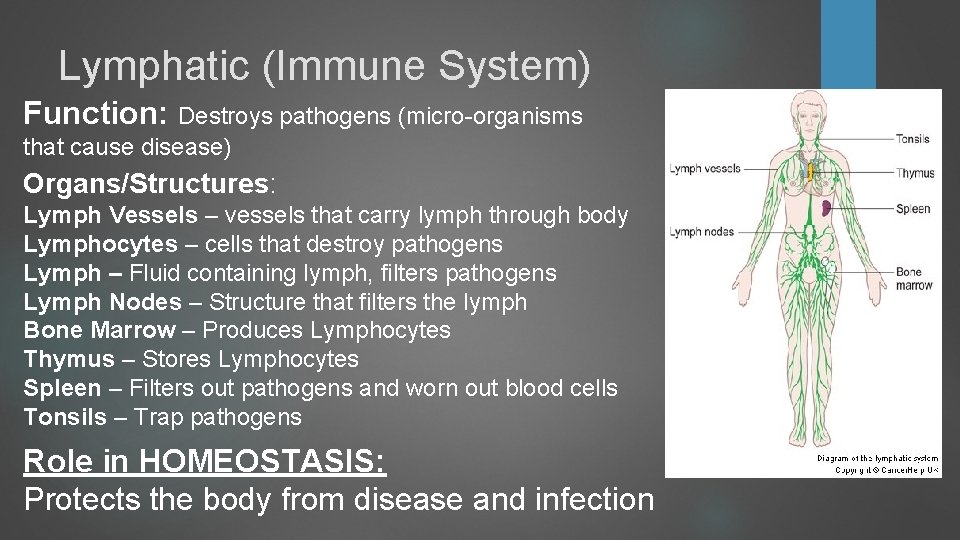
Lymphatic (Immune System) Function: Destroys pathogens (micro-organisms that cause disease) Organs/Structures: Lymph Vessels – vessels that carry lymph through body Lymphocytes – cells that destroy pathogens Lymph – Fluid containing lymph, filters pathogens Lymph Nodes – Structure that filters the lymph Bone Marrow – Produces Lymphocytes Thymus – Stores Lymphocytes Spleen – Filters out pathogens and worn out blood cells Tonsils – Trap pathogens Role in HOMEOSTASIS: Protects the body from disease and infection
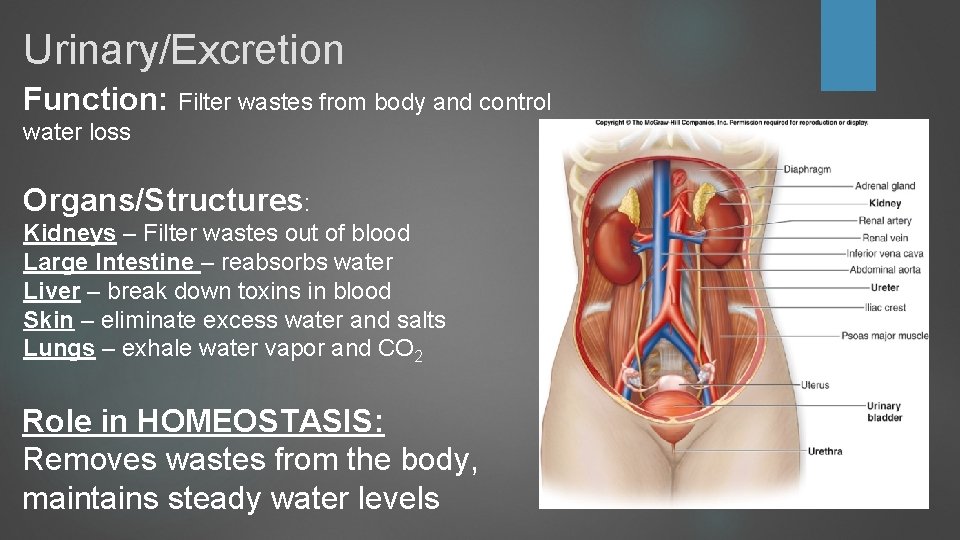
Urinary/Excretion Function: Filter wastes from body and control water loss Organs/Structures: Kidneys – Filter wastes out of blood Large Intestine – reabsorbs water Liver – break down toxins in blood Skin – eliminate excess water and salts Lungs – exhale water vapor and CO 2 Role in HOMEOSTASIS: Removes wastes from the body, maintains steady water levels
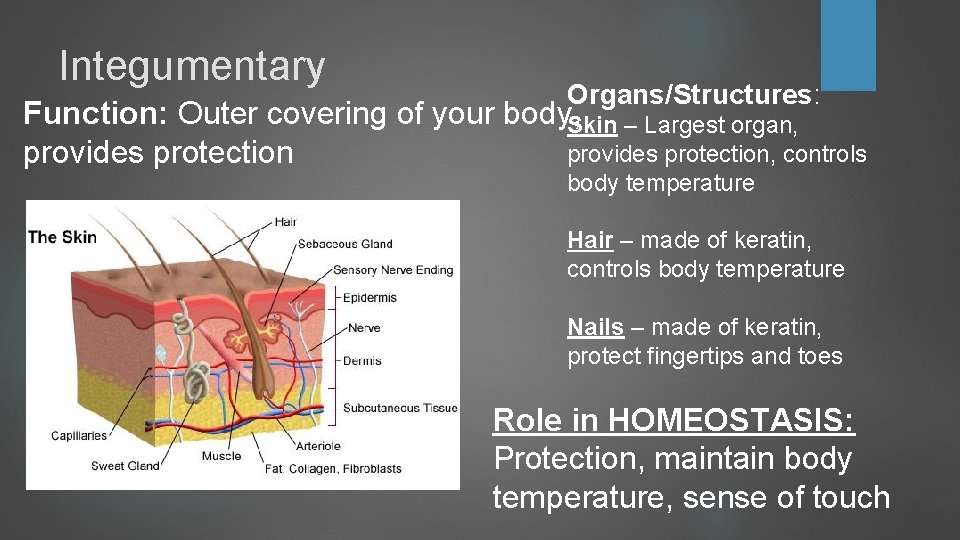
Integumentary Organs/Structures: Function: Outer covering of your body, Skin – Largest organ, provides protection, controls provides protection body temperature Hair – made of keratin, controls body temperature Nails – made of keratin, protect fingertips and toes Role in HOMEOSTASIS: Protection, maintain body temperature, sense of touch
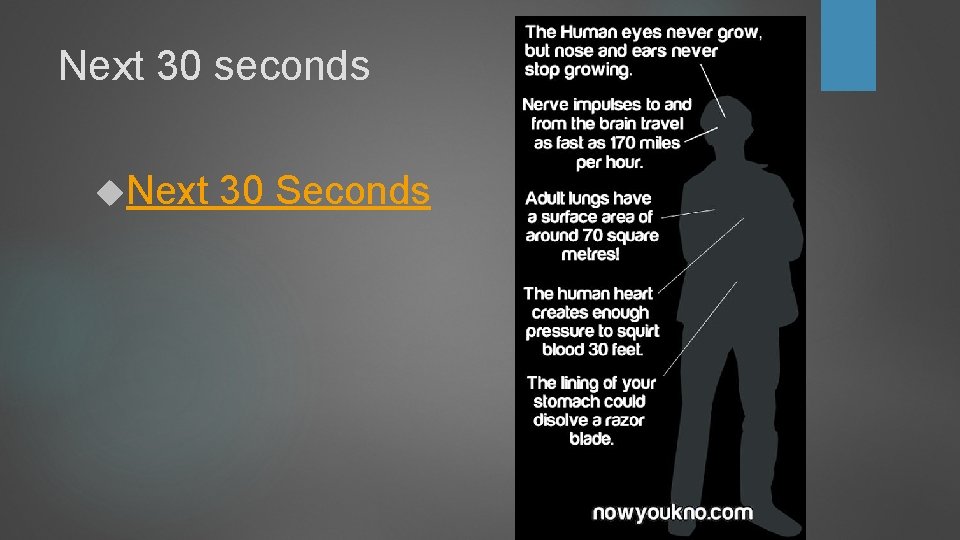
Next 30 seconds Next 30 Seconds