
ORGAN SYSTEMS AND HOMEOSTASIS The Human Body 4
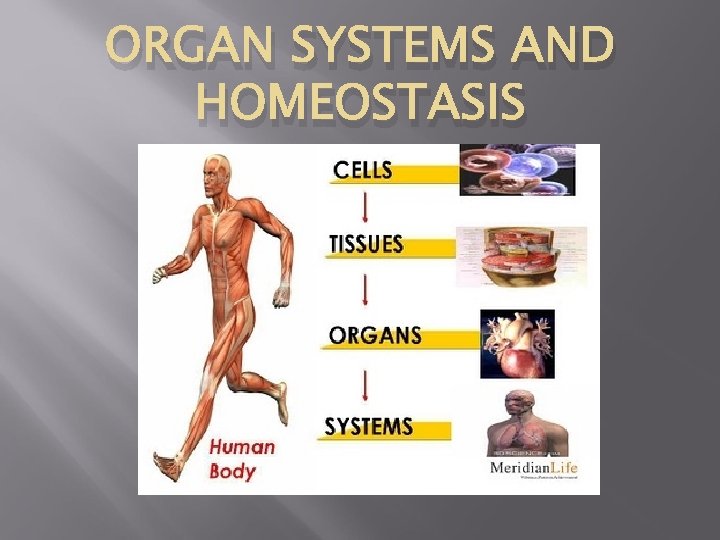
ORGAN SYSTEMS AND HOMEOSTASIS The Human Body!
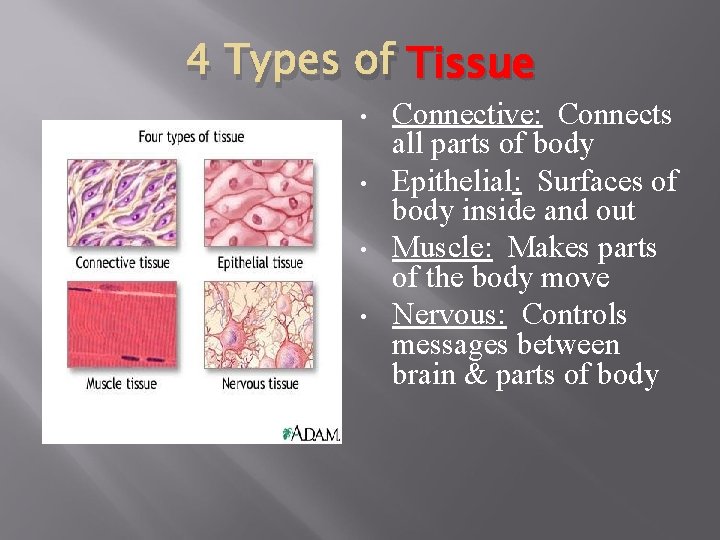
4 Types of Tissue • • Connective: Connects all parts of body Epithelial: Surfaces of body inside and out Muscle: Makes parts of the body move Nervous: Controls messages between brain & parts of body
Organ Systems � Group of organs that work together to perform a major function �There �First � 1. are 11 in the human body 3: Integumentary: skin, hair and nails Function: provides a barrier and protection � 2. Skeletal: bones, cartilage, ligaments, tendons Function: Provides support and protection, minerals, blood cells � 3. Muscular: muscles Function: Pulls on the skeleton to provide movement
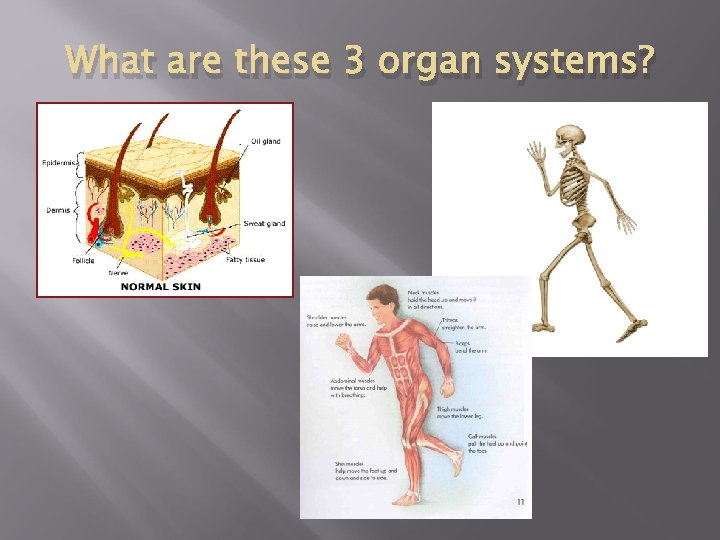
What are these 3 organ systems?
• • • The next 6 organ systems 4. Circulatory: tube like vessels throughout body • Function: carries food and oxygen to all the cells 5. Respiratory lungs, nose, pharynx, larynx, trachea, bronchioles, lungs – Function: takes in oxygen and disposes of carbon dioxide 6. Digestive System mouth, pharynx, esophagus, stomach, small and large intestines, rectum, liver, pancreas – Function: breaks down food into small molecules the body can use
• 7. Excretory System: kidney, ureter, urinary bladder, urethra – • Function: removes waste from the breakdown of materials in the bloodstream 8. Immune System: specialized white blood cells – Function: destroys disease-causing bacteria and viruses � 9. Reproductive: testes, epididymis, vas deferens, urethra, and penis; Females. Ovaries, Fallopian tubes, uterus � Function: contains organs that produce sex cells and produce chemicals that regulate physical development of maturing bodies.
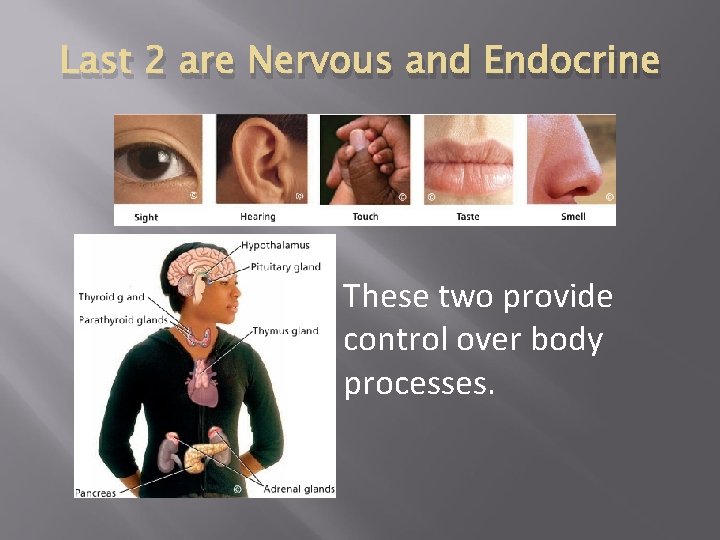
Last 2 are Nervous and Endocrine These two provide control over body processes.
• 10. Nervous: Brain, spinal cord, peripheral nerves, (senses: sight, hearing, touch, smell, taste) Functions: Recognizes and coordinates the body’s responses to changes in its internal and external environments • 11. Endocrine: Glands- Hypothalamus, pituitary, pineal, thyroid, parathyroid, adrenals pancreas, ovaries (females), testes (males) Function: Controls growth, development, and metabolism, maintains homeostasis
Homeostasis All of the body systems work together to maintain homeostasis! � The process by which an organism’s internal environment is kept stable in spite of changes in the external environment. � What are examples? � Why is this important? �
- Slides: 9