
Organ Systems 1 Recall Cell the smallest unit
- Slides: 16
Organ Systems 1
Recall �Cell = the smallest unit of life �A single unit �Ex: plant cell, animal cell �Tissue = a group of cells that work together �Made up of the same type of cells (similar shape and function) 2
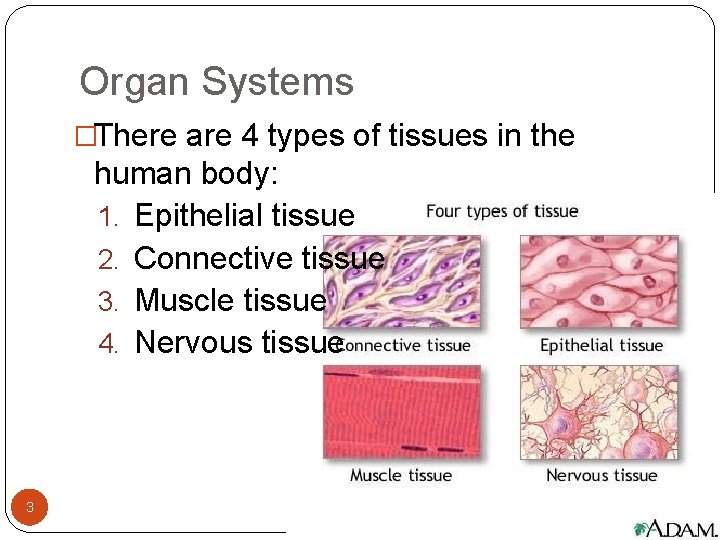
Organ Systems �There are 4 types of tissues in the human body: 1. Epithelial tissue 2. Connective tissue 3. Muscle tissue 4. Nervous tissue 3
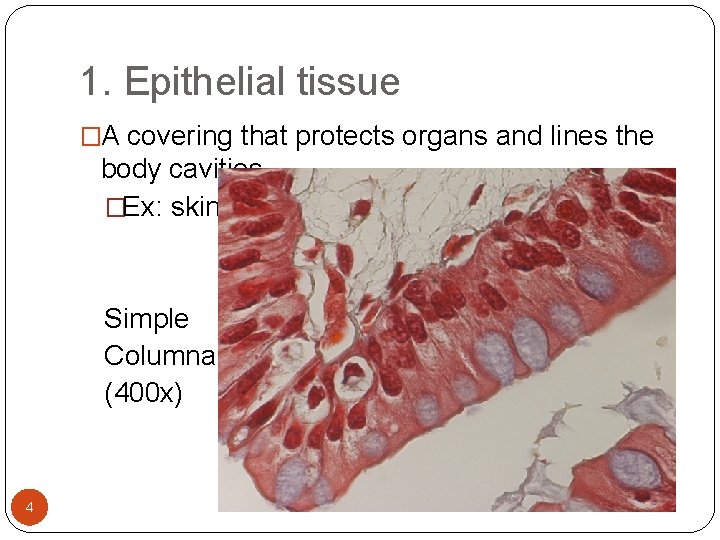
1. Epithelial tissue �A covering that protects organs and lines the body cavities �Ex: skin Simple Columnar (400 x) 4
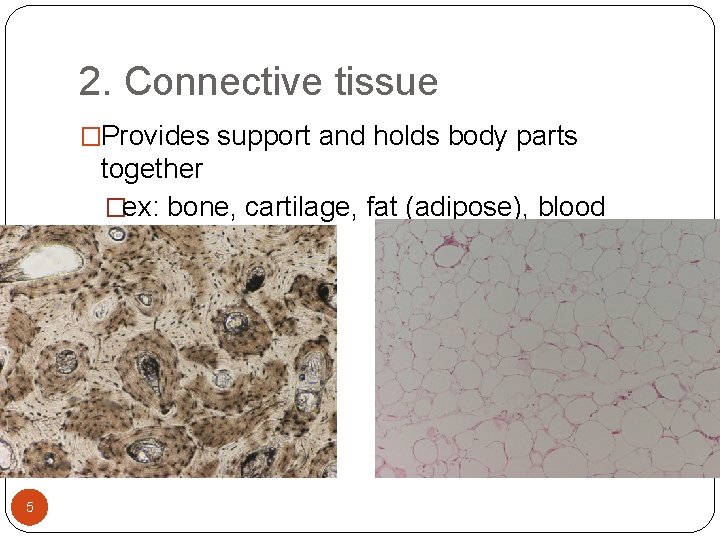
2. Connective tissue �Provides support and holds body parts together �ex: bone, cartilage, fat (adipose), blood Bone (100 x) adipose (100 x) 5
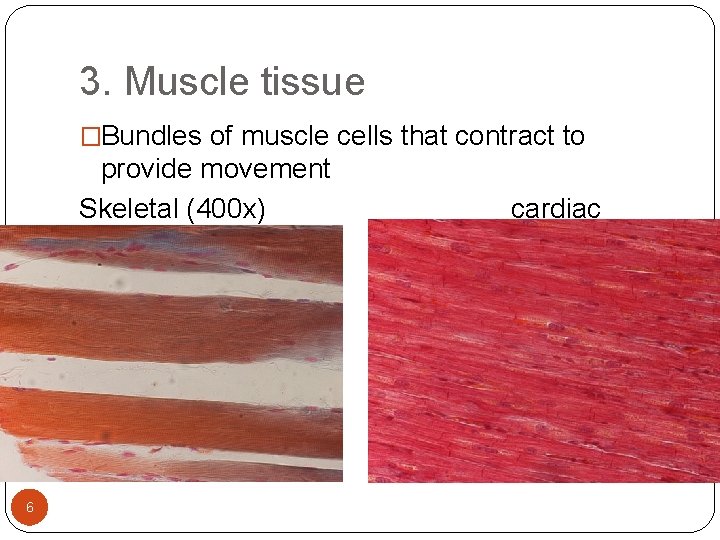
3. Muscle tissue �Bundles of muscle cells that contract to provide movement Skeletal (400 x) 6 cardiac
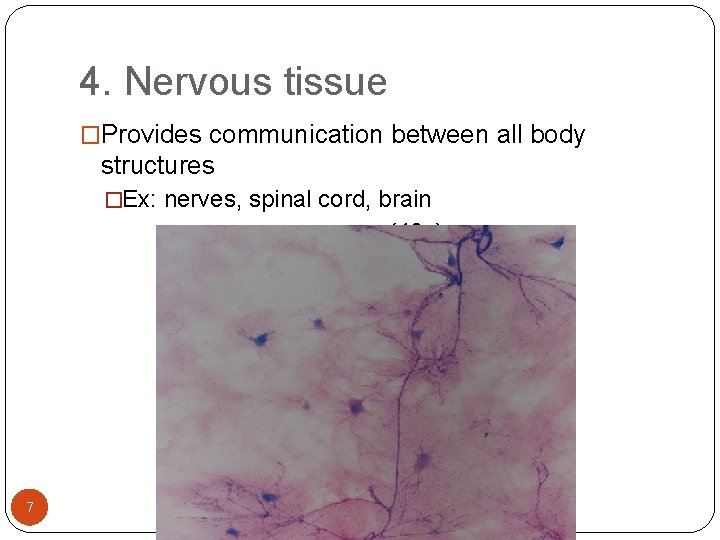
4. Nervous tissue �Provides communication between all body structures �Ex: nerves, spinal cord, brain neurons (40 x) 7
Organ Systems – def’n �Organ = a complex structure made up of many tissues working together to accomplish a common goal �Ex: heart – made up of muscle, nerve, fat, and epithelial tissue �All cells types work together to contract and pump blood. �Classifying organs into organ systems – �Physiology = functions �Anatomy = structures �Organ systems = a group of organs that have 8 related structures or functions
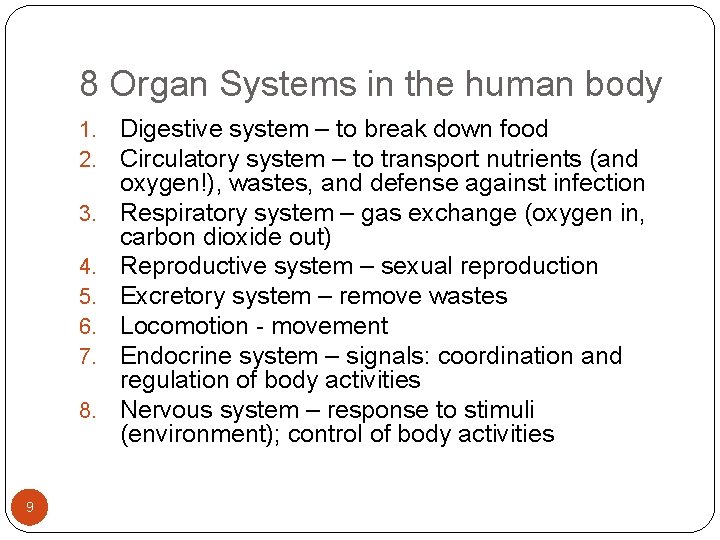
8 Organ Systems in the human body 1. 2. 3. 4. 5. 6. 7. 8. 9 Digestive system – to break down food Circulatory system – to transport nutrients (and oxygen!), wastes, and defense against infection Respiratory system – gas exchange (oxygen in, carbon dioxide out) Reproductive system – sexual reproduction Excretory system – remove wastes Locomotion - movement Endocrine system – signals: coordination and regulation of body activities Nervous system – response to stimuli (environment); control of body activities
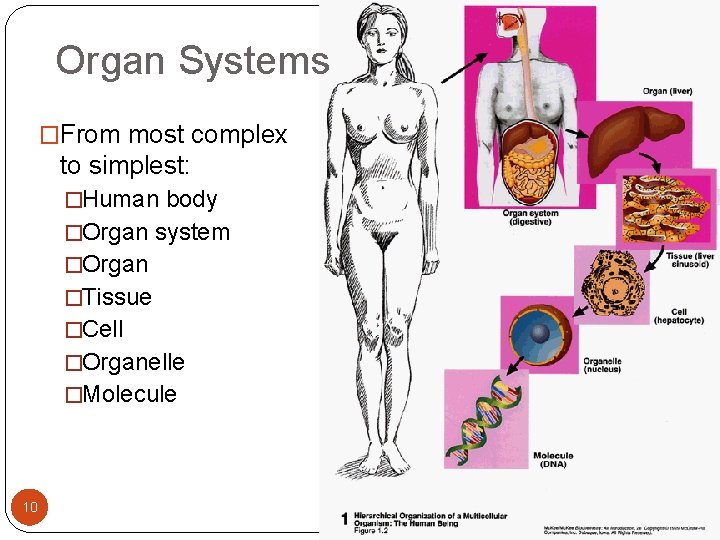
Organ Systems �From most complex to simplest: �Human body �Organ system �Organ �Tissue �Cell �Organelle �Molecule 10
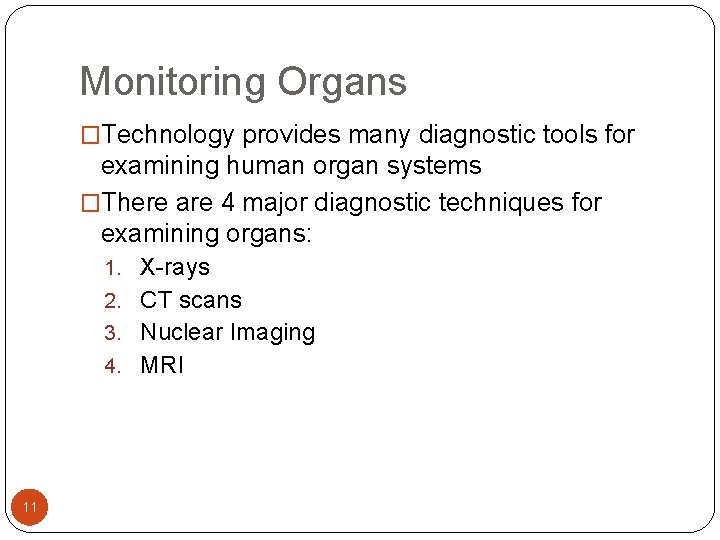
Monitoring Organs �Technology provides many diagnostic tools for examining human organ systems �There are 4 major diagnostic techniques for examining organs: 1. X-rays 2. CT scans 3. Nuclear Imaging 4. MRI 11
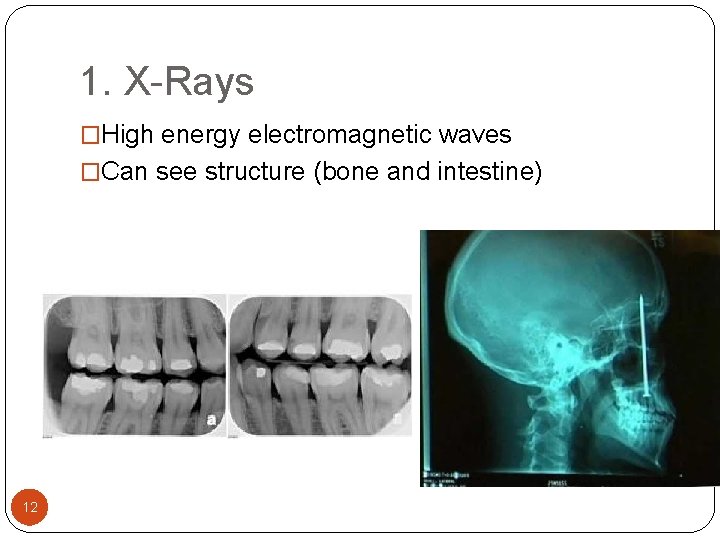
1. X-Rays �High energy electromagnetic waves �Can see structure (bone and intestine) 12
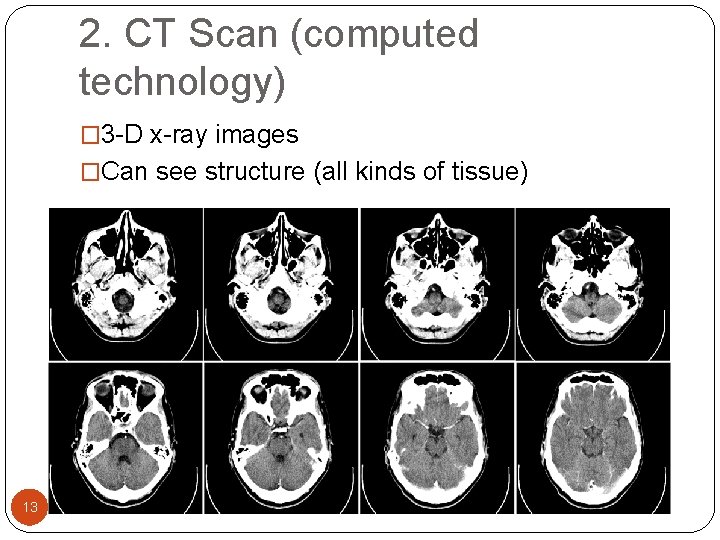
2. CT Scan (computed technology) � 3 -D x-ray images �Can see structure (all kinds of tissue) 13
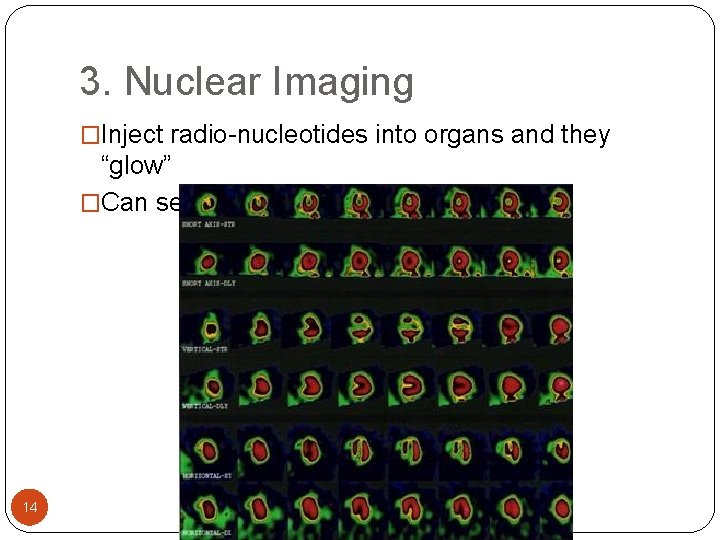
3. Nuclear Imaging �Inject radio-nucleotides into organs and they “glow” �Can see function 14
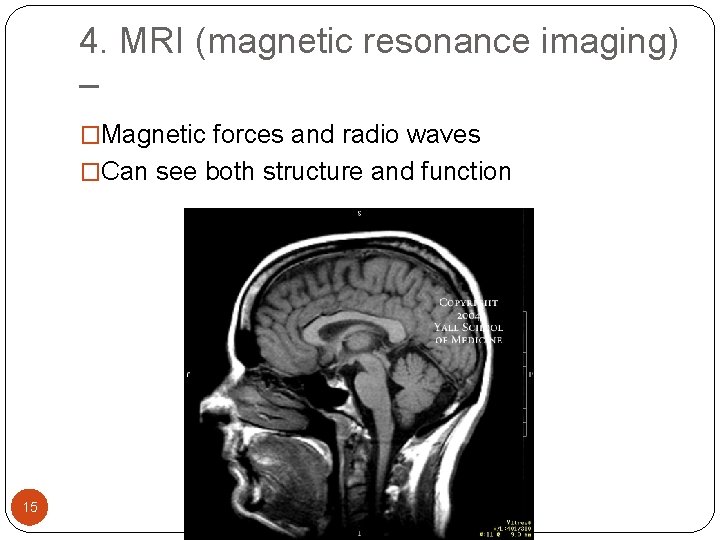
4. MRI (magnetic resonance imaging) – �Magnetic forces and radio waves �Can see both structure and function 15
16