
Oregon Statewide Assessment System OSAS Interim Assessment Remote
- Slides: 17
Oregon Statewide Assessment System (OSAS) Interim Assessment Remote Administration and Test Security Required for DTCs, STCs, and TAs
Topics • Overview of the Oregon Balanced Assessment System and Interim Assessment Features • Interim Assessment Test Security and Remote Administration Features
Overview of the Oregon Balanced Assessment System and Interim Assessment Features
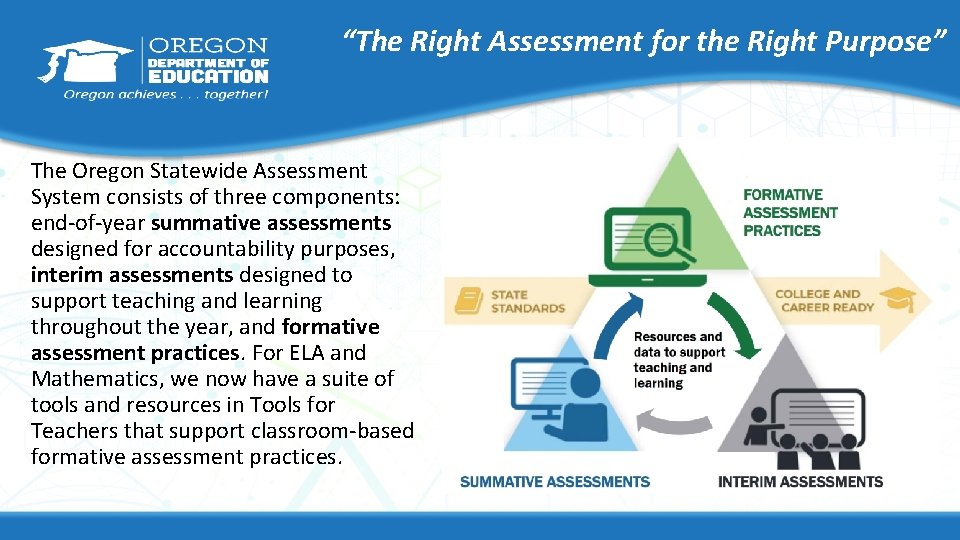
“The Right Assessment for the Right Purpose” The Oregon Statewide Assessment System consists of three components: end-of-year summative assessments designed for accountability purposes, interim assessments designed to support teaching and learning throughout the year, and formative assessment practices. For ELA and Mathematics, we now have a suite of tools and resources in Tools for Teachers that support classroom-based formative assessment practices.
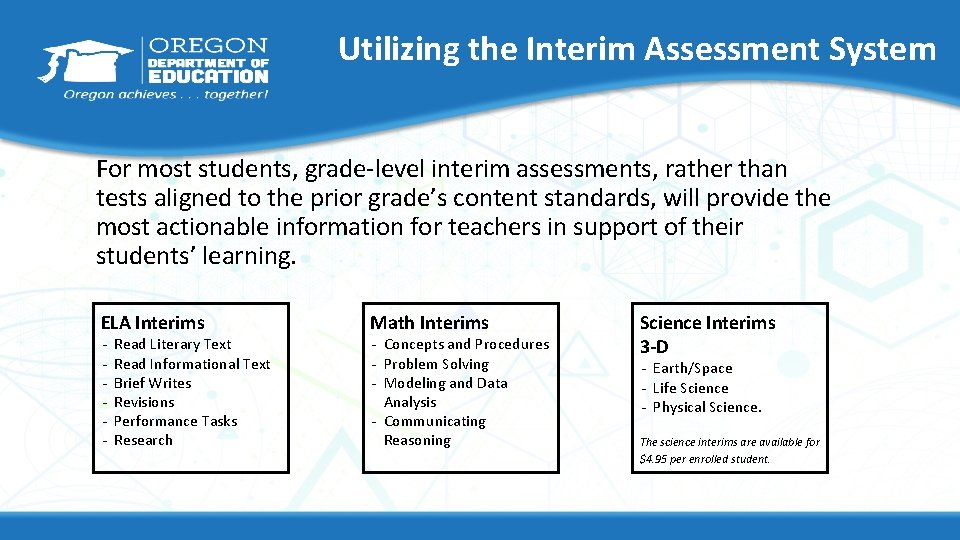
Utilizing the Interim Assessment System For most students, grade-level interim assessments, rather than tests aligned to the prior grade’s content standards, will provide the most actionable information for teachers in support of their students’ learning. ELA Interims - Read Literary Text Read Informational Text Brief Writes Revisions Performance Tasks Research Math Interims - Concepts and Procedures - Problem Solving - Modeling and Data Analysis - Communicating Reasoning Science Interims 3 -D - Earth/Space - Life Science - Physical Science. The science interims are available for $4. 95 per enrolled student.
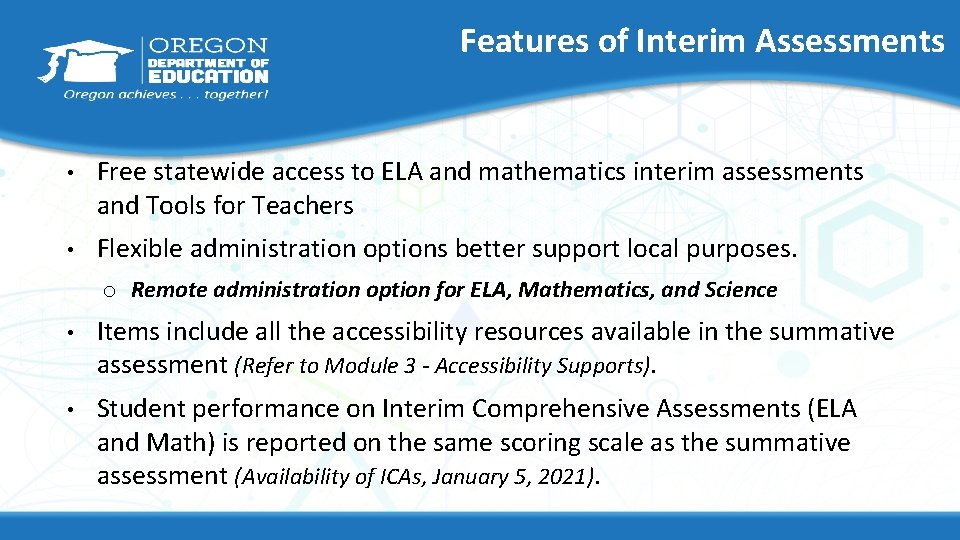
Features of Interim Assessments • Free statewide access to ELA and mathematics interim assessments and Tools for Teachers • Flexible administration options better support local purposes. o Remote administration option for ELA, Mathematics, and Science • Items include all the accessibility resources available in the summative assessment (Refer to Module 3 - Accessibility Supports). • Student performance on Interim Comprehensive Assessments (ELA and Math) is reported on the same scoring scale as the summative assessment (Availability of ICAs, January 5, 2021).
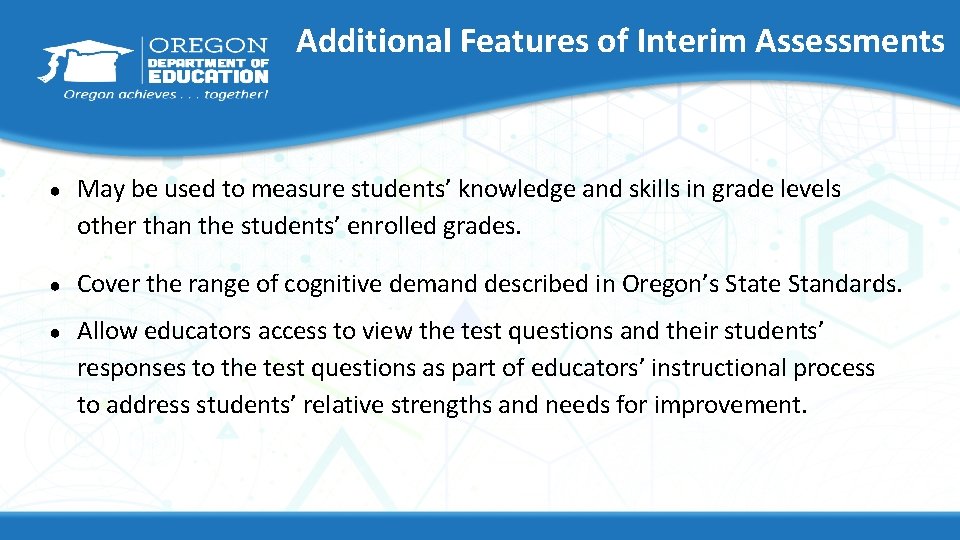
Additional Features of Interim Assessments ● May be used to measure students’ knowledge and skills in grade levels other than the students’ enrolled grades. ● Cover the range of cognitive demand described in Oregon’s State Standards. ● Allow educators access to view the test questions and their students’ responses to the test questions as part of educators’ instructional process to address students’ relative strengths and needs for improvement.
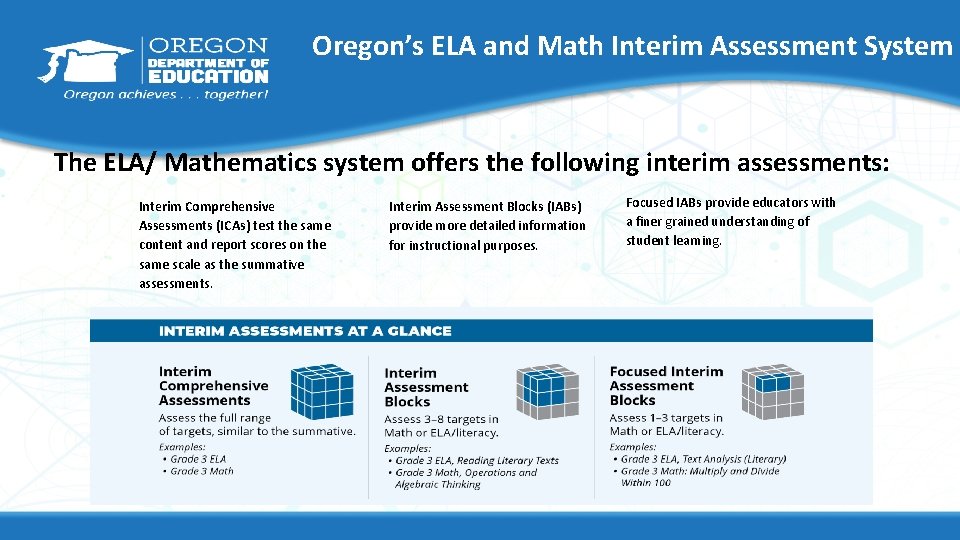
Oregon’s ELA and Math Interim Assessment System The ELA/ Mathematics system offers the following interim assessments: Interim Comprehensive Assessments (ICAs) test the same content and report scores on the same scale as the summative assessments. Interim Assessment Blocks (IABs) provide more detailed information for instructional purposes. Focused IABs provide educators with a finer grained understanding of student learning.
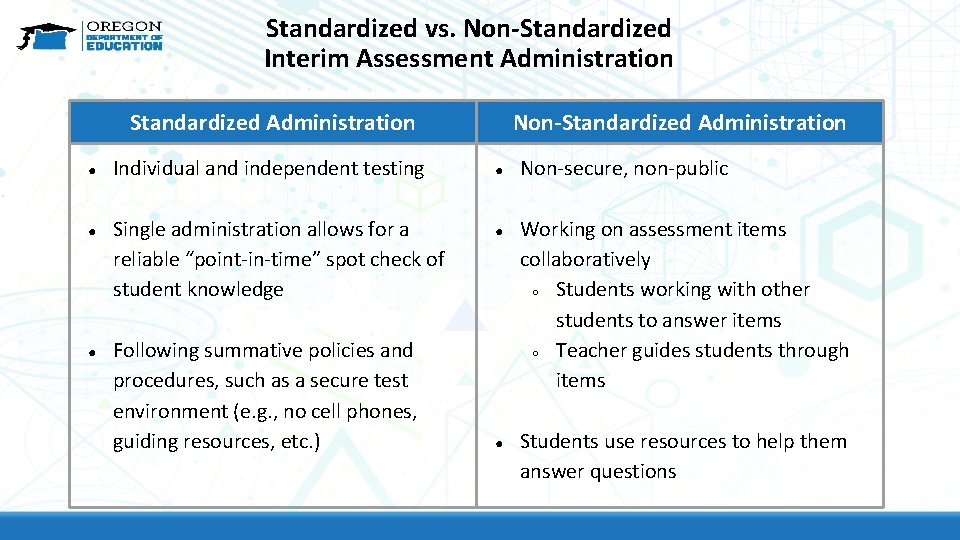
Standardized vs. Non-Standardized Interim Assessment Administration Standardized Administration ● ● ● Individual and independent testing Single administration allows for a reliable “point-in-time” spot check of student knowledge Following summative policies and procedures, such as a secure test environment (e. g. , no cell phones, guiding resources, etc. ) Non-Standardized Administration ● ● ● Non-secure, non-public Working on assessment items collaboratively ○ Students working with other students to answer items ○ Teacher guides students through items Students use resources to help them answer questions
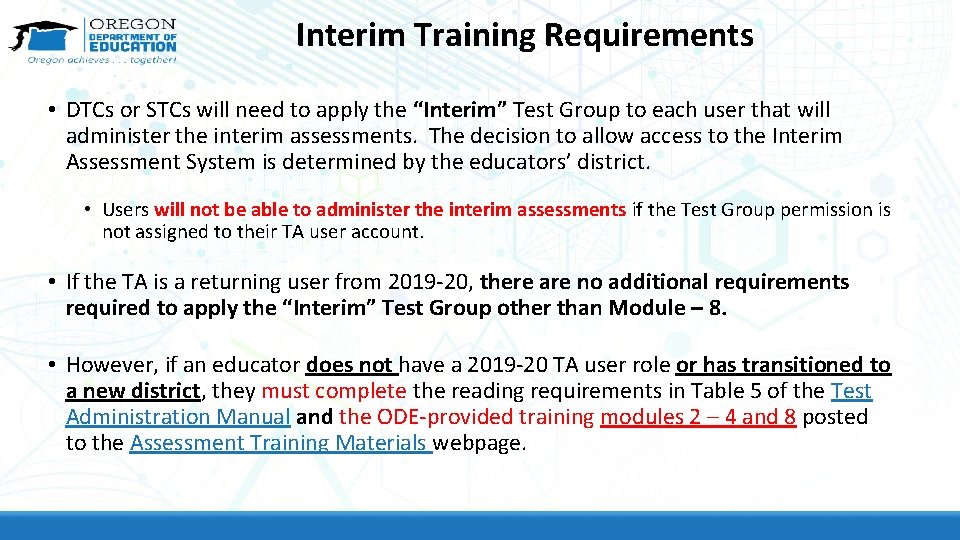
Interim Training Requirements • DTCs or STCs will need to apply the “Interim” Test Group to each user that will administer the interim assessments. The decision to allow access to the Interim Assessment System is determined by the educators’ district. • Users will not be able to administer the interim assessments if the Test Group permission is not assigned to their TA user account. • If the TA is a returning user from 2019 -20, there are no additional requirements required to apply the “Interim” Test Group other than Module – 8. • However, if an educator does not have a 2019 -20 TA user role or has transitioned to a new district, they must complete the reading requirements in Table 5 of the Test Administration Manual and the ODE-provided training modules 2 – 4 and 8 posted to the Assessment Training Materials webpage.
Interim Assessment Test Security and Remote Administration Features
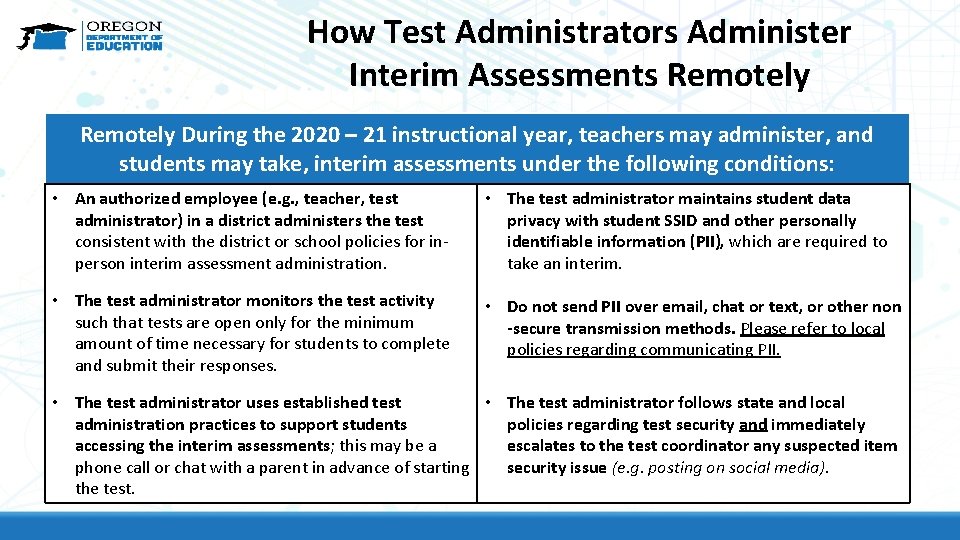
How Test Administrators Administer Interim Assessments Remotely During the 2020 – 21 instructional year, teachers may administer, and students may take, interim assessments under the following conditions: • An authorized employee (e. g. , teacher, test administrator) in a district administers the test consistent with the district or school policies for inperson interim assessment administration. • The test administrator maintains student data privacy with student SSID and other personally identifiable information (PII), which are required to take an interim. • The test administrator monitors the test activity such that tests are open only for the minimum amount of time necessary for students to complete and submit their responses. • Do not send PII over email, chat or text, or other non -secure transmission methods. Please refer to local policies regarding communicating PII. • The test administrator uses established test • The test administrator follows state and local administration practices to support students policies regarding test security and immediately accessing the interim assessments; this may be a escalates to the test coordinator any suspected item phone call or chat with a parent in advance of starting security issue (e. g. posting on social media). the test.
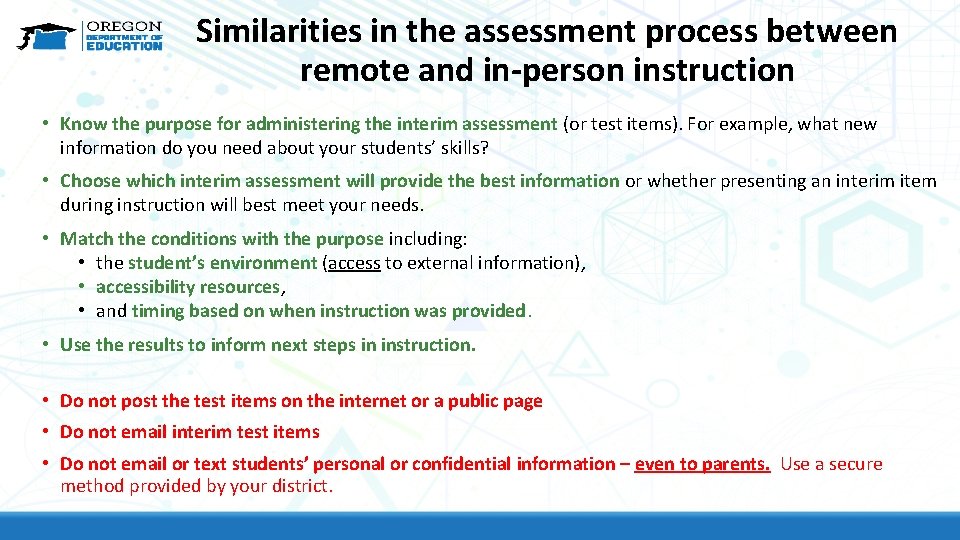
Similarities in the assessment process between remote and in-person instruction • Know the purpose for administering the interim assessment (or test items). For example, what new information do you need about your students’ skills? • Choose which interim assessment will provide the best information or whether presenting an interim item during instruction will best meet your needs. • Match the conditions with the purpose including: • the student’s environment (access to external information), • accessibility resources, • and timing based on when instruction was provided. • Use the results to inform next steps in instruction. • Do not post the test items on the internet or a public page • Do not email interim test items • Do not email or text students’ personal or confidential information – even to parents. Use a secure method provided by your district.
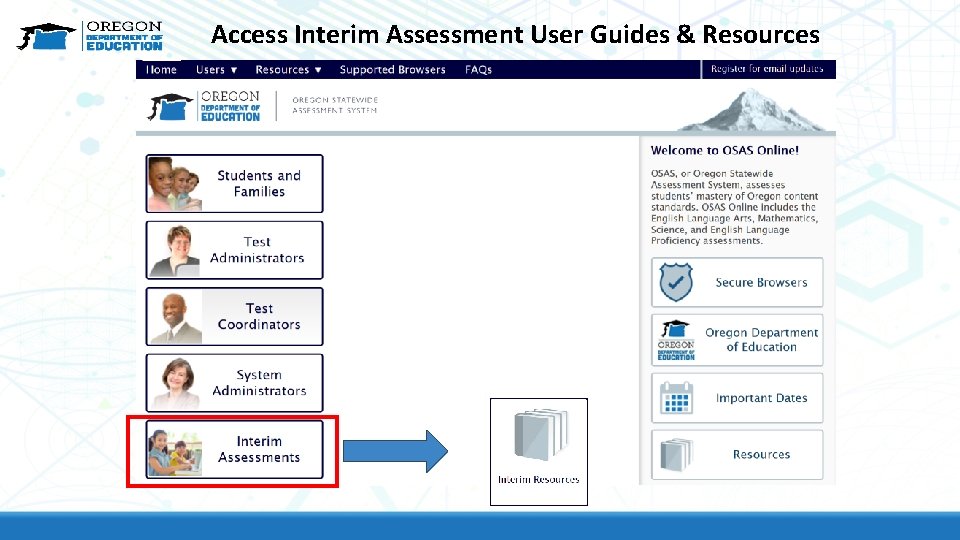
Access Interim Assessment User Guides & Resources
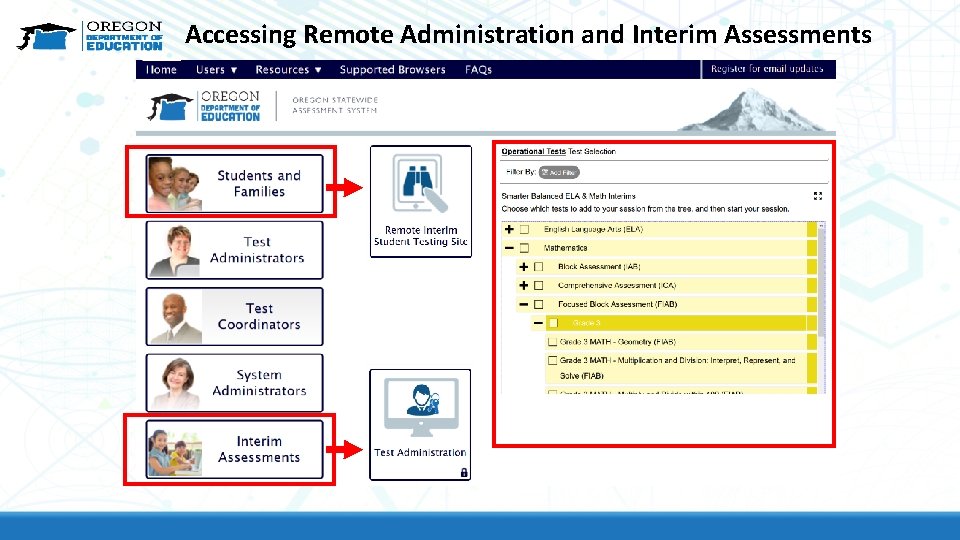
Accessing Remote Administration and Interim Assessments
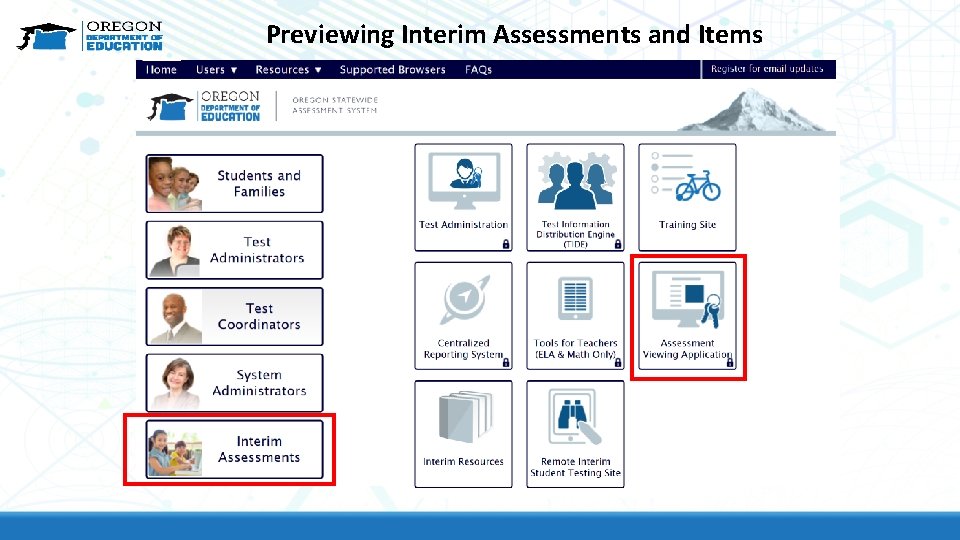
Previewing Interim Assessments and Items
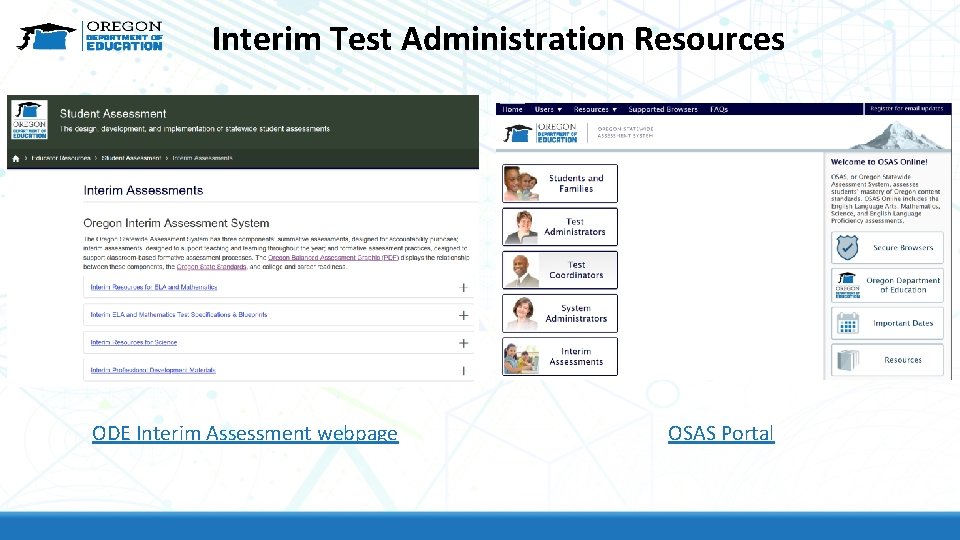
Interim Test Administration Resources ODE Interim Assessment webpage OSAS Portal