
Orders of Aquatic Insects Classification Known Living Species


- Slides: 21
Orders of Aquatic Insects
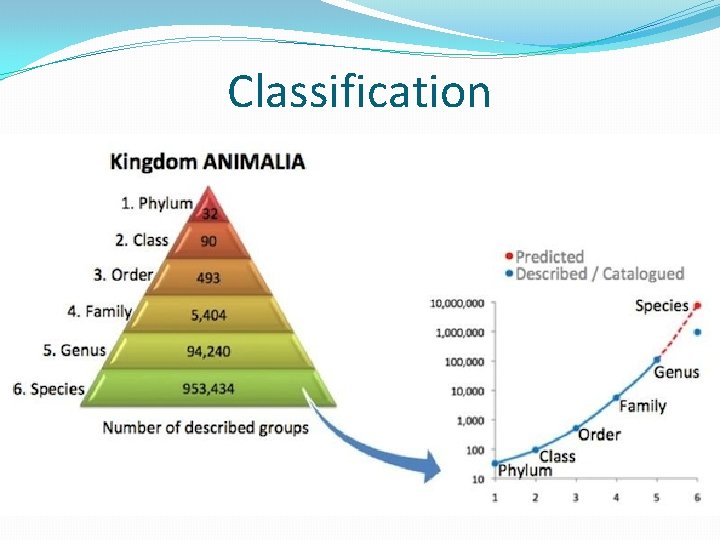
Classification
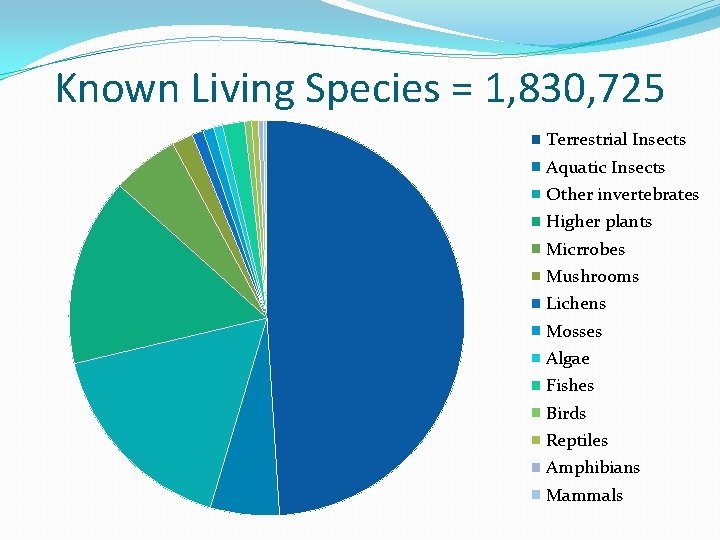
Known Living Species = 1, 830, 725 Terrestrial Insects Aquatic Insects Other invertebrates Higher plants Micrrobes Mushrooms Lichens Mosses Algae Fishes Birds Reptiles Amphibians Mammals
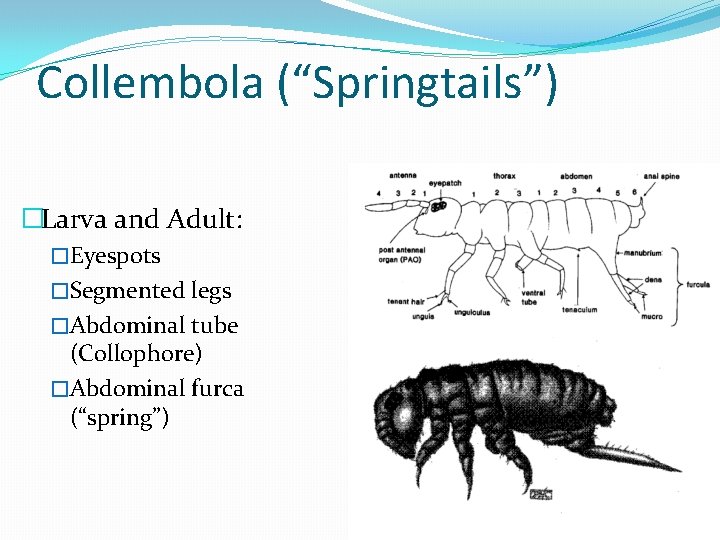
Collembola (“Springtails”) �Larva and Adult: �Eyespots �Segmented legs �Abdominal tube (Collophore) �Abdominal furca (“spring”)
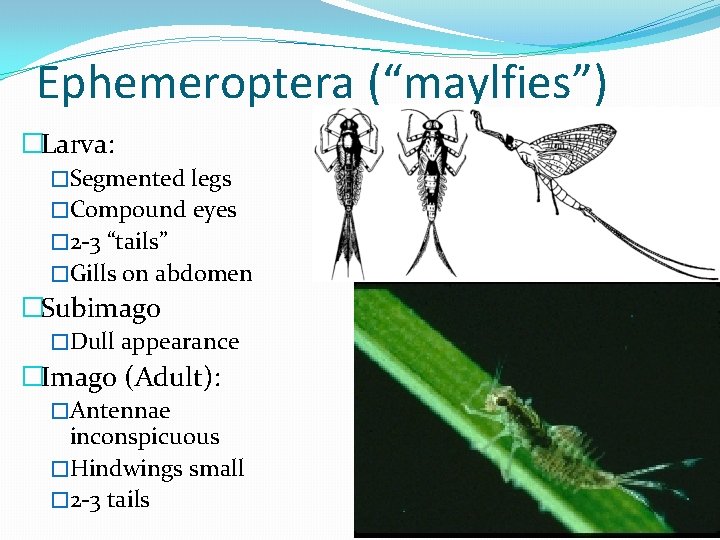
Ephemeroptera (“maylfies”) �Larva: �Segmented legs �Compound eyes � 2 -3 “tails” �Gills on abdomen �Subimago �Dull appearance �Imago (Adult): �Antennae inconspicuous �Hindwings small � 2 -3 tails
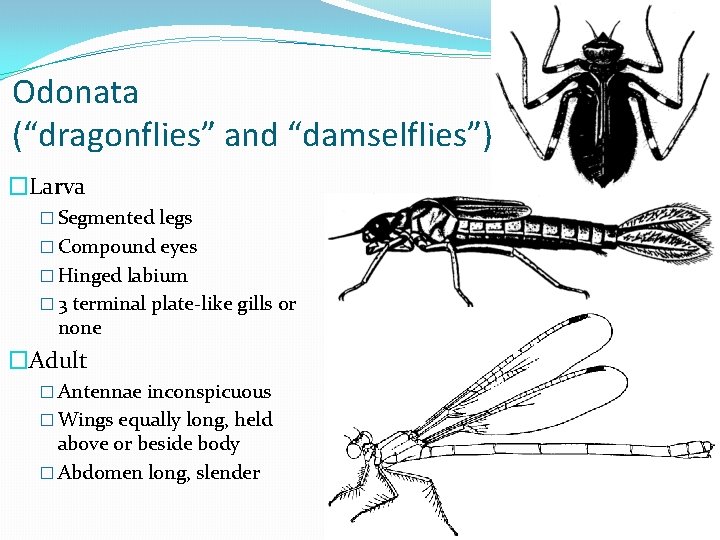
Odonata (“dragonflies” and “damselflies”) �Larva � Segmented legs � Compound eyes � Hinged labium � 3 terminal plate-like gills or none �Adult � Antennae inconspicuous � Wings equally long, held above or beside body � Abdomen long, slender
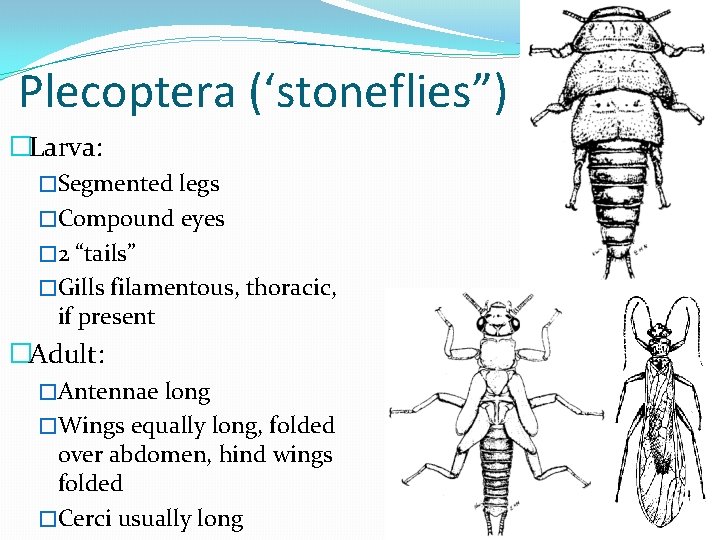
Plecoptera (‘stoneflies”) �Larva: �Segmented legs �Compound eyes � 2 “tails” �Gills filamentous, thoracic, if present �Adult: �Antennae long �Wings equally long, folded over abdomen, hind wings folded �Cerci usually long
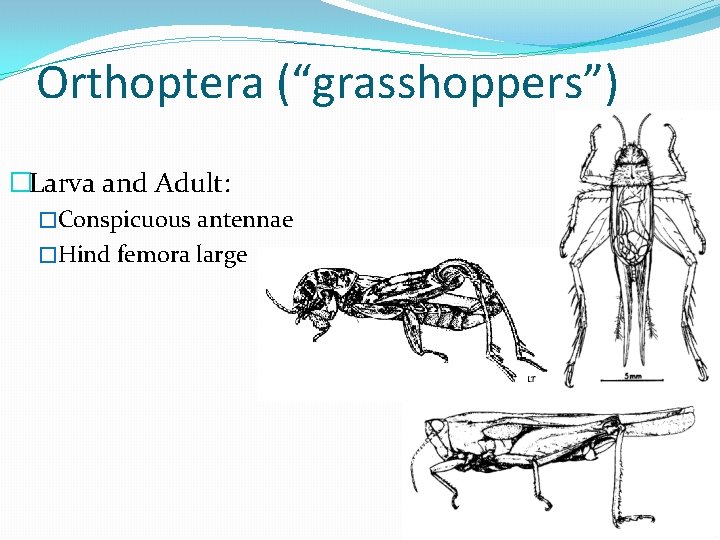
Orthoptera (“grasshoppers”) �Larva and Adult: �Conspicuous antennae �Hind femora large
Blattodea �Oval body �Head hidden in dorsal view �Cursorial legs with 5 segmented tarsi �Wings present, sometimes reduced esp. in ♀♀
Hemiptera-Heteroptera (‘bugs”) �Larva: �Similar to adult �Adult: �Antennae conspicuous or hidden �Beak-like mouthparts �Bases of adult forewings leathery
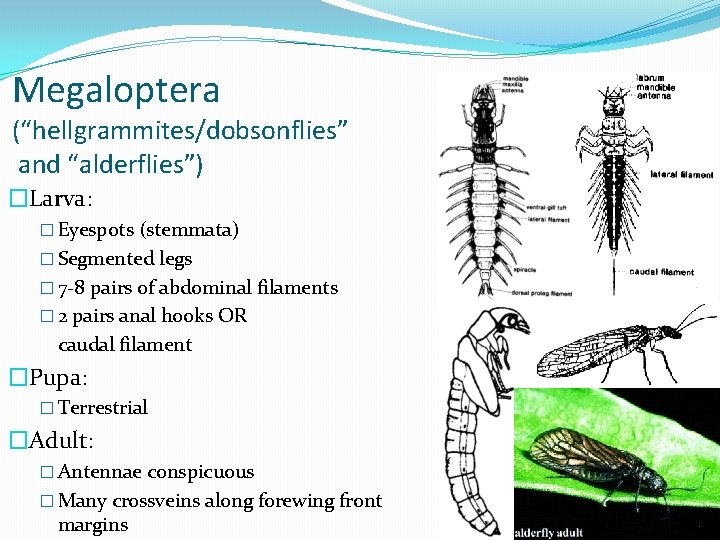
Megaloptera (“hellgrammites/dobsonflies” and “alderflies”) �Larva: � Eyespots (stemmata) � Segmented legs � 7 -8 pairs of abdominal filaments � 2 pairs anal hooks OR caudal filament �Pupa: � Terrestrial �Adult: � Antennae conspicuous � Many crossveins along forewing front margins
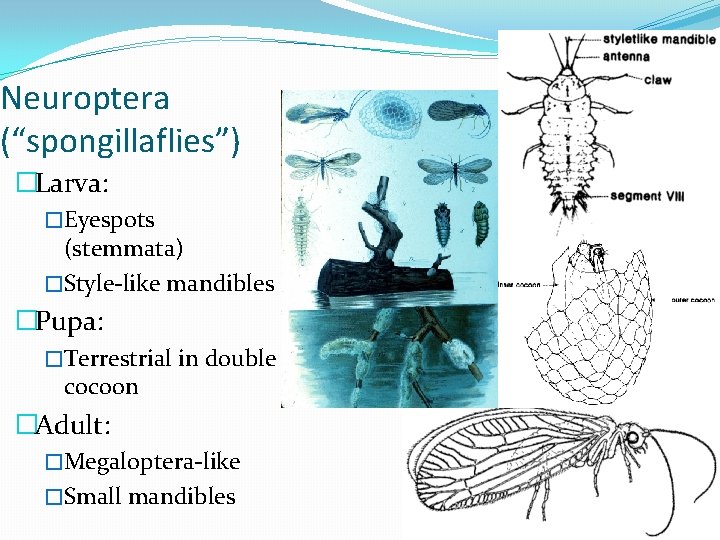
Neuroptera (“spongillaflies”) �Larva: �Eyespots (stemmata) �Style-like mandibles �Pupa: �Terrestrial in double cocoon �Adult: �Megaloptera-like �Small mandibles
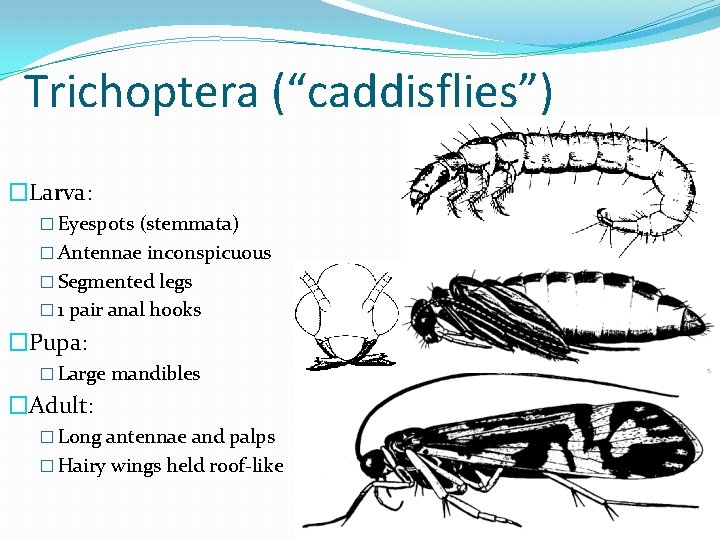
Trichoptera (“caddisflies”) �Larva: � Eyespots (stemmata) � Antennae inconspicuous � Segmented legs � 1 pair anal hooks �Pupa: � Large mandibles �Adult: � Long antennae and palps � Hairy wings held roof-like
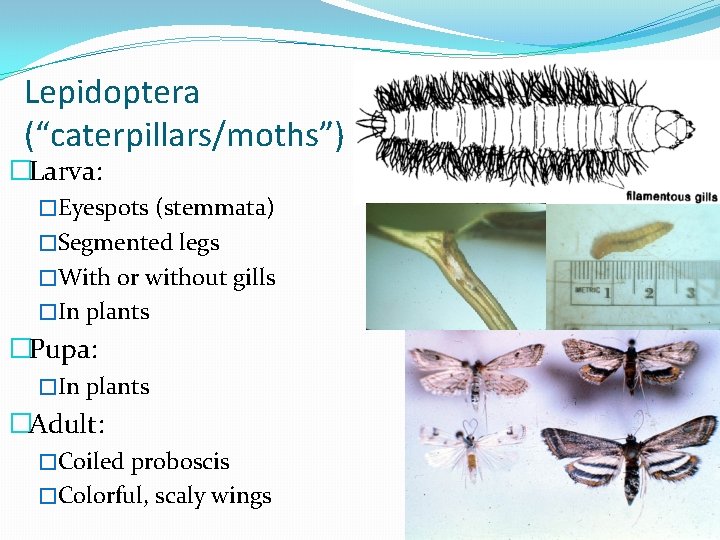
Lepidoptera (“caterpillars/moths”) �Larva: �Eyespots (stemmata) �Segmented legs �With or without gills �In plants �Pupa: �In plants �Adult: �Coiled proboscis �Colorful, scaly wings
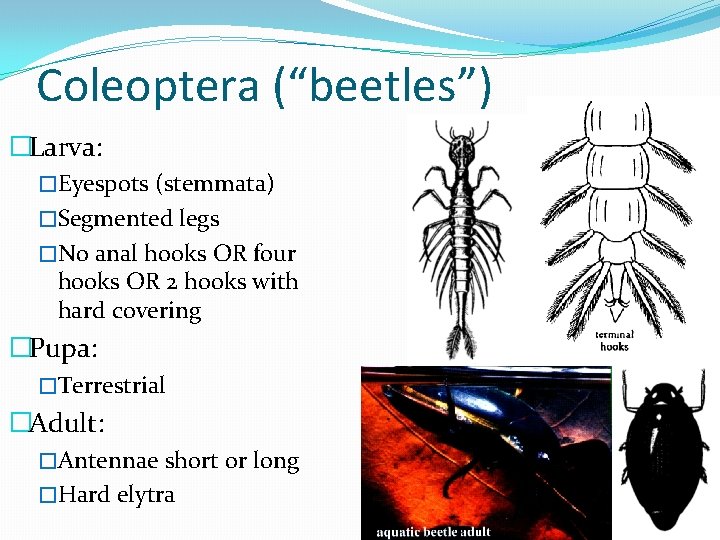
Coleoptera (“beetles”) �Larva: �Eyespots (stemmata) �Segmented legs �No anal hooks OR four hooks OR 2 hooks with hard covering �Pupa: �Terrestrial �Adult: �Antennae short or long �Hard elytra
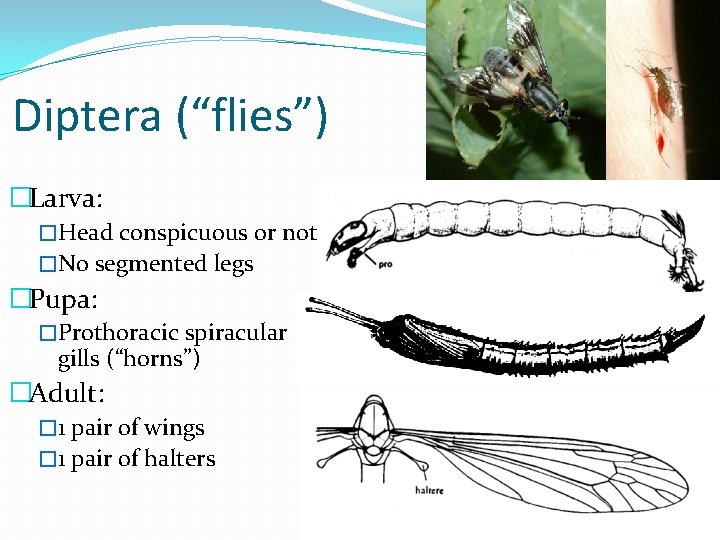
Diptera (“flies”) �Larva: �Head conspicuous or not �No segmented legs �Pupa: �Prothoracic spiracular gills (“horns”) �Adult: � 1 pair of wings � 1 pair of halters
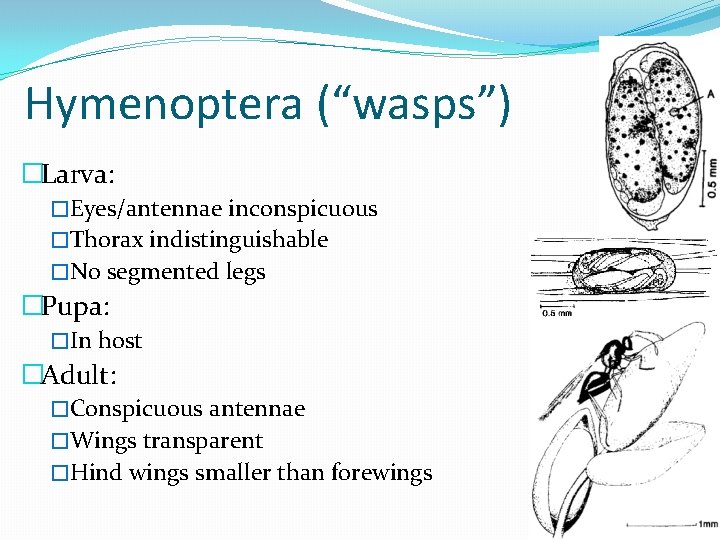
Hymenoptera (“wasps”) �Larva: �Eyes/antennae inconspicuous �Thorax indistinguishable �No segmented legs �Pupa: �In host �Adult: �Conspicuous antennae �Wings transparent �Hind wings smaller than forewings
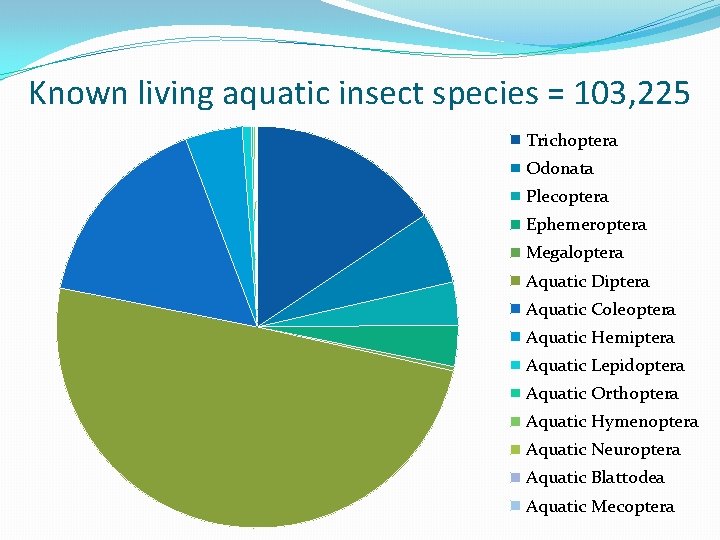
Known living aquatic insect species = 103, 225 Trichoptera Odonata Plecoptera Ephemeroptera Megaloptera Aquatic Diptera Aquatic Coleoptera Aquatic Hemiptera Aquatic Lepidoptera Aquatic Orthoptera Aquatic Hymenoptera Aquatic Neuroptera Aquatic Blattodea Aquatic Mecoptera
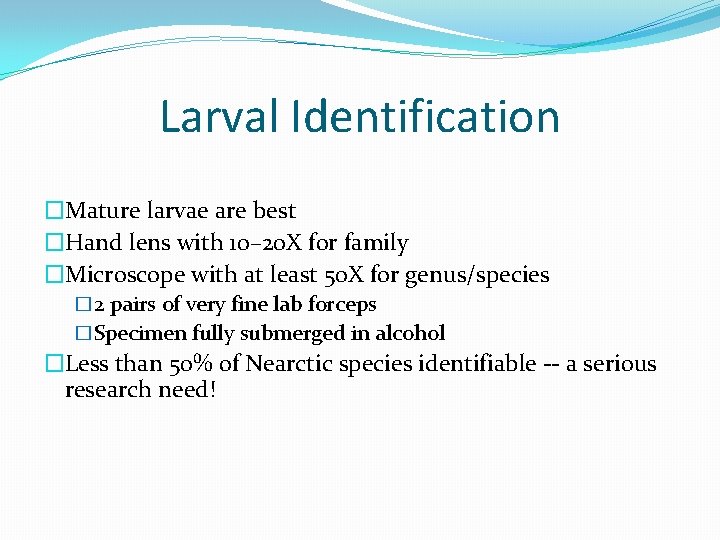
Larval Identification �Mature larvae are best �Hand lens with 10– 20 X for family �Microscope with at least 50 X for genus/species � 2 pairs of very fine lab forceps �Specimen fully submerged in alcohol �Less than 50% of Nearctic species identifiable -- a serious research need!
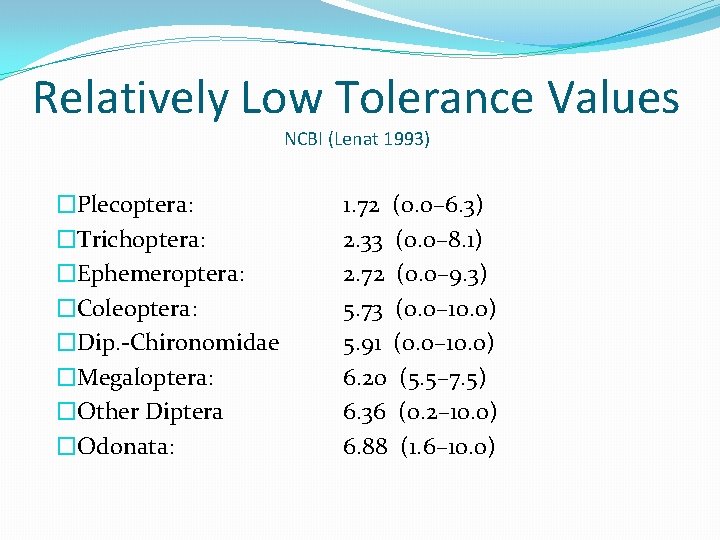
Relatively Low Tolerance Values NCBI (Lenat 1993) �Plecoptera: �Trichoptera: �Ephemeroptera: �Coleoptera: �Dip. -Chironomidae �Megaloptera: �Other Diptera �Odonata: 1. 72 (0. 0– 6. 3) 2. 33 (0. 0– 8. 1) 2. 72 (0. 0– 9. 3) 5. 73 (0. 0– 10. 0) 5. 91 (0. 0– 10. 0) 6. 20 (5. 5– 7. 5) 6. 36 (0. 2– 10. 0) 6. 88 (1. 6– 10. 0)