
ORDER OF MAGNITUDE PHYSICS Celestial Mechanics Richard Anantua

- Slides: 73
ORDER OF MAGNITUDE PHYSICS Celestial Mechanics Richard Anantua Jing Luan Jeffrey Fung
Celestial Mechanics This week is all about astronomy (Finally!)
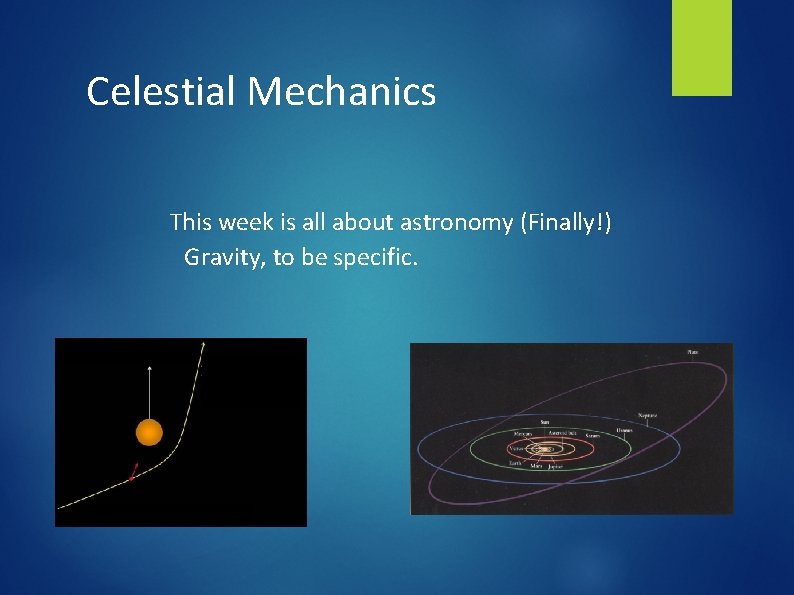
Celestial Mechanics This week is all about astronomy (Finally!) Gravity, to be specific.
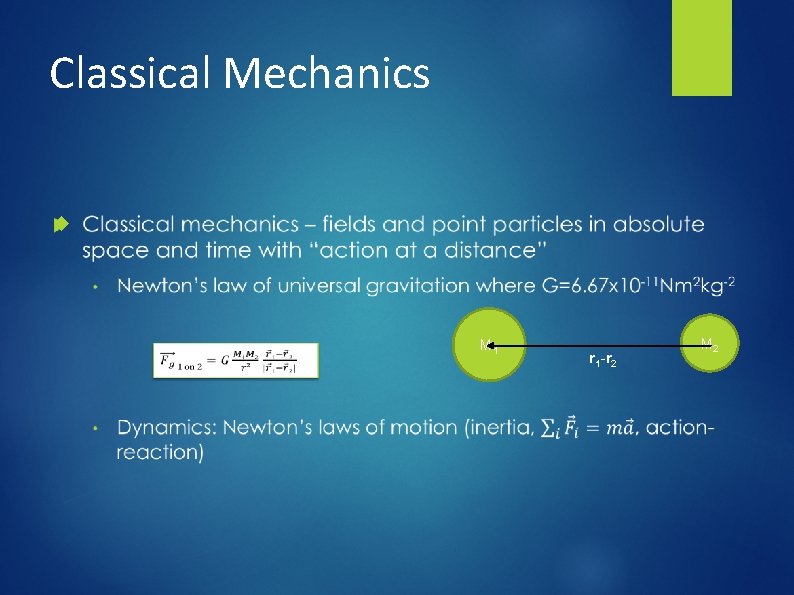
Classical Mechanics M 1 r 1 -r 2 M 2
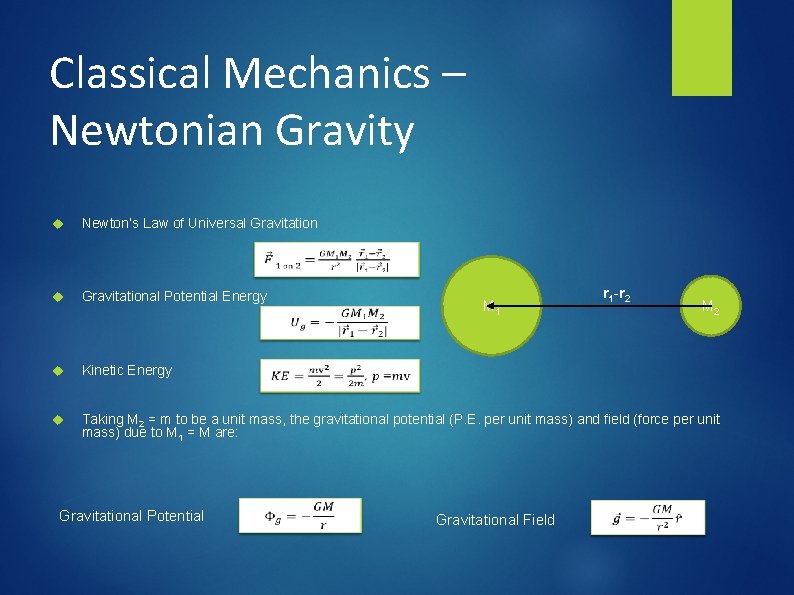
Classical Mechanics – Newtonian Gravity Newton’s Law of Universal Gravitational Potential Energy Kinetic Energy Taking M 2 = m to be a unit mass, the gravitational potential (P. E. per unit mass) and field (force per unit mass) due to M 1 = M are: Gravitational Potential M 1 Gravitational Field r 1 -r 2 M 2
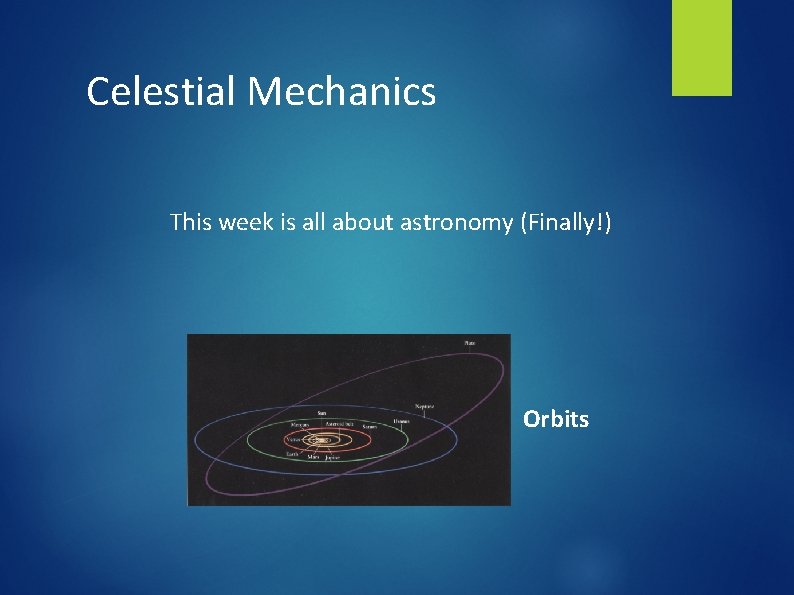
Celestial Mechanics This week is all about astronomy (Finally!) Orbits
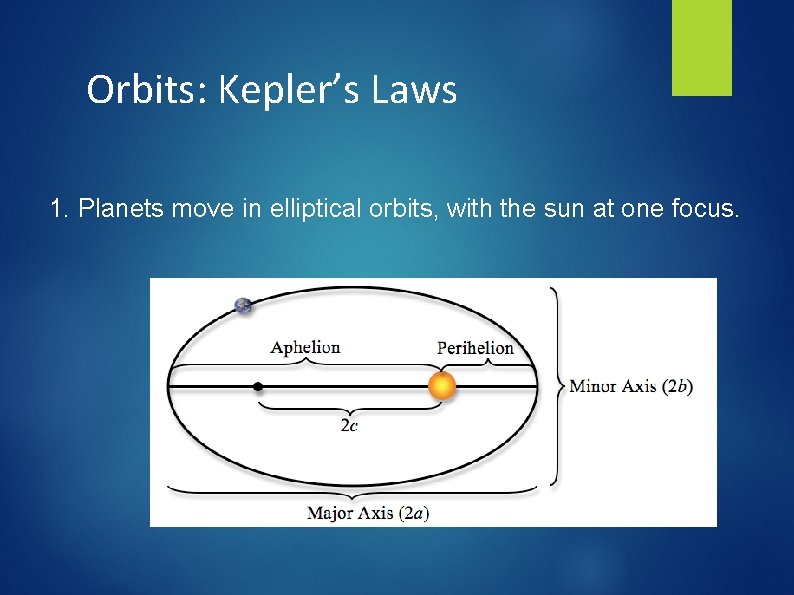
Orbits: Kepler’s Laws 1. Planets move in elliptical orbits, with the sun at one focus.
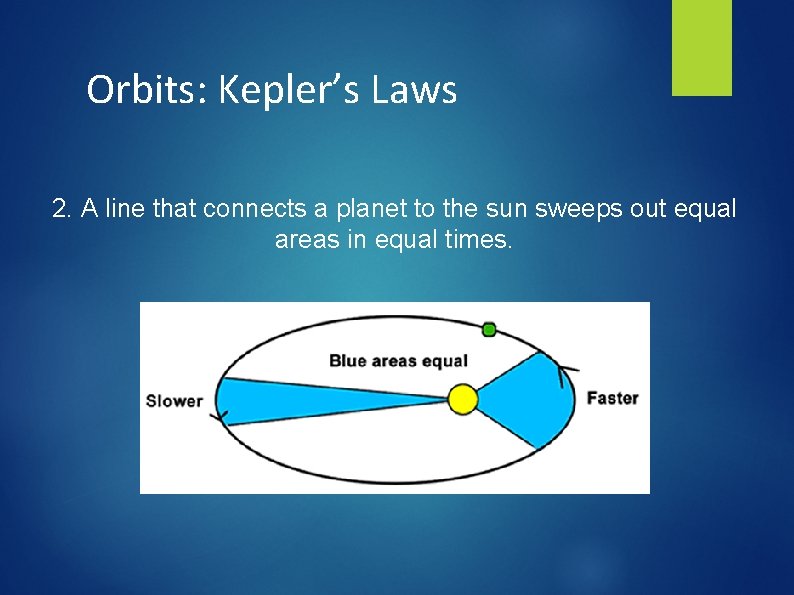
Orbits: Kepler’s Laws 2. A line that connects a planet to the sun sweeps out equal areas in equal times.
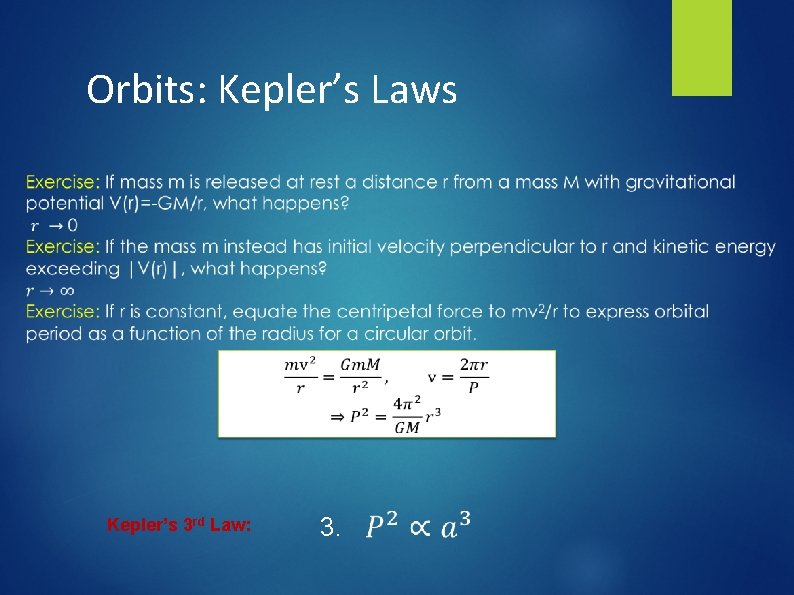
Orbits: Kepler’s Laws Kepler’s 3 rd Law: 3.
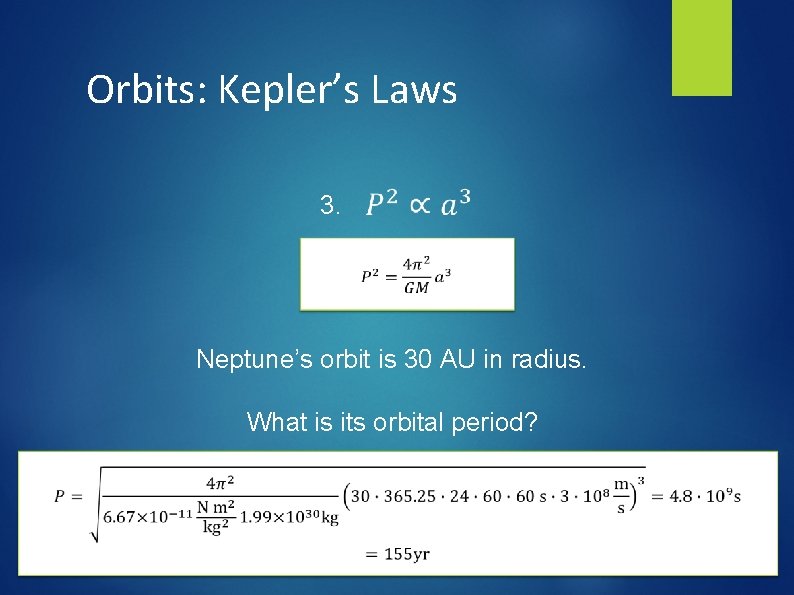
Orbits: Kepler’s Laws 3. Neptune’s orbit is 30 AU in radius. What is its orbital period?
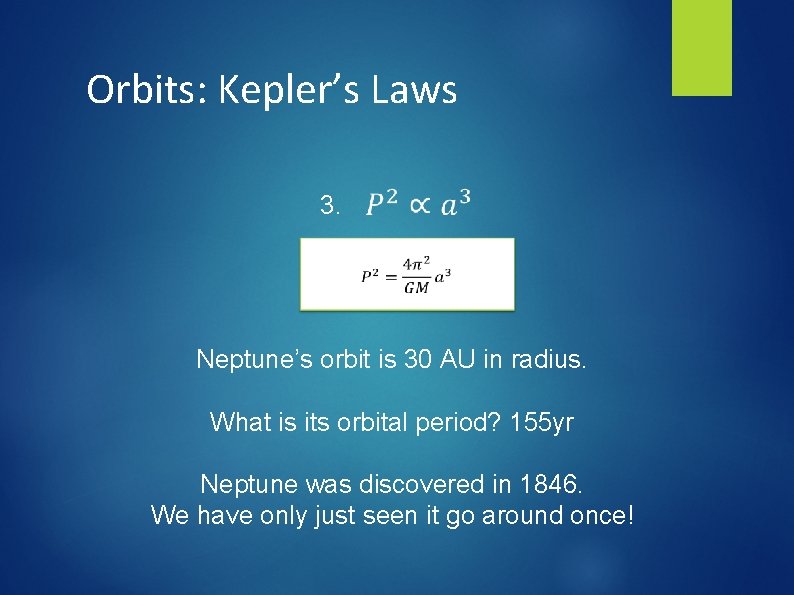
Orbits: Kepler’s Laws 3. Neptune’s orbit is 30 AU in radius. What is its orbital period? 155 yr Neptune was discovered in 1846. We have only just seen it go around once!
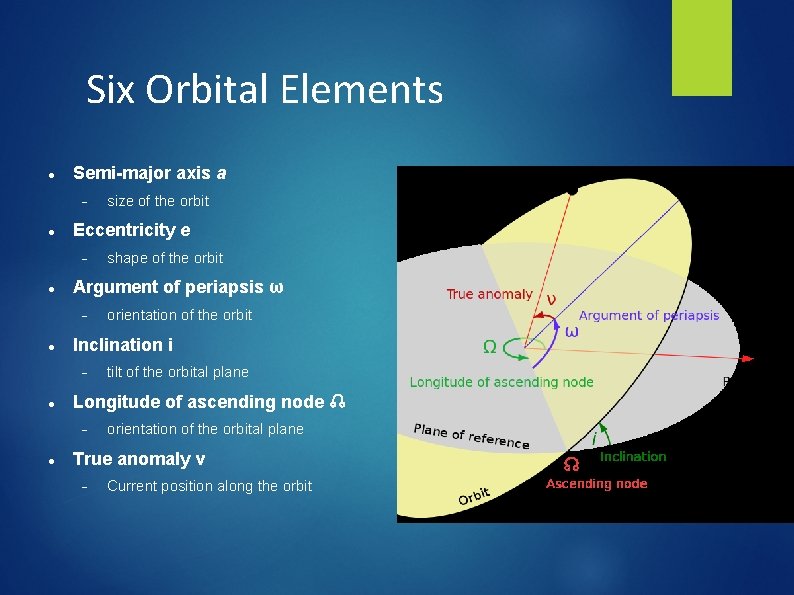
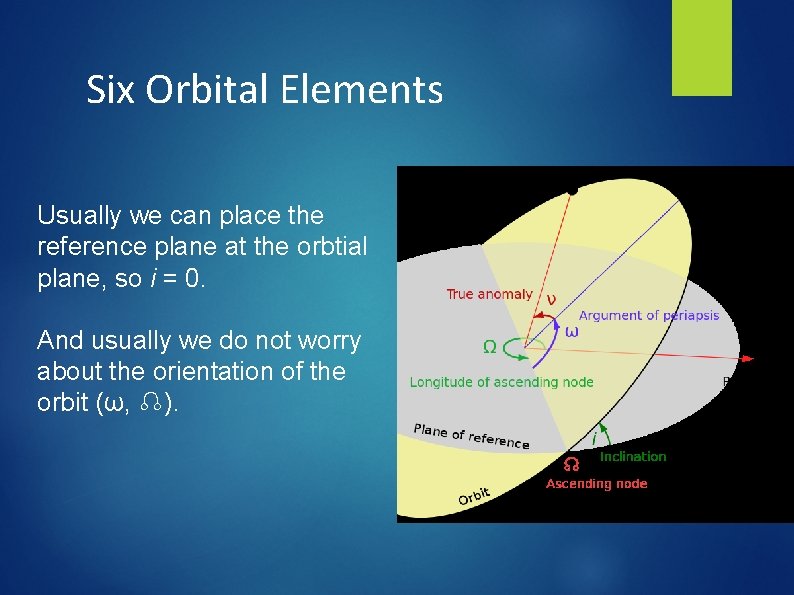
Six Orbital Elements Semi-major axis a Eccentricity e tilt of the orbital plane Longitude of ascending node ☊ orientation of the orbit Inclination i shape of the orbit Argument of periapsis ω size of the orbit orientation of the orbital plane True anomaly ν Current position along the orbit
Six Orbital Elements Usually we can place the reference plane at the orbtial plane, so i = 0. And usually we do not worry about the orientation of the orbit (ω, ☊).
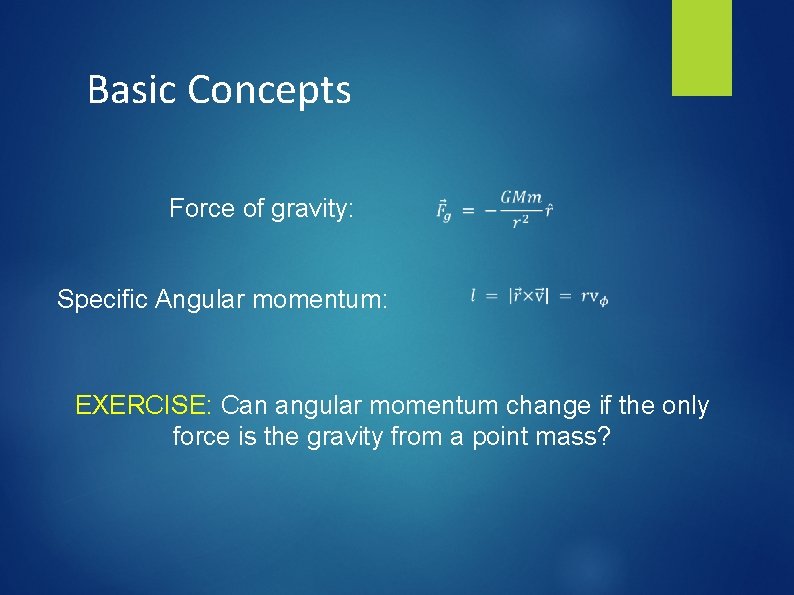
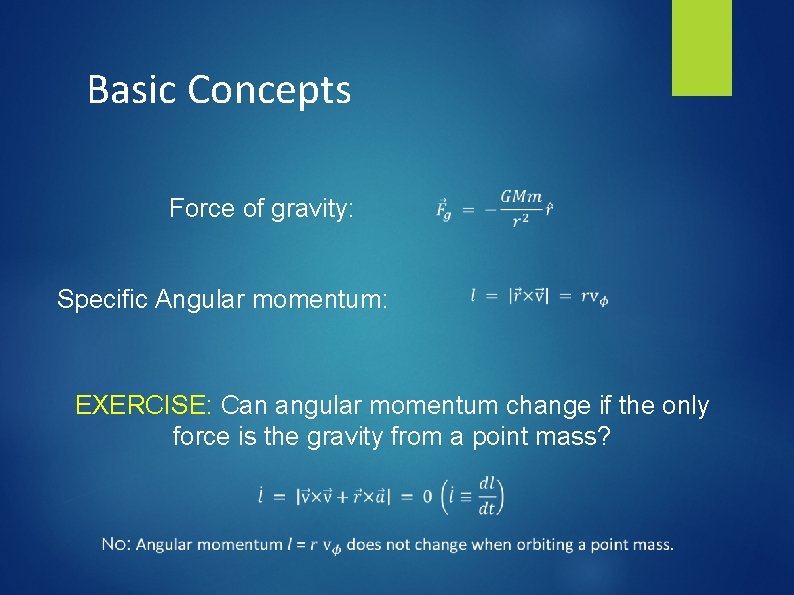
Basic Concepts Force of gravity: Specific Angular momentum: EXERCISE: Can angular momentum change if the only force is the gravity from a point mass?
Basic Concepts Force of gravity: Specific Angular momentum: EXERCISE: Can angular momentum change if the only force is the gravity from a point mass?
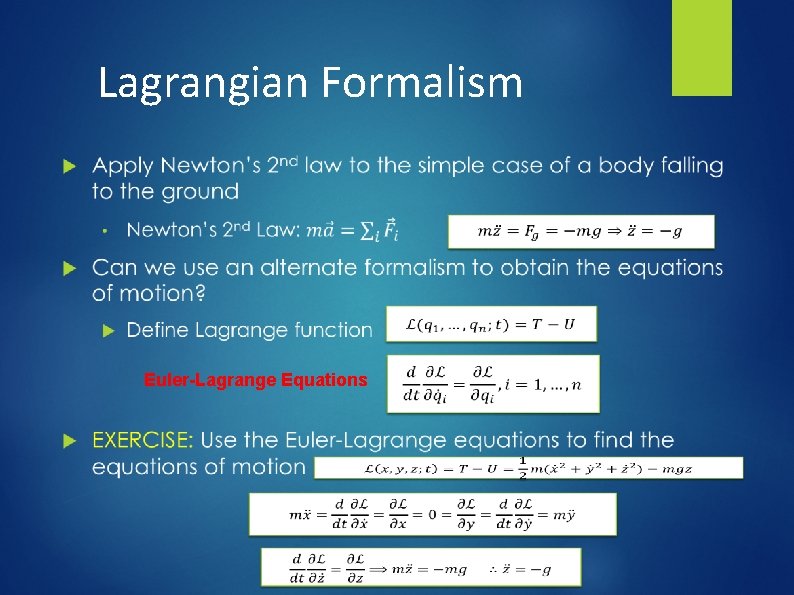
Lagrangian Formalism Euler-Lagrange Equations
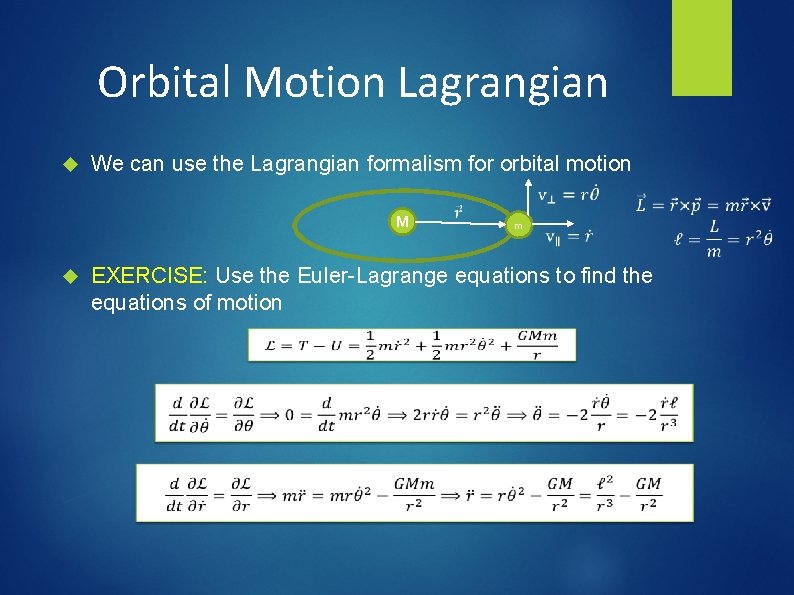
Orbital Motion Lagrangian We can use the Lagrangian formalism for orbital motion M m EXERCISE: Use the Euler-Lagrange equations to find the equations of motion
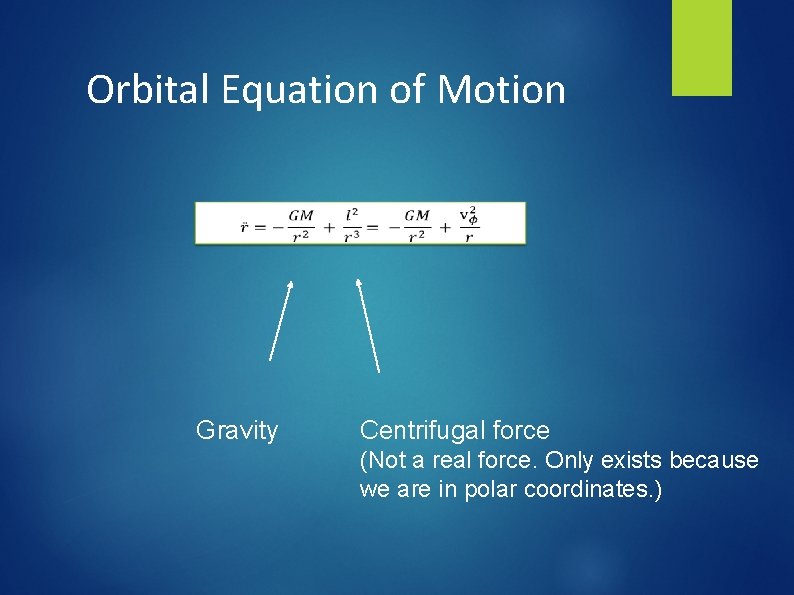
Orbital Equation of Motion Gravity Centrifugal force (Not a real force. Only exists because we are in polar coordinates. )
ORDER OF MAGNITUDE PHYSICS Celestial Mechanics Richard Anantua Jing Luan Jeffrey Fung
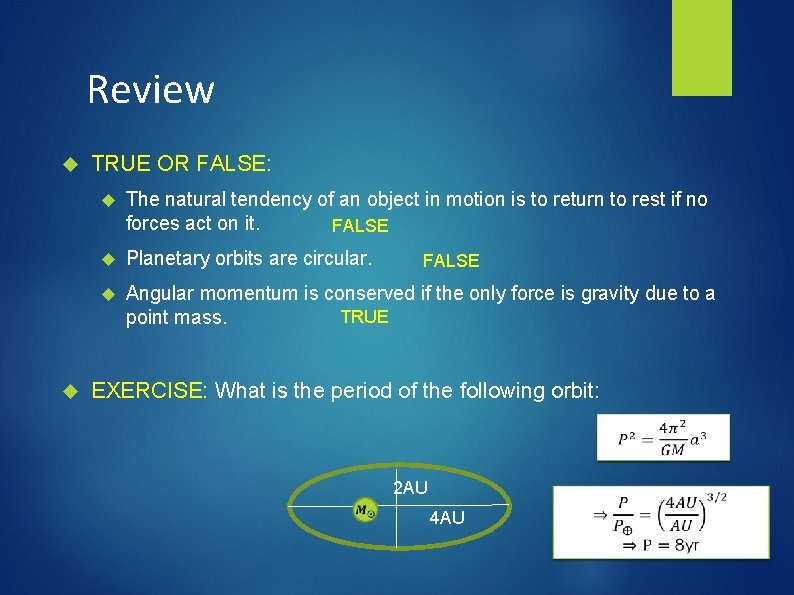
Review TRUE OR FALSE: The natural tendency of an object in motion is to return to rest if no forces act on it. FALSE Planetary orbits are circular. Angular momentum is conserved if the only force is gravity due to a TRUE point mass. FALSE EXERCISE: What is the period of the following orbit: 2 AU 4 AU
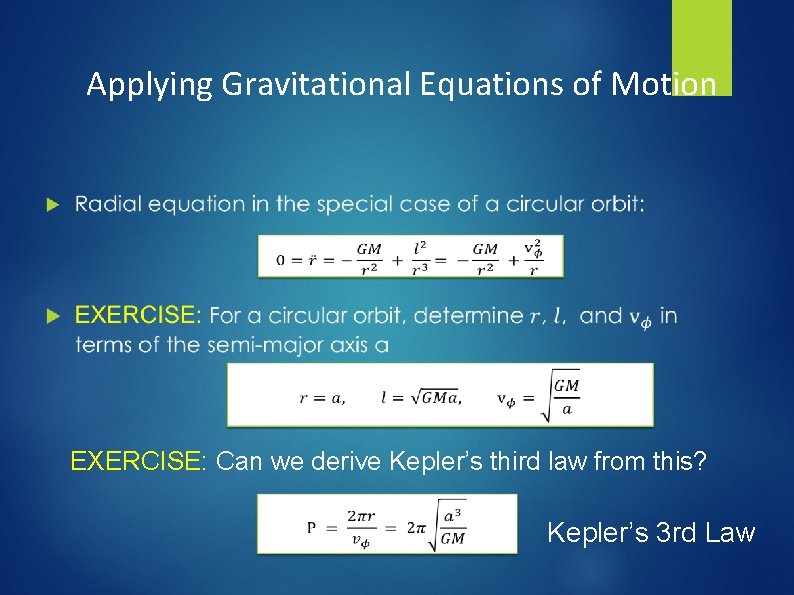
Applying Gravitational Equations of Motion EXERCISE: Can we derive Kepler’s third law from this? Kepler’s 3 rd Law
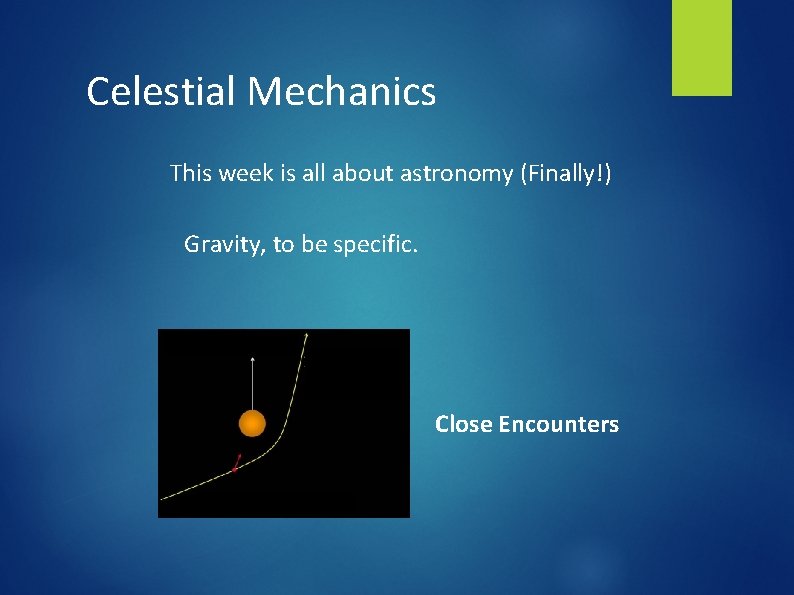
Celestial Mechanics This week is all about astronomy (Finally!) Gravity, to be specific. Close Encounters
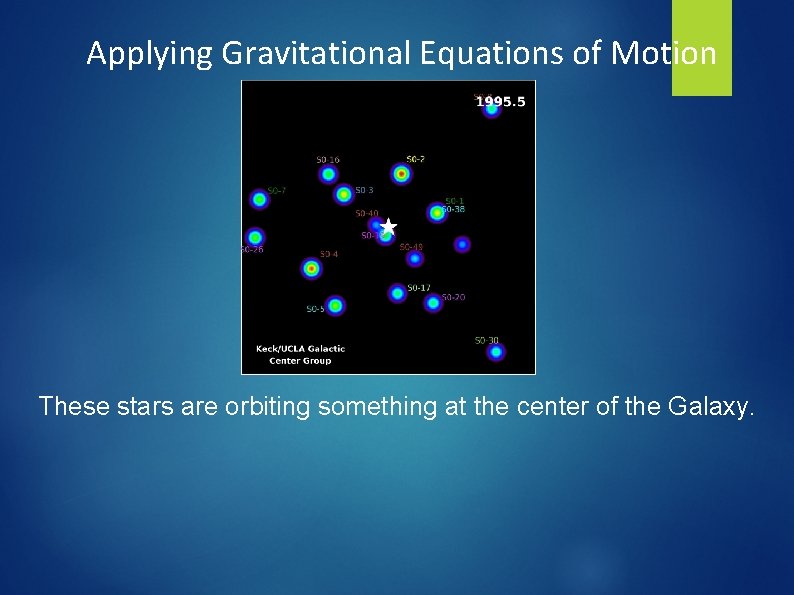
Applying Gravitational Equations of Motion These stars are orbiting something at the center of the Galaxy.
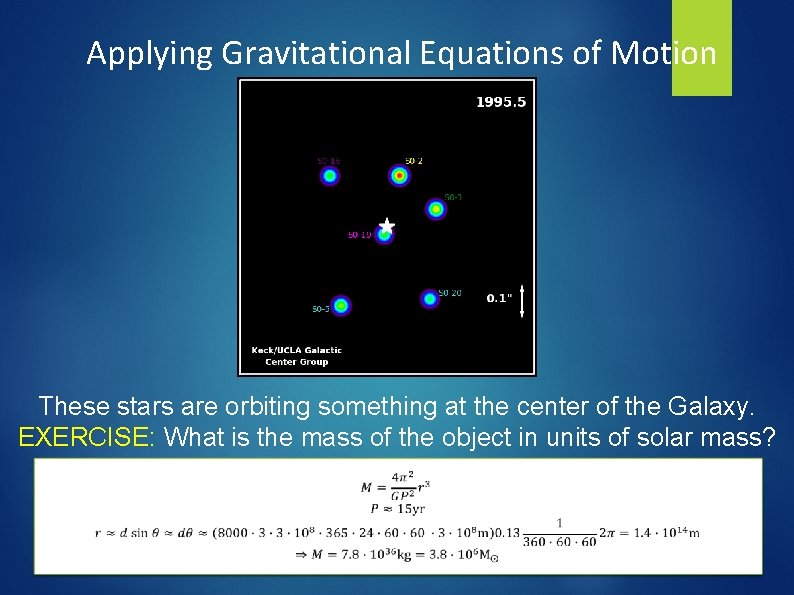
Applying Gravitational Equations of Motion These stars are orbiting something at the center of the Galaxy. EXERCISE: What is the mass of the object in units of solar mass?
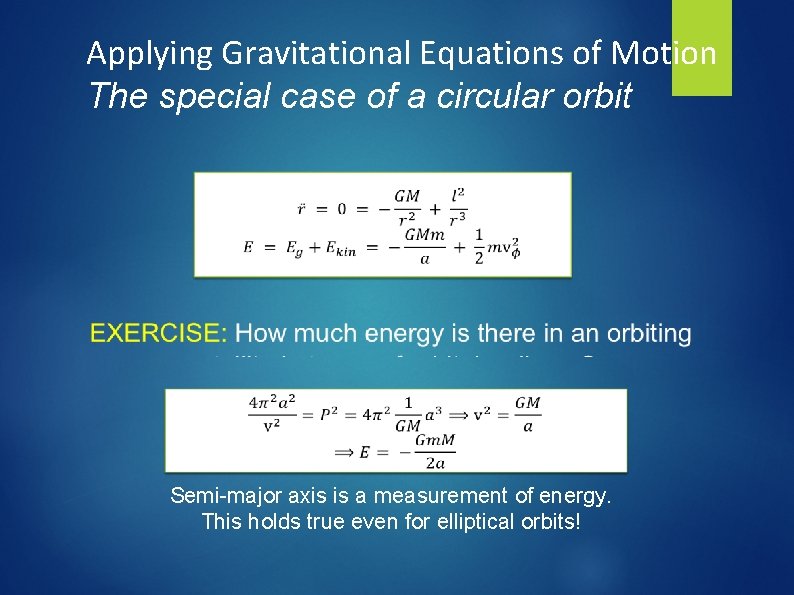
Applying Gravitational Equations of Motion The special case of a circular orbit Semi-major axis is a measurement of energy. This holds true even for elliptical orbits!
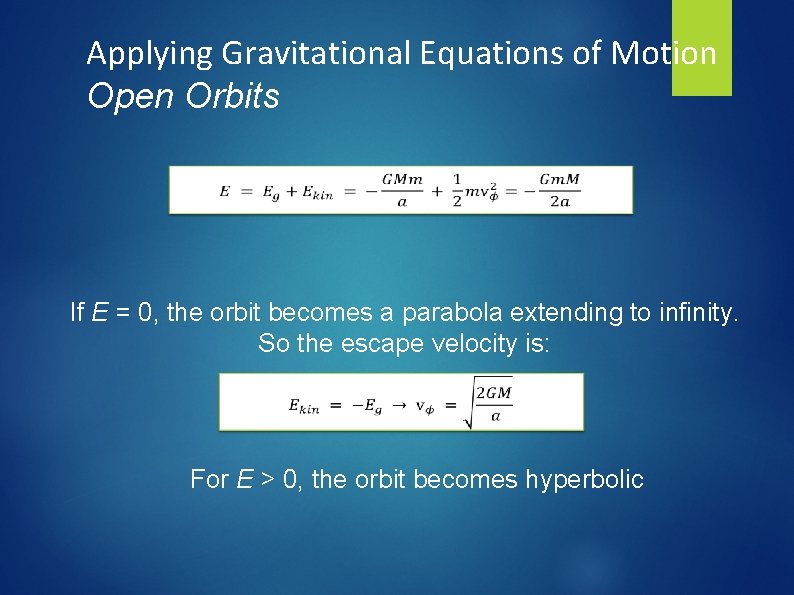
Applying Gravitational Equations of Motion Open Orbits If E = 0, the orbit becomes a parabola extending to infinity. So the escape velocity is: For E > 0, the orbit becomes hyperbolic
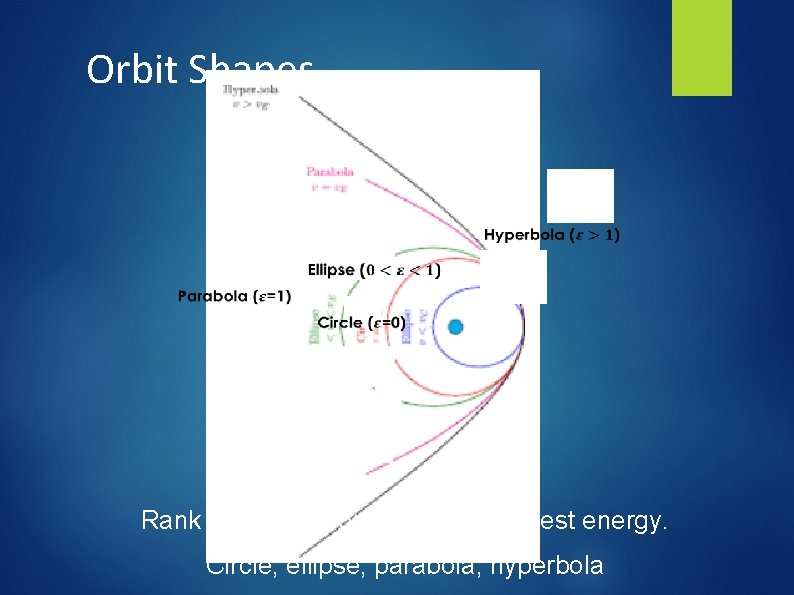
Orbit Shapes Rank the orbits from lowest to highest energy. Circle, ellipse, parabola, hyperbola
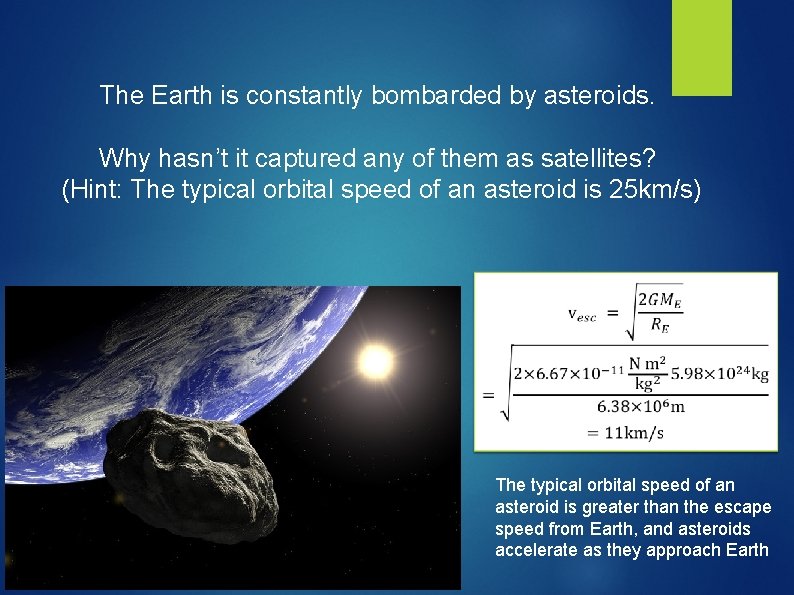
The Earth is constantly bombarded by asteroids. Why hasn’t it captured any of them as satellites? (Hint: The typical orbital speed of an asteroid is 25 km/s) The typical orbital speed of an asteroid is greater than the escape speed from Earth, and asteroids accelerate as they approach Earth
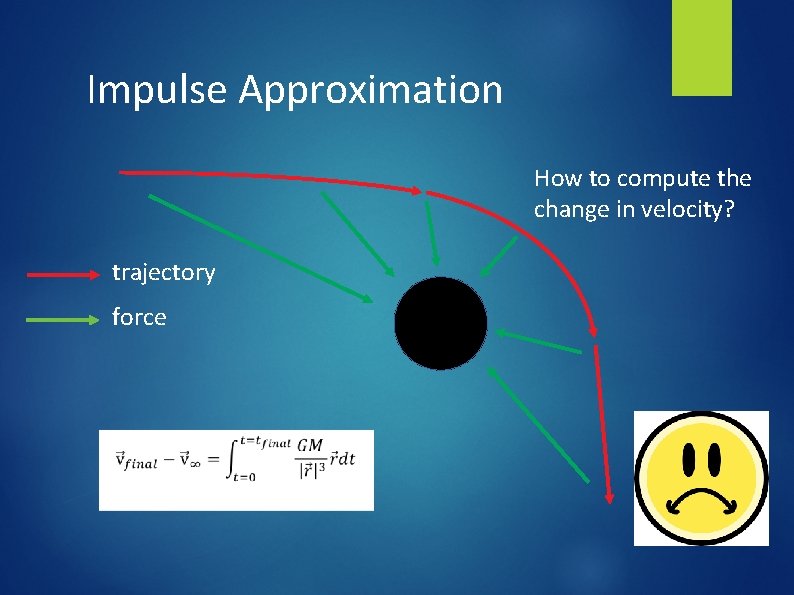
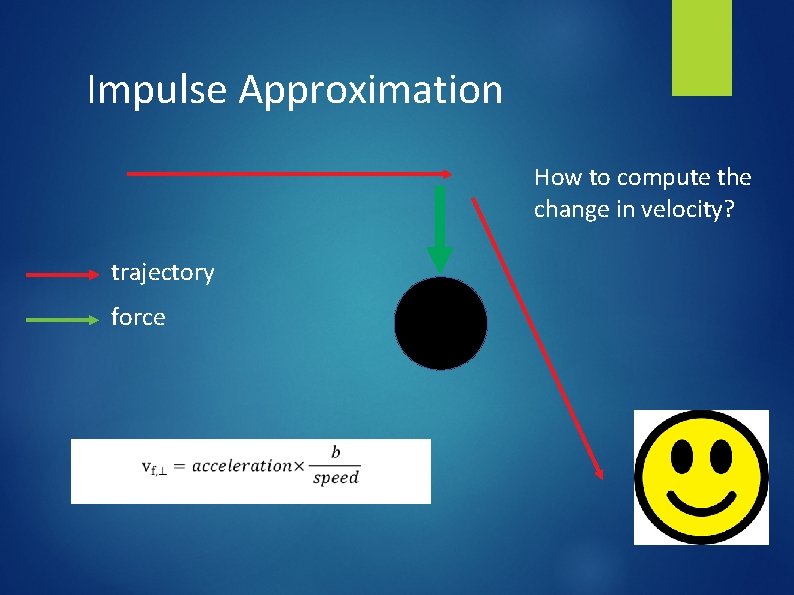
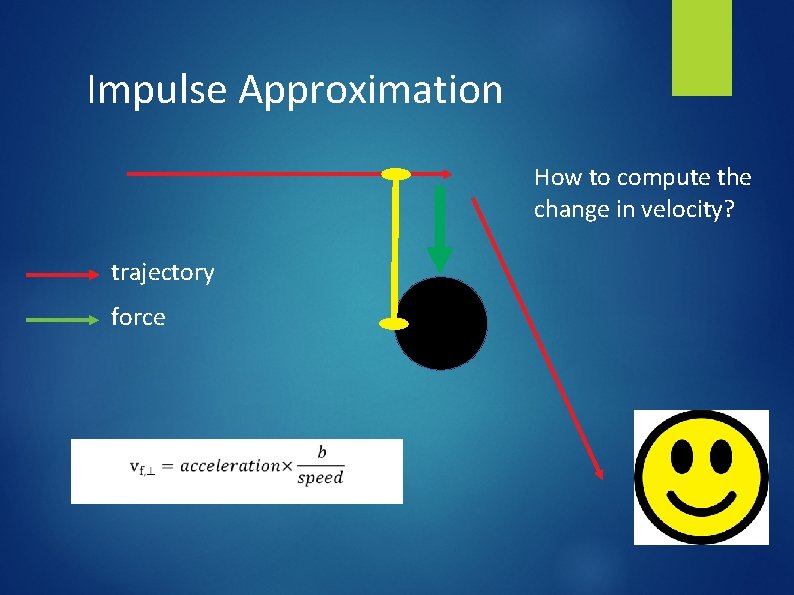
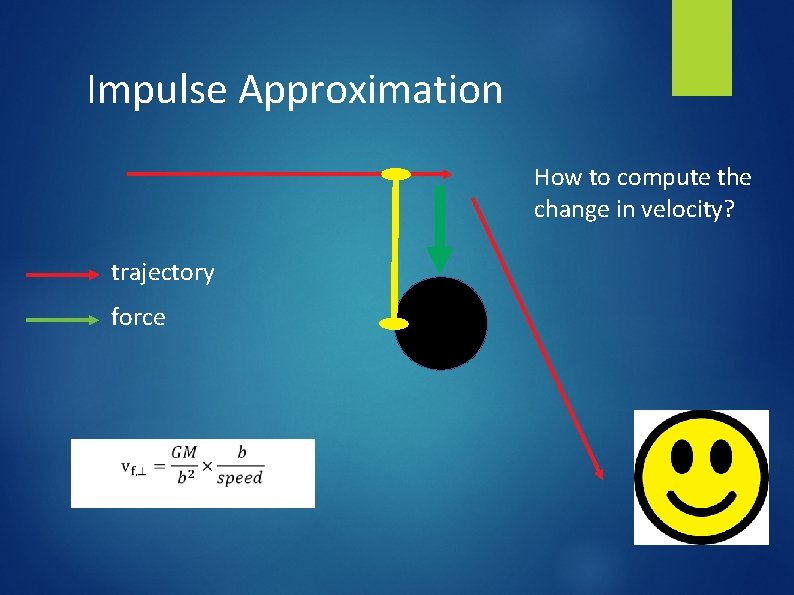
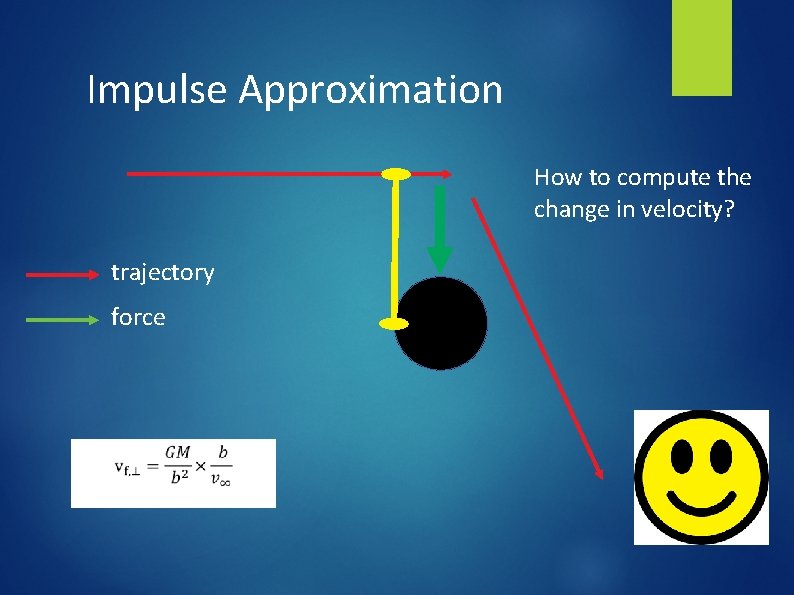
Impulse Approximation How to compute the change in velocity? trajectory force
Impulse Approximation How to compute the change in velocity? trajectory force
Impulse Approximation How to compute the change in velocity? trajectory force
Impulse Approximation How to compute the change in velocity? trajectory force
Impulse Approximation How to compute the change in velocity? trajectory force
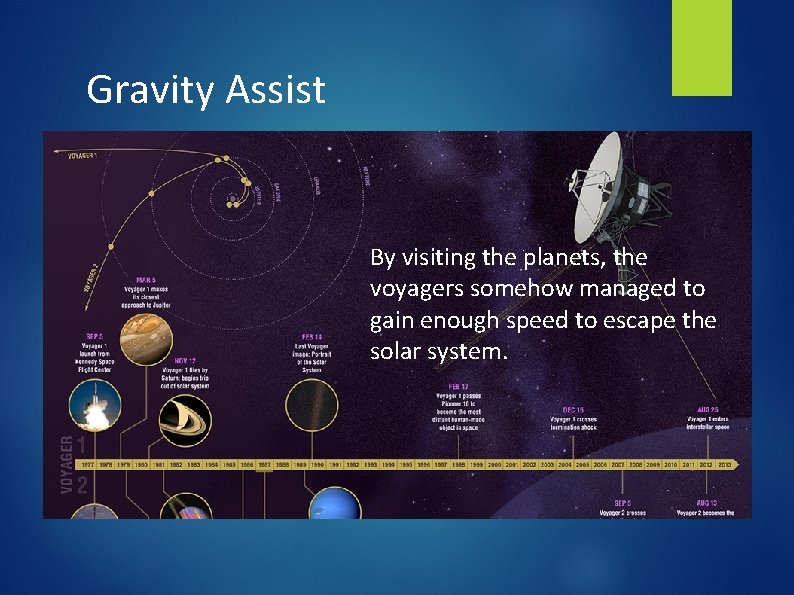
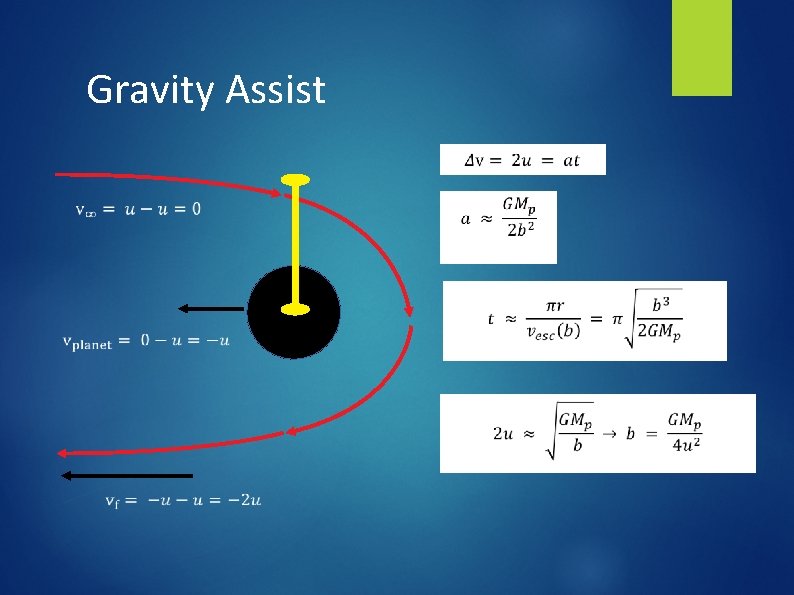
Gravity Assist By visiting the planets, the voyagers somehow managed to gain enough speed to escape the solar system.
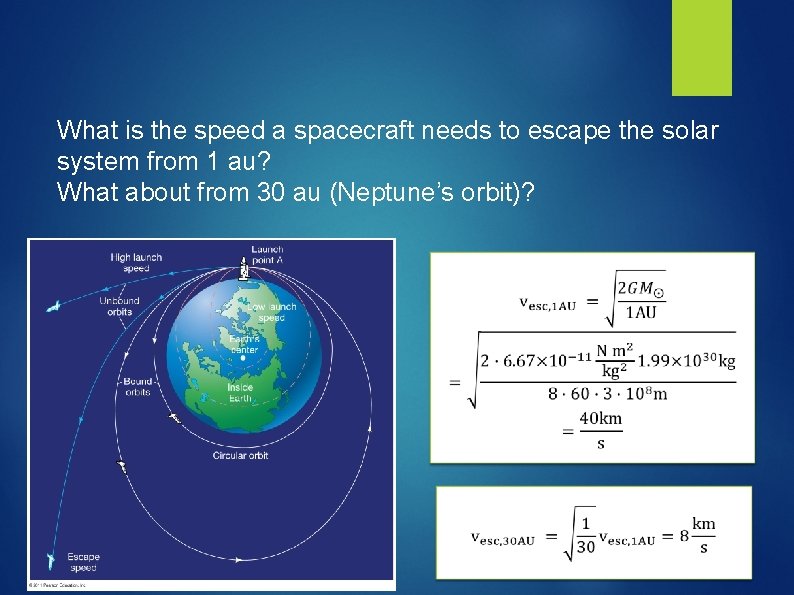
What is the speed a spacecraft needs to escape the solar system from 1 au? What about from 30 au (Neptune’s orbit)?
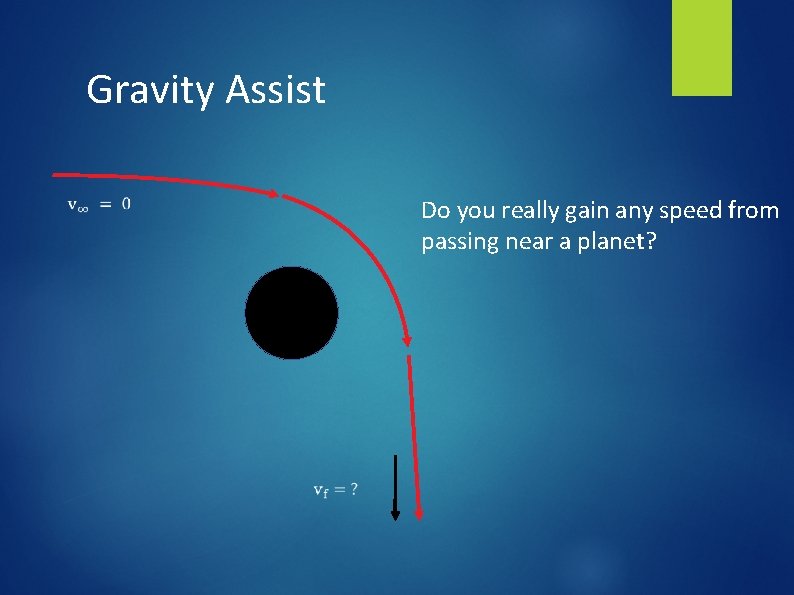
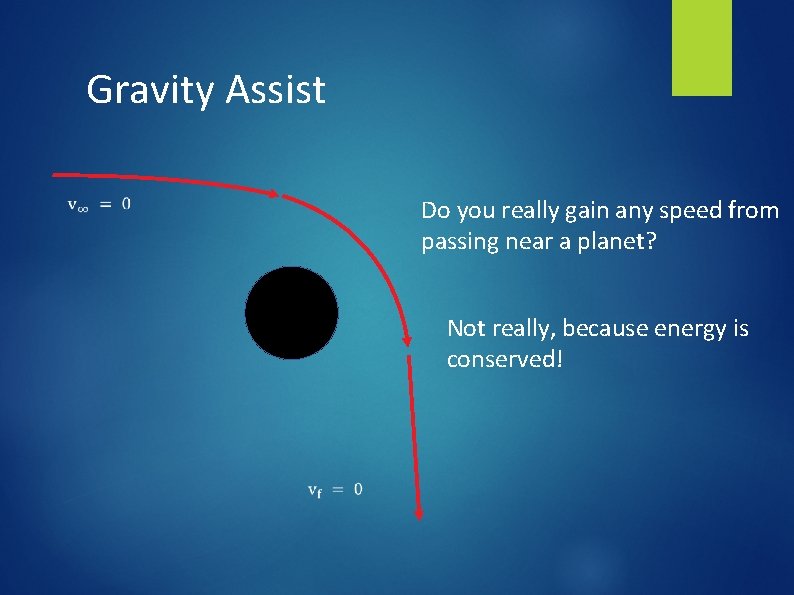
Gravity Assist Do you really gain any speed from passing near a planet?
Gravity Assist Do you really gain any speed from passing near a planet? Not really, because energy is conserved!
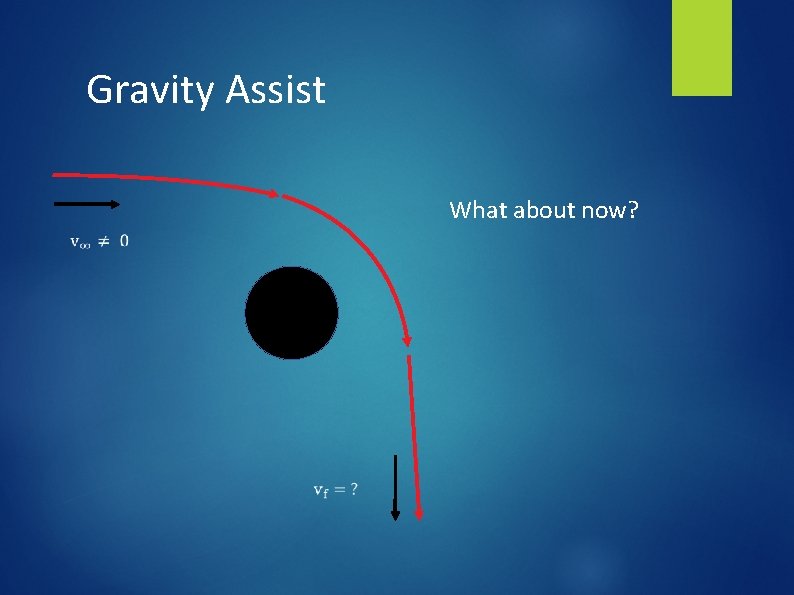
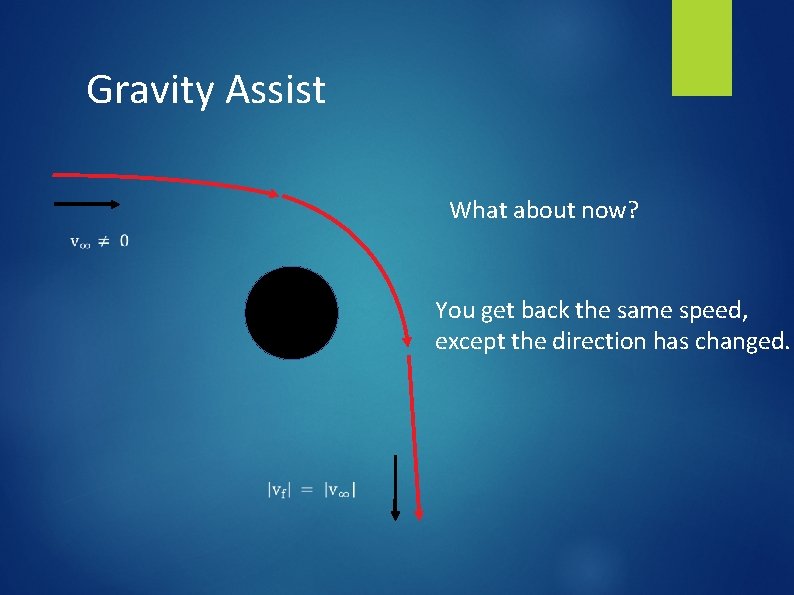
Gravity Assist What about now?
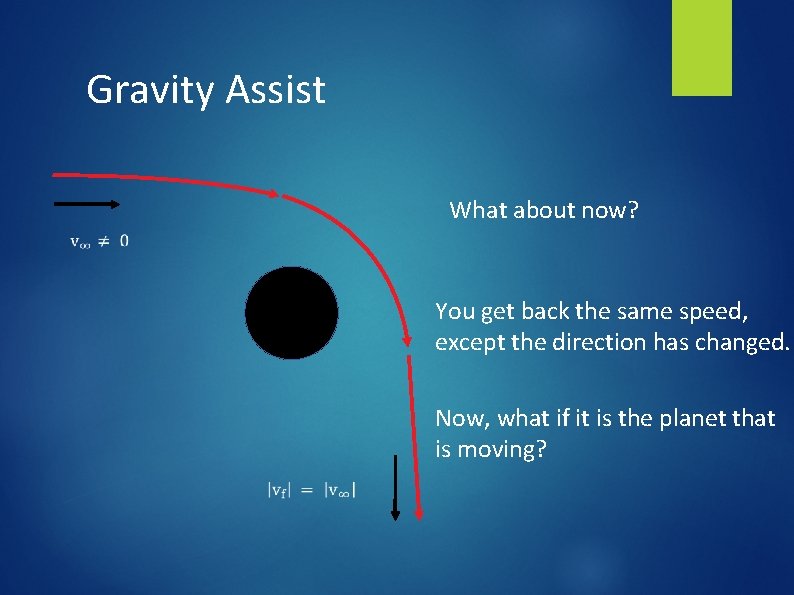
Gravity Assist What about now? You get back the same speed, except the direction has changed.
Gravity Assist What about now? You get back the same speed, except the direction has changed. Now, what if it is the planet that is moving?
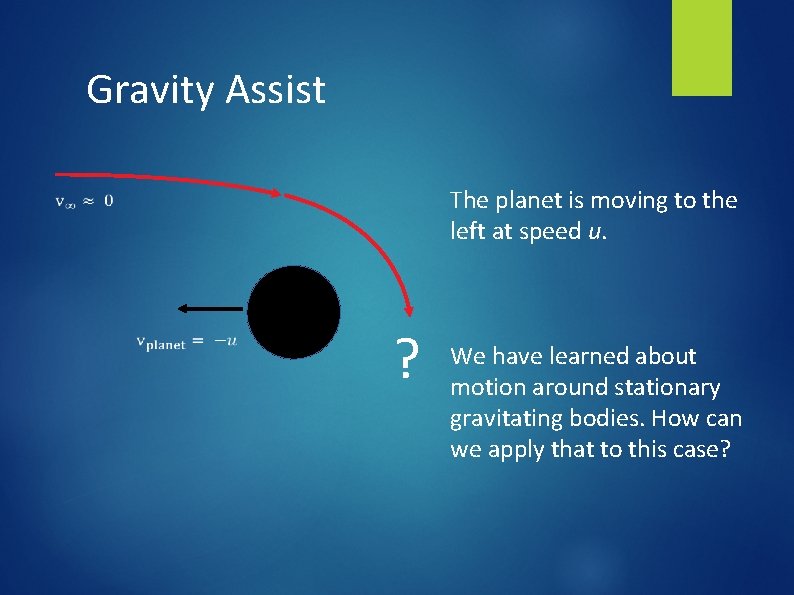
Gravity Assist The planet is moving to the left at speed u. ? We have learned about motion around stationary gravitating bodies. How can we apply that to this case?
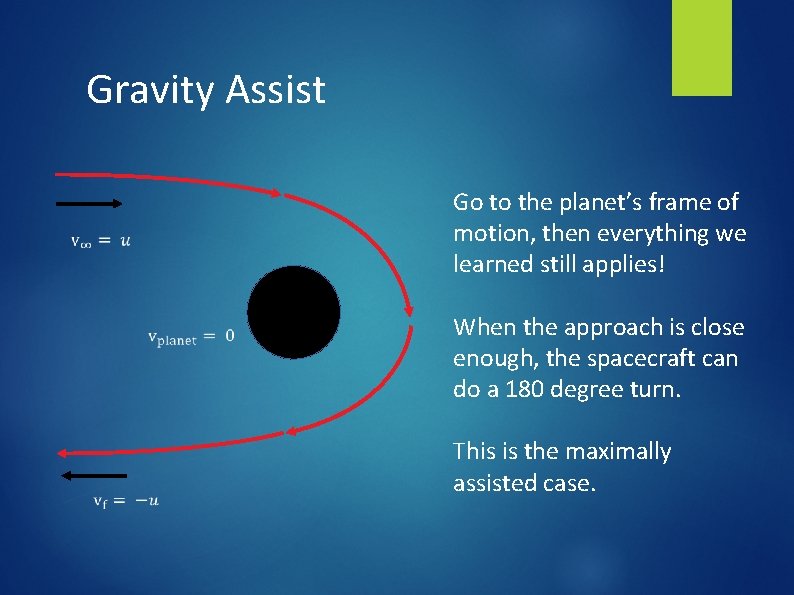
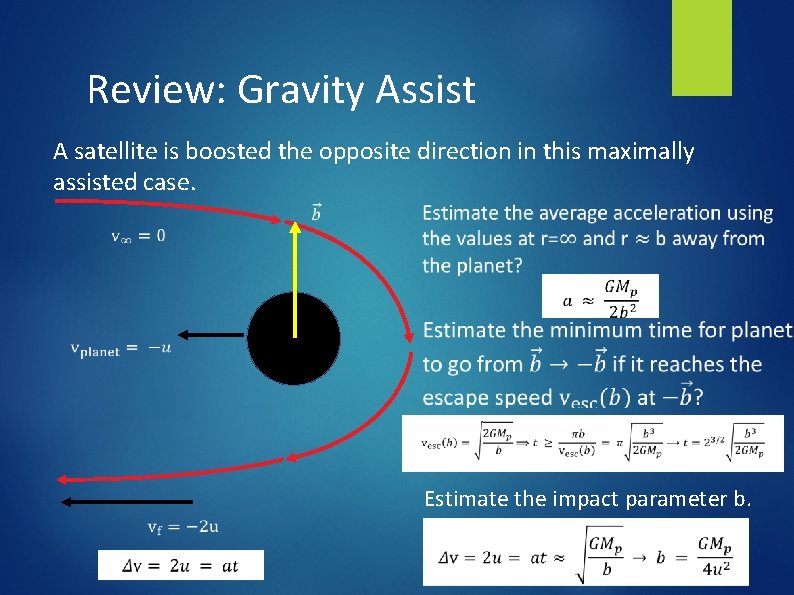
Gravity Assist Go to the planet’s frame of motion, then everything we learned still applies! When the approach is close enough, the spacecraft can do a 180 degree turn. This is the maximally assisted case.
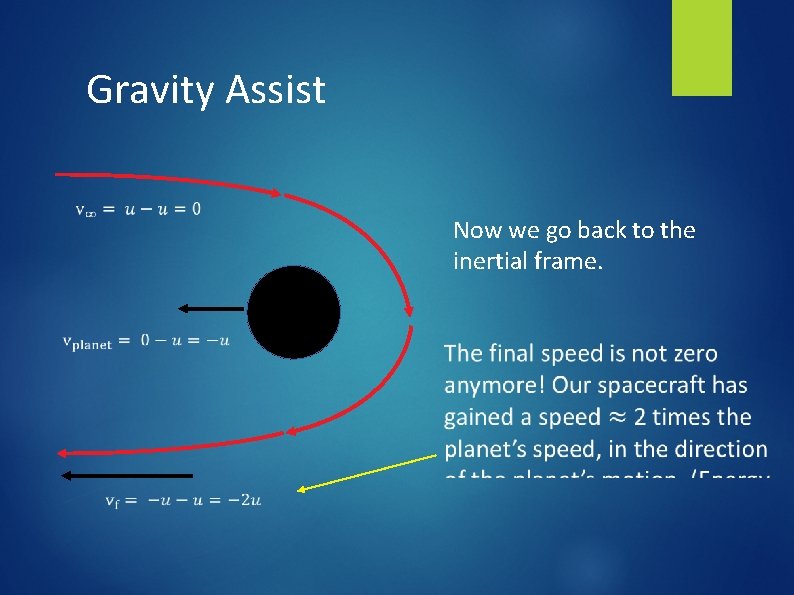
Gravity Assist Now we go back to the inertial frame.
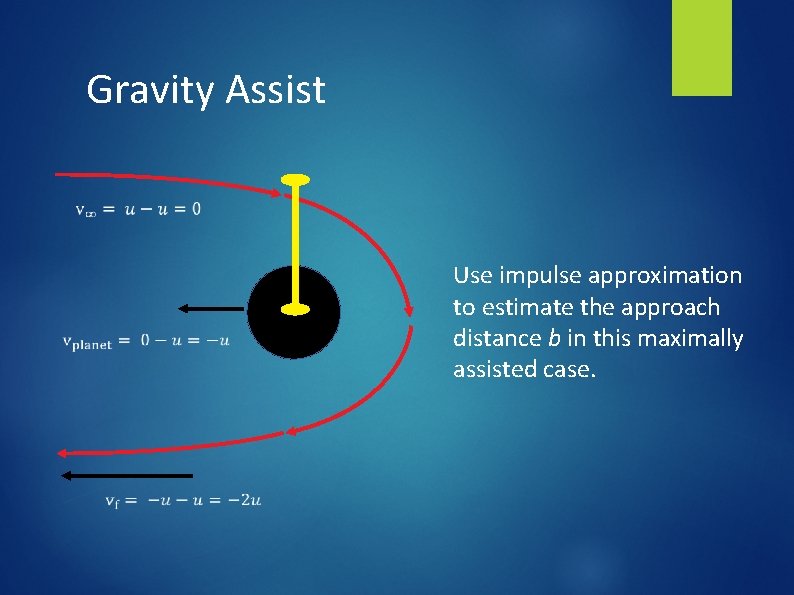
Gravity Assist Use impulse approximation to estimate the approach distance b in this maximally assisted case.
Gravity Assist
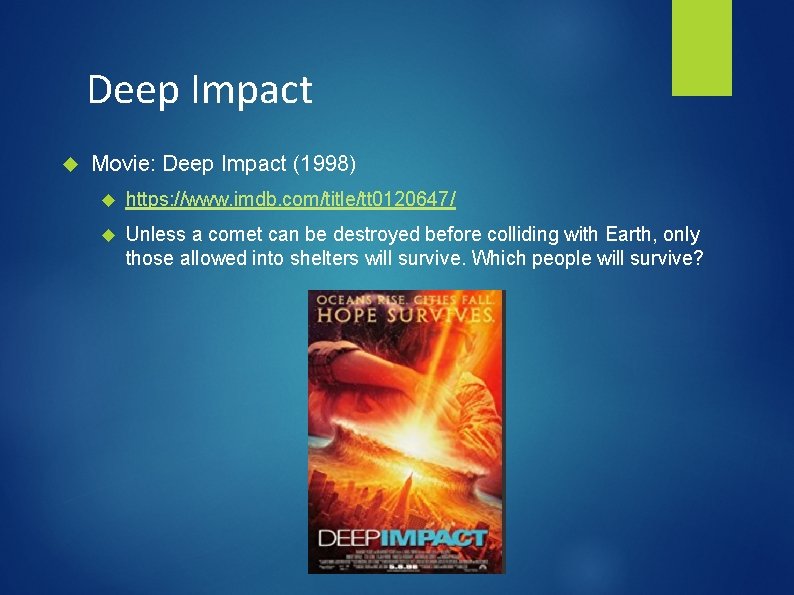
Deep Impact Movie: Deep Impact (1998) https: //www. imdb. com/title/tt 0120647/ Unless a comet can be destroyed before colliding with Earth, only those allowed into shelters will survive. Which people will survive?
ORDER OF MAGNITUDE PHYSICS Celestial Mechanics Richard Anantua Jing Luan Jeffrey Fung
Final Exam Closed book, no notes, Campbell 121 W Aug 8 1: 30 p-4 p Review session Mon Aug 6 in class 30% of final grade Topics: Weeks 1 -5 Basics: Units, Dimensional Analysis, Buckingham Pi Theorem Fundamental Interactions, Nuclear and Atomic Physics Material Physics Wave Physics Celestial Mechanics
Review: Gravity Assist A satellite is boosted the opposite direction in this maximally assisted case. Estimate the impact parameter b.
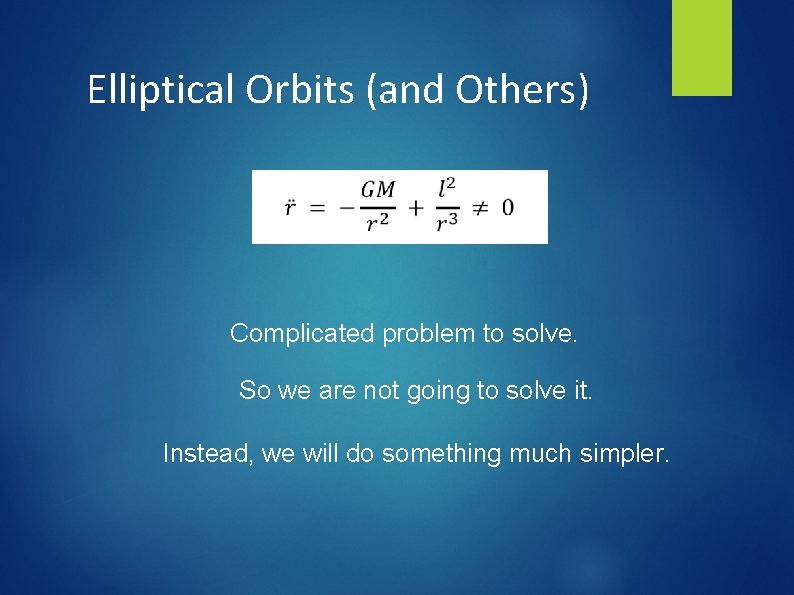
Elliptical Orbits (and Others) Complicated problem to solve. So we are not going to solve it. Instead, we will do something much simpler.
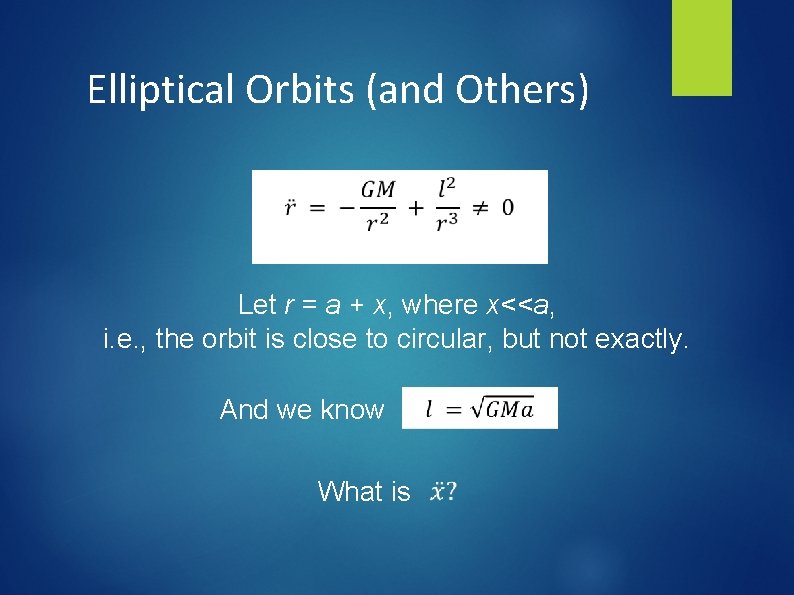
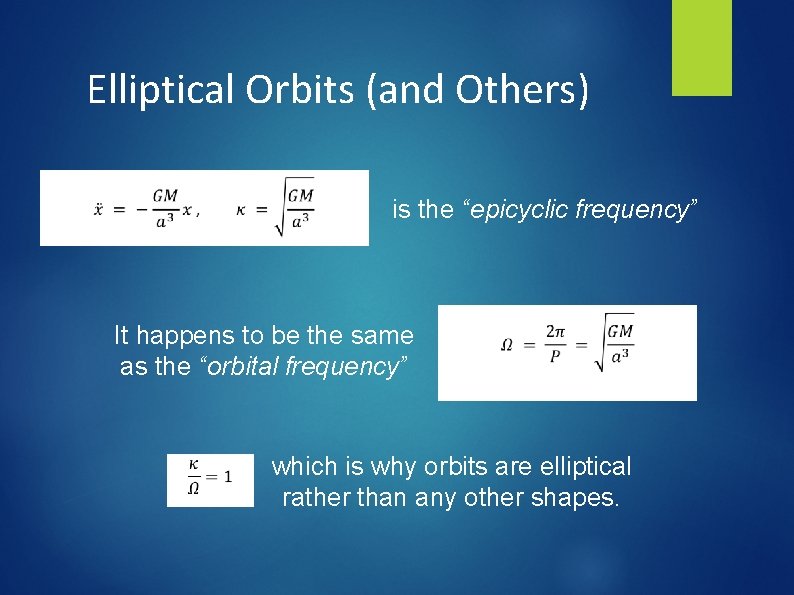
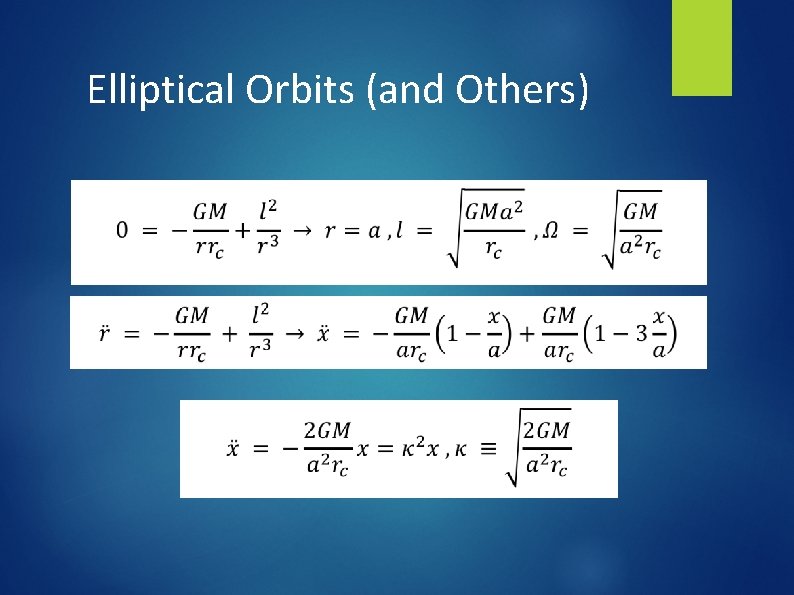
Elliptical Orbits (and Others) Let r = a + x, where x<<a, i. e. , the orbit is close to circular, but not exactly. And we know What is
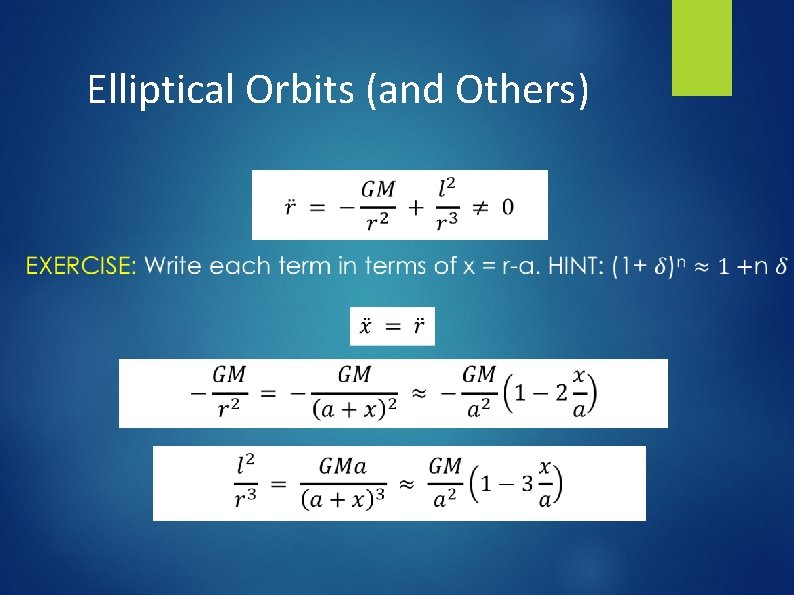
Elliptical Orbits (and Others)
Elliptical Orbits (and Others) is the “epicyclic frequency” It happens to be the same as the “orbital frequency” which is why orbits are elliptical rather than any other shapes.
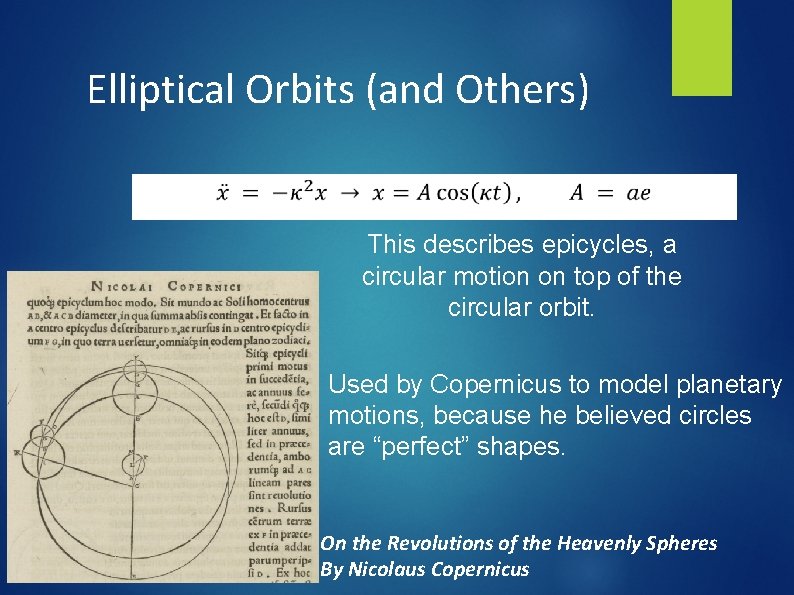
Elliptical Orbits (and Others) This describes epicycles, a circular motion on top of the circular orbit. Used by Copernicus to model planetary motions, because he believed circles are “perfect” shapes. On the Revolutions of the Heavenly Spheres By Nicolaus Copernicus
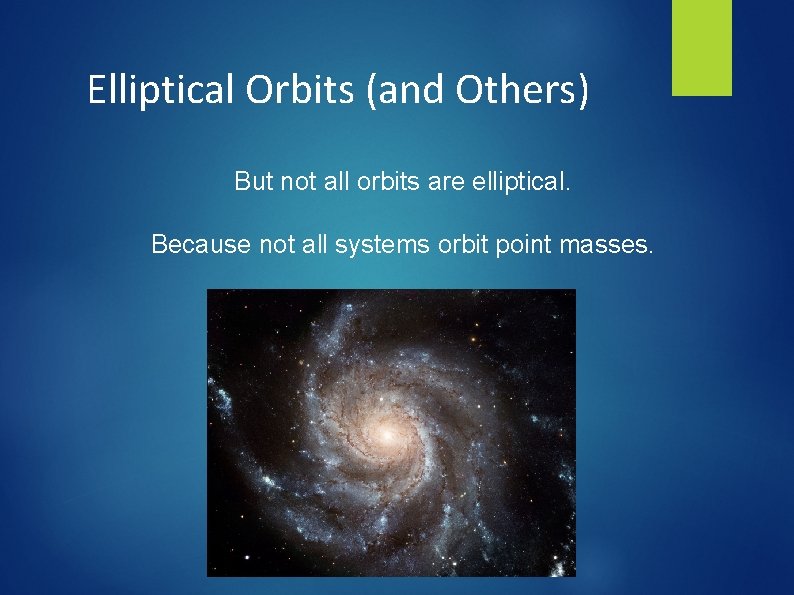
Elliptical Orbits (and Others) But not all orbits are elliptical. Because not all systems orbit point masses.
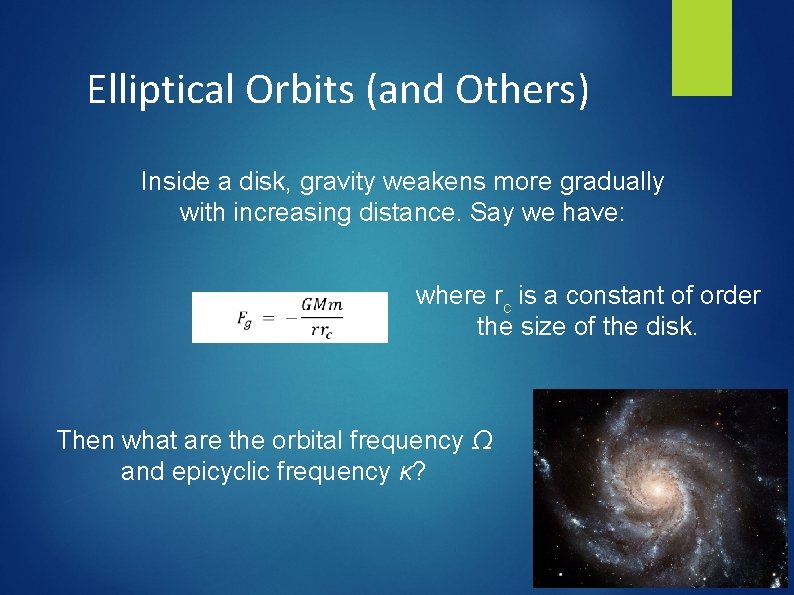
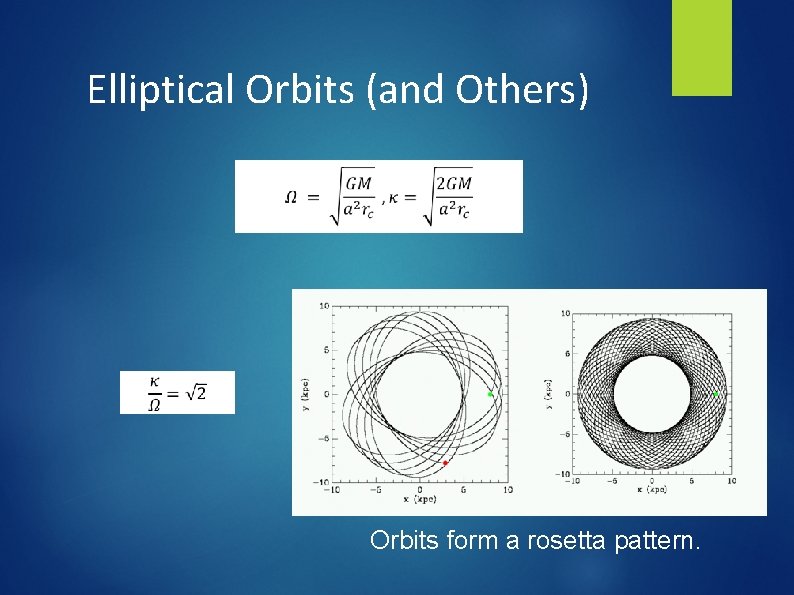
Elliptical Orbits (and Others) Inside a disk, gravity weakens more gradually with increasing distance. Say we have: where rc is a constant of order the size of the disk. Then what are the orbital frequency Ω and epicyclic frequency κ?
Elliptical Orbits (and Others)
Elliptical Orbits (and Others) Orbits form a rosetta pattern.
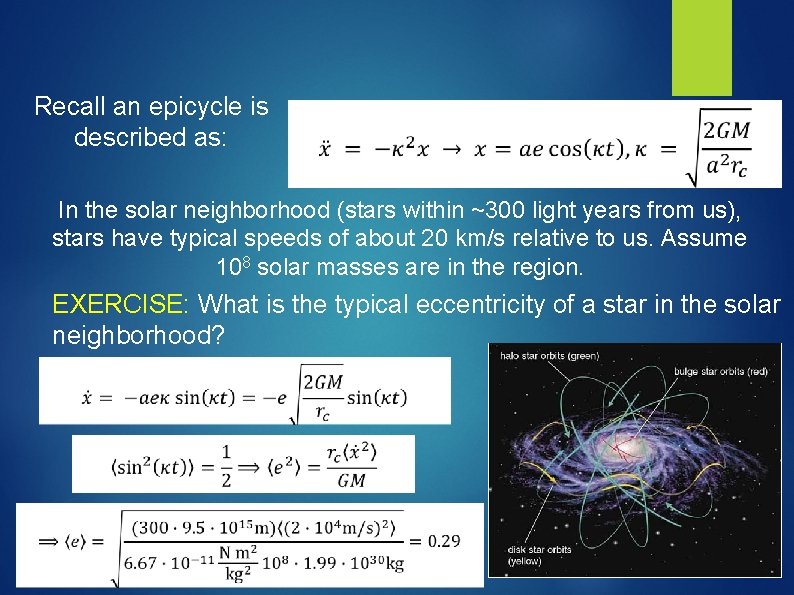
Recall an epicycle is described as: In the solar neighborhood (stars within ~300 light years from us), stars have typical speeds of about 20 km/s relative to us. Assume 108 solar masses are in the region. EXERCISE: What is the typical eccentricity of a star in the solar neighborhood?
Extra Slides
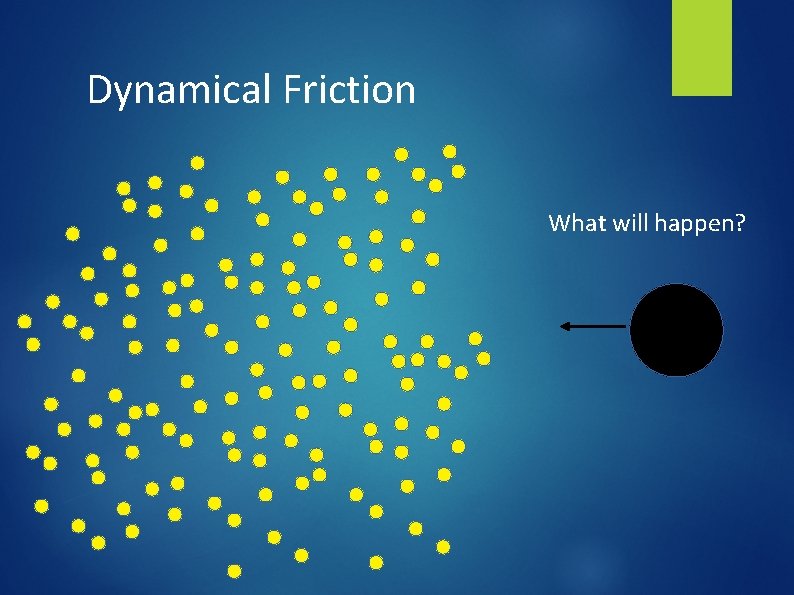
Dynamical Friction What will happen?
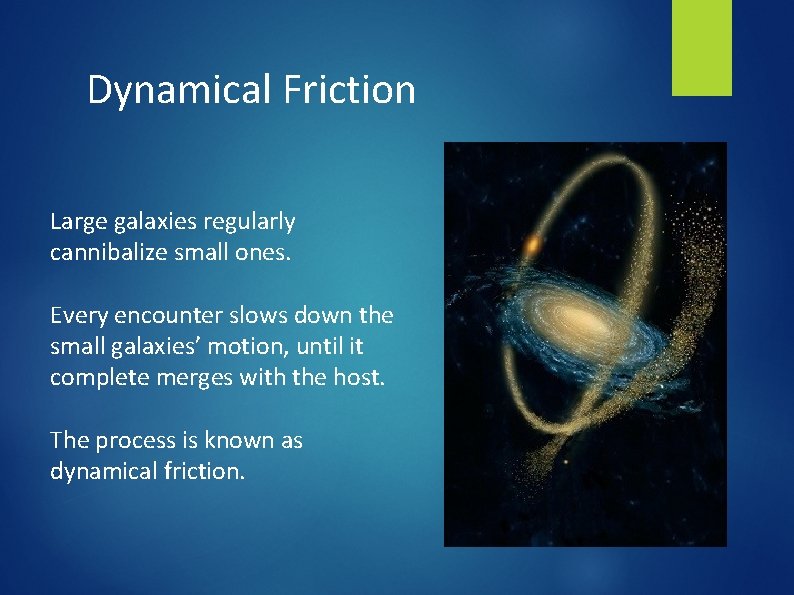
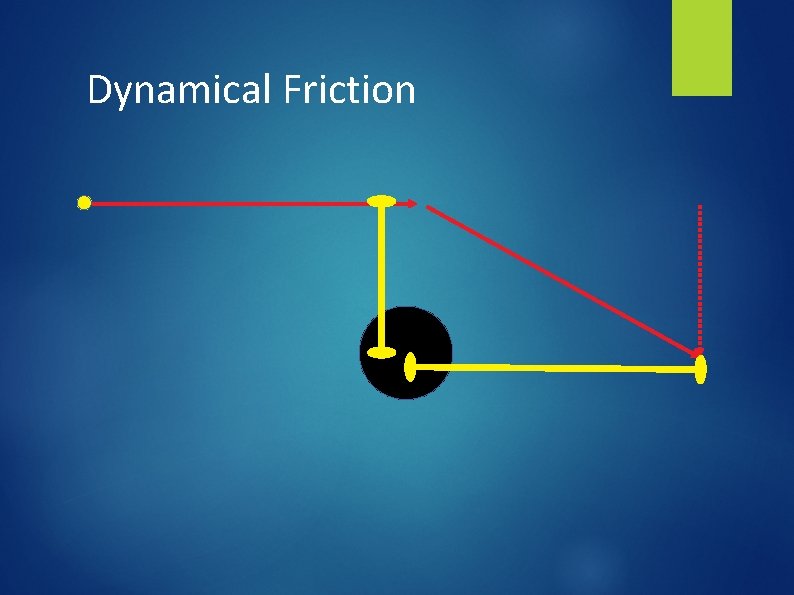
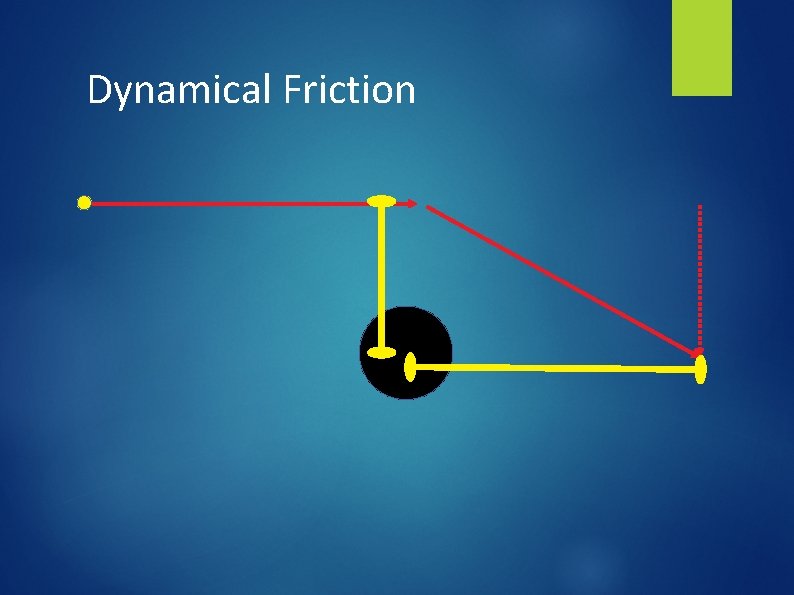
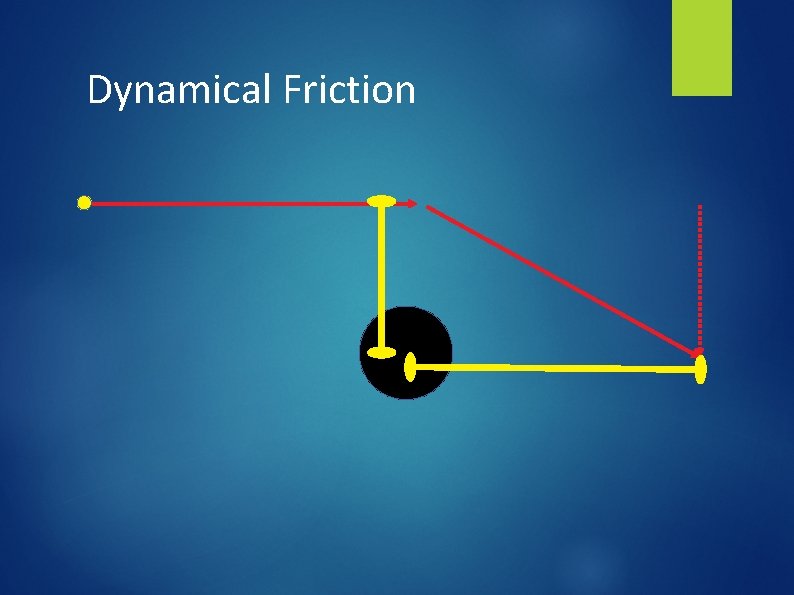
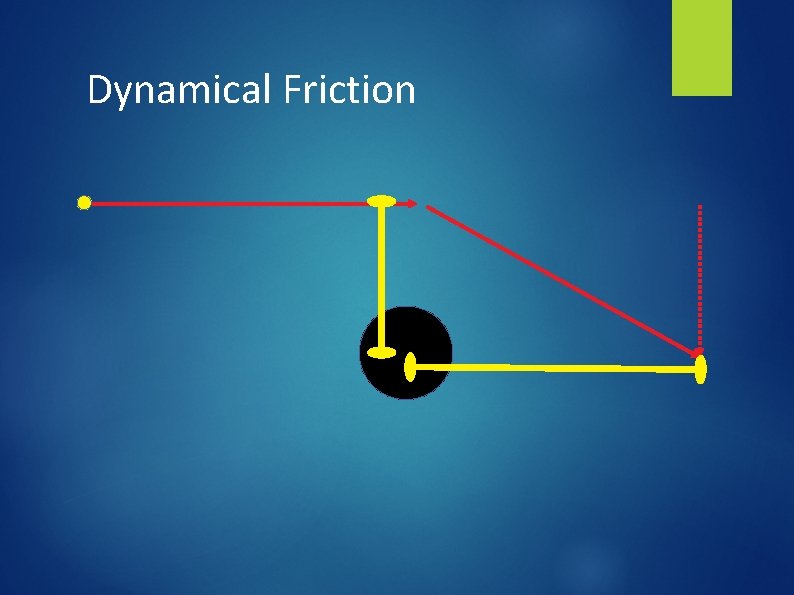
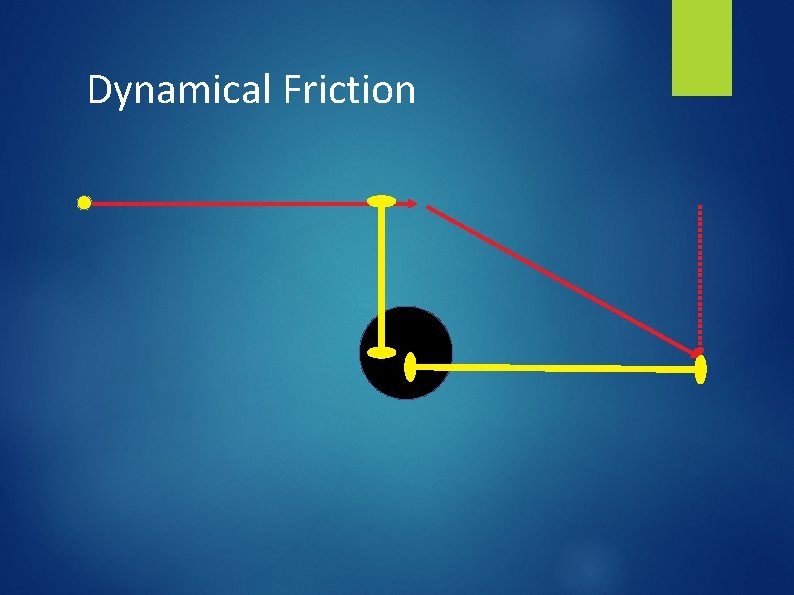
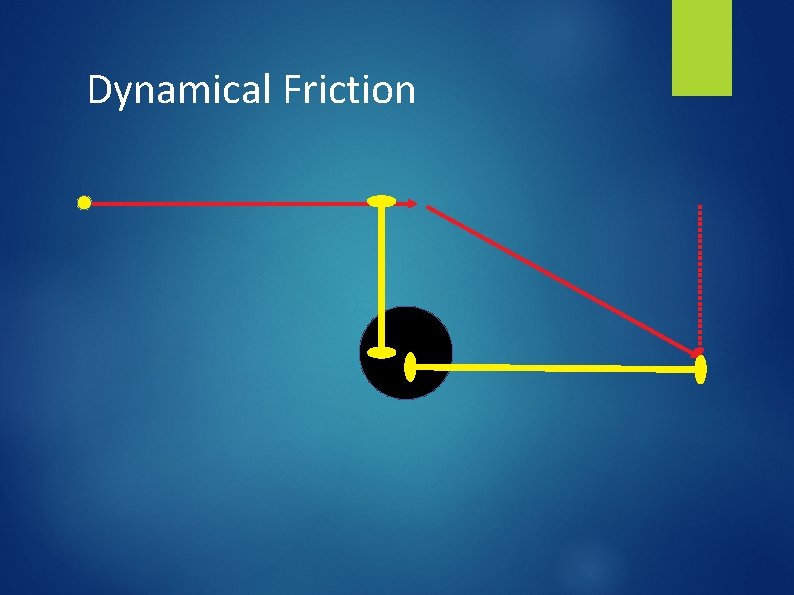
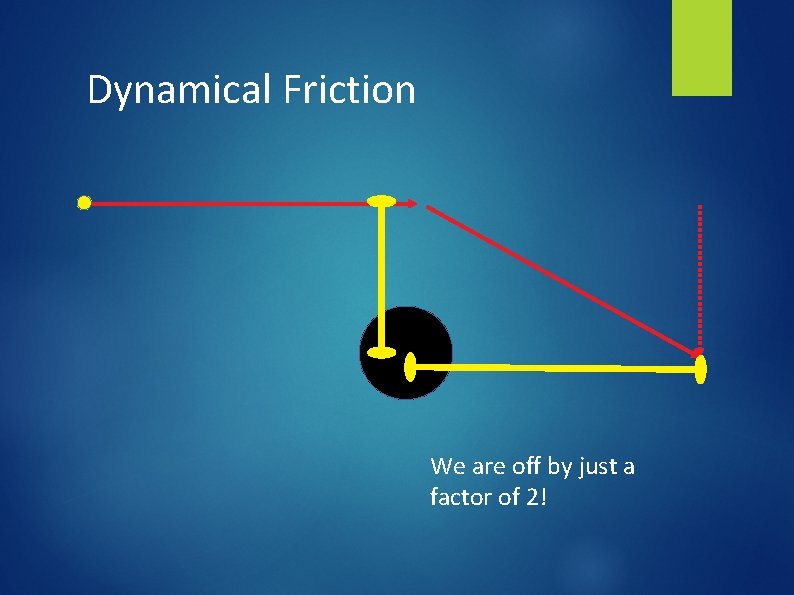
Dynamical Friction Large galaxies regularly cannibalize small ones. Every encounter slows down the small galaxies’ motion, until it complete merges with the host. The process is known as dynamical friction.
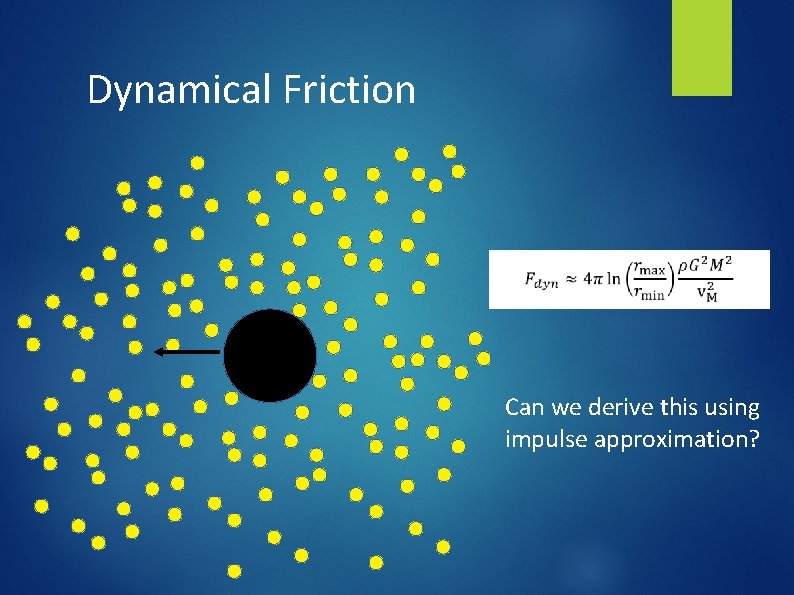
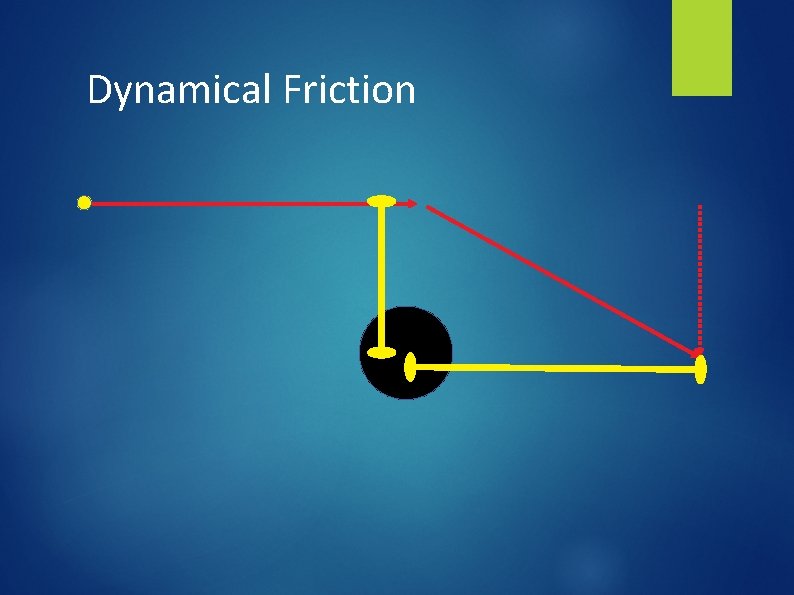
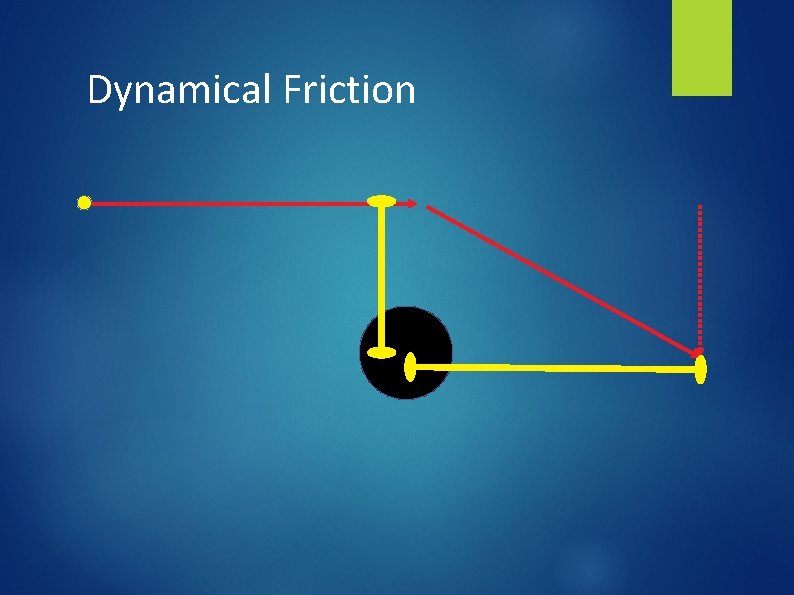
Dynamical Friction Can we derive this using impulse approximation?
Dynamical Friction
Dynamical Friction
Dynamical Friction
Dynamical Friction
Dynamical Friction
Dynamical Friction
Dynamical Friction
Dynamical Friction
Dynamical Friction We are off by just a factor of 2!
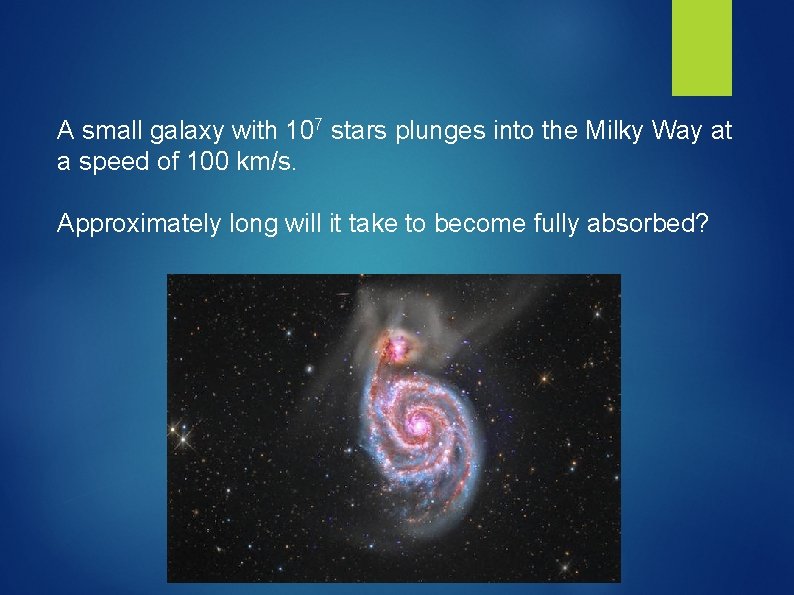
A small galaxy with 107 stars plunges into the Milky Way at a speed of 100 km/s. Approximately long will it take to become fully absorbed?