
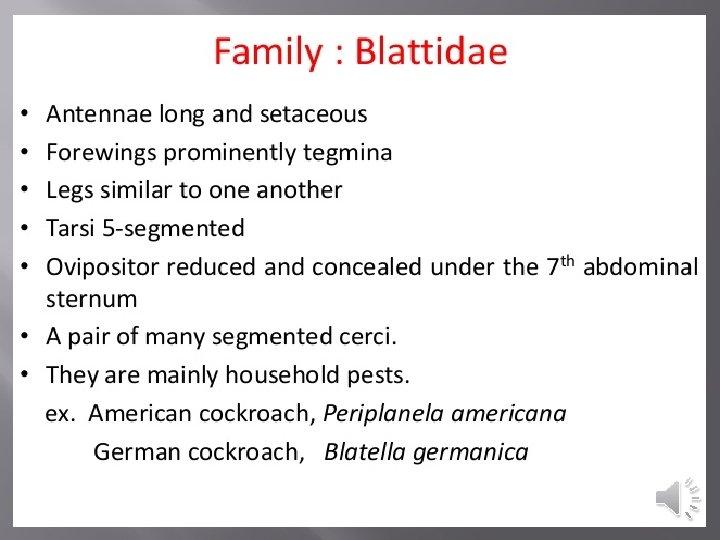
ORDER DICTYOPTERA Order BlattodeaeDictyoptera About 30 species of

ORDER DICTYOPTERA
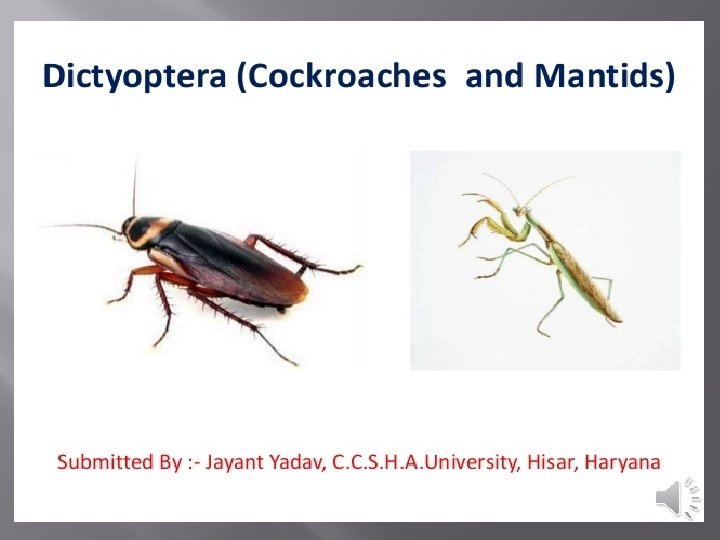
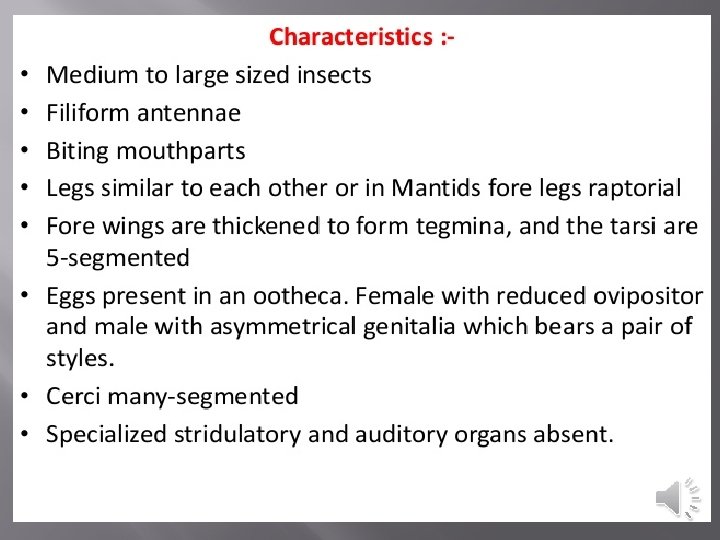
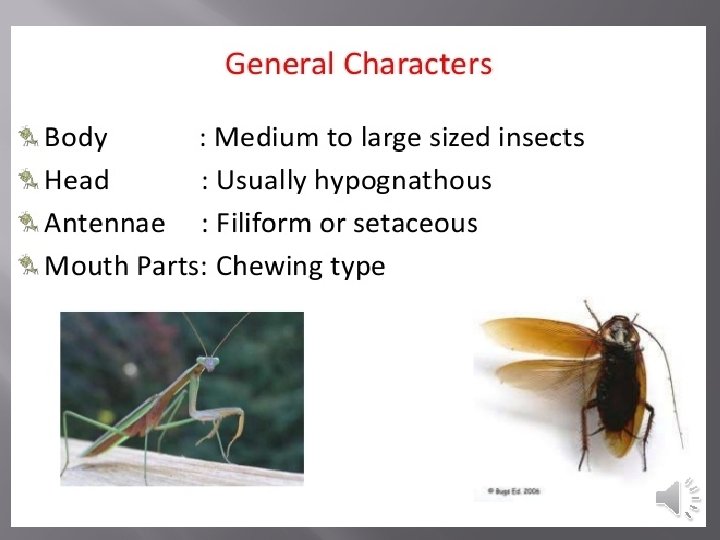
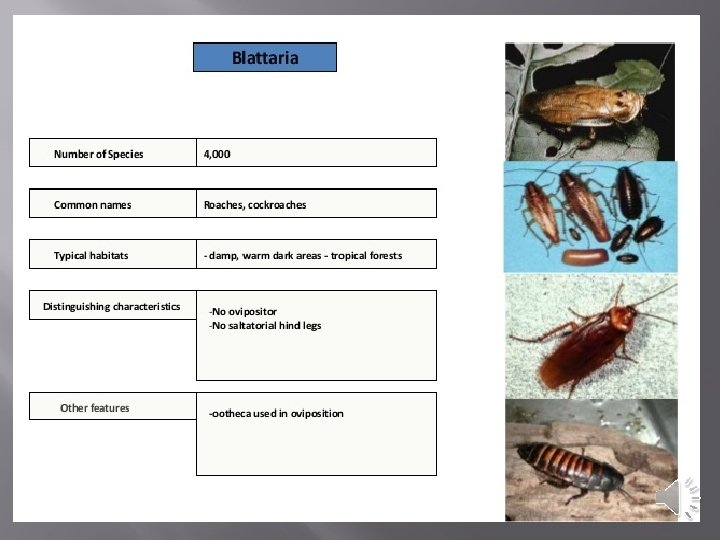
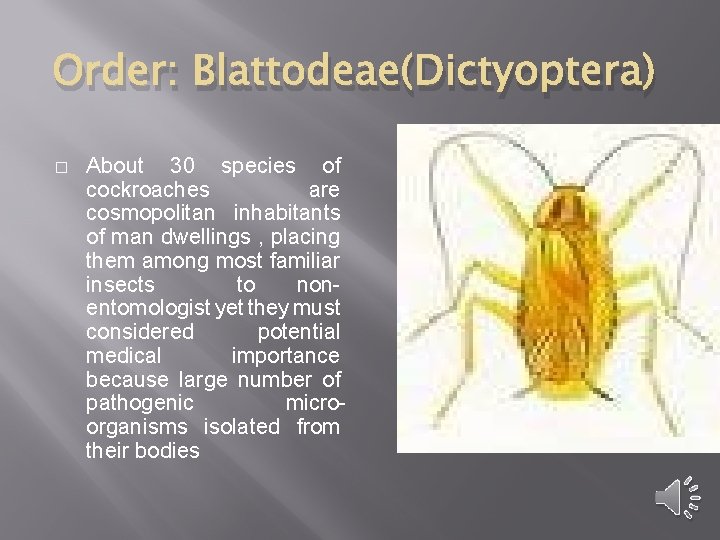
Order: Blattodeae(Dictyoptera) � About 30 species of cockroaches are cosmopolitan inhabitants of man dwellings , placing them among most familiar insects to nonentomologist yet they must considered potential medical importance because large number of pathogenic microorganisms isolated from their bodies
Cockroaches have been important subject for investigation of hormonal control of insect growth , development , study insecticidal mode of action and insecticide resistance , cockroaches adults are long lived , some species surviving 4 -years under experimental conditions �
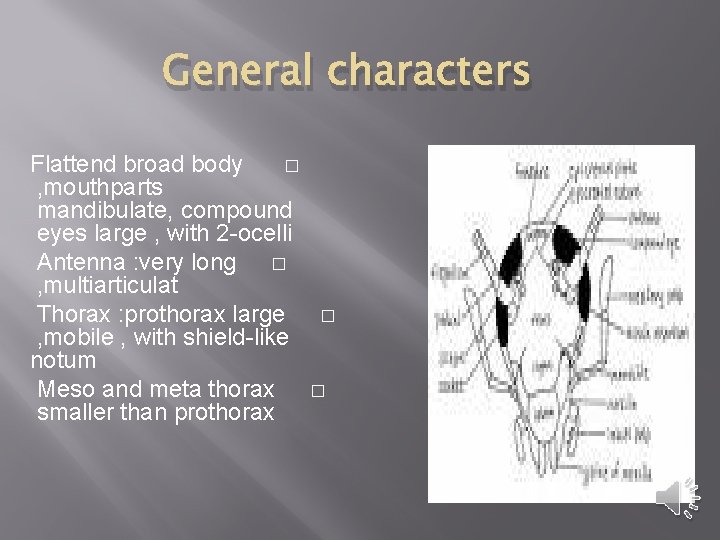
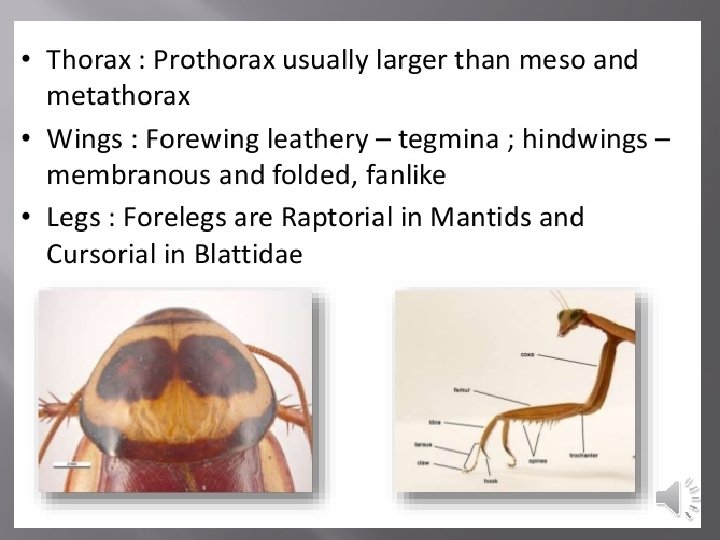
General characters Flattend broad body � , mouthparts mandibulate, compound eyes large , with 2 -ocelli Antenna : very long � , multiarticulat Thorax : prothorax large , mobile , with shield-like notum Meso and meta thorax smaller than prothorax � �
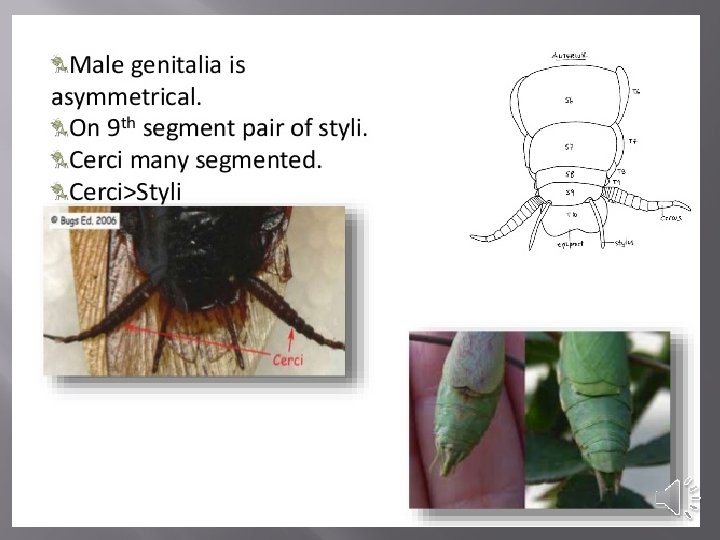
Wings : fore wings � scelerotized hind wings membranous Legs : coxae long , � tarsi 5 -segments , abdomen 10 segments Tergit 10 bearing � cerci tergit 5 -6 bearing scentgland.
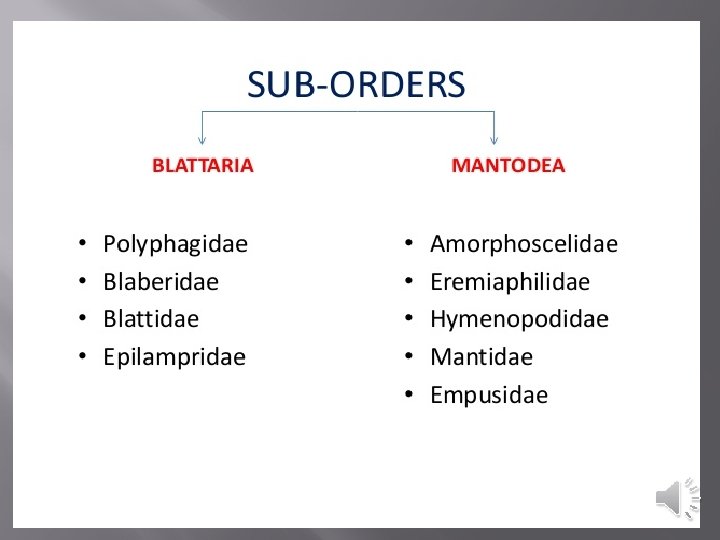
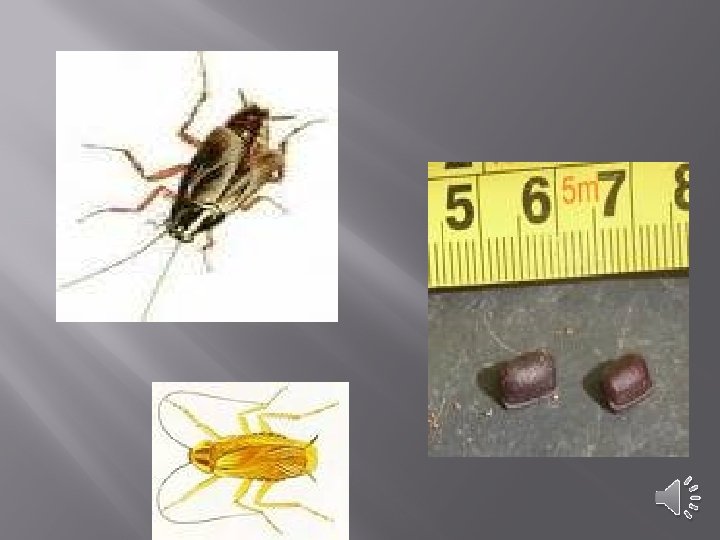
Order: Dyctyoptera(Blattodeae) Family : Blattidae � e. g: Periplaneta amricana e. g : Blattela germanica e. g: Polyphaga aegyptiaca


ORDER : MANTODEA Mantids
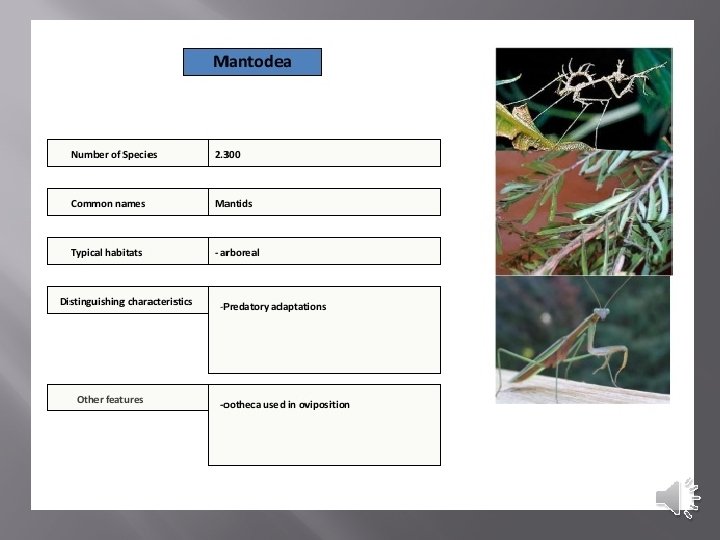
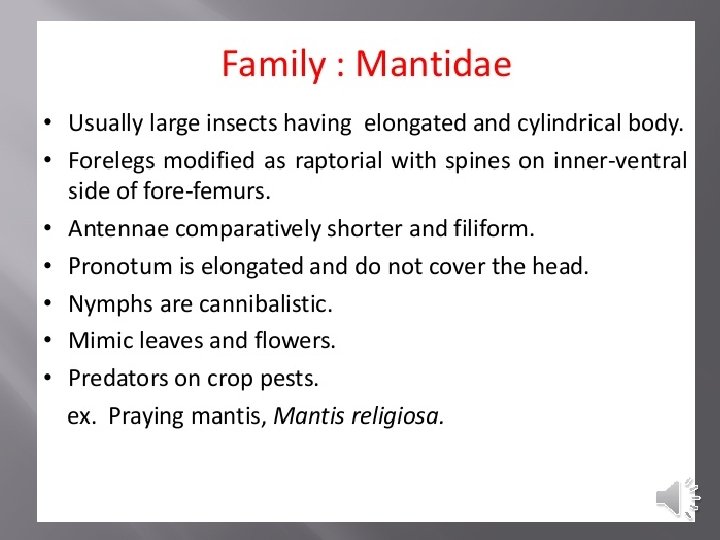
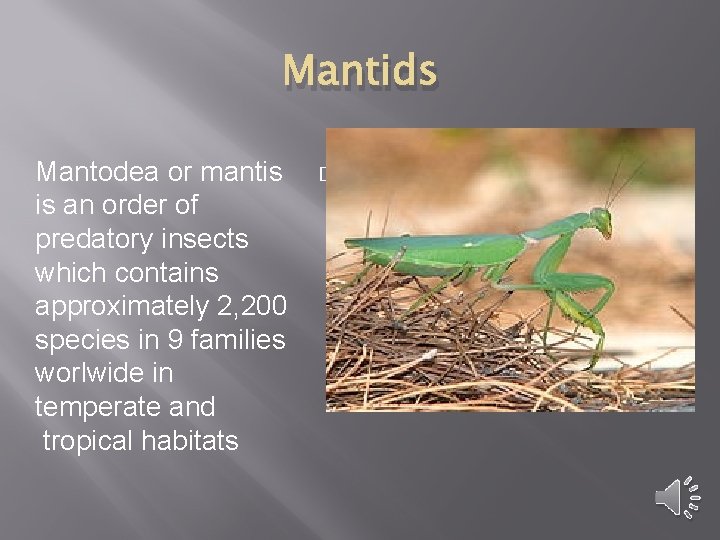
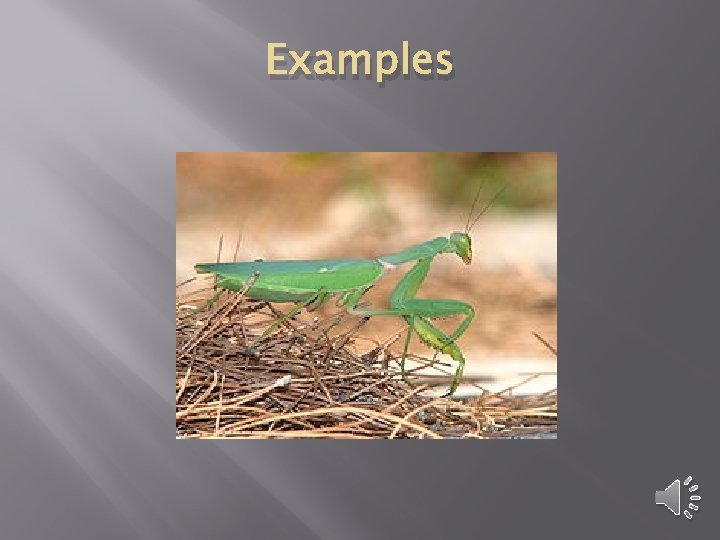
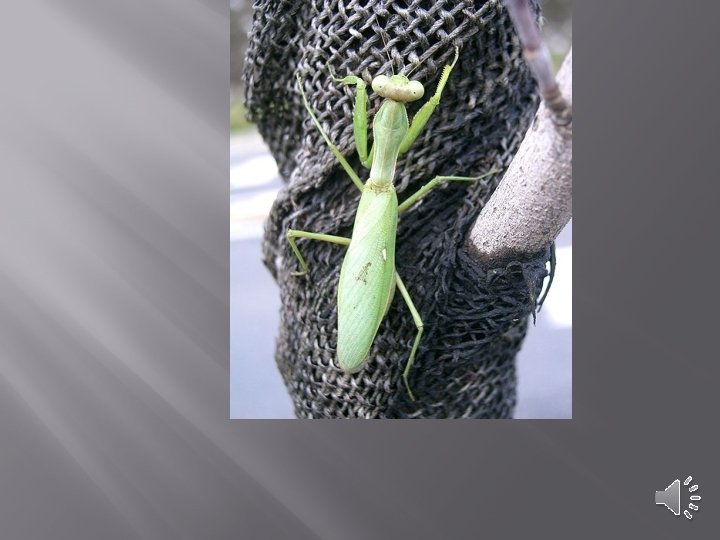
Mantids Mantodea or mantis is an order of predatory insects which contains approximately 2, 200 species in 9 families worlwide in temperate and tropical habitats �
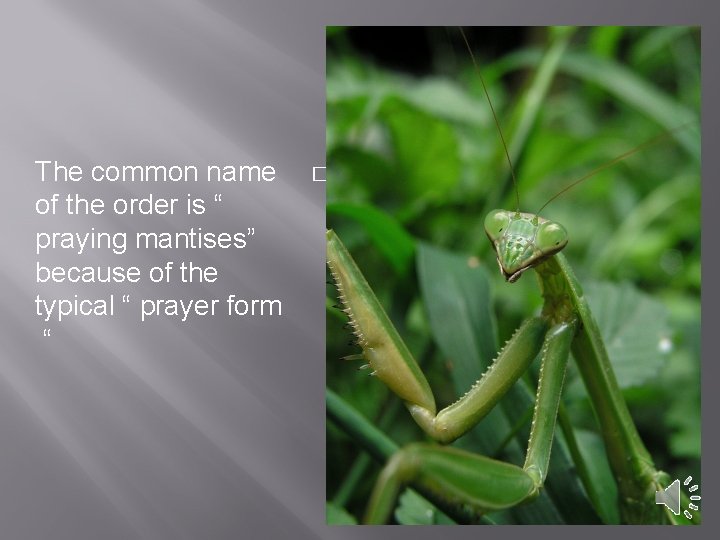
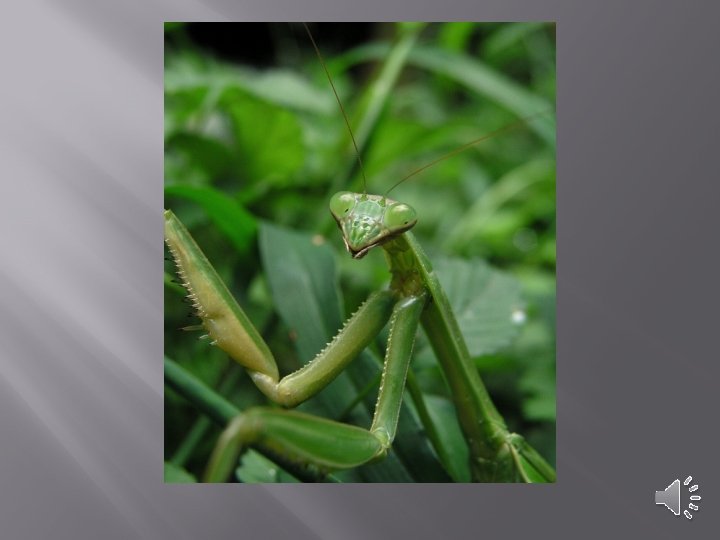
The common name of the order is “ praying mantises” because of the typical “ prayer form “ �
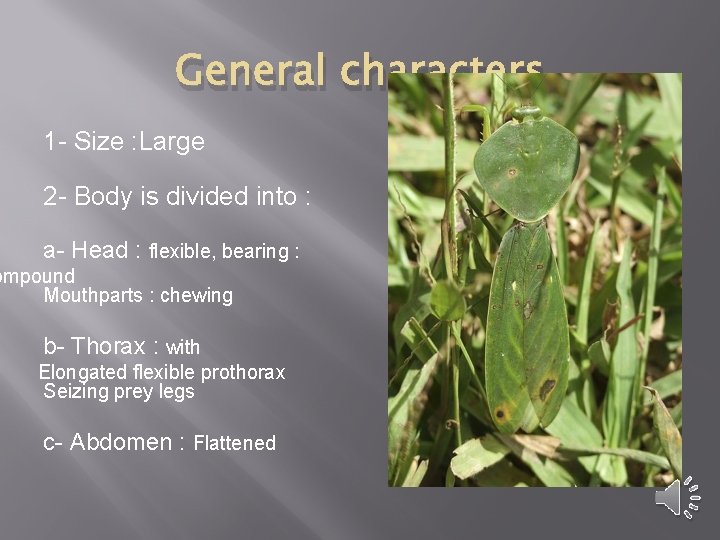
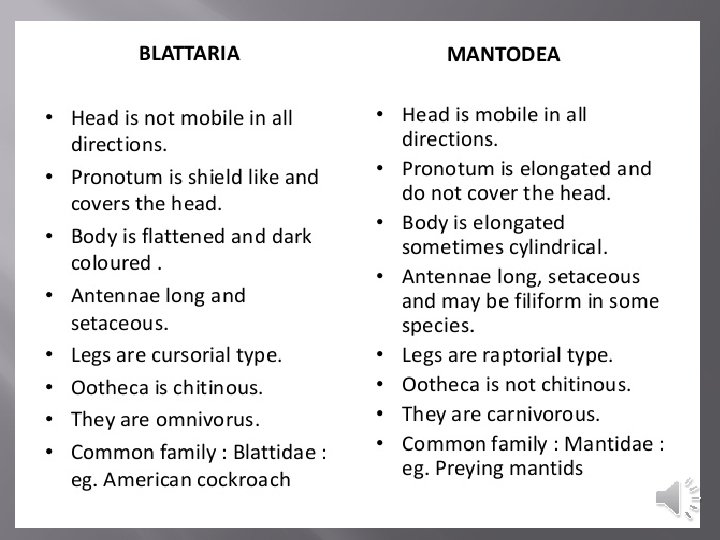
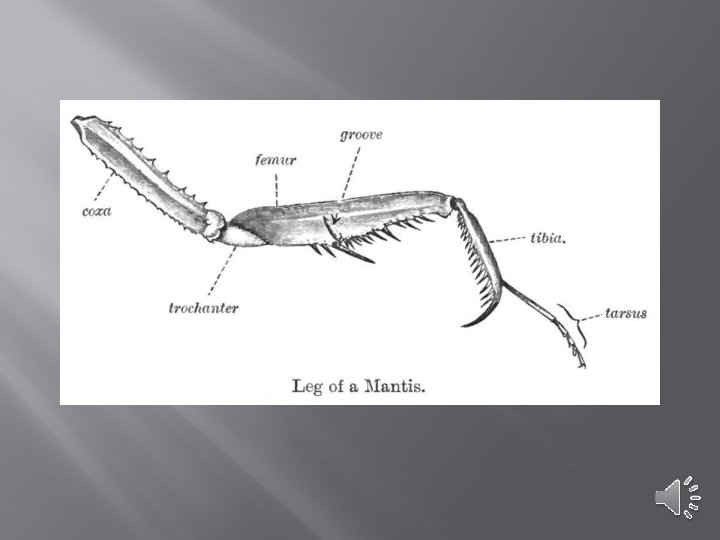
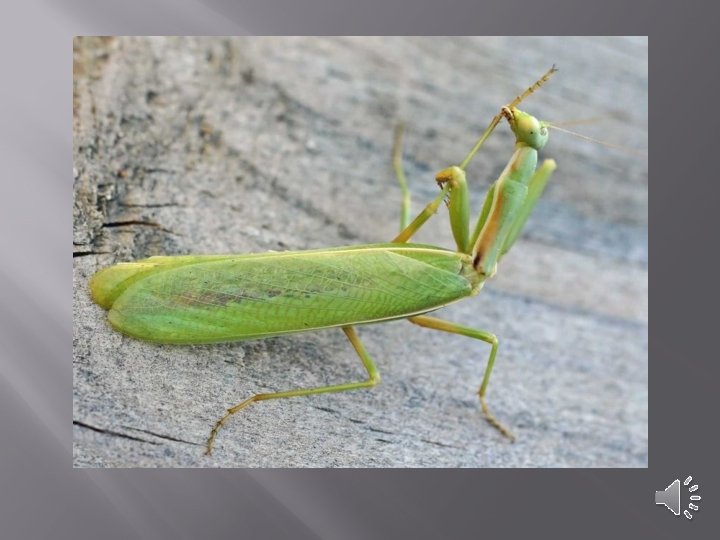
General characters 1 - Size : Large 2 - Body is divided into : a- Head : flexible, bearing : ompound Mouthparts : chewing b- Thorax : with Elongated flexible prothorax Seizing prey legs c- Abdomen : Flattened
Food Mantids are predaceous , typically � feeding on insects and other arthropods Large mantids have also been � known to prey on small birds , lizards and amphipians
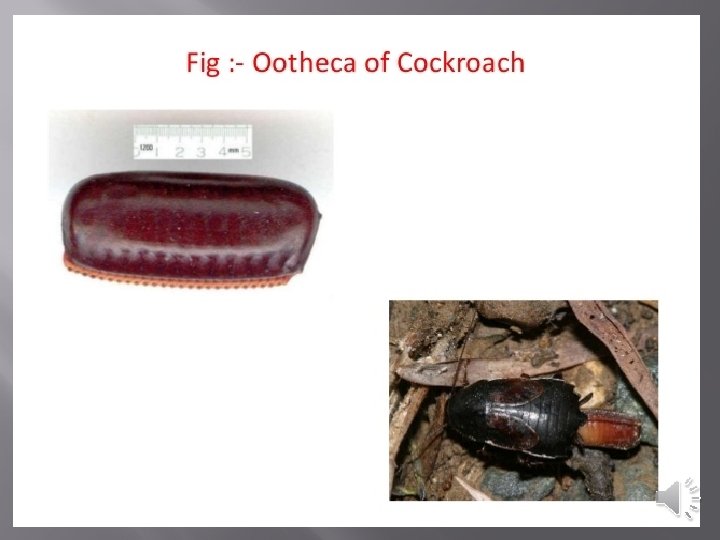
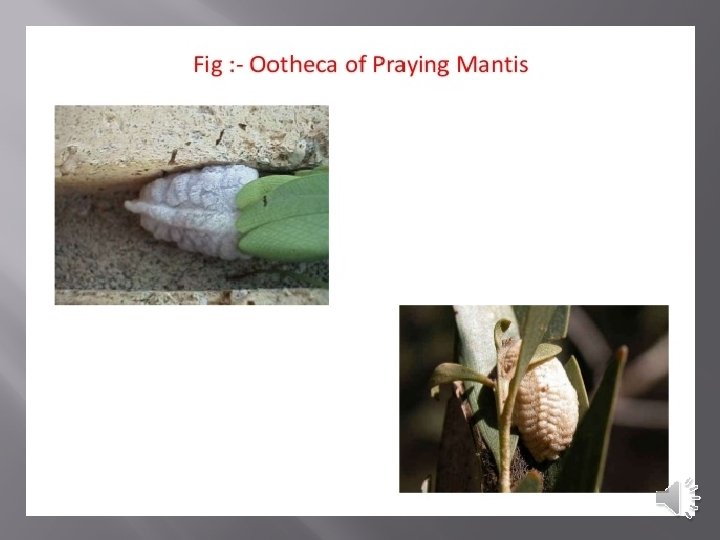
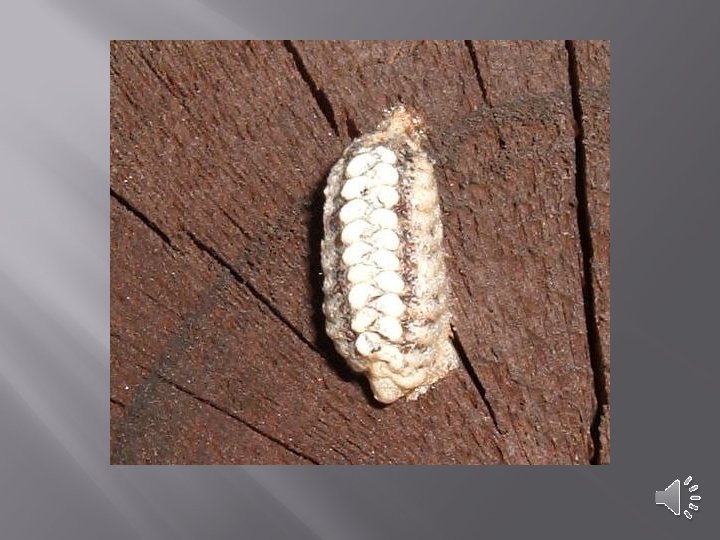
Life cycle 1 - Mantises carry out incomplete metamorphosis 2 - Generally molting 7 or more times to reach maturity 3 - Eggs are laid during autumn in an ootheca (egg sac ) which hatch in the spring
Examples
- Slides: 33