
Orca A language for parallel programming of distributed
Orca A language for parallel programming of distributed systems
Orca • Parallel language designed at VU • Design and first implementation (‘ 88 -’ 92): – Bal, Kaashoek, Tanenbaum • Portable Orca system (‘ 93 -’ 97): – Bal, Bhoedjang, Langendoen, Rühl, Jacobs, Hofman • Used by ~30 M. Sc. Students
Overview • • Shared data-object model Processes Condition synchronization Example: TSP
Orca’s Programming Model • Explicit parallelism (processes) • Communication model: – Shared memory: hard to build – Distributed memory: hard to program • Idea: shared memory programming model on distributed memory machine • Form of Distributed shared memory (DSM)
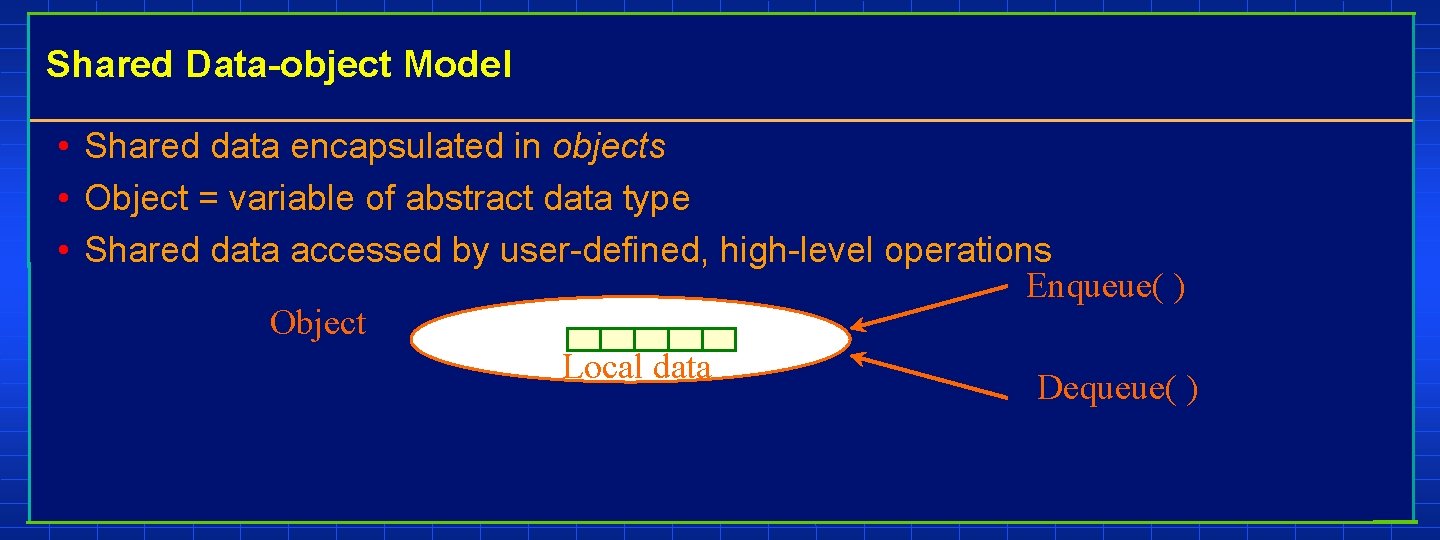
Shared Data-object Model • Shared data encapsulated in objects • Object = variable of abstract data type • Shared data accessed by user-defined, high-level operations Enqueue( ) Object Local data Dequeue( )
Semantics • Each operation is executed atomically – As if operations were executed 1 at a time – Mutual exclusion synchronization – Similar to monitors • Each operation applies to single object – Allows efficient implementation – Atomic operations on multiple objects are seldom needed and hard to implement
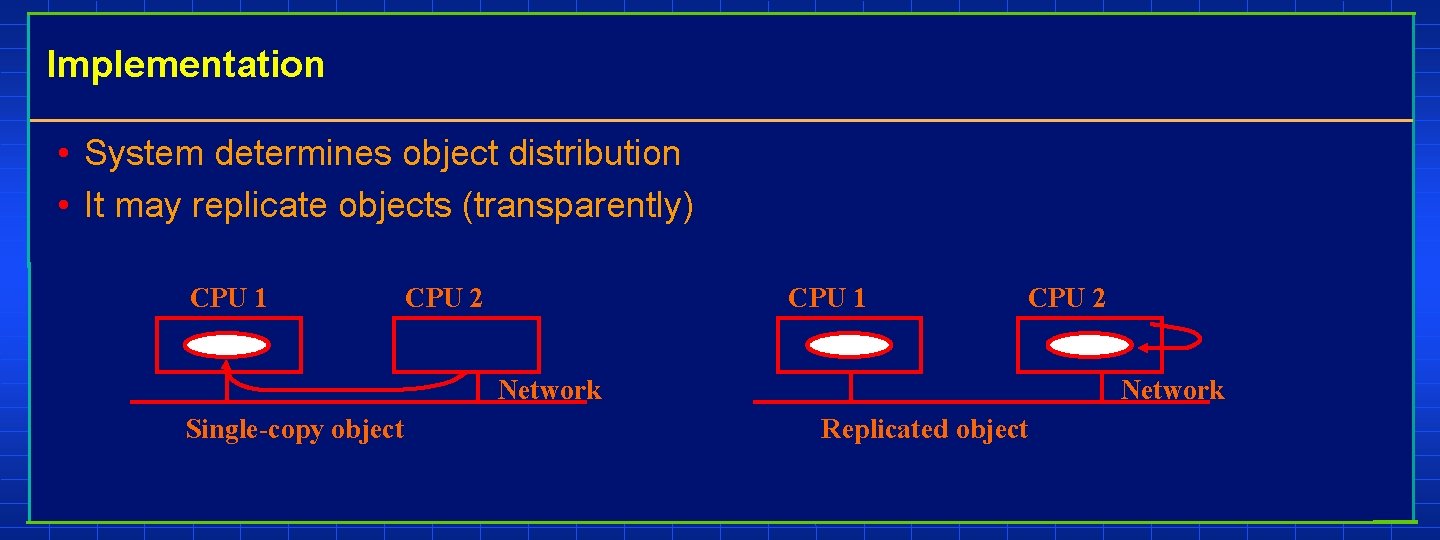
Implementation • System determines object distribution • It may replicate objects (transparently) CPU 1 CPU 2 Network Single-copy object Network Replicated object

Object Types • Abstract data type • Two parts: 1 Specification part • ADT operations 2 Implementation part • Local data • Code for operations • Optional initialization code
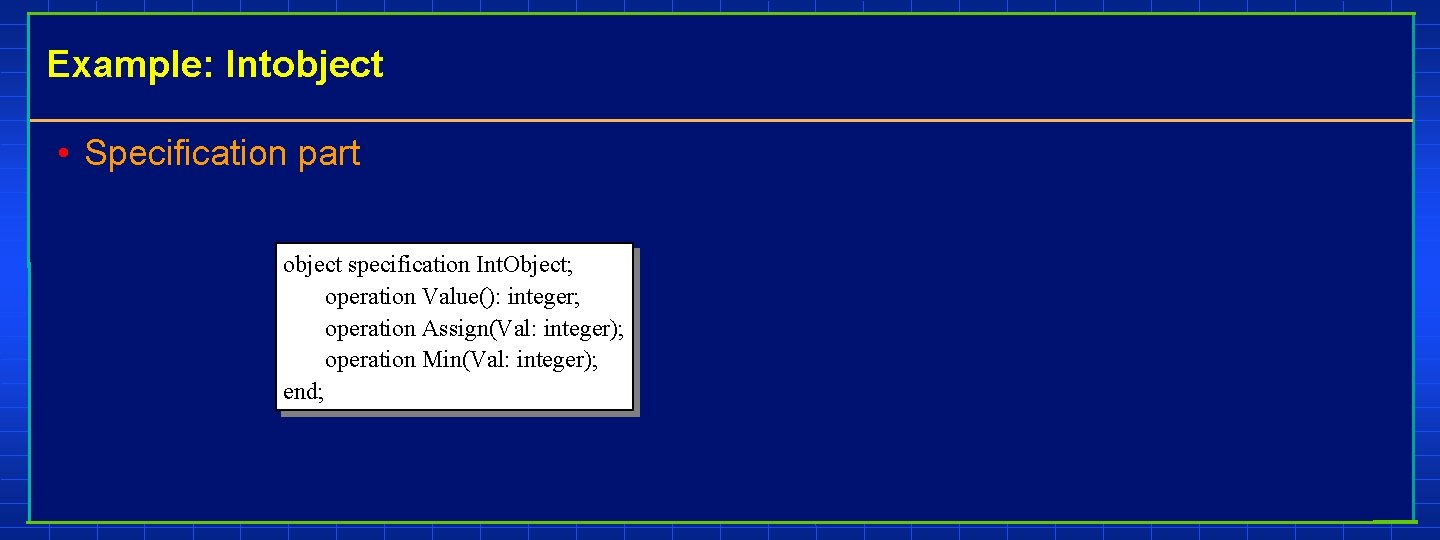
Example: Intobject • Specification part object specification Int. Object; operation Value(): integer; operation Assign(Val: integer); operation Min(Val: integer); end;
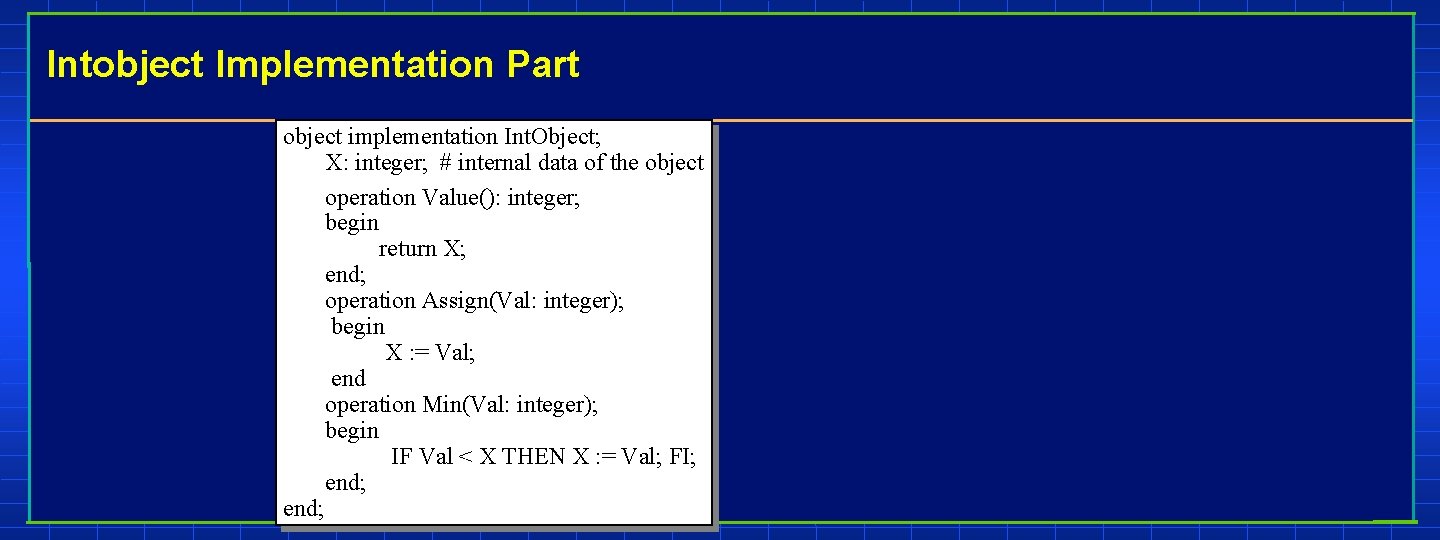
Intobject Implementation Part object implementation Int. Object; X: integer; # internal data of the object operation Value(): integer; begin return X; end; operation Assign(Val: integer); begin X : = Val; end operation Min(Val: integer); begin IF Val < X THEN X : = Val; FI; end;
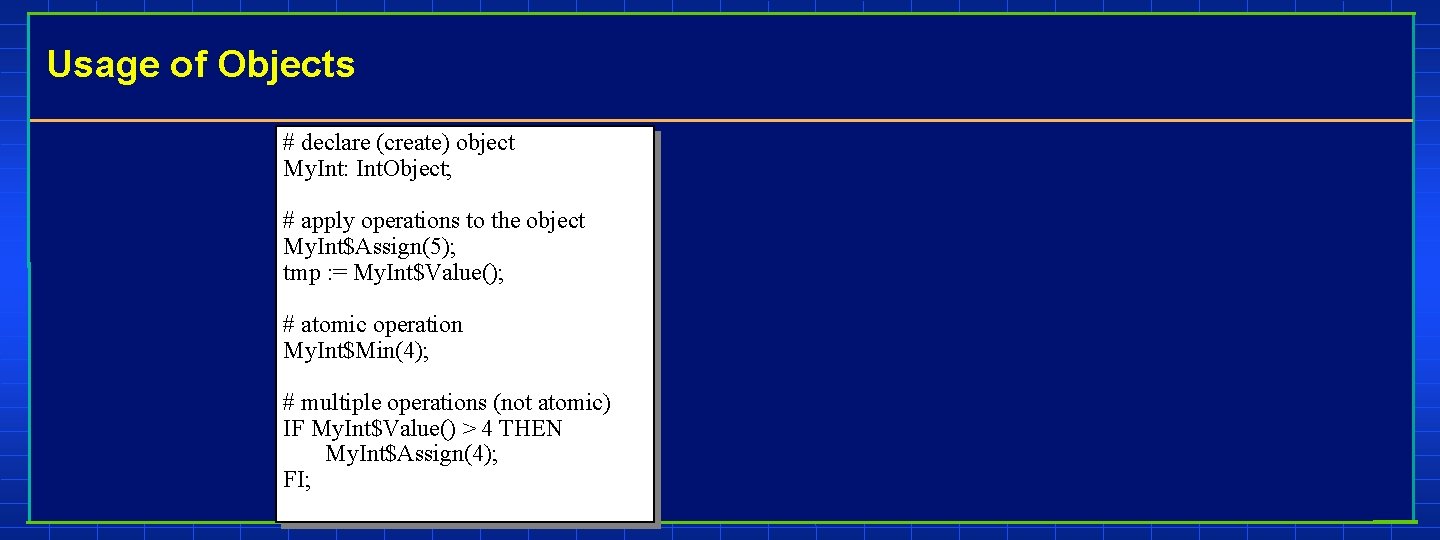
Usage of Objects # declare (create) object My. Int: Int. Object; # apply operations to the object My. Int$Assign(5); tmp : = My. Int$Value(); # atomic operation My. Int$Min(4); # multiple operations (not atomic) IF My. Int$Value() > 4 THEN My. Int$Assign(4); FI;
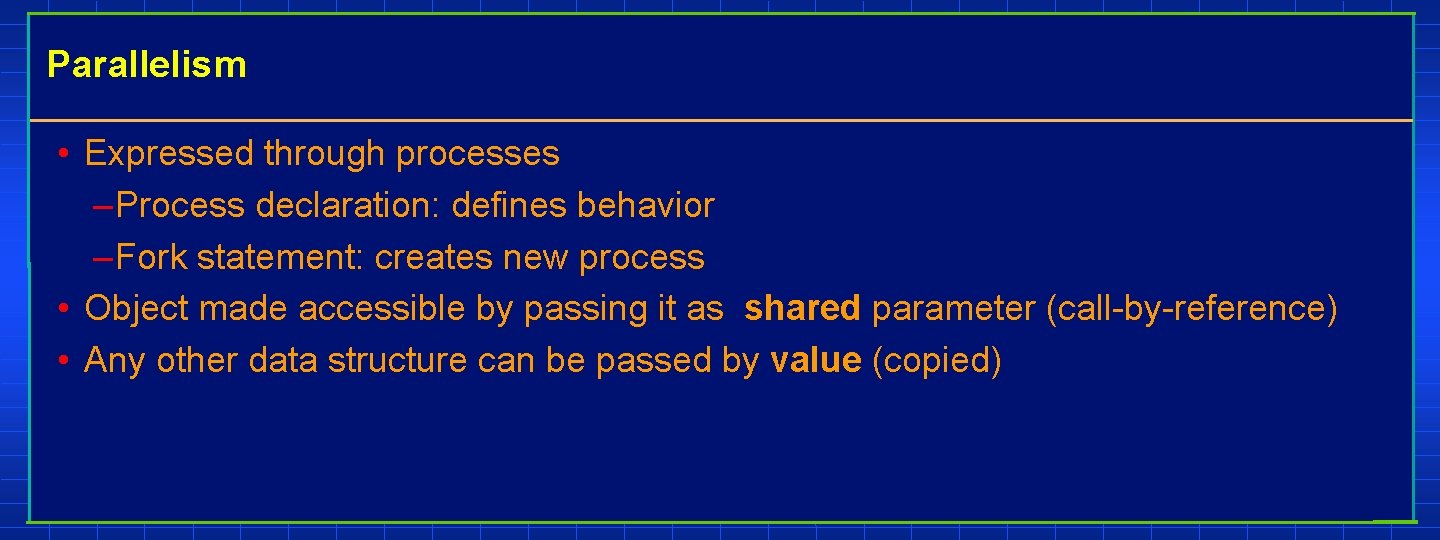
Parallelism • Expressed through processes – Process declaration: defines behavior – Fork statement: creates new process • Object made accessible by passing it as shared parameter (call-by-reference) • Any other data structure can be passed by value (copied)
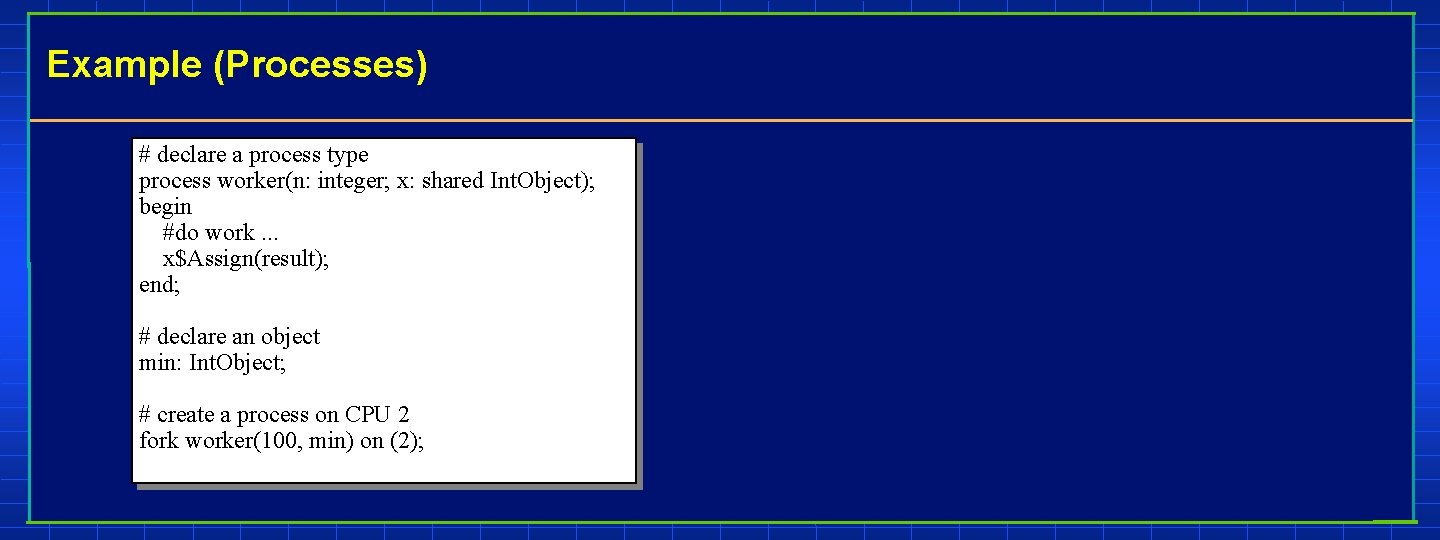
Example (Processes) # declare a process type process worker(n: integer; x: shared Int. Object); begin #do work. . . x$Assign(result); end; # declare an object min: Int. Object; # create a process on CPU 2 fork worker(100, min) on (2);
Structure of Orca Programs • • Initially there is one process (Orca. Main) A process can create child processes and share objects with them Hierarchy of processes communicating through objects No lightweight treads
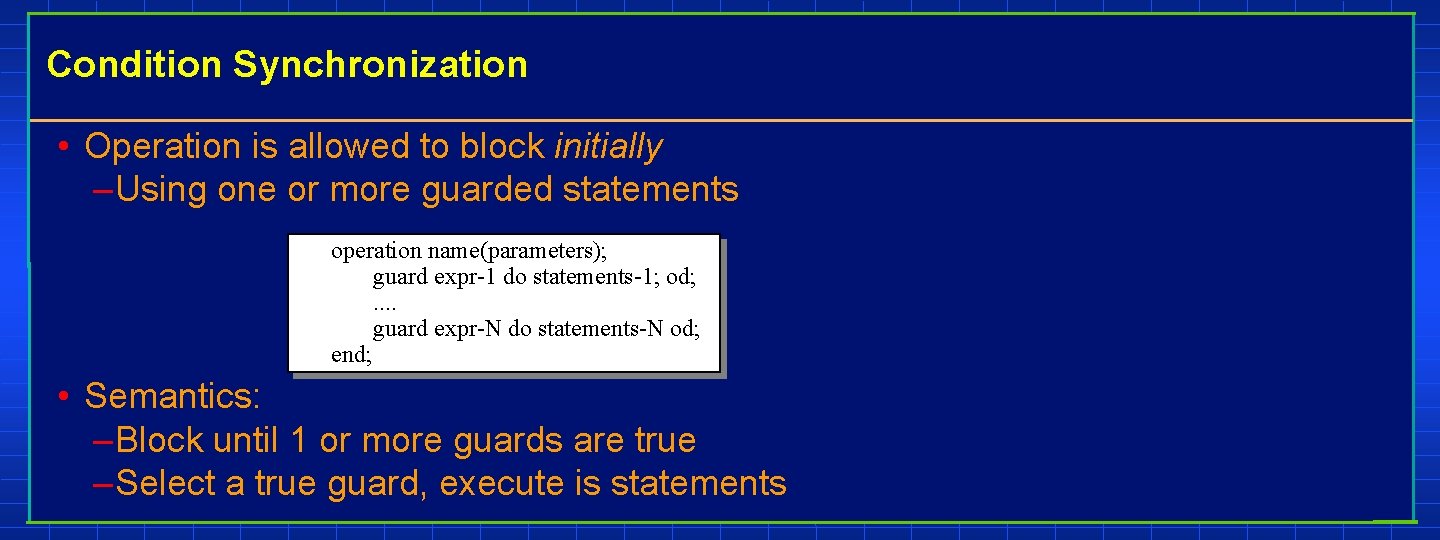
Condition Synchronization • Operation is allowed to block initially – Using one or more guarded statements operation name(parameters); guard expr-1 do statements-1; od; . . guard expr-N do statements-N od; end; • Semantics: – Block until 1 or more guards are true – Select a true guard, execute is statements
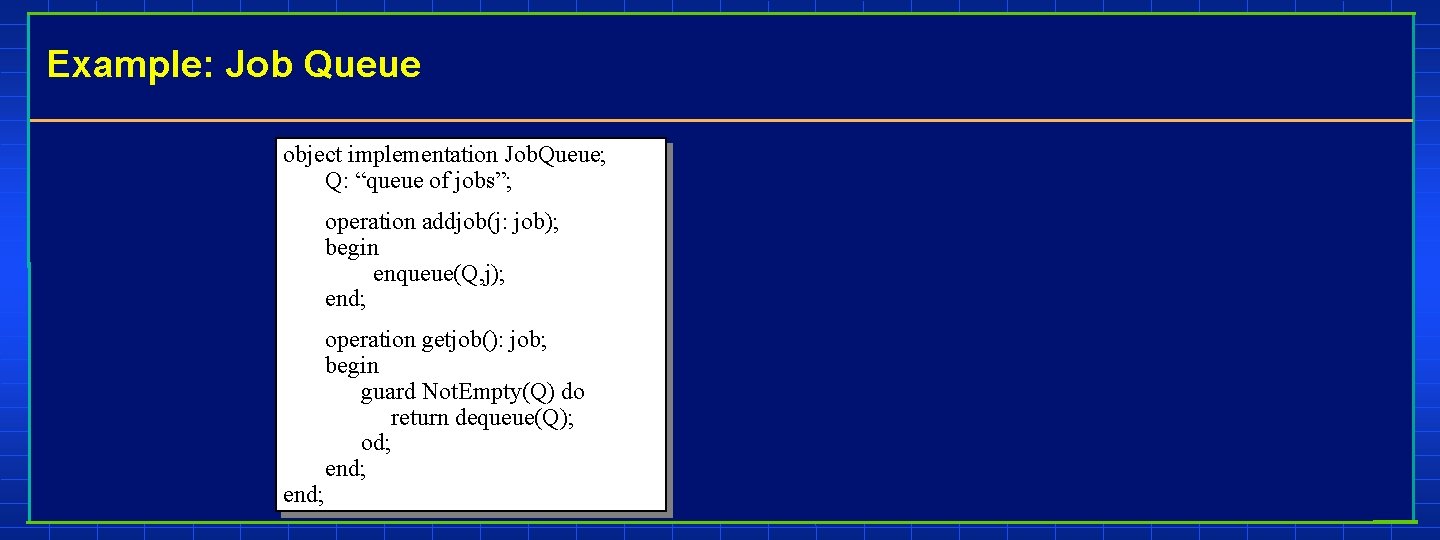
Example: Job Queue object implementation Job. Queue; Q: “queue of jobs”; operation addjob(j: job); begin enqueue(Q, j); end; operation getjob(): job; begin guard Not. Empty(Q) do return dequeue(Q); od; end;
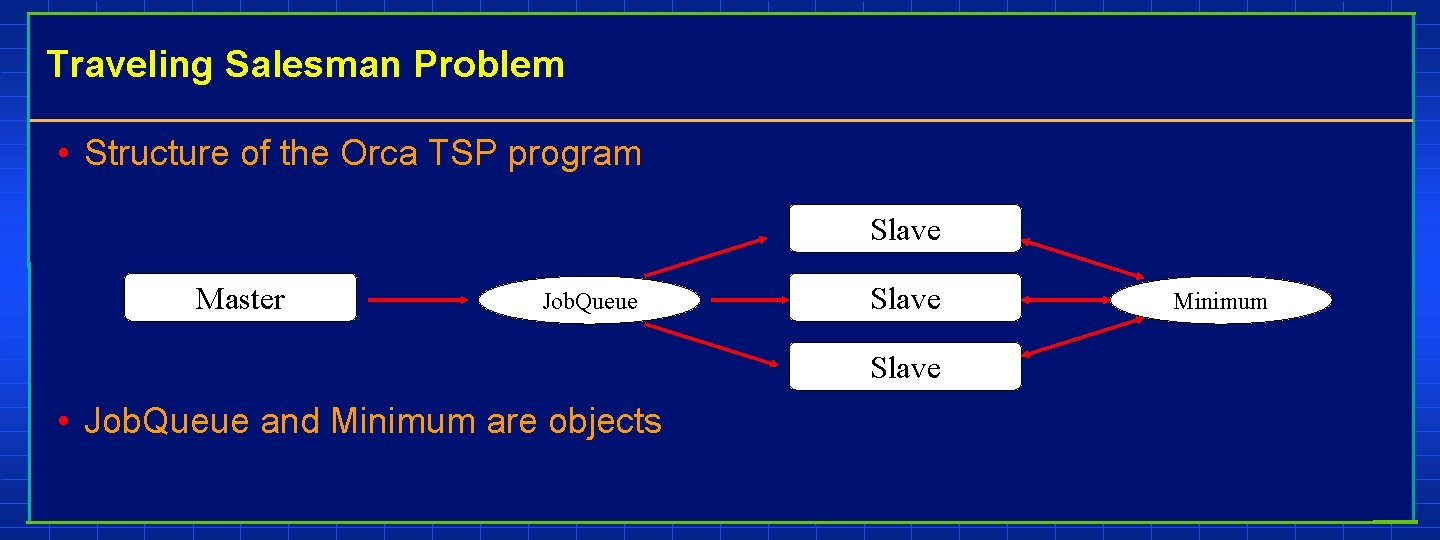
Traveling Salesman Problem • Structure of the Orca TSP program Slave Master Job. Queue Slave • Job. Queue and Minimum are objects Minimum
Performance Issues • Orca provides high level of abstraction easy to program hard to understand performance behavior • Example: X$foo() can either result in: – function call (if X is not shared) – monitor call (if X is shared and stored locally) – remote procedure call (if X is stored remotely) – broadcast (if X is replicated)
Performance model • The Orca system will: – replicate objects with a high read/write-ratio – store nonreplicated object on ``best’’ location • Communication is generated for: – writing replicated object (broadcast) – accessing remote nonreplicated object (RPC) • Programmer must think about locality
Summary of Orca • Object-based distributed shared memory – Hides the underlying network from the user – Applications can use shared data • Language is especially designed for distributed systems • User-defined, high-level operations
- Slides: 20