
ORBITS FOR THE IMPATIENT a Bayesian Rejectionsampling Algorithm
ORBITS FOR THE IMPATIENT a Bayesian Rejection-sampling Algorithm for Rapidly Fitting the Orbits of Long-period Exoplanets SARAH BLUNT Eric Nielsen, Rob De Rosa, Quinn Konopacky, Dominic Ryan, Jason Wang, Laurent Pueyo, Julien Rameau, Christian Marois, Franck Marchis, Bruce Macintosh, James Graham, Gaspard Duchêne, & Adam Schneider 1
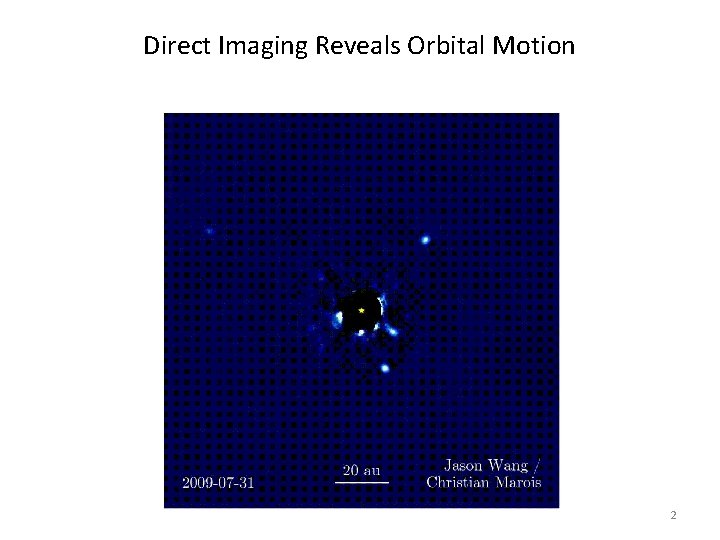
Direct Imaging Reveals Orbital Motion 2
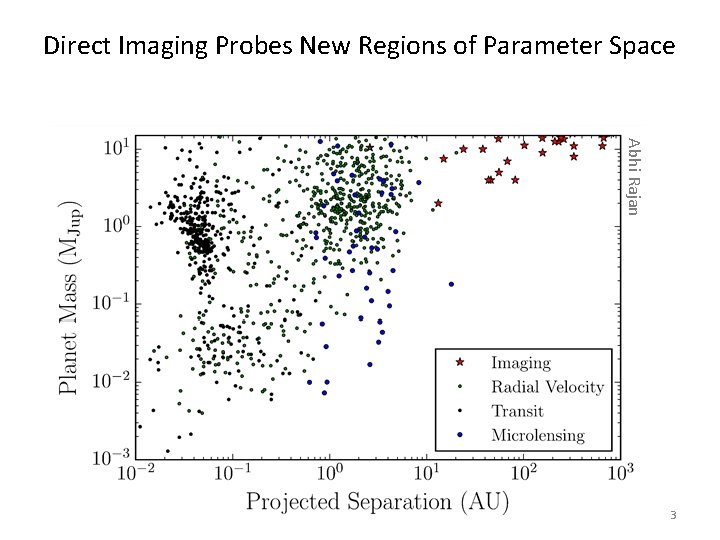
Direct Imaging Probes New Regions of Parameter Space Abhi Rajan 3
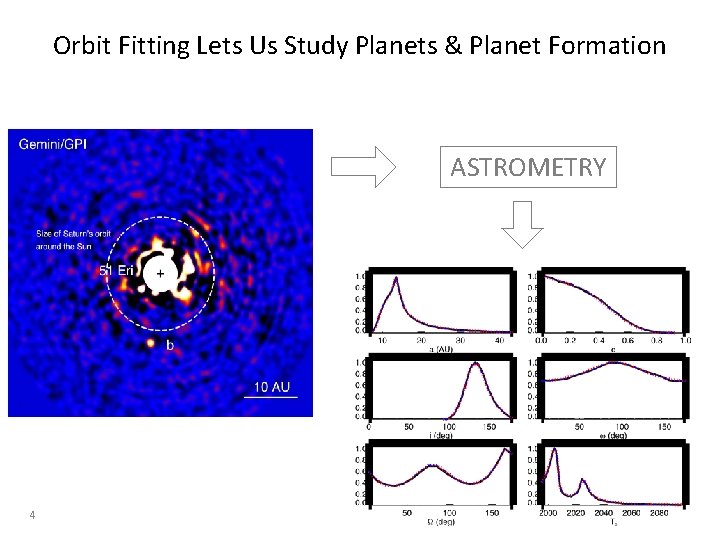
Orbit Fitting Lets Us Study Planets & Planet Formation ASTROMETRY 4
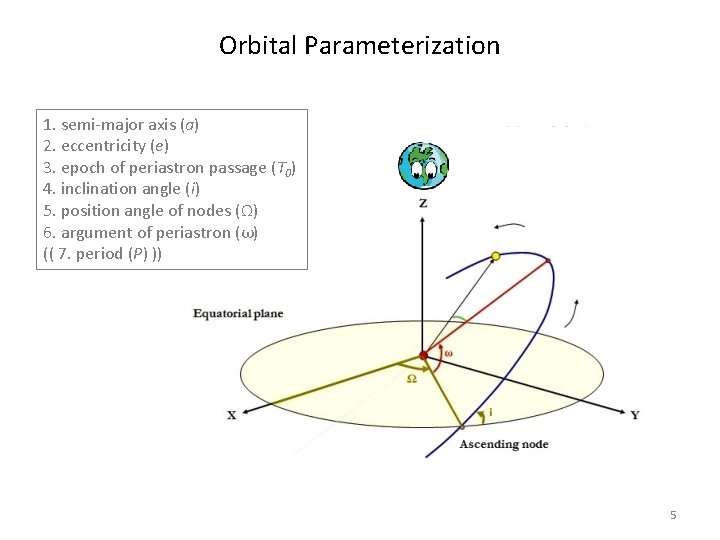
Orbital Parameterization 1. semi-major axis (a) 2. eccentricity (e) 3. epoch of periastron passage (T 0) 4. inclination angle (i) 5. position angle of nodes (Ω) 6. argument of periastron (ω) (( 7. period (P) )) 5
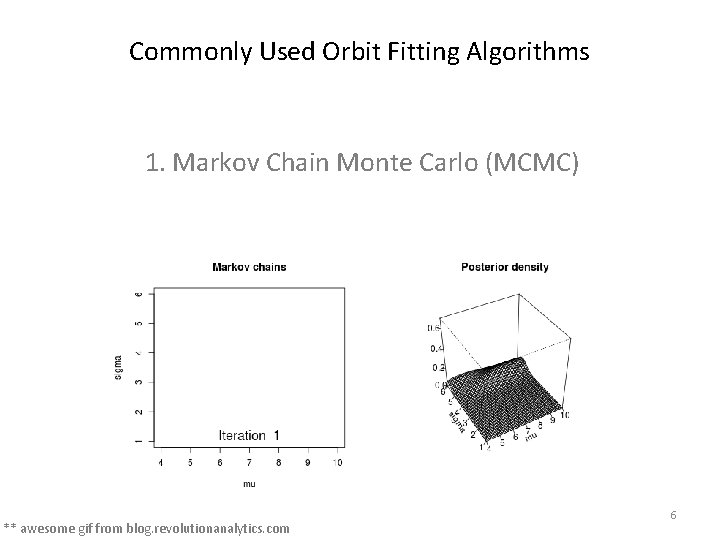
Commonly Used Orbit Fitting Algorithms 1. Markov Chain Monte Carlo (MCMC) ** awesome gif from blog. revolutionanalytics. com 6
Commonly Used Orbit Fitting Algorithms (( 2. Least Squares Monte Carlo (LMSC) )) 7
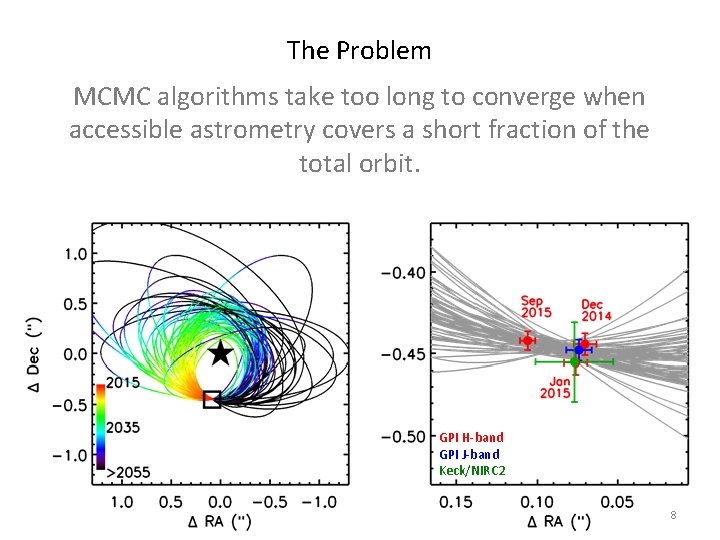
The Problem MCMC algorithms take too long to converge when accessible astrometry covers a short fraction of the total orbit. GPI H-band GPI J-band Keck/NIRC 2 8
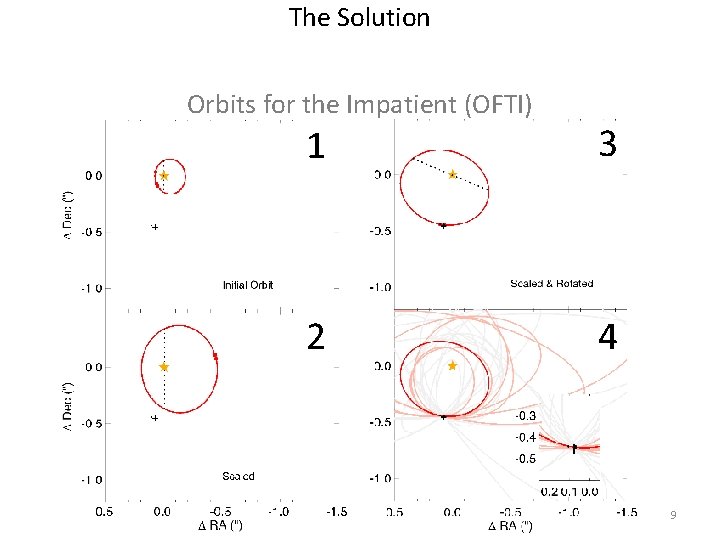
The Solution Orbits for the Impatient (OFTI) 1 3 2 4 9
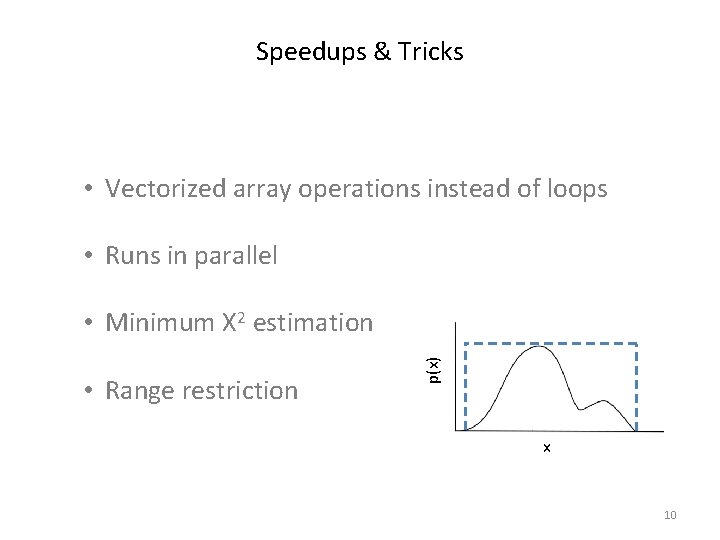
Speedups & Tricks • Vectorized array operations instead of loops • Runs in parallel • Range restriction p(x) • Minimum Χ 2 estimation x 10
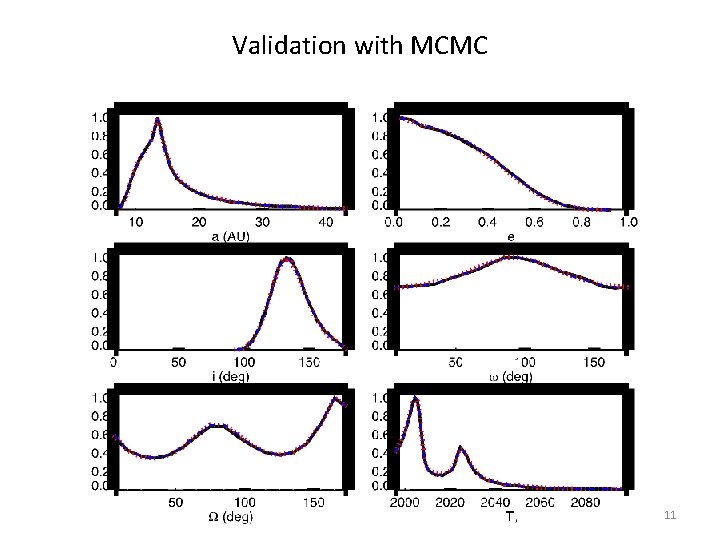
Validation with MCMC 11
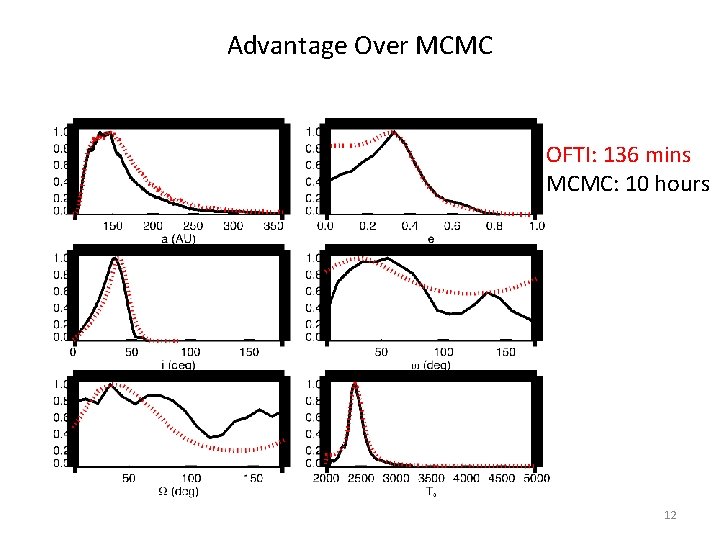
Advantage Over MCMC OFTI: 136 mins MCMC: 10 hours 12
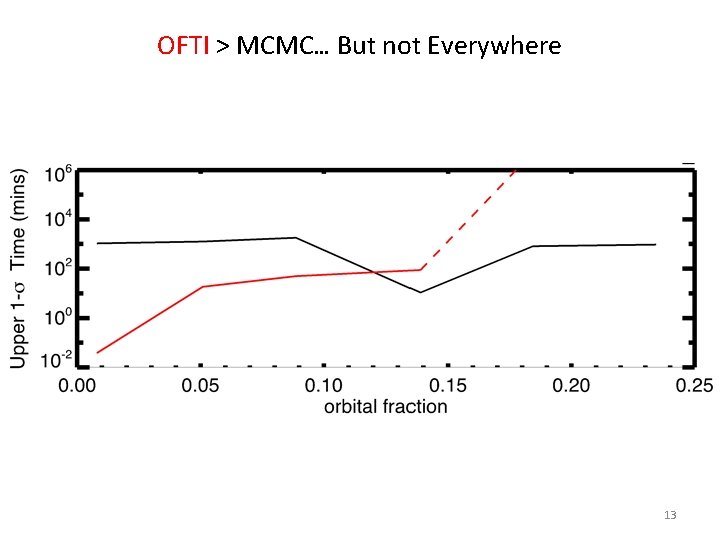
OFTI > MCMC… But not Everywhere 13
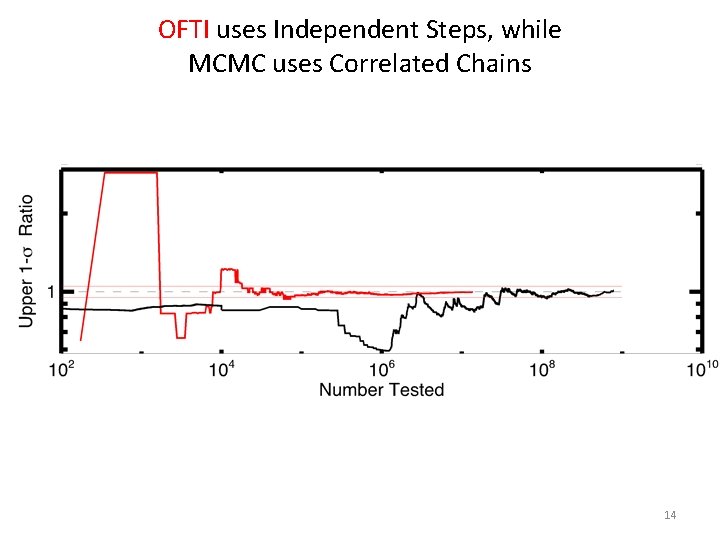
OFTI uses Independent Steps, while MCMC uses Correlated Chains 14
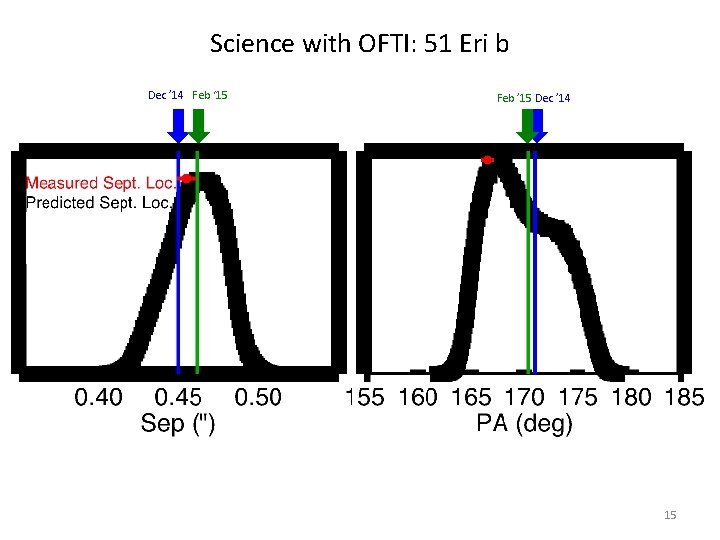
Science with OFTI: 51 Eri b Dec ’ 14 Feb ‘ 15 Feb ’ 15 Dec ’ 14 15
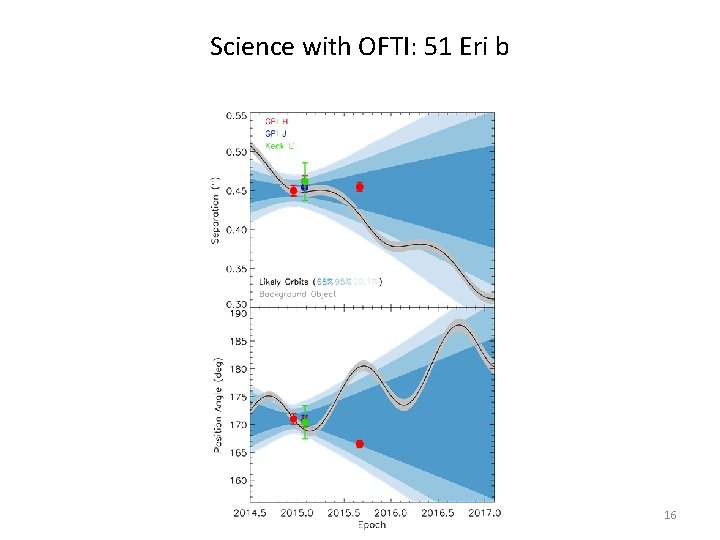
Science with OFTI: 51 Eri b 16
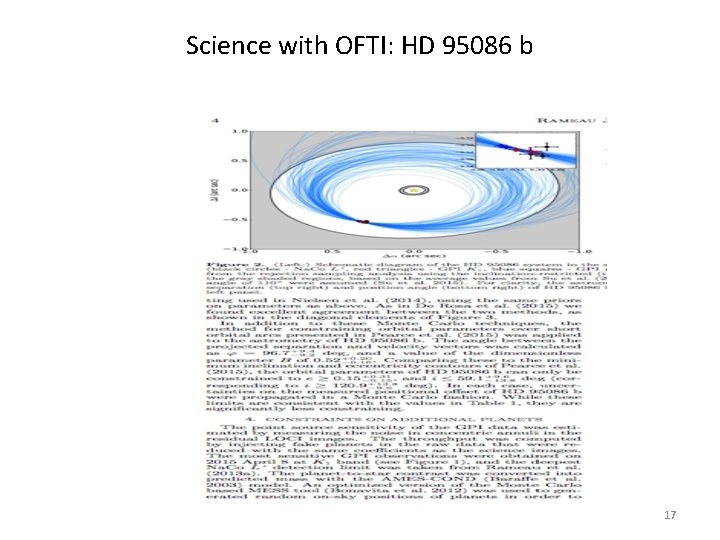
Science with OFTI: HD 95086 b 17
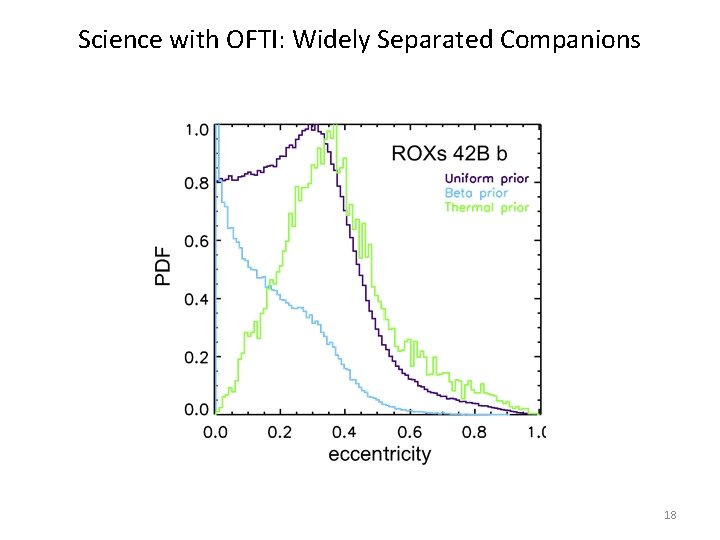
Science with OFTI: Widely Separated Companions 18
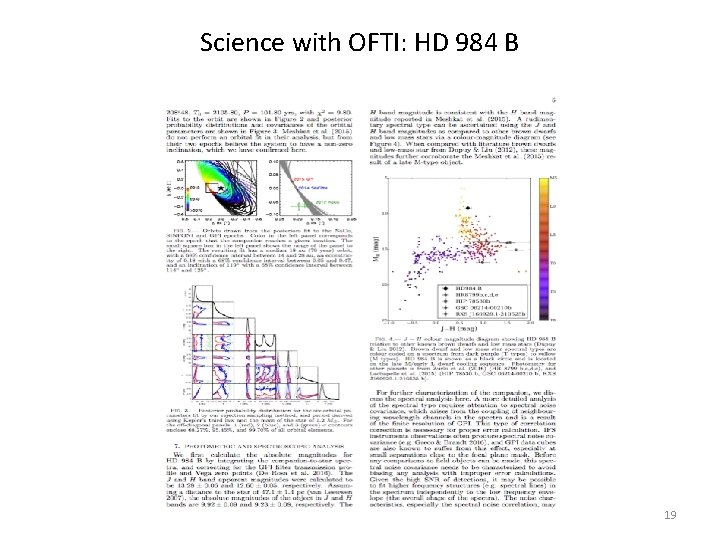
Science with OFTI: HD 984 B 19
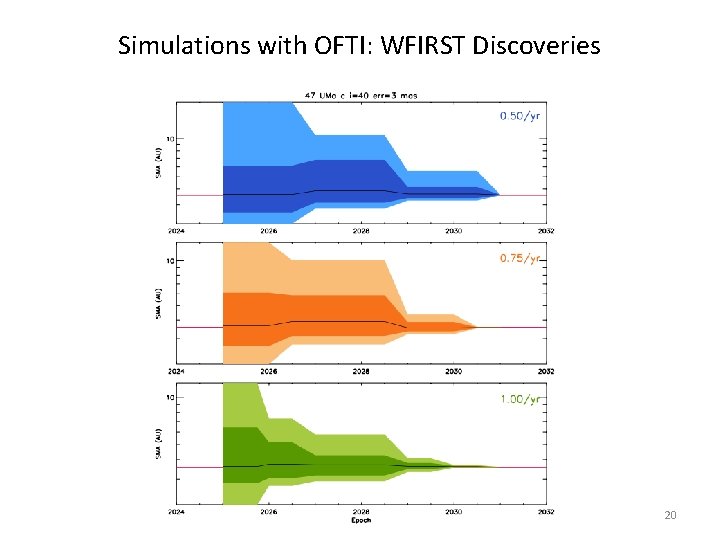
Simulations with OFTI: WFIRST Discoveries 20
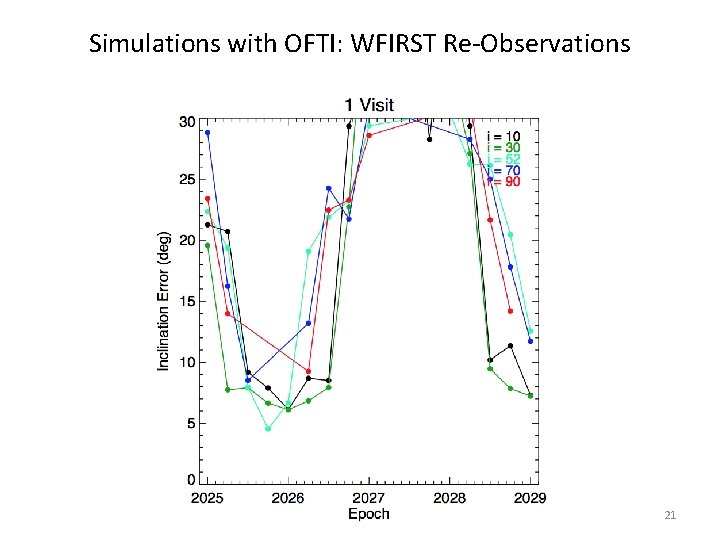
Simulations with OFTI: WFIRST Re-Observations 21
Future Hacks and Science more orbits more simulations the eccentricity distribution of Brown Dwarfs add systematics parameters fit radial velocity & imaging combined datasets explore Nyquist sampling problems for smaller orbital periods (Eric already working on this) • …and much more! • • • What can OFTI do for you? 22
References Overview: • AJ, Blunt et al 2017 Similar Techniques: • Ap. J, Konopacky et al 2016 • Ap. J, Price-Wheelan et al 2017 Science Papers: • AJ, Nielsen et al 2017 (submitted) • AJ, Ngo et al 2017 • AJ, Johnson-Groh et al 2017 • Ap. J, Bryan et al 2016 • Ap. JL, Rameau et al 2016 • Ap. JL, De Rosa et al 2015 23
Acknowledgments OFTI is based on a method described in Ghez et al (2008), and was jointly developed by the authors of this talk. S. B. has been supported by the National Science Foundation Research Experiences for Undergraduates Program under Grant No. AST-1359346 and the Stanford Summer Research Early-Identification Program. S. B. would also like to acknowledge and thank Charles Royce and the Royce Fellowship for their support, and Jasmine Garani for useful discussion. Thanks to Mike Fitzgerald, Anand Sivaramakrishnan, Alexandra Greenbaum, Max Millar-Blanchaer, and Vanessa Bailey for helpful discussion. Based on observations obtained at the Gemini Observatory, which is operated by the Association of Universities for Research in Astronomy, Inc. , under a cooperative agreement with the National Science Foundation (NSF) on behalf of the Gemini partnership: the NSF (United States), the National Research Council (Canada), CONICYT (Chile), the Australian Research Council (Australia), Ministério da Ciência, Tecnologiae Inovacao (Brazil) and Ministerio de Ciencia, Tecnología e Innovación Productiva (Argentina). E. L. N. , S. B. , B. M. , F. M. , and M. P. were supported by NASA grant NNX 14 AJ 80 G. R. J. D. R, J. J. W, J. R. G have been supported by NSF grant AST-1518332, National Aeronautics and Space Administration (NASA) Origins grant NNX 15 AC 89 G, and NASA NEx. SS grant NNX 15 AD 95 G. This work benefited from NASA’s Nexus for Exoplanet System Science (NEx. SS) research coordination network sponsored by NASA’s Science Mission Directorate. 24
- Slides: 24