
ORBIT MUDr Veronika Matukov Ph D FEBO Fractura
ORBIT MUDr. Veronika Matušková, Ph. D. , FEBO

Fractura orbitae Anatomy Canalis opticus Fissura orbitalis superior Fissura orbitalis inferior

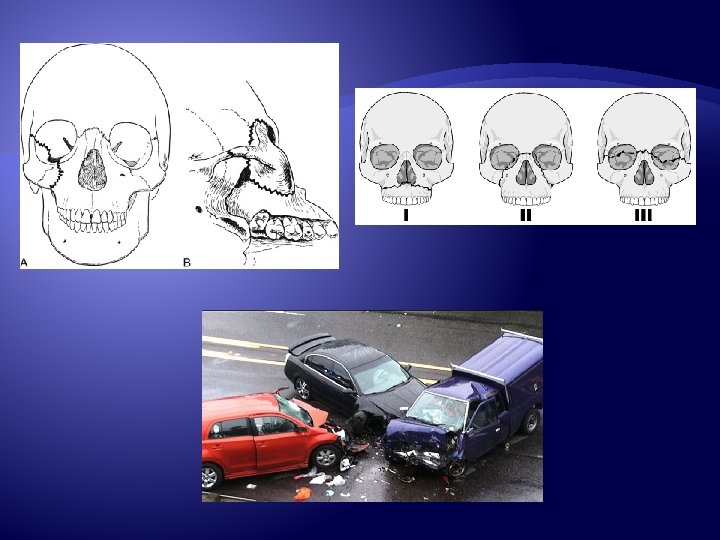
Fracturae of orbit v Roof - frontobasal, orbitofrontal v Lateral wall – orbitozygomatic v Medial wall – orbitoetmoideal v Floor – retromarginal, „blow out fracture“
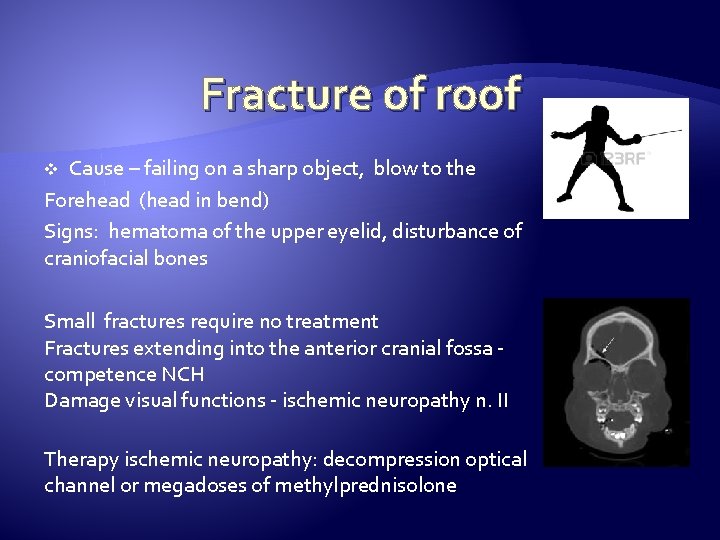
Fracture of roof Cause – failing on a sharp object, blow to the Forehead (head in bend) Signs: hematoma of the upper eyelid, disturbance of craniofacial bones v Small fractures require no treatment Fractures extending into the anterior cranial fossa competence NCH Damage visual functions - ischemic neuropathy n. II Therapy ischemic neuropathy: decompression optical channel or megadoses of methylprednisolone
Fracture of lateral wall � � Cause - blunt trauma on cheekbones Usually part of zygomatikomaxilárního complex (ZMK) � � � Symptoms: pain, hematoma of eyelids, conjunctiva chemosis, visual disturbances and eyeball displacement (diplopia, enophthalmos) Dg. - CT, NMR Treatment - Indications for surgery is persistent diplopia, limited mouth opening and flattening of the facial region
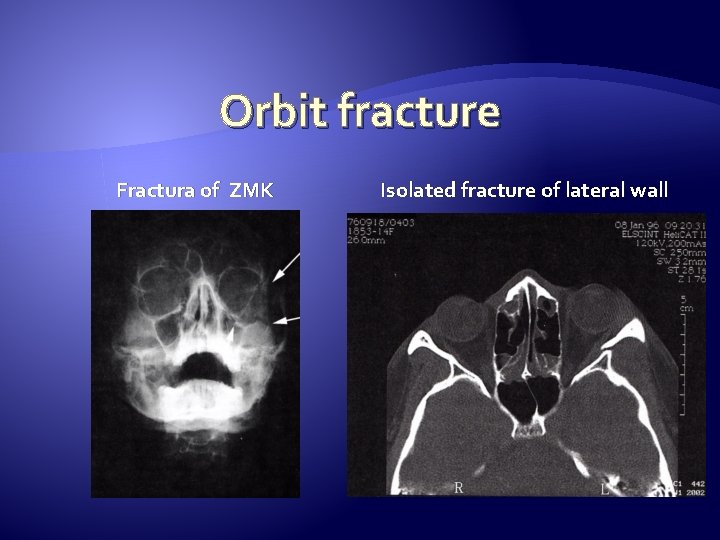
Orbit fracture Fractura of ZMK Isolated fracture of lateral wall
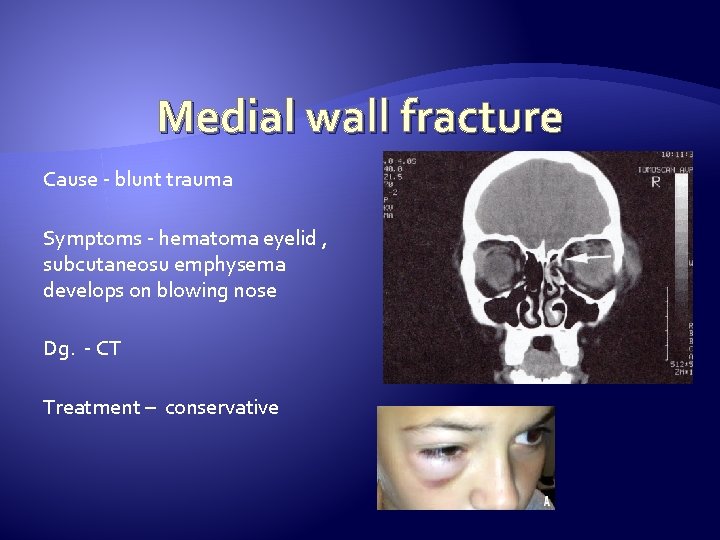
Medial wall fracture Cause - blunt trauma Symptoms - hematoma eyelid , subcutaneosu emphysema develops on blowing nose Dg. - CT Treatment – conservative
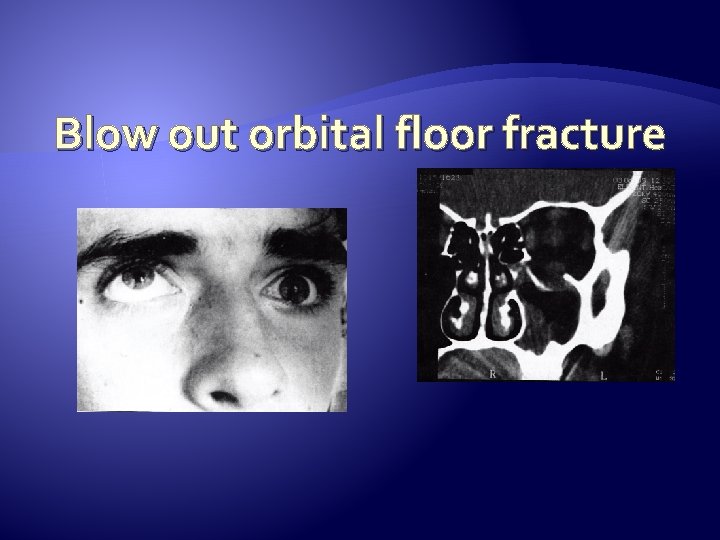
Blow out orbital floor fracture Cause – sudden increase in the orbital pressure by a striking object ( larger than 5 cm) The symptoms - swelling, hematoma of eyelids pseudoptóza, diplopia, inability to move the eyeball upwards (seriously elevation). Paresthesia, hypoesthesia in n. infraorbitalis.
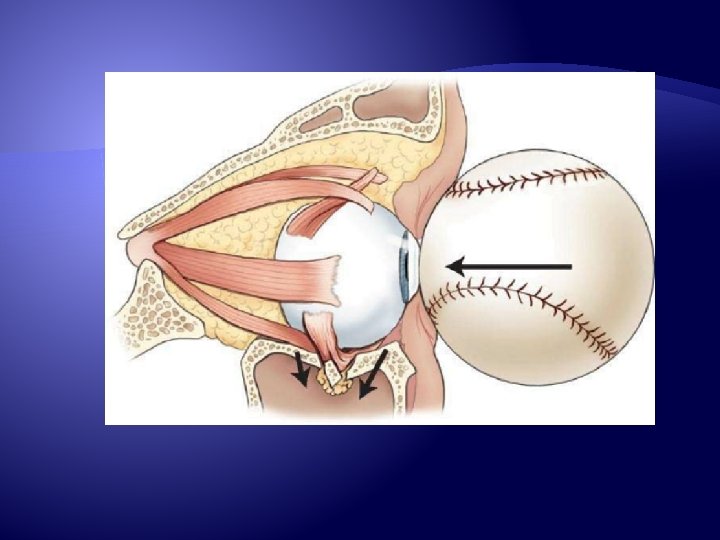
Blow out orbital floor fracture � Dg. - X-ray orbit, CT � Symptom - hammlock - wide breaking orbital floor. Significant enophthalmos, without incarceration of m. r. inf. Symptom - hanging drop - fisure fracture with soft tissue entrappment Double diplopia Test passive duction Treatment - Surgery – in case of entrappemnt (in 3 -5 days -resolved orbital hematoma). �
Blow out orbital floor fracture
Disease of lacrimal gland Acute dacryadenitis – rare, in isolation S: swelling of the lateral aspect of the eyelid – charakteristic „S“ shaped ptosis T: usually is not required Tumors: Lacrimal gland carcinoma - high mortality and morbidity T: surgery and radiotherapy
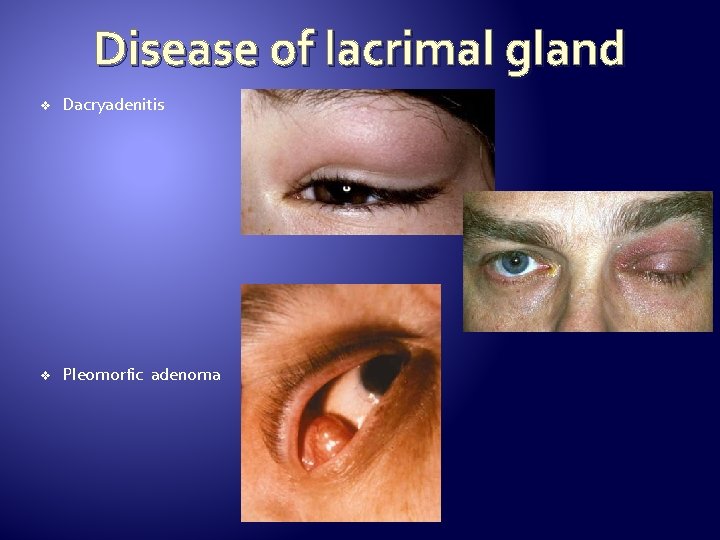
Disease of lacrimal gland v Dacryadenitis v Pleomorfic adenoma

Helter exophtalmometr � � � Measurement of the position of the eye Hertel exoftalmometr measures the distance corneal apex - the external edge of the bony orbit (diameter 17 mm, above 20 - pathology) Side difference to 2 mm - physiological Always should be recorded the distance of the outer edges of the orbits
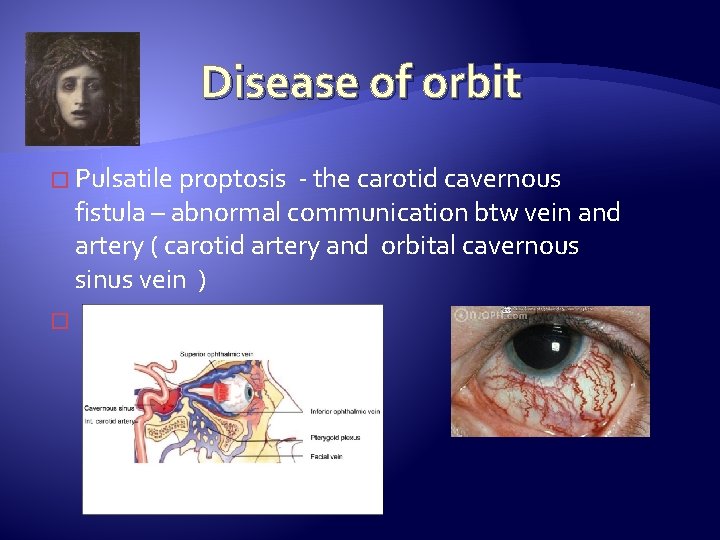
Disease of orbit � Pulsatile proptosis - the carotid cavernous fistula – abnormal communication btw vein and artery ( carotid artery and orbital cavernous sinus vein ) �
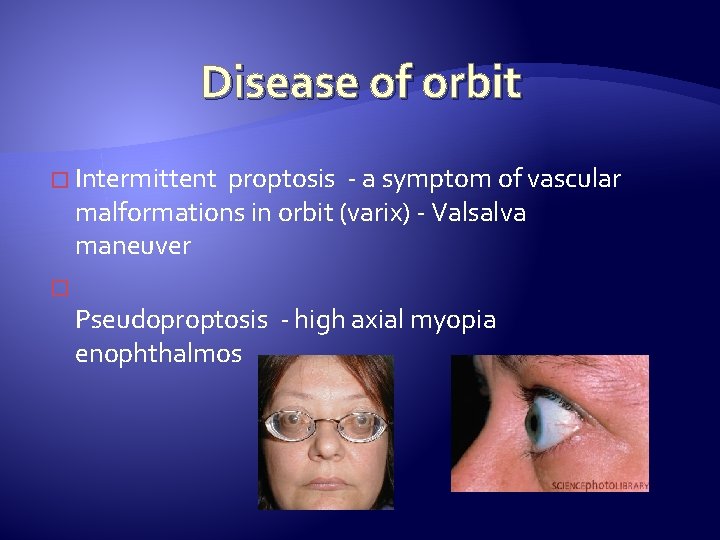
Disease of orbit � Intermittent proptosis - a symptom of vascular malformations in orbit (varix) - Valsalva maneuver � Pseudoproptosis - high axial myopia enophthalmos
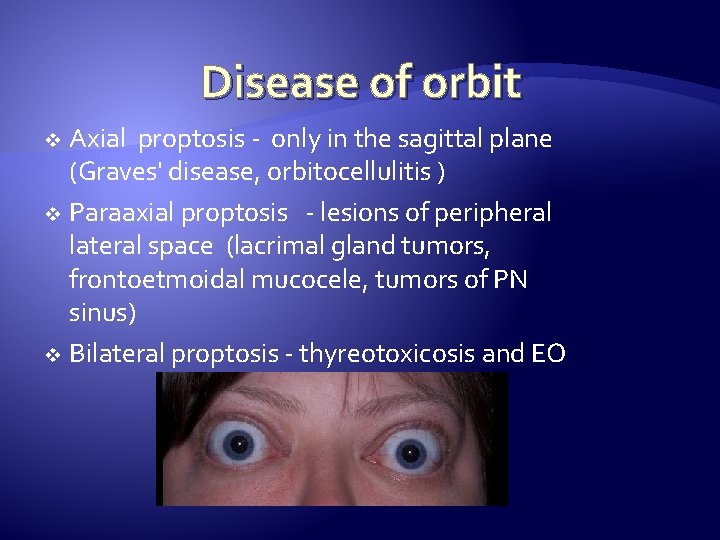
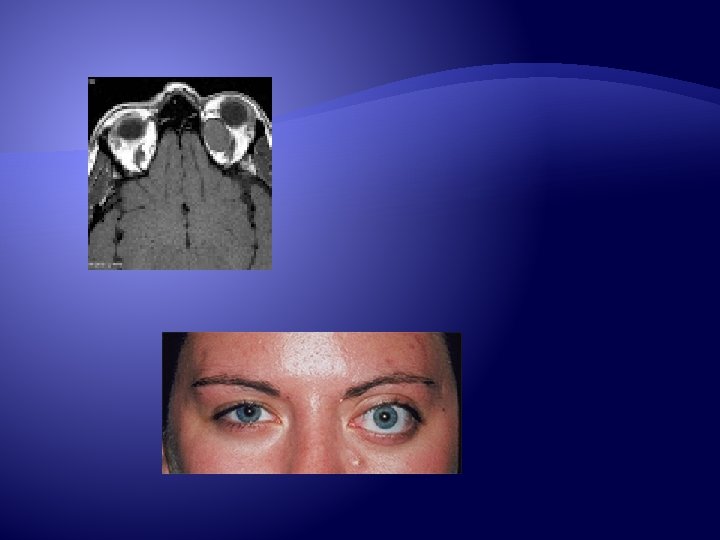
Disease of orbit Axial proptosis - only in the sagittal plane (Graves' disease, orbitocellulitis ) v Paraaxial proptosis - lesions of peripheral lateral space (lacrimal gland tumors, frontoetmoidal mucocele, tumors of PN sinus) v Bilateral proptosis - thyreotoxicosis and EO v
Examination of orbit X ray v Ultrasound v CT v NMR v

Inflammation of orbit Etiopatogenesis: Microbial infection Immune responses hyperergická-allergic-type Endocrine ophthalmopathy (Graves disease) orbitocellulitis phlegmone orbit abscess of orbit Tenonitis myositis orbitalis Inflammatory pseudotumor of the orbit
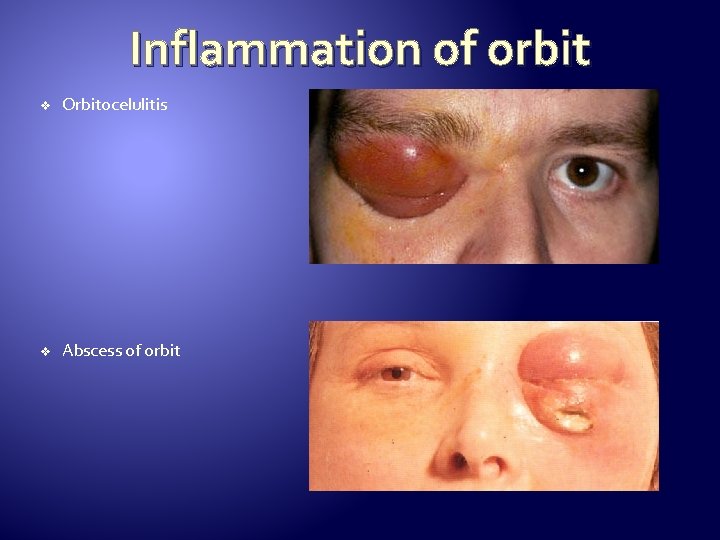
Inflammation of orbit v Orbitocelulitis v Abscess of orbit
Endocrine orbitopathy (EO) Autoimmune disease with the formation of a binding antibodies on cells of thyroid gland Orbital fat Subcutaneous tissue front of the lower leg v Clinical picture: Eyelid symptoms Eye movement disorder Pseudoglaukom Exophtalmus Neuropathy n. II v
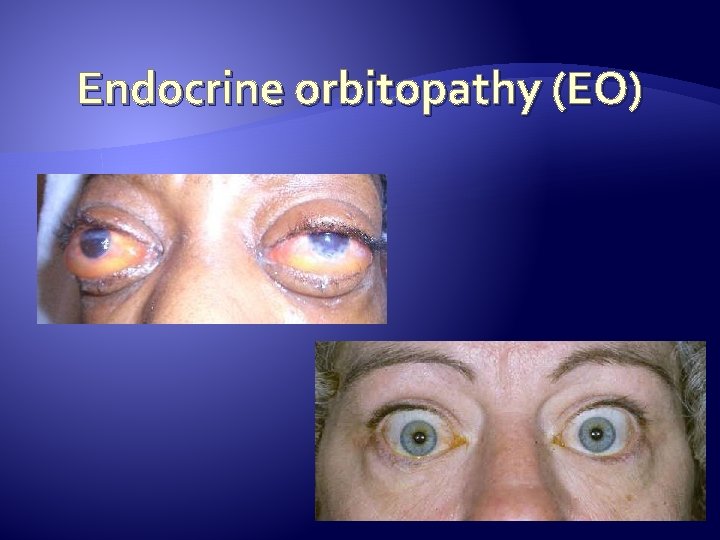
Endocrine orbitopathy (EO)
Endocrine orbitopathy (EO) Diagnosis: laboratory findings Imaging (ultrasound B scan, NMR, CT) Test passive duction (muscle fibrosis) Complications of EO - the cornea exposure, elevated intraocular pressure, changes in the orbit (neuropathy) v v Treatment: Endokrinologist Ophthalmologist - serious ocular complications megadoses of steroids, orbital decompression, the treatment of ocular disorders
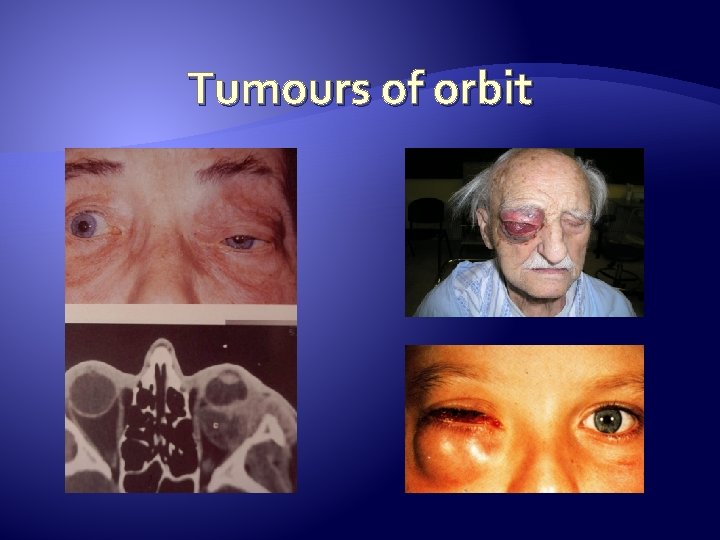
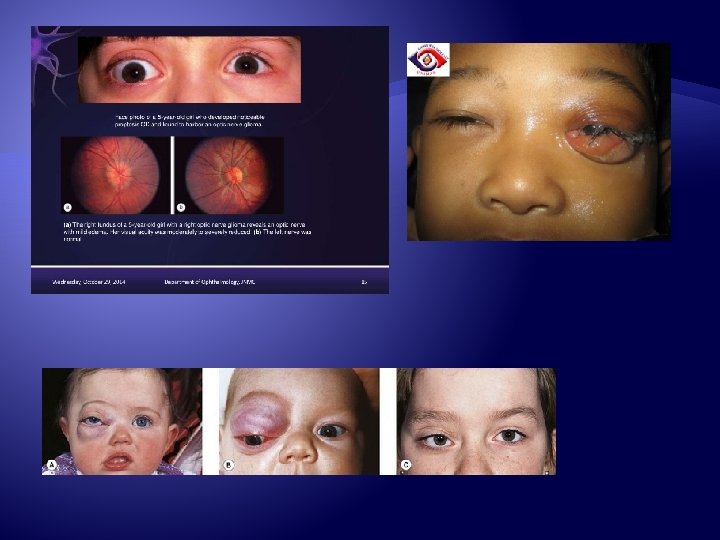
Tumours of orbit v Benign and malignant primary secondary metastatic Primary vascular tumors dermoid cyst nerve tumors lacrimal gland tumors meningiomas orbit malignant lymphomas rhabdomyosarcoma
Tumours of orbit
Tumours of orbit Secondary tumors of PN sinuses carcinomas of the eyelids Extrabulbar expansion of intraocular tumors metastatic Adenocarcinomas (breast, lung, prostate, colon, pancreas, testis) Treatment According to type, location and size of the tumor. Interdisciplinary cooperation Anterior, lateral, and transcranial transetmoidální orbitotomy. Orbital decompression, exenteration of the orbit.

Enucleation and exenteration Enucleation of the eyeball – Removing the whole globe after ( transection of eye ocular muscles and optic nerve) Indications: malignant intraocular tumors without extrabulbární promotion painful blind bulbus cosmetically unsightly blind bulbus devastating eye injury (primary enucleation) sympathetic ophthalmia

Enucleation and exenteration Enucleation of the eyeball surgical procedure without orbital implant
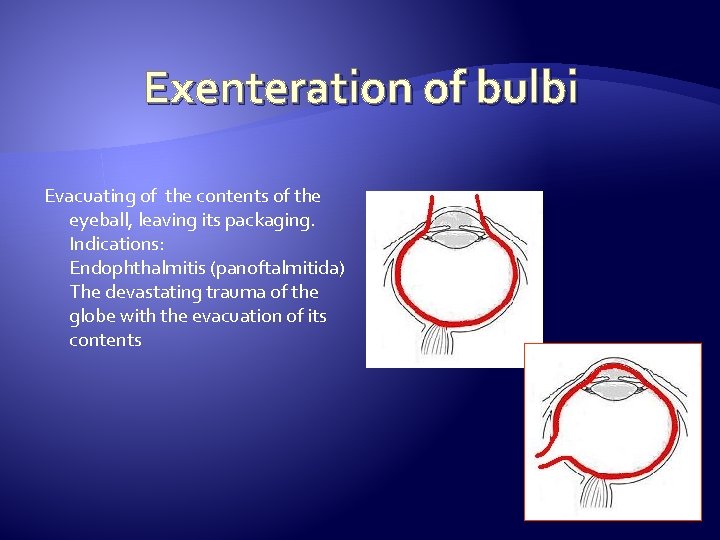
Exenteration of bulbi Evacuating of the contents of the eyeball, leaving its packaging. Indications: Endophthalmitis (panoftalmitida) The devastating trauma of the globe with the evacuation of its contents

Enucleation and exenteration Without implant With implant
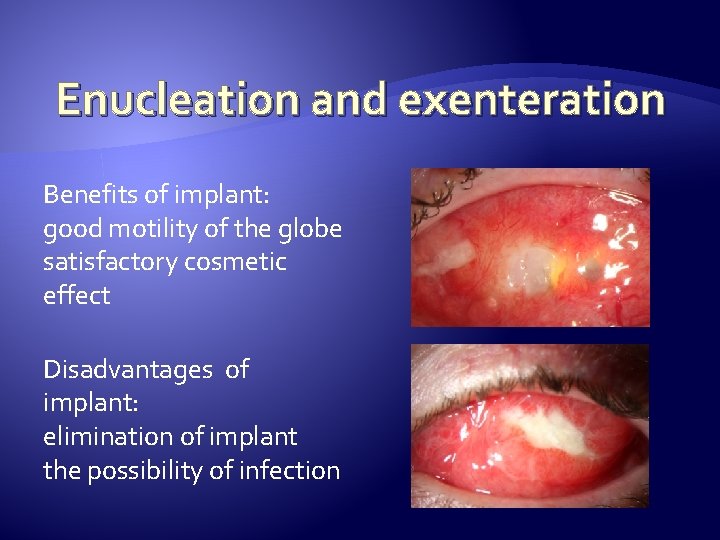
Enucleation and exenteration Benefits of implant: good motility of the globe satisfactory cosmetic effect Disadvantages of implant: elimination of implant the possibility of infection
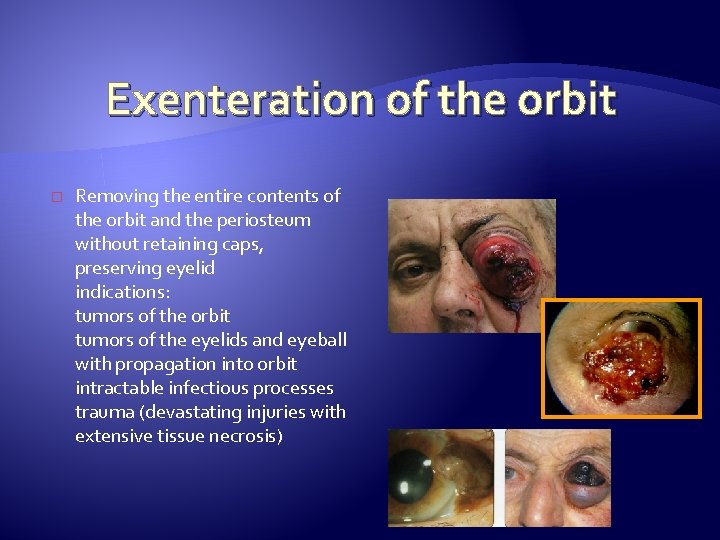
Exenteration of the orbit � Removing the entire contents of the orbit and the periosteum without retaining caps, preserving eyelid indications: tumors of the orbit tumors of the eyelids and eyeball with propagation into orbit intractable infectious processes trauma (devastating injuries with extensive tissue necrosis)
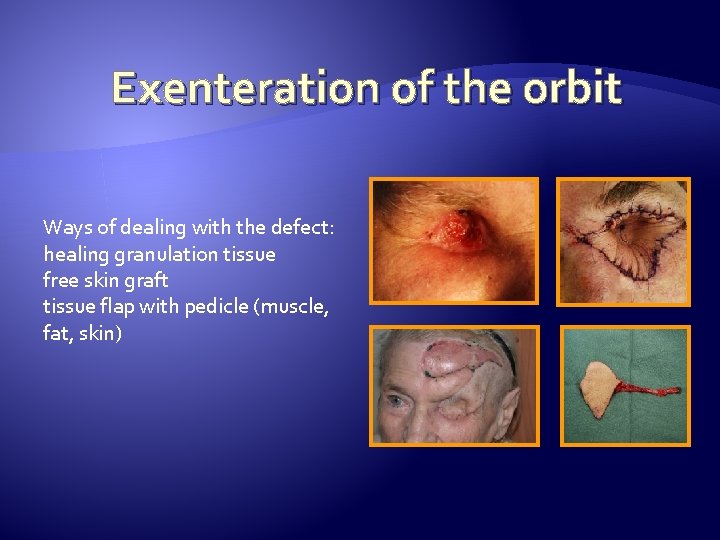
Exenteration of the orbit Ways of dealing with the defect: healing granulation tissue free skin graft tissue flap with pedicle (muscle, fat, skin)

Exenteration of the orbit Permanent Cosmetic Solutions: Spectacle ectoprotesis (prostheses) Fixed implants
- Slides: 38