
Orange County Environmental Health Food Protection Program How





- Slides: 35
Orange County Environmental Health Food Protection Program How to Get a PASS Enhancements to the Inspection Notification Seals Effective October 1, 2009
How to Get a PASS Agenda Purpose of this training Overview of the new Inspection Notification Seals Major violations Imminent health hazards Questions & Answers
How to Get a PASS The purpose of this training is to give Orange County food facility operators all the information they need to get a PASS. Covering: Major violations and reasons for permit suspensions What causes these violations Proactive strategies
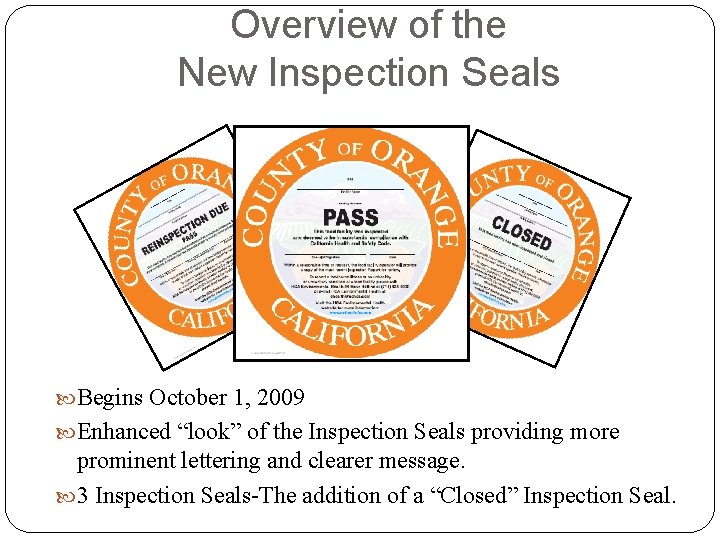
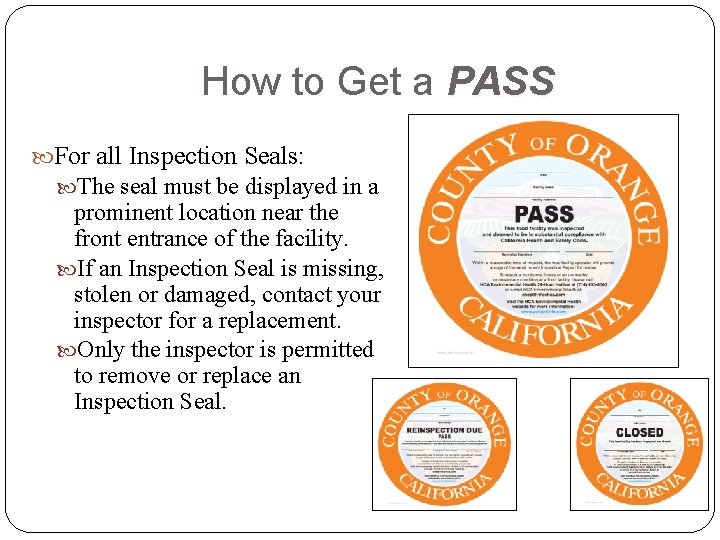
Overview of the New Inspection Seals Begins October 1, 2009 Enhanced “look” of the Inspection Seals providing more prominent lettering and clearer message. 3 Inspection Seals-The addition of a “Closed” Inspection Seal.
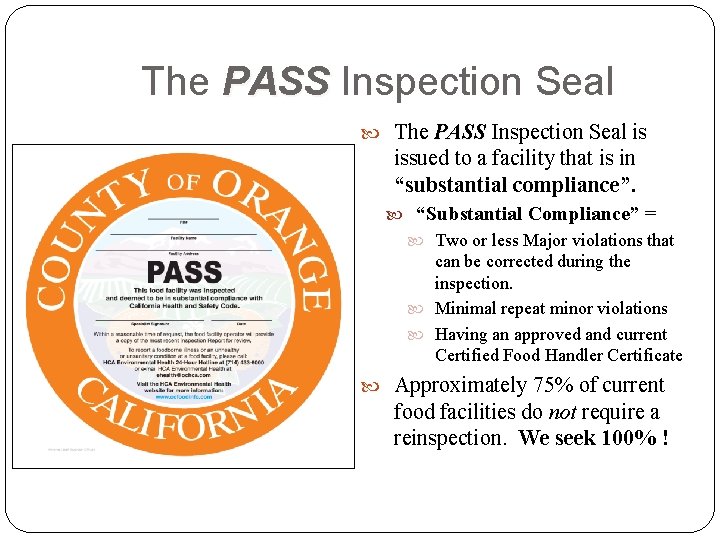
The PASS Inspection Seal is issued to a facility that is in “substantial compliance”. “Substantial Compliance” = Two or less Major violations that can be corrected during the inspection. Minimal repeat minor violations Having an approved and current Certified Food Handler Certificate Approximately 75% of current food facilities do not require a reinspection. We seek 100% !
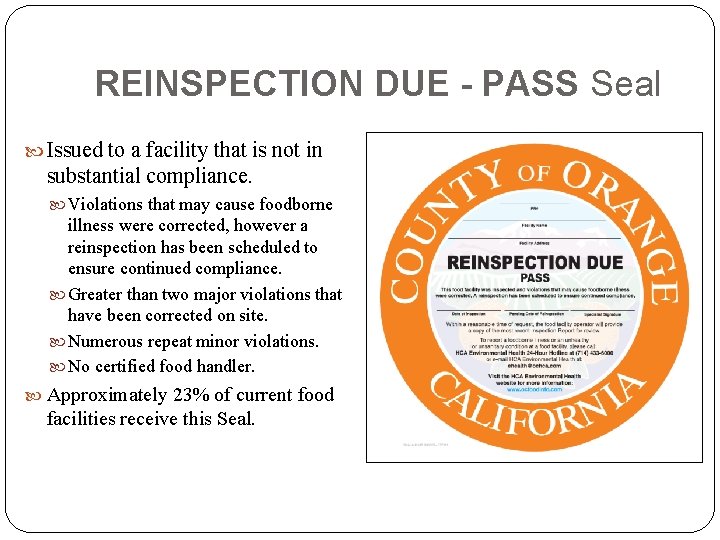
REINSPECTION DUE - PASS Seal Issued to a facility that is not in substantial compliance. Violations that may cause foodborne illness were corrected, however a reinspection has been scheduled to ensure continued compliance. Greater than two major violations that have been corrected on site. Numerous repeat minor violations. No certified food handler. Approximately 23% of current food facilities receive this Seal.
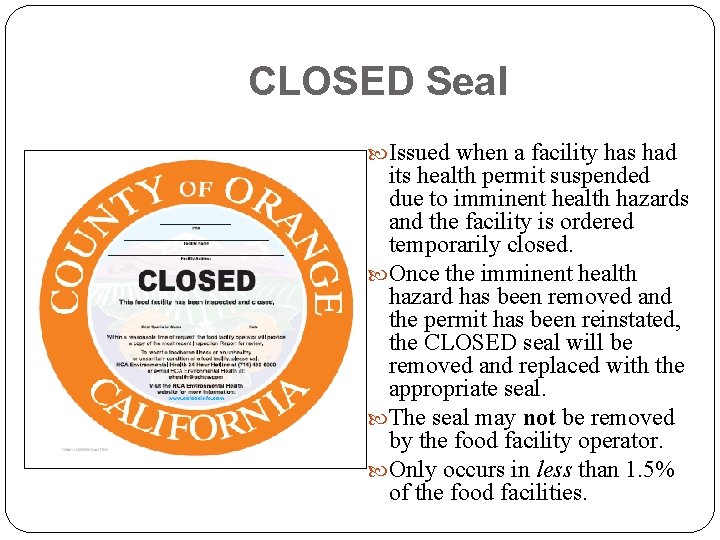
CLOSED Seal Issued when a facility has had its health permit suspended due to imminent health hazards and the facility is ordered temporarily closed. Once the imminent health hazard has been removed and the permit has been reinstated, the CLOSED seal will be removed and replaced with the appropriate seal. The seal may not be removed by the food facility operator. Only occurs in less than 1. 5% of the food facilities.
How to Get a PASS For all Inspection Seals: The seal must be displayed in a prominent location near the front entrance of the facility. If an Inspection Seal is missing, stolen or damaged, contact your inspector for a replacement. Only the inspector is permitted to remove or replace an Inspection Seal.
How to Get a Pass How do you get a PASS? Avoid major violations Major violation means, “A violation of [California Retail Food Code] that poses an imminent health hazard and warrants immediate closure of the food facility or immediate correction.
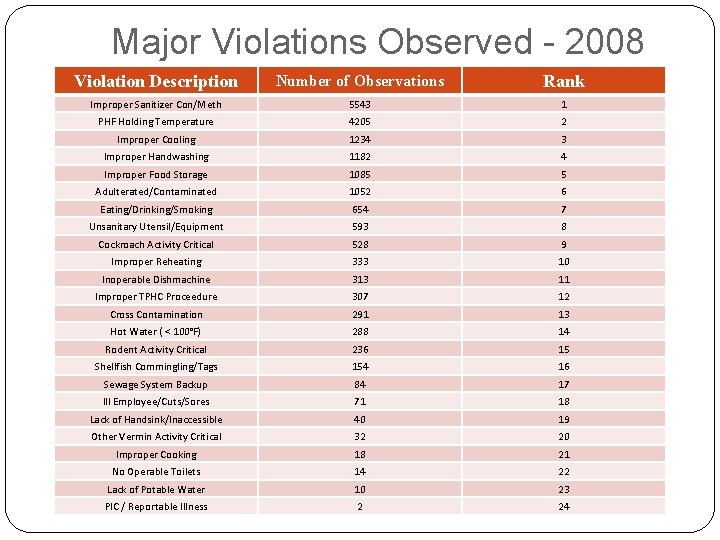
Major Violations Observed - 2008 Violation Description Number of Observations Rank Improper Sanitizer Con/Meth 5543 1 PHF Holding Temperature 4205 2 Improper Cooling 1234 3 Improper Handwashing 1182 4 Improper Food Storage 1085 5 Adulterated/Contaminated 1052 6 Eating/Drinking/Smoking 654 7 Unsanitary Utensil/Equipment 593 8 Cockroach Activity Critical 528 9 Improper Reheating 333 10 Inoperable Dishmachine 313 11 Improper TPHC Proceedure 307 12 Cross Contamination 291 13 Hot Water ( < 100°F) 288 14 Rodent Activity Critical 236 15 Shellfish Commingling/Tags 154 16 Sewage System Backup 84 17 Ill Employee/Cuts/Sores 71 18 Lack of Handsink/Inaccessible 40 19 Other Vermin Activity Critical 32 20 Improper Cooking 18 21 No Operable Toilets 14 22 Lack of Potable Water 10 23 PIC / Reportable Illness 2 24
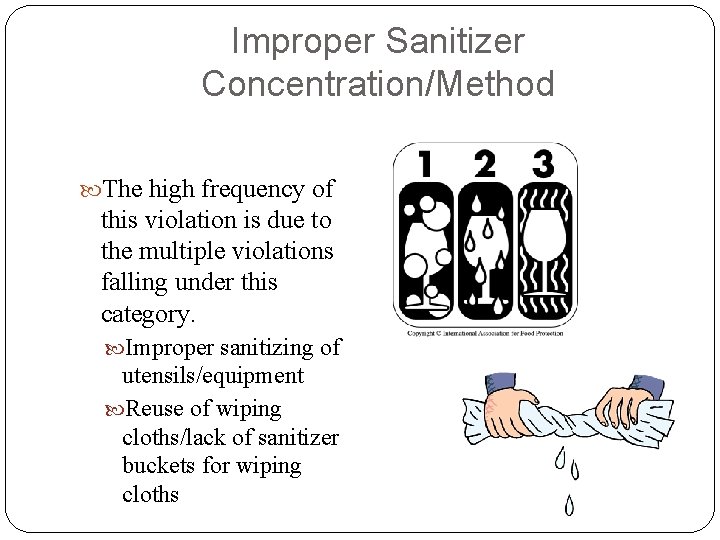
Improper Sanitizer Concentration/Method The high frequency of this violation is due to the multiple violations falling under this category. Improper sanitizing of utensils/equipment Reuse of wiping cloths/lack of sanitizer buckets for wiping cloths
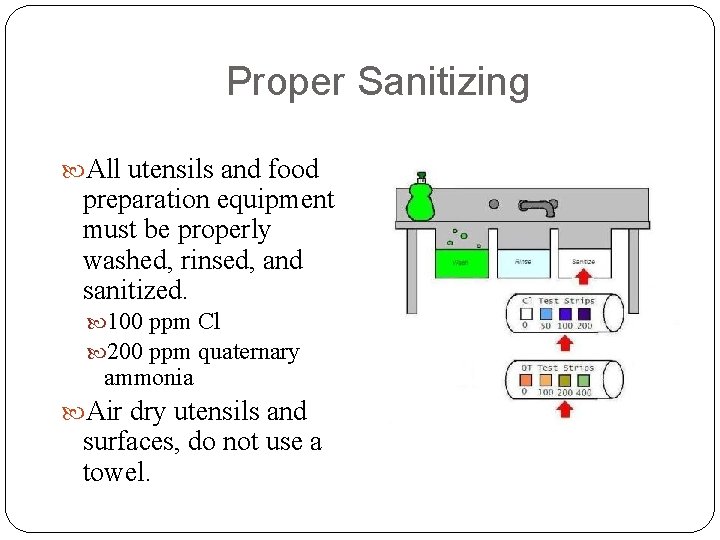
Proper Sanitizing All utensils and food preparation equipment must be properly washed, rinsed, and sanitized. 100 ppm Cl 200 ppm quaternary ammonia Air dry utensils and surfaces, do not use a towel.
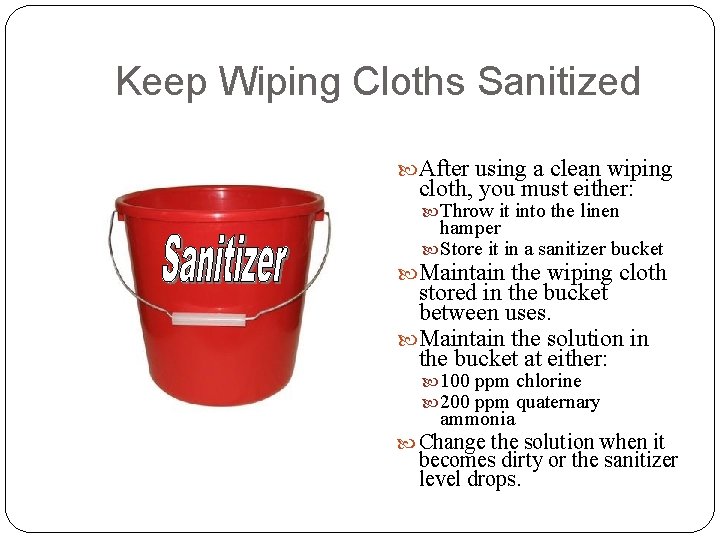
Keep Wiping Cloths Sanitized After using a clean wiping cloth, you must either: Throw it into the linen hamper Store it in a sanitizer bucket Maintain the wiping cloth stored in the bucket between uses. Maintain the solution in the bucket at either: 100 ppm chlorine 200 ppm quaternary ammonia Change the solution when it becomes dirty or the sanitizer level drops.
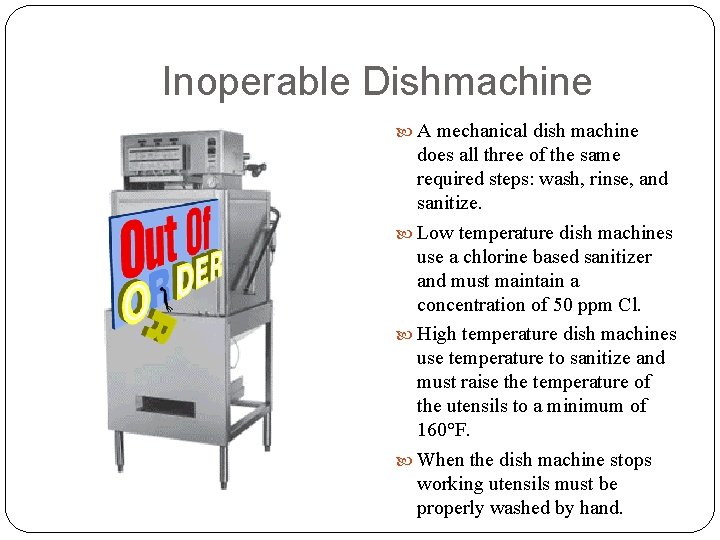
Inoperable Dishmachine A mechanical dish machine does all three of the same required steps: wash, rinse, and sanitize. Low temperature dish machines use a chlorine based sanitizer and must maintain a concentration of 50 ppm Cl. High temperature dish machines use temperature to sanitize and must raise the temperature of the utensils to a minimum of 160°F. When the dish machine stops working utensils must be properly washed by hand.
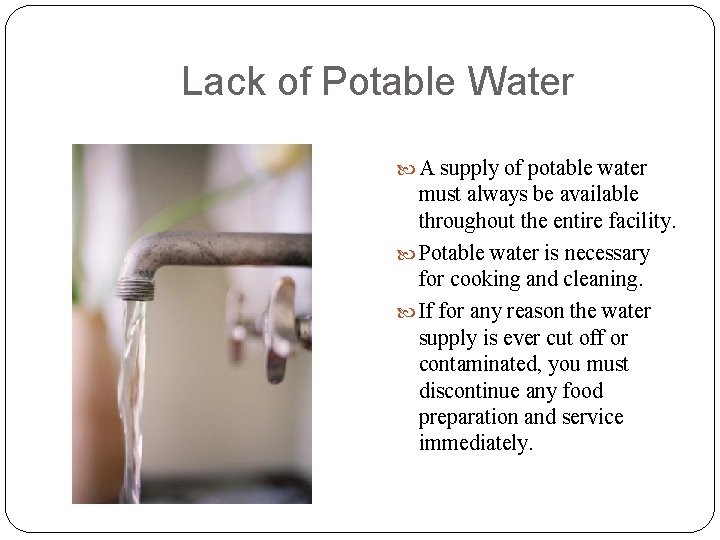
Lack of Potable Water A supply of potable water must always be available throughout the entire facility. Potable water is necessary for cooking and cleaning. If for any reason the water supply is ever cut off or contaminated, you must discontinue any food preparation and service immediately.
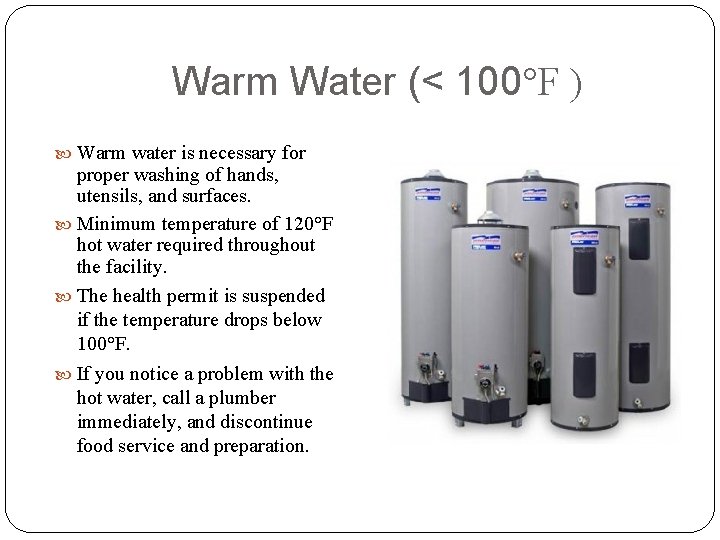
Warm Water (< 100°F ) Warm water is necessary for proper washing of hands, utensils, and surfaces. Minimum temperature of 120°F hot water required throughout the facility. The health permit is suspended if the temperature drops below 100°F. If you notice a problem with the hot water, call a plumber immediately, and discontinue food service and preparation.
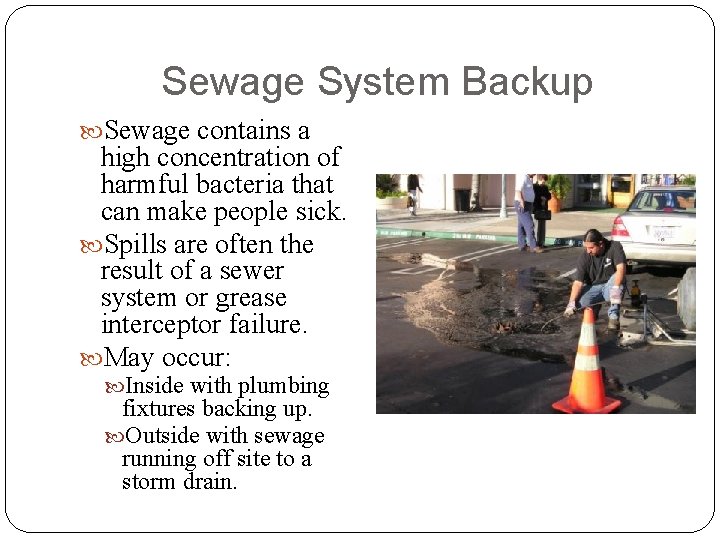
Sewage System Backup Sewage contains a high concentration of harmful bacteria that can make people sick. Spills are often the result of a sewer system or grease interceptor failure. May occur: Inside with plumbing fixtures backing up. Outside with sewage running off site to a storm drain.
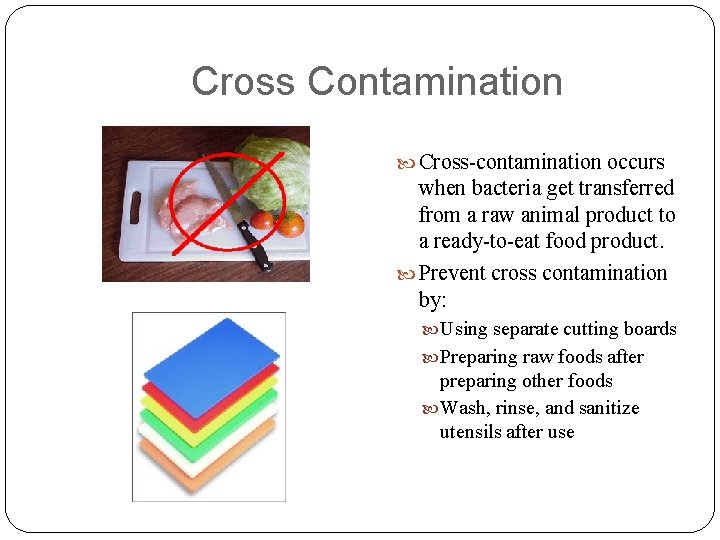
Cross Contamination Cross-contamination occurs when bacteria get transferred from a raw animal product to a ready-to-eat food product. Prevent cross contamination by: Using separate cutting boards Preparing raw foods after preparing other foods Wash, rinse, and sanitize utensils after use
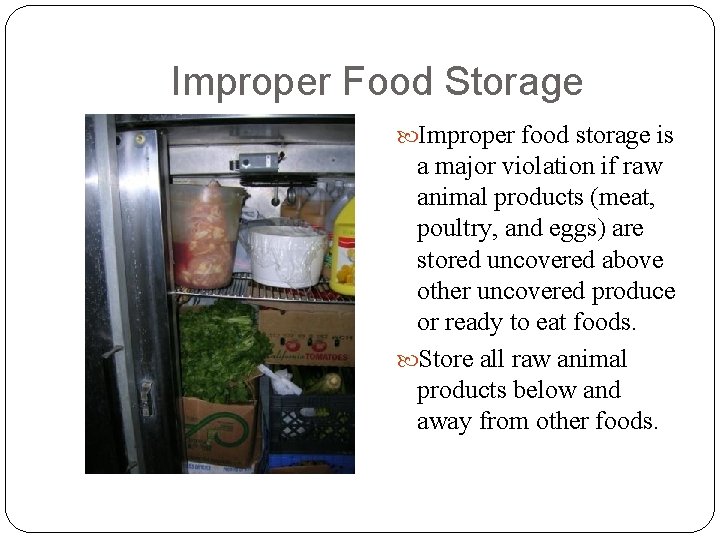
Improper Food Storage Improper food storage is a major violation if raw animal products (meat, poultry, and eggs) are stored uncovered above other uncovered produce or ready to eat foods. Store all raw animal products below and away from other foods.
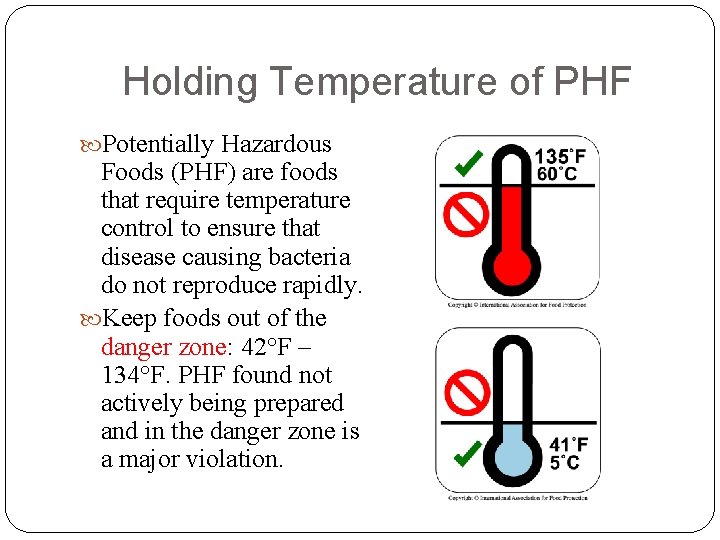
Holding Temperature of PHF Potentially Hazardous Foods (PHF) are foods that require temperature control to ensure that disease causing bacteria do not reproduce rapidly. Keep foods out of the danger zone: 42°F – 134°F. PHF found not actively being prepared and in the danger zone is a major violation.
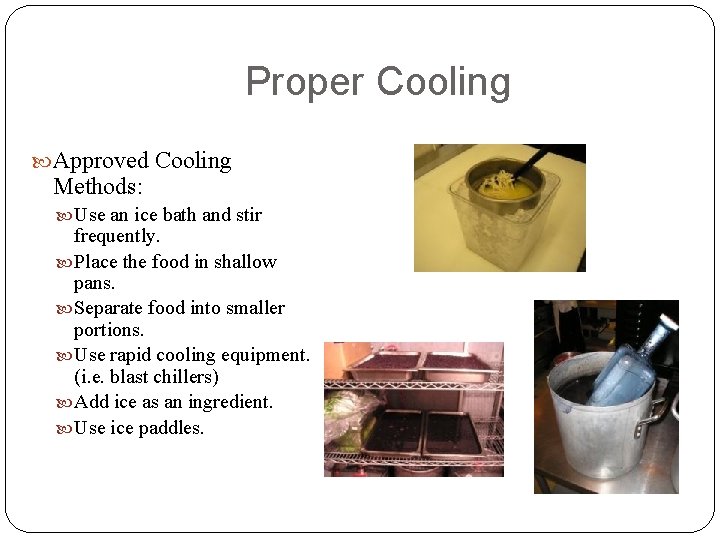
Proper Cooling Approved Cooling Methods: Use an ice bath and stir frequently. Place the food in shallow pans. Separate food into smaller portions. Use rapid cooling equipment. (i. e. blast chillers) Add ice as an ingredient. Use ice paddles.
Proper Cooking Animal products must be cooked to a minimum temperature to ensure that harmful bacteria are killed. Proper cooking temperatures: Poultry – 165°F Ground Meat – 155°F Fish, Eggs, Pork, and Lamb – 145°F
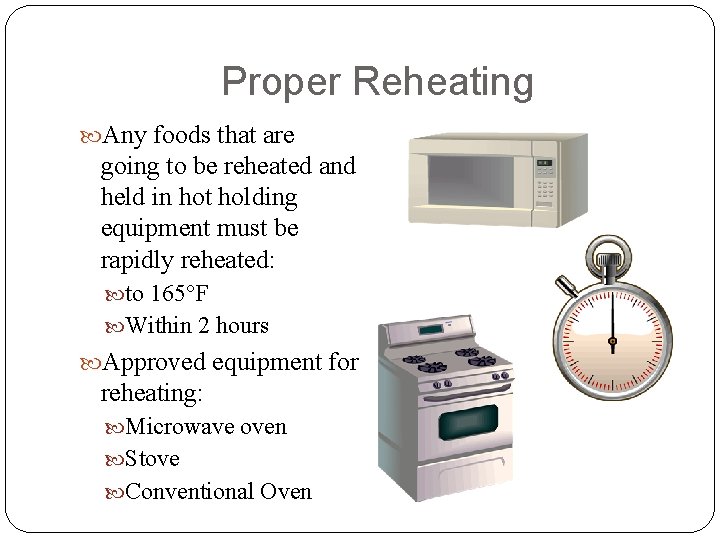
Proper Reheating Any foods that are going to be reheated and held in hot holding equipment must be rapidly reheated: to 165°F Within 2 hours Approved equipment for reheating: Microwave oven Stove Conventional Oven
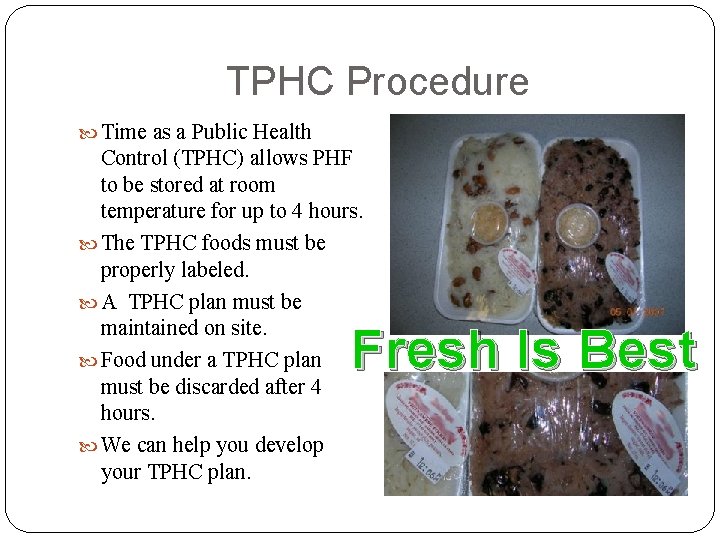
TPHC Procedure Time as a Public Health Control (TPHC) allows PHF to be stored at room temperature for up to 4 hours. The TPHC foods must be properly labeled. A TPHC plan must be maintained on site. Food under a TPHC plan must be discarded after 4 hours. We can help you develop your TPHC plan. Fresh Is Best
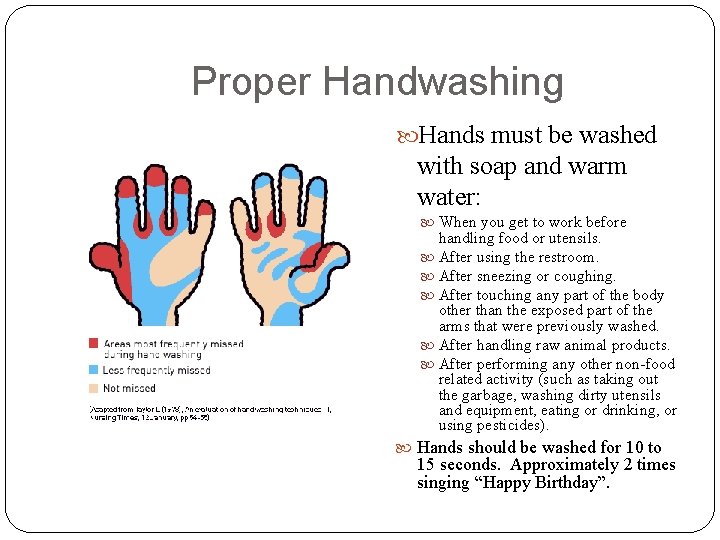
Proper Handwashing Hands must be washed with soap and warm water: When you get to work before handling food or utensils. After using the restroom. After sneezing or coughing. After touching any part of the body other than the exposed part of the arms that were previously washed. After handling raw animal products. After performing any other non-food related activity (such as taking out the garbage, washing dirty utensils and equipment, eating or drinking, or using pesticides). Hands should be washed for 10 to 15 seconds. Approximately 2 times singing “Happy Birthday”.
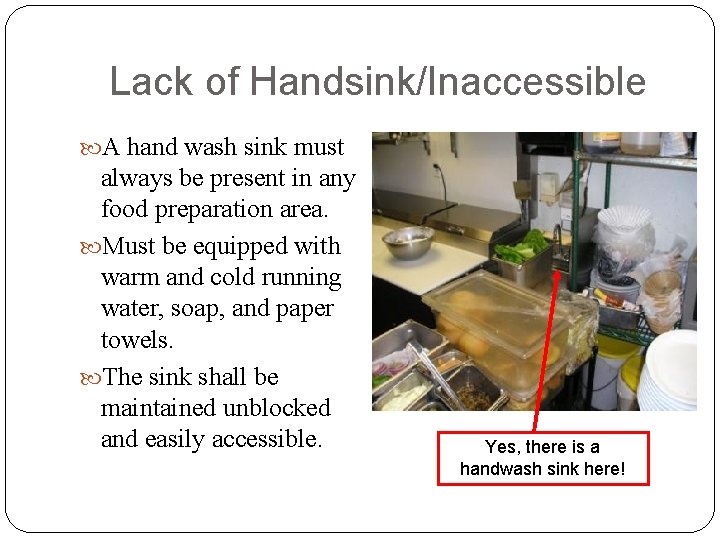
Lack of Handsink/Inaccessible A hand wash sink must always be present in any food preparation area. Must be equipped with warm and cold running water, soap, and paper towels. The sink shall be maintained unblocked and easily accessible. Yes, there is a handwash sink here!
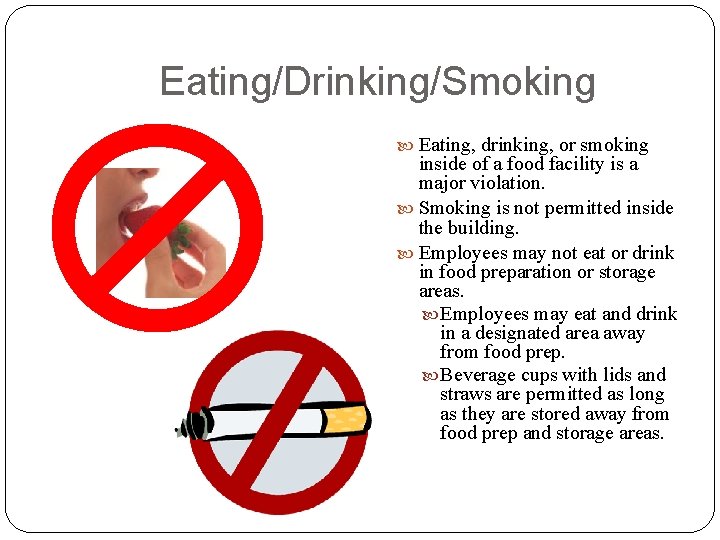
Eating/Drinking/Smoking Eating, drinking, or smoking inside of a food facility is a major violation. Smoking is not permitted inside the building. Employees may not eat or drink in food preparation or storage areas. Employees may eat and drink in a designated area away from food prep. Beverage cups with lids and straws are permitted as long as they are stored away from food prep and storage areas.
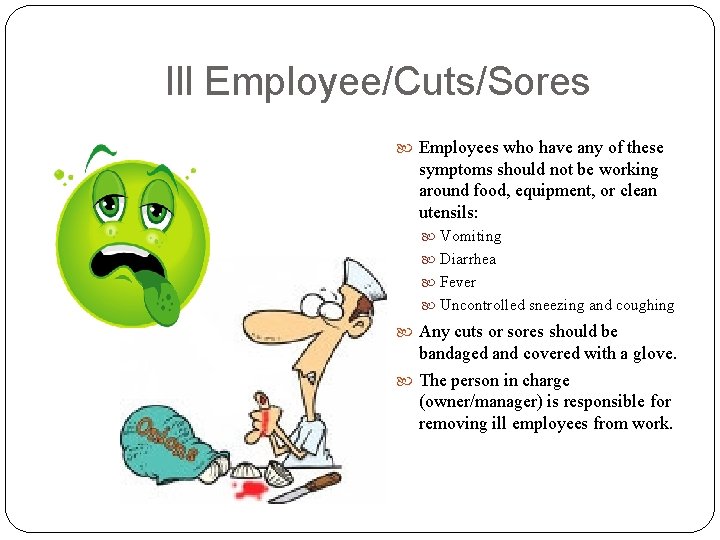
Ill Employee/Cuts/Sores Employees who have any of these symptoms should not be working around food, equipment, or clean utensils: Vomiting Diarrhea Fever Uncontrolled sneezing and coughing Any cuts or sores should be bandaged and covered with a glove. The person in charge (owner/manager) is responsible for removing ill employees from work.
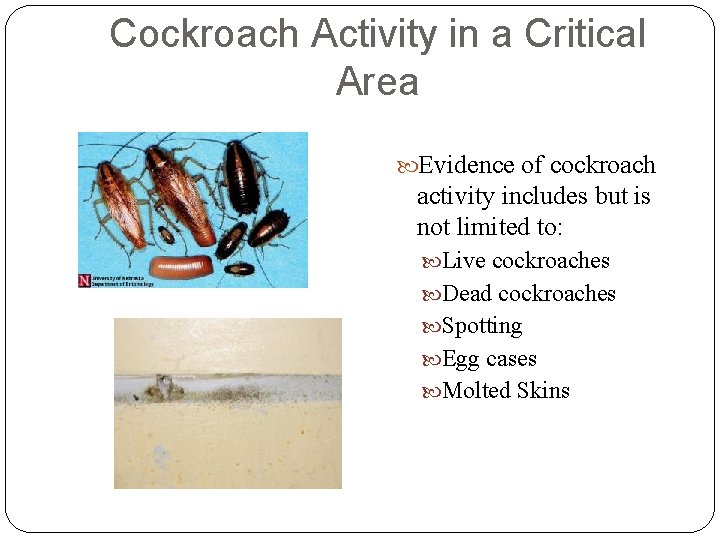
Cockroach Activity in a Critical Area Evidence of cockroach activity includes but is not limited to: Live cockroaches Dead cockroaches Spotting Egg cases Molted Skins
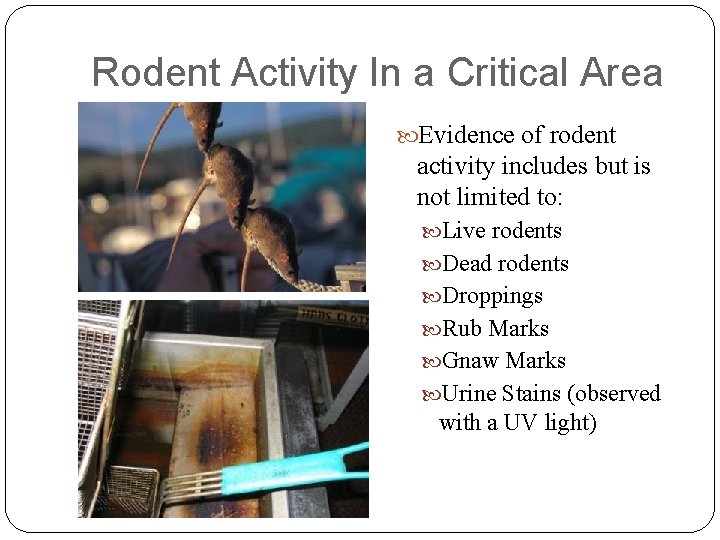
Rodent Activity In a Critical Area Evidence of rodent activity includes but is not limited to: Live rodents Dead rodents Droppings Rub Marks Gnaw Marks Urine Stains (observed with a UV light)
www. ocfoodinfo. com 2 year history of each facility in O. C. Major and minor violations Any regulatory action PDF copy of report List of Award of Excellence winners Health news updates and recall information
Award of Excellence The Award of Excellence is given to food facilities that maintain the highest standards of food safety and sanitation. Open food facilities must go one calendar year with: No major violations Average of 6 or less minor violations Have a least one certified food handler. Have at least 2 routine inspections conducted in the calendar year.
GET INVOLVED! The Orange County Food Safety Advisory Council (FSAC) is an organization of food service operators. Identify and address areas of food safety concerns and challenges. Promote a close working relationship with the Orange County Food Protection Program. For more information on how to become a voting member and have a voice check out the FSAC webpage at www. ocfoodinfo. com
For Additional Information Contact your inspector or their supervisor. Robert Curtis (714) 433 – 6103 rcurtis@ochca. com Orange County Food Protection Program Web Site: www. ocfoodinfo. com Free “How to Get a Pass” classes twice per month until October. English, Spanish, Vietnamese, Cantonese, Mandarin, and Korean FREE!
Questions