
Oral ulceration vesiculobullous and dermatologic diseases Markta Hermanov
Oral ulceration, vesiculobullous and dermatologic diseases. Markéta Hermanová
Causes of oral ulceration (I) n Infective Bacterial Viral Fungal n Traumatic Mechanical Chemical Thermal Factitious injury Radiation Eosinophilic ulcer (traumatic granuloma) n Idiopathic Recurrent aphthous stomatitis minor aphthous ulcers major aphthous ulcers herpetiform ulcers
Causes of oral ulceration (II) n Associated with systemic disease Haematological diseases GIT diseases Behcet´s disease (syndrome) HIV infection Other diseases n Associated with dermatological diseases Lichen planus Chronic discoid lupus erythematosus Vesiculobullous diseases n Neoplastic Squamous cell carcinoma Other malignant neoplasms
Traumatic ulceration n A cause of trauma must be identified n The cause must fit the site, size, and shape of the ulcer n On removal of the cause the ulcer must show signs of healing within 10 days
Traumatic ulceration - remarks n Mechanical injury: often related to overxtended flanges of a denture (diff. dg. neoplastic ulcer!) n Radiation injury (delayed effects: epithelial atrophy, damage of vasculature; immediate effects: erythema, radiation mucositis, ulceration, oedema dueto obstruction of lymphatics) n Factitious ulcers (self-inflicted – manifestation of stress, anxiety, emotional disturbance, …) n Eosinophilic ulcers (traumatic or eosinophilic granuloma of the tongue) ass. with trauma and crush injury of muscle – unknown etiology n Chemical injury (caused also by chemicals used in dental practice, preparations used by patients in self-treatment, aspirin (oedema to epithelial necrosis)
Recurrent aphthous stomatitis (RAS): clinical variation Minor aphthous ulcers (80 %) n Major aphthous ulcers (10 %) n Herpetiform ulcers n n Histopathology: ulcerative lesion covered with fibrinopurulent membrane, mixed inflammatory infiltration; spongiosis of the epithelium
Clinical features of RAS Minor Major Herpetiform Age of onset 10 -19 20 -29 Number of ulcers 1 -5 1 -10 10 -100 Size of ulcers (mm) <10 >10 1 -2, often coalesce Duration (days) 7 -14 >30 10 -30 As for minor+palate, pharynx As for minor+floor of the mouth, palate, pharynx, gingiva Principal sites Lips, cheeks, tongue
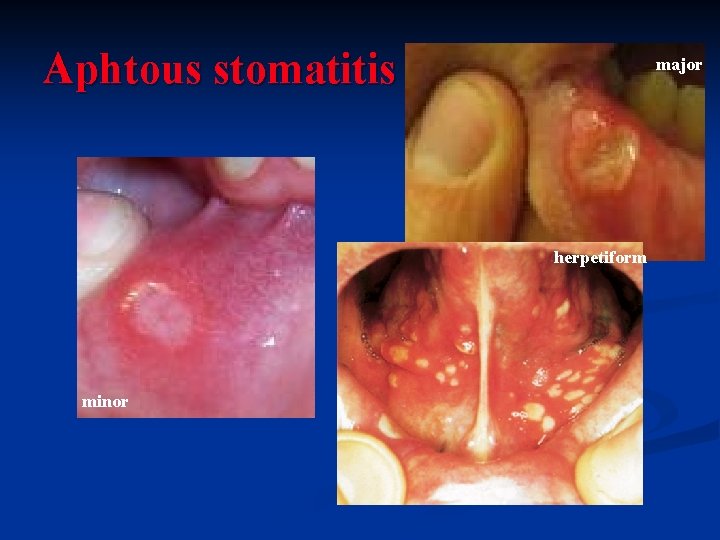
Aphtous stomatitis major herpetiform minor
Potential etiopathogenetic factors of RAS n n n n n Allergies Genetic predisposition (HLA-B 12, B 51, Cw 7) Nutritional abnormalities (B 12, folate and iron deficiences) Haematological disorders (anemia) Gastrointestinal diseases (avitaminosis B 12 – atrophic oral mucosae, MAS, coeliac disease, ulcerative colitis, m. Crohn, …) Hormonal influences (pregnancy, luteal phase of MC, …) Infectious agents (L form of streptococci (hypersensitivity to Streptococcus sanguis), HSV, VZV, CMV, …) Trauma Emotional stress Systemic disorders
RAS (recurrent aphthous ulcerations; canker sores) - Primary immunodysregulation In ulcerative stage: decreased ratio of CD 4/CD 8 T lymphocytes (about 1: 10); increased TCRγδ+, increased TNFα → increased activity of T cell subpopulations that mediate cytotoxic damage Antibody-dependent cellular cytotoxicity, T-cell mediated cytotoxicity to oral epithelial cells (Ag unknown)? ? ? cross reactivity between Ag shared by oral streptococci and oral epithelial cells? ? ? Patients with cyclic neutropenia n Decrease of mucosal barrier n Increase in antigenic exposure n - -

Systemic diseases associated with RAS n n n n n Behcet´s syndrome (aphtous ulcers, genital ulcers, uveitis) Celiac disease (gluten intolerance) Cyclic neutropenia (AD, ELA 2 gene - neutrophil elastase) Nutritional deficiencies Ig. A deficiency Immunocompromised conditions, incl. HIV Inflammatory bowel disease (ulcerative colitis, Crohn´s disease) MAGIC syndrome (mouth and genital ulcers with inflamed cartilage) PFAPA syndrome (periodic fever, aphtous stomatitis, pharyngitis, cervical adenitis) Reiter´s syndrome (arthritis, urethritis, conjunctivitis and skin lesions)
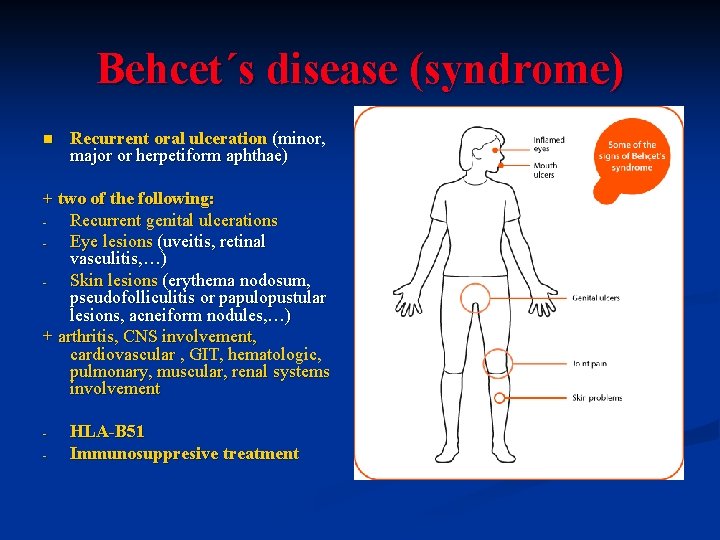
Behcet´s disease (syndrome) n Recurrent oral ulceration (minor, major or herpetiform aphthae) + two of the following: Recurrent genital ulcerations Eye lesions (uveitis, retinal vasculitis, …) Skin lesions (erythema nodosum, pseudofolliculitis or papulopustular lesions, acneiform nodules, …) + arthritis, CNS involvement, cardiovascular , GIT, hematologic, pulmonary, muscular, renal systems involvement - HLA-B 51 Immunosuppresive treatment
Vesiculobullous diseases Intraepithelial vesiculobullous diseases Acantholytic lesions (produced by a breakdown of desmosomes) pemphigus vulgaris paraneoplastic pemphigus and other variants Darier´s disease Non-acantholytic lesions viral infections of oral mucosae n n Subepithelial vesiculobullous diseases erythema multiforme pemphigoid (mucous membrane, cicatrical) dermatitis herpetiformis and linear Ig. A disease epidermolysis bullosa angina bullosa haemorrhagica (oral blood blisters) bullous lichen planus
Pemphigus vulgaris Intraepithelial, acantolytic vesicles and bullae involving skin and mucous membranes n Ragged oral ulcers n Oral lesions often the presenting feature n Autoimmune disease - autoantibodies to desmosomal proteins (diagnostic test – direct immunofluorescence, Ig. G) n Middle age, F>M, some ethnic groups frequently affected (genetic links) n
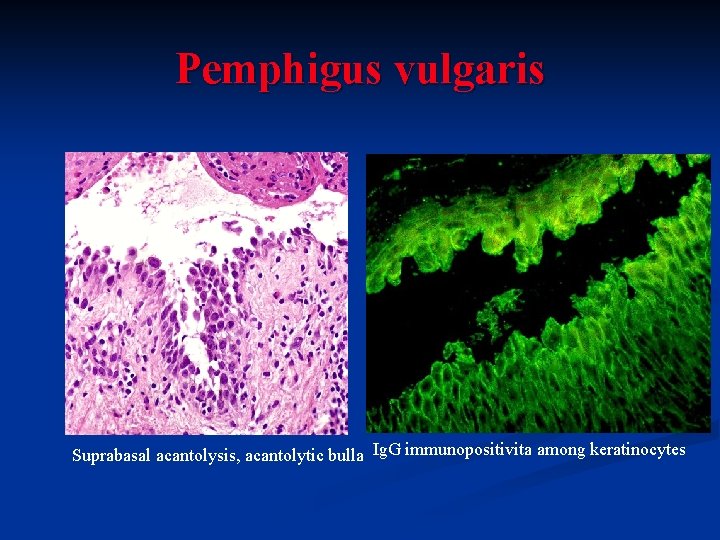
Pemphigus vulgaris Suprabasal acantolysis, acantolytic bulla Ig. G immunopositivita among keratinocytes
Other forms of pemphigus, oral lesions (antibodies against different proteins of desmosome complex) n Pemphigus vegetans (milder form, granulation tissue develop following rupture of bullae) n Drug-induced pemphigus (penicillamine, captopril, …) n Paraneoplastic pemphigus (leukaemia, lymphoma, …)
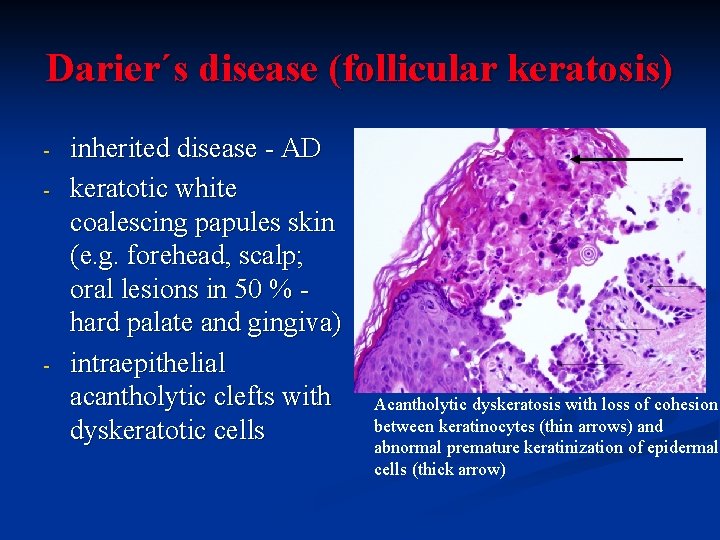
Darier´s disease (follicular keratosis) - - inherited disease - AD keratotic white coalescing papules skin (e. g. forehead, scalp; oral lesions in 50 % hard palate and gingiva) intraepithelial acantholytic clefts with dyskeratotic cells Acantholytic dyskeratosis with loss of cohesion between keratinocytes (thin arrows) and abnormal premature keratinization of epidermal cells (thick arrow)
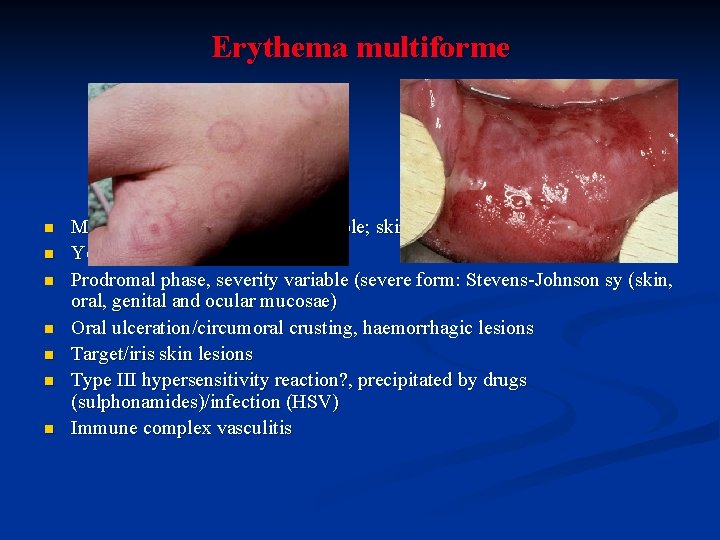
Erythema multiforme n n n n Mucosal vesicles and bullae variable; skin and mucous membranes Young adults, M>F Prodromal phase, severity variable (severe form: Stevens-Johnson sy (skin, oral, genital and ocular mucosae) Oral ulceration/circumoral crusting, haemorrhagic lesions Target/iris skin lesions Type III hypersensitivity reaction? , precipitated by drugs (sulphonamides)/infection (HSV) Immune complex vasculitis
Pemphigoid: subtypes Bullous pemphigoid (skin alone or with minimal mucosal involvement) n Mucous membrane pemhigoid (mucosa alone or with minimal skin involvement) n
Pemphigoid n n n Complex group of subepithelial blistering diseases Autoantibodies attack hemidesmosome – basement membrane antigens (collagens, collagen-like proteins, laminins, integrins, . . ) Linear binding of Ig. G along the basement membrane Different clinical subtypes of pemphigoid reflect damage to different antigens Mucosal lesions, including mouth, occur predominantly in the mucous membrane pemphigoid subtypes
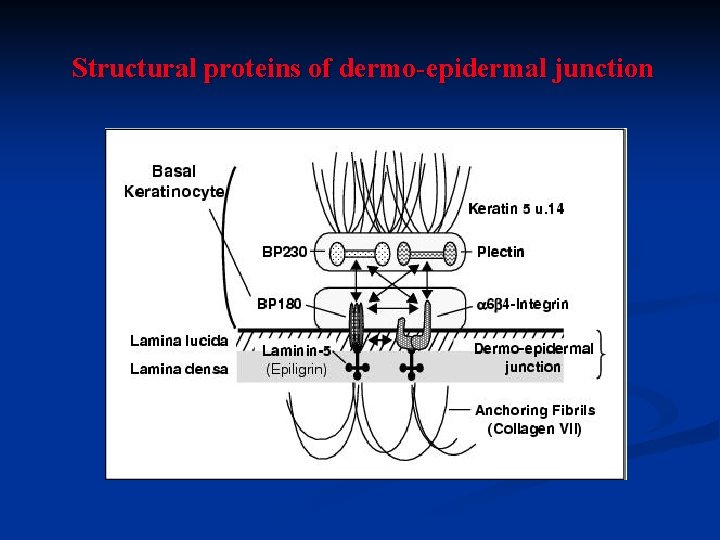
Structural proteins of dermo-epidermal junction
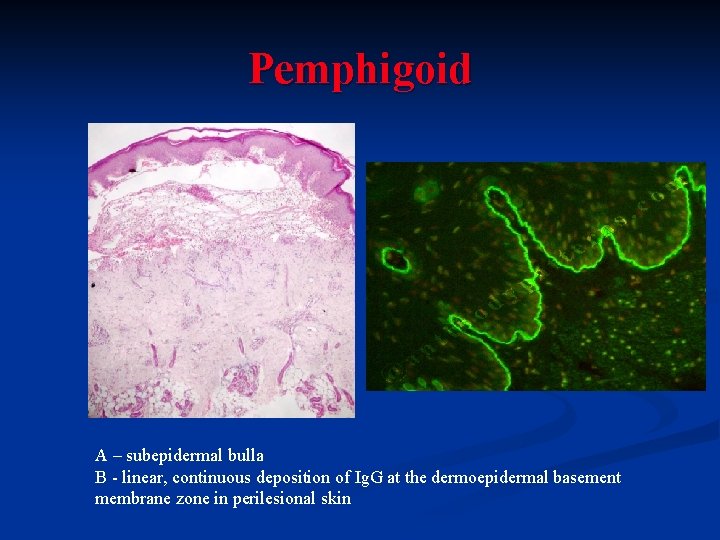
Pemphigoid A – subepidermal bulla B - linear, continuous deposition of Ig. G at the dermoepidermal basement membrane zone in perilesional skin
Mucous membrane pemphigoid mucosa alone or with minimal skin involvement n conjunctiva, genital, nasal, laryngeal, oesophageal, pharyngeal mucose can be also affected n Subepithelial vesicles and bullae; extensive ulceration, desquamative gingivis, scarring (cicatrical MMP) n older women (6 th decade) n autoantibodies to hemidesmosomal proteins n
Dermatitis herpetiformis n n Chronic, pruritic, subepidermal autoimmune blistering disease of the skin Oral manifestation variable (erythematous area→extensive erosions) Granular deposits of Ig. A in the tips of the connective tissue papillae together with complement components (activation of the alternative complement pathway by Ig A, chemotaxis of neutrophils) Associated with coeliac disease – gluten hypersensitivity
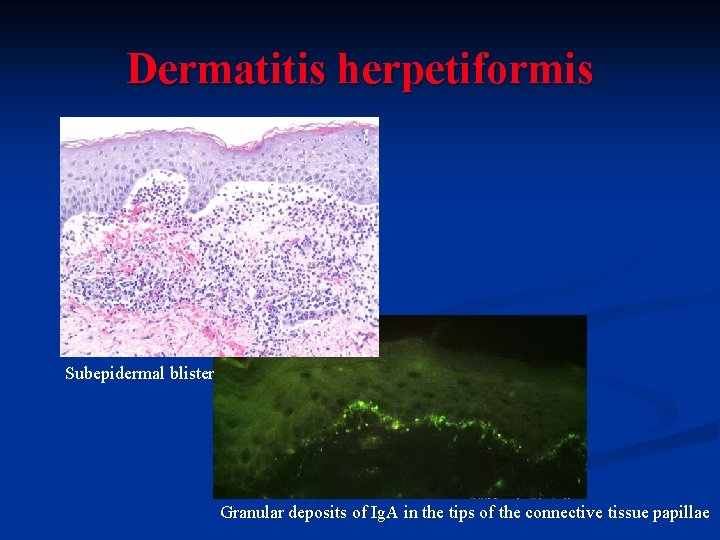
Dermatitis herpetiformis Subepidermal blister Granular deposits of Ig. A in the tips of the connective tissue papillae
Linear Ig. A disease Subepidermal blistering disease overlaping with dermatitis herpetiformis and bullous pemphigoid n Oral lesions reported n Linear binding of Ig. A along the basement membrane n ass. with coeliac disease – gluten hypersensitivity n
Epidermolysis bullosa Inherited disease, 30 types n Mutations in genes coding specific keratins in the basal epithelial layer (intraepithelial bullae), collagens and other attachement proteins (subepithelial bullae) n Extreme fragility of the skin n Mucosae also affected n
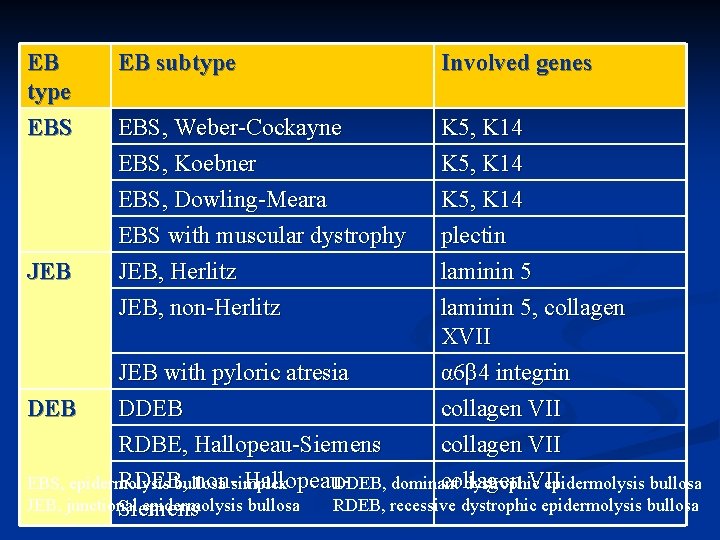
EB type EBS EB subtype Involved genes EBS, Weber-Cockayne EBS, Koebner K 5, K 14 EBS, Dowling-Meara EBS with muscular dystrophy JEB, Herlitz JEB, non-Herlitz K 5, K 14 plectin JEB laminin 5, collagen XVII JEB with pyloric atresia α 6β 4 integrin DEB DDEB collagen VII RDBE, Hallopeau-Siemens collagen VII RDEB, non-simplex Hallopeau. DDEB, collagen VII EBS, epidermolysis bullosa dominant dystrophic epidermolysis bullosa JEB, junctional epidermolysis bullosa RDEB, recessive dystrophic epidermolysis bullosa Siemens
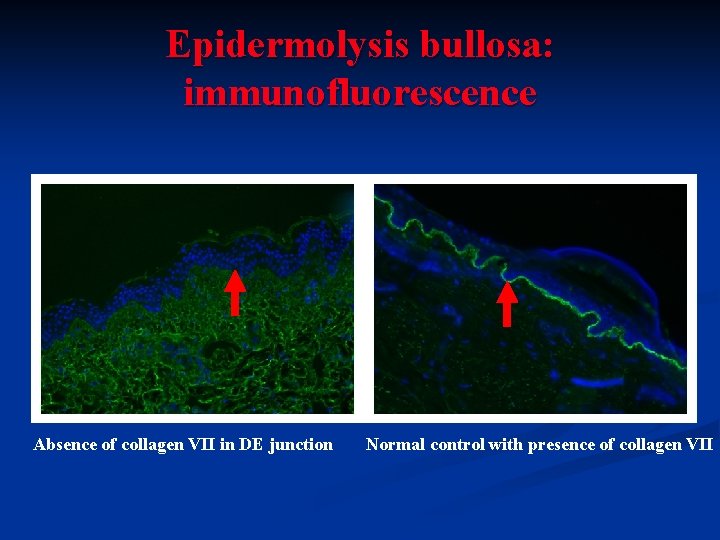
Epidermolysis bullosa: immunofluorescence Absence of collagen VII in DE junction Normal control with presence of collagen VII
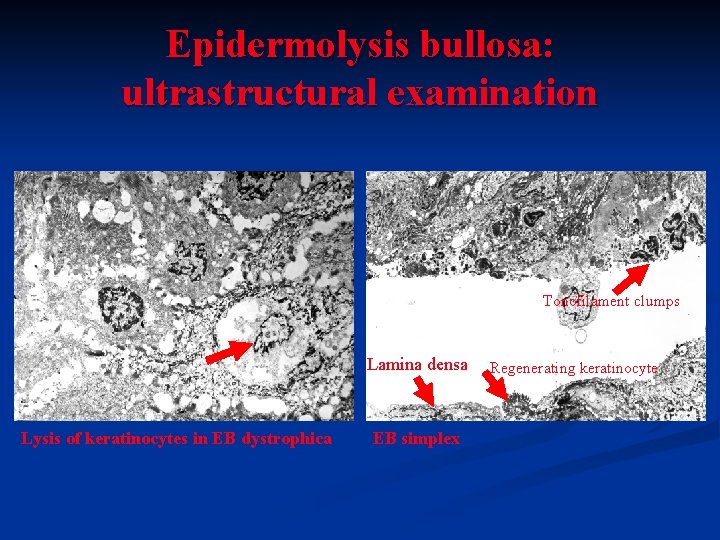
Epidermolysis bullosa: ultrastructural examination Tonofilament clumps Lamina densa Lysis of keratinocytes in EB dystrophica EB simplex Regenerating keratinocyte
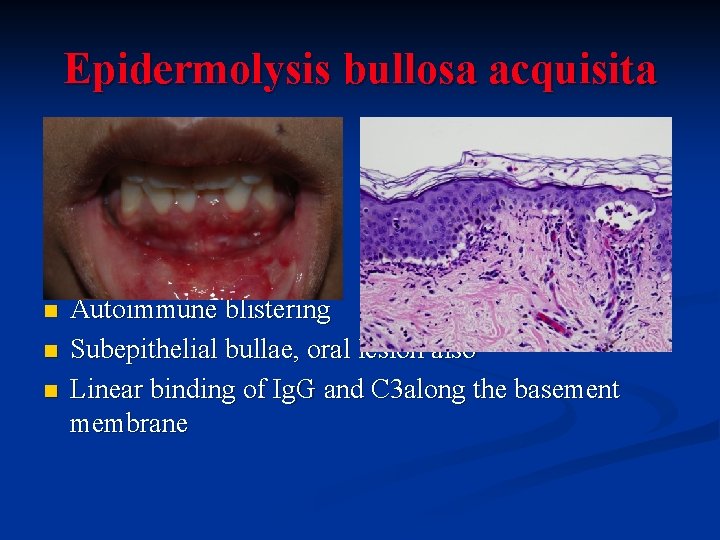
Epidermolysis bullosa acquisita n n n Autoimmune blistering Subepithelial bullae, oral lesion also Linear binding of Ig. G and C 3 along the basement membrane
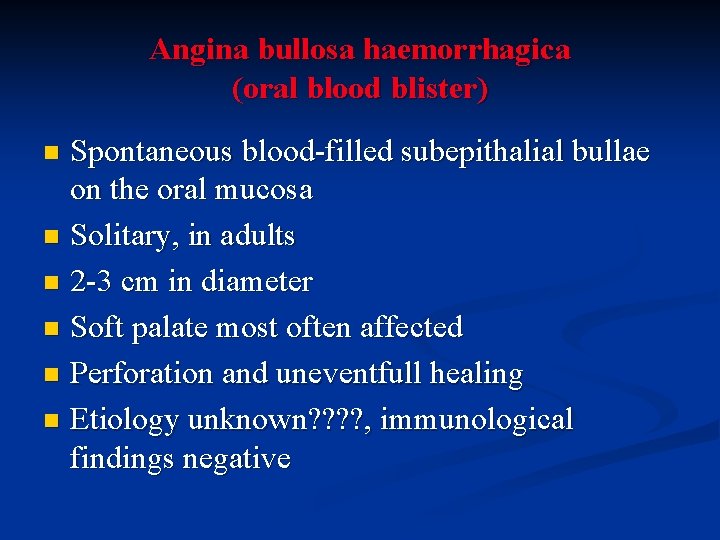
Angina bullosa haemorrhagica (oral blood blister) Spontaneous blood-filled subepithalial bullae on the oral mucosa n Solitary, in adults n 2 -3 cm in diameter n Soft palate most often affected n Perforation and uneventfull healing n Etiology unknown? ? , immunological findings negative n
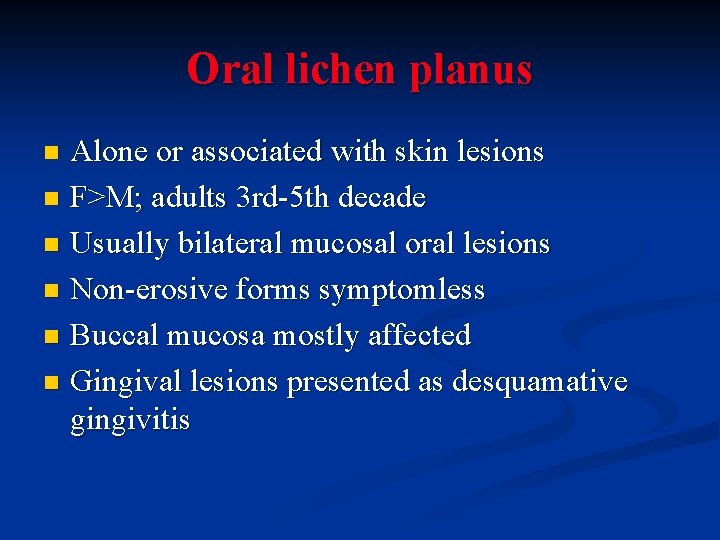
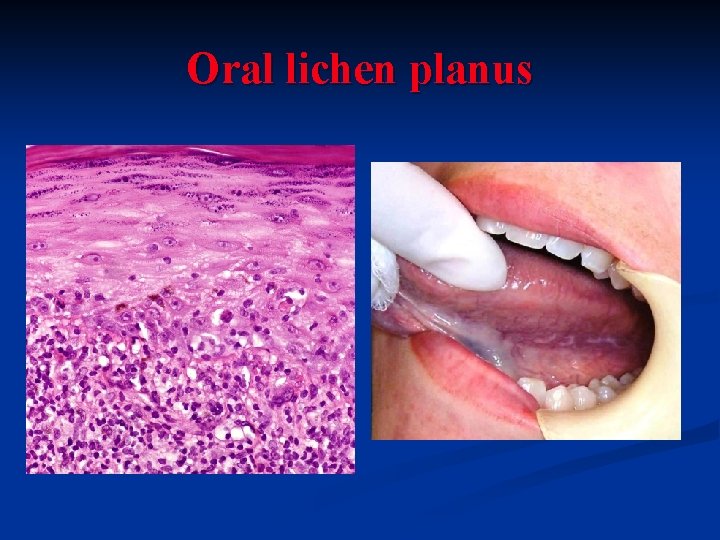
Oral lichen planus Alone or associated with skin lesions n F>M; adults 3 rd-5 th decade n Usually bilateral mucosal oral lesions n Non-erosive forms symptomless n Buccal mucosa mostly affected n Gingival lesions presented as desquamative gingivitis n
Aetiology of lichen planus n Aetiology not fully understood – cell-mediated immune responses to an external antigen, or to internal antigenic changes in the epithelial cells (T-cell mediated, resembles type IV hypersensitivity reaction, CD 8+ T cells damage basal epithelium) n Often associated with other systemic disease n May be associated HCV n May be a part of GVHD (graft versus host reaction in recipients of transplants) n Differential diagnosis: lichenoid reactions – hypersensitivity to drugs or dental materials
Clinical type of lichen planus Reticular (lace-like striae) n Atrophic (resemble erythroplakia) n Plaque-like (resemble leukoplakia) n Papular n Erosive n Bullous n
Lichen planus morphology and histopathology n n n n Violaceous, itchy papule with white streaks on the surface (Wickham´s striae) Papules have a variable pattern (discrete, annular, linear, widespread rash, …) Typically flexor surface of the wrists affected, fingernail also affected (10 %); skin LP – 85 % resolve in 18 months; oral LP more chronic Ortho- or parakeratinized surface Acanthotic or atrophic epithelium Subepithelial band of T lymphocytes Liquefactive degeneration of basal cells
Oral lichen planus

Thanks for your attention……. .
- Slides: 38