
Oral Somatosensory Stimulation in Newborns with CCHD Dongli
Oral Somatosensory Stimulation in Newborns with CCHD Dongli Song MD, Ph. D Associate Chief, Division of Neonatology Director, Newborn Clinical Research Director, Newborn Neuroprotection Program Santa Clara Valley Medical Center Stanford University School of Medicine (Affiliated) Department of Pediatrics, Division of Neonatal and Developmental Medicine Stanford University School of Medicine
Disclosure: • No personal financial disclosure • Study PI - multicenter RCT of Patterned Oral Somatosensory Stimulation in Preterm Infants Funded by Innara Health, Inc. I am not a cardiologist/cardiac surgeon I am a neonatologist
Feeding Difficulties in Children with Congenital Heart Disease • Malnutrition and failure to thrive are common in children with CHD post surgical repair • Poor oral feeding is a major cause of imbalanced nutritional intake • Nutritional/feeding issues in these infants often persist throughout the first years of life • Increased rate of oral motor and speech abnormalities and poor neurodevelopmental outcomes
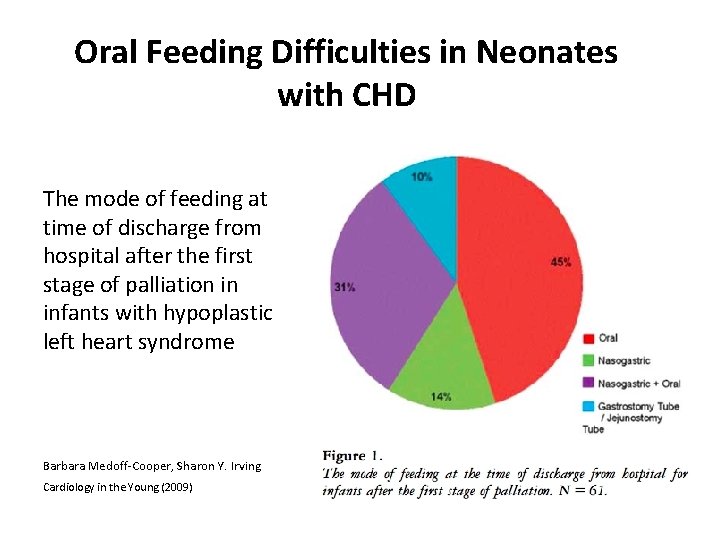
Oral Feeding Difficulties in Neonates with CHD The mode of feeding at time of discharge from hospital after the first stage of palliation in infants with hypoplastic left heart syndrome Barbara Medoff-Cooper, Sharon Y. Irving Cardiology in the Young (2009)
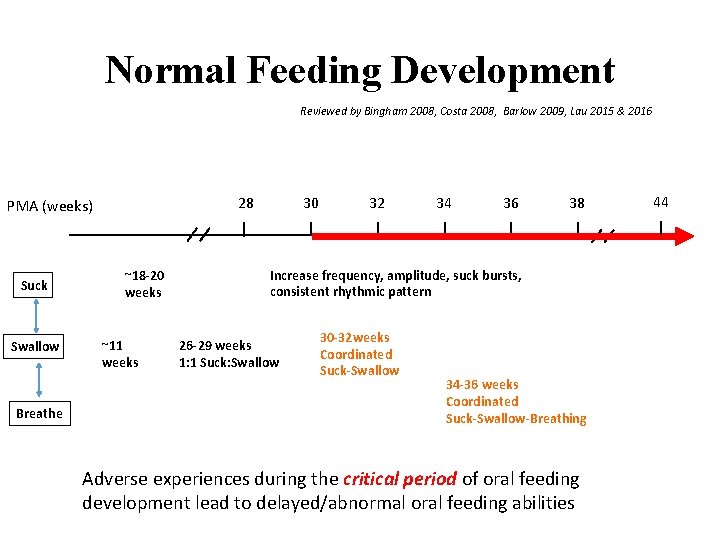
Normal Feeding Development Reviewed by Bingham 2008, Costa 2008, Barlow 2009, Lau 2015 & 2016 28 PMA (weeks) Suck Swallow Breathe ~18 -20 weeks ~11 weeks 30 32 34 36 38 Increase frequency, amplitude, suck bursts, consistent rhythmic pattern 26 -29 weeks 1: 1 Suck: Swallow 30 -32 weeks Coordinated Suck-Swallow 34 -36 weeks Coordinated Suck-Swallow-Breathing Adverse experiences during the critical period of oral feeding development lead to delayed/abnormal oral feeding abilities 44
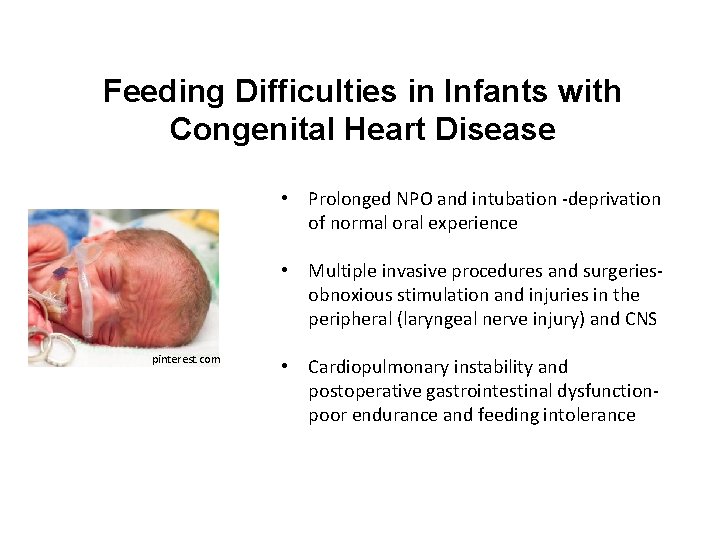
Feeding Difficulties in Infants with Congenital Heart Disease • Prolonged NPO and intubation -deprivation of normal oral experience • Multiple invasive procedures and surgeriesobnoxious stimulation and injuries in the peripheral (laryngeal nerve injury) and CNS pinterest. com • Cardiopulmonary instability and postoperative gastrointestinal dysfunctionpoor endurance and feeding intolerance
Feeding Difficulties in Neonates with Congenital Heart Disease Infants with CHD are usually born at full term but their feeding difficulties are very similar to that of preterm infants (Pereira et al. , 2015, Medoff-Cooper and Irving, 2009) • Disorganized and weak suck • Delayed triggering of swallowing • Poor coordination in suck-swallow-breathe
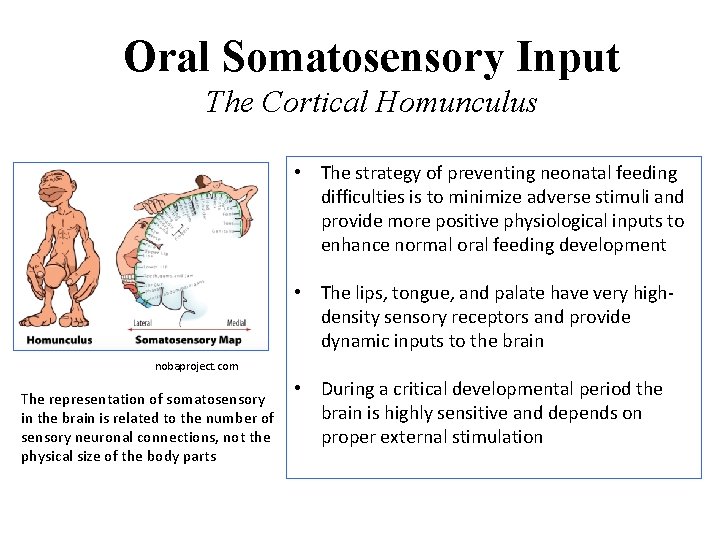
Oral Somatosensory Input The Cortical Homunculus • The strategy of preventing neonatal feeding difficulties is to minimize adverse stimuli and provide more positive physiological inputs to enhance normal oral feeding development • The lips, tongue, and palate have very highdensity sensory receptors and provide dynamic inputs to the brain nobaproject. com The representation of somatosensory in the brain is related to the number of sensory neuronal connections, not the physical size of the body parts • During a critical developmental period the brain is highly sensitive and depends on proper external stimulation
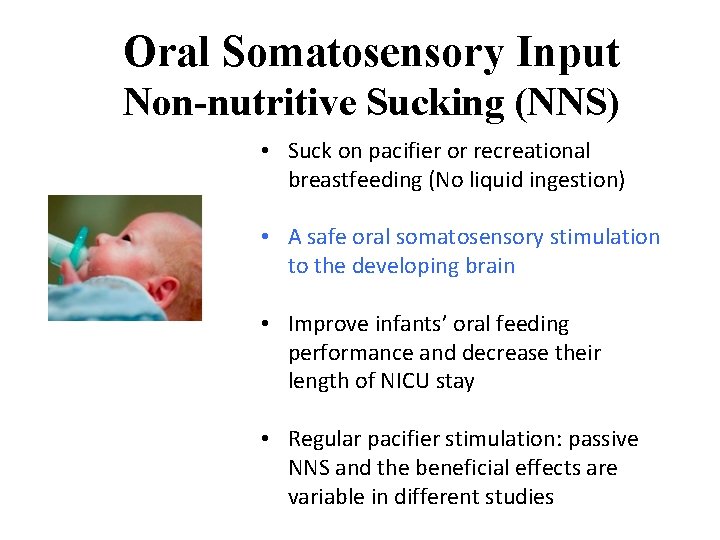
Oral Somatosensory Input Non-nutritive Sucking (NNS) • Suck on pacifier or recreational breastfeeding (No liquid ingestion) • A safe oral somatosensory stimulation to the developing brain • Improve infants’ oral feeding performance and decrease their length of NICU stay • Regular pacifier stimulation: passive NNS and the beneficial effects are variable in different studies
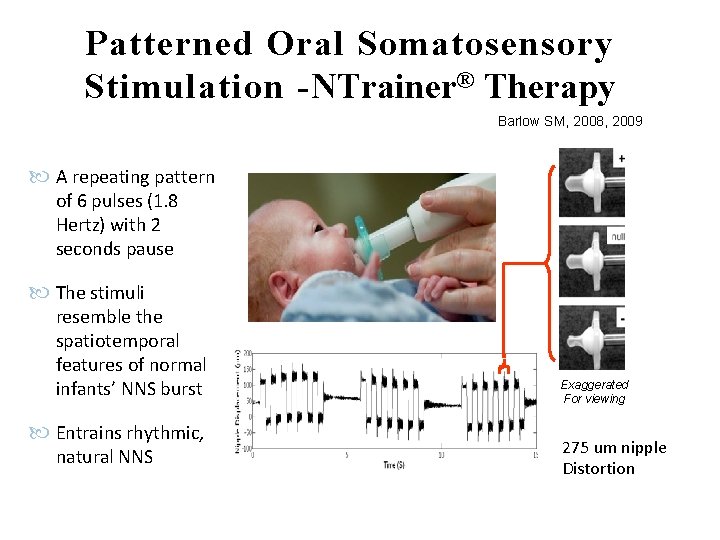
Patterned Oral Somatosensory Stimulation -NTrainer® Therapy Barlow SM, 2008, 2009 A repeating pattern of 6 pulses (1. 8 Hertz) with 2 seconds pause The stimuli resemble the spatiotemporal features of normal infants’ NNS burst Entrains rhythmic, natural NNS Exaggerated For viewing 275 um nipple Distortion
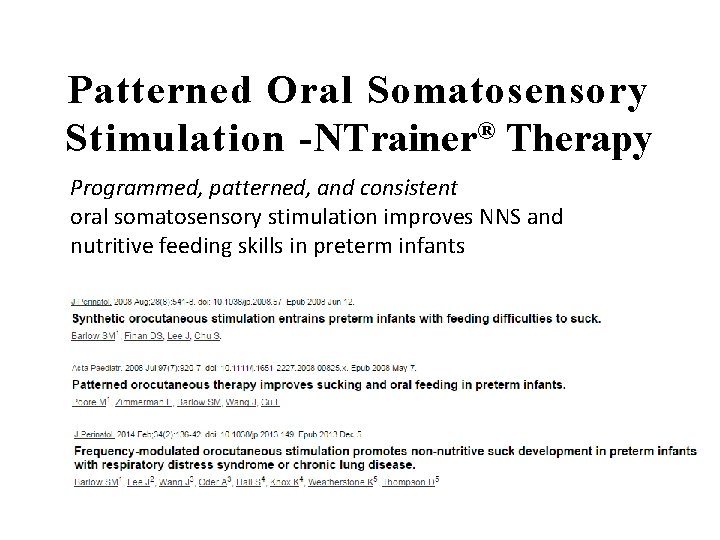
Patterned Oral Somatosensory Stimulation -NTrainer® Therapy Programmed, patterned, and consistent oral somatosensory stimulation improves NNS and nutritive feeding skills in preterm infants
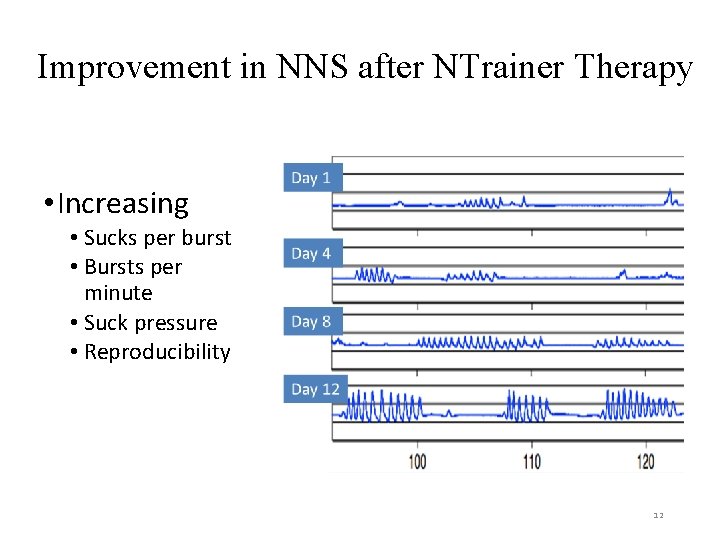
Improvement in NNS after NTrainer Therapy • Increasing • Sucks per burst • Bursts per minute • Suck pressure • Reproducibility 12
Standardized Patterned Somatosensory Oral Stimulation in Very Preterm Infants: A Multicenter Randomized Controlled Trial D Song, MD, Ph. D, P Jegatheesan, MD, S Nafday MD, K Ahmad MD, J Nedrelow MD, M Wearden MD, S Nemerofsky MD, S Pooley, MD, D Thompson Ph. D, Z Cohen RN, T Cornejo RN, C Garrett RN, B Govindaswami, MBBS, MPH • Santa Clara Valley Medical Center, San Jose, CA • Children's Hospital at Montefiore-Weiler and Wakefield divisions, and Albert Einstein College of Medicine, Bronx, NY • Pediatrix Medical Group, North Central Baptist Hospital • Cook Children’s Medical Center, Fort Worth, TX Sponsored by: Innara Health, Inc.
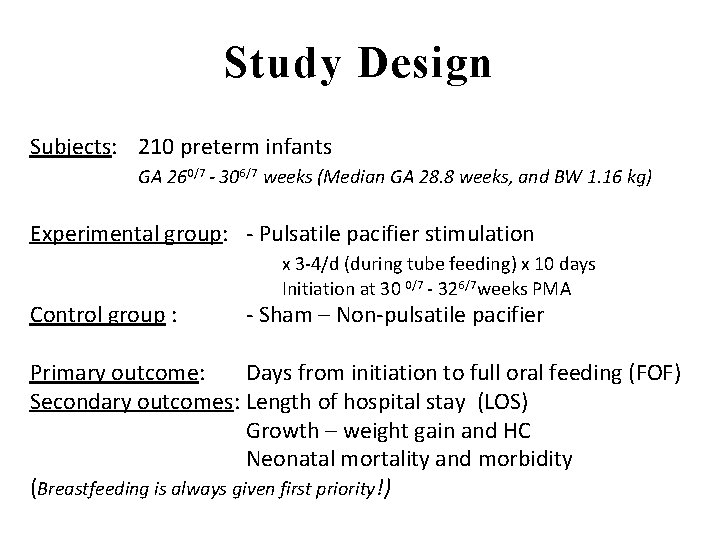
Study Design Subjects: 210 preterm infants GA 260/7 - 306/7 weeks (Median GA 28. 8 weeks, and BW 1. 16 kg) Experimental group: - Pulsatile pacifier stimulation Control group : x 3 -4/d (during tube feeding) x 10 days Initiation at 30 0/7 - 326/7 weeks PMA - Sham – Non-pulsatile pacifier Primary outcome: Days from initiation to full oral feeding (FOF) Secondary outcomes: Length of hospital stay (LOS) Growth – weight gain and HC Neonatal mortality and morbidity (Breastfeeding is always given first priority!)
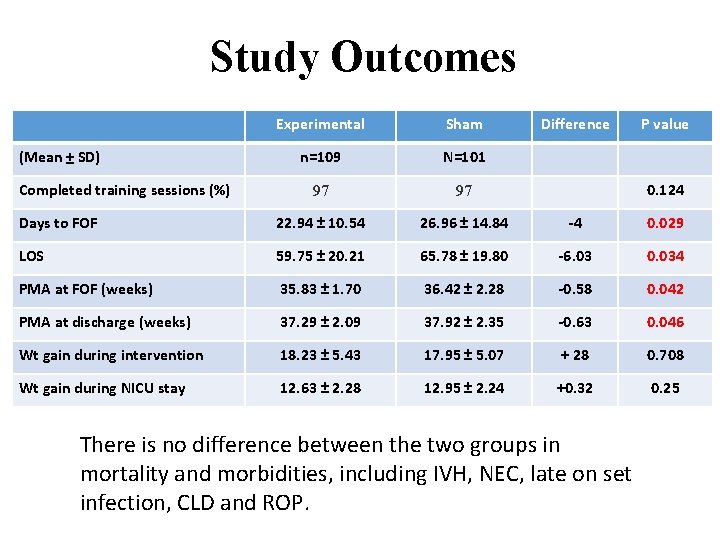
Study Outcomes Experimental Sham n=109 N=101 97 97 Days to FOF 22. 94 ± 10. 54 26. 96 ± 14. 84 -4 0. 029 LOS 59. 75 ± 20. 21 65. 78 ± 19. 80 -6. 03 0. 034 PMA at FOF (weeks) 35. 83 ± 1. 70 36. 42 ± 2. 28 -0. 58 0. 042 PMA at discharge (weeks) 37. 29 ± 2. 09 37. 92 ± 2. 35 -0. 63 0. 046 Wt gain during intervention 18. 23 ± 5. 43 17. 95 ± 5. 07 + 28 0. 708 Wt gain during NICU stay 12. 63 ± 2. 28 12. 95 ± 2. 24 +0. 32 0. 25 (Mean + SD) Completed training sessions (%) Difference P value 0. 124 There is no difference between the two groups in mortality and morbidities, including IVH, NEC, late on set infection, CLD and ROP.
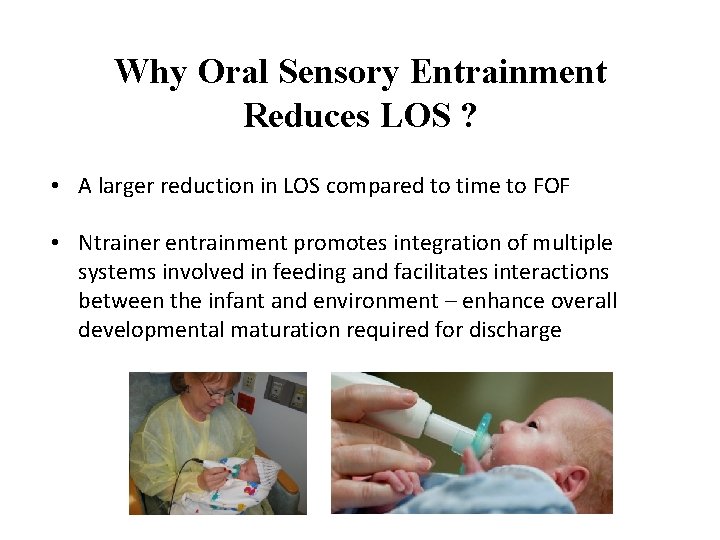
Why Oral Sensory Entrainment Reduces LOS ? • A larger reduction in LOS compared to time to FOF • Ntrainer entrainment promotes integration of multiple systems involved in feeding and facilitates interactions between the infant and environment – enhance overall developmental maturation required for discharge
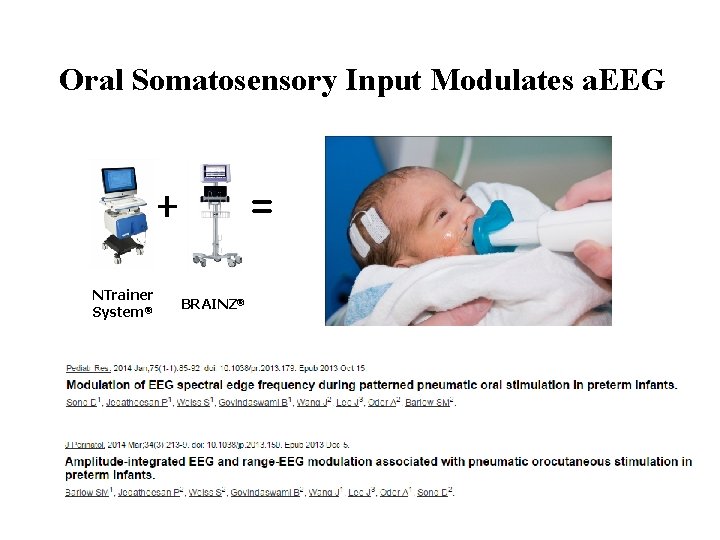
Oral Somatosensory Input Modulates a. EEG + NTrainer System® = BRAINZ®
Summary: • Patterned oral somatosensory stimulation (NTrainer®) is a effective therapy in improving oral feeding development in preterm infants • Patterned oral somatosensory stimulation presents a new and exciting neurotherapeutic strategy to prevent and treat feeding disorders associated with CHD • It is non-invasive and well tolerated by infants on respiratory support and thus can be used before and after surgery • Feeding is important not only for nutrition, but may also have a significant impact on an infant’s speech development and long-term neurodevelopmental outcome

Improving Clinical Practice Thank you ! • Feeding guidelines • Evidence based practice • Innovative therapies • Babies and their families • Change our practice model: • SCVMC NICU staff More attention and resources to infant feeding • Collaborators: Children's Hospital at Montefiore-Weiler and Wakefield divisions, Albert Einstein • Education: Feeding is important not only for nutrition, College. Pediatrix Group, North impact Central on an infant’s but also Medical has a significant Baptist Hospital, Cook Children’s Medical Center. maturation and long-term neurodevelopmental Funding: Santa Clara First Five; Innara Health, Inc. outcome
• The unique orosensory experience offered by the ‘motorized pacifier nipple’ is physiologically salient and • The spectrally patterned stimuli resemble the spatiotemporal features of normal infants’ NNS burst. • This form of stimulation serves to entrain the activity patterns of sensory receptors located in the lips, tongue, and jaw. • The synchronous sensory input relay in the brainstem and project to the thalamus, and subsequently relayed to orofacial regions of the sensorimotor cortex. Descending neuromodulatory inputs are presumed to influence the firing patterns of facial, trigeminal, and hypoglossal motoneurons. The richness of the somatic sensory experience offered by an entraining pacifier nipple presents new and exciting neurotherapeutic applications
Improving Clinical Practice Changing our feeding practice model: • Education: feeding is important not only for nutrition, but also has a significant impact on an infant’s maturation and long-term neurodevelopmental outcome • Put more attention and resources to infant feeding • Standardized feeding guidelines • Implement evidence based practice • Develop more innovative therapies
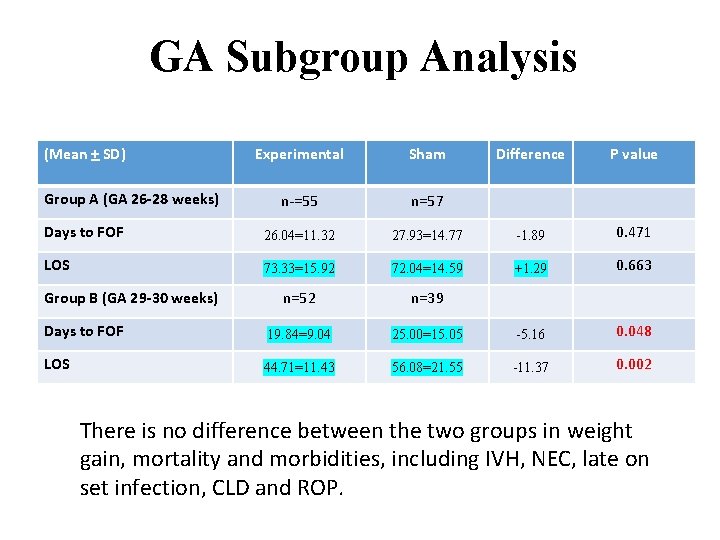
GA Subgroup Analysis (Mean + SD) Experimental Sham Difference P value n-=55 n=57 Days to FOF 26. 04=11. 32 27. 93=14. 77 -1. 89 0. 471 LOS 73. 33=15. 92 72. 04=14. 59 +1. 29 0. 663 n=52 n=39 Days to FOF 19. 84=9. 04 25. 00=15. 05 -5. 16 0. 048 LOS 44. 71=11. 43 56. 08=21. 55 -11. 37 0. 002 Group A (GA 26 -28 weeks) Group B (GA 29 -30 weeks) There is no difference between the two groups in weight gain, mortality and morbidities, including IVH, NEC, late on set infection, CLD and ROP.
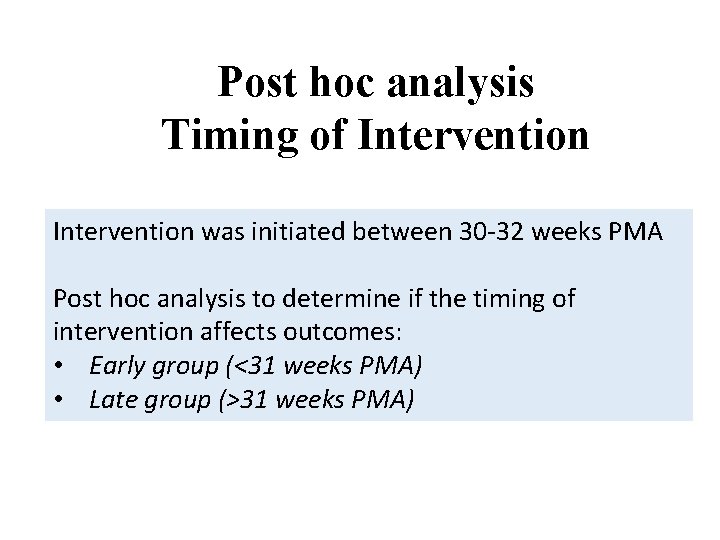
Post hoc analysis Timing of Intervention was initiated between 30 -32 weeks PMA Post hoc analysis to determine if the timing of intervention affects outcomes: • Early group (<31 weeks PMA) • Late group (>31 weeks PMA)
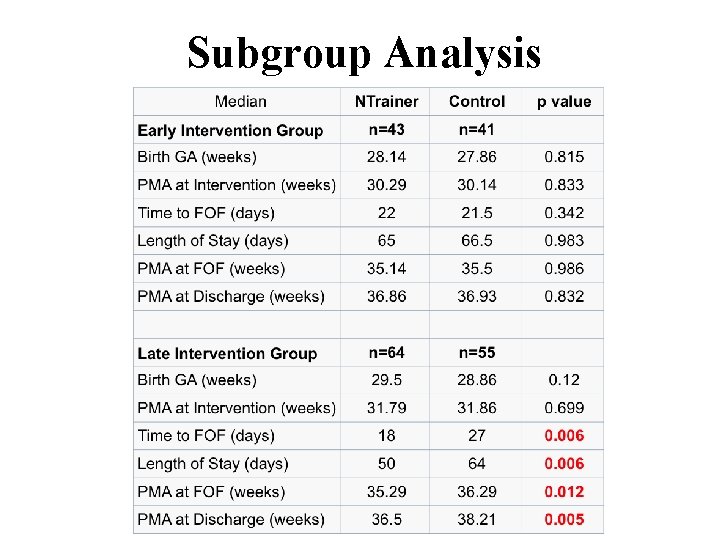
Subgroup Analysis
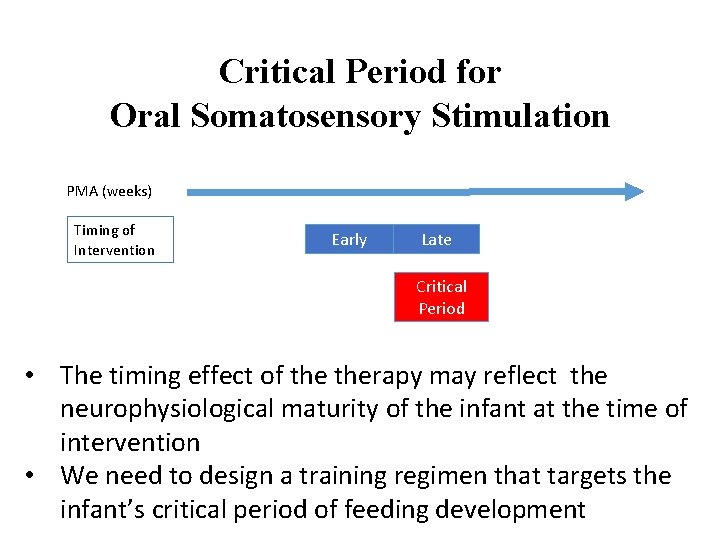
Critical Period for Oral Somatosensory Stimulation PMA (weeks) Timing of Intervention Early Late Critical Period • The timing effect of therapy may reflect the neurophysiological maturity of the infant at the time of intervention • We need to design a training regimen that targets the infant’s critical period of feeding development
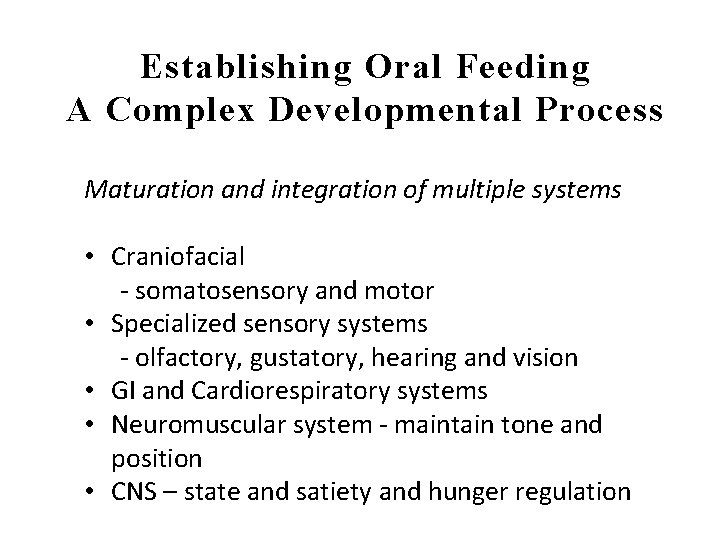
Establishing Oral Feeding A Complex Developmental Process Maturation and integration of multiple systems • Craniofacial - somatosensory and motor • Specialized sensory systems - olfactory, gustatory, hearing and vision • GI and Cardiorespiratory systems • Neuromuscular system - maintain tone and position • CNS – state and satiety and hunger regulation
- Slides: 26