
ORAL HYPOGLYCEMIC AGENTS H Delshad M D Endocrinologist



- Slides: 38
ORAL HYPOGLYCEMIC AGENTS H. Delshad M. D Endocrinologist Research Institute for Endocrine Sciences
TYPE 2 DIABETES MELLITUS • Is a complex heterogeneous condition characterized by abnormalities of both: ►Insulin Secretion ►Insulin action
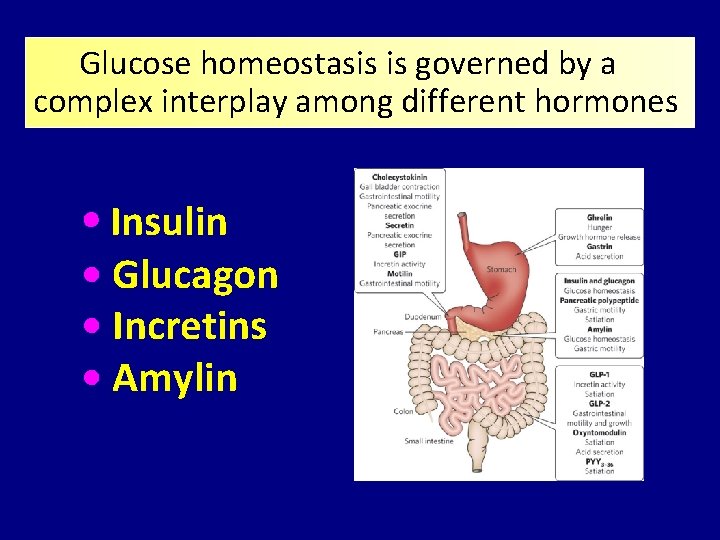
Glucose homeostasis is governed by a complex interplay among different hormones • Insulin • Glucagon • Incretins • Amylin
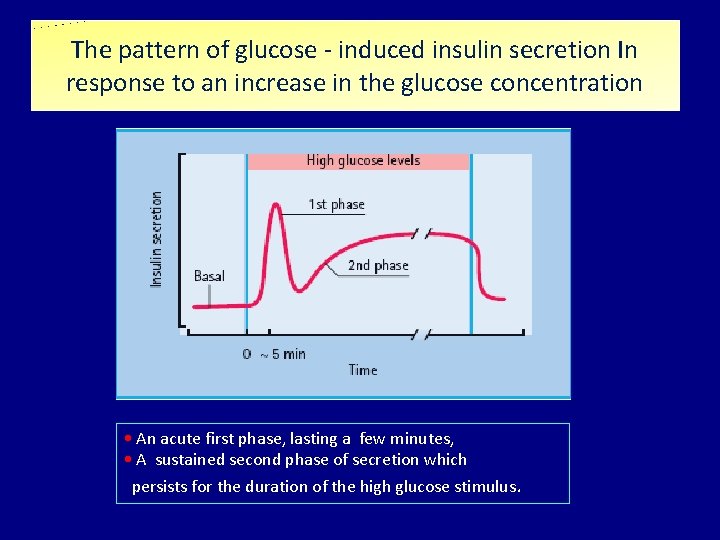
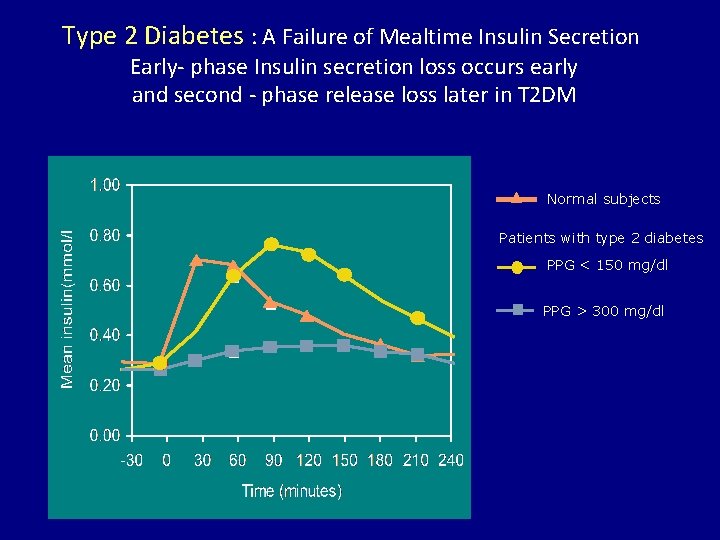
The pattern of glucose - induced insulin secretion In response to an increase in the glucose concentration • An acute first phase, lasting a few minutes, • A sustained second phase of secretion which persists for the duration of the high glucose stimulus.
Type 2 Diabetes : A Failure of Mealtime Insulin Secretion Early- phase Insulin secretion loss occurs early and second - phase release loss later in T 2 DM Normal subjects Patients with type 2 diabetes PPG < 150 mg/dl PPG > 300 mg/dl
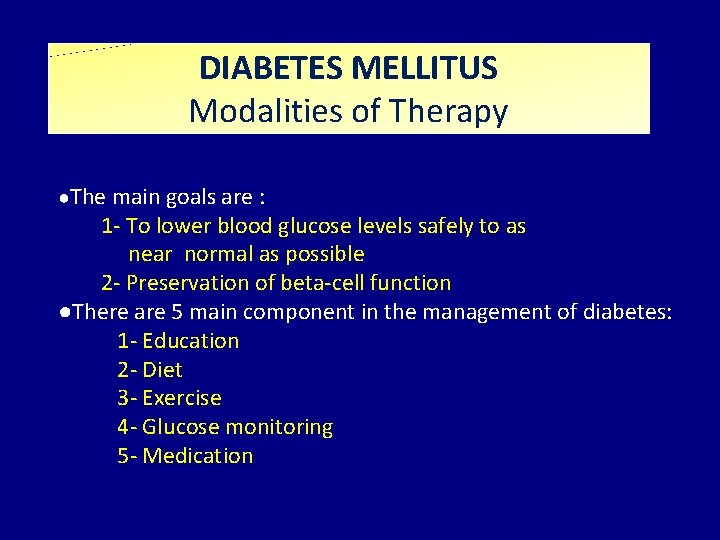
DIABETES MELLITUS Modalities of Therapy ●The main goals are : 1 - To lower blood glucose levels safely to as near normal as possible 2 - Preservation of beta-cell function ●There are 5 main component in the management of diabetes: 1 - Education 2 - Diet 3 - Exercise 4 - Glucose monitoring 5 - Medication
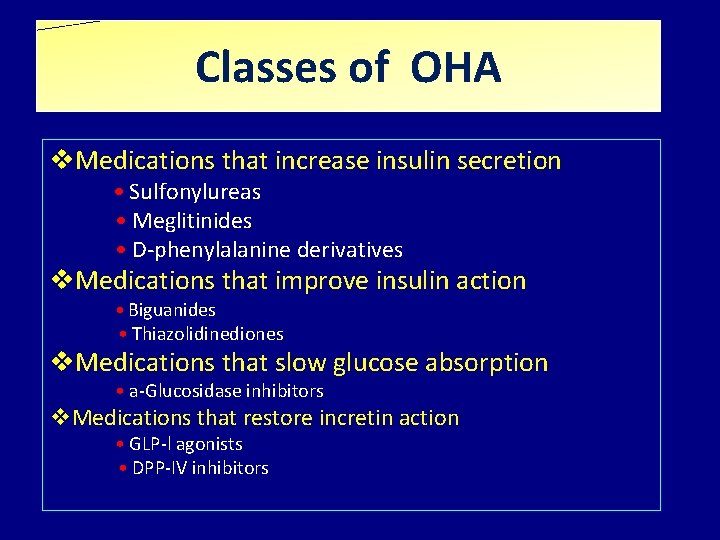
Classes of OHA v. Medications that increase insulin secretion • Sulfonylureas • Meglitinides • D-phenylalanine derivatives v. Medications that improve insulin action • Biguanides • Thiazolidinediones v. Medications that slow glucose absorption • a-Glucosidase inhibitors v. Medications that restore incretin action • GLP-l agonists • DPP-IV inhibitors
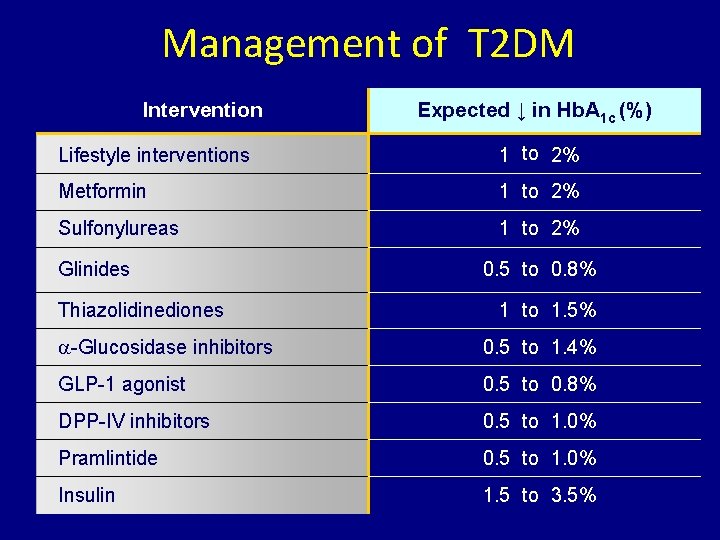
Management of T 2 DM Intervention Expected ↓ in Hb. A 1 c (%) Lifestyle interventions 1 to 2% Metformin 1 to 2% Sulfonylureas 1 to 2% Glinides Thiazolidinediones 0. 5 to 0. 8% 1 to 1. 5% -Glucosidase inhibitors 0. 5 to 1. 4% GLP-1 agonist 0. 5 to 0. 8% DPP-IV inhibitors 0. 5 to 1. 0% Pramlintide 0. 5 to 1. 0% Insulin 1. 5 to 3. 5%
Sulfonylureas • Are sulfonamide derivatives • Their hypoglycemic actions were discovered inadvertently when one of the initial agents was given to treat patients with typhoid fever • Since 1950 s, have been used extensively as insulin secretagogues for the treatment of T 2 DM. • Sulfonylureas cause only first-phase insulin release (preformed insulin) whereas nutrients stimulate both first-phase and second-phase insulin release
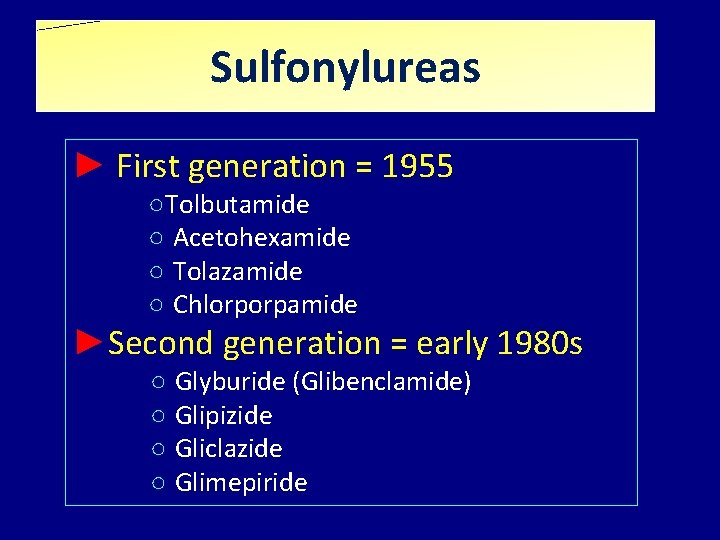
Sulfonylureas ► First generation = 1955 ○Tolbutamide ○ Acetohexamide ○ Tolazamide ○ Chlorporpamide ►Second generation = early 1980 s ○ Glyburide (Glibenclamide) ○ Glipizide ○ Gliclazide ○ Glimepiride
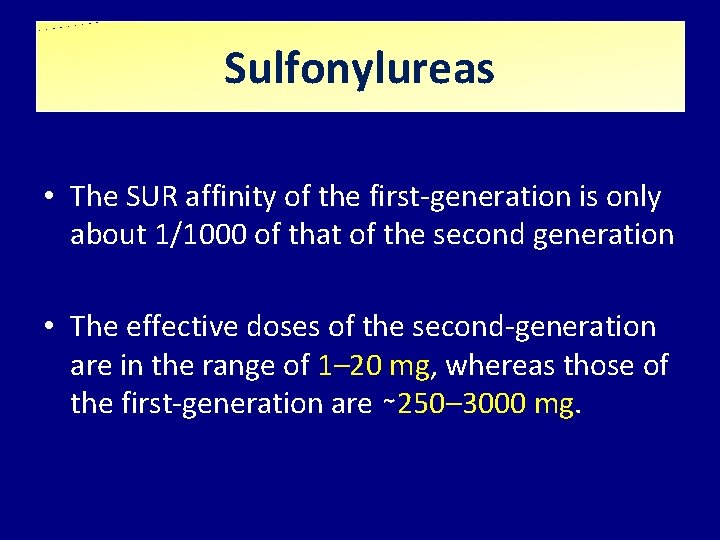
Sulfonylureas • The SUR affinity of the first-generation is only about 1/1000 of that of the second generation • The effective doses of the second-generation are in the range of 1– 20 mg, whereas those of the first-generation are ∼ 250– 3000 mg.
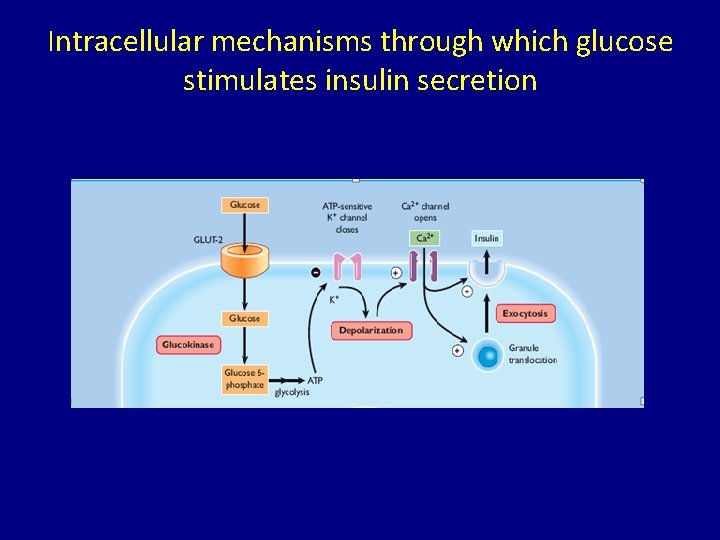
Intracellular mechanisms through which glucose stimulates insulin secretion
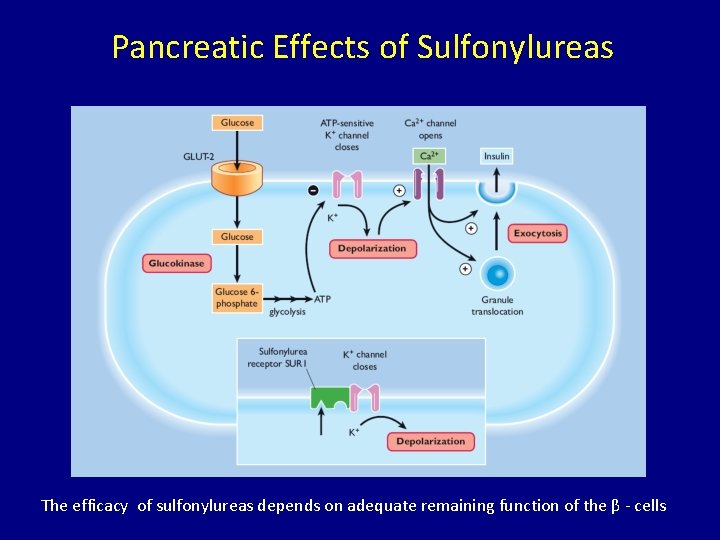
Pancreatic Effects of Sulfonylureas The efficacy of sulfonylureas depends on adequate remaining function of the β - cells
Extrapancreatic Effects of Sulfonylureas • Sulfonylureas exert minor glucose lowering effects independently of increased insulin secretion : • A small reduction in glucagon concentrations • Increased peripheral glucose transport • Increased hepatic glucose deposition But these effects are not regarded to be of sufficient magnitude to be clinically relevant
Sulfonylureas : Pharmacokinetic • They are generally well absorbed, and reach peak plasma concentration in 2 – 4 hours. • Are highly bound to plasma proteins which can lead to interactions with other protein-bound drugs such as Salicylates, Sulfonamides and Warfarin. • Displacement of protein – bound sulfonylurea can increase the risk of hypoglycemia
Sulfonylureas : Pharmacokinetic Glyburide (glibenclamide) Hypoglycemic effect appears to be equal to that of other sulfonylureas. Is associated with a high rate of serious and fatal hypoglycemia. Modest weight gain. Relative lack of specificity on the different KATP channels. Glipizide Short-acting formulation and extended-release formulation The short-acting form is rapidly absorbed and is completely bioavailable. Is eliminated with a half-life of 2 to 4 hours Glimepiride & Gliclazide More selective for the βcell KATP channel Bind 2. 5 - to 3. 0 -fold faster and dissociate 8. 0 - to 9. 0 -fold faster than glyburide from its β-cell KATP-binding site Insulin release is more rapid and of shorter duration that with glyburide.
Sulfonylureas : Pharmacokinetic Indications and contraindications • As monotherapy and in combination with Metformin or a TZDs • Begin with a low dose, with SMBG at least once daily during the first few weeks. • Up titrate the dosage at 2 – 4 week intervals • Hypoglycemia, or early hypoglycemic symptoms are the main limitation to dose escalation • Maximal blood glucose – lowering effect is usually achieved at a dose that is well below the recommended maximum
Sulfonylureas : Efficacy • As monotherapy sulfonylureas reduce Hb. A 1 c of 1 – 2% • A rapid deterioration of glycemic control during sulfonylurea therapy “ secondary failure ” occurs in approximately 5 – 10% of patients per year • Sulfonylureas generally have little effect on blood lipids. • Occasionally, their use will cause a small decrease in plasma triglyceride or increase in HDL cholesterol.
Sulfonylureas : Adverse effects • Weight gain : 1 – 4 kg • • Hypoglycemia Very occasionally, sensitivity reactions : usually transient cutaneous rashes. • • Erythema multiforme is rare. • Chlorpropamide (no longer in common use) : - Facial flushing with alcohol - Water retention and hyponatremia. Fever, jaundice, acute porphyria, photosensitivity and blood dyscrasias are also rare.
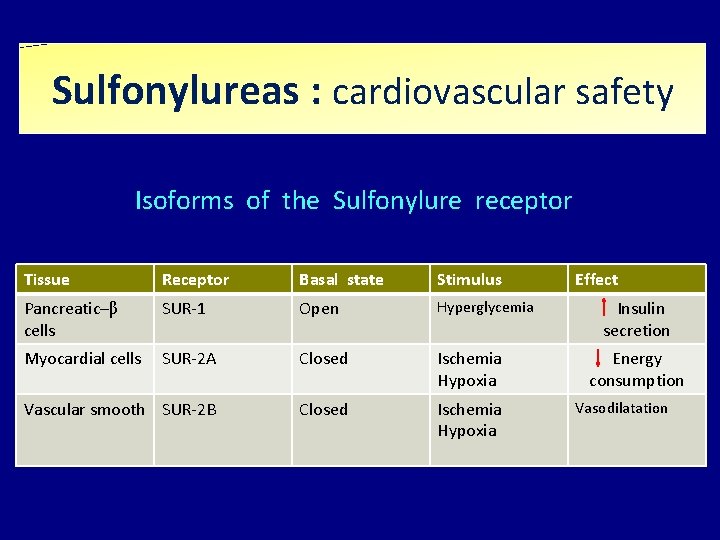
Sulfonylureas : cardiovascular safety Isoforms of the Sulfonylure receptor Tissue Receptor Basal state Stimulus Pancreatic–β cells SUR-1 Open Hyperglycemia Myocardial cells SUR-2 A Closed Ischemia Hypoxia Vascular smooth SUR-2 B Closed Ischemia Hypoxia Effect Insulin secretion Energy consumption Vasodilatation
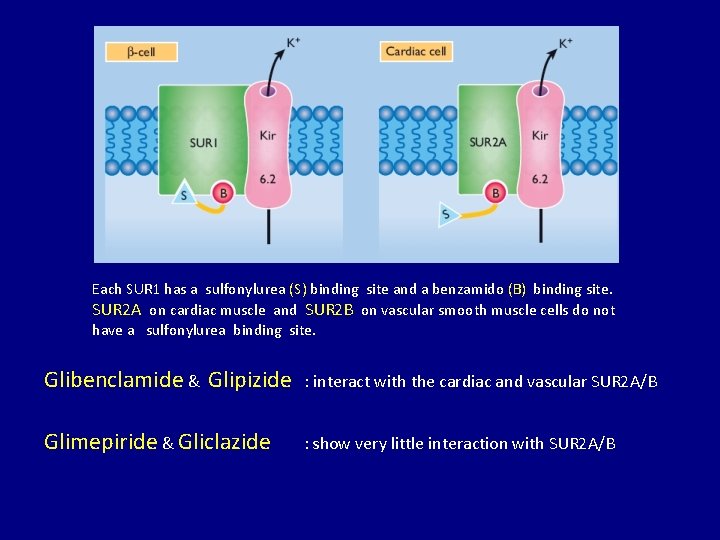
Each SUR 1 has a sulfonylurea (S) binding site and a benzamido (B) binding site. SUR 2 A on cardiac muscle and SUR 2 B on vascular smooth muscle cells do not have a sulfonylurea binding site. Glibenclamide & Glipizide : interact with the cardiac and vascular SUR 2 A/B Glimepiride & Gliclazide : show very little interaction with SUR 2 A/B
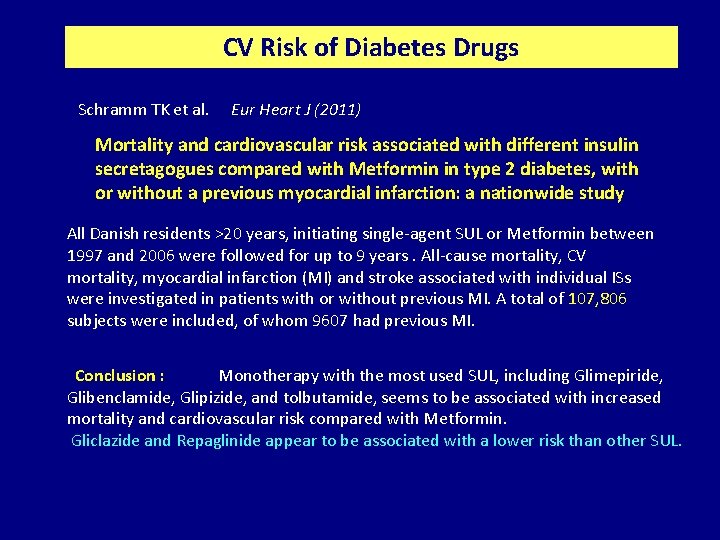
CV Risk of Diabetes Drugs Schramm TK et al. Eur Heart J (2011) Mortality and cardiovascular risk associated with different insulin secretagogues compared with Metformin in type 2 diabetes, with or without a previous myocardial infarction: a nationwide study All Danish residents >20 years, initiating single-agent SUL or Metformin between 1997 and 2006 were followed for up to 9 years. All-cause mortality, CV mortality, myocardial infarction (MI) and stroke associated with individual ISs were investigated in patients with or without previous MI. A total of 107, 806 subjects were included, of whom 9607 had previous MI. Conclusion : Monotherapy with the most used SUL, including Glimepiride, Glibenclamide, Glipizide, and tolbutamide, seems to be associated with increased mortality and cardiovascular risk compared with Metformin. Gliclazide and Repaglinide appear to be associated with a lower risk than other SUL.
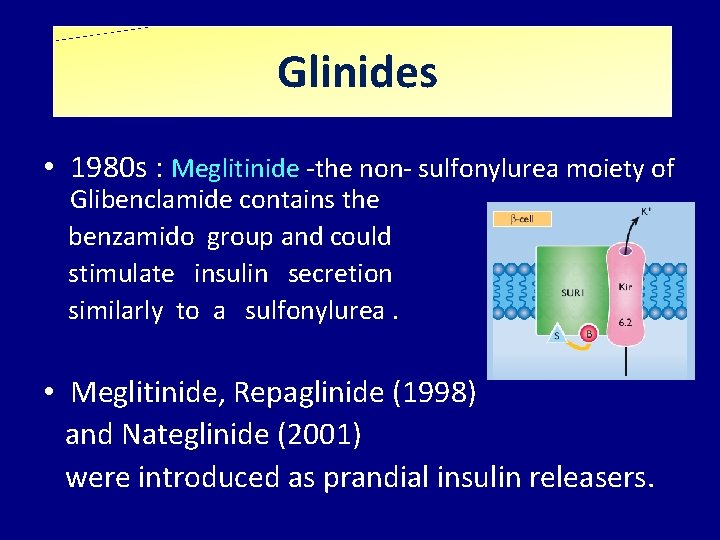
Glinides • 1980 s : Meglitinide -the non- sulfonylurea moiety of Glibenclamide contains the benzamido group and could stimulate insulin secretion similarly to a sulfonylurea. • Meglitinide, Repaglinide (1998) and Nateglinide (2001) were introduced as prandial insulin releasers.
Pharm Glinides : Pharmacokinetic • Repaglinide is almost completely and rapidly absorbed with peak plasma concentrations after about 1 hour. • It is quickly metabolized in the liver and mostly excretes in the bile • Taken about 15 minutes before a meal, Repaglinide produces a prompt insulin response which lasts about 3 hours, coinciding with the duration of meal digestion. • Nateglinide has a slightly faster onset and shorter duration of action
Glinides : Indications and contraindications • For individuals who exhibit post-prandial Hyperglycemia while retaining near normal fasting glycemia. • For individuals with irregular lifestyles & unpredictable or missed meals. • For some elderly patients, particularly if other agents are contraindicated. • Repaglinide is ideally taken 15 – 30 min. before a meal. • Start with a low dose (e. g. 0. 5 mg), titrate every 2 weeks up to a maximum of 4 mg before each main meal.
Glinides Efficacy • Reductions in Hb. A 1 c are similar to or smaller than with sulfonylureas • As add-on to metformin, they can reduce Hb. A 1 c by an additional 0. 5 – 1. 5%. Adverse effects • Hypoglycemic episodes are fewer and less severe than with sulfonylureas. • Sensitivity reactions, usually transient, are uncommon. • They may cause a small increase in body weight
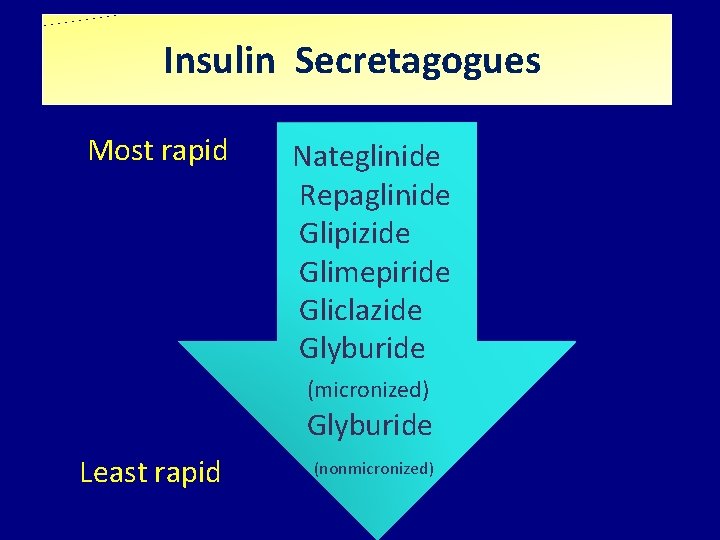
Insulin Efficacy Secretagogues Most rapid Nateglinide Repaglinide Glipizide Glimepiride Gliclazide Glyburide (micronized) Glyburide Least rapid (nonmicronized)
Treatment of T 2 DM Choice of drug therapy should ideally address underlying pathophysiology ADA/EASD Guidelines : 2010 AACE Guidelines : 2011
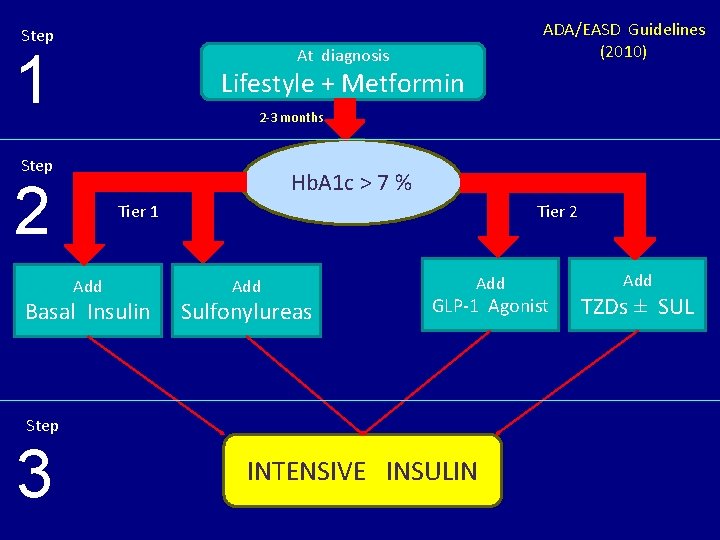
Step 1 ADA/EASD Guidelines (2010) At diagnosis Lifestyle + Metformin 2 -3 months Step Hb. A 1 c > 7 % 2 Tier 1 Add Basal Insulin Tier 2 Add Sulfonylureas Add GLP-1 Agonist Step 3 INTENSIVE INSULIN Add TZDs ± SUL
AACE Guidelines (2011)
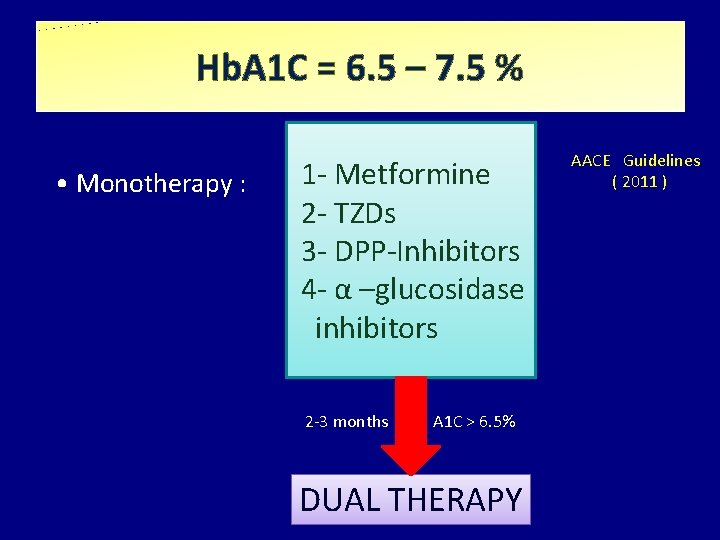
Hb. A 1 C = 6. 5 – 7. 5 % • Monotherapy : 1 - Metformine 2 - TZDs 3 - DPP-Inhibitors 4 - α –glucosidase inhibitors 2 -3 months A 1 C > 6. 5% DUAL THERAPY AACE Guidelines ( 2011 )
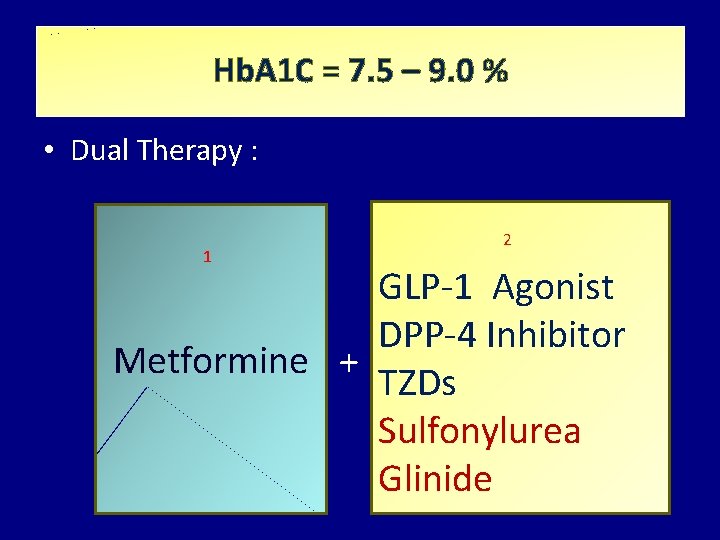
Hb. A 1 C = 7. 5 – 9. 0 % • Dual Therapy : 1 2 GLP-1 Agonist DPP-4 Inhibitor Metformine + TZDs Sulfonylurea Glinide
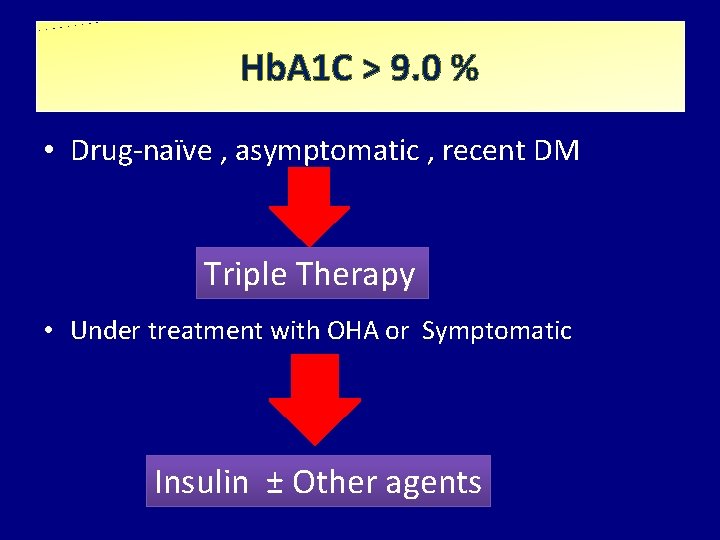
Hb. A 1 C > 9. 0 % • Drug-naïve , asymptomatic , recent DM Triple Therapy • Under treatment with OHA or Symptomatic Insulin ± Other agents
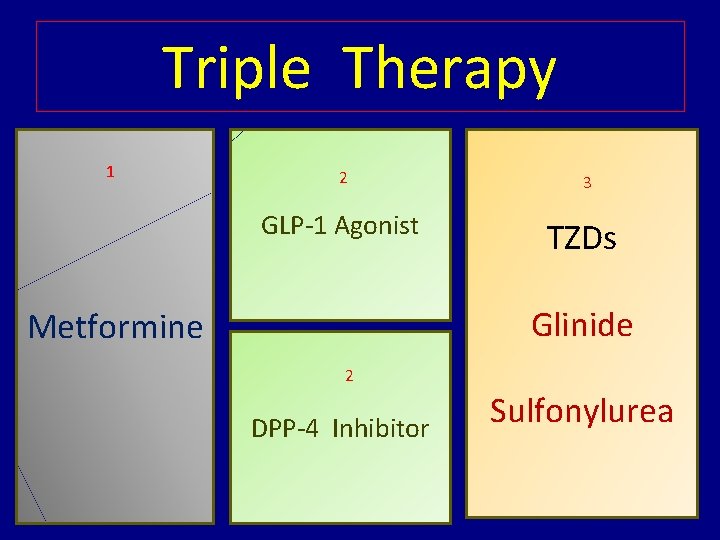
Triple Therapy 1 2 3 GLP-1 Agonist TZDs Glinide Metformine 2 DPP-4 Inhibitor Sulfonylurea