
Oral History Project By Alison Kilpatrick Why Oral
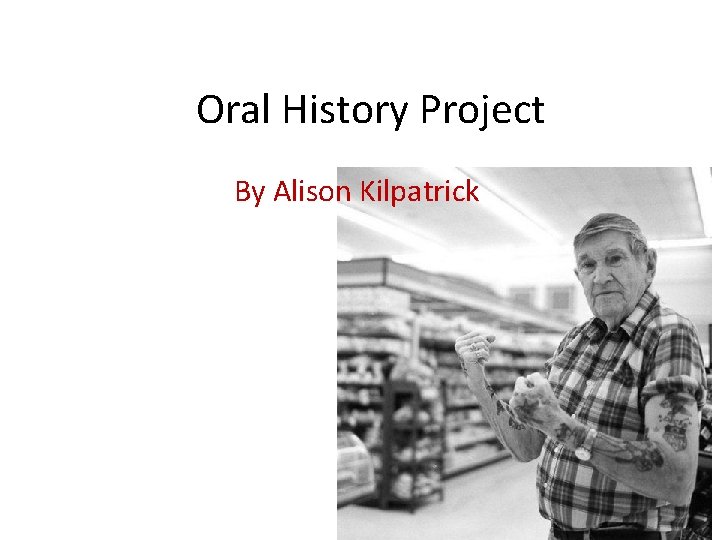
Oral History Project By Alison Kilpatrick
Why Oral History • A unique way to learn about past events and experiences. • A method that probes memory, evoking feelings that may have long been dormant. • Oral history provides a duet of telling and retelling which captures the importance of history through an individuals life. • The process of interviewing and preparing an oral history often creates a special relationship between the narrator and interviewer. • https: //www. youtube. com/watch? v=Xk 3 gb 9 x. CTF
Why are you doing this Project? • Seniors struggle with isolation (even though they live with others in a facility), especially here on the coast. • The older population is often cut off from the rest of the community even though they value socializing with others at all walks of life. • Encourage intergenerational socialization, and to hopefully build relationships between students and residents.
For the Resident • Having the on one attention helps them feel more important and included. • Knowing that someone is interested in their past and will take the time to listen to what they have to say. • To expose seniors to modern technology (recording on phones/tablets) • To have and hold a piece of their own history to share with family and friends.
For the students • Hopefully this project will give students a taste of what life used to be. • Build an interest in individual history (instead of learning about big events, you can learn about how the events affected people) • Develop a different view on aging • Spark and interest in Anthropology, history and storytelling. – The study of human societies and the development of culture.
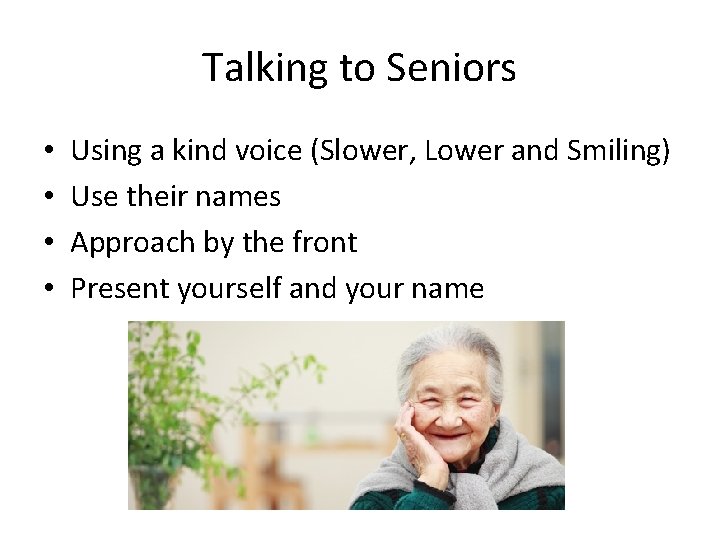
Talking to Seniors • • Using a kind voice (Slower, Lower and Smiling) Use their names Approach by the front Present yourself and your name
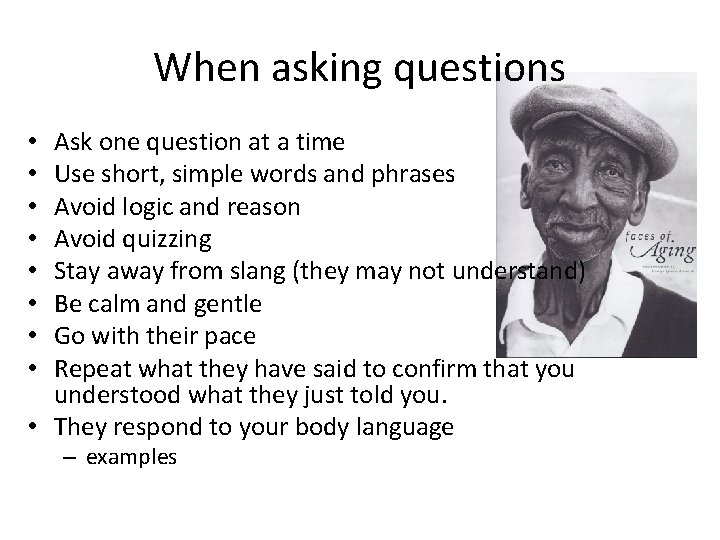
When asking questions Ask one question at a time Use short, simple words and phrases Avoid logic and reason Avoid quizzing Stay away from slang (they may not understand) Be calm and gentle Go with their pace Repeat what they have said to confirm that you understood what they just told you. • They respond to your body language • • – examples
Dementia and Alzheirmers • The word dementia means mad or insane in Latin. • Gradually diminishes a person’s ability to communicate. • Have more difficulty expressing thoughts and emotions, as well as understanding others. • Issues with Short term memory, long term memory is easier to access for them.
• A collective term for a group of neurocognitive disorders characterised by a decline in cognitive functions such as: – Memory, language, recognizing, reasoning and planning. • Progressive and impairs the ability of an individual to carry out routine functions such as doing household chores, driving, bathing, dressing and feeding. • Results in: – Social isolation, dificulty completing familiar tasks, changes in vision, memory loss, changes in mood, confusion.
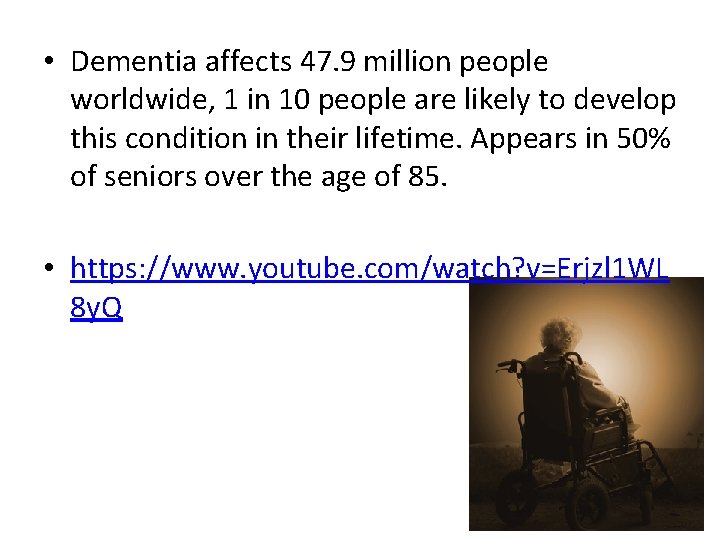
• Dementia affects 47. 9 million people worldwide, 1 in 10 people are likely to develop this condition in their lifetime. Appears in 50% of seniors over the age of 85. • https: //www. youtube. com/watch? v=Erjzl 1 WL 8 y. Q
Be Careful • Don’t interrupt them when they are speaking • Do not criticize, correct or argue • Let the person know you are listening and trying to understand what is being said. • Keep good eye contact • Show the person that you care about what is being said. • Patiently wait for a response, extra time may be requires to process your request. • Repeat information and questions, if the person doesn’t respond, wait a moment, then ask again.
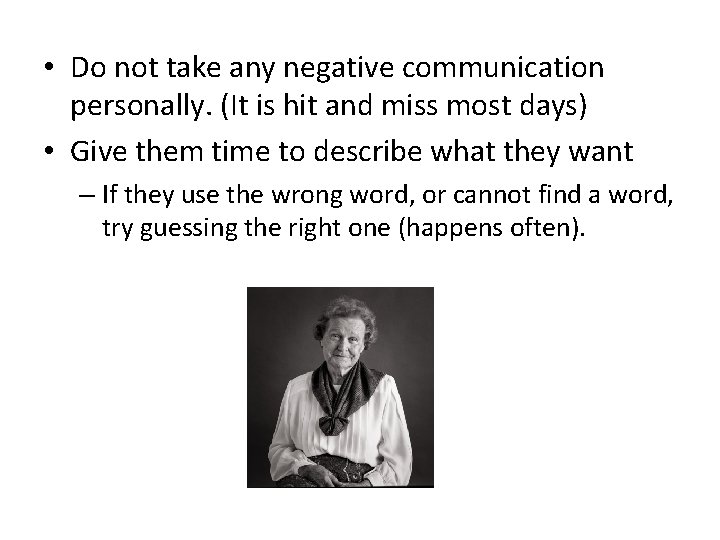
• Do not take any negative communication personally. (It is hit and miss most days) • Give them time to describe what they want – If they use the wrong word, or cannot find a word, try guessing the right one (happens often).
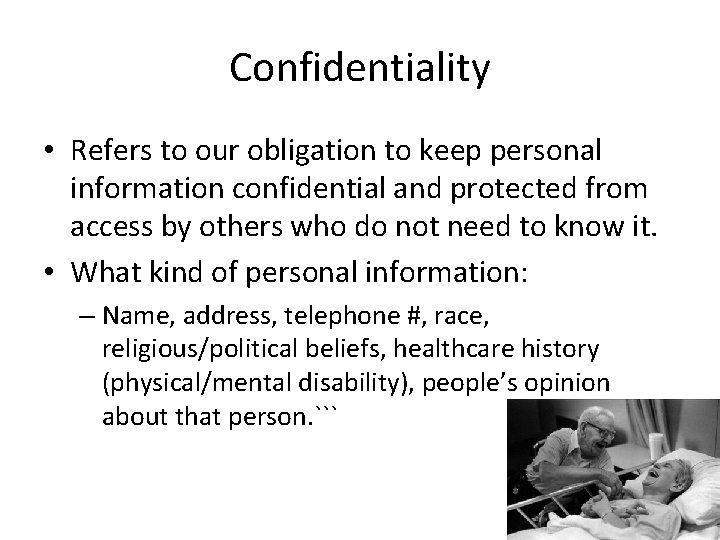
Confidentiality • Refers to our obligation to keep personal information confidential and protected from access by others who do not need to know it. • What kind of personal information: – Name, address, telephone #, race, religious/political beliefs, healthcare history (physical/mental disability), people’s opinion about that person. ```
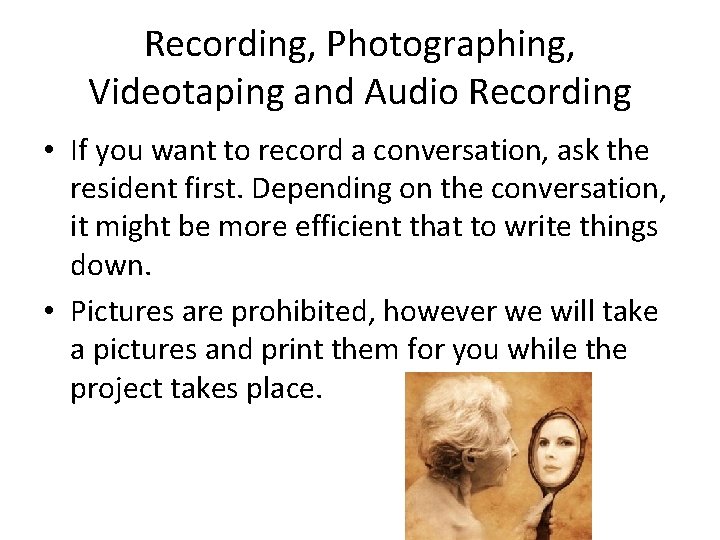
Recording, Photographing, Videotaping and Audio Recording • If you want to record a conversation, ask the resident first. Depending on the conversation, it might be more efficient that to write things down. • Pictures are prohibited, however we will take a pictures and print them for you while the project takes place.
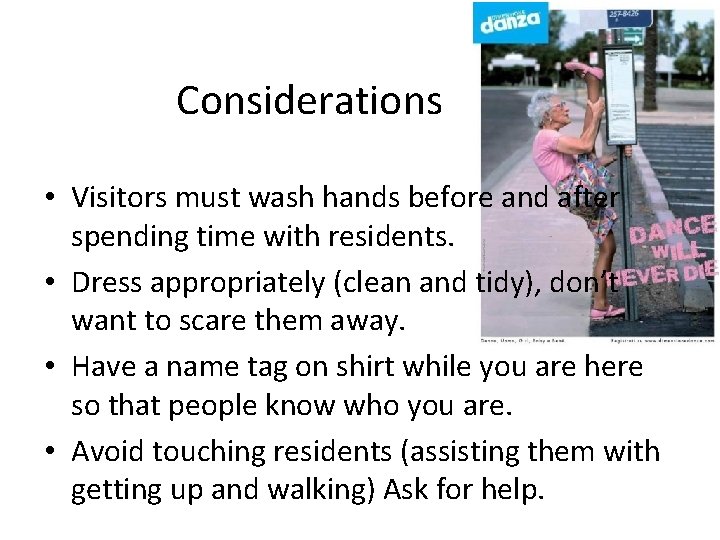
Considerations • Visitors must wash hands before and after spending time with residents. • Dress appropriately (clean and tidy), don’t want to scare them away. • Have a name tag on shirt while you are here so that people know who you are. • Avoid touching residents (assisting them with getting up and walking) Ask for help.
Examples of Oral History Projects • https: //www. youtube. com/watch? v=TTF 4 Nl. F_l. M
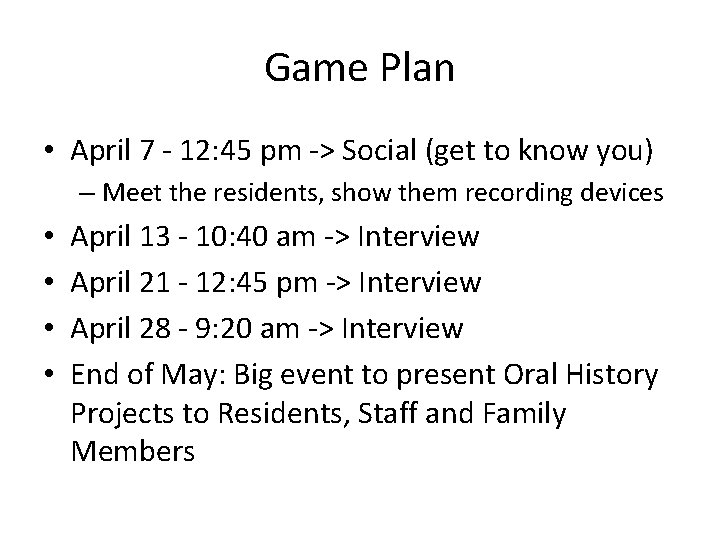
Game Plan • April 7 - 12: 45 pm -> Social (get to know you) – Meet the residents, show them recording devices • • April 13 - 10: 40 am -> Interview April 21 - 12: 45 pm -> Interview April 28 - 9: 20 am -> Interview End of May: Big event to present Oral History Projects to Residents, Staff and Family Members
- Slides: 17