
Oral Diagnostic Communication in the dental office Anamnesis

- Slides: 40
Oral Diagnostic Communication in the dental office. Anamnesis, status assessment and documentation of data. Dr Bródy Andrea Semmelweis University Oral Diagnostic Department
Further procedure • Main complain • General health status assessment (family and social anamnesis) • Mouth hygiene habits • Clinical examination Ø Ø extraoral Intraoral teeth oral cavity and mucosa
Main complain • The reason, why patient came to us complain, control, need • Must clarify
Good anamnesis • Important in the all the three main steps of the patient treatment: diagnose, treatment, prognosis • Main key of the anamnesis – good communication skill
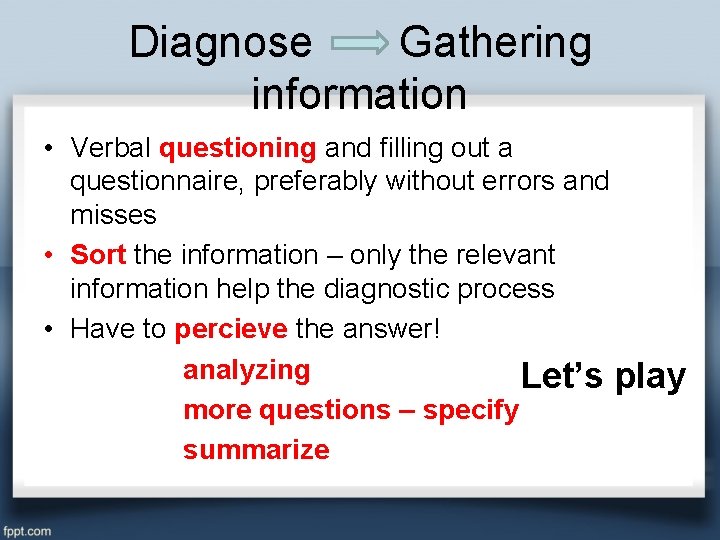
Diagnose Gathering information • Verbal questioning and filling out a questionnaire, preferably without errors and misses • Sort the information – only the relevant information help the diagnostic process • Have to percieve the answer! analyzing Let’s play more questions – specify summarize
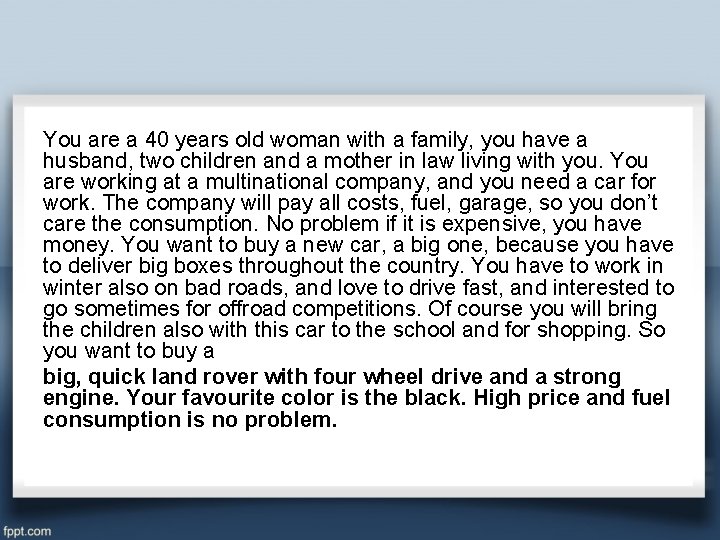
You are a 40 years old woman with a family, you have a husband, two children and a mother in law living with you. You are working at a multinational company, and you need a car for work. The company will pay all costs, fuel, garage, so you don’t care the consumption. No problem if it is expensive, you have money. You want to buy a new car, a big one, because you have to deliver big boxes throughout the country. You have to work in winter also on bad roads, and love to drive fast, and interested to go sometimes for offroad competitions. Of course you will bring the children also with this car to the school and for shopping. So you want to buy a big, quick land rover with four wheel drive and a strong engine. Your favourite color is the black. High price and fuel consumption is no problem.
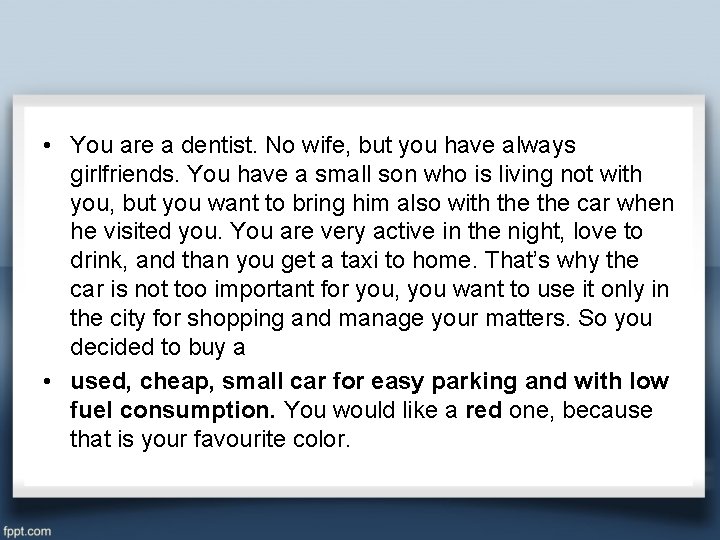
• You are a dentist. No wife, but you have always girlfriends. You have a small son who is living not with you, but you want to bring him also with the car when he visited you. You are very active in the night, love to drink, and than you get a taxi to home. That’s why the car is not too important for you, you want to use it only in the city for shopping and manage your matters. So you decided to buy a • used, cheap, small car for easy parking and with low fuel consumption. You would like a red one, because that is your favourite color.
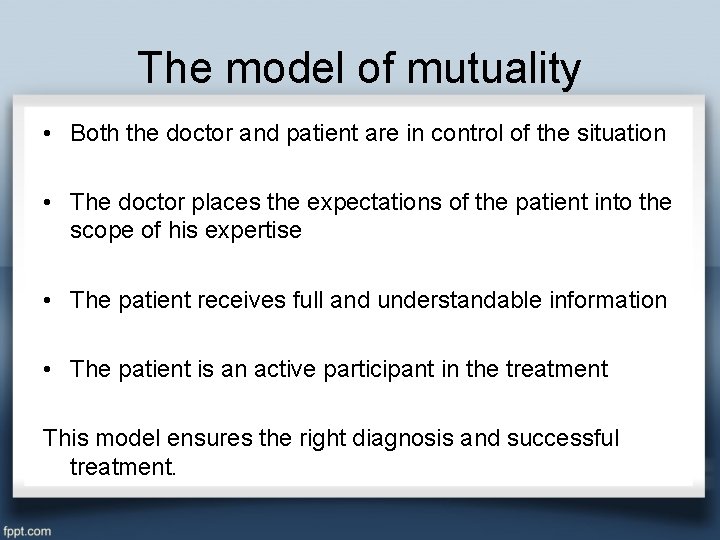
The model of mutuality • Both the doctor and patient are in control of the situation • The doctor places the expectations of the patient into the scope of his expertise • The patient receives full and understandable information • The patient is an active participant in the treatment This model ensures the right diagnosis and successful treatment.
Obstructing factors (noise) • Due to a previous bad experience the patient is not sincere • The patient does not know the significance of earlier diseases, treatment or taken medicine • The patient is ashamed – e. g. alcohol abuse, or is afraid of the consequences – e. g. drugs • The patient is not able to give the necessary information • Sometimes there is no explanation
Factors of efficacy (decrease the noise) Important communication skills in doctoral work • General speech skill • Good question’s skill • The ability to listen to others – effective listening • Tactfulness, using the right expressions • Decoding of non-verbal signs
Verbal communication • Open question: the patient tells us the information with her own words • Closed question: previously given options for answers • Leading question – the information received may be misleading • Applying open and closed questionning techniques: we aim from open to closed questionning • Pay attention to the language use! • we should use medical terminology as little as possible • pay attention to the expressions used
Non-verbal communication • Non-verbal channels – body posture, movements, mimicry • Non-verbal communication often gives more precise information • It suggests that the partner is not sincere or satisfied if the words and gestures or mimicry refer to a different meaning.
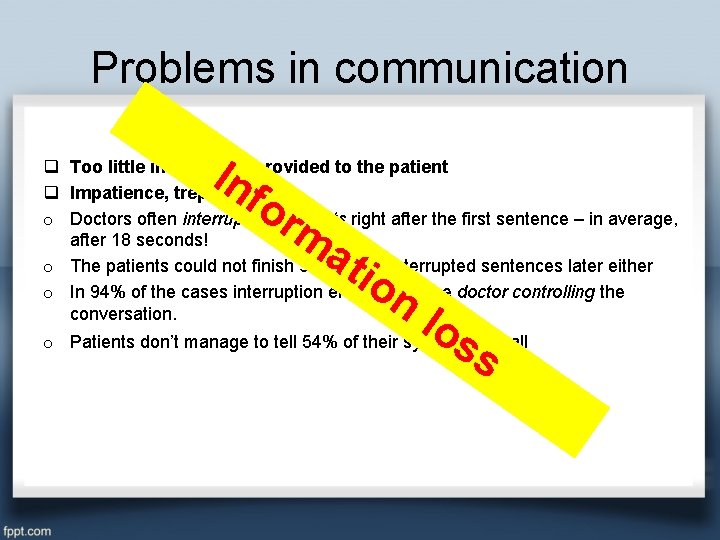
Problems in communication In fo q Too little information provided to the patient q Impatience, trepidity o Doctors often interrupt the patients right after the first sentence – in average, after 18 seconds! o The patients could not finish 98% of the interrupted sentences later either o In 94% of the cases interruption ended up in the doctor controlling the conversation. rm o at io n l os at all Patients don’t manage to tell 54% of their symptoms s
Results of bad communication • • • Patient don’t understand their status They are not cooperate Change for an other dentist Cancel therapy Has the law on Lo st of t ru st
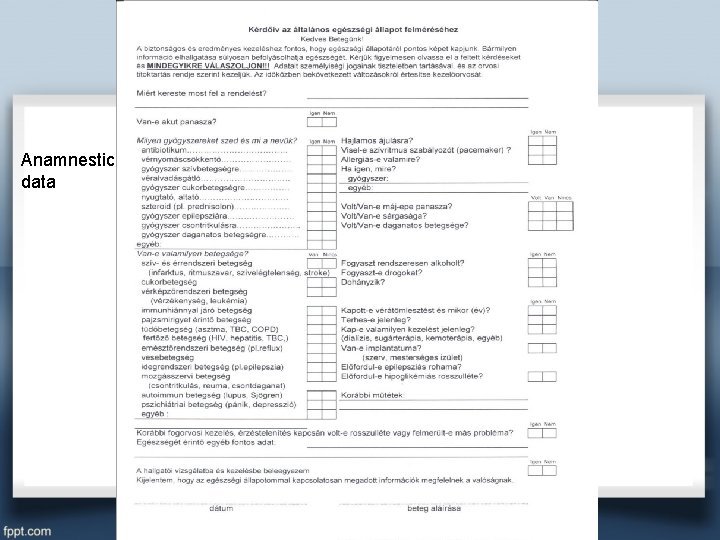
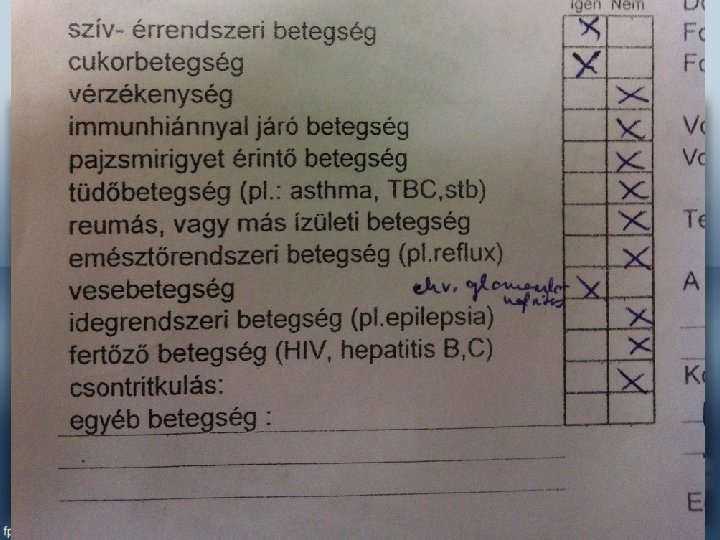
Anamnezis Anamnestic data
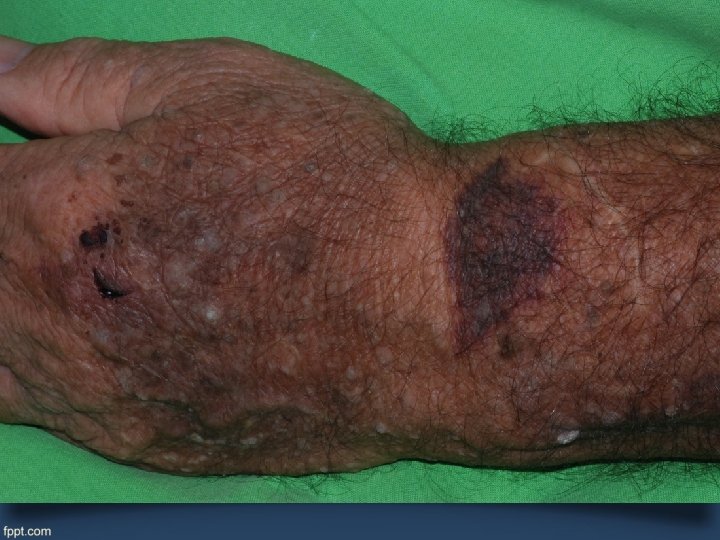
Is the information received always realistic?
Contraindications relating with general health status Treatment is contraindicated in case of • Acute infective diseases • Patient in need of hospitalization • Mental disorders in need of sedatives • Antikoagulant therapy • Severe allergic reaction to earlier dental treament with unknown origin Must find the solution!
We never know which case will bring unexpected complications
Status assessment
Physical examination • The dentist examines the patient using his/her senses Inspection, palpation, percussion, bimanual, bilateral, etc.
Assessment of the function • sensitivity trial – indicates the reaction of the pulpa (the response of the sensor nerves to external stimulus) • occlusion • atypical occlusional connection • salivary gland function
Infection control Dental office is high risk for infection • Protective equipment should be worn – mask, glasses, gloves, rubber dam isolation • Protect patient against nosocomial infection – desinfection of contaminated surfaces
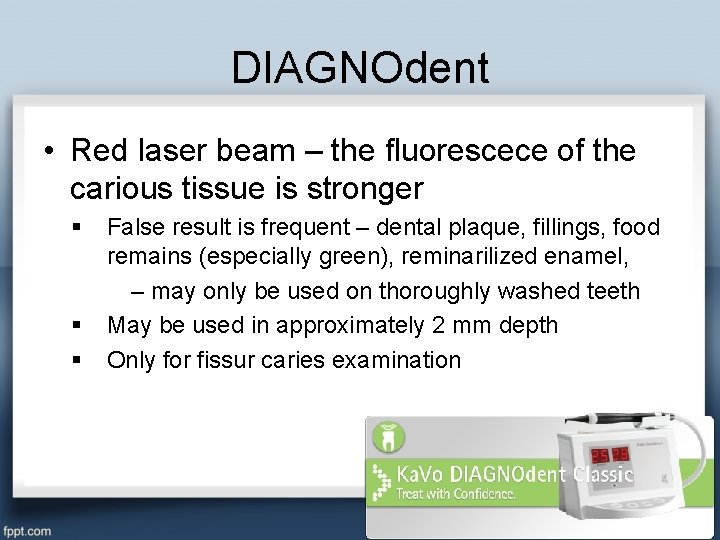
DIAGNOdent • Red laser beam – the fluorescece of the carious tissue is stronger § False result is frequent – dental plaque, fillings, food remains (especially green), reminarilized enamel, – may only be used on thoroughly washed teeth § May be used in approximately 2 mm depth § Only for fissur caries examination
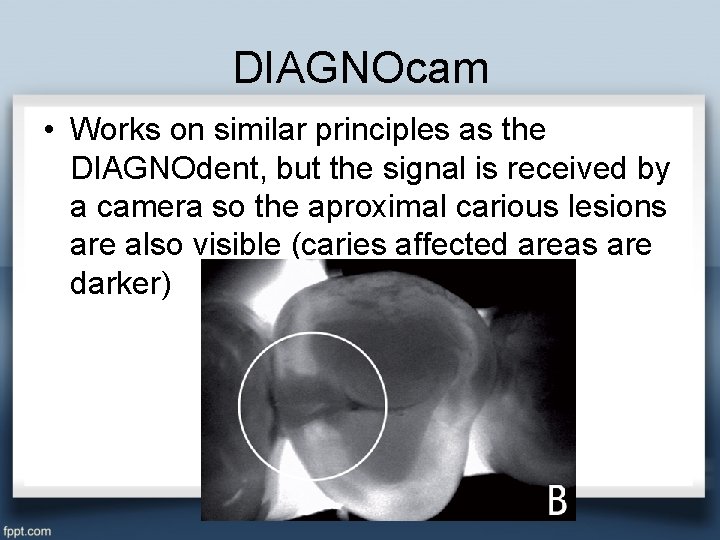
DIAGNOcam • Works on similar principles as the DIAGNOdent, but the signal is received by a camera so the aproximal carious lesions are also visible (caries affected areas are darker)
Supplementary diagnostic examinations • Radiology • Clinical laboratory • Microbiological
Documenting the data
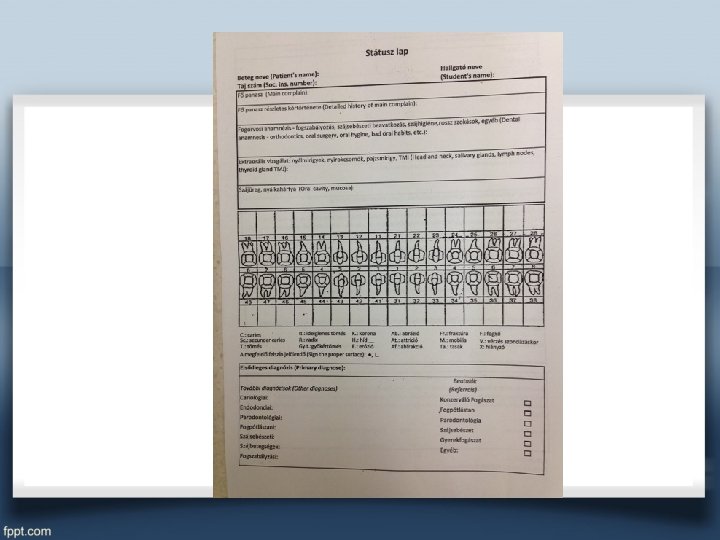
Documentation • „The medical documentation contains the data concerning the examination and treatment of the patient. The documentation tasks should be carried out in a manner that ensures the data properly reflect the course of the treatment. ” • Records the relevant data • Protects the patients from repeated examinations • Official source of data – legal problems
• Should not be possible to alter or change information without detection – photo, video • Dates is important • Both the doctor and patient should signed • To be preserved for the obligatory period (5 -10 years) • Has to be stored separately, safely
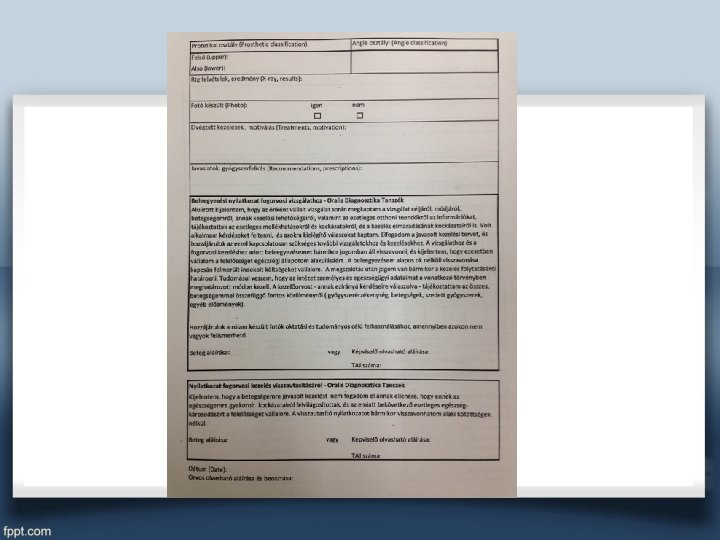
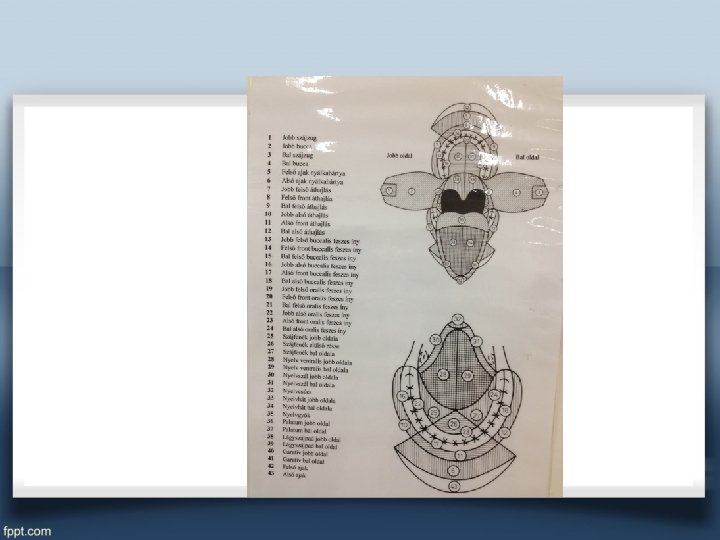
Registration obligation • Personal data, anamnesis, status, diagnosis, risk factors, treatments and their results • Date, signature • Documents signed by the patient They were informed of the treatment and have accepted it • It is advised to enclose the findings and x-ray records too • Ambulant diary • Financial regulations
• Treatment sheet – Contains the original status, the treatment plan, the specific data connected to the treatment, dates, call-backs – with the written consent of the patient • Ad hoc/casual documentation – e. g. certification
Referring and consultation
Consultation • Communication between two experts • The consultant is the expert advisor of the doctor performing the treatment – does not actively take part in the treatment • Gives his expert opinion in writing regarding the specific problem and the recommended treatment Refers the patient back to his dentist
Process of the consultation • Transfer of relevant information (only such information) and important evidences have to be summarized with technical terms – they must be provided • It covers the ü Diagnosis ü Proposed examinations ü Prognosis • May be obligatory
Consultation requesting form Contains the identification data of the patient • The opinion and evaluation of the doctor • Documentation • What we expects from the consultation – only opinion or active participation • Warning regarding certain risks • The identification of the dentist • Via telephone: fast and efficient in simple cases but may lead to legal problems • The patient may need to be accompanied if there is a dangerous complication • The number of diagnostic interventions must be minimized
Thank you for your attention brody. andrea@gmail. com