
Oral Complications chemotherapy CT radiation therapy RT hematopoietic



- Slides: 64
Oral Complications
� chemotherapy (CT) � radiation therapy (RT), � hematopoietic stem cell transplantation (HSCT)
Oral complications 1. 2. 3. 4. 5. CT- and RT-related stomatitis oropharyngeal pain xerostomia oral infection oral chronic graft-versus-host disease (c. GVHD).
Stomatitis � Stomatitis is an inflammation of the mucous membranes of the oral cavity and oropharynx characterized by tissue erythema, edema, and atrophy, often progressing to ulceration. � The clinical significance of CT- and RTrelated stomatitis as a dose- and treatmentlimiting side effect is well appreciated.
Cancer Treatment- and Patient. Related Risk Factors for Stomatitis � PATIENT-RELATED Age older than 65 y or younger than 20 y Gender Inadequate oral health and hygiene practices Periodontal diseases Microbial flora Chronic low-grade mouth infections Salivary gland secretory dysfunction Herpes simplex virus infection Inborn inability to metabolize chemotherapeutic agents effectively Inadequate nutritional status Exposure to oral stressors including alcohol and smoking Ill-fitting dental prostheses
� TREATMENT-RELATED Radiation therapy: dose, schedule Chemotherapy: agent; dose, schedule Myelosuppression Neutropenia Immunosuppression Reduced secretory immunoglobulin A Inadequate oral care during treatment Infections of bacterial, viral, fungal origin Use of antidepressants, opiates, antihypertensives, antihistamines, diuretics, and sedatives Impairment of renal and/or hepatic function Protein or calorie malnutrition, and dehydration Xerostomia
� Risk factors for CT-related stomatitis are complex, and study results are conflicting.
Known risk factors include � continuous CT infusion therapy for breast and colon cancer [5 -FU and leucovorin ] � selected anthracyclines � alkylating agents � taxanes � vinca alkaloids � Antimetabolites � antitumor antibiotics � myeloablative conditioning regimens for HSCT; � RT to the head and neck.
� Children are 3 times more likely than adults to develop stomatitis because of a higher proliferating fraction of basal cells. � Individual drug metabolism affects stomatitis incidence and severity, as seen with patients who are unable to adequately metabolize certain CT
Chemotherapy-Induced Stomatitis � 40% of CT patients develop stomatitis, � Half requiring parenteral analgesia that may lead to treatment modification. � 60% are seen in the HSCT setting, � Oral infection, herpes simplex virus (HSV) in particular, may increase stomatitis severity � a 4 times greater relative risk of septicemia
Stomatitis presents � asymptomatic erythema and progresses from solitary, white, elevated desquamative patches that are slightly painful to large, contiguous, pseudomembranous, painful lesions.
Radiation-Induced Stomatitis � Area � Type of ionizing radiation � volume of irradiated tissue � daily and cumulative dose � duration of RT
Stomatitis is a dose- and rate-limiting toxicity of RT for head and neck cancer, and of hyperfractionated RT and CT that is designed to improve survival time. � COX-2 plays an amplifying role in RT-related stomatitis. � Atrophic changes in the oral epithelium usually occur at total doses of 1, 600 to 2, 200 c. Gy, administered at a rate of 200 c. Gy per day. Doses higher than 6, 000 c. Gy place the patient at risk for permanent changes in the salivary glands. �
RT-induced dental effects � depend primarily on salivary changes rather than on direct irradiation of the teeth. � Direct irradiation of teeth may alter the organic or inorganic components making them more susceptible to decalcification or hypocalcification. � daily fluoride application is necessary
Radiation Therapy-Related Complications � Long-term 1. 2. 3. 4. 5. effects of head and neck RT Soft tissue fibrosis Obliterative endoarteritis Trismus Nonhealing or slow-healing mucosal ulcerations slow healing of dental extraction sites.
RT-induced fibrotic changes � up to 1 year post-therapy, becoming more serious over time.
Osteoradionecrosis (ORN) � Higher incidences are seen after total doses to the bone exceed 65 Gy. � The risk of ORN actually increases over time following RT. � pathologic fracture, infection of surrounding soft tissues, and severe pain. � time to allow adequate extraction site healing is 10 to 14 days before start of RT.
Osteonecrosis of the jaw bone � Long use : bisphonate therapy � majority required surgical procedures to remove the involved bone. �
H &N RT � Oral candidiasis angular cheilitis, may appear as white and removable chronic hyperplastic (nonremovable) chronic erythematous (diffuse patchy erythema).
Chronic Graft-Versus-Host Disease Oral Manifestations � Acute GVHD occurs within the first 100 days after allogeneic HSCT. � Chronic GVHD begins as early as 70 days or as late as 15 months after allogeneic transplant. � 80% of patients with extensive c. GVHD have some type of oral involvement � Oral infection in c. GVHD patients is a risk factor for systemic infections that are the primary cause of death in this population
Oropharyngeal Pain � stomatitis-related pain � Immunocompromised cancer patients with HSV infections have larger, more painful lesions as compared with noncancer patients � c. GVHD
v The effect on the patient's psychological well -being: � medication usage, � decreased oral intake � use of analgesics and opioids.
Cognitive dimension of pain � individual's thought process, � self-perception, � reported pain relief, � the personal meaning of the pain.
Multidimensional oral pain � The sociocultural dimension includes demographic characteristics, cultural background, and family and work roles. � age and pain perception, � intraethnic differences in pain perception � Gender
� Pain control is critical to accomplish to avoid suffering and psychological distress. � Effective oral pain management is promoted through open, consistent communication between and among patient, physician, nurse, and caregiver. � A comprehensive pain assessment tool?
Xerostomia � Severity dependent on the radiation dosage and location, and volume of exposed salivary glands. � Significant xerostomia has not been reported in patients treated with CT alone. � Xerostomia can affect oral comfort, fit of prostheses, speech, and swallowing. � Xerostomia-associated enzymes contribute to the growth of caries (decay)-producing organisms, and the decrease in quantity and quality of saliva can be very harmful to dentition
Strategies for Prevention and Treatment of Oral Complications � Pretherapy Dental Evaluation and Intervention � Assessment of the Oral Mucosa
Pretherapy Dental Evaluation and Intervention � an experienced dental team � Many health care institution-specific policies and preventive approaches exist for oral care for CT and RT patients.
Patients scheduled for CT and/or head and neck RT: � dental screening at least 2 weeks before therapy � Oral hygiene
The decision to extract asymptomatic teeth related to several important factors, including radiation exposure , type, portal field, fractionization, total dosage tumor prognosis, expediency of control of the cancer.
� Careful examination of extraction sites must be performed before RT commences. � Dental extractions following RT require collaborations between dental and radiation oncology team members to minimize the risk of ORN. � A low incidence of ORN is seen when pre-RT dental consultation and appropriate treatment (e. g. , extractions) are rendered. � Follow-up
� Assessment of the Oral Mucosa
Treatment Strategies � The optimal treatment ? � mainly empirical � The only standard forms of care pretreatment oral/dental stabilization, saline mouthwashes, and oropharyngeal pain management. � oral hygiene
stomatitis treatment. � unreliable evidence for the effectiveness of 1. allopurinol mouthwash, 2. vitamin E, 3. immunoglobulin, 4. human placental extract Ø no single agent completely prevented stomatitis, suggesting that combined strategies may be necessary
�A standardized approach for the prevention and treatment of CT- and RT-induced stomatitis is essential.
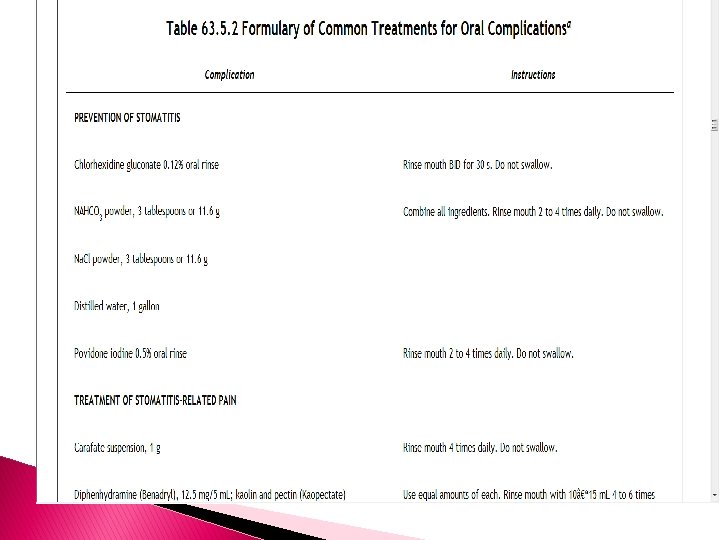
prophylactic measures � Chlorhexidine � Saline gluconate (Peridex), rinses, � Sodium bicarbonate rinses, � Acyclovir � Amphotericin B � Ice
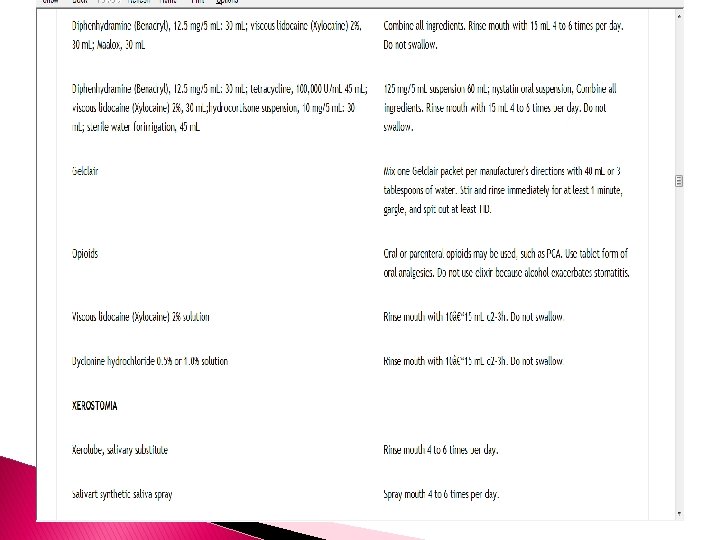
Treatment of stomatitis and related pain �a local anesthetic such as lidocaine or dyclonine hydrochloride, magnesium-based antacids (Maalox, Mylanta), diphenhydramine hydrochloride (Benadryl), nystatin, or sucralfate � These agents are used either alone or in various combinations as a mouthwash formulation. � opioids
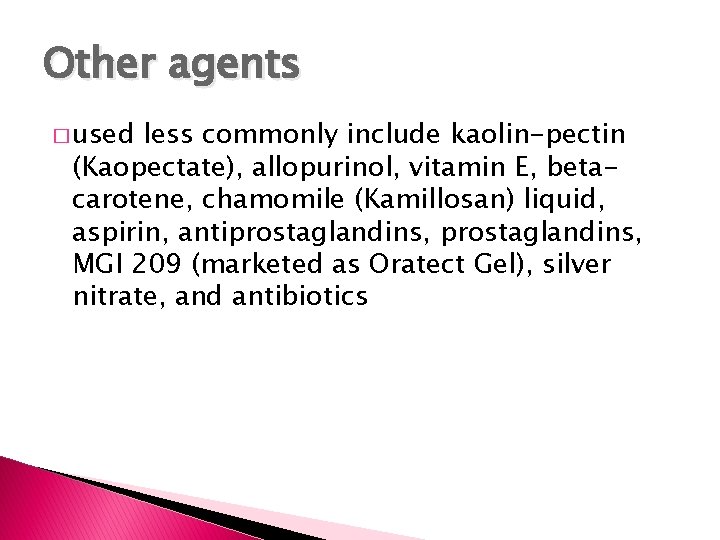
Other agents � used less commonly include kaolin-pectin (Kaopectate), allopurinol, vitamin E, betacarotene, chamomile (Kamillosan) liquid, aspirin, antiprostaglandins, MGI 209 (marketed as Oratect Gel), silver nitrate, and antibiotics
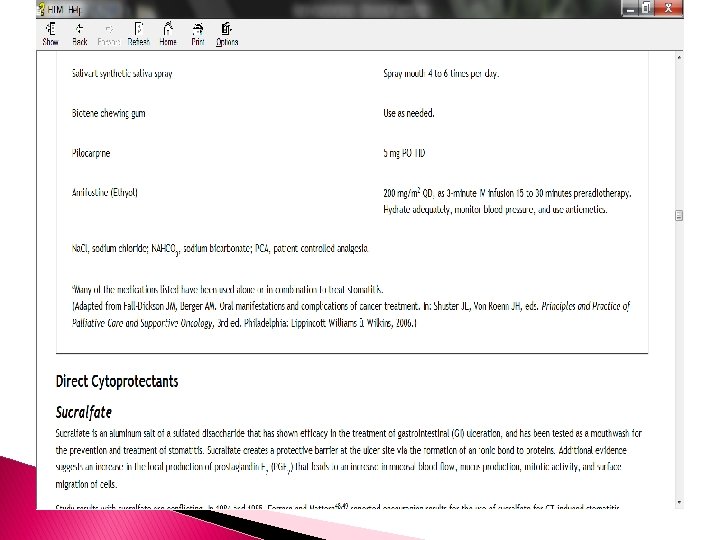
Direct Cytoprotectants Sucralfate � has shown efficacy in the treatment of gastrointestinal (GI) ulceration � has been tested as a mouthwash for the prevention and treatment of stomatitis? � CT? � Sucralfate has also been tested in the head and neck RT population?
Gelclair � Gelclair is a concentrated, bioadherent gel that has received for the management of stomatitis-related oral pain.
Prostaglandins, Antiprostaglandins, and Nonsteroidal Agents? � Benzydamine is a nonsteroidal antiinflammatory drug with reported analgesic, anesthetic, anti-inflammatory, and antimicrobial properties.
Vitamins and Other Antioxidants � Vitamin E+ � vitamins C and E and glutathione ? � Azelastine may be useful to prevent CTinduced stomatitis
� Silver Nitrate + � Laser? � Miscellaneous Agents? diphenhydramine hydrochlor-ide (Benadryl), saline, sodium bicarbonate, and gentian violet
Cryotherapy � Cryotherapy used to induce vasoconstriction should be considered for patients receiving 5 -FU or melphalan when these agents are administered during short infusion times.
Indirect Cytoprotectants � Hematopoietic Growth Factors? � Keratinocyte Growth Factors � Antimicrobials � Pharmacologic Modulation
Keratinocyte Growth Factors � Recently, palifermin, which is a recombinant human keratinocyte growth factor, has shown efficacy in the reduction of oral mucosal injury related to cytotoxic therapy
Antimicrobials � Treatment approaches for oral candidiasis include Mycostatin (troches), nystatin (liquid or ointment), or clotrimazole. � Pseudomembranous candidiasis is successfully treated topically. � Chronic candidiases usually requires much longer treatment, and it may be necessary to use oral ketoconazole, fluconazole, or intravenous amphotericin B. � chlorhexidine mouthwash ?
Pharmacologic Modulation Allopurinol mouthwash for the prevention and treatment of 5 -FU-related stomatitis � positive results have led to allopurinol becoming routine practice. � no protective effect of allopurinol against 5 FU-induced stomatitis was seen in a randomized, double-blind clinical trial conducted by the NCCTG and the Mayo Clinic.
Exercises for Radiation Therapy. Induced Complications � RT-induced fibrosis of the masticatory muscles and/or the temporal mandibular joint may be prevented or attenuated through early exercises with trismus appliances posttherapy. Fibrosis of the masticatory muscles may occur up to 1 year postradiation; therefore, jaw-opening exercises should start after oral mucosal healing and continue for more than 1 year following RT. Effective exercises in reducing trismus include the use of tongue depressors taped together 10 to 15 times a day for 10 -minute sets.
Treatment Strategies for Osteonecrosis 1. 2. Antibiotics and surgical debridement and curettage. Hyperbaric oxygen ?
Osteonecrosis of the jaw related to bisphonate therapy � conservative debridement and antibiotic therapy. � surgical procedures to remove the involved bone. � Early diagnosis � pretherapy dental care
Symptom Management Oropharyngeal Pain � Stomatitis is the principal etiology of most pain experienced during the 3 -week post-BMT time period. � Stomatitis-related oropharyngeal pain is multidimensional. � Immunocompromised patients with cancer who are also HIV develop larger, more painful lesions � Oral pain associated with c. GVHD has been described as severe, with symptoms of burning, irritation, dryness, and loss of taste has been reported.
Anesthetic Cocktails � viscous lidocaine (Xylocaine) or dyclonine hydrochloride � temporary pain relief � kaolin-pectin, diphenhydramine, Orabase, and Oratect Gel.
� One large clinical research center uses a topical formulation that contains lidocaine viscous 2% (40 m. L), diphenhydramine 12. 5 mg/5 m. L (40 m. L), and Maalox 10 mg (40 m. L) and prescribes its use every 3 to 4 hours as needed.
� Severe stomatitis-related oropharyngeal pain may interfere with hydration and nutritional intake and affect quality of life. Management of this oropharyngeal pain may require use of opioids, � oral transmucosal fentanyl was more effective than morphine sulfate immediate release in treating breakthrough pain
� At present, no standard treatment has been defined for the prevention or treatment of stomatitis-related oral pain; therefore, it is essential to continue studies of the treatments already available and to develop promising new approaches.
Capsaicin?
Xerostomia � Oral hygiene regimens that include the use of water/saline and daily fluoride application along with brushing teeth at least 3 times daily may reduce colonization and proliferation of oral pathogens.
Xerostomia � pilocarpine, 5 - and 10 -mg doses � amifostine (Ethyol), administered at 200 mg/m 2 as a 3 -minute intravenous infusion 15 to 30 minutes before each fraction of radiation. � Artificial saliva, which usually uses carboxymethylcellulose as a base? � sugarless gum and hard candy
� Conclusion