
Oral Communication Time Spent Research Talking 30 Listening
- Slides: 30
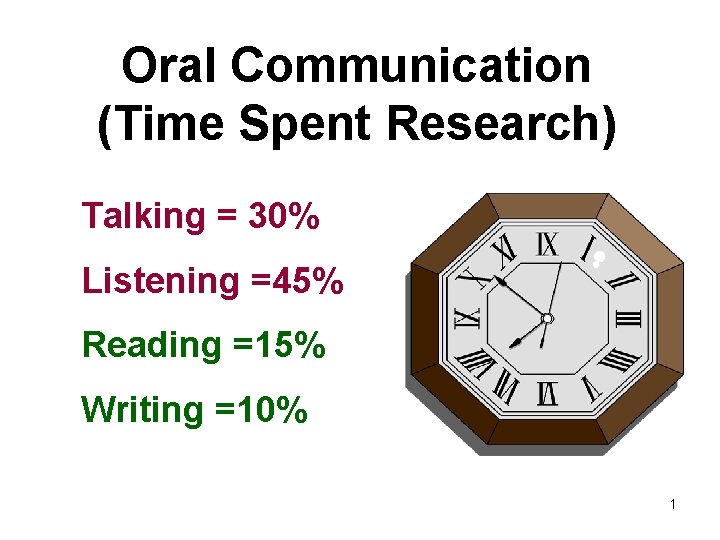
Oral Communication (Time Spent Research) Talking = 30% Listening =45% Reading =15% Writing =10% 1
Activity 1: Oral Communication Exercise (Time Spent) • Answer as honestly as you can • Go through the questions provided 2
Activity 2: Improve Verbal Skills (Part I) • Choice of words • Feeling versus Neutral words Feeling : He was kicked out of the department. Neutral : He was transferred. 3
Activity 2: Improve Verbal Skills (Part II) • Thinking straight • Generalisation versus Facts Generalisation : He is a very generous person. Facts : He is only generous to those he trust. 4
Objectives • Use vocal communication as an effective channel • Improve ability to say things well Our voice is an Instrument
VOCAL QUALITY • Volume • Tone • Rate (Pace) • Pitch • Pronunciation
ACTIVITY 3: Vocal Communication (Part I) • Work in groups • Choose a situation to demonstrate correct use of vocal qualities • Choose a representative to present
Activity 3: Vocal Communication Part II - Self-Assessment 1. Do you smile with your voice? 2. Give examples how you can smile with your voice 3. Why is it important to smile with your voice? 4. Has anyone complimented or complained about your voice? In what way? 8
Manage Your Voice (Some tips) • Pace yourself – don’t rush • Keep eye contact • Speak through your mouth - not nose • Stand or sit straight 9
1. Choice of Words / Expressions 2. * Facts versus feelings 3. * Facts versus generalisation 2. Manage Voice 3. * Volume, tone, pace, pitch, pronunciation
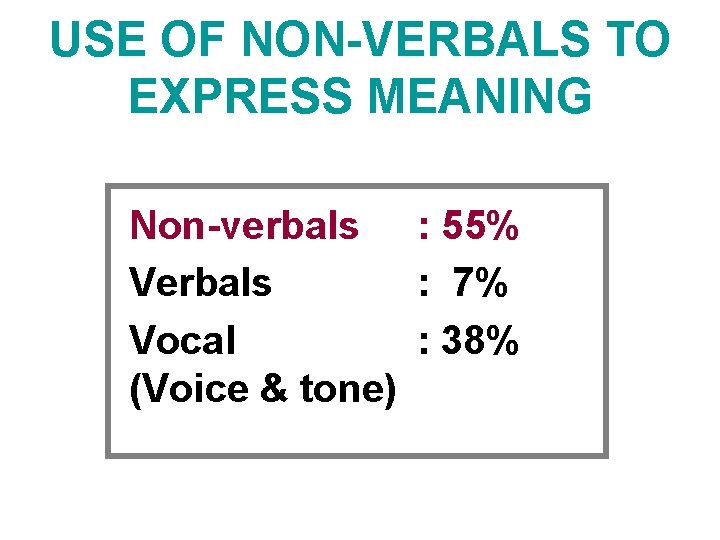
USE OF NON-VERBALS TO EXPRESS MEANING Non-verbals : 55% Verbals : 7% Vocal : 38% (Voice & tone)
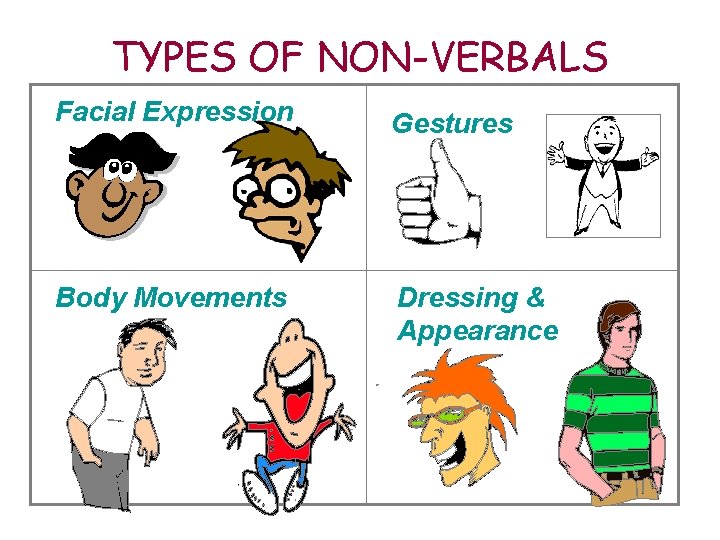
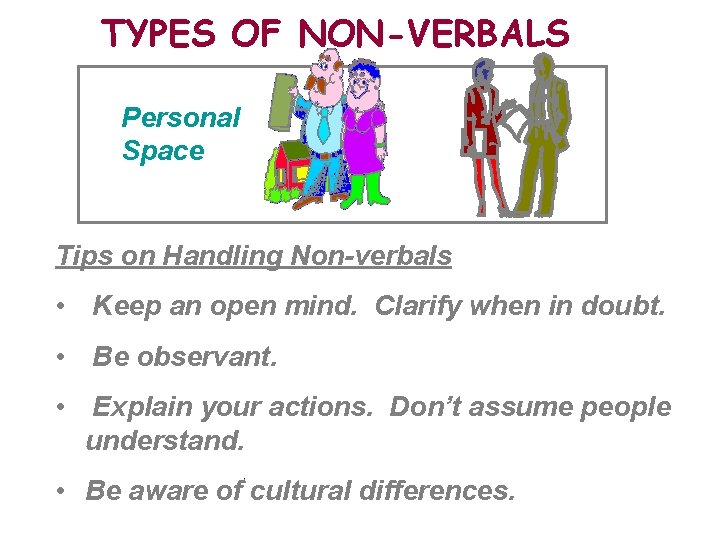
TYPES OF NON-VERBALS Facial Expression Gestures Body Movements Dressing & Appearance
TYPES OF NON-VERBALS Personal Space Tips on Handling Non-verbals • Keep an open mind. Clarify when in doubt. • Be observant. • Explain your actions. Don’t assume people understand. • Be aware of cultural differences.
GESTURES (Question #1) • Why is it useful for us to understand gestures?
GESTURES (Question #2) • Why is it useful for us to use meaningful gestures?
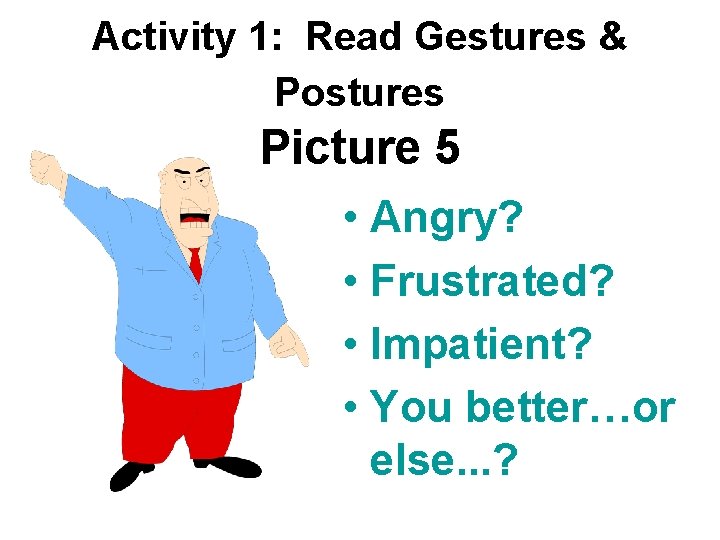
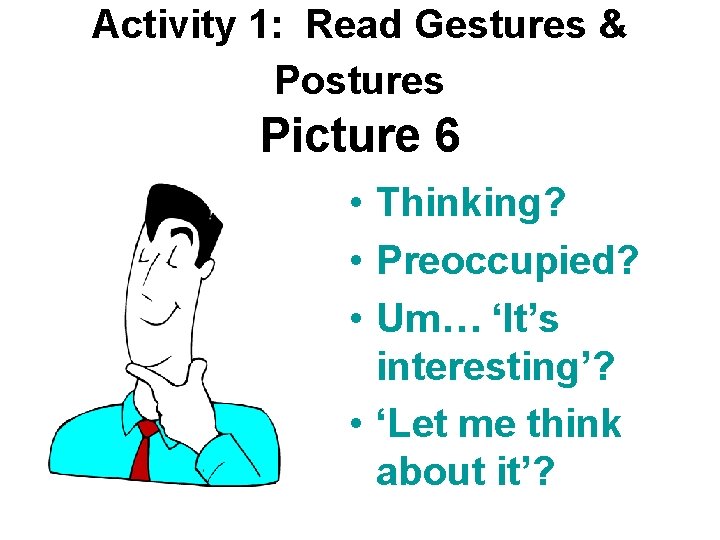
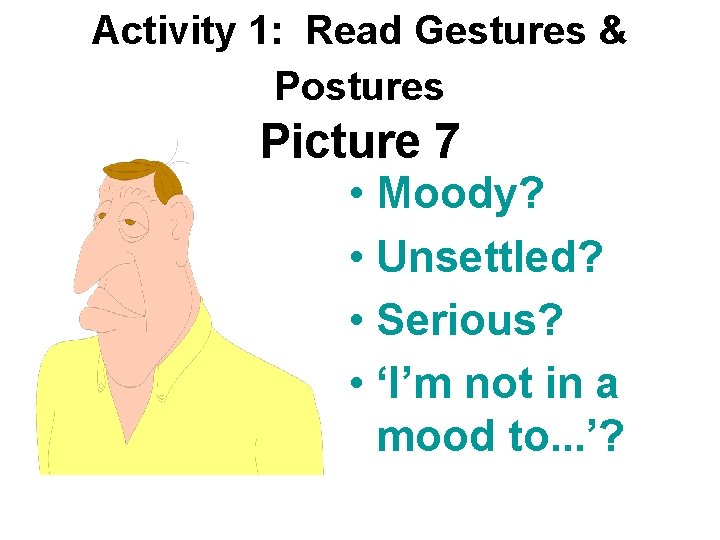
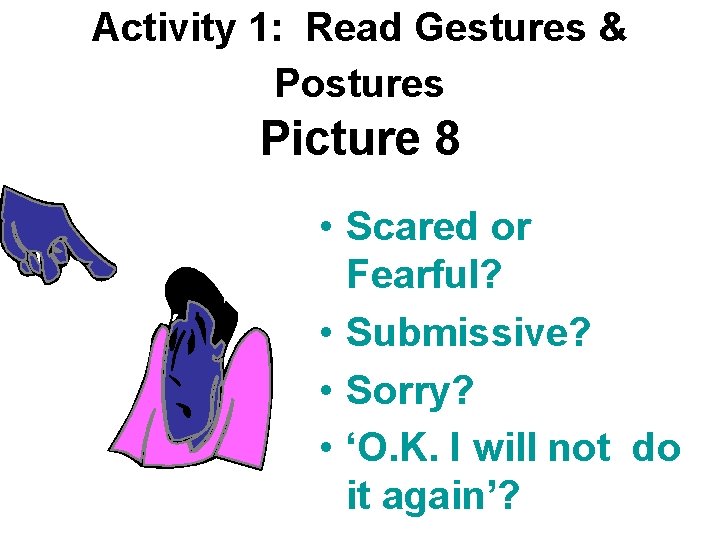
Activity 1 : Read Gestures & Postures Part I • Study the 12 pictures • Explain its likely meaning(s)
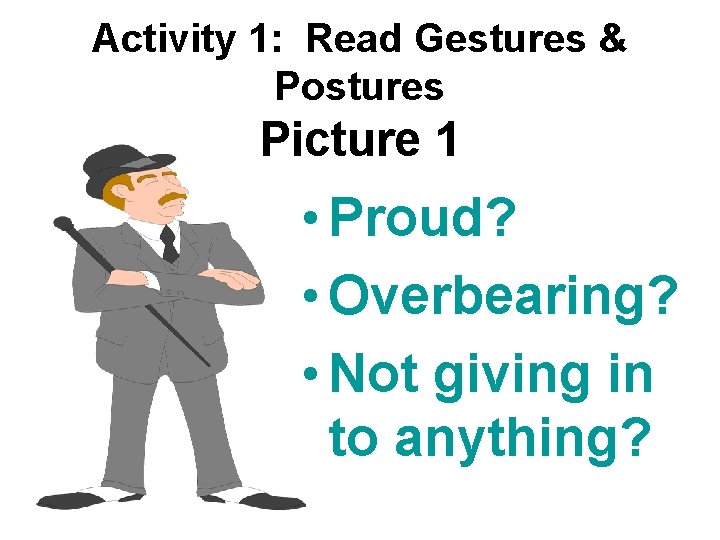
Activity 1: Read Gestures & Postures Picture 1 • Proud? • Overbearing? • Not giving in to anything?
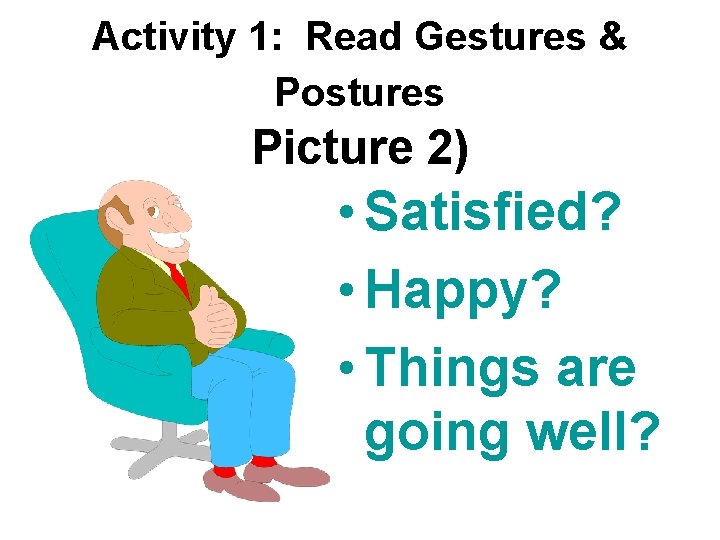
Activity 1: Read Gestures & Postures Picture 2) • Satisfied? • Happy? • Things are going well?
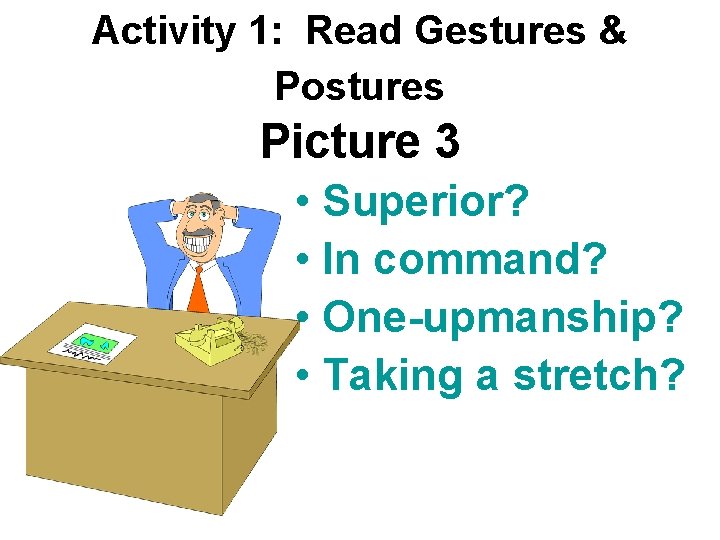
Activity 1: Read Gestures & Postures Picture 3 • Superior? • In command? • One-upmanship? • Taking a stretch?
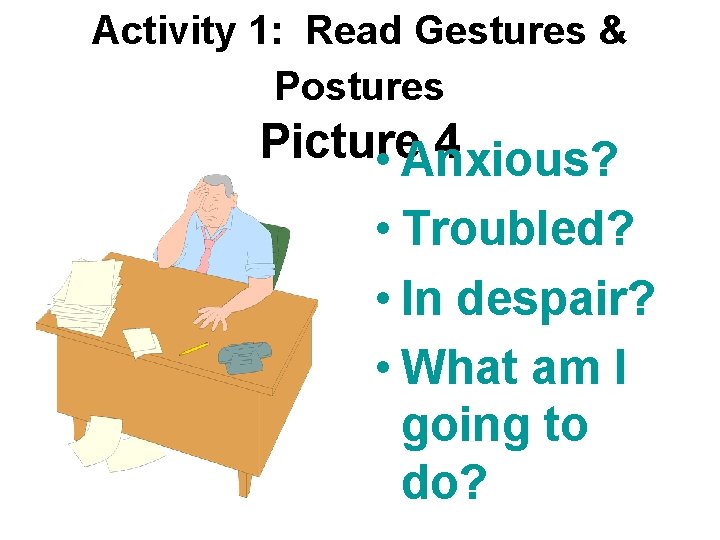
Activity 1: Read Gestures & Postures Picture 4 • Anxious? • Troubled? • In despair? • What am I going to do?
Activity 1: Read Gestures & Postures Picture 5 • Angry? • Frustrated? • Impatient? • You better…or else. . . ?
Activity 1: Read Gestures & Postures Picture 6 • Thinking? • Preoccupied? • Um… ‘It’s interesting’? • ‘Let me think about it’?
Activity 1: Read Gestures & Postures Picture 7 • Moody? • Unsettled? • Serious? • ‘I’m not in a mood to. . . ’?
Activity 1: Read Gestures & Postures Picture 8 • Scared or Fearful? • Submissive? • Sorry? • ‘O. K. I will not do it again’?
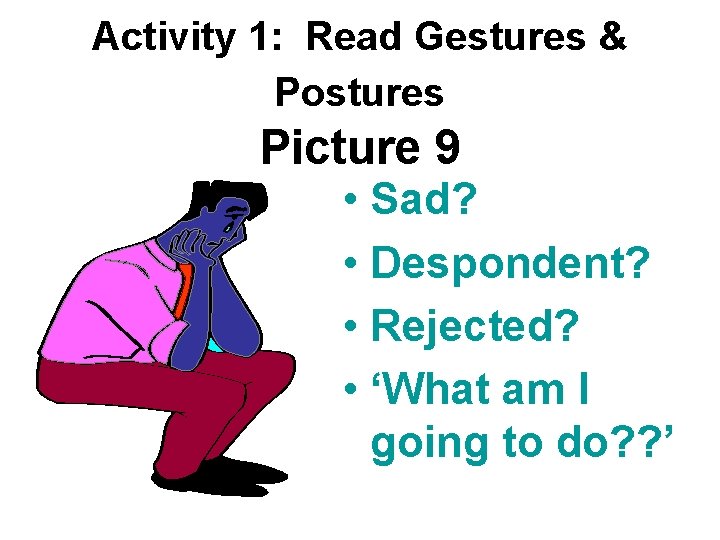
Activity 1: Read Gestures & Postures Picture 9 • Sad? • Despondent? • Rejected? • ‘What am I going to do? ? ’
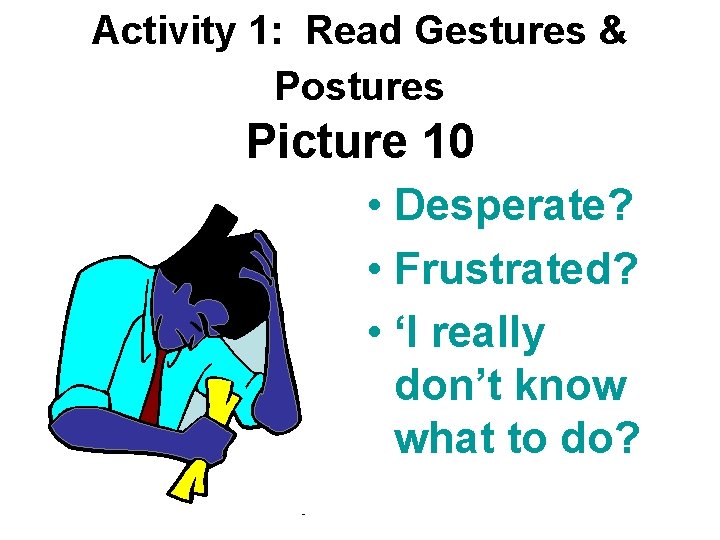
Activity 1: Read Gestures & Postures Picture 10 • Desperate? • Frustrated? • ‘I really don’t know what to do?
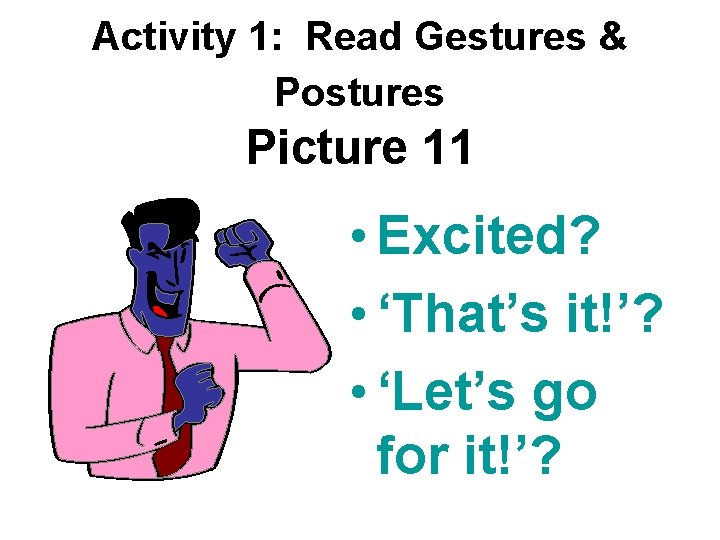
Activity 1: Read Gestures & Postures Picture 11 • Excited? • ‘That’s it!’? • ‘Let’s go for it!’?
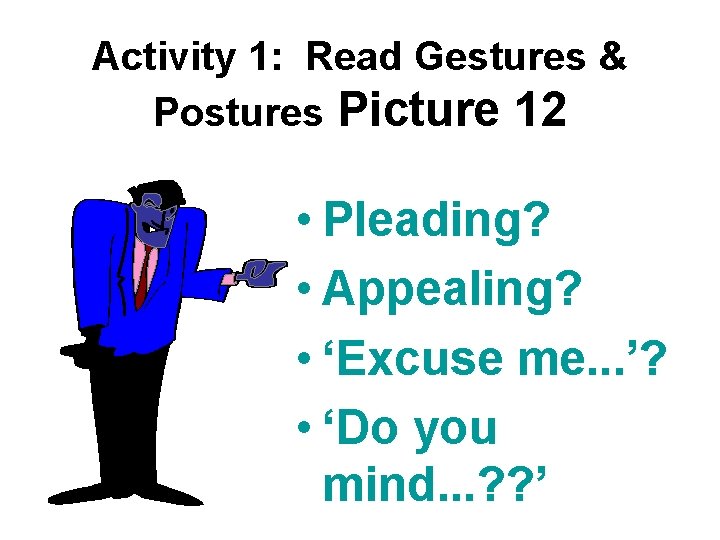
Activity 1: Read Gestures & Postures Picture 12 • Pleading? • Appealing? • ‘Excuse me. . . ’? • ‘Do you mind. . . ? ? ’
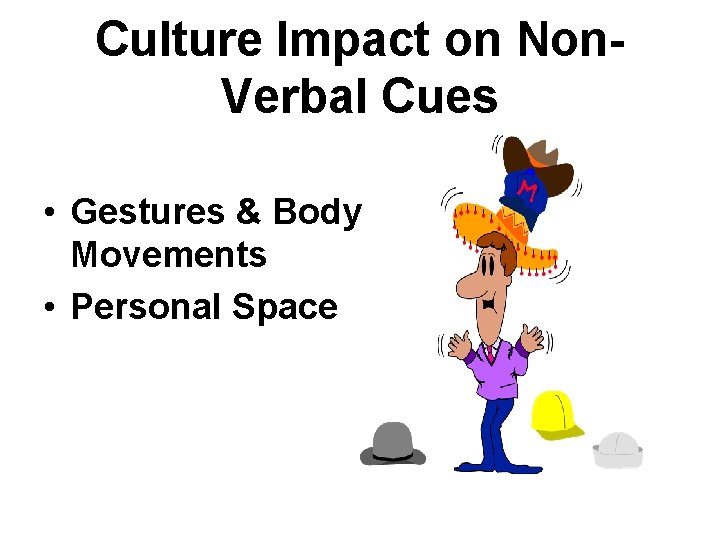
Culture Impact on Non. Verbal Cues • Gestures & Body Movements • Personal Space