
Oral communication Conversational control Effective oral communication Defining


- Slides: 27
Oral communication Conversational control Effective oral communication
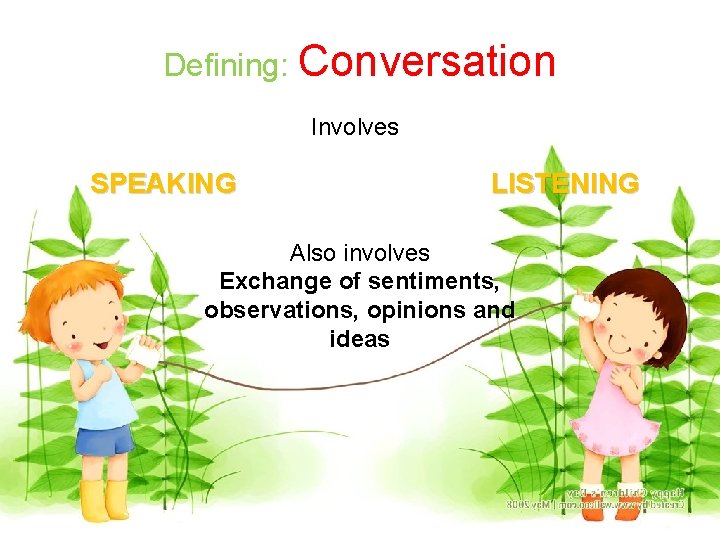
Defining: Conversation Involves SPEAKING LISTENING Also involves Exchange of sentiments, observations, opinions and ideas
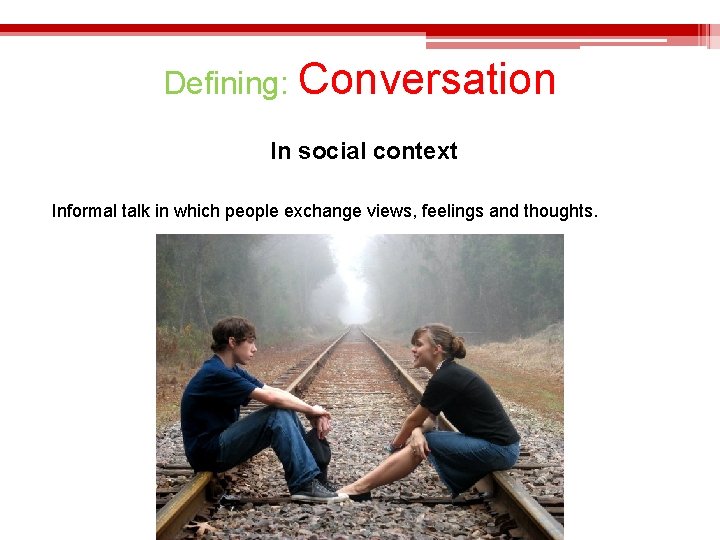
Defining: Conversation In social context Informal talk in which people exchange views, feelings and thoughts.
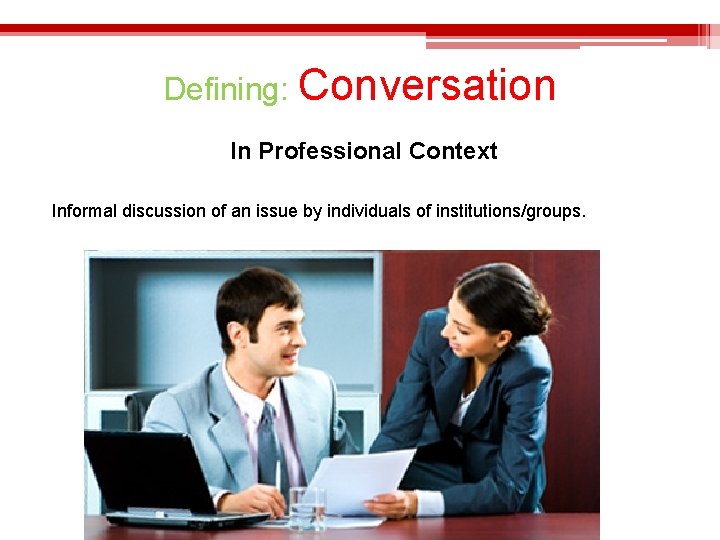
Defining: Conversation In Professional Context Informal discussion of an issue by individuals of institutions/groups.
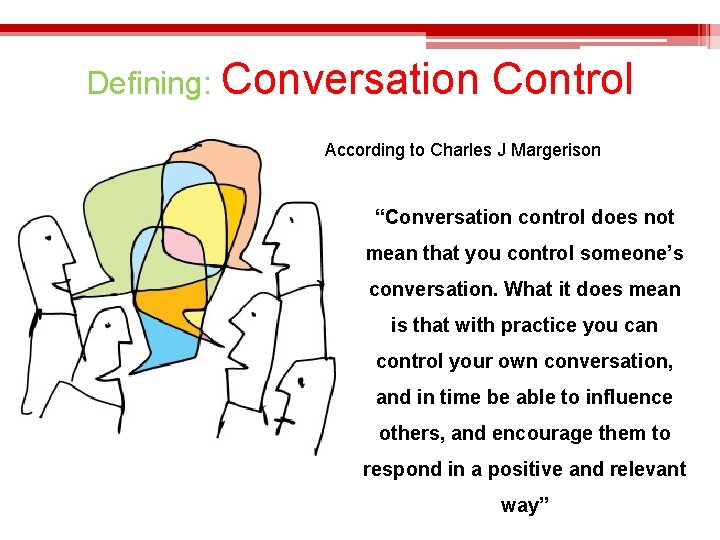
Defining: Conversation Control According to Charles J Margerison “Conversation control does not mean that you control someone’s conversation. What it does mean is that with practice you can control your own conversation, and in time be able to influence others, and encourage them to respond in a positive and relevant way”
Understanding: Conversation Ability to manage your own conversation Does NOT mean Manipulating other people’s conversation although it does imply giving it gentle pushes in particular directions from time to time. Control
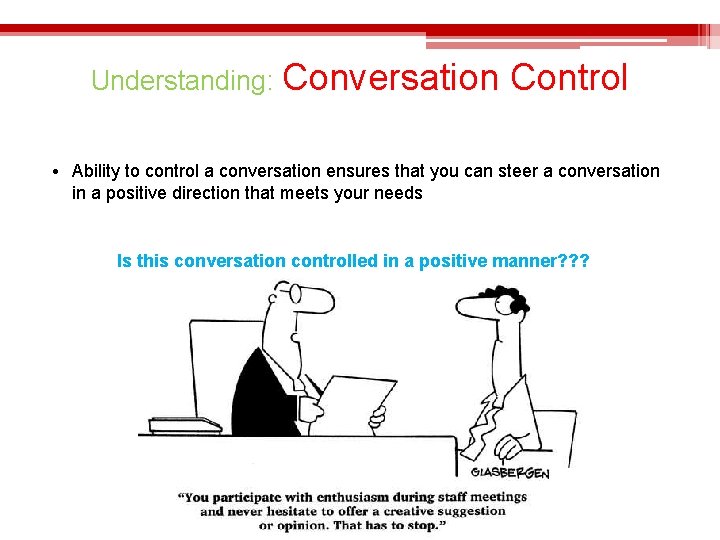
Understanding: Conversation Control • Ability to control a conversation ensures that you can steer a conversation in a positive direction that meets your needs Is this conversation controlled in a positive manner? ? ?
Understanding: Conversation Control • The ability to allow a discussion to develop along key issues an in uninterrupted way towards a desired end
Understanding: Conversation Control • Conversation control involves skills listening and talking in a positive and meaningful way at an appropriate time.
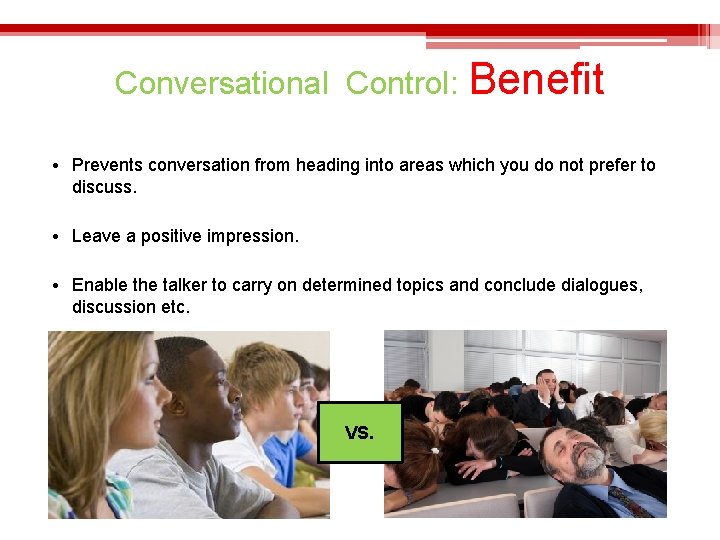
Conversational Control: Benefit • Prevents conversation from heading into areas which you do not prefer to discuss. • Leave a positive impression. • Enable the talker to carry on determined topics and conclude dialogues, discussion etc. VS.
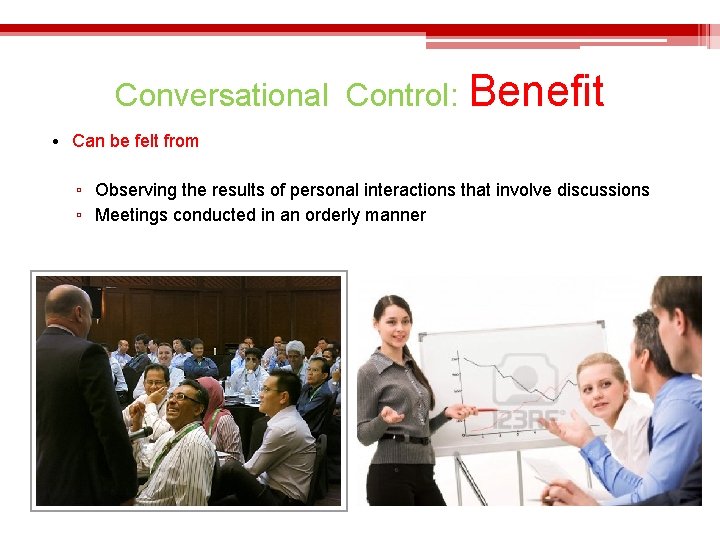
Conversational Control: Benefit • Can be felt from ▫ Observing the results of personal interactions that involve discussions ▫ Meetings conducted in an orderly manner
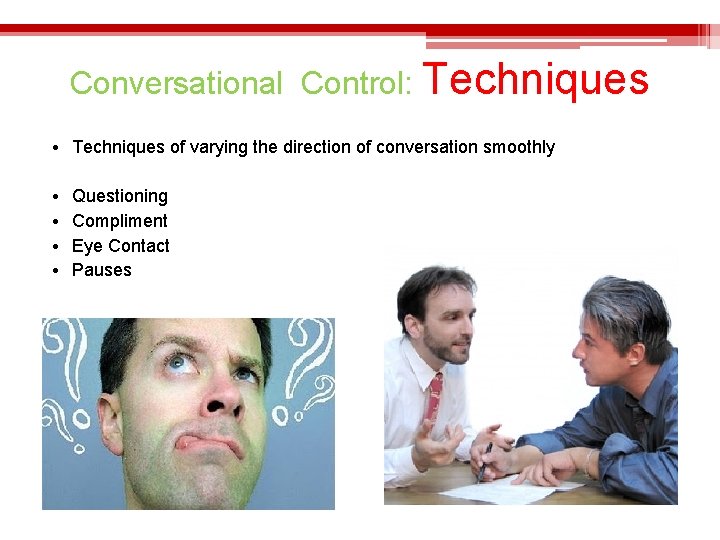
Conversational Control: Techniques • Techniques of varying the direction of conversation smoothly • • Questioning Compliment Eye Contact Pauses
Conversational Control: Situations • • Selling and Buying Negotiations Interviews Meetings Expressing Disagreements Compliments/praises Responding to personal criticism Depends on individuals
Conversational Control: Cues and Clues Along with sign and signals- point out what is important and what is not.
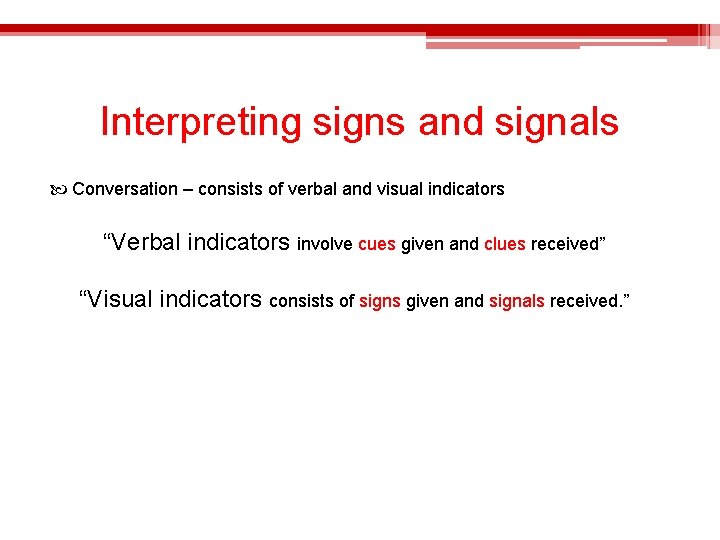
Interpreting signs and signals Conversation – consists of verbal and visual indicators “Verbal indicators involve cues given and clues received” “Visual indicators consists of signs given and signals received. ”
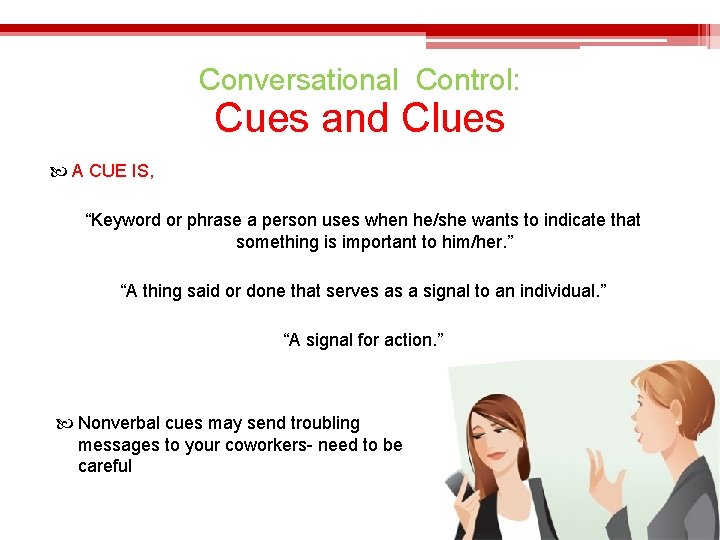
Conversational Control: Cues and Clues A CUE IS, “Keyword or phrase a person uses when he/she wants to indicate that something is important to him/her. ” “A thing said or done that serves as a signal to an individual. ” “A signal for action. ” Nonverbal cues may send troubling messages to your coworkers- need to be careful
Conversational Control: Cues and Clues A CLUE IS, “A word or a set of words that someone else gives to us. ”
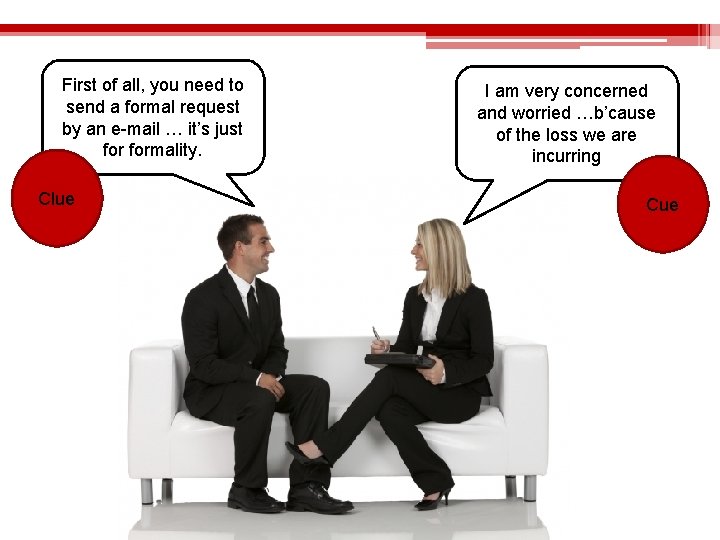
First of all, you need to send a formal request by an e-mail … it’s just formality. Clue I am very concerned I would like a copy of the and worried …b’cause financial statements for of the loss we are the last 5 years incurring Cue
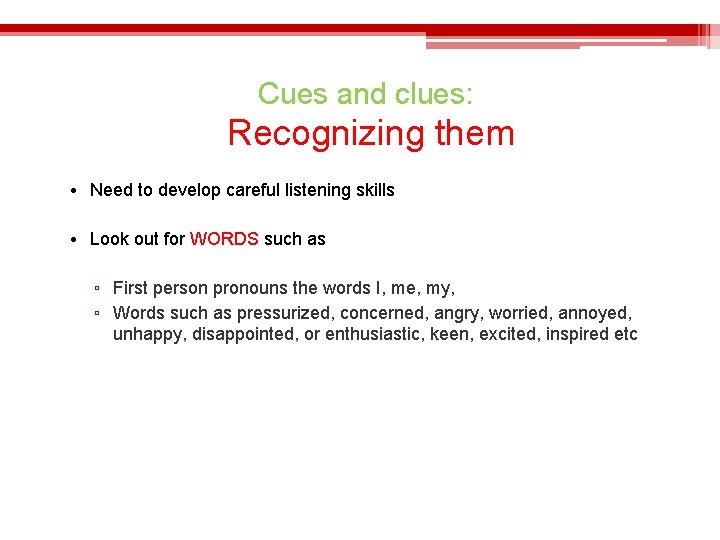
Cues and clues: Recognizing them • Need to develop careful listening skills • Look out for WORDS such as ▫ First person pronouns the words I, me, my, ▫ Words such as pressurized, concerned, angry, worried, annoyed, unhappy, disappointed, or enthusiastic, keen, excited, inspired etc
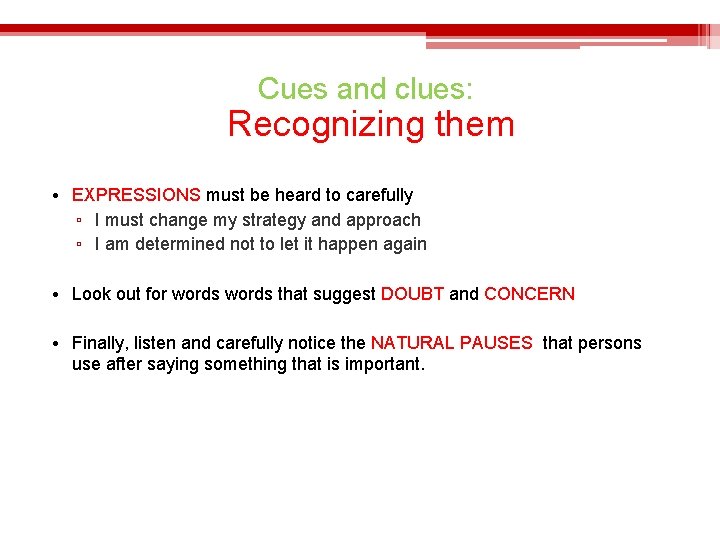
Cues and clues: Recognizing them • EXPRESSIONS must be heard to carefully ▫ I must change my strategy and approach ▫ I am determined not to let it happen again • Look out for words that suggest DOUBT and CONCERN • Finally, listen and carefully notice the NATURAL PAUSES that persons use after saying something that is important.
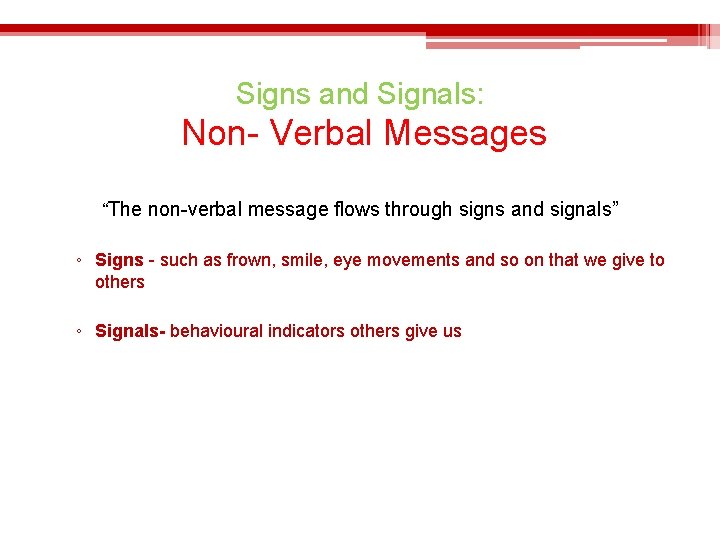
Signs and Signals: Non- Verbal Messages “The non-verbal message flows through signs and signals” ◦ Signs - such as frown, smile, eye movements and so on that we give to others ◦ Signals- behavioural indicators others give us
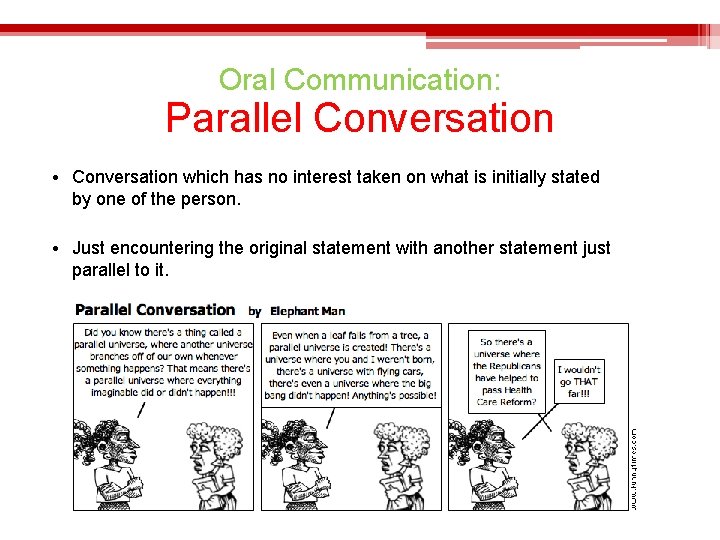
Oral Communication: Parallel Conversation • Conversation which has no interest taken on what is initially stated by one of the person. • Just encountering the original statement with another statement just parallel to it. Parallel conversation
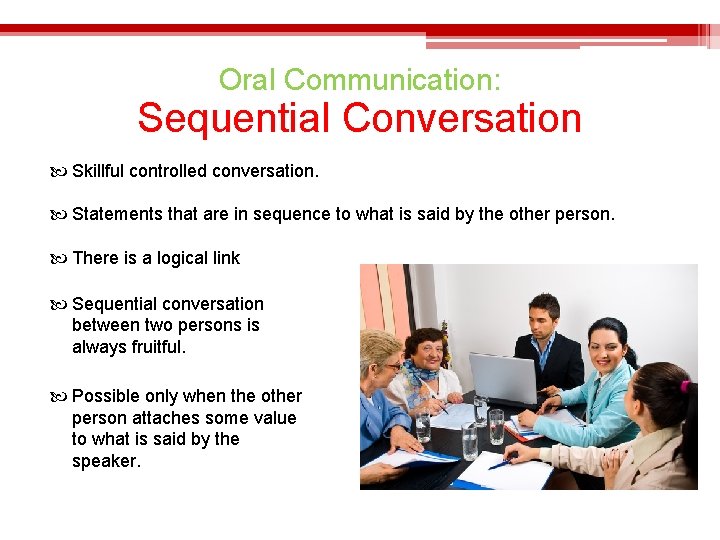
Oral Communication: Sequential Conversation Skillful controlled conversation. Statements that are in sequence to what is said by the other person. There is a logical link Sequential conversation between two persons is always fruitful. Possible only when the other person attaches some value to what is said by the speaker. Sequential Conversation
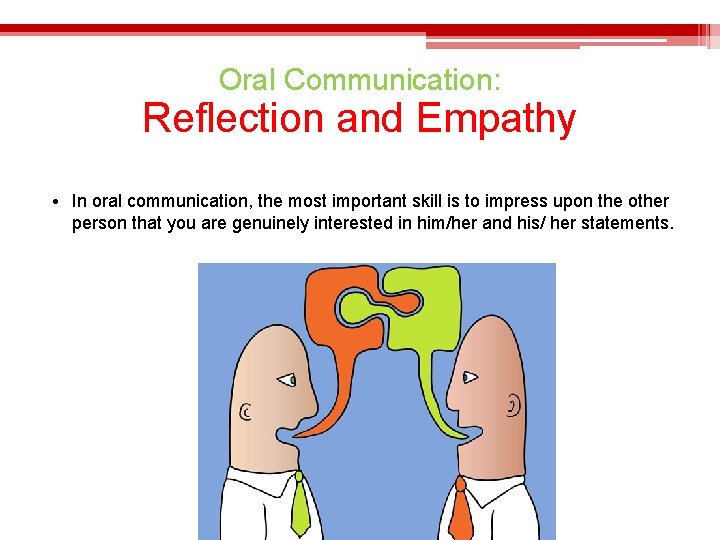
Oral Communication: Reflection and Empathy • In oral communication, the most important skill is to impress upon the other person that you are genuinely interested in him/her and his/ her statements.
Oral Communication: Sense of time as a skill • Speaker- keep in mind the time taken to communicate. • The time limits announced in formal oral activities- should be strictly observed • Plan your time judiciously to reach a properly evolved end
Oral Communication: Summarising as an integral skill • It is necessary to convey to the other person that you understand his/her point. • Opinions should be given- when the sender is able to recognize, analyze and evaluate what the other person has said.
• ANY QUESTIONS? ?