
ORACLE COSTBASED OPTIMIZER BASICS Randolf Geist http oraclerandolf

ORACLE COST-BASED OPTIMIZER BASICS Randolf Geist http: //oracle-randolf. blogspot. com info@sqltools-plus. org
ABOUT ME � Independent consultant � Available for consulting � In-house workshops Cost-Based Optimizer Performance By Design � Performance Troubleshooting � Oracle ACE Director � Member of Oak. Table Network
OVERVIEW � Optimizer Basics – Key Concepts � Proactive: Performance by design � Reactive: Troubleshooting
OPTIMIZER BASICS � Three main questions you should ask when looking for an efficient execution plan: � How much data? How many rows / volume? � How scattered / clustered is the data? � Caching? => Know your data!
OPTIMIZER BASICS � Why are these questions so important? � Two main strategies: One “Big Job” => How much data, volume? Few/many “Small Jobs” => How many times / rows? => Effort per iteration? Clustering / Caching
OPTIMIZER BASICS � Optimizer’s cost estimate is based on: � How much data? How many rows / volume? � How scattered / clustered? (partially) � (Caching? ) Not at all
HOW MANY ROWS? � Single table cardinality � Join cardinality � Filter subquery / Aggregation cardinality
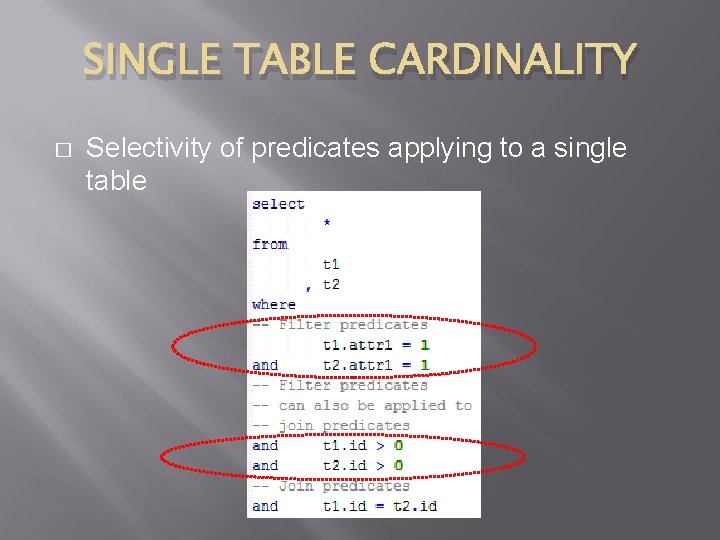
SINGLE TABLE CARDINALITY � Selectivity of predicates applying to a single table
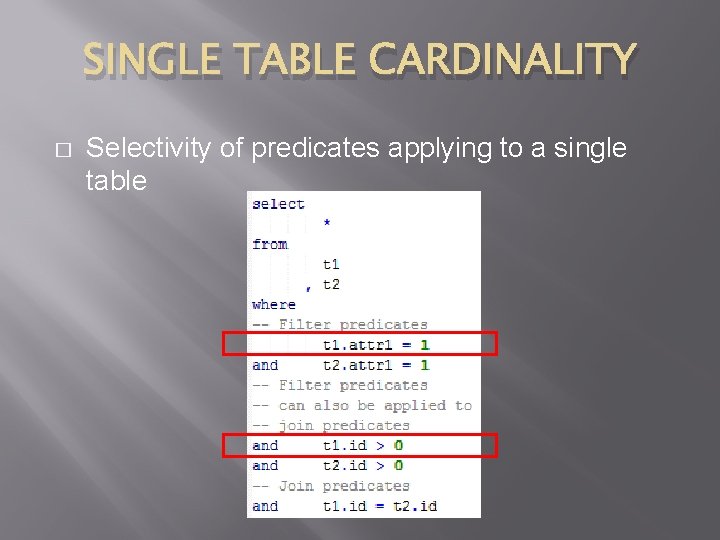
SINGLE TABLE CARDINALITY � Selectivity of predicates applying to a single table
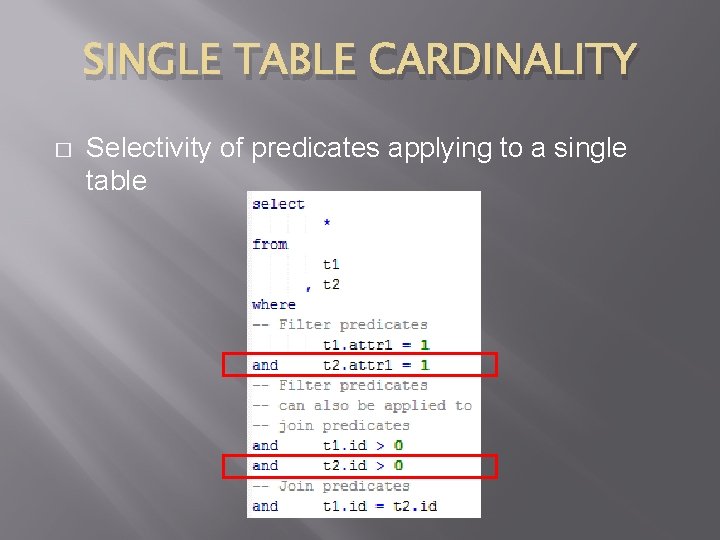
SINGLE TABLE CARDINALITY � Selectivity of predicates applying to a single table
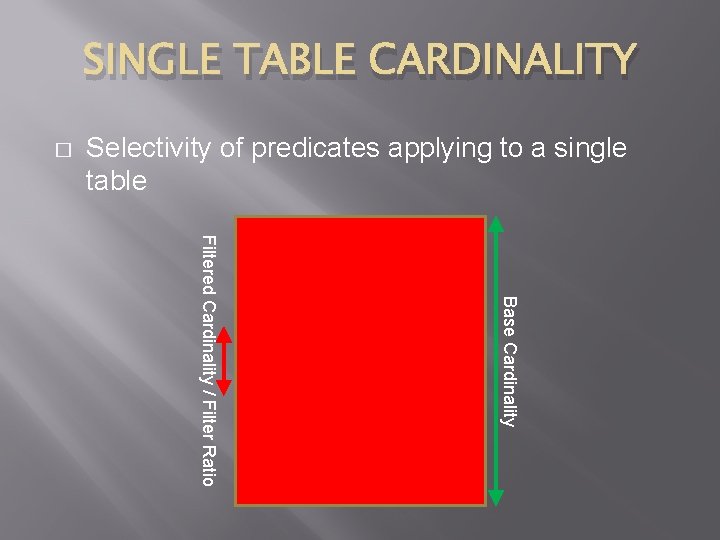
SINGLE TABLE CARDINALITY � Selectivity of predicates applying to a single table Base Cardinality Filtered Cardinality / Filter Ratio
SINGLE TABLE CARDINALITY � Optimizer challenges � Skewed � Gaps column value distribution / clustered values � Correlated � Complex � Bind column values predicates and expressions variables
SINGLE TABLE CARDINALITY Demo! optimizer_basics_single_table_cardinality_testcase. sql
SINGLE TABLE CARDINALITY � Impact NOT limited to a “single table” � Influences the favored Single Table Access Path (Full Table Scan, Index Access etc. ) � Influences the Join Order and Join Methods (NESTED LOOP, HASH, MERGE) => An incorrect single table cardinality potentially screws up whole execution plan!
JOIN CARDINALITY � Oracle joins exactly two row sources at a time � If more than two row sources need to be joined, multiple join operations are required � Many different join orders possible (factorial!)
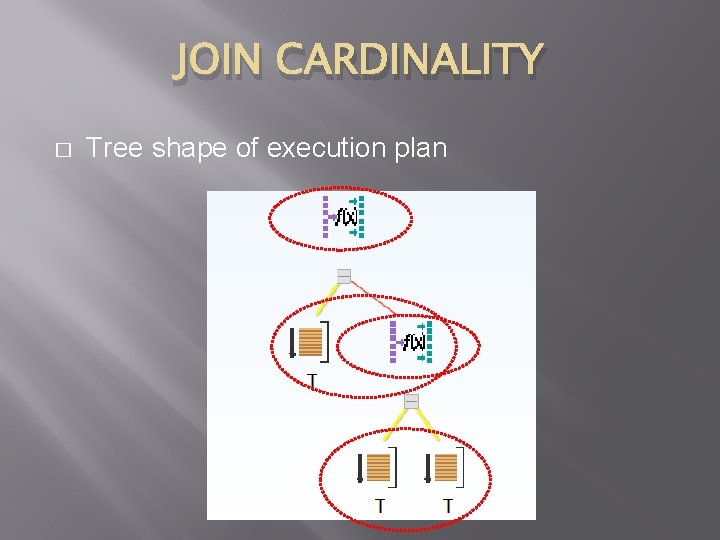
JOIN CARDINALITY � Tree shape of execution plan
JOIN CARDINALITY � Challenges �Getting �A the join selectivity right! join can mean anything between no rows and a Cartesian product
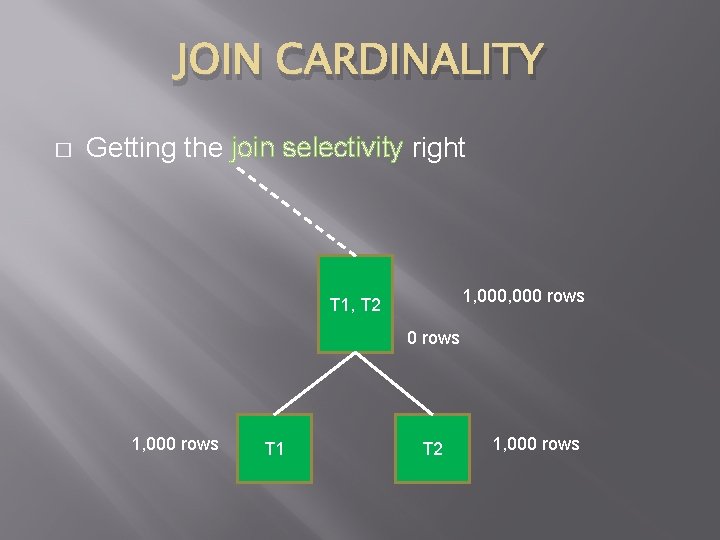
JOIN CARDINALITY � Getting the join selectivity right 1, 000 rows T 1, T 2 0 rows 1, 000 rows T 1 T 2 1, 000 rows
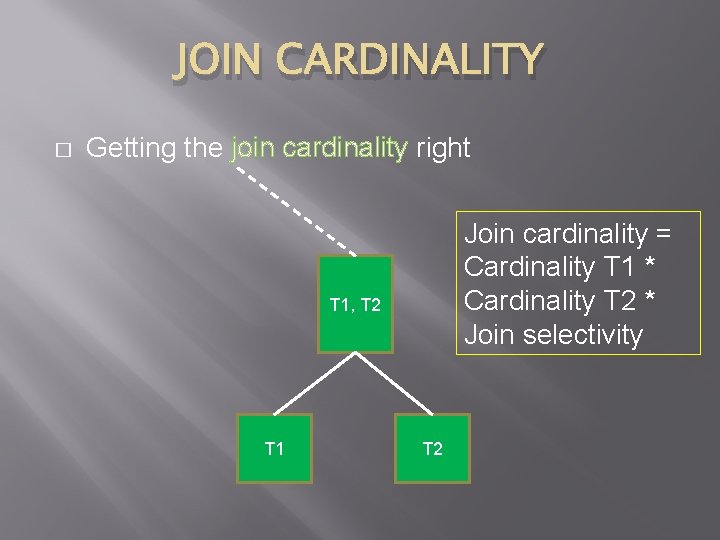
JOIN CARDINALITY � Getting the join cardinality right Join cardinality = Cardinality T 1 * Cardinality T 2 * Join selectivity T 1, T 2 T 1 T 2
JOIN CARDINALITY � Challenges � Semi � Anti Joins (EXISTS (), = ANY()) Joins (NOT EXISTS (), <> ALL()) � Non-Equi Joins (Range, Unequal etc. )
JOIN CARDINALITY � Even for the most common form of a join - the Equi-Join – there are several challenges � Non-uniform � Partially join column value distribution overlapping join columns � Correlated column values � Expressions � Complex join expressions (multiple AND, OR)
JOIN CARDINALITY Demo! optimizer_basics_join_cardinality_testcase. sql
JOIN CARDINALITY � Influences the Join Order and Join Methods (NESTED LOOP, HASH, MERGE) => An incorrect join cardinality/selectivity potentially screws up whole execution plan!
HOW SCATTERED / CLUSTERED? � Data is organized in blocks � Many rows can fit into a single block � According to a specific access pattern data can be either scattered across many different blocks or clustered in the same or few blocks � Does make a tremendous difference in terms of efficiency of a “Small Job”
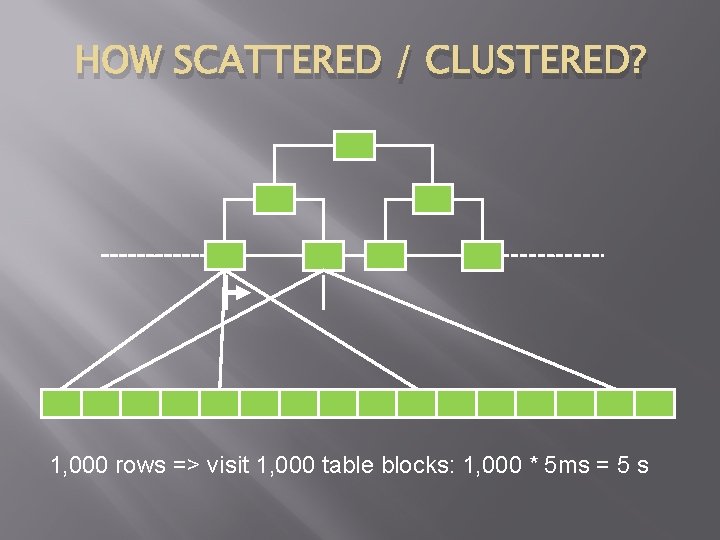
HOW SCATTERED / CLUSTERED? 1, 000 rows => visit 1, 000 table blocks: 1, 000 * 5 ms = 5 s
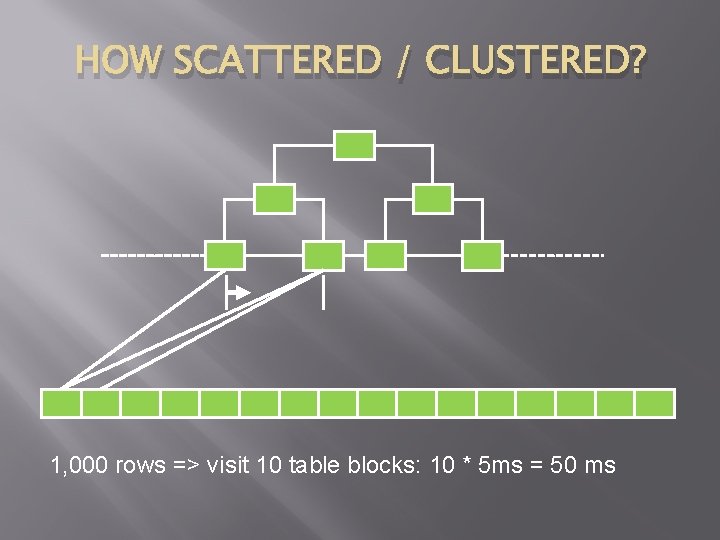
HOW SCATTERED / CLUSTERED? 1, 000 rows => visit 10 table blocks: 10 * 5 ms = 50 ms
HOW SCATTERED / CLUSTERED? � � � Scattered data means potentially many more blocks to compete for the Buffer Cache for the same number of rows => Caching! Scattered data can result in increased �physical disk I/O �logical I/O �write disk I/O (Log Writer, DB Writer) �free buffer waits
HOW SCATTERED / CLUSTERED? � Most OLTP data has a natural clustering � Data arriving around the same time is usually clustered together in a heap organized table � Depends on the physical organization � Partitioning for example can influence this clustering even for heap organized tables
HOW SCATTERED / CLUSTERED? � Clustering of data can be influenced by physical implementation � Physical design matters � Segment space management (MSSM / ASSM) � Partitioning � Index/Hash Cluster � Index Organized Tables (IOT) � Index design / multi-column composite indexes � There is a reason why the Oracle internal data dictionary uses clusters all over the place
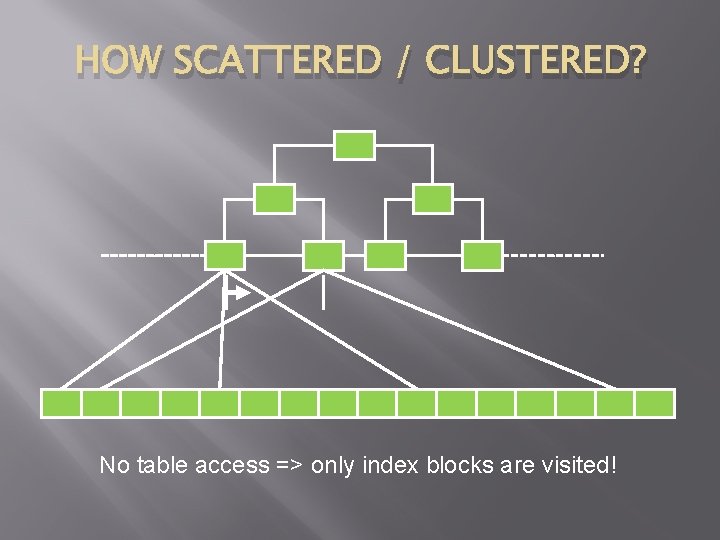
HOW SCATTERED / CLUSTERED? No table access => only index blocks are visited!
HOW SCATTERED / CLUSTERED? � There is only a single measure of clustering in Oracle: The index clustering factor � The index clustering factor is represented by a single value � The logic measuring the clustering factor by default does not cater for data clustered across few blocks (ASSM!)
HOW SCATTERED / CLUSTERED? � Challenges � Getting the index clustering factor right � There are various reasons why the index clustering factor measured by Oracle might not be representative Multiple freelists / freelist groups (MSSM) ASSM Partitioning SHRINK SPACE effects
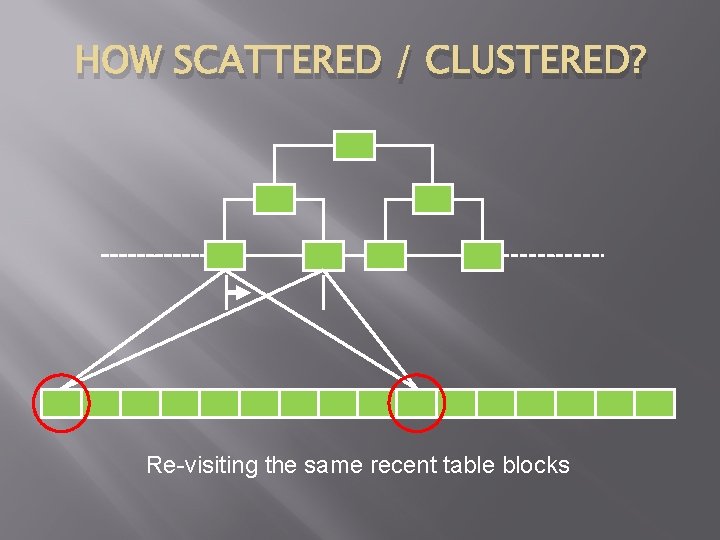
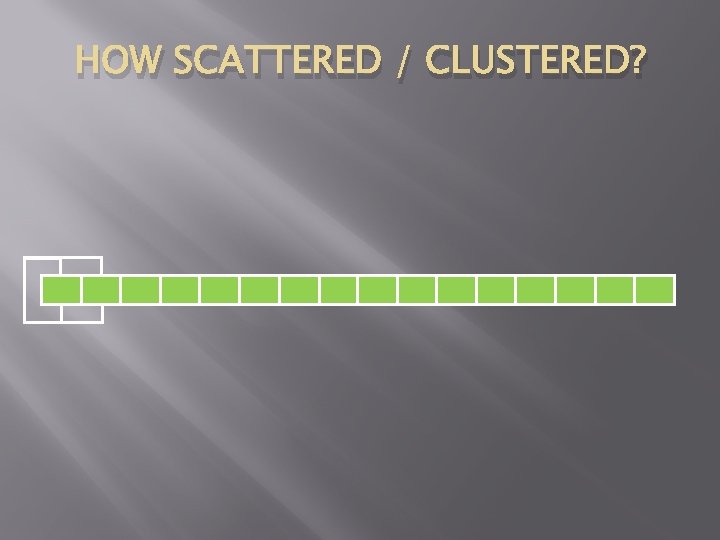
HOW SCATTERED / CLUSTERED? Re-visiting the same recent table blocks
HOW SCATTERED / CLUSTERED? � Challenges � There is no inter-table clustering measurement � The optimizer therefore doesn’t really have a clue about the clustering of joins � You may need to influence the optimizer’s decisions if you know about this clustering
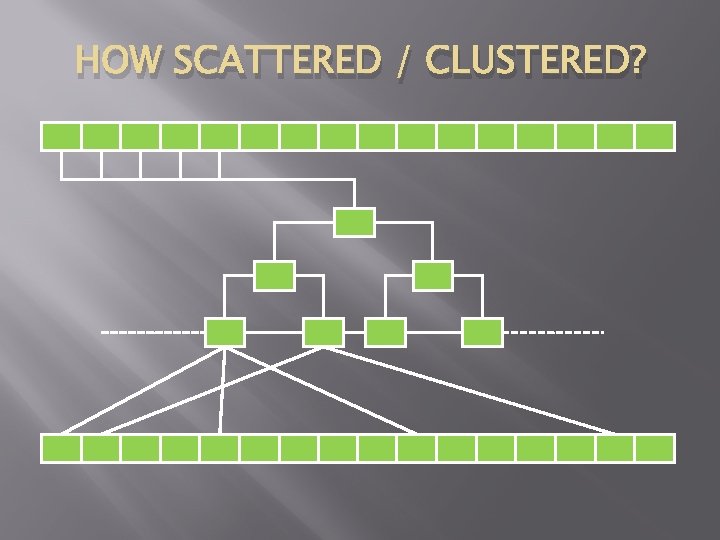
HOW SCATTERED / CLUSTERED?
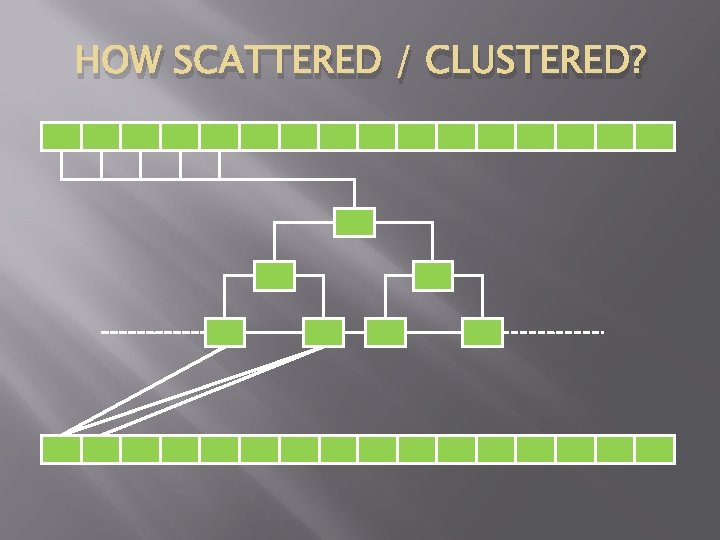
HOW SCATTERED / CLUSTERED?
HOW SCATTERED / CLUSTERED?
HOW SCATTERED / CLUSTERED? Demo! optimizer_basics_inter_table_clustering_testcase. sql
CACHING � The optimizer’s model by default doesn’t consider caching of data � Every I/O is assumed to be physical I/O � But there is a huge difference between logical I/O (measured in microseconds) and physical I/O (measured in milliseconds)
CACHING � You might have knowledge of particular application data that is “hot” and usually stays in the Buffer Cache � Therefore certain queries against this “hot” data can be designed based on that knowledge � The optimizer doesn’t know about this. You may need to influence the optimizer’s decisions
CACHING � Oracle obviously played with the idea of introducing an per object caching component into the cost calculation in 9 i and 10 g � You can see this from the undocumented parameters _optimizer_cache_stats and _cache_stats_monitor as well as the columns AVG_CACHED_BLOCKS and AVG_CACHE_HIT_RATIO in the data dictionary
CACHING � It is important to point out that even logical I/O is not “free” � So even by putting all objects entirely in the Buffer Cache inefficient execution plans may still lead to poor performance � Excessive logical I/O, in particular on “hot blocks”, can lead to latch contention and CPU starvation
SUMMARY � Cardinality and Clustering determine whether the “Big Job” or “Small Job” strategy should be preferred � If the optimizer gets these estimates right, the resulting execution plan will be efficient within the boundaries of the given access paths � Know your data and business questions

PERFORMANCE BY DESIGN � How to apply these concepts, where to go from here? � Read Jonathan Lewis’ article “Designing Efficient SQL” at Red Gate’s “Simple Talk” Probably the best coverage of the concepts outlined here including clustering and caching http: //www. simple-talk. com/sql/performance/designing-efficient-sql-a-visual-approach/
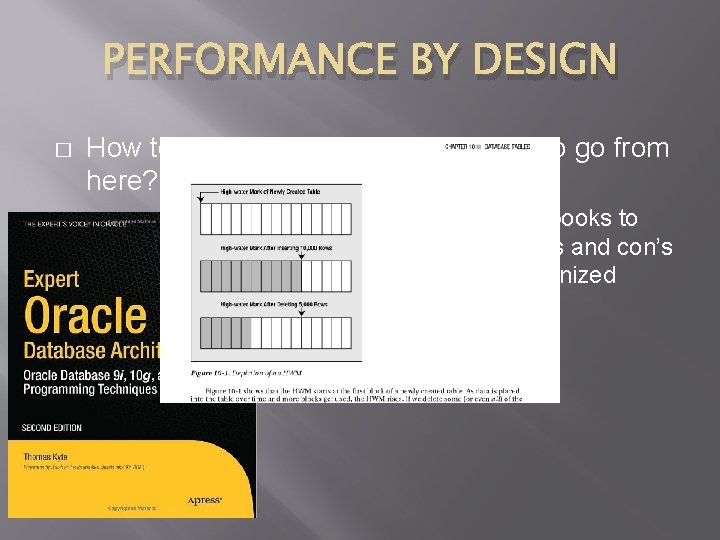
PERFORMANCE BY DESIGN � How to apply these concepts, where to go from here? � Read one of Tom Kyte’s books to learn more about the pro’s and con’s of clusters and index organized tables
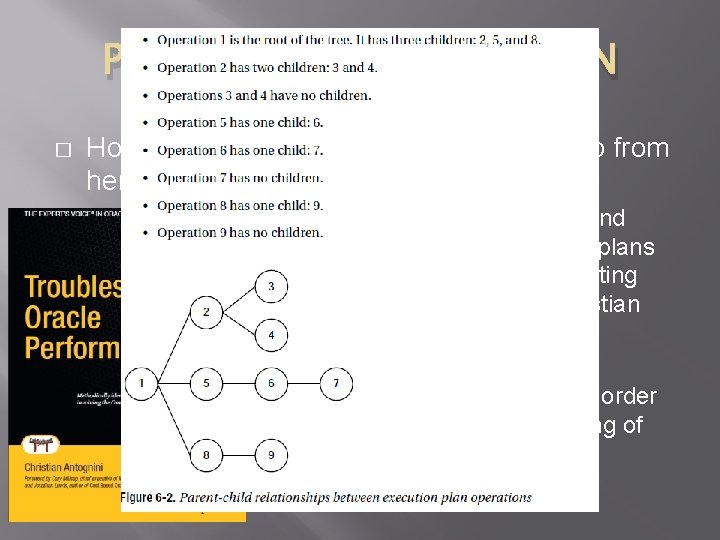
PERFORMANCE BY DESIGN � How to apply these concepts, where to go from here? � Learn how to read, interpret and understand Oracle execution plans => Chapter 6 of “Troubleshooting Oracle Performance” by Christian Antognini � This knowledge is required in order to compare your understanding of the query to the optimizer’s understanding
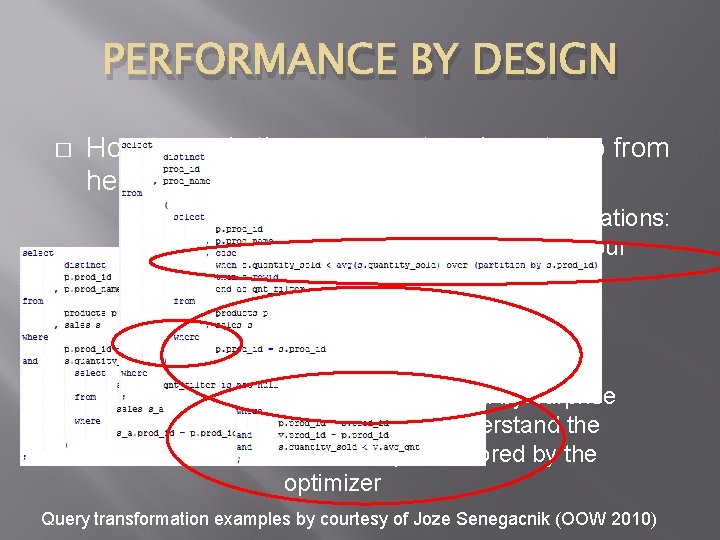
PERFORMANCE BY DESIGN � How to apply these concepts, where to go from here? � Be aware of Query Transformations: The optimizer might rewrite your query to something that is semantically equivalent but potentially more efficient � This might take you by surprise when trying to understand the execution plan favored by the optimizer Query transformation examples by courtesy of Joze Senegacnik (OOW 2010)
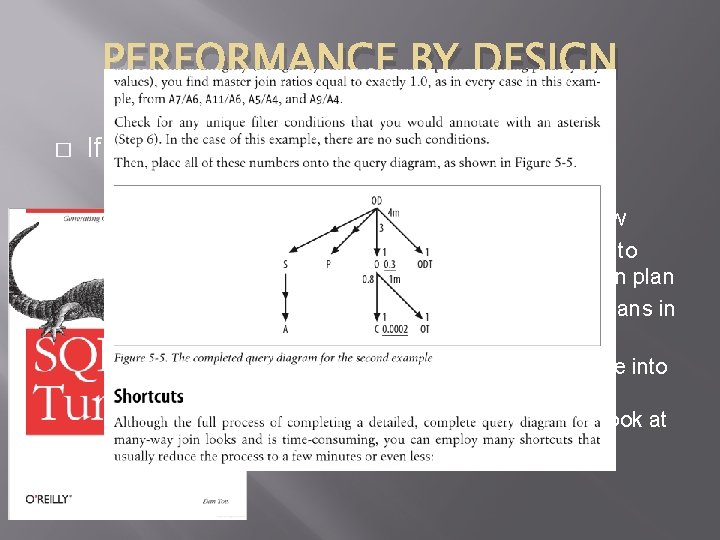
PERFORMANCE BY DESIGN � If you want a more formal approach � Read “SQL Tuning” by Dan Tow Teaches a formal approach how to design and visualize an execution plan Focuses on “robust” execution plans in an OLTP environment The formal approach doesn’t take into account clustering and caching, however it is mentioned in the book at some places
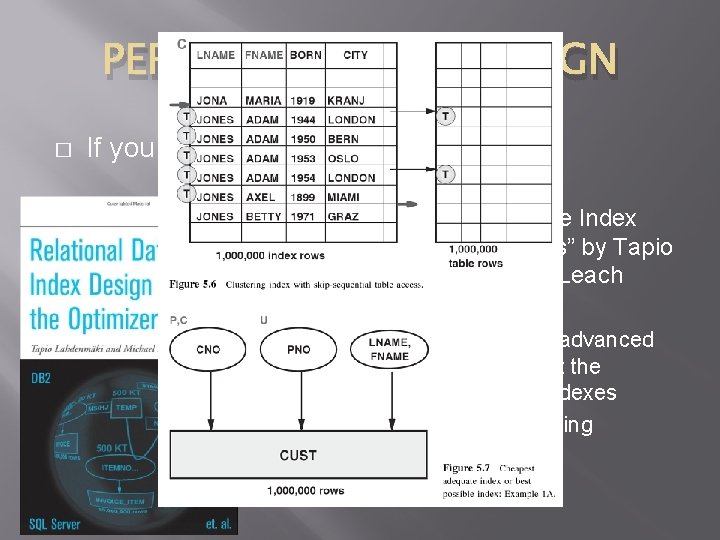
PERFORMANCE BY DESIGN � If you want a more formal approach � Read “Relational Database Index Design and the Optimizers” by Tapio Lahdenmäki and Michael Leach Focuses on index design Provides simple and more advanced formulas allowing to predict the efficiency of queries and indexes Covers clustering and caching
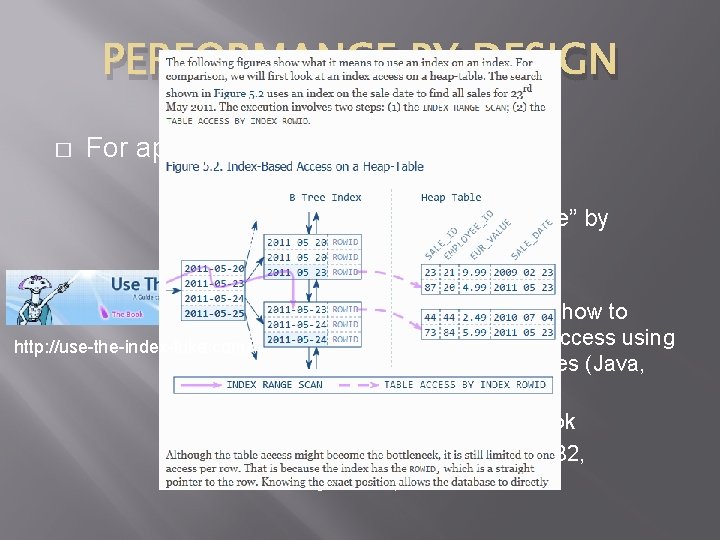
PERFORMANCE BY DESIGN � For application developers � Read “Use the Index, Luke” by Markus Winand http: //use-the-index-luke. com/ Focuses on index design Provides a lot of examples how to design efficient database access using different front-end languages (Java, Perl, PHP, etc. ) Also available as free e. Book Cross database (Oracle DB 2, My. SQL…)
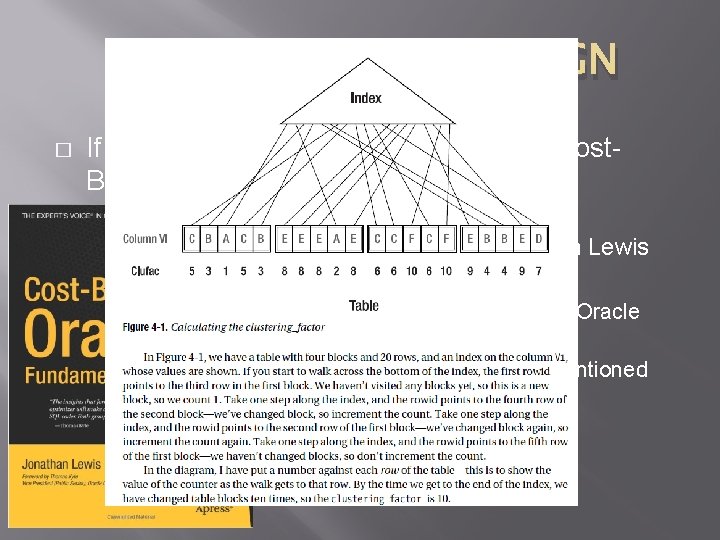
PERFORMANCE BY DESIGN � If you want dive into the details of the Cost. Based Optimizer � Read “Cost-Based Oracle: Fundamentals” by Jonathan Lewis Almost six years old Still the best book about the Oracle optimizer Covers the key concepts mentioned here in great detail

QUESTIONS & ANSWERS Q&A
- Slides: 52