
OPTOELECTRONIC COMMUNICATIONS EKT 442 1 PROGRAM EDUCATIONAL OBJECTIVES
OPTOELECTRONIC COMMUNICATIONS EKT 442 1

PROGRAM EDUCATIONAL OBJECTIVES (PEO) Uni. MAP Program Educational Objective Code Description PROGRAM EDUCATIONAL OBJECTIVES of Uni. MAP PEO 01 To produce holistic engineers who are highly competent in both engineering theory and practice PEO 02 To contribute in the supply of human resource to meet current engineering demands PEO 03 To contribute to the development of strategic engineering disciplines, in line with the requirements outlined in Malaysia’s Industrial Master Plan 2
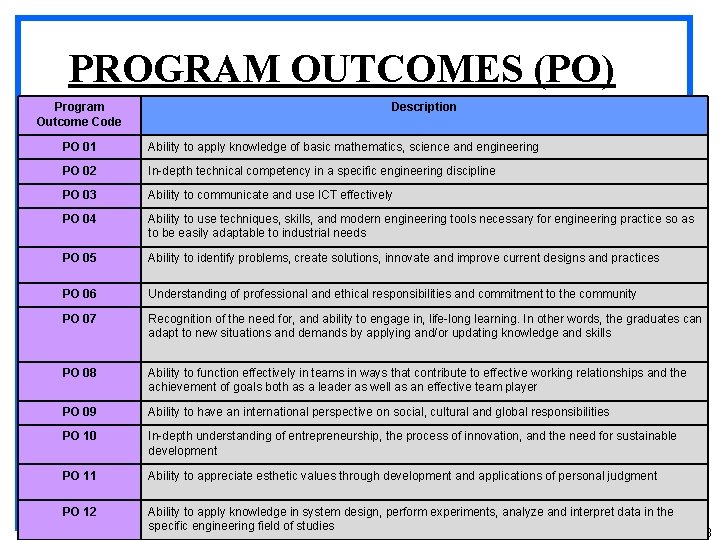
PROGRAM OUTCOMES (PO) Program Outcome Code Description PO 01 Ability to apply knowledge of basic mathematics, science and engineering PO 02 In-depth technical competency in a specific engineering discipline PO 03 Ability to communicate and use ICT effectively PO 04 Ability to use techniques, skills, and modern engineering tools necessary for engineering practice so as to be easily adaptable to industrial needs PO 05 Ability to identify problems, create solutions, innovate and improve current designs and practices PO 06 Understanding of professional and ethical responsibilities and commitment to the community PO 07 Recognition of the need for, and ability to engage in, life-long learning. In other words, the graduates can adapt to new situations and demands by applying and/or updating knowledge and skills PO 08 Ability to function effectively in teams in ways that contribute to effective working relationships and the achievement of goals both as a leader as well as an effective team player PO 09 Ability to have an international perspective on social, cultural and global responsibilities PO 10 In-depth understanding of entrepreneurship, the process of innovation, and the need for sustainable development PO 11 Ability to appreciate esthetic values through development and applications of personal judgment PO 12 Ability to apply knowledge in system design, perform experiments, analyze and interpret data in the specific engineering field of studies 3
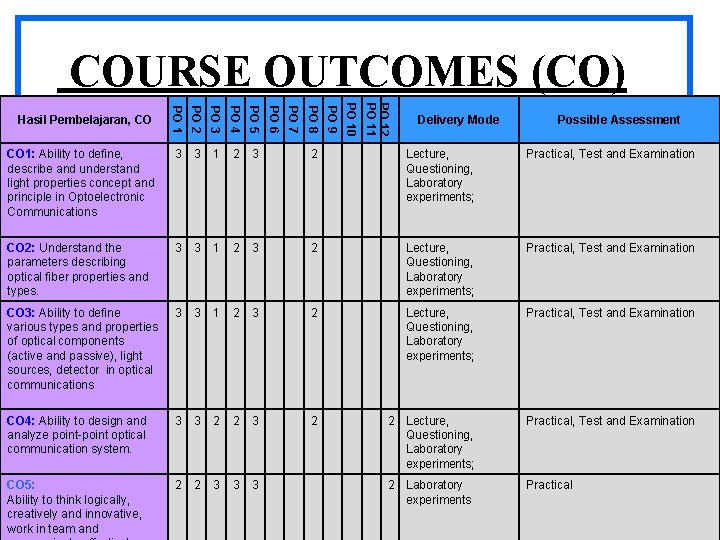
COURSE OUTCOMES (CO) PO 12 PO 11 PO 10 PO 5 PO 9 PO 4 PO 8 PO 3 PO 7 PO 2 PO 6 PO 1 CO 1: Ability to define, describe and understand light properties concept and principle in Optoelectronic Communications 3 3 1 2 3 2 Lecture, Questioning, Laboratory experiments; Practical, Test and Examination CO 2: Understand the parameters describing optical fiber properties and types. 3 3 1 2 3 2 Lecture, Questioning, Laboratory experiments; Practical, Test and Examination CO 3: Ability to define various types and properties of optical components (active and passive), light sources, detector in optical communications 3 3 1 2 3 2 Lecture, Questioning, Laboratory experiments; Practical, Test and Examination CO 4: Ability to design and analyze point-point optical communication system. 3 3 2 2 Lecture, Questioning, Laboratory experiments; Practical, Test and Examination CO 5: Ability to think logically, creatively and innovative, work in team and 2 2 3 3 3 2 Laboratory experiments Practical Hasil Pembelajaran, CO Delivery Mode Possible Assessment 4
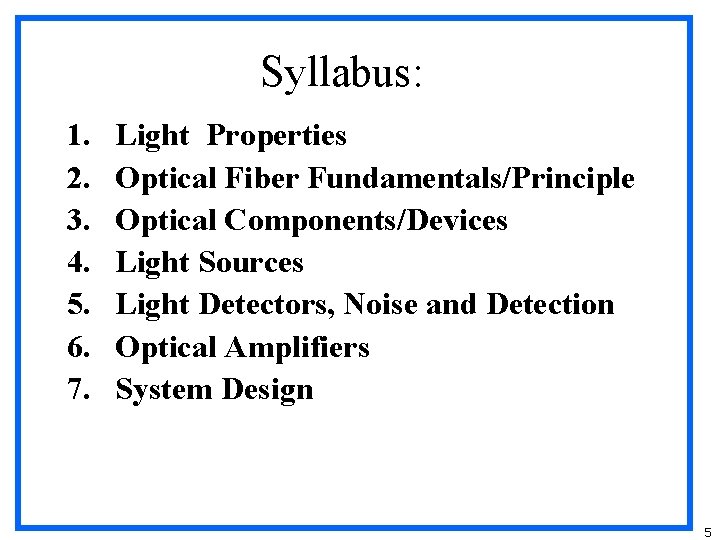
Syllabus: 1. 2. 3. 4. 5. 6. 7. Light Properties Optical Fiber Fundamentals/Principle Optical Components/Devices Light Sources Light Detectors, Noise and Detection Optical Amplifiers System Design 5
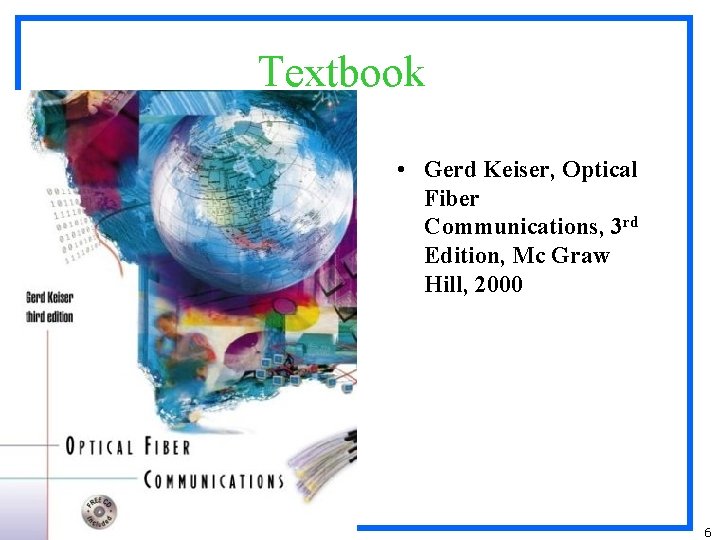
Textbook • Gerd Keiser, Optical Fiber Communications, 3 rd Edition, Mc Graw Hill, 2000 6
References • Joseph C. Palais, Fiber Optic Communications, 5 th Edition, Prentice Hall, 2005 • Jeff Hecht, Undestanding Fiber Optics, 5 th Edition, Prentice Hall, 2006 7
Chapter 1. 0 Light Properties 8
Contents a) Electromagnetic radiation b) Frequency and wavelength of light c) Refraction of light d) Polarization of light 9
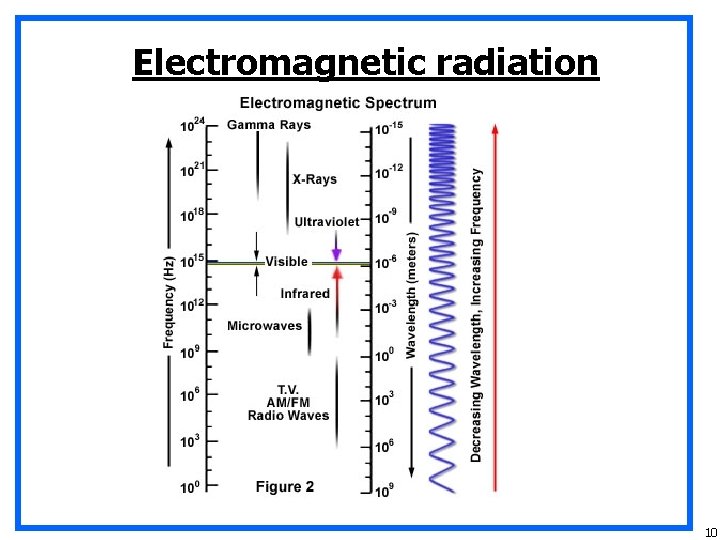
Electromagnetic radiation 10
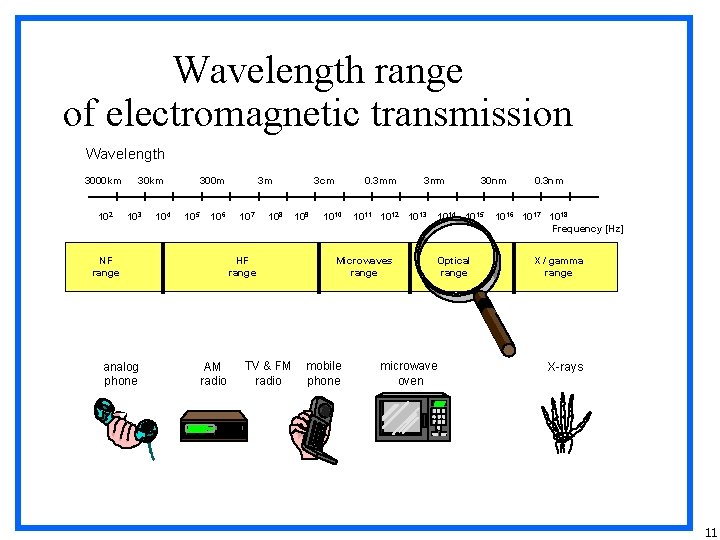
Wavelength range of electromagnetic transmission Wavelength 3000 km 102 30 km 103 104 300 m 105 106 NF range analog phone 3 m 107 108 HF range AM radio TV & FM radio 3 cm 109 0. 3 mm 1010 1011 1012 1013 Microwaves range mobile phone 3 mm 30 nm 1014 1015 Optical range microwave oven 0. 3 nm 1016 1017 1018 Frequency [Hz] X / gamma range X-rays 11
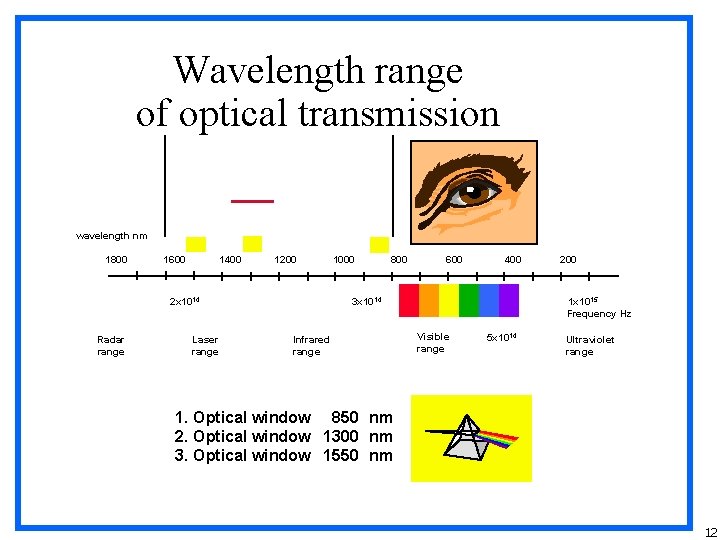
Wavelength range of optical transmission wavelength nm 1800 1600 1400 1200 2 x 10¹⁴ Radar range Laser range 1000 800 600 400 3 x 10¹⁴ Infrared range 200 1 x 10¹⁵ Frequency Hz Visible range 5 x 10¹⁴ Ultraviolet range 1. Optical window 850 nm 2. Optical window 1300 nm 3. Optical window 1550 nm 12
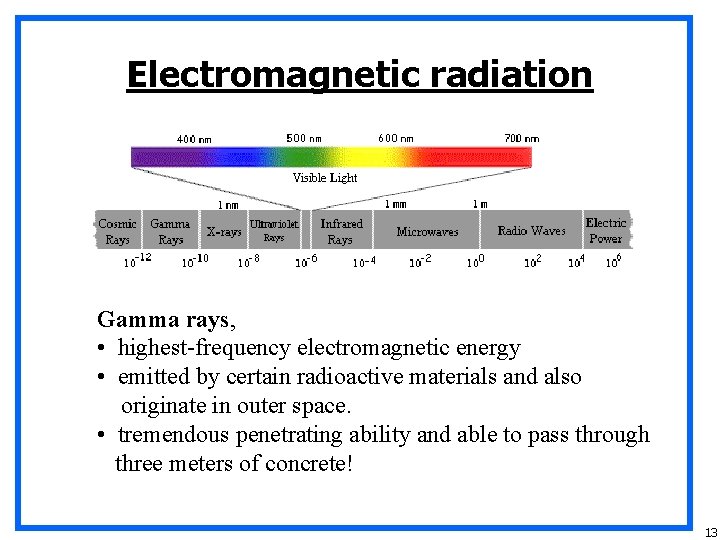
Electromagnetic radiation Gamma rays, • highest-frequency electromagnetic energy • emitted by certain radioactive materials and also originate in outer space. • tremendous penetrating ability and able to pass through three meters of concrete! 13
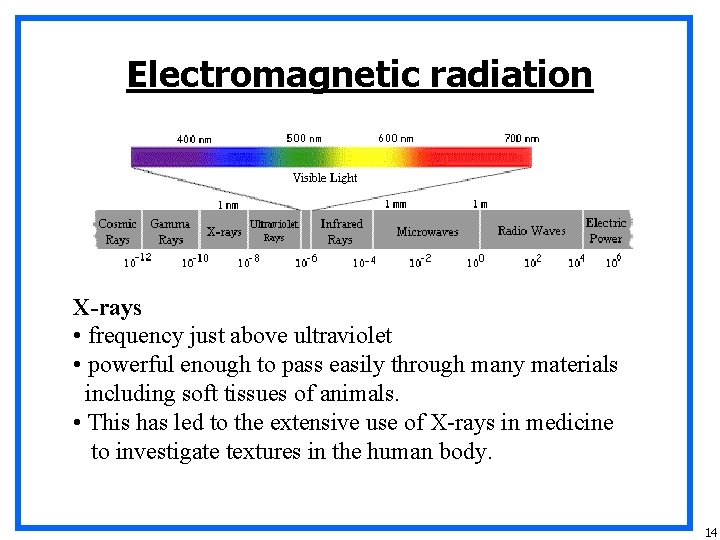
Electromagnetic radiation X-rays • frequency just above ultraviolet • powerful enough to pass easily through many materials including soft tissues of animals. • This has led to the extensive use of X-rays in medicine to investigate textures in the human body. 14
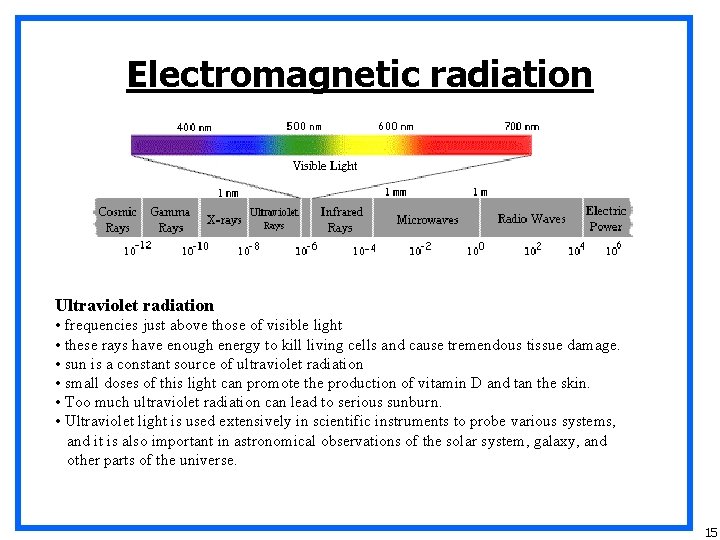
Electromagnetic radiation Ultraviolet radiation • frequencies just above those of visible light • these rays have enough energy to kill living cells and cause tremendous tissue damage. • sun is a constant source of ultraviolet radiation • small doses of this light can promote the production of vitamin D and tan the skin. • Too much ultraviolet radiation can lead to serious sunburn. • Ultraviolet light is used extensively in scientific instruments to probe various systems, and it is also important in astronomical observations of the solar system, galaxy, and other parts of the universe. 15
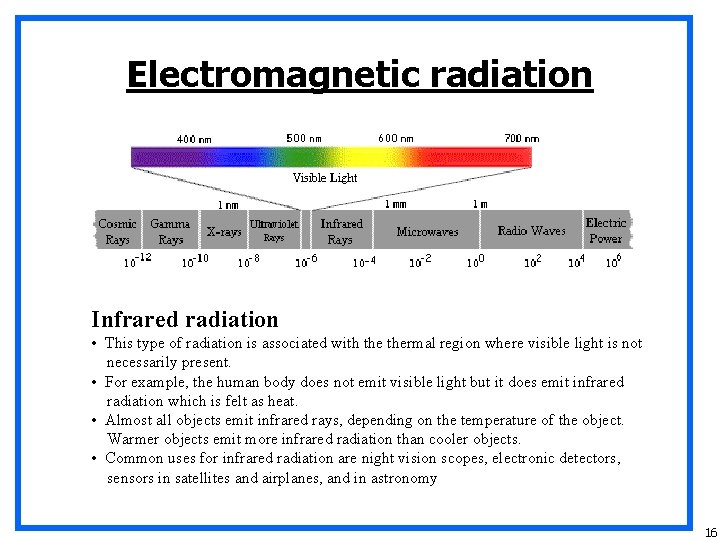
Electromagnetic radiation Infrared radiation • This type of radiation is associated with thermal region where visible light is not necessarily present. • For example, the human body does not emit visible light but it does emit infrared radiation which is felt as heat. • Almost all objects emit infrared rays, depending on the temperature of the object. Warmer objects emit more infrared radiation than cooler objects. • Common uses for infrared radiation are night vision scopes, electronic detectors, sensors in satellites and airplanes, and in astronomy 16
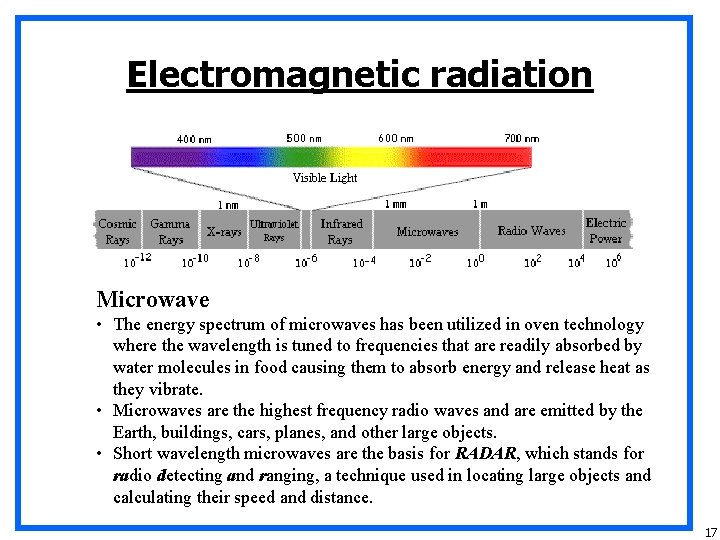
Electromagnetic radiation Microwave • The energy spectrum of microwaves has been utilized in oven technology where the wavelength is tuned to frequencies that are readily absorbed by water molecules in food causing them to absorb energy and release heat as they vibrate. • Microwaves are the highest frequency radio waves and are emitted by the Earth, buildings, cars, planes, and other large objects. • Short wavelength microwaves are the basis for RADAR, which stands for radio detecting and ranging, a technique used in locating large objects and calculating their speed and distance. 17
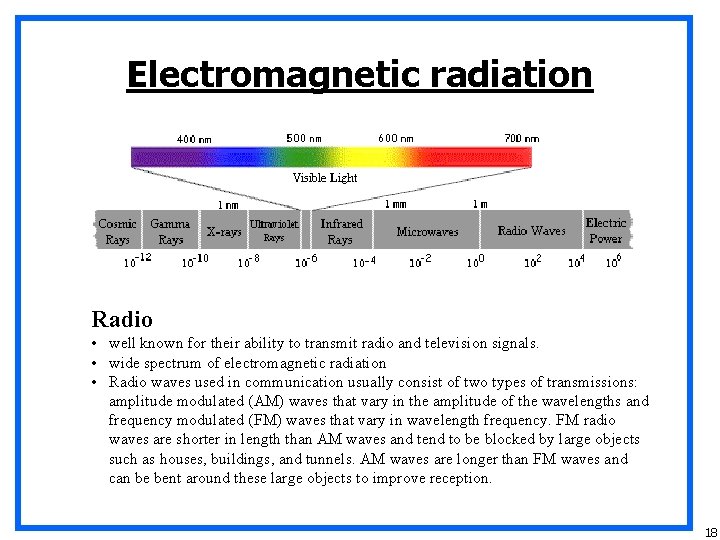
Electromagnetic radiation Radio • well known for their ability to transmit radio and television signals. • wide spectrum of electromagnetic radiation • Radio waves used in communication usually consist of two types of transmissions: amplitude modulated (AM) waves that vary in the amplitude of the wavelengths and frequency modulated (FM) waves that vary in wavelength frequency. FM radio waves are shorter in length than AM waves and tend to be blocked by large objects such as houses, buildings, and tunnels. AM waves are longer than FM waves and can be bent around these large objects to improve reception. 18
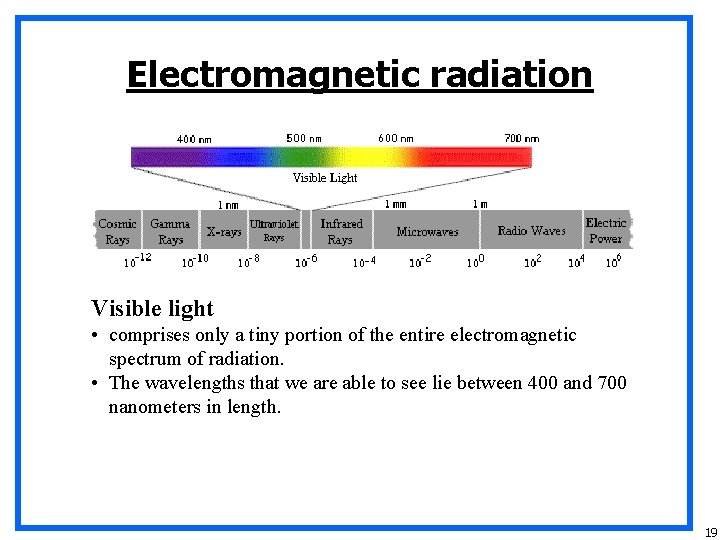
Electromagnetic radiation Visible light • comprises only a tiny portion of the entire electromagnetic spectrum of radiation. • The wavelengths that we are able to see lie between 400 and 700 nanometers in length. 19
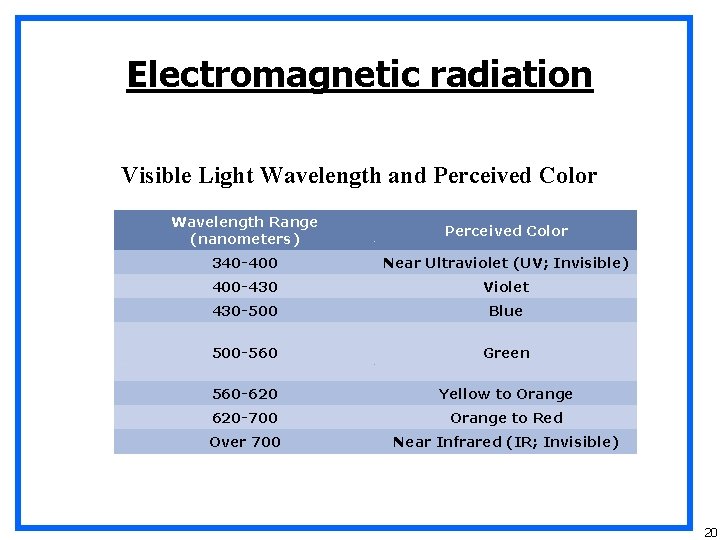
Electromagnetic radiation Visible Light Wavelength and Perceived Color Wavelength Range (nanometers) Perceived Color 340 -400 Near Ultraviolet (UV; Invisible) 400 -430 Violet 430 -500 Blue 500 -560 Green 560 -620 Yellow to Orange 620 -700 Orange to Red Over 700 Near Infrared (IR; Invisible) 20
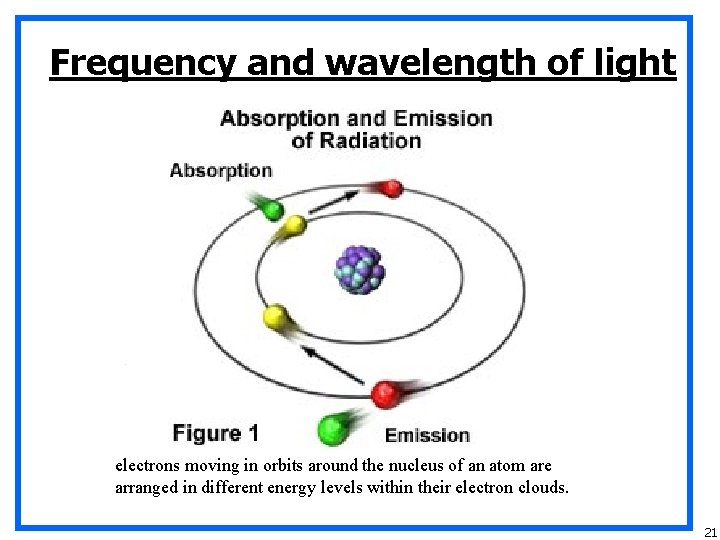
Frequency and wavelength of light electrons moving in orbits around the nucleus of an atom are arranged in different energy levels within their electron clouds. 21
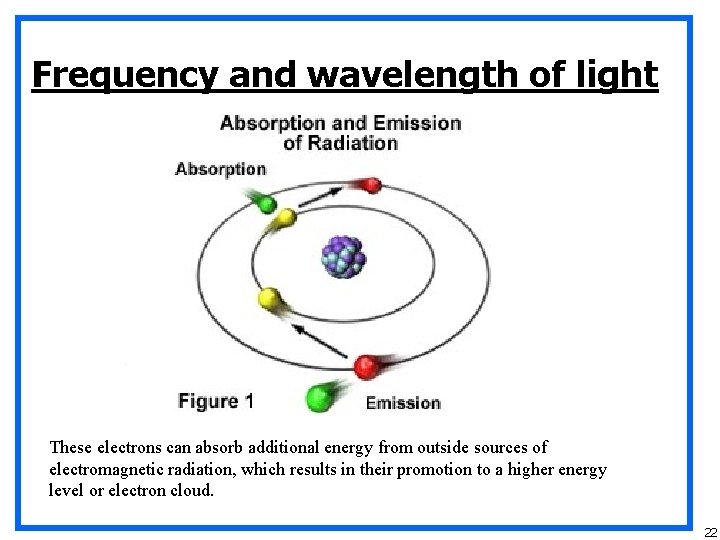
Frequency and wavelength of light These electrons can absorb additional energy from outside sources of electromagnetic radiation, which results in their promotion to a higher energy level or electron cloud. 22
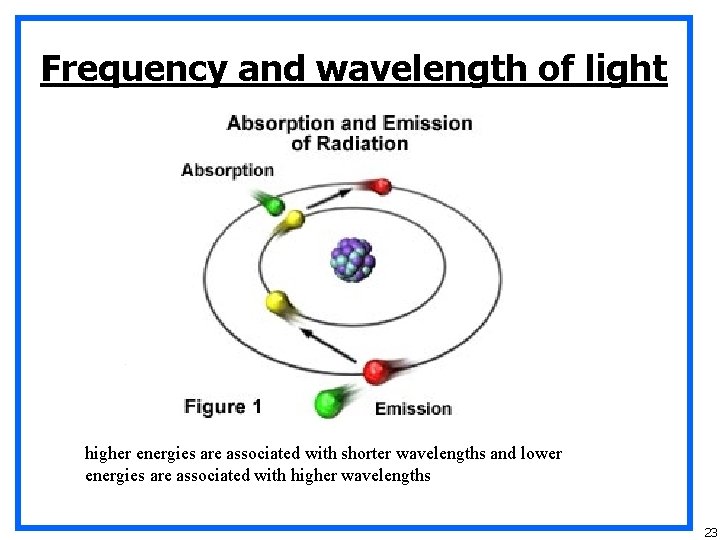
Frequency and wavelength of light higher energies are associated with shorter wavelengths and lower energies are associated with higher wavelengths 23
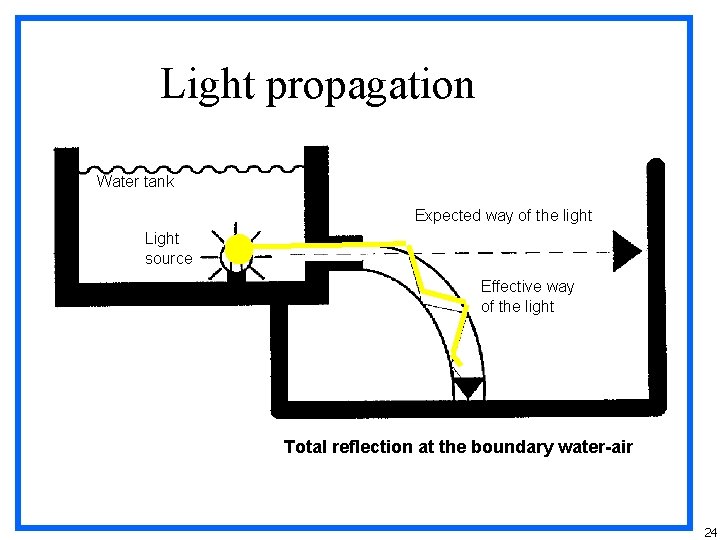
Light propagation Water tank Expected way of the light Light source Effective way of the light Total reflection at the boundary water-air 24
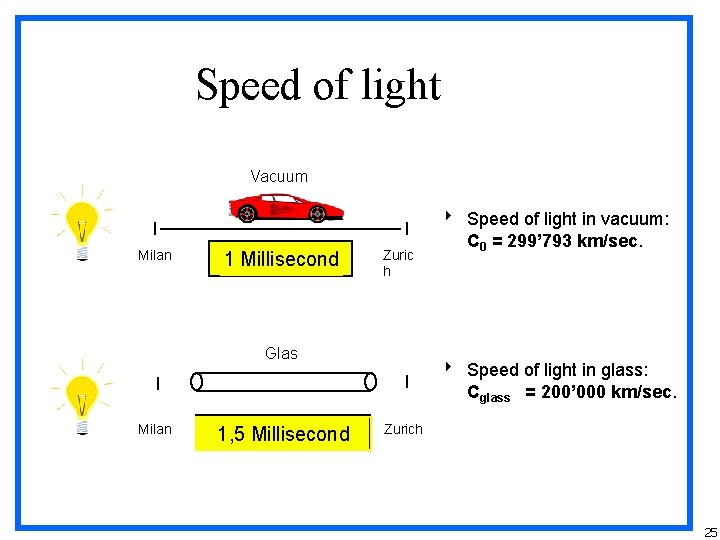
Speed of light Vacuum Milan 1 Millisecond Zuric h Glas Milan 1, 5 Millisecond 8 Speed of light in vacuum: C 0 = 299’ 793 km/sec. 8 Speed of light in glass: Cglass = 200’ 000 km/sec. Zurich 25
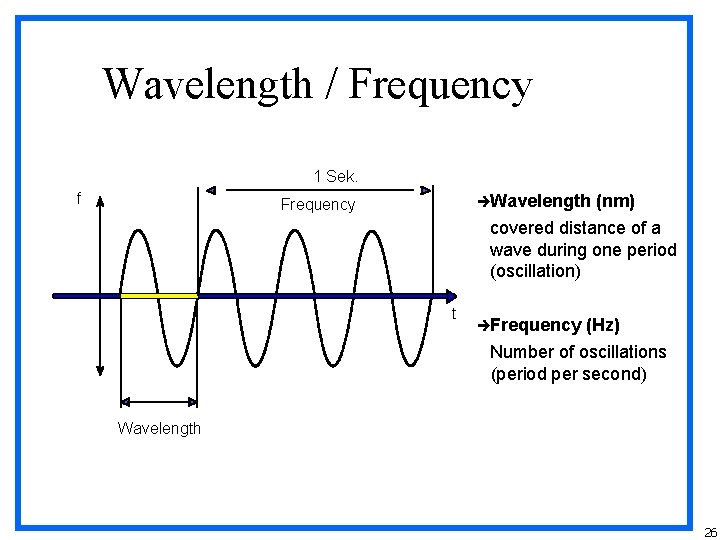
Wavelength / Frequency 1 Sek. f èWavelength Frequency (nm) covered distance of a wave during one period (oscillation) t èFrequency (Hz) Number of oscillations (period per second) Wavelength 26
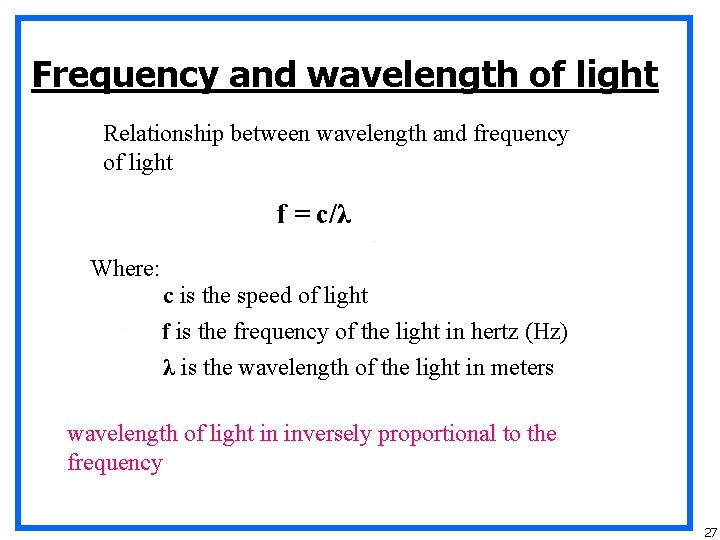
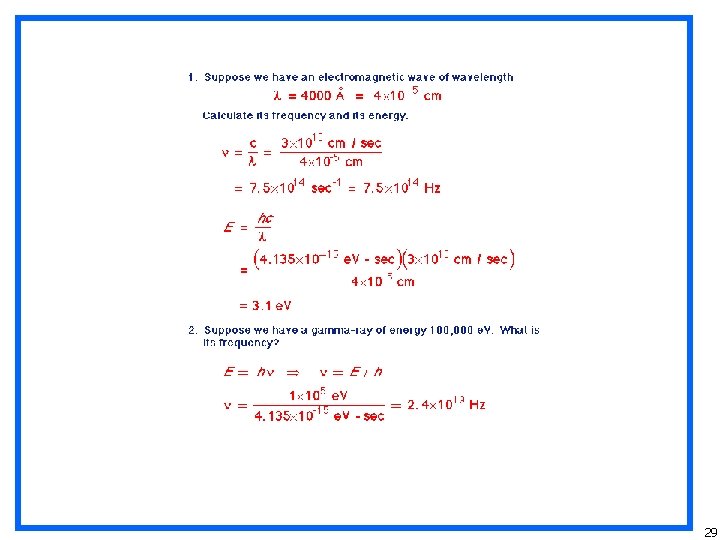
Frequency and wavelength of light Relationship between wavelength and frequency of light f = c/λ Where: c is the speed of light f is the frequency of the light in hertz (Hz) λ is the wavelength of the light in meters wavelength of light in inversely proportional to the frequency 27
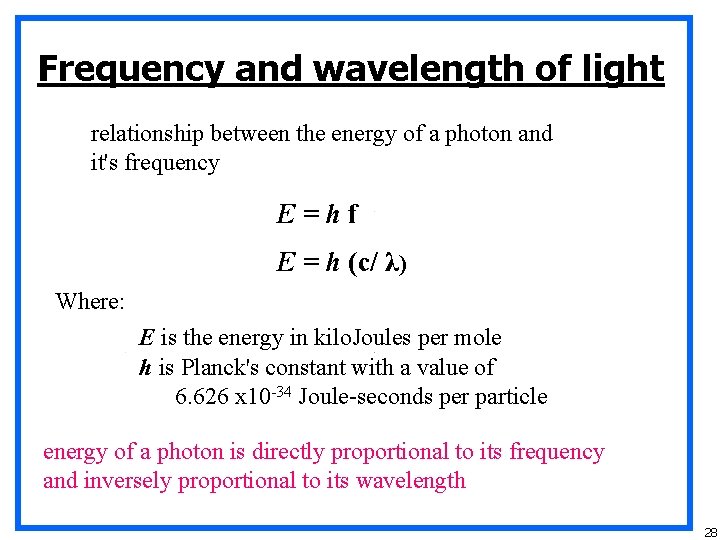
Frequency and wavelength of light relationship between the energy of a photon and it's frequency E=hf E = h (c/ λ) Where: E is the energy in kilo. Joules per mole h is Planck's constant with a value of 6. 626 x 10 -34 Joule-seconds per particle energy of a photon is directly proportional to its frequency and inversely proportional to its wavelength 28
29
Frequency and wavelength of light Conclusion • Very high-frequency electromagnetic radiation such a gamma rays, x-rays, and ultraviolet light possess very short wavelengths and a great deal of energy. • On the other hand, lower frequency radiation such as visible, infrared, microwave, and radio waves have correspondingly greater wavelengths with lower frequencies and energy. 30
Nature of light 31
Nature of light 32
Nature of light 33
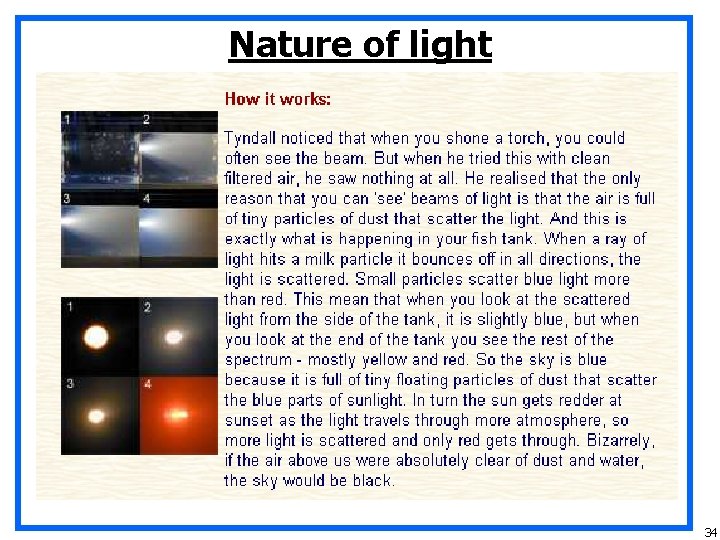
Nature of light 34
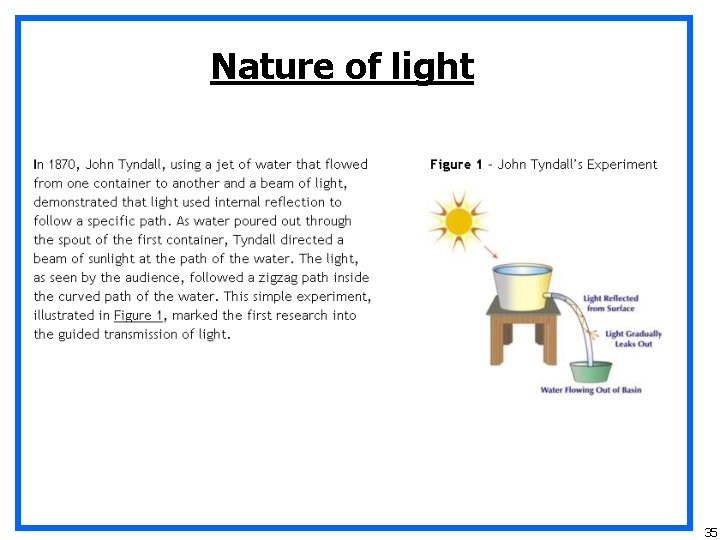
Nature of light 35
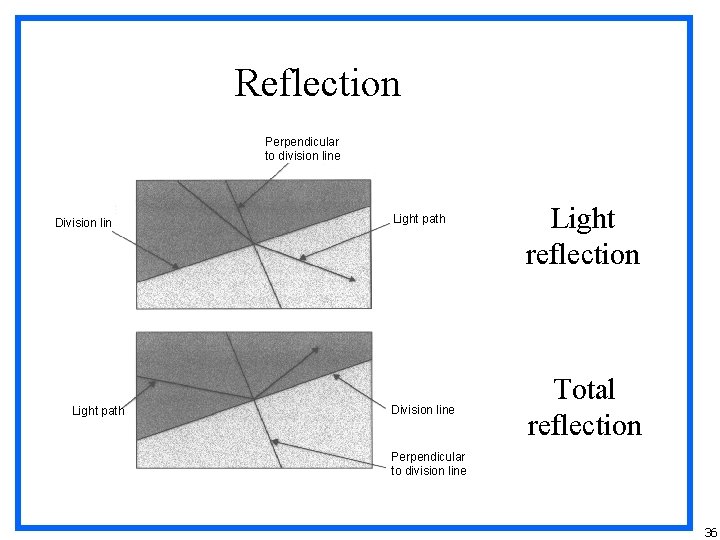
Reflection Perpendicular to division line Division line Light path Division line Light reflection Total reflection Perpendicular to division line 36
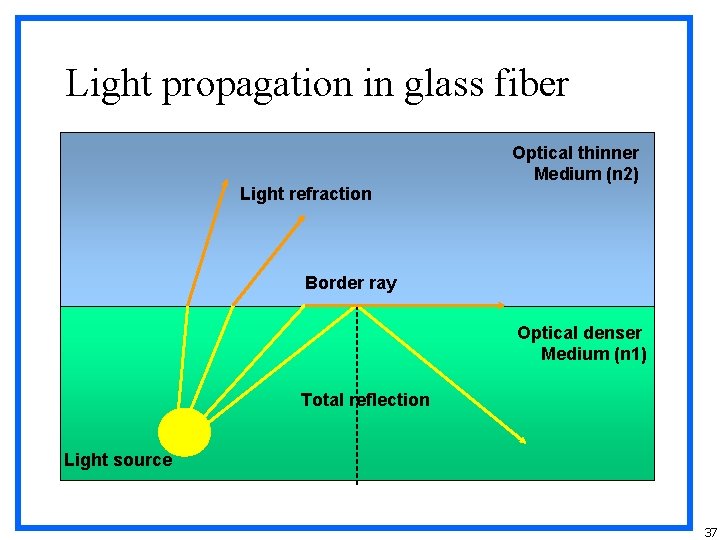
Light propagation in glass fiber Optical thinner Medium (n 2) Light refraction Border ray Optical denser Medium (n 1) Total reflection Light source 37
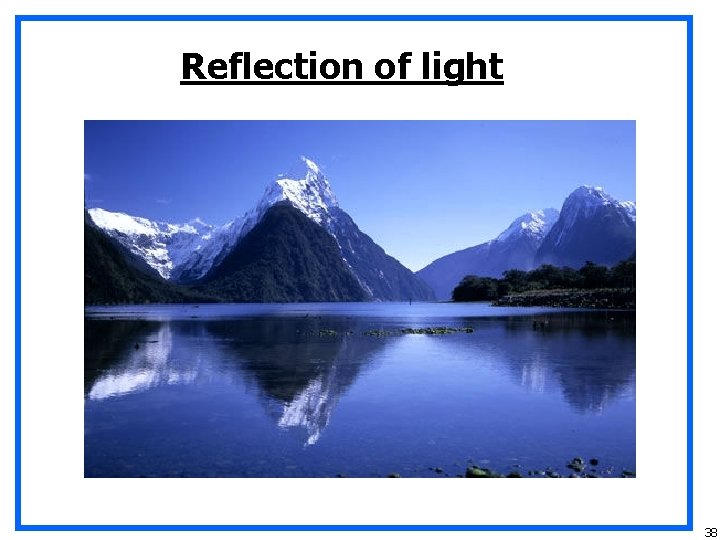
Reflection of light 38
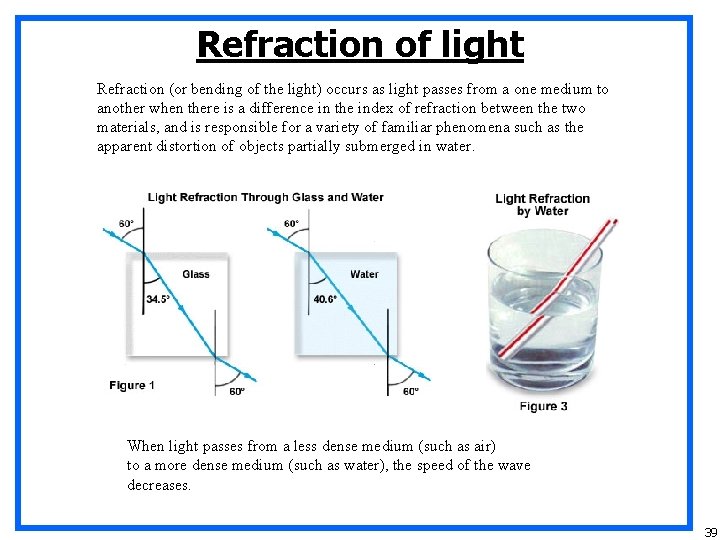
Refraction of light Refraction (or bending of the light) occurs as light passes from a one medium to another when there is a difference in the index of refraction between the two materials, and is responsible for a variety of familiar phenomena such as the apparent distortion of objects partially submerged in water. When light passes from a less dense medium (such as air) to a more dense medium (such as water), the speed of the wave decreases. 39
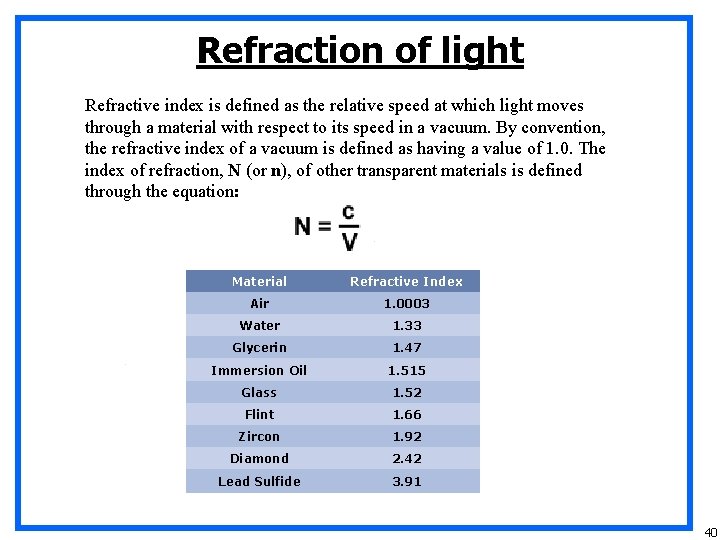
Refraction of light Refractive index is defined as the relative speed at which light moves through a material with respect to its speed in a vacuum. By convention, the refractive index of a vacuum is defined as having a value of 1. 0. The index of refraction, N (or n), of other transparent materials is defined through the equation: Material Refractive Index Air 1. 0003 Water 1. 33 Glycerin 1. 47 Immersion Oil 1. 515 Glass 1. 52 Flint 1. 66 Zircon 1. 92 Diamond 2. 42 Lead Sulfide 3. 91 40
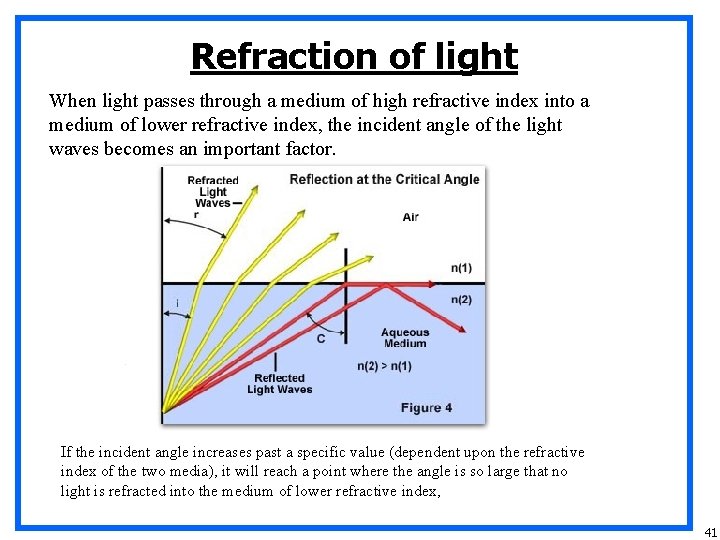
Refraction of light When light passes through a medium of high refractive index into a medium of lower refractive index, the incident angle of the light waves becomes an important factor. If the incident angle increases past a specific value (dependent upon the refractive index of the two media), it will reach a point where the angle is so large that no light is refracted into the medium of lower refractive index, 41
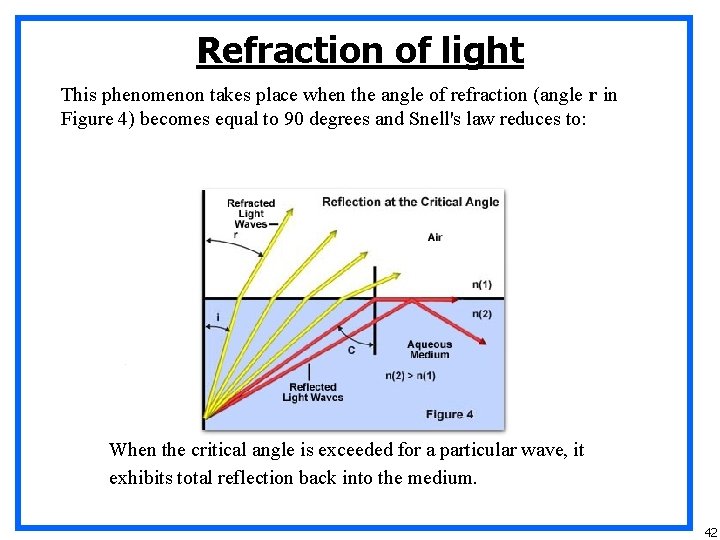
Refraction of light This phenomenon takes place when the angle of refraction (angle r in Figure 4) becomes equal to 90 degrees and Snell's law reduces to: When the critical angle is exceeded for a particular wave, it exhibits total reflection back into the medium. 42
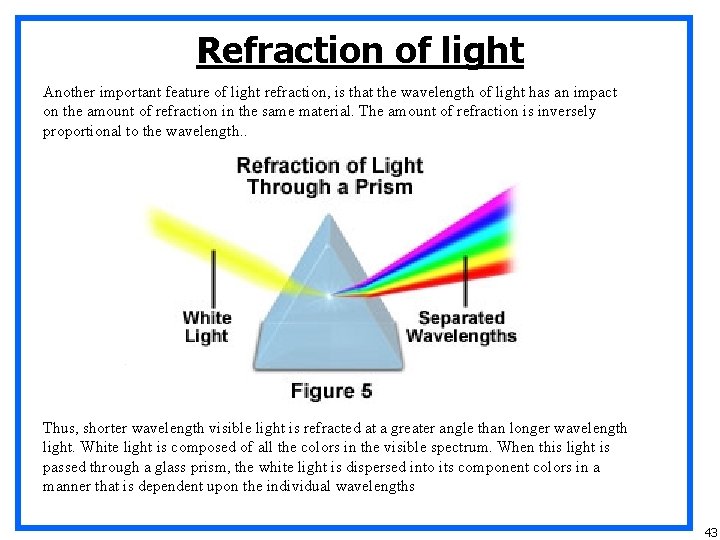
Refraction of light Another important feature of light refraction, is that the wavelength of light has an impact on the amount of refraction in the same material. The amount of refraction is inversely proportional to the wavelength. . Thus, shorter wavelength visible light is refracted at a greater angle than longer wavelength light. White light is composed of all the colors in the visible spectrum. When this light is passed through a glass prism, the white light is dispersed into its component colors in a manner that is dependent upon the individual wavelengths 43
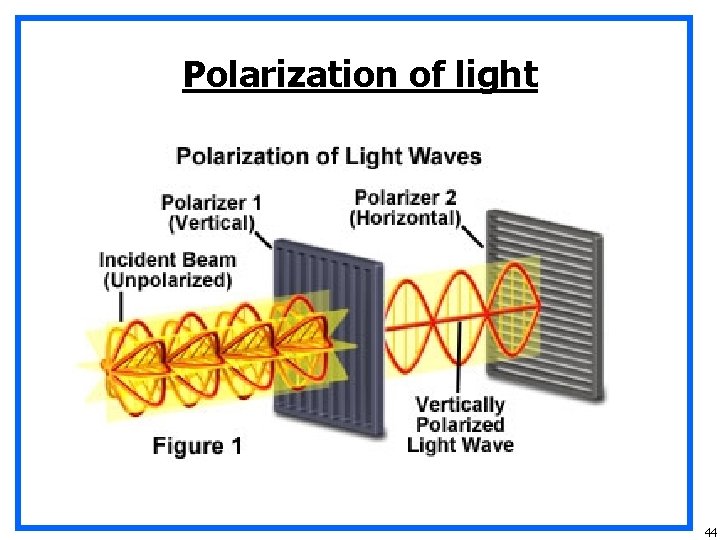
Polarization of light 44
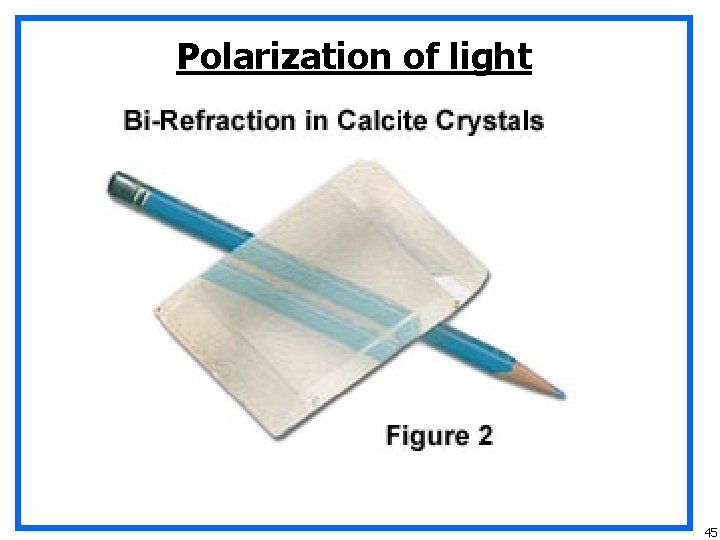
Polarization of light 45
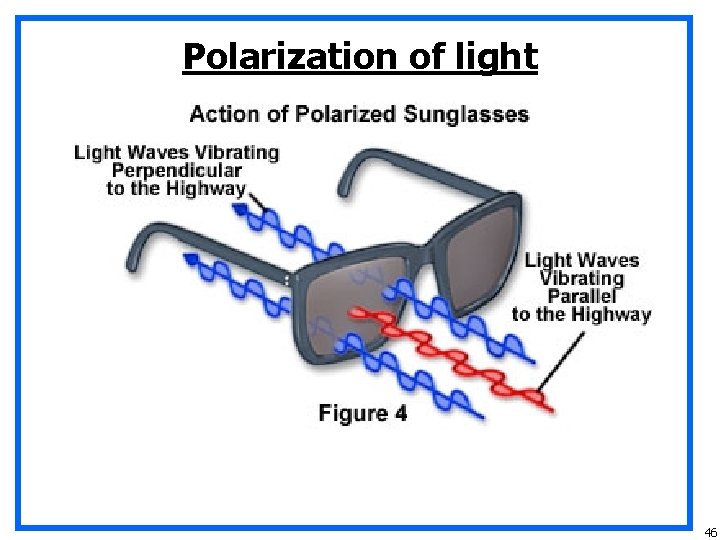
Polarization of light 46
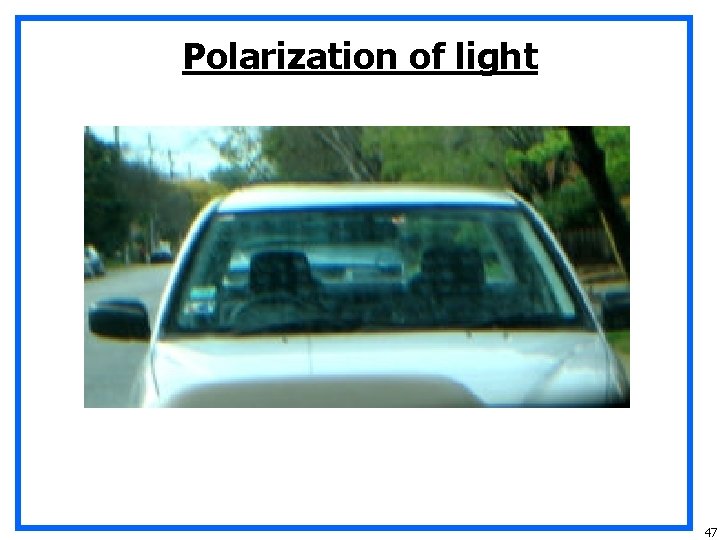
Polarization of light 47
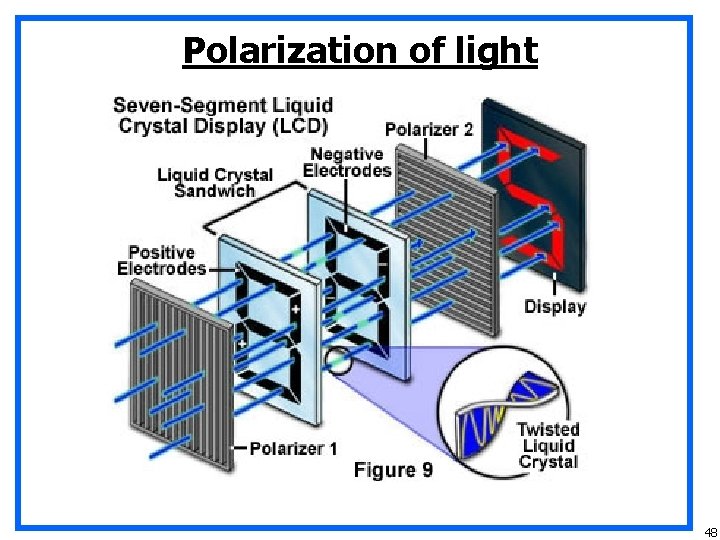
Polarization of light 48
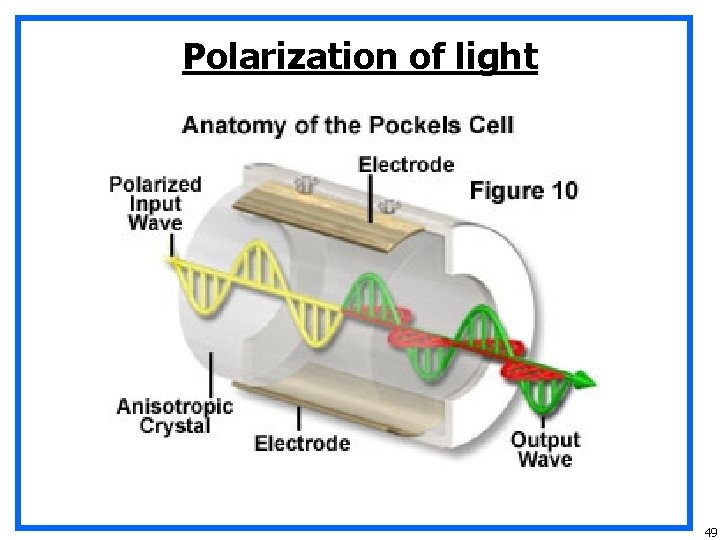
Polarization of light 49
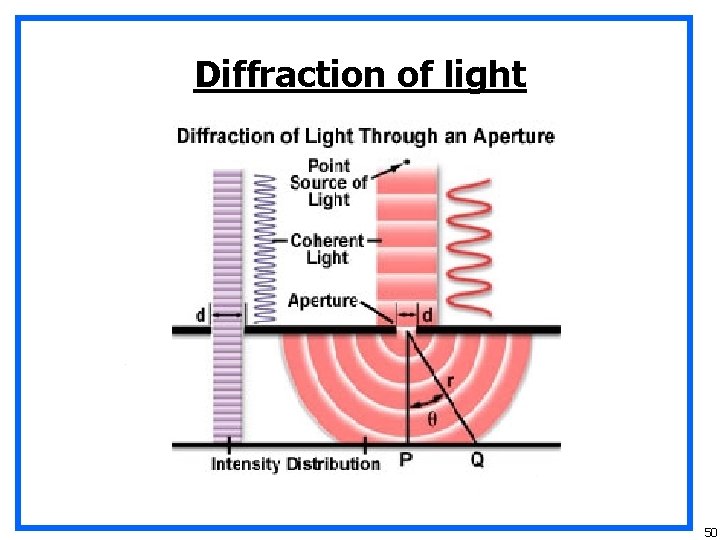
Diffraction of light 50
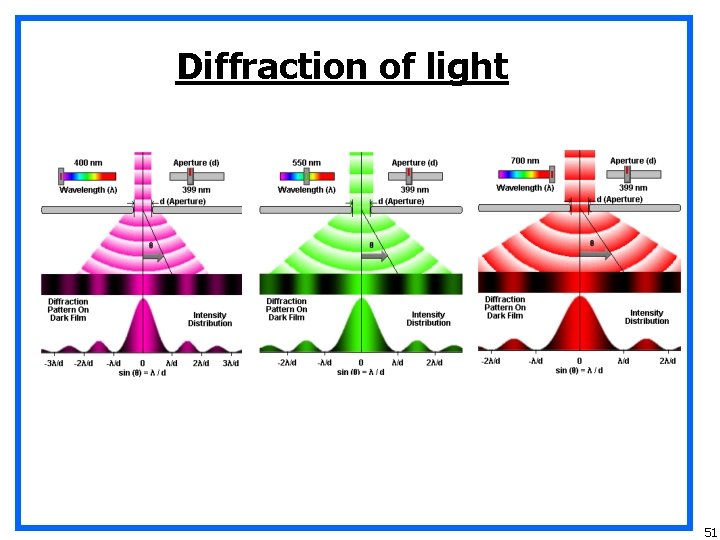
Diffraction of light 51
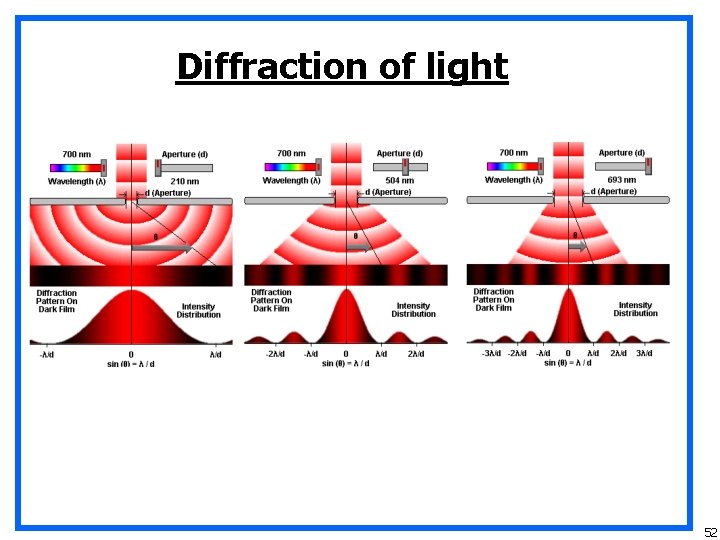
Diffraction of light 52
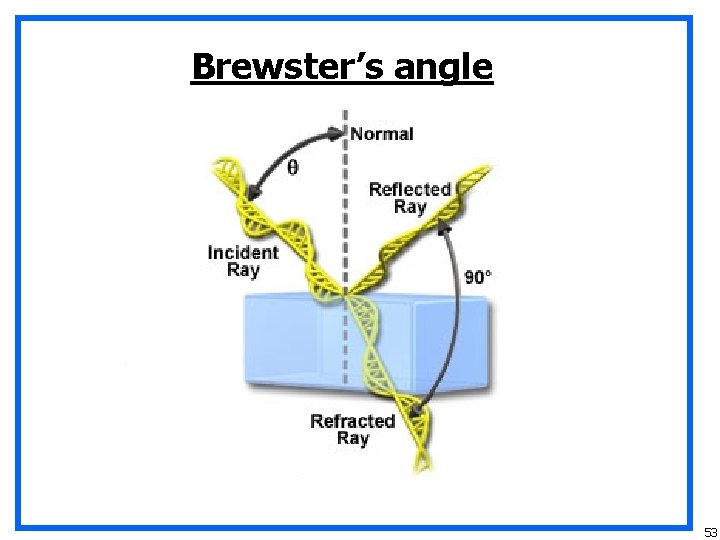
Brewster’s angle 53

Thank You 54
- Slides: 54