
Options for Preference Analysis Technology Method Ranking A

- Slides: 11
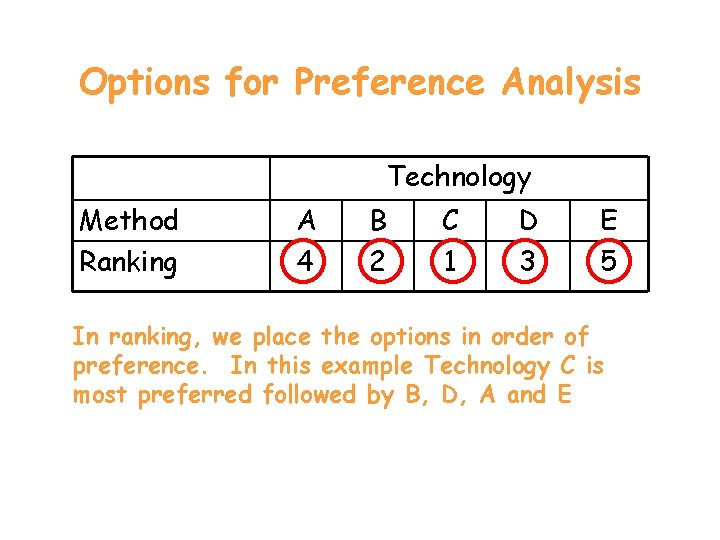
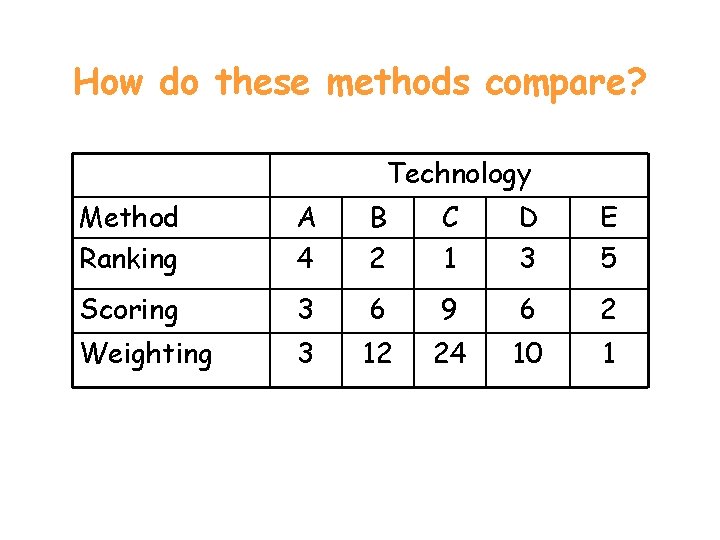
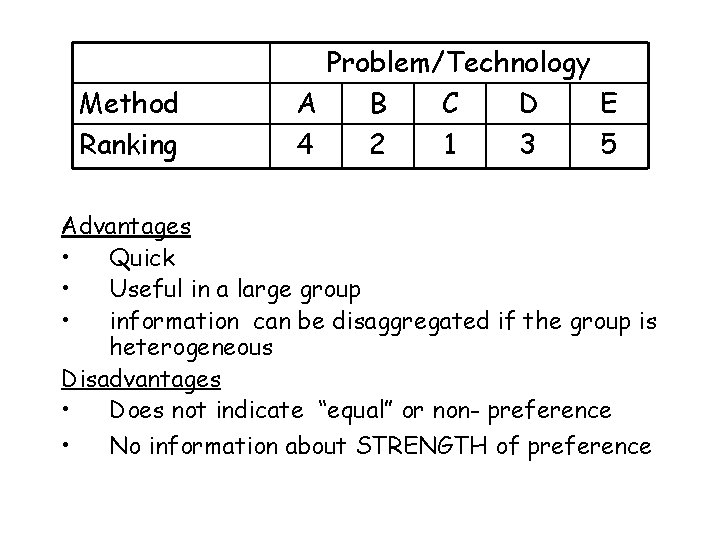
Options for Preference Analysis Technology Method Ranking A 4 B 2 C 1 D 3 E 5 In ranking, we place the options in order of preference. In this example Technology C is most preferred followed by B, D, A and E
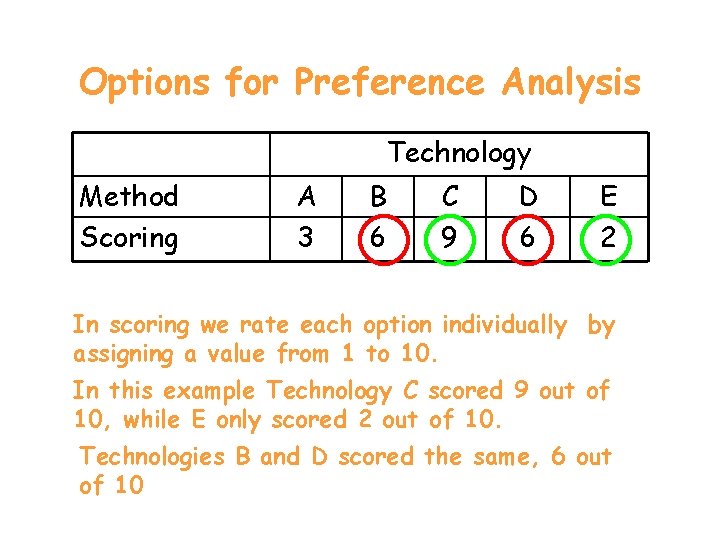
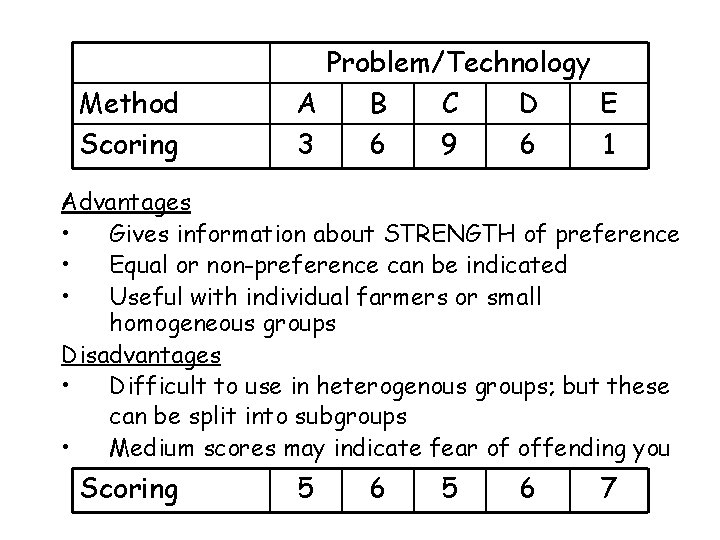
Options for Preference Analysis Technology Method Scoring A 3 B 6 C 9 D 6 E 2 In scoring we rate each option individually by assigning a value from 1 to 10. In this example Technology C scored 9 out of 10, while E only scored 2 out of 10. Technologies B and D scored the same, 6 out of 10
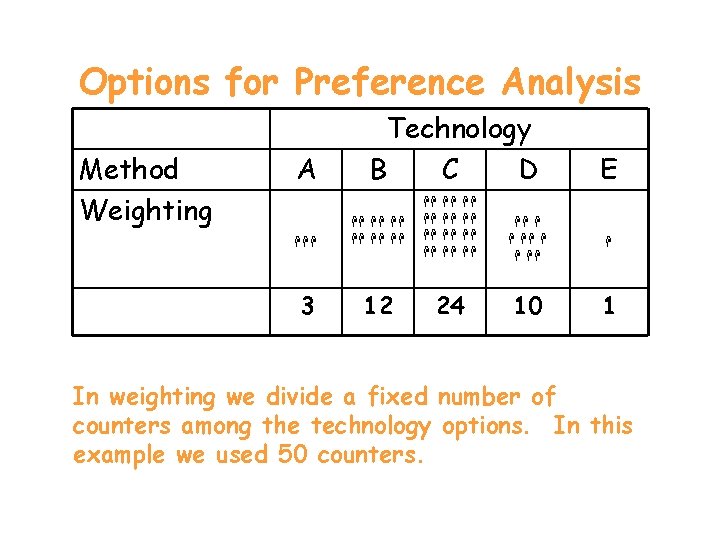
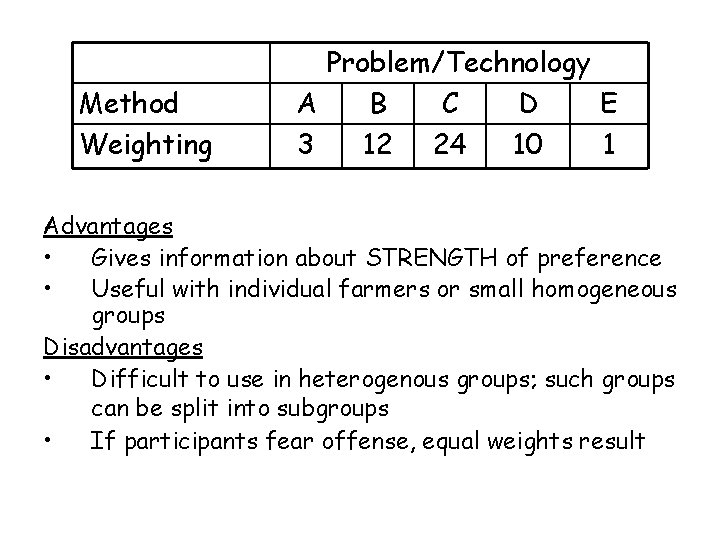
Options for Preference Analysis Method Weighting A Technology B C D 3 12 24 E 10 1 In weighting we divide a fixed number of counters among the technology options. In this example we used 50 counters.
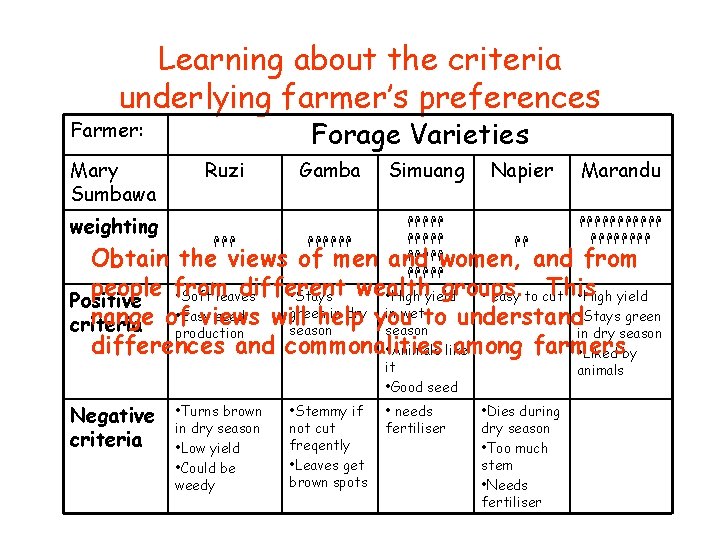
Learning about the criteria underlying farmer’s preferences Forage Varieties Farmer: Mary Sumbawa weighting Ruzi Gamba Simuang Napier Marandu Obtain the views of men and women, and from people from different wealth groups. This • Soft leaves • Stays • High yield • easy to cut • High yield Positive green in dry you in wetto understand • Easy seed • Stays green range of views will help criteria season production in dry season differences and commonalities among farmers • Animals like • Liked by it • Good seed Negative criteria • Turns brown in dry season • Low yield • Could be weedy • Stemmy if not cut freqently • Leaves get brown spots • needs fertiliser animals • Dies during dry season • Too much stem • Needs fertiliser
How do these methods compare? Technology Method Ranking A 4 B 2 C 1 D 3 E 5 Scoring 3 6 9 6 2 Weighting 3 12 24 10 1
Method Ranking Problem/Technology A B C D E 4 2 1 3 5 Advantages • Quick • Useful in a large group • information can be disaggregated if the group is heterogeneous Disadvantages • Does not indicate “equal” or non- preference • No information about STRENGTH of preference
Method Scoring Problem/Technology A B C D E 3 6 9 6 1 Advantages • Gives information about STRENGTH of preference • Equal or non-preference can be indicated • Useful with individual farmers or small homogeneous groups Disadvantages • Difficult to use in heterogenous groups; but these can be split into subgroups • Medium scores may indicate fear of offending you Scoring 5 6 7
Method Weighting Problem/Technology A B C D E 3 12 24 10 1 Advantages • Gives information about STRENGTH of preference • Useful with individual farmers or small homogeneous groups Disadvantages • Difficult to use in heterogenous groups; such groups can be split into subgroups • If participants fear offense, equal weights result
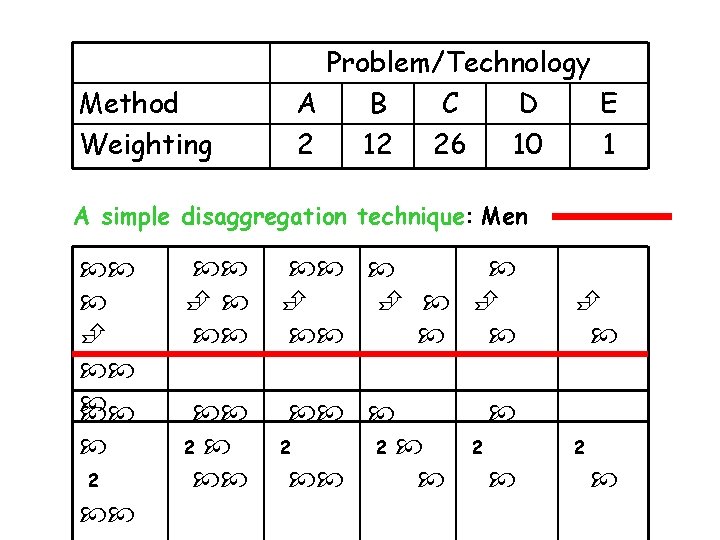
Method Weighting Problem/Technology A B C D E 2 12 26 10 1 A simple disaggregation technique: Men 2 2 2
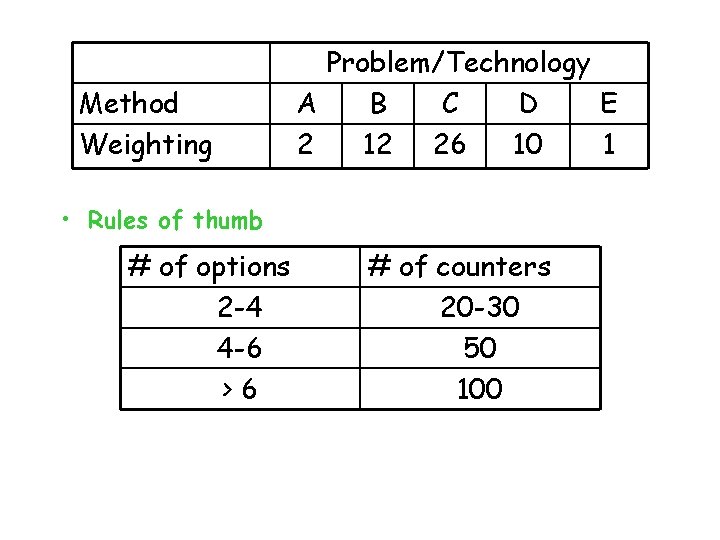
Method Weighting Problem/Technology A B C D E 2 12 26 10 1 • Rules of thumb # of options 2 -4 4 -6 >6 # of counters 20 -30 50 100
Click the back button on your browser to return to the main menu