
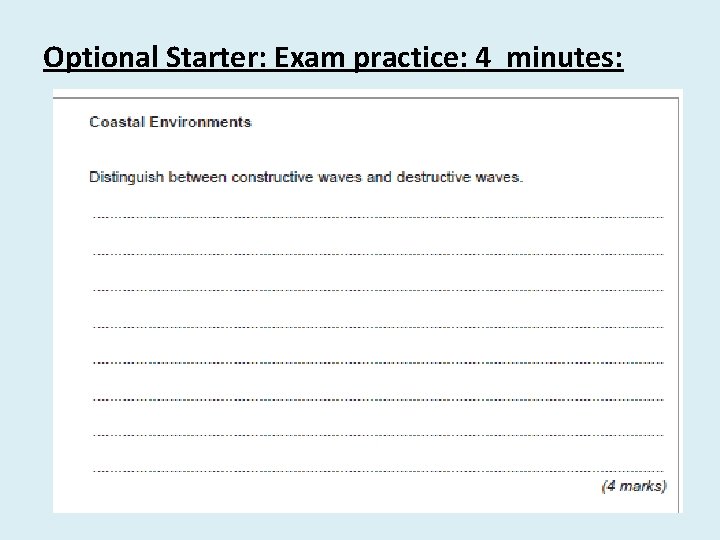
Optional Starter Exam practice 4 minutes Exam practise

- Slides: 12
Optional Starter: Exam practice: 4 minutes:
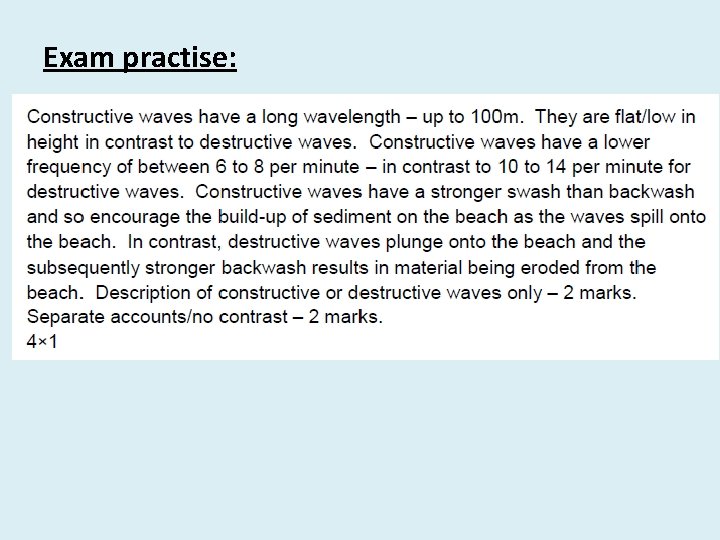
Exam practise:
Starter: http: //www. bbc. co. uk/news/uk-england-sussex-25594640 Insert above link What made this cliff collapse?
What is weathering? Weathering is the deterioration (breakdown) of rock, and does not involve the removal of rock as in erosion. Think of examples of weathering. How do they work?
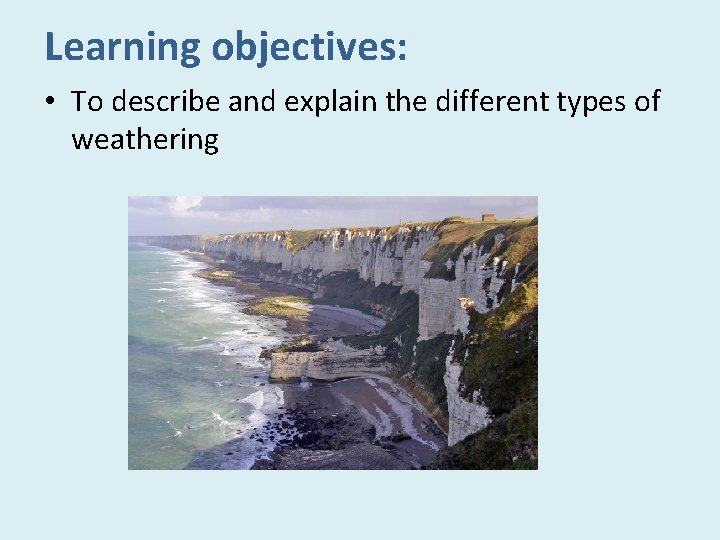
Learning objectives: • To describe and explain the different types of weathering
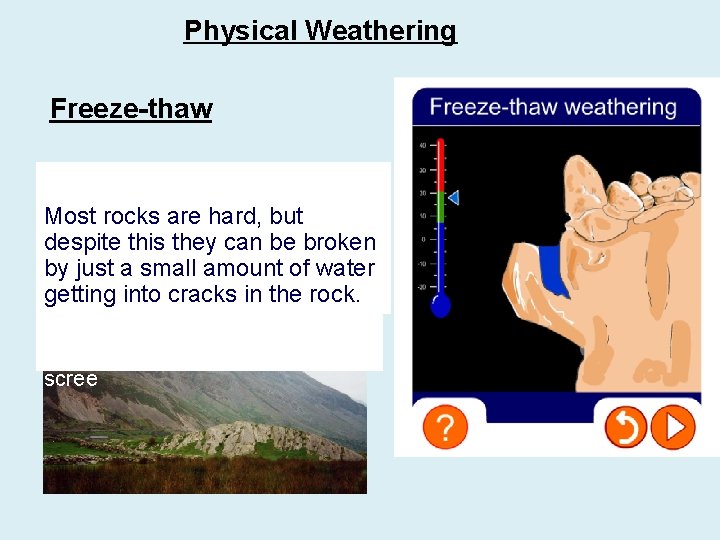
Physical Weathering Freeze-thaw As thisis freeze–thaw is repeated This becauseprocess as water and cracks spread through the rock. freezes itsmall expands. Most rocks are hard, but(called Eventually pieces of rock scree) offthey altogether. scree break despite this can be broken This creates powerful forces by just a small amount of water that can enlarge the cracks. getting into cracks in the rock. scree
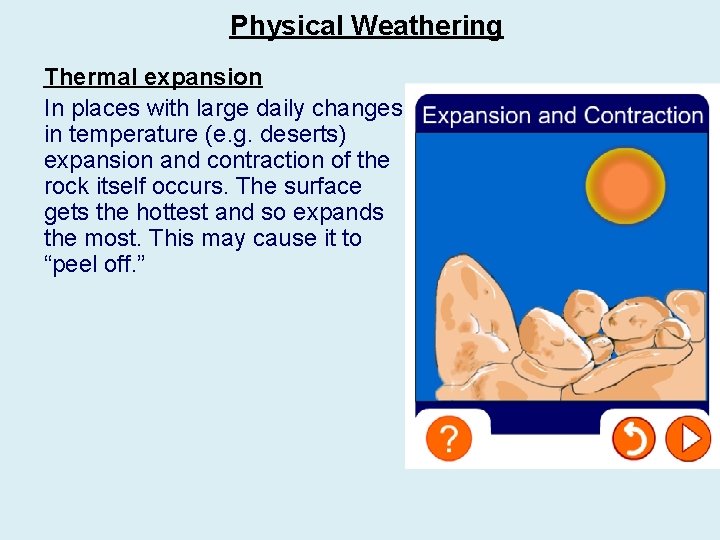
Physical Weathering Thermal expansion In places with large daily changes in temperature (e. g. deserts) expansion and contraction of the rock itself occurs. The surface gets the hottest and so expands the most. This may cause it to “peel off. ”
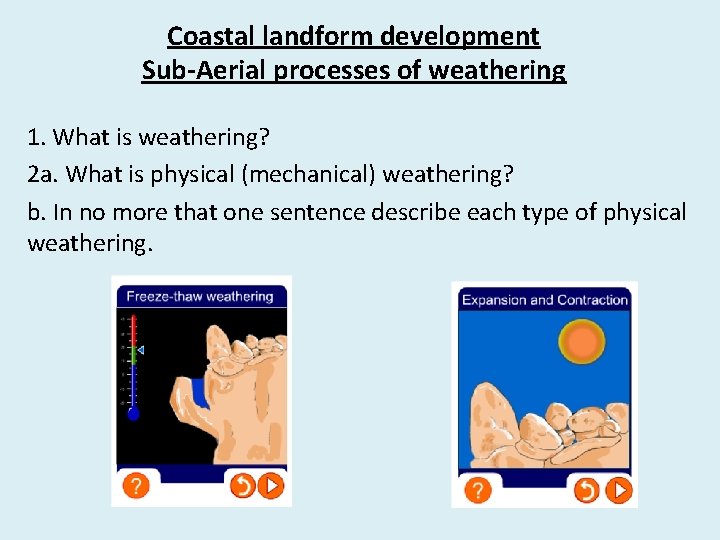
Coastal landform development Sub-Aerial processes of weathering 1. What is weathering? 2 a. What is physical (mechanical) weathering? b. In no more that one sentence describe each type of physical weathering.
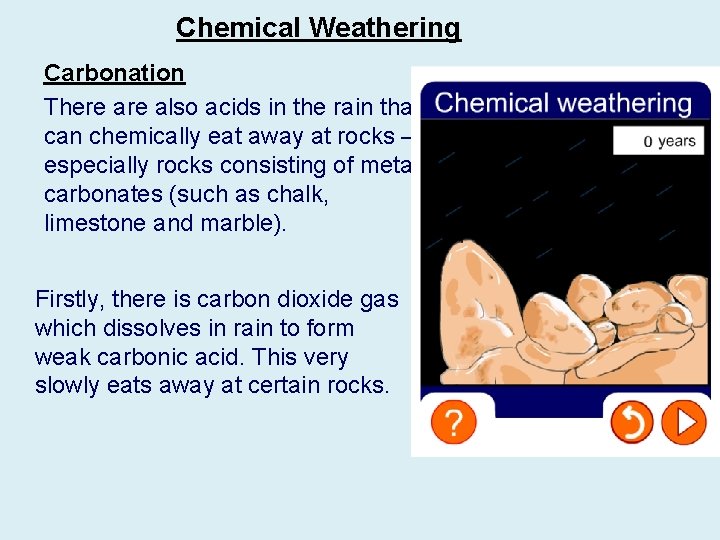
Chemical Weathering Carbonation There also acids in the rain that can chemically eat away at rocks – especially rocks consisting of metal carbonates (such as chalk, limestone and marble). Firstly, there is carbon dioxide gas which dissolves in rain to form weak carbonic acid. This very slowly eats away at certain rocks.
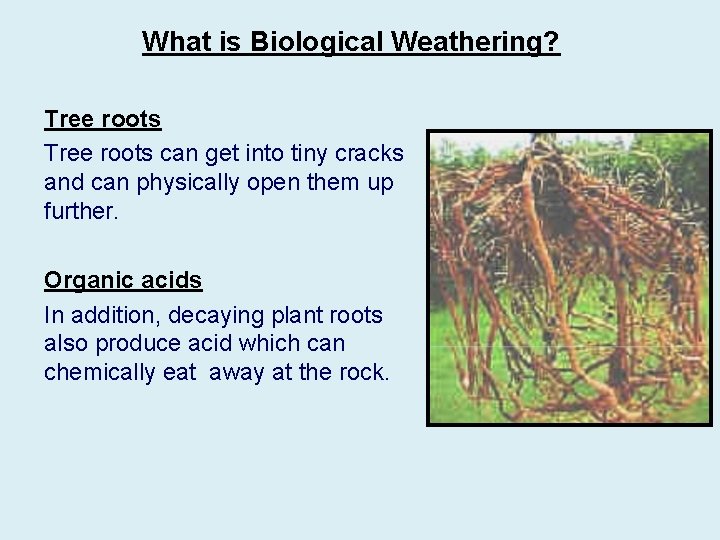
What is Biological Weathering? Tree roots can get into tiny cracks and can physically open them up further. Organic acids In addition, decaying plant roots also produce acid which can chemically eat away at the rock.
Coastal landform development Sub-Aerial processes of weathering and mass movement 1. What is weathering? 2 a. What is physical (mechanical) weathering and when is it most effective? b. In no more that one sentence describe each type of physical weathering. 3 a. What is chemical weathering and when is it most effective? b. In no more that one sentence describe each type of chemical weathering. 4) What are the two main types of biological weathering?
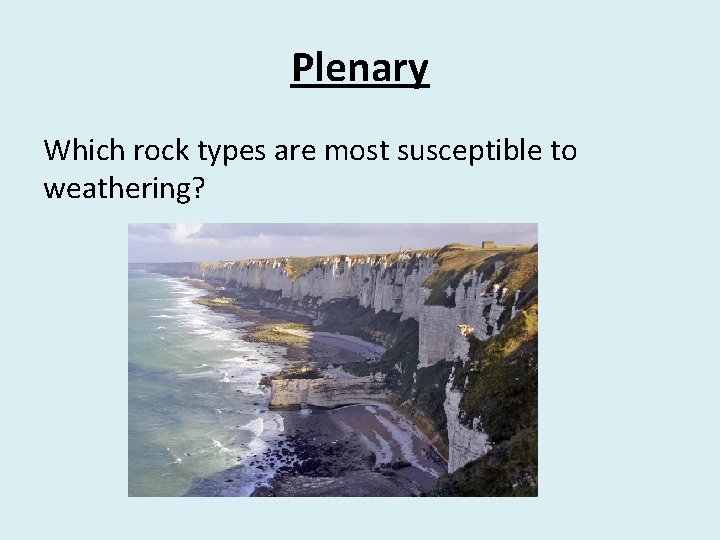
Plenary Which rock types are most susceptible to weathering?