
Optimizing the Locations of Cables for Current Rating

Optimizing the Locations of Cables for Current Rating Presented by Wael Moutassem Supervisors: Reza Iravani, George Anders
Outline • What is current rating of a cable? • Cables in duct bank and casing • Algorithm: Vector-Immune-System (VIS) • Optimization results
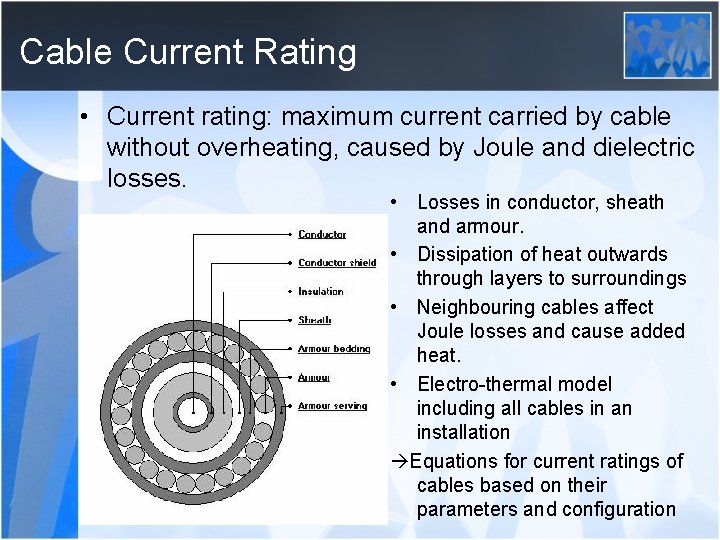
Cable Current Rating • Current rating: maximum current carried by cable without overheating, caused by Joule and dielectric losses. • Losses in conductor, sheath and armour. • Dissipation of heat outwards through layers to surroundings • Neighbouring cables affect Joule losses and cause added heat. • Electro-thermal model including all cables in an installation Equations for current ratings of cables based on their parameters and configuration

Cables in Duct Bank or Casing
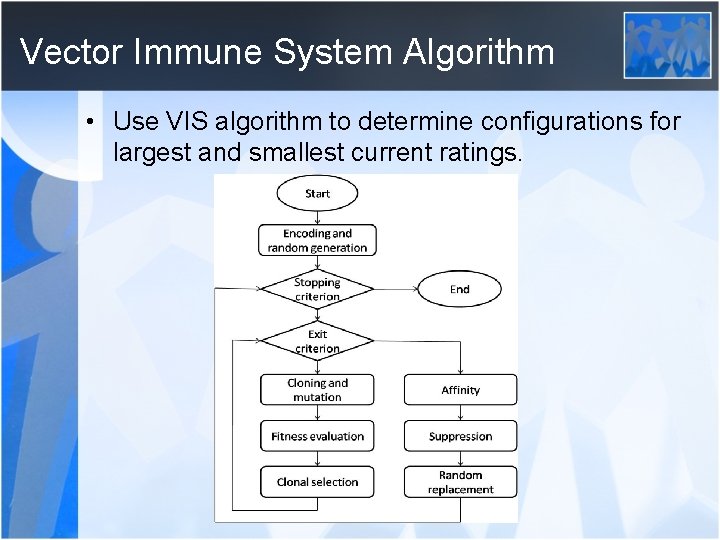
Vector Immune System Algorithm • Use VIS algorithm to determine configurations for largest and smallest current ratings.
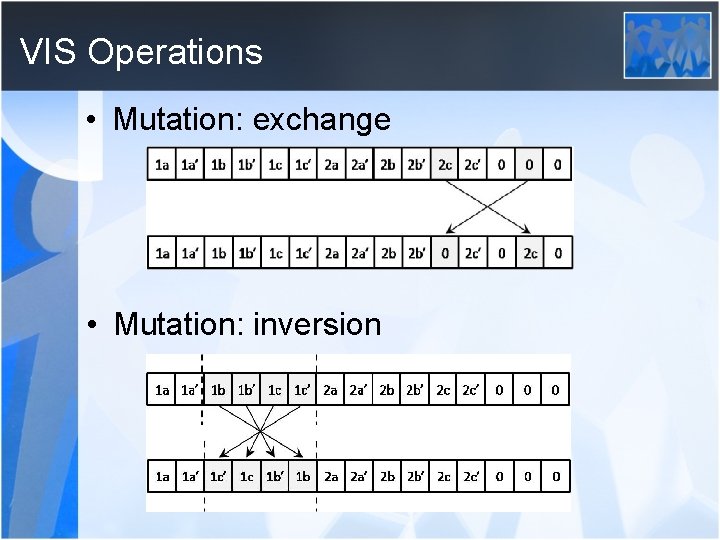
VIS Operations • Mutation: exchange • Mutation: inversion
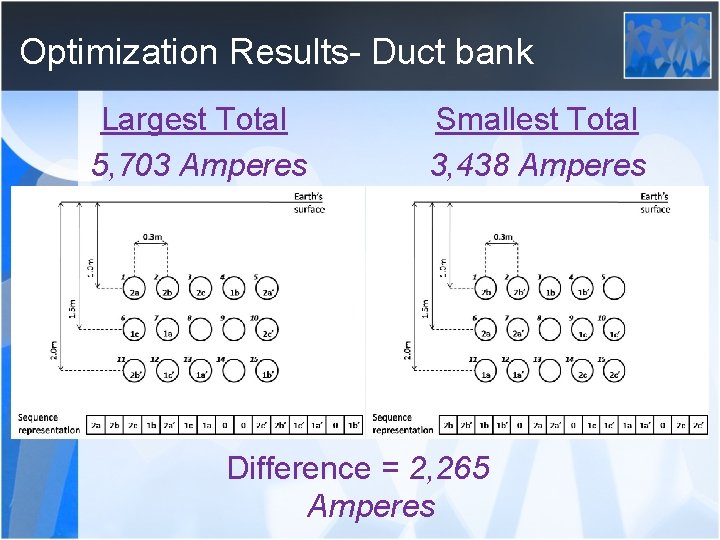
Optimization Results- Duct bank Largest Total 5, 703 Amperes Smallest Total 3, 438 Amperes Difference = 2, 265 Amperes
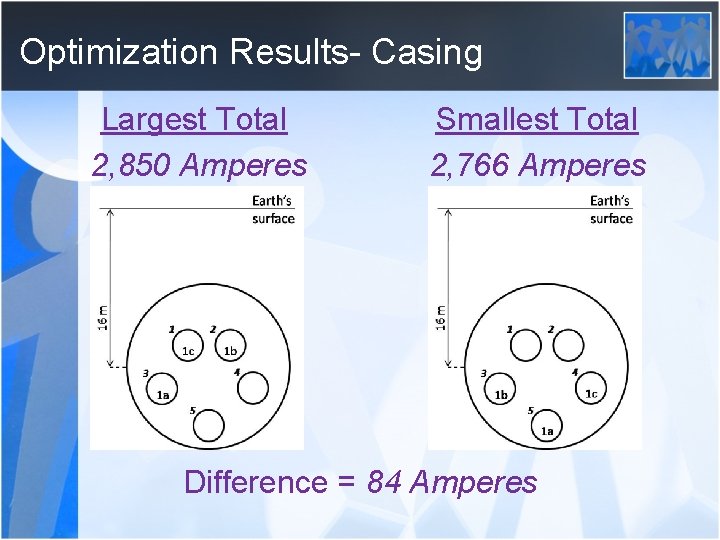
Optimization Results- Casing Largest Total 2, 850 Amperes Smallest Total 2, 766 Amperes Difference = 84 Amperes
Conclusion • Genetic algorithm used to determine best and worst case configurations. • Duct bank study shows the large difference in possible total current rating • Casing study shows effect on current rating of cables proximity to steel casing

Thank You Questions? wael. moutassem@utoronto. ca
- Slides: 10