
Optimizing The Evaluation of The Life Cycle Impacts
- Slides: 21
Optimizing The Evaluation of The Life Cycle Impacts of Intersection Control Type Selection Presented by Joy Davis, ITRE TRB Planning Applications Conference May 15, 2017
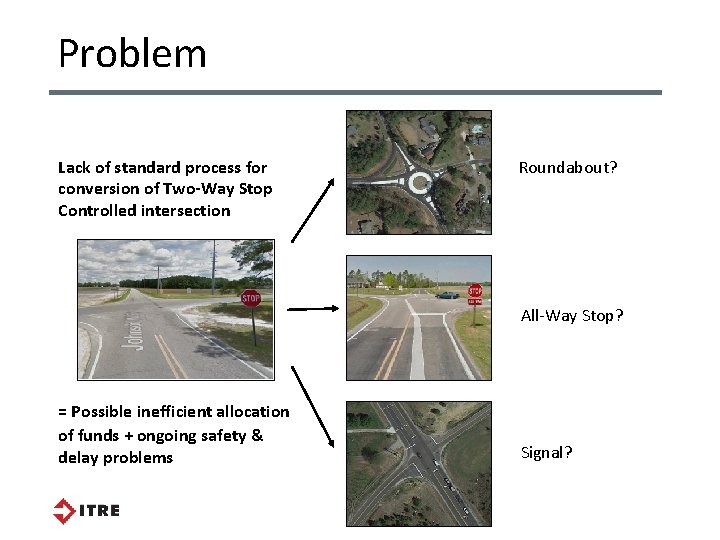
Problem Lack of standard process for conversion of Two-Way Stop Controlled intersection Roundabout? All-Way Stop? = Possible inefficient allocation of funds + ongoing safety & delay problems Signal?
Goals Provide guidance for conversions of two-way stop controlled (TWSC) intersections to other types to enhance the effective allocation of public funds: 1. Create an analytic model that accounts for variables that impact the life cycle costs of conversions 2. Develop a user-friendly planning-level tool that requires minimal time & effort 3. Use Life Cycle Cost Analysis (LCCA) framework to compares the monetized outcomes of alternatives
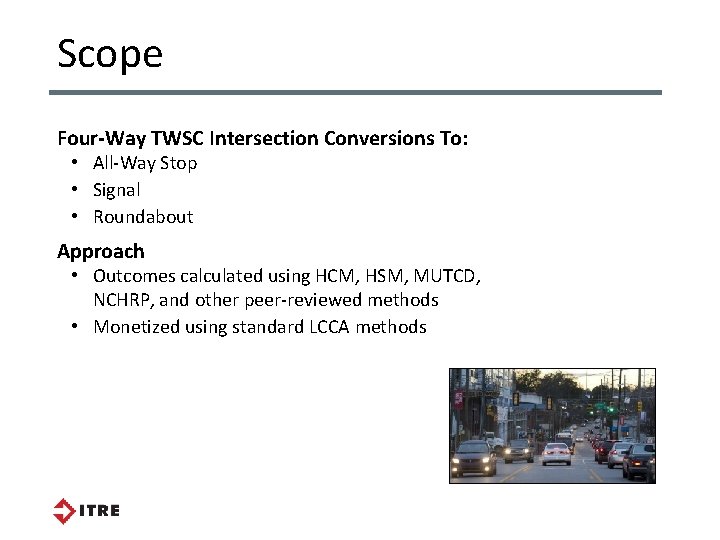
Scope Four-Way TWSC Intersection Conversions To: • All-Way Stop • Signal • Roundabout Approach • Outcomes calculated using HCM, HSM, MUTCD, NCHRP, and other peer-reviewed methods • Monetized using standard LCCA methods
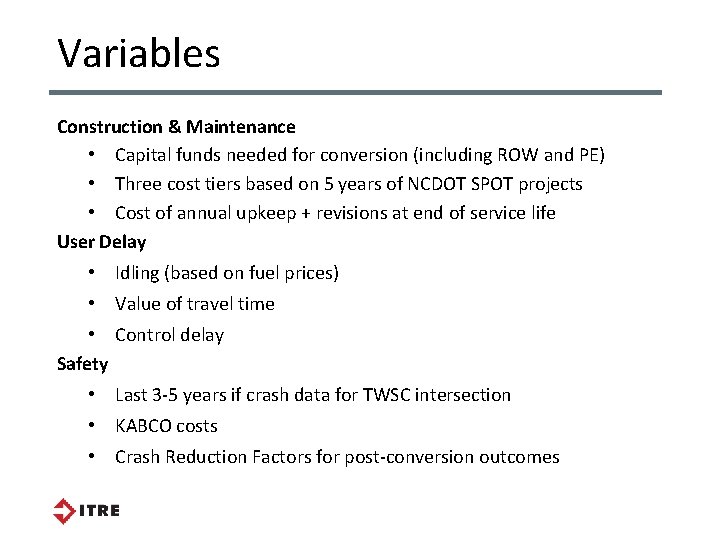
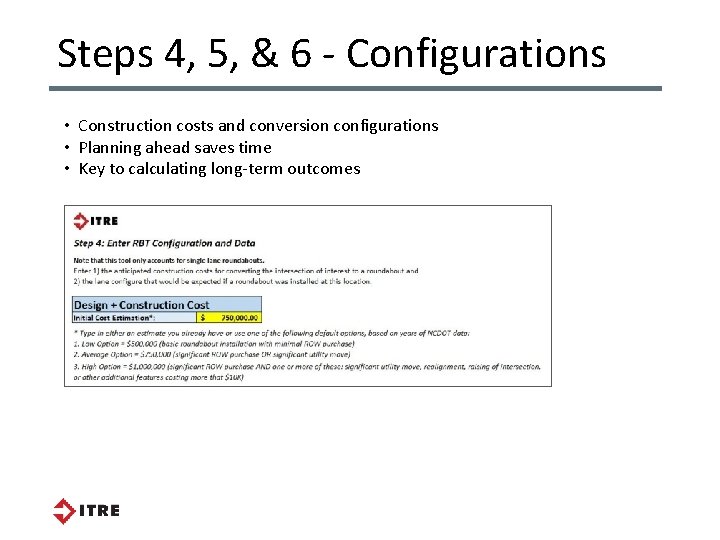
Variables Construction & Maintenance • Capital funds needed for conversion (including ROW and PE) • Three cost tiers based on 5 years of NCDOT SPOT projects • Cost of annual upkeep + revisions at end of service life User Delay • Idling (based on fuel prices) • Value of travel time • Control delay Safety • Last 3 -5 years if crash data for TWSC intersection • KABCO costs • Crash Reduction Factors for post-conversion outcomes
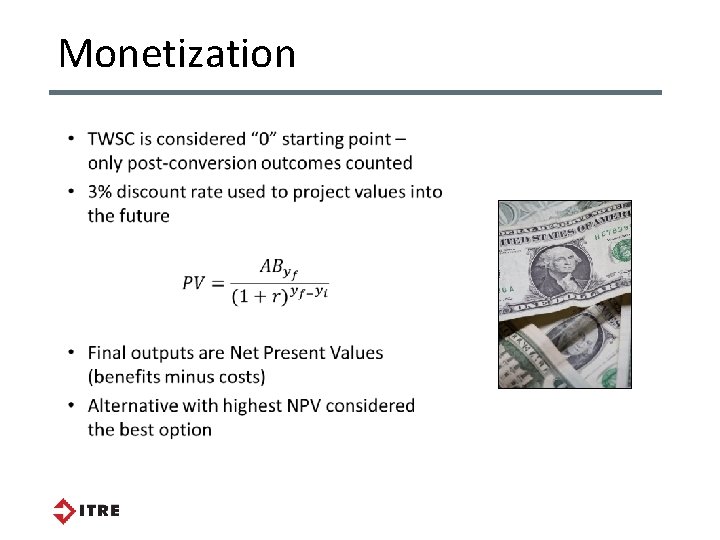
Monetization •
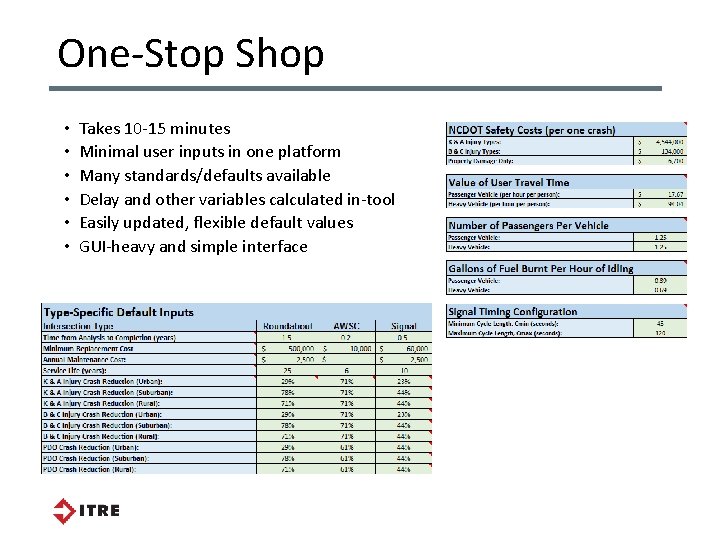
One-Stop Shop • • • Takes 10 -15 minutes Minimal user inputs in one platform Many standards/defaults available Delay and other variables calculated in-tool Easily updated, flexible default values GUI-heavy and simple interface
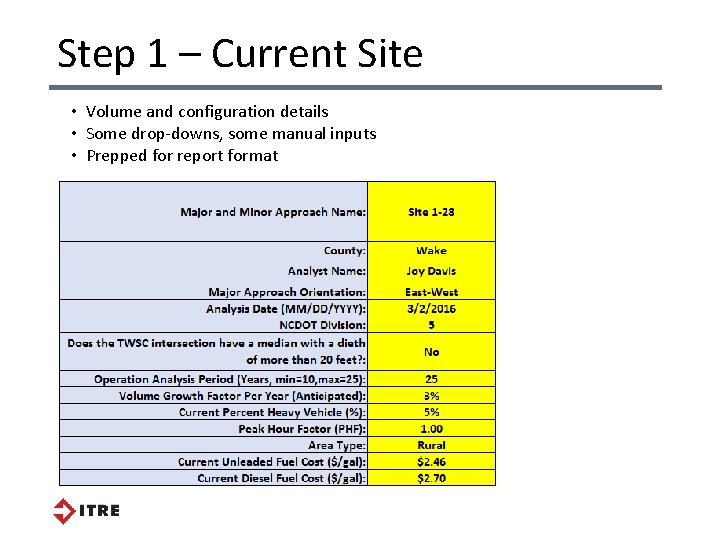
Step 1 – Current Site • Volume and configuration details • Some drop-downs, some manual inputs • Prepped for report format
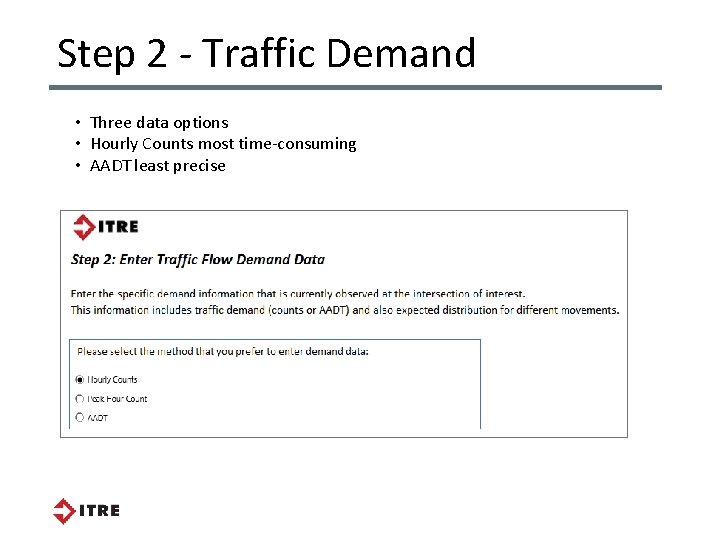
Step 2 - Traffic Demand • Three data options • Hourly Counts most time-consuming • AADT least precise
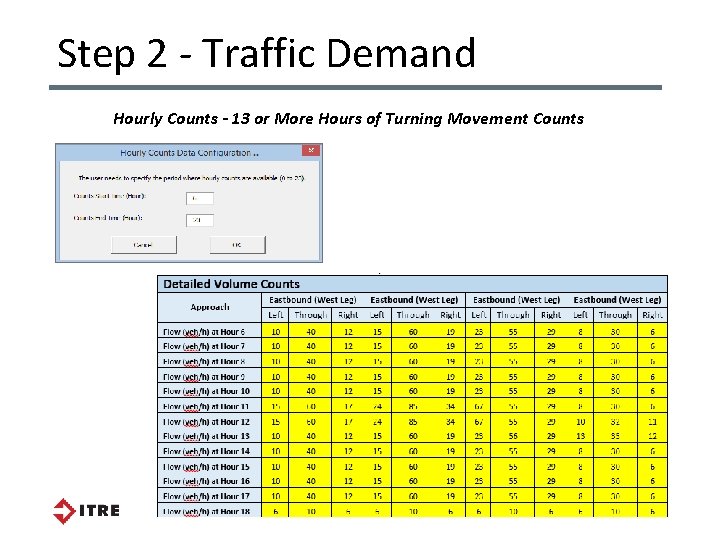
Step 2 - Traffic Demand Hourly Counts - 13 or More Hours of Turning Movement Counts
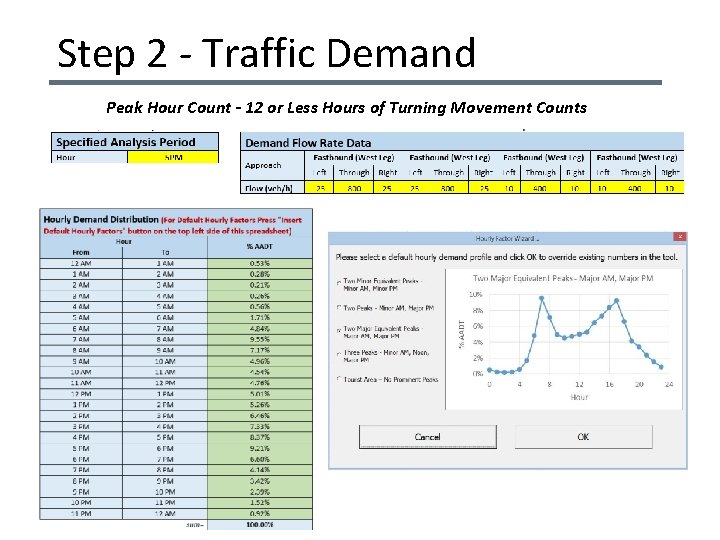
Step 2 - Traffic Demand Peak Hour Count - 12 or Less Hours of Turning Movement Counts
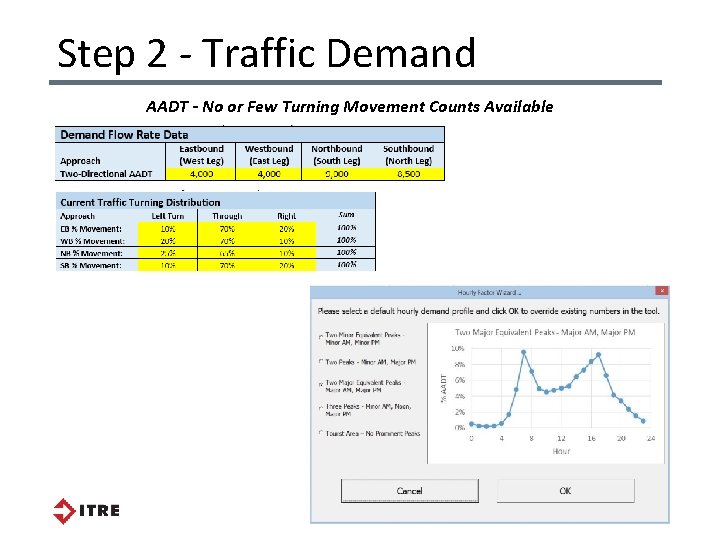
Step 2 - Traffic Demand AADT - No or Few Turning Movement Counts Available
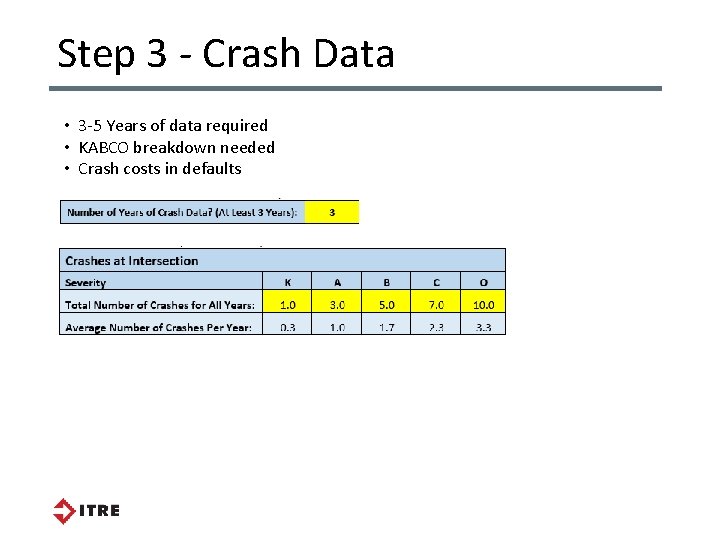
Step 3 - Crash Data • 3 -5 Years of data required • KABCO breakdown needed • Crash costs in defaults
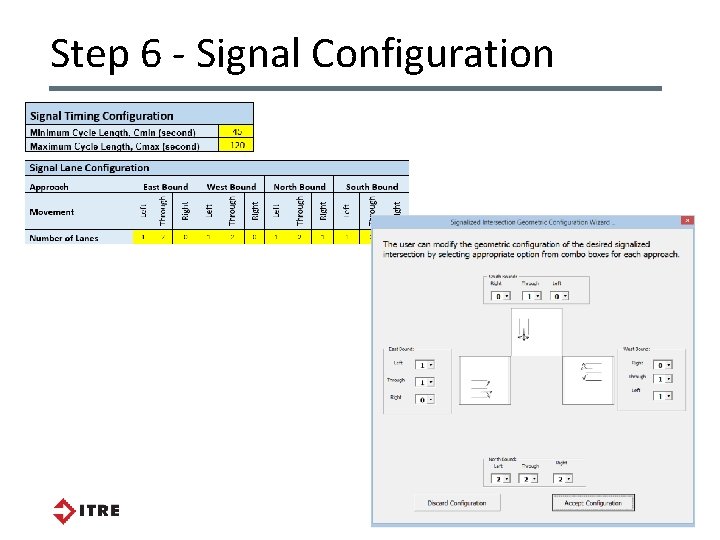
Steps 4, 5, & 6 - Configurations • Construction costs and conversion configurations • Planning ahead saves time • Key to calculating long-term outcomes
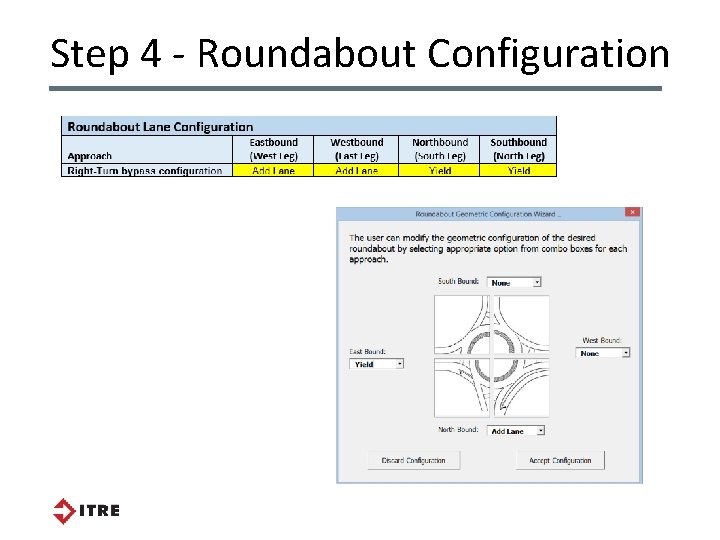
Step 4 - Roundabout Configuration
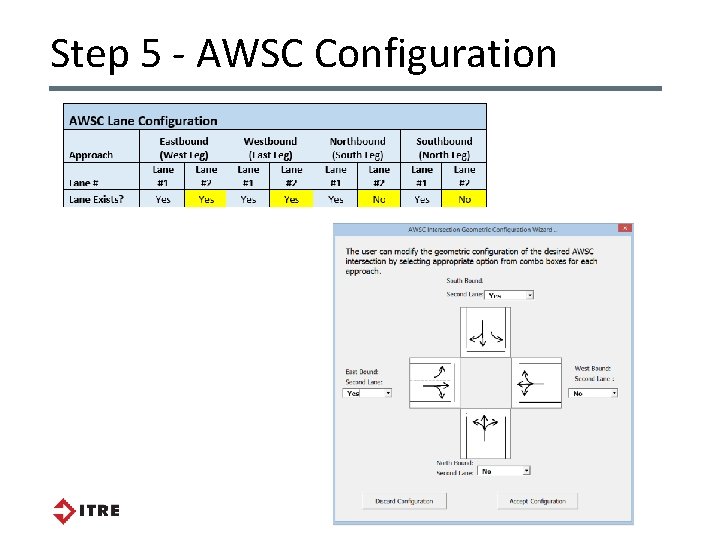
Step 5 - AWSC Configuration
Step 6 - Signal Configuration
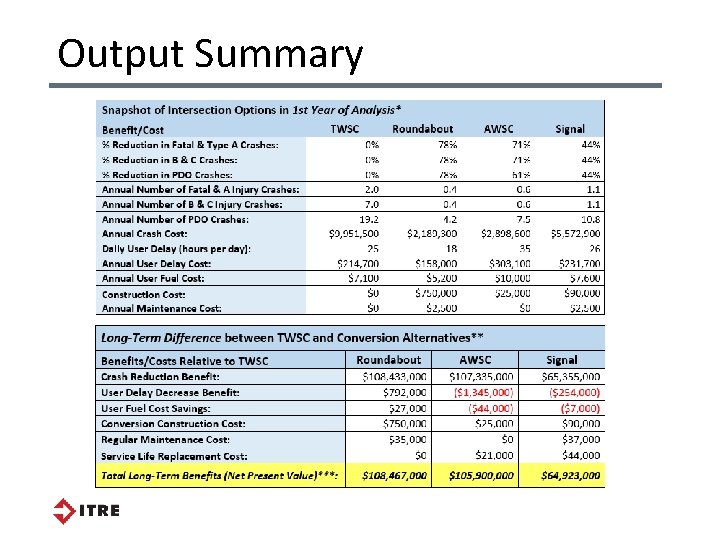
Output Summary
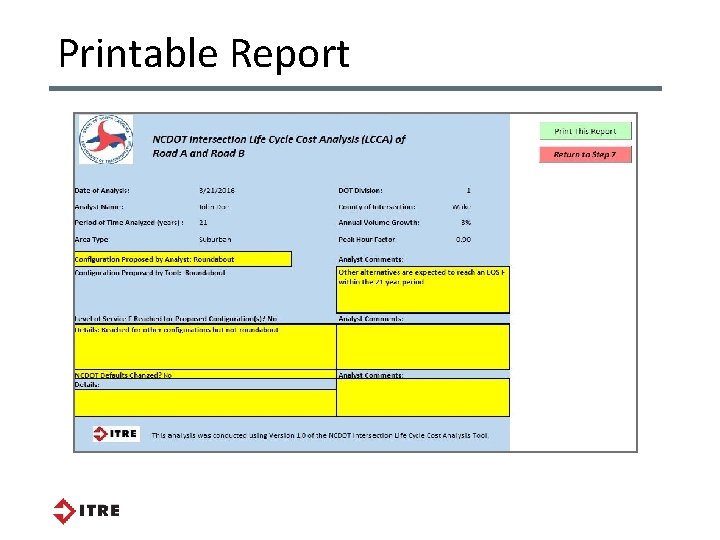
Printable Report
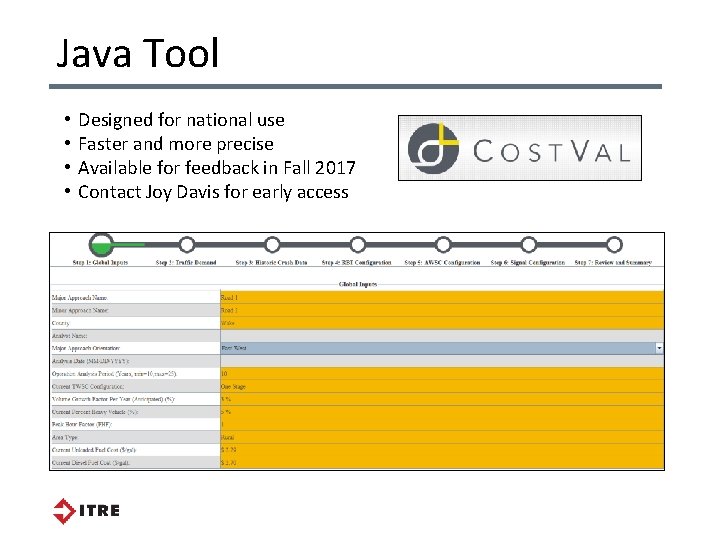
Java Tool • • Designed for national use Faster and more precise Available for feedback in Fall 2017 Contact Joy Davis for early access
Thank you! Question? Comments? Research Team: Joy Davis, Chris Cunningham, Behzad Aghdashi, Daniel Findley, and Sangkey Kim