
Optimizing Nitrogen and Irrigation Timing for Corn Fertigation
- Slides: 34
Optimizing Nitrogen and Irrigation Timing for Corn Fertigation Applications Using Remote Sensing Ray Asebedo, David Mengel, and Randall Nelson Kansas State University Manhattan, KS
Objectives Measure the impact of the relationship between irrigation timing, N rate, and timing of N application with corn grain yield Evaluate the potential for developing algorithms designed for fertigation systems
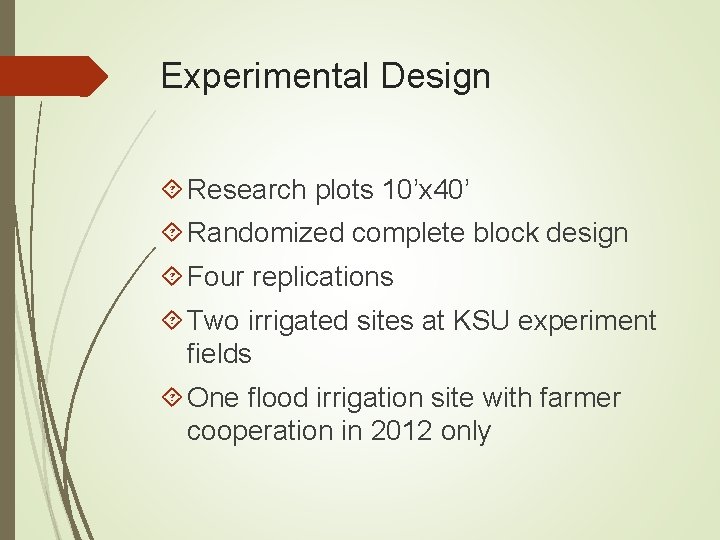
Experimental Design Research plots 10’x 40’ Randomized complete block design Four replications Two irrigated sites at KSU experiment fields One flood irrigation site with farmer cooperation in 2012 only
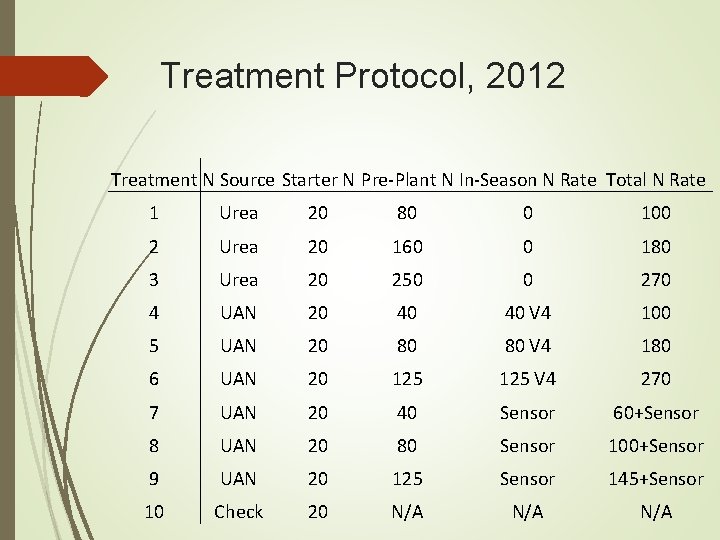
Treatment Protocol, 2012 Treatment N Source Starter N Pre-Plant N In-Season N Rate Total N Rate 1 Urea 20 80 0 100 2 Urea 20 160 0 180 3 Urea 20 250 0 270 4 UAN 20 40 40 V 4 100 5 UAN 20 80 80 V 4 180 6 UAN 20 125 V 4 270 7 UAN 20 40 Sensor 60+Sensor 8 UAN 20 80 Sensor 100+Sensor 9 UAN 20 125 Sensor 145+Sensor 10 Check 20 N/A N/A
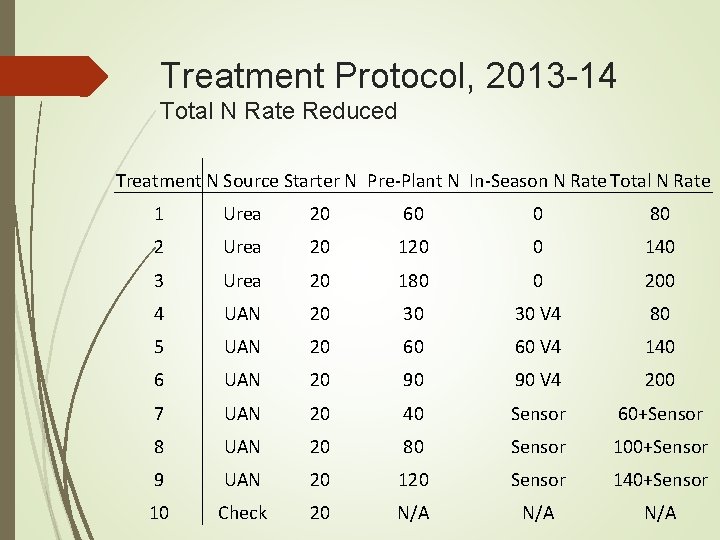
Treatment Protocol, 2013 -14 Total N Rate Reduced Treatment N Source Starter N Pre-Plant N In-Season N Rate Total N Rate 1 Urea 20 60 0 80 2 Urea 20 120 0 140 3 Urea 20 180 0 200 4 UAN 20 30 30 V 4 80 5 UAN 20 60 60 V 4 140 6 UAN 20 90 90 V 4 200 7 UAN 20 40 Sensor 60+Sensor 8 UAN 20 80 Sensor 100+Sensor 9 UAN 20 120 Sensor 140+Sensor 10 Check 20 N/A N/A
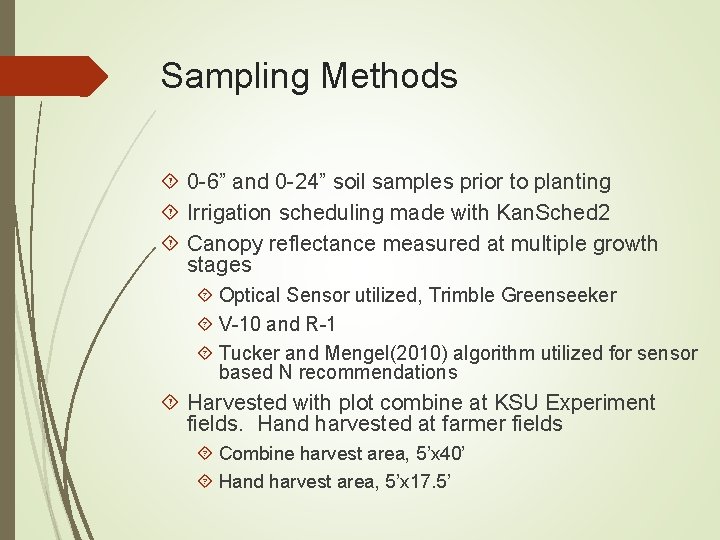
Sampling Methods 0 -6” and 0 -24” soil samples prior to planting Irrigation scheduling made with Kan. Sched 2 Canopy reflectance measured at multiple growth stages Optical Sensor utilized, Trimble Greenseeker V-10 and R-1 Tucker and Mengel(2010) algorithm utilized for sensor based N recommendations Harvested with plot combine at KSU Experiment fields. Hand harvested at farmer fields Combine harvest area, 5’x 40’ Hand harvest area, 5’x 17. 5’
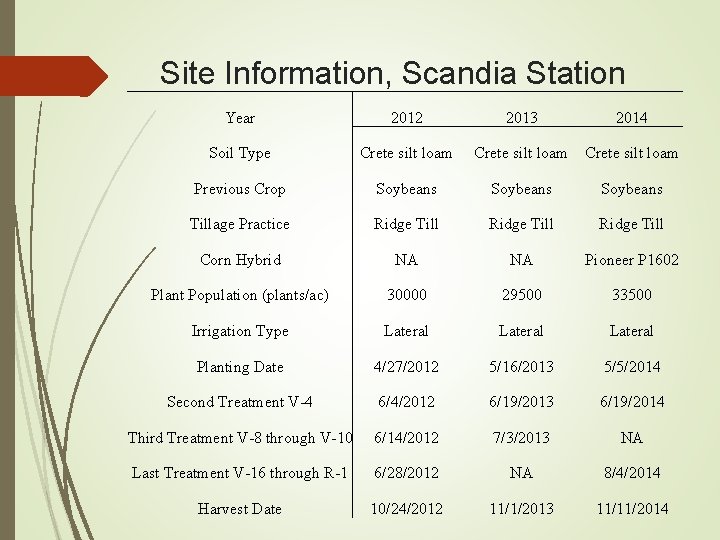
Site Information, Scandia Station Year 2012 2013 2014 Soil Type Crete silt loam Previous Crop Soybeans Tillage Practice Ridge Till Corn Hybrid NA NA Pioneer P 1602 Plant Population (plants/ac) 30000 29500 33500 Irrigation Type Lateral Planting Date 4/27/2012 5/16/2013 5/5/2014 Second Treatment V-4 6/4/2012 6/19/2013 6/19/2014 Third Treatment V-8 through V-10 6/14/2012 7/3/2013 NA Last Treatment V-16 through R-1 6/28/2012 NA 8/4/2014 Harvest Date 10/24/2012 11/1/2013 11/11/2014
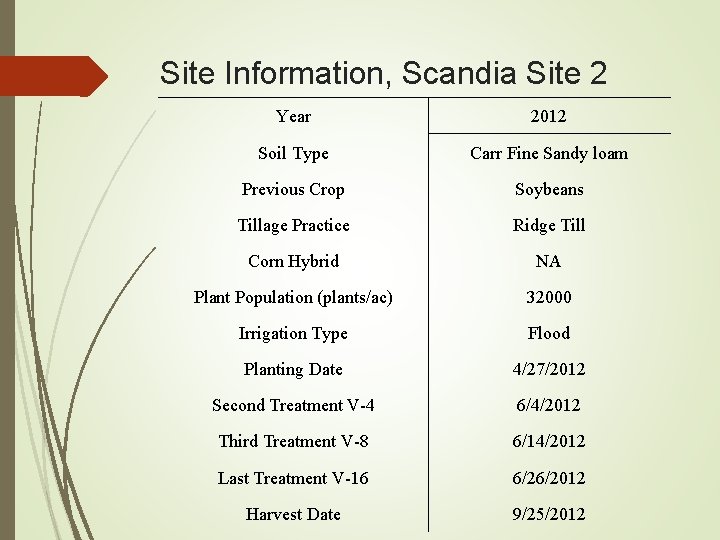
Site Information, Scandia Site 2 Year 2012 Soil Type Carr Fine Sandy loam Previous Crop Soybeans Tillage Practice Ridge Till Corn Hybrid NA Plant Population (plants/ac) 32000 Irrigation Type Flood Planting Date 4/27/2012 Second Treatment V-4 6/4/2012 Third Treatment V-8 6/14/2012 Last Treatment V-16 6/26/2012 Harvest Date 9/25/2012
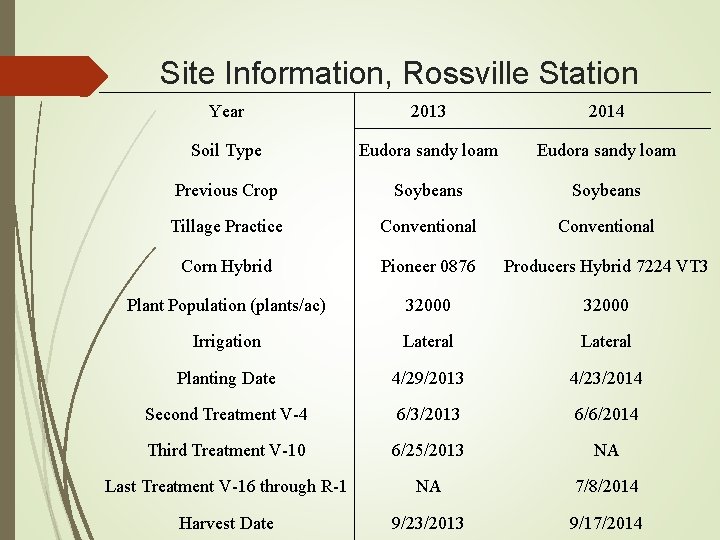
Site Information, Rossville Station Year 2013 2014 Soil Type Eudora sandy loam Previous Crop Soybeans Tillage Practice Conventional Corn Hybrid Pioneer 0876 Producers Hybrid 7224 VT 3 Plant Population (plants/ac) 32000 Irrigation Lateral Planting Date 4/29/2013 4/23/2014 Second Treatment V-4 6/3/2013 6/6/2014 Third Treatment V-10 6/25/2013 NA Last Treatment V-16 through R-1 NA 7/8/2014 Harvest Date 9/23/2013 9/17/2014
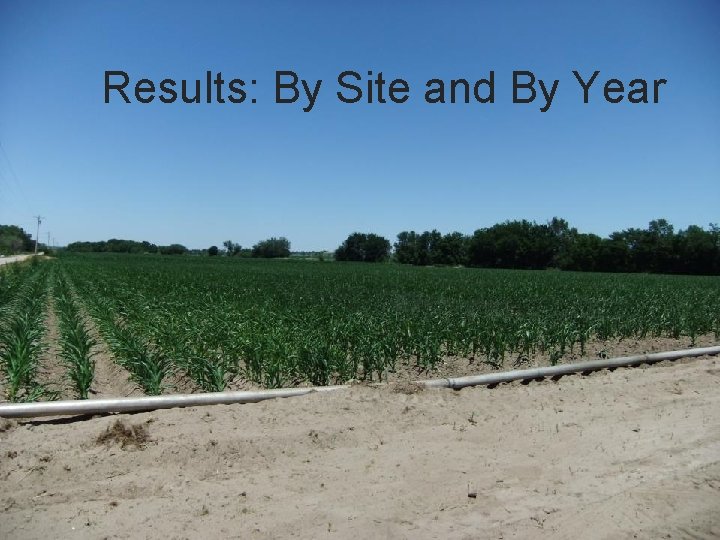
Results: By Site and By Year
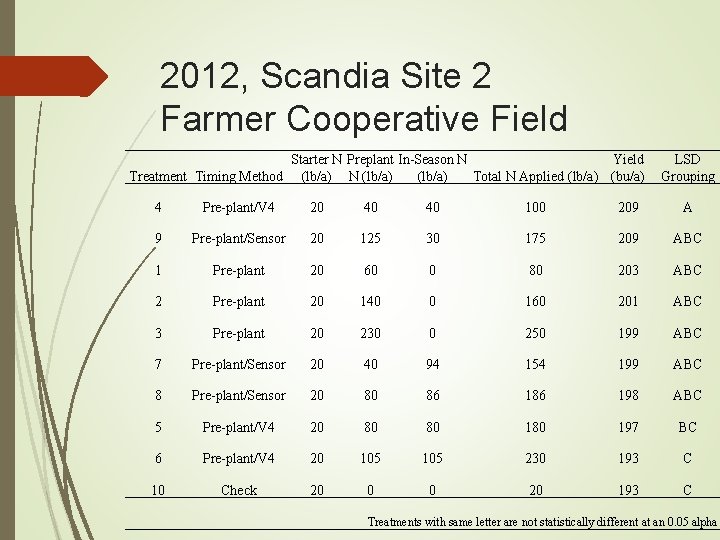
2012, Scandia Site 2 Farmer Cooperative Field Starter N Preplant In-Season N Yield Treatment Timing Method (lb/a) N (lb/a) Total N Applied (lb/a) (bu/a) LSD Grouping 4 Pre-plant/V 4 20 40 40 100 209 A 9 Pre-plant/Sensor 20 125 30 175 209 ABC 1 Pre-plant 20 60 0 80 203 ABC 2 Pre-plant 20 140 0 160 201 ABC 3 Pre-plant 20 230 0 250 199 ABC 7 Pre-plant/Sensor 20 40 94 154 199 ABC 8 Pre-plant/Sensor 20 80 86 198 ABC 5 Pre-plant/V 4 20 80 80 197 BC 6 Pre-plant/V 4 20 105 230 193 C 10 Check 20 0 0 20 193 C Treatments with same letter are not statistically different at an 0. 05 alpha
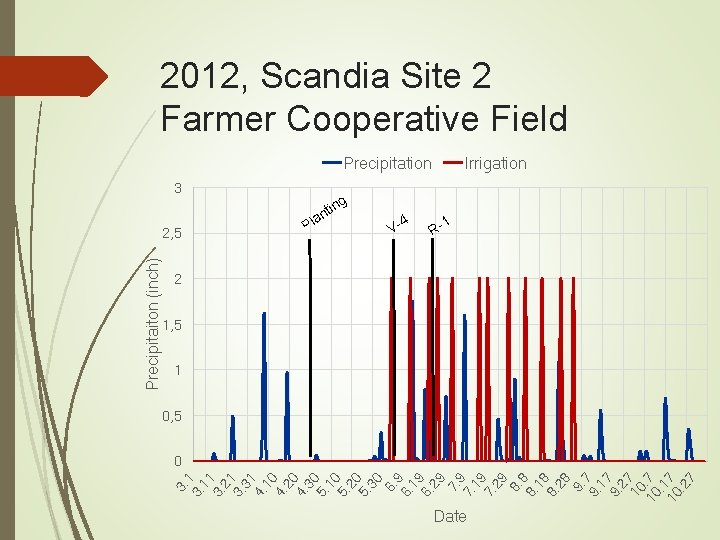
3. 11 3. 21 3. 31 4. 10 4. 20 4. 30 5. 10 5. 20 5. 30 6. 9 6. 19 6. 29 7. 19 7. 29 8. 8 8. 18 8. 28 9. 7 9. 17 9. 27 10 10. 7. 1 10 7. 2 7 Precipitaiton (inch) 2012, Scandia Site 2 Farmer Cooperative Field Precipitation 3 2, 5 ti an l P ng V 4 Irrigation R 1 2 1, 5 1 0, 5 0 Date
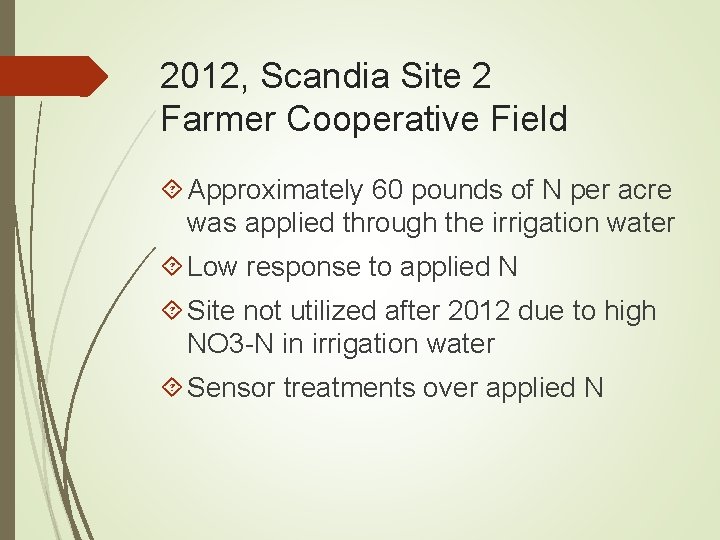
2012, Scandia Site 2 Farmer Cooperative Field Approximately 60 pounds of N per acre was applied through the irrigation water Low response to applied N Site not utilized after 2012 due to high NO 3 -N in irrigation water Sensor treatments over applied N
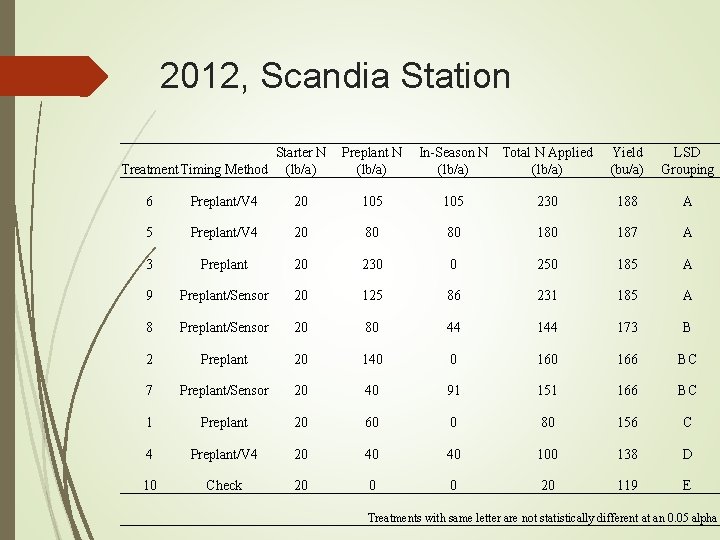
2012, Scandia Station Starter N Treatment Timing Method (lb/a) Preplant N (lb/a) In-Season N Total N Applied (lb/a) Yield (bu/a) LSD Grouping 6 Preplant/V 4 20 105 230 188 A 5 Preplant/V 4 20 80 80 187 A 3 Preplant 20 230 0 250 185 A 9 Preplant/Sensor 20 125 86 231 185 A 8 Preplant/Sensor 20 80 44 173 B 2 Preplant 20 140 0 166 BC 7 Preplant/Sensor 20 40 91 151 166 BC 1 Preplant 20 60 0 80 156 C 4 Preplant/V 4 20 40 40 100 138 D 10 Check 20 0 0 20 119 E Treatments with same letter are not statistically different at an 0. 05 alpha
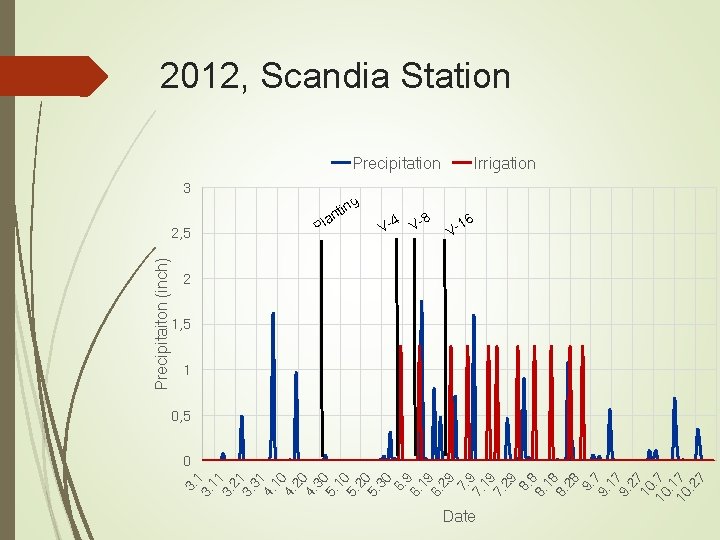
3. 11 3. 21 3. 31 4. 10 4. 20 4. 30 5. 10 5. 20 5. 30 6. 9 6. 19 6. 29 7. 19 7. 29 8. 8 8. 18 8. 28 9. 7 9. 17 9. 27 10 10. 7. 1 10 7. 2 7 Precipitaiton (inch) 2012, Scandia Station Precipitation 3 2, 5 ng i t an Pl 8 4 V- V- Irrigation 16 V- 2 1, 5 1 0, 5 0 Date
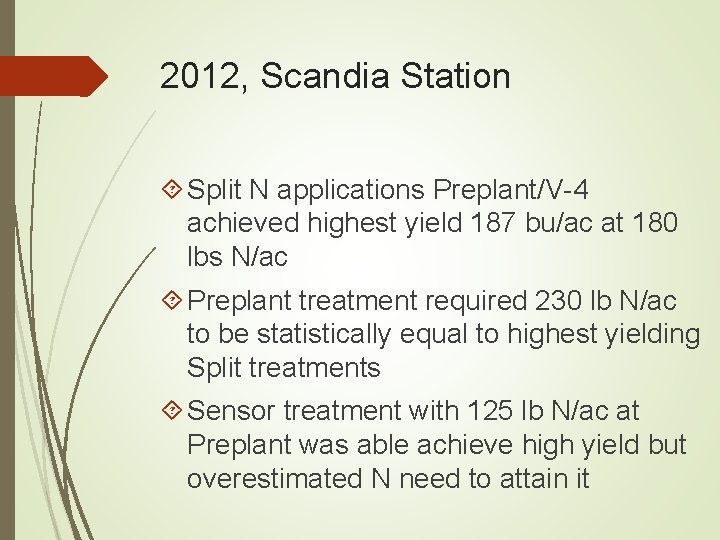
2012, Scandia Station Split N applications Preplant/V-4 achieved highest yield 187 bu/ac at 180 lbs N/ac Preplant treatment required 230 lb N/ac to be statistically equal to highest yielding Split treatments Sensor treatment with 125 lb N/ac at Preplant was able achieve high yield but overestimated N need to attain it
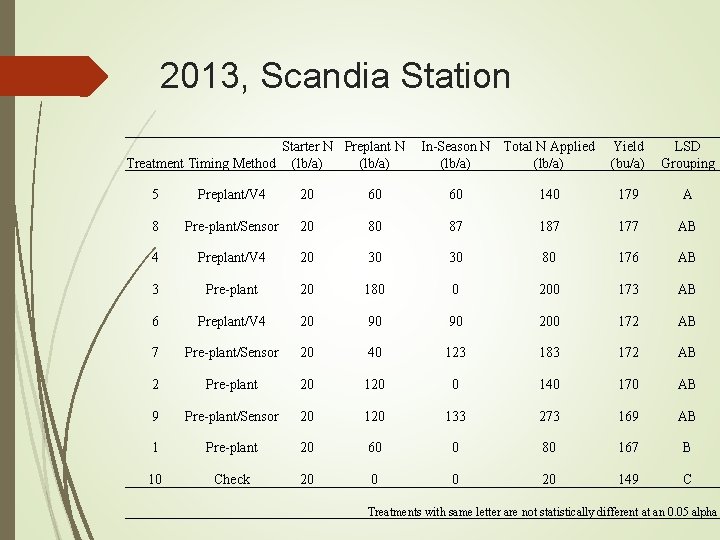
2013, Scandia Station Starter N Preplant N Treatment Timing Method (lb/a) In-Season N Total N Applied (lb/a) Yield (bu/a) LSD Grouping 5 Preplant/V 4 20 60 60 140 179 A 8 Pre-plant/Sensor 20 80 87 177 AB 4 Preplant/V 4 20 30 30 80 176 AB 3 Pre-plant 20 180 0 200 173 AB 6 Preplant/V 4 20 90 90 200 172 AB 7 Pre-plant/Sensor 20 40 123 183 172 AB 2 Pre-plant 20 120 0 140 170 AB 9 Pre-plant/Sensor 20 133 273 169 AB 1 Pre-plant 20 60 0 80 167 B 10 Check 20 0 0 20 149 C Treatments with same letter are not statistically different at an 0. 05 alpha
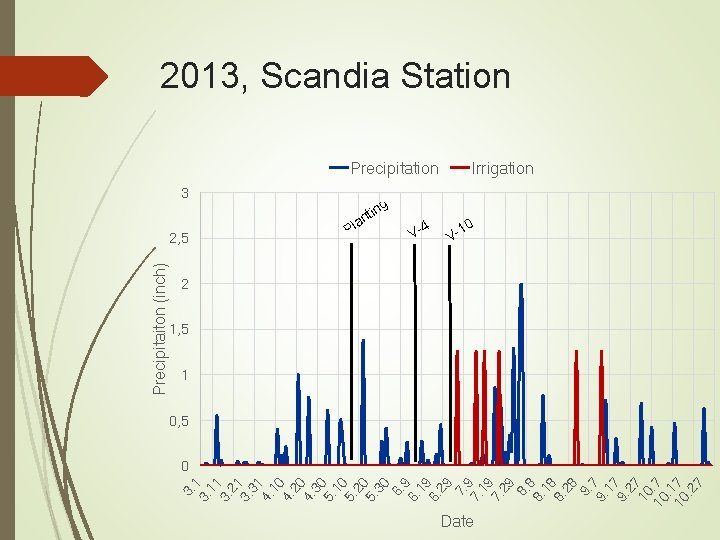
3. 11 3. 21 3. 31 4. 10 4. 20 4. 30 5. 10 5. 20 5. 30 6. 9 6. 19 6. 29 7. 19 7. 29 8. 8 8. 18 8. 28 9. 7 9. 17 9. 27 10 10. 7. 1 10 7. 2 7 Precipitaiton (inch) 2013, Scandia Station Precipitation 3 2, 5 ti an l P ng 4 V- Irrigation 10 V- 2 1, 5 1 0, 5 0 Date
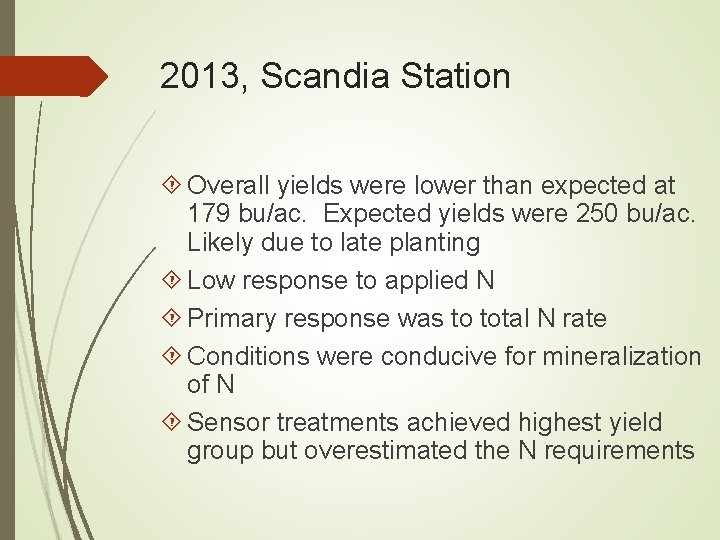
2013, Scandia Station Overall yields were lower than expected at 179 bu/ac. Expected yields were 250 bu/ac. Likely due to late planting Low response to applied N Primary response was to total N rate Conditions were conducive for mineralization of N Sensor treatments achieved highest yield group but overestimated the N requirements
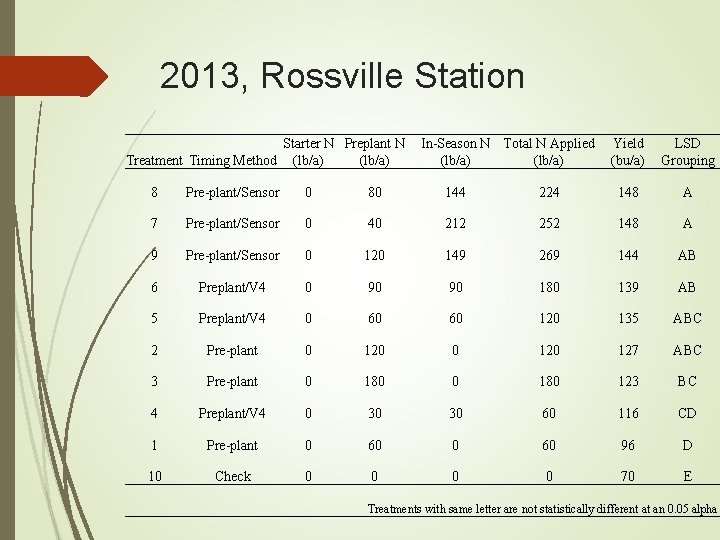
2013, Rossville Station Starter N Preplant N Treatment Timing Method (lb/a) In-Season N Total N Applied (lb/a) Yield (bu/a) LSD Grouping 8 Pre-plant/Sensor 0 80 144 224 148 A 7 Pre-plant/Sensor 0 40 212 252 148 A 9 Pre-plant/Sensor 0 120 149 269 144 AB 6 Preplant/V 4 0 90 90 180 139 AB 5 Preplant/V 4 0 60 60 120 135 ABC 2 Pre-plant 0 120 127 ABC 3 Pre-plant 0 180 123 BC 4 Preplant/V 4 0 30 30 60 116 CD 1 Pre-plant 0 60 96 D 10 Check 0 0 70 E Treatments with same letter are not statistically different at an 0. 05 alpha
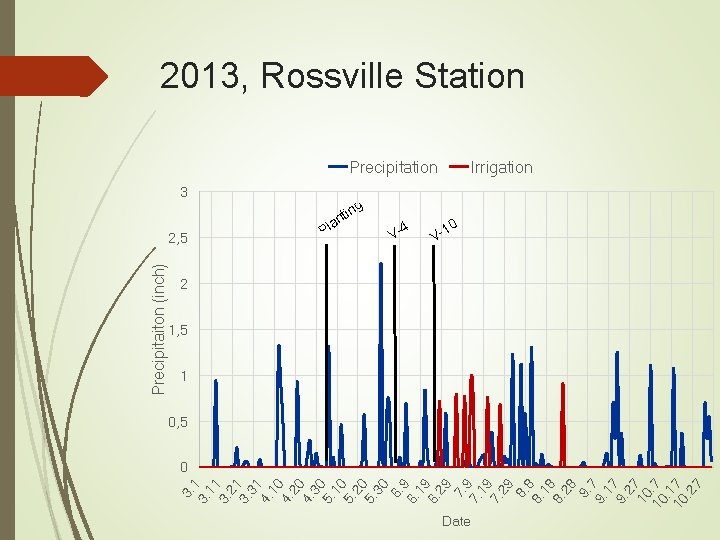
3. 11 3. 21 3. 31 4. 10 4. 20 4. 30 5. 10 5. 20 5. 30 6. 9 6. 19 6. 29 7. 19 7. 29 8. 8 8. 18 8. 28 9. 7 9. 17 9. 27 10 10. 7. 1 10 7. 2 7 Precipitaiton (inch) 2013, Rossville Station Precipitation 3 2, 5 ng i t an Pl V 4 Irrigation 10 V- 2 1, 5 1 0, 5 0 Date
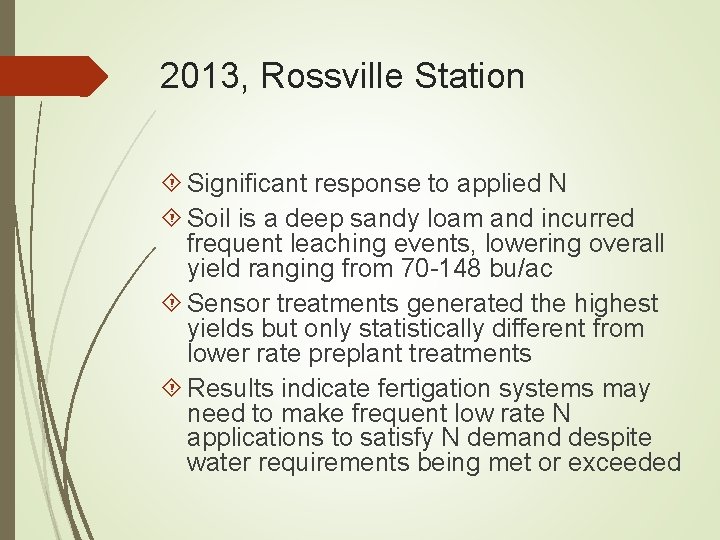
2013, Rossville Station Significant response to applied N Soil is a deep sandy loam and incurred frequent leaching events, lowering overall yield ranging from 70 -148 bu/ac Sensor treatments generated the highest yields but only statistically different from lower rate preplant treatments Results indicate fertigation systems may need to make frequent low rate N applications to satisfy N demand despite water requirements being met or exceeded
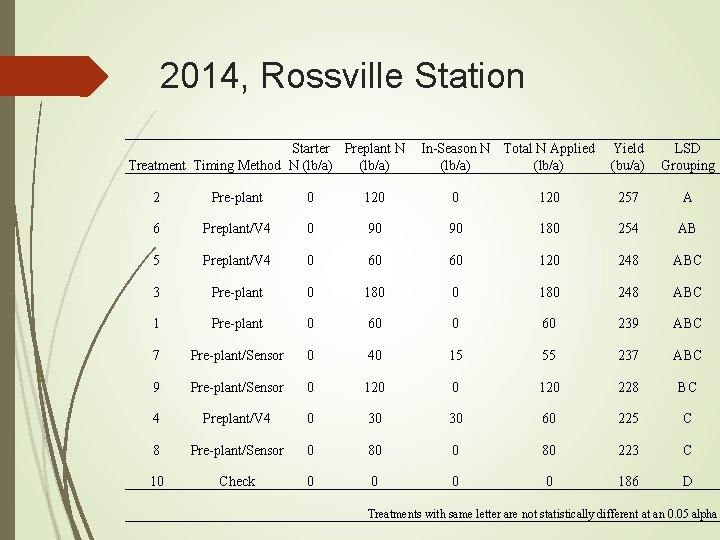
2014, Rossville Station Starter Preplant N Treatment Timing Method N (lb/a) In-Season N Total N Applied (lb/a) Yield (bu/a) LSD Grouping 2 Pre-plant 0 120 257 A 6 Preplant/V 4 0 90 90 180 254 AB 5 Preplant/V 4 0 60 60 120 248 ABC 3 Pre-plant 0 180 248 ABC 1 Pre-plant 0 60 239 ABC 7 Pre-plant/Sensor 0 40 15 55 237 ABC 9 Pre-plant/Sensor 0 120 228 BC 4 Preplant/V 4 0 30 30 60 225 C 8 Pre-plant/Sensor 0 80 223 C 10 Check 0 0 186 D Treatments with same letter are not statistically different at an 0. 05 alpha
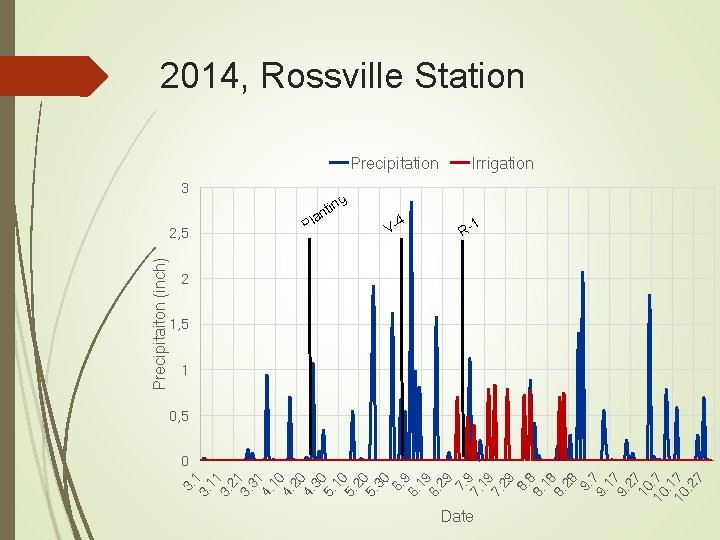
3. 11 3. 21 3. 31 4. 10 4. 20 4. 30 5. 10 5. 20 5. 30 6. 9 6. 19 6. 29 7. 19 7. 29 8. 8 8. 18 8. 28 9. 7 9. 17 9. 27 10 10. 7. 1 10 7. 2 7 Precipitaiton (inch) 2014, Rossville Station Precipitation 3 2, 5 ti n a Pl V 4 Irrigation ng R 1 2 1, 5 1 0, 5 0 Date
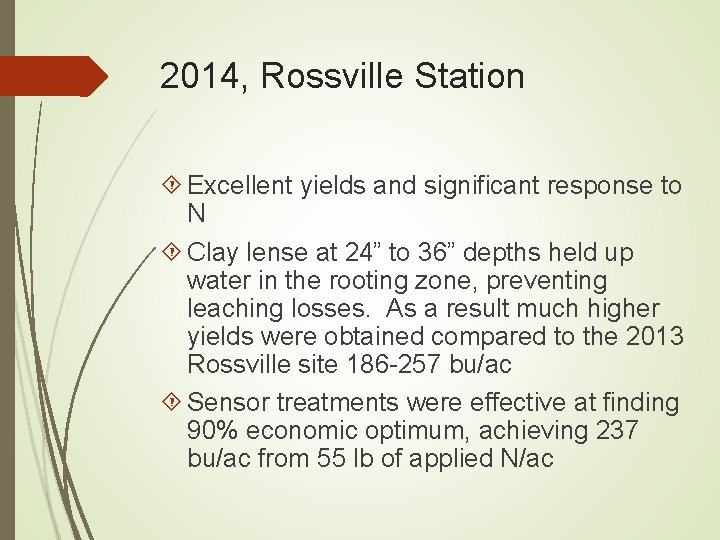
2014, Rossville Station Excellent yields and significant response to N Clay lense at 24” to 36” depths held up water in the rooting zone, preventing leaching losses. As a result much higher yields were obtained compared to the 2013 Rossville site 186 -257 bu/ac Sensor treatments were effective at finding 90% economic optimum, achieving 237 bu/ac from 55 lb of applied N/ac
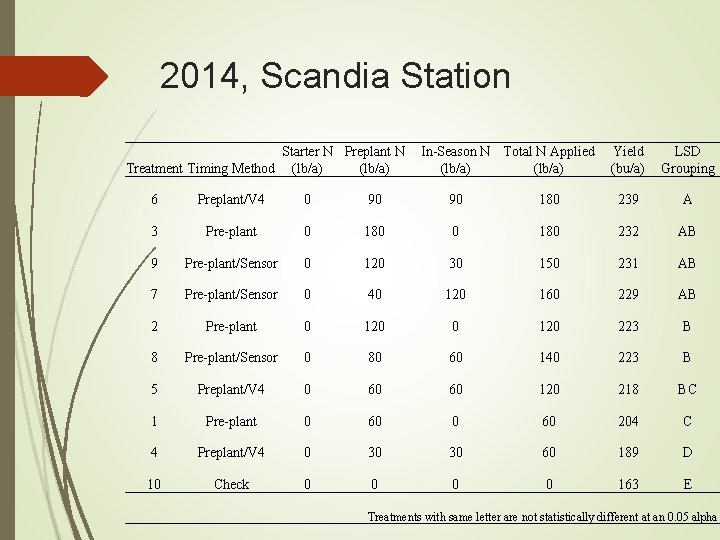
2014, Scandia Station Starter N Preplant N Treatment Timing Method (lb/a) In-Season N Total N Applied (lb/a) Yield (bu/a) LSD Grouping 6 Preplant/V 4 0 90 90 180 239 A 3 Pre-plant 0 180 232 AB 9 Pre-plant/Sensor 0 120 30 150 231 AB 7 Pre-plant/Sensor 0 40 120 160 229 AB 2 Pre-plant 0 120 223 B 8 Pre-plant/Sensor 0 80 60 140 223 B 5 Preplant/V 4 0 60 60 120 218 BC 1 Pre-plant 0 60 204 C 4 Preplant/V 4 0 30 30 60 189 D 10 Check 0 0 163 E Treatments with same letter are not statistically different at an 0. 05 alpha
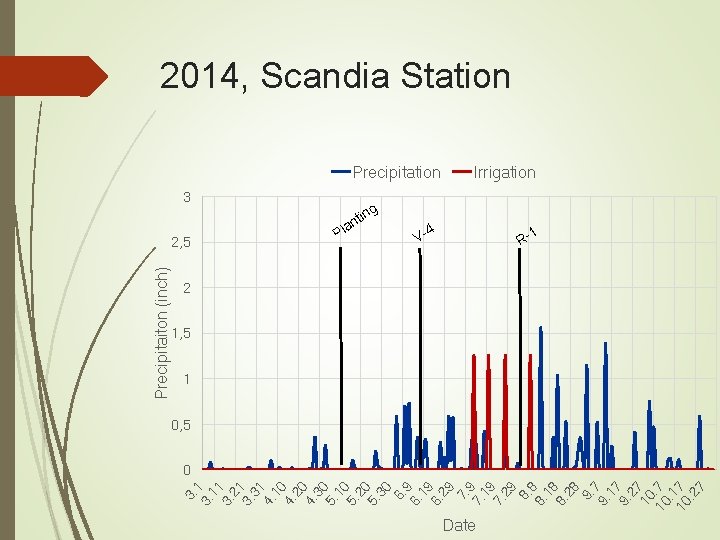
3. 11 3. 21 3. 31 4. 10 4. 20 4. 30 5. 10 5. 20 5. 30 6. 9 6. 19 6. 29 7. 19 7. 29 8. 8 8. 18 8. 28 9. 7 9. 17 9. 27 10 10. 7. 1 10 7. 2 7 Precipitaiton (inch) 2014, Scandia Station Precipitation 3 2, 5 ti an l P Irrigation ng V 4 R 1 2 1, 5 1 0, 5 0 Date
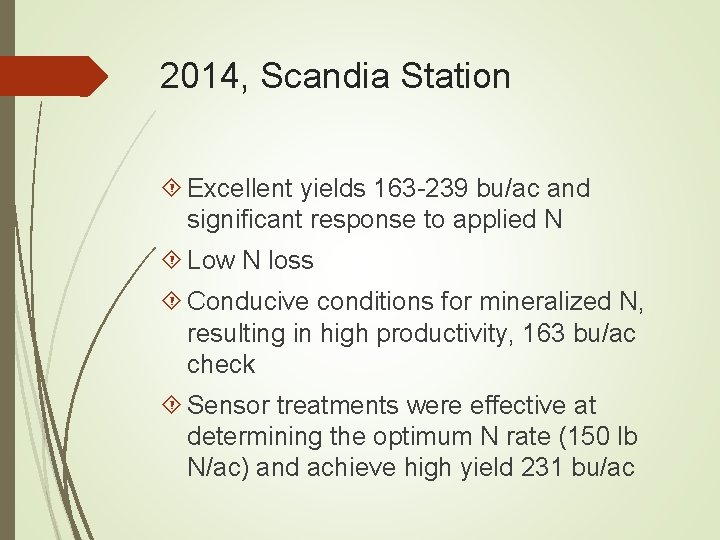
2014, Scandia Station Excellent yields 163 -239 bu/ac and significant response to applied N Low N loss Conducive conditions for mineralized N, resulting in high productivity, 163 bu/ac check Sensor treatments were effective at determining the optimum N rate (150 lb N/ac) and achieve high yield 231 bu/ac
Potential for Fertigation and Remote Sensing Would be able to conduct crop monitoring throughout the growing season, thus presenting the possibility to determine the optimize N rate and timing for any given soil and year (weather) Sensor algorithms must be specifically designed for fertigation systems Fertigation systems may need to apply N when water requirements have been met or exceeded
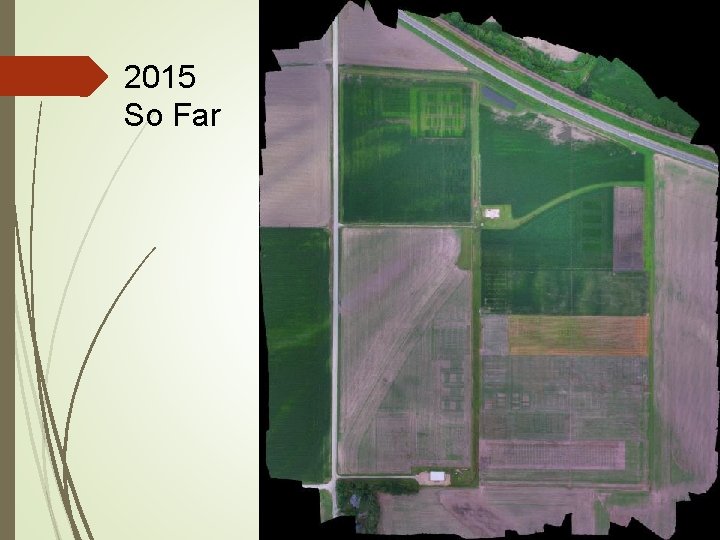
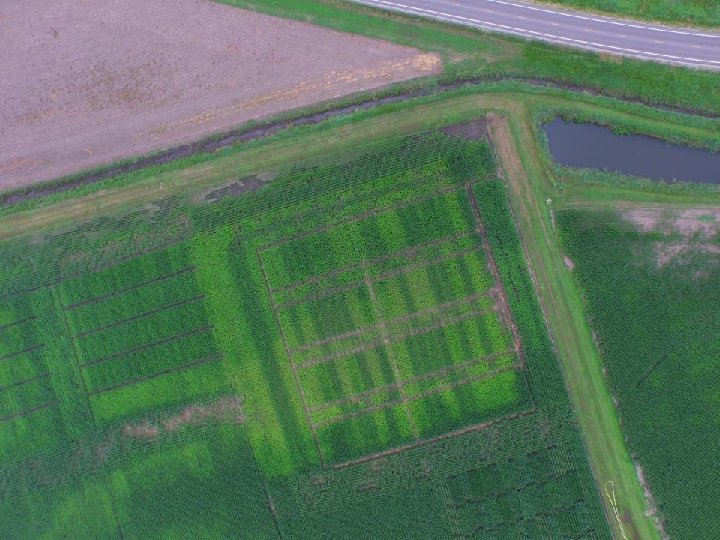
2015 So Far
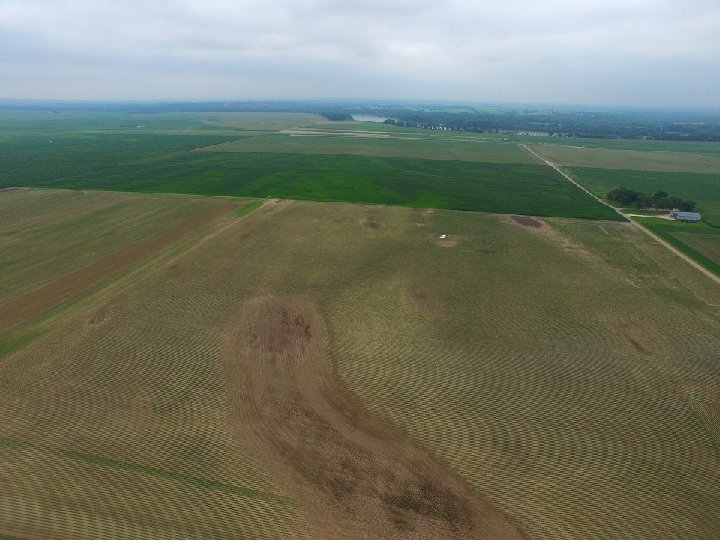
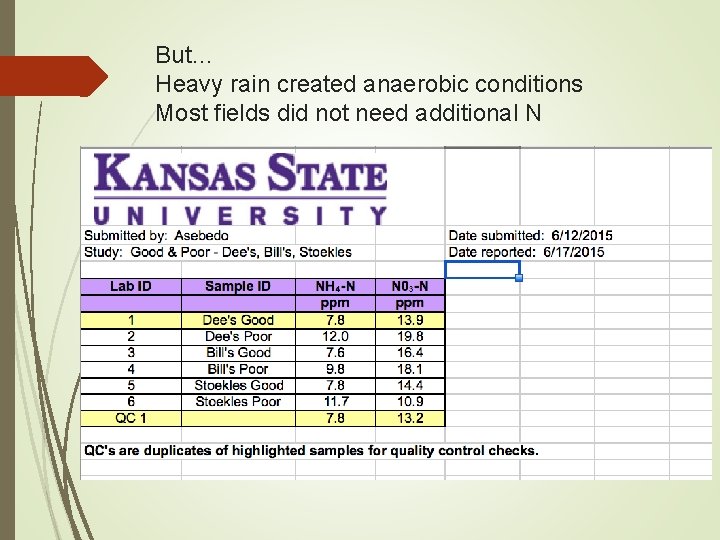
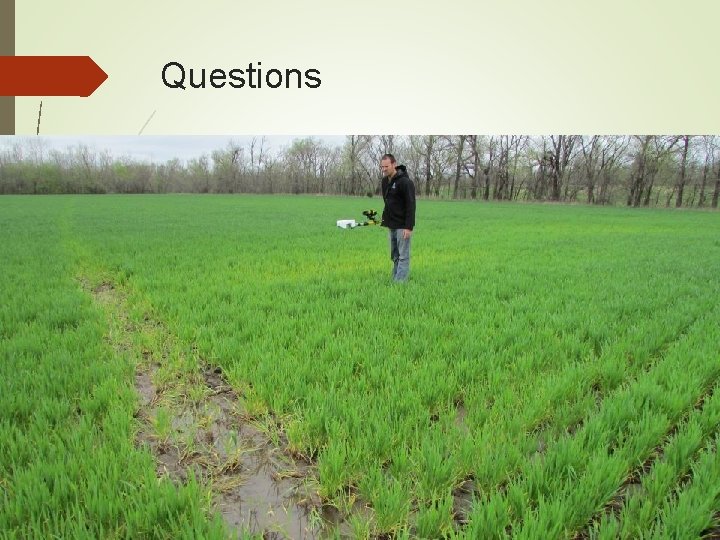
But… Heavy rain created anaerobic conditions Most fields did not need additional N
Questions