
Optimizations for the CSE Machine Programming Language Principles
- Slides: 12
Optimizations for the CSE Machine Programming Language Principles Lecture 13 Prepared by Manuel E. Bermúdez, Ph. D. Associate Professor University of Florida
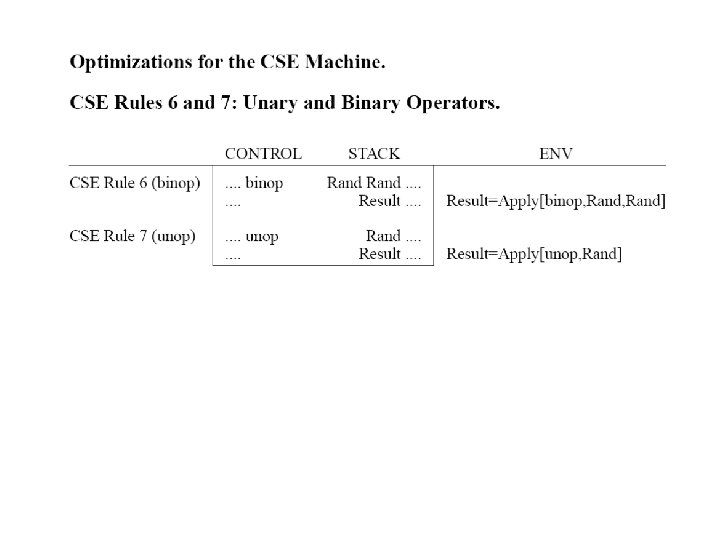
Five CSE Rules (Minimally) Sufficient • Let's take some shortcuts. • CSE Rules 6 and 7: Unary and Binary Operators.
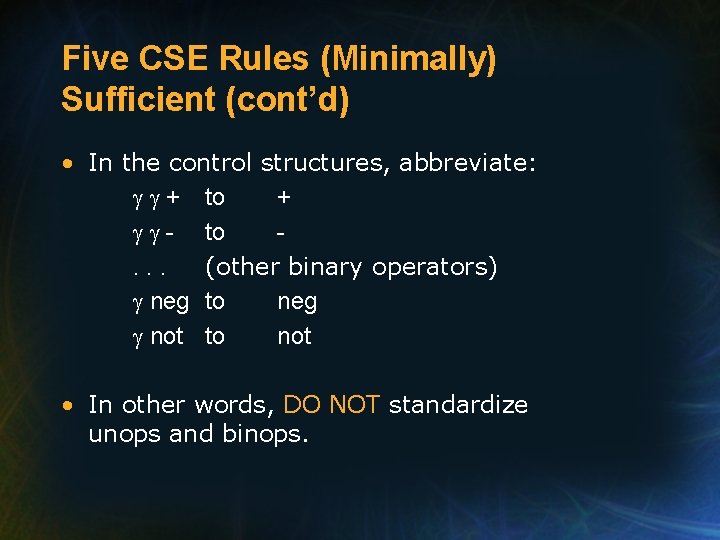
Five CSE Rules (Minimally) Sufficient (cont’d) • In the control structures, abbreviate: + to + - to. . . (other binary operators) neg to neg not to not • In other words, DO NOT standardize unops and binops.
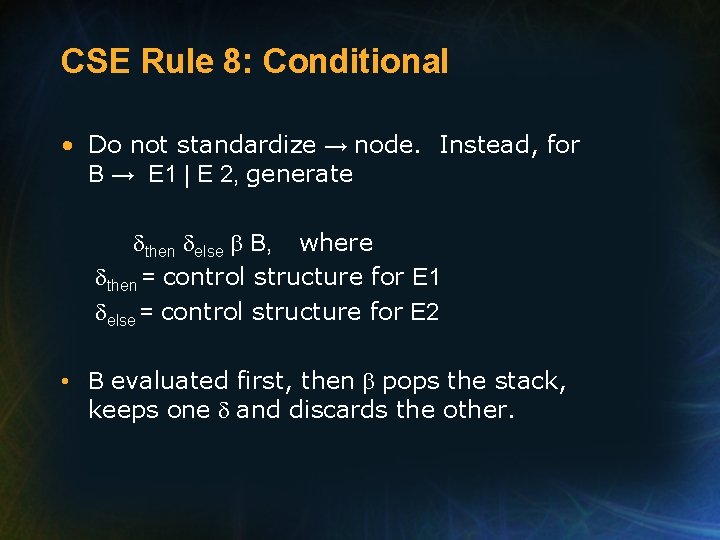
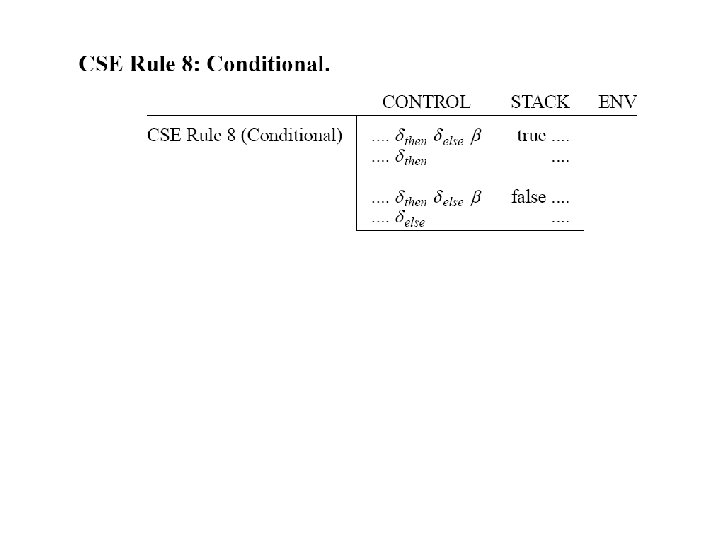
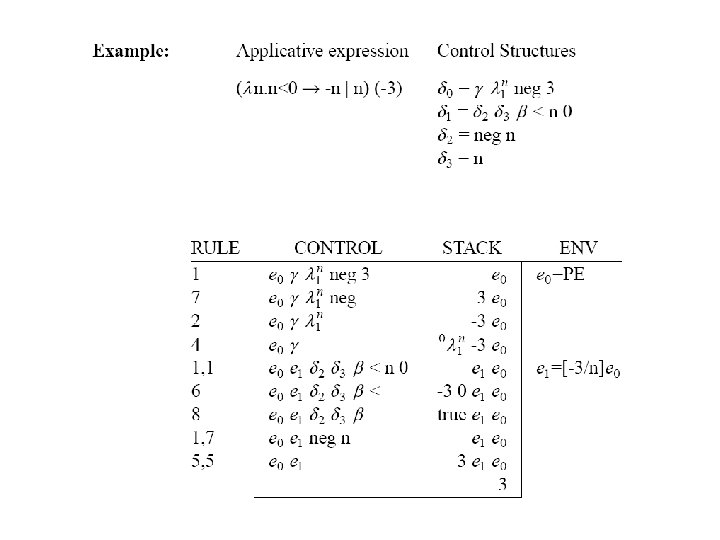
CSE Rule 8: Conditional • Do not standardize → node. Instead, for B → E 1 | E 2, generate then else B, where then = control structure for E 1 else = control structure for E 2 • B evaluated first, then pops the stack, keeps one and discards the other.
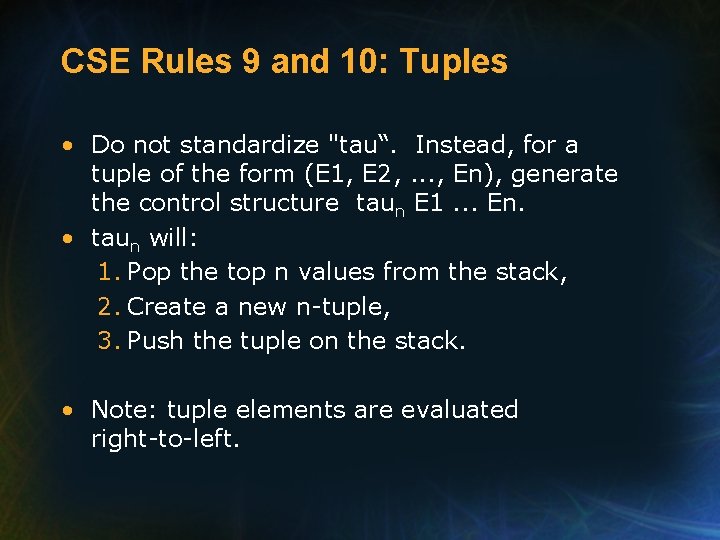
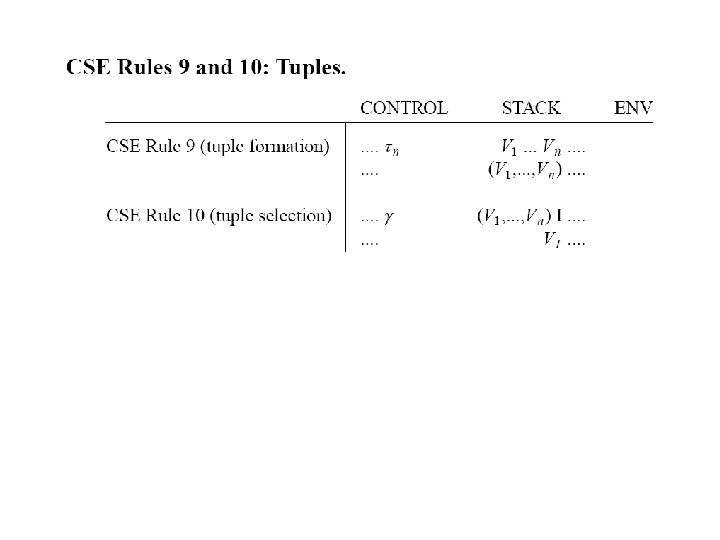
CSE Rules 9 and 10: Tuples • Do not standardize "tau“. Instead, for a tuple of the form (E 1, E 2, . . . , En), generate the control structure taun E 1. . . En. • taun will: 1. Pop the top n values from the stack, 2. Create a new n-tuple, 3. Push the tuple on the stack. • Note: tuple elements are evaluated right-to-left.
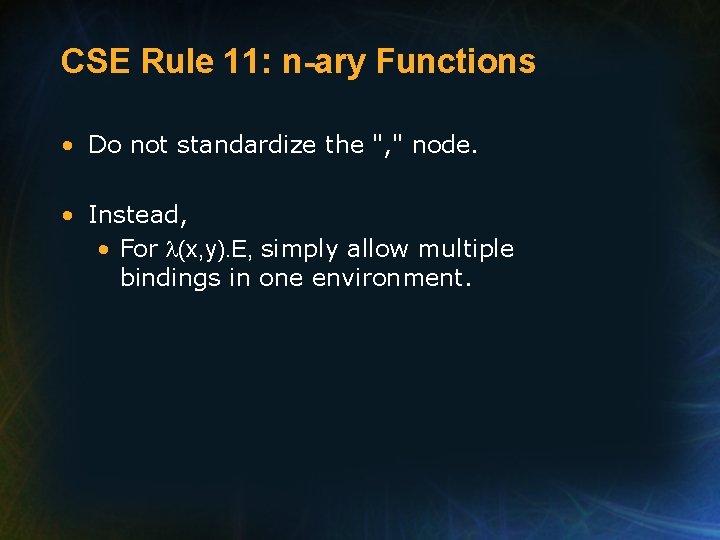
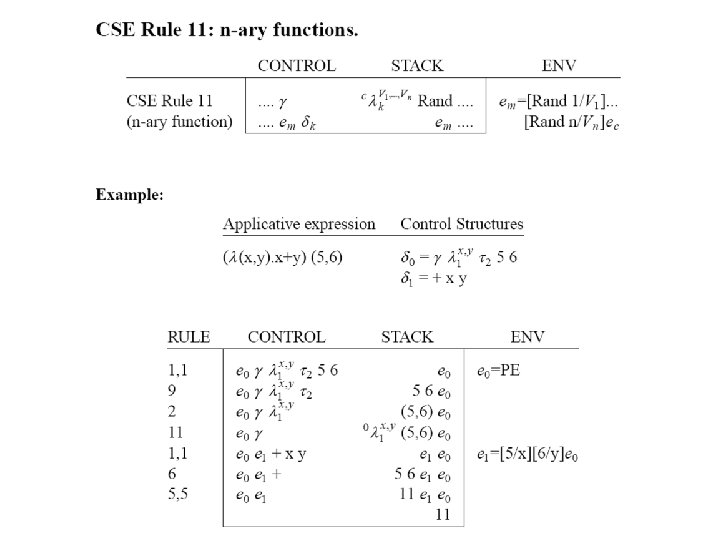
CSE Rule 11: n-ary Functions • Do not standardize the ", " node. • Instead, • For (x, y). E, simply allow multiple bindings in one environment.
Optimizations for the CSE Machine Programming Language Principles Lecture 13 Prepared by Manuel E. Bermúdez, Ph. D. Associate Professor University of Florida